
When you’re weighing the cost of ceramic coating vs. PPF, the number on the initial quote is only part of the story. Right out of the gate, Paint Protection Film (PPF) is the bigger investment. We’re often talking several thousand dollars for full coverage, whereas a professional ceramic coating usually lands somewhere between a third to half of that cost.
Your final decision really boils down to what you value more: the heavy-duty, physical armor of PPF against things like rock chips, or the slick, glossy, chemical-resistant shell of a ceramic coating.
The True Cost Of Protecting Your Car’s Paint
There’s nothing quite like that flawless, mirror-like finish on a brand-new car. But the moment you drive it off the lot, it’s under assault from road debris, harsh UV rays, and all sorts of environmental gunk. This is where car owners face a critical choice between Ceramic Coating and Paint Protection Film (PPF), and the real story behind the “ceramic coating vs. PPF cost” debate is far more nuanced than a simple price tag.
Let’s put this in perspective by following a car enthusiast named Alex. After finally getting their dream car, Alex was obsessed with keeping it perfect. They quickly learned that a simple wash and wax just wouldn’t cut it against the daily grind. We’ll use Alex’s journey to break down the real financial picture, looking way beyond the initial invoice to uncover the long-term value.
Setting The Stage For Protection
Alex’s initial research revealed two very different philosophies for paint protection. Each one offered a unique defense strategy and came with its own financial commitment. Getting a handle on these core differences is the first step to making a smart decision that protects both your car and your bank account.
Choosing the right protection is an investment in your vehicle’s future value. The goal is to balance upfront costs with the long-term benefits of preserving the original factory paint, which is irreplaceable.
Here’s a quick look at what Alex found:
| Feature | Ceramic Coating | Paint Protection Film (PPF) |
|---|---|---|
| Primary Protection | Chemical & UV resistance, hydrophobicity | Physical impact resistance (rock chips, scratches) |
| Material | Liquid polymer (SiO2 or advanced elastomers) | Thick, self-healing polyurethane film |
| Aesthetics | Enhances gloss, depth, and slickness | Optically clear, preserves original look |
| Typical Lifespan | 2-9 years, depending on the product | 7-10 years, depending on the film |
To get a better sense of how professional services are priced, it can be helpful to look at how other industries break things down. For example, exploring a detailed cost analysis for various services can help put the value of expert labor and materials into context.
Ultimately, the choice isn’t just about the initial hit to your wallet. It’s about matching the protection to your driving habits, where you live, and what you expect. For someone who wants jaw-dropping gloss and a shield against chemicals and grime, a quality coating is a fantastic solution. If you want to dive deeper into the basics, our guide on how to protect car paint is a great place to start. In the next sections, we’ll get into the specific numbers and technologies that Alex had to consider.
Analyzing The Upfront Investment: Ceramic Coating Vs. PPF
When you first start weighing your options, the price tag is where the ceramic coating versus PPF debate gets real. The upfront investment for these two is worlds apart, and understanding why is key to making the right call for your car and your wallet.
This isn’t just about a final number on an invoice. The cost comes down to the raw materials, the sheer amount of skilled labor involved, and the critical prep work needed to get that perfect, lasting finish.
As you can see, your paint is constantly fighting a battle against physical impacts, UV rays, and chemical contaminants. This makes high-quality protection less of a luxury and more of a necessity for keeping your car looking its best.
Ceramic Coating: The Accessible Choice
Let’s talk about the more approachable option first. From a pure upfront cost perspective, ceramic coating is the hands-down winner for most car owners. A professional job typically runs between $1,000 and $3,500. The final price depends on your vehicle’s size, the current state of its paint, and the grade of coating you choose.
That price isn’t just for wiping on some liquid. It covers a comprehensive, multi-step process that starts with deep cleaning and, most importantly, paint correction to eliminate any existing swirls and fine scratches. Only then can a detailer meticulously apply the coating, often in multiple layers. If you’re curious about what this entails, our guide on applying ceramic coating to your car breaks it down.
Paint Protection Film: The Premium Shield
Now for the other side of the coin. PPF is a serious investment, and the price reflects that. Protecting your entire vehicle with a quality film can easily cost between $6,500 and $8,000, sometimes even more. We’re talking four to six times the price of a top-tier ceramic coating.
Why the huge jump? It’s a combination of the expensive polyurethane film itself and an incredibly tedious, labor-intensive installation that can take a skilled technician several days to get just right.
The heart of PPF’s value—and its cost—is its role as a physical shield. You’re literally paying for a thick, self-healing second skin that can absorb rock chips and shrug off scratches in a way a liquid coating simply can’t.
Given the steep cost, many owners choose a hybrid approach. They’ll install PPF on the most vulnerable, high-impact areas—like the front bumper, hood, fenders, and side mirrors. This “partial front” package usually lands in the $1,500 to $3,000 range, offering a smart compromise between protection and price.
Upfront Cost Comparison Ceramic Coating vs PPF
To make the difference crystal clear, here’s a side-by-side look at what you can expect to pay for professional installation on different types of vehicles.
| Service | Compact Sedan | Mid-Size SUV | Large Truck / Luxury SUV |
|---|---|---|---|
| Professional Ceramic Coating | $1,000 – $1,800 | $1,500 – $2,500 | $2,000 – $3,500+ |
| Partial Front PPF | $1,500 – $2,000 | $1,800 – $2,500 | $2,200 – $3,000+ |
| Full Vehicle PPF | $6,000 – $7,000 | $6,500 – $8,000 | $7,500 – $9,000+ |
This table immediately shows why many people start with ceramic coating. The barrier to entry for full-body protection is significantly lower, while full PPF remains a premium choice for those who want the ultimate physical defense.
The Titan Coatings Difference: A New Value Proposition
For years, the choice was simple: affordable gloss and chemical resistance, or expensive impact armor. But technology doesn’t stand still. At Titan Coatings, we’ve developed advanced Elastomer coatings that challenge this old way of thinking.
Our elastic coatings are built from military-grade polymers and enhanced with nano tubes technology, creating a unique blend of hardness and flexibility. This elasticity makes them far tougher than traditional, rigid ceramic coatings. They are hard like glass and flexible, which means they can handle extreme temperature changes—from frozen to hot—without cracking down. This flexibility is the key to their long-lasting performance.
In essence, a Titan coating delivers a higher degree of durability that starts to bridge the gap between standard coatings and pricey PPF. While you’re getting a feel for the market, using a tool like an auto detailing price estimator can help you understand the broader cost landscape. With Titan, you’re not just buying a coating; you’re investing in a product engineered for superior resilience, delivering exceptional value right in that sweet spot of the ceramic coating price range.
A New Breed of Coating Technology
For years, the choice was simple: ceramic coating for gloss and chemical resistance, or Paint Protection Film for heavy-duty impact defense. But what if you could get something in between? What if a coating could offer more than just a hard, glassy shell?
That’s exactly where the industry is headed. The game changed when Titan Coatings became the first company to introduce Elastomer coatings to the market, using our groundbreaking nano tubes technology and Dark Matter tech. This isn’t just a rebranded ceramic; it’s a fundamental shift in protective chemistry that creates a uniquely flexible molecular structure. The end result is a surface that’s tough as glass but pliable.
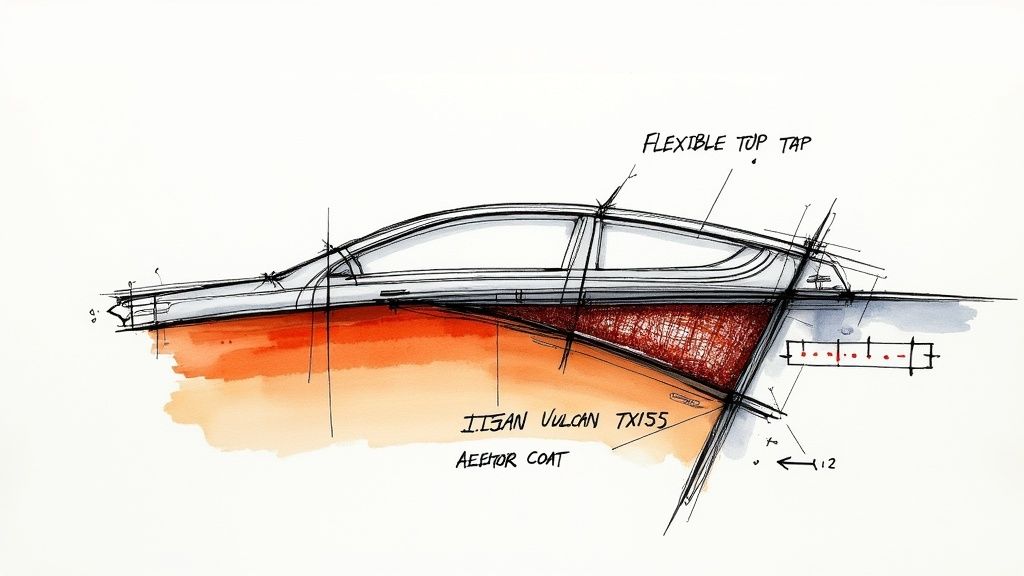
This elasticity is the real breakthrough. Traditional ceramic coatings are incredibly rigid, which makes them brittle. As your car’s metal panels expand in the summer sun and contract in the winter cold, that rigidity can lead to microscopic cracks, slowly degrading the coating’s integrity. Our elastic coatings, on the other hand, move with the vehicle. This flexibility ensures that temperature changes, from frozen to hot, won’t affect the coating or cause it to crack down, making it last much longer.
Titan Vulcan TX155: Setting a New Standard
A prime example of this technology in action is the Titan Vulcan TX155. This is more than just another bottle of liquid polymer; it represents a genuine leap in surface science. It was engineered specifically to bridge the gap between the slick, glossy finish of a coating and the rugged resilience of a film.
Let’s imagine Alex, our car enthusiast, again. After researching traditional options, Alex stumbled upon a video showcasing the Vulcan TX155. They saw a coated panel being put through punishing tests—intense heat, freezing cold, and minor abrasions. What amazed Alex was how the coating flexed and endured, unlike the brittle ceramics they had seen fail in other videos. The rubberized membrane it formed wasn’t just a shiny layer; it was a durable, elastic shield.
Titan’s Elastomer technology completely changes the ceramic coating vs. PPF cost equation. It brings a level of durability and minor self-healing capabilities to the table that were previously impossible at a ceramic coating price point, creating an incredibly compelling value proposition.
This kind of performance forces us to rethink what a paint coating can and should do. It’s a solution that delivers more than just a pretty shine—it offers real, long-lasting resilience.
Redefining Durability and Value
So, where does a product like the Vulcan TX155 fit into the cost conversation? It carves out a strategic middle ground, delivering a much higher degree of protection than standard ceramics without the hefty financial blow of a full PPF installation.
Here’s how it flips the script:
- Enhanced Flexibility: The coating flexes with the paint, preventing the micro-cracking that causes conventional coatings to fail over time. This built-in flexibility translates directly to a longer, more effective lifespan.
- Minor Self-Healing: While it won’t shrug off a rock chip like PPF can, the rubberized nature of the Vulcan TX155 allows it to resist and even mend minor wash-induced swirls. This keeps the finish looking sharp for years, not months.
- Cost-Effectiveness: You get this superior, flexible, and more durable protection at a price that’s still squarely within the professional ceramic coating bracket. You can see how our products compare on our detailed comparison page.
For any car owner, this is the smart money. It’s a robust, long-lasting shield that goes far beyond what you’d expect from a traditional coating, making it an intelligent investment for the long haul. You can explore the Titan Vulcan TX155 and other advanced solutions in our shop.
Looking at the Bigger Financial Picture
The price you’re quoted upfront is just the starting point. When you’re comparing the cost of ceramic coating versus PPF, you have to think like an owner, not just a buyer. The real cost shows up over the 5 to 10 years you’ll have the car.
To get an honest comparison, you need to factor in everything: maintenance, potential reapplications, and the cost of fixing any damage that gets through. That initial sticker price can be pretty deceptive if one option needs constant upkeep while the other is a “set it and forget it” solution.
The True Lifecycle Cost of Ceramic Coatings
A traditional ceramic coating looks like a bargain at first, but those costs add up. Most professional coatings are good for about 3 to 5 years, and then you’re back at the shop for a full strip and reapplication. That means the initial $1,500 – $3,500 bill might hit your wallet two or even three times over a decade.
On top of that, many coatings need an annual “booster” service to keep them beading water like they did on day one. It’s a smaller, recurring fee, but it’s part of the total cost of ownership. What starts as a one-time expense can easily become a significant long-term investment.
Where Paint Protection Film Delivers Long-Term Value
Paint Protection Film hits you with a much higher upfront cost, no doubt. But its financial story over the long haul is a lot more predictable. A quality PPF installation is built to last 7 to 10 years—often the entire time you own the car. It’s a one-and-done investment that provides serious physical protection without needing to be reapplied.
Sure, a deep gouge might require replacing the film on a single panel. But for all the minor swirls and light scratches that make a ceramic coating look tired over time, PPF just heals itself. That built-in durability can save you a ton of money on paint correction and touch-ups down the road.
When you run the numbers over a decade, PPF often comes out ahead financially, especially for a daily driver. The initial sticker shock fades when you realize its superior durability against the physical abuse of high-mileage driving.
Real-world data shows that a good PPF install preserves your car’s resale value by keeping the original paint pristine. It stops rock chips dead in their tracks—something a standard ceramic coating just can’t do. For a car that sees a lot of highway miles, that could mean avoiding thousands in paint repair bills every few years. You can see more analysis on this at Springs Detailing.
How Titan Elastomers Change the Long-Term Equation
This is where Titan’s advanced Elastomer coatings completely disrupt the old math. We engineered a coating that’s both incredibly hard and flexible, which radically extends its lifespan and makes the long-term financials look a whole lot better.
Our formula uses proprietary nano tubes and Dark Matter tech to create a coating that resists the micro-cracking that kills traditional, brittle ceramics. This elasticity is key—it lets the coating handle wild temperature swings, from freezing cold to blistering heat, without breaking down. That toughness means it simply lasts longer, pushing reapplications much further down the road.
A single application of a product like Titan Vulcan TX155 is built for the long haul. It delivers a level of durability that gets much closer to the lifespan of PPF, but at a price point that still feels like a ceramic coating. For an owner who wants serious, lasting protection without the massive upfront cost of film, it’s a game-changer. Of course, you still have to take care of it, and our guide on how to handle ceramic coat maintenance gives you the pro tips to make sure you get every bit of value out of your investment for years.
The Hybrid Strategy: Ultimate, No-Compromise Protection
For some people, it’s not a choice between the physical armor of PPF and the glossy shield of a coating. It’s a false dilemma. If you’re looking for total protection without compromise, the hybrid strategy is the only way to go. This approach is all about combining the strengths of both, creating a truly multi-layered defense system for your paint.
The process itself is quite simple but unbelievably effective. First, a skilled installer applies durable Paint Protection Film to the most vulnerable, high-impact zones of your car. We’re talking about the front bumper, hood, fenders, and side mirrors—all the areas that take a beating from road debris day in and day out. After that, a high-performance ceramic coating is layered over the entire car, including right on top of the new PPF.
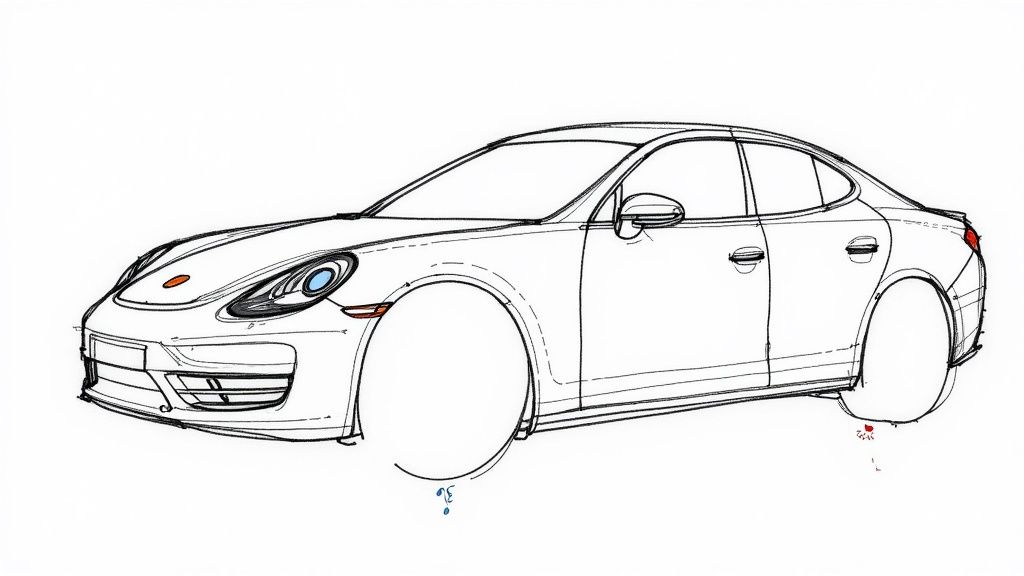
This creates a powerful synergy. Each layer actually makes the other better, delivering a level of protection that neither could ever achieve on its own. It’s the ultimate peace-of-mind package.
Getting The Best of Both Worlds: A Cost-Smart Synergy
The real genius of the hybrid approach is how it solves the ceramic coating vs PPF cost problem. You get the incredible impact resistance of PPF exactly where you need it most, preventing those ugly, expensive rock chip repairs without having to pay for a full-body wrap. Applying film only to the most critical areas keeps the initial investment reasonable.
At the same time, the ceramic coating elevates the entire vehicle’s appearance and protection. When applied over PPF, it adds a slick, hydrophobic surface that protects the film itself from UV damage and staining, making it ridiculously easy to clean. On the rest of the car, it delivers that signature deep gloss and a tough barrier against chemical etching and environmental grime.
The hybrid method isn’t just about stacking products; it’s a strategic investment. You put the more expensive physical shield (PPF) on the front lines and use the more affordable chemical shield (coating) everywhere else. It’s the optimal balance of performance and price.
For many owners, this is hands-down the smartest way to protect a new vehicle. You can dive deeper into this topic in our guide on the best paint protection for new cars.
Why A Titan Elastomer Coating Is The Perfect Top Layer
When you’re picking a coating for a hybrid install, you have to be careful. Not all products are created equal. This is where the advanced chemistry behind Titan Coatings really pulls away from the pack. Our unique Elastomer coatings are built from military-grade polymers and nano tubes technology, giving them a flexibility and resilience that perfectly complements the PPF underneath.
Here’s the problem with most coatings: they’re rigid. Traditional ceramic coatings cure into a hard, glass-like layer that can become brittle. When you put a rigid layer over a flexible film, you create a potential point of failure—the two materials expand and contract at different rates, which can lead to cracking.
A Titan coating is fundamentally different. It’s engineered to be hard like glass yet remain incredibly flexible, allowing it to move and stretch right along with the PPF and the vehicle’s body panels. This elasticity ensures a durable bond that won’t crack under the stress of extreme temperature swings, from freezing winters to scorching summers. That’s what makes it the ideal top layer, ensuring your investment lasts longer and performs better than any standard ceramic ever could.
Which Protection Strategy Is Right For You?
Choosing between an advanced Elastomer coating, a traditional Paint Protection Film, or a combination of both is a big decision. Honestly, there’s no single “right” answer. The best choice comes down to your budget, your daily driving routine, and the specific threats your car faces out on the road. The “ceramic coating vs ppf cost” question isn’t about which one is better overall, but which one is the perfect fit for you.
Let’s put the technical jargon aside and look at some real-world situations. Finding your own profile here will help you invest with confidence, knowing you’ve made the smartest move for your car.
The Daily Commuter and Gloss Enthusiast
Let’s say you’re someone who mainly drives on city streets and well-paved highways. Your biggest goals are keeping the car ridiculously glossy, making washes quick and easy, and shielding the paint from environmental gunk like bird droppings, acid rain, and UV damage. Rock chips just aren’t a major part of your reality.
For this kind of driver, wrapping the whole car in PPF would be overkill—a huge expense for protection you simply don’t need. The smarter play is a high-quality Elastomer coating. A product like Titan Coatings Vulcan TX155 is a perfect example, offering incredible value. It gives you that brilliant, wet look and water-beading magic you’re after, but it has a key advantage over old-school ceramic coatings.
Powered by nano tubes and Dark Matter technology, Titan’s flexible Elastomer coatings resist the micro-cracking that causes traditional coatings to fail. This flexibility means longer-lasting protection that won’t break down due to extreme temperature changes, from freezing winters to scorching summers.
The Highway Warrior and Track Day Hero
Now, let’s imagine a completely different driver. This person logs serious highway miles, often stuck behind trucks that are constantly kicking up gravel. Or maybe they’re a performance junkie who loves canyon carving or hitting the track on weekends. For them, the enemy isn’t bird poop—it’s high-velocity physical impacts.
In this scenario, no coating on earth, no matter how good, is going to stop a rock from chipping your paint. The physical, self-healing armor of Paint Protection Film is the only real answer. Sure, the upfront cost is higher, but think of it as insurance against costly paint repairs. Preventing just one or two decent-sized chips on your front bumper or hood can easily pay for a partial front PPF job.
The Meticulous Owner Who Demands It All
Finally, we have the owner who just won’t compromise. This person wants it all: the impact-absorbing shield of PPF and the unbelievable gloss, chemical resistance, and easy cleaning of a world-class coating. They want their prized possession protected from literally everything.
For this owner, the hybrid strategy is the undisputed champion. It involves applying PPF to the high-impact areas (like the front bumper, hood, and mirrors) and then layering an advanced Elastomer coating over the entire car. This gives you a comprehensive, multi-layered defense that balances cost and performance perfectly, offering total peace of mind.
For a deeper dive into how these two technologies compare, you can explore our detailed guide on paint protection film vs. ceramic coating. Matching your needs with the right solution ensures every dollar you spend is a solid investment in your vehicle’s future.
Frequently Asked Questions
You’ve got the big picture, but the small details matter when you’re deciding between ceramic coatings and PPF. Here are some straight answers to the questions we hear all the time, designed to help you lock in your final choice with total confidence.
Is PPF Really Worth the High Price Tag?
For the right person, absolutely. If your daily commute involves highways notorious for kicking up rocks and debris, or if you’re protecting the original paint on a high-end exotic or classic car, PPF is a smart investment. It’s a physical barrier that takes the hit so your paint doesn’t.
Think of it this way: the cost of a full-front PPF install might be less than repairing a single deep rock chip on a modern luxury car’s bumper and hood. It’s an insurance policy against physical damage. If your main worries are things like bird droppings, UV fading, and getting that unbelievable gloss, a high-quality ceramic coating is a far more practical and cost-effective solution.
Can You Put a Ceramic Coating on Top of PPF?
Yes, and honestly, it’s the best of both worlds. This is the setup most high-end detailers recommend for ultimate protection.
The PPF serves as your impact-resistant shield, absorbing scratches and rock chips. The ceramic coating goes on top of the film, adding a super-slick, hydrophobic layer. This makes the car ridiculously easy to wash, protects the film itself from staining and UV damage, and amps up the gloss factor even more. It’s the ultimate one-two punch in paint protection.
How Do Titan Elastomer Coatings Change the Equation?
This is where things get interesting. Titan’s Elastomer coatings are a completely different animal compared to old-school, brittle ceramic coatings. We use proprietary nano tubes technology and Dark Matter tech to create a coating that’s hard as glass but stays flexible.
Why does that matter? Traditional ceramics can develop micro-cracks over time from heat cycles and vibration, which leads to failure. Our elastic coatings are engineered to resist this, giving them a huge edge in durability. While they won’t stop a rock flying at 70 mph like a thick sheet of PPF, a product like our Titan Vulcan TX155 offers a level of resilience against light abrasions that standard ceramics just can’t match. It’s a fantastic middle-ground for owners who want more than just shine without jumping to the cost of film. You can see a full breakdown on our comparison page.
What’s the Biggest “Hidden Cost” I Should Watch Out For?
Hands down, it’s paint correction. You can’t apply a perfect layer of protection over imperfect paint. Whether it’s a coating or a film, any existing swirl marks, light scratches, or holograms will be locked in underneath for years.
A professional installer will always insist on performing at least a single-stage machine polish to create a pristine surface before application. Depending on how much work your paint needs, this crucial prep step can easily add $500 to $2,000+ to your final invoice. Always ask if paint correction is itemized in your quote so you aren’t surprised by the final bill.
Ready for a smarter kind of protection? Titan Coatings and our advanced Elastomer technology offer a leap forward in durability, bridging the gap between fragile ceramics and pricey PPF.
Explore the Titan Vulcan TX155 and elevate your vehicle’s defense today!
0 Comments
Trackbacks/Pingbacks