
So, what exactly is a ceramic coating maintenance spray? Think of it as a specialized product built to clean, restore, and protect the ceramic coating you've already applied to your vehicle. It's essentially a "topper" that refreshes the slick, water-hating properties and deep gloss of the main coating, which makes your life easier and extends the coating's lifespan.
Keep Your Coating Strong with the Right Maintenance
You've already made the smart investment in a high-tech ceramic coating, giving your vehicle a serious defense against whatever the road throws at it. But how do you keep that shield working like new? This is exactly where a ceramic coating maintenance spray comes in—it’s not an optional add-on, it’s a core part of your detailing arsenal.
Imagine this: a client of ours, let's call him Mark, just had our revolutionary Alpha Quartz Elastomer coating applied to his new car. He was blown away by the glass-like finish and the way water just danced off the surface. For a few months, he was in heaven. But then, after a long road trip and a few too many automatic car washes, he noticed the beading wasn't as tight. The finish felt a little… sluggish. What was happening is that environmental fallout was slowly clogging the microscopic pores of the coating, smothering its hydrophobic power and killing that slick, just-detailed feel.
Why You Can't Skip This Step
The right maintenance spray is the solution. It’s formulated specifically to:
- Deep Clean the Surface: It gently lifts and clears away those stubborn contaminants that a normal car wash just can't handle.
- Bring Back the Beading: It recharges the coating's water-repelling abilities, making sure rain and water slide right off.
- Punch Up the Gloss: It seriously boosts the depth and clarity of your paint, restoring that jaw-dropping, showroom shine.
A great maintenance spray adds a sacrificial, slick layer that takes the daily beating for your primary coating. This simple step preserves the durable base coat underneath and makes every future wash incredibly fast and easy. This isn't just about shine; it’s a smart strategy for getting the most life and performance out of your investment. You can dive deeper into this process in our comprehensive guide to ceramic coating maintenance.
This proactive care is more crucial than ever. The demand for advanced vehicle protection is exploding—North America's ceramic coating market hit USD 11.26 billion in 2024 and is expected to rocket to USD 19.23 billion by 2033. This growth is all driven by people wanting long-lasting, scratch-resistant protection for their cars. You can see the full breakdown of these market trends from Market Data Forecast. By simply adding a maintenance spray to your routine, you're ensuring your vehicle's finish stays at the top of its game.
Choosing the Right Spray for an Advanced Coating
Let's be clear: not all maintenance sprays are created equal. This is especially true when you're working with an advanced Elastomer coating from Titan Coatings. As the first company to introduce elastomer coatings using nano-tube and Dark Matter technology, we understand that the science behind compatibility is critical. Grabbing a generic silica (SiO2) topper can do more harm than good, sometimes even working against the very technology you paid to protect.
I've seen it happen. A professional detailer applies a premium coating like our Alpha Quartz to a client's prized possession. Looking for that extra pop of gloss, they reach for a standard SiO2-based maintenance spray. Sure, the initial shine is impressive, but a problem is brewing just beneath the surface.
That rigid SiO2 spray forms a brittle, glass-like layer over our flexible, resilient elastomer coating. Our coatings are designed to be hard like glass but also flexible. This unique elasticity makes them last longer and prevents them from cracking under extreme temperature changes, from freezing cold to scorching heat. The rigid SiO2 topper unintentionally suffocates these properties and can actually reduce the coating's lifespan by creating a microscopic conflict between the two layers.
Matching Chemistry for Peak Performance
This exact scenario is why we engineered Titan’s Ultra Ceramic Spray. Its unique formula isn't just a topper; it's designed to chemically bond with and complement our flexible coatings, not fight against them.
Instead of forming a separate, rigid layer, it integrates seamlessly with the elastomer, amplifying its natural slickness and durability. It works in perfect sync with our Dark Matter Technology to boost hydrophobicity and gloss without ever compromising the coating's core strengths.
This diagram really breaks down the core principles of protecting your coating, hitting on the need to cleanse, restore, and then protect with products that are designed to work together.
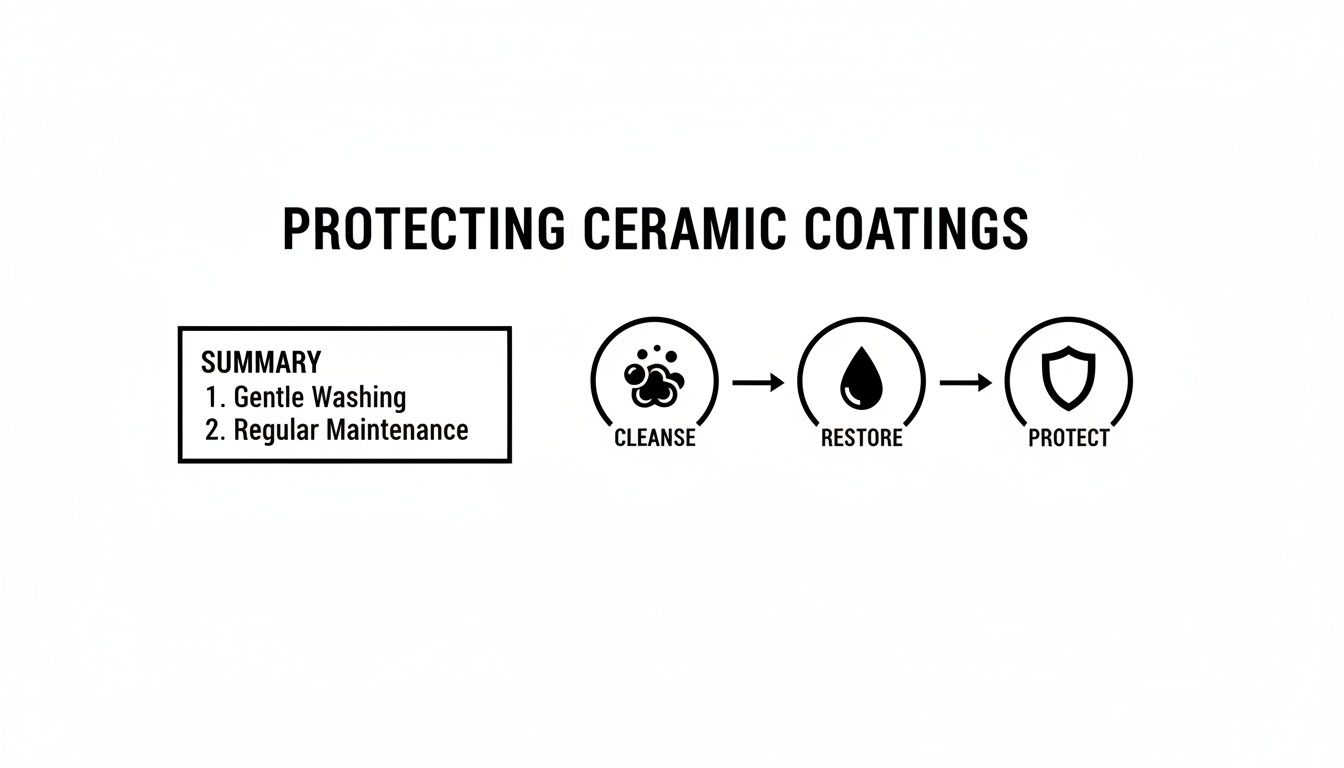
The real takeaway here is that proper maintenance is a system. Each product has to work harmoniously with the next.
So, what should you actually look for? It all comes down to chemistry. A proper ceramic coating maintenance spray for an advanced coating must share a similar chemical foundation.
The goal is synergy. You want a spray that doesn't just sit on top of your coating but becomes a part of it. This ensures the elastic properties—which allow Titan coatings to resist cracking from extreme temperature changes—remain fully functional.
When you use a product like Ultra, you're not just adding a temporary shine. You're feeding the coating with the right ingredients to keep it healthy and performing at its absolute peak. This synergy is what separates a world-class, long-lasting finish from one that just looks good for a week.
To help illustrate the difference, let's look at how Titan's purpose-built spray stacks up against a common alternative on our comparison page.
Maintenance Spray Compatibility Chart
| Feature | Titan Ultra Ceramic Spray | Generic SiO2 Spray |
|---|---|---|
| Primary Chemistry | Elastomer-based, flexible | Silica-based, rigid |
| Bonding | Integrates with coating | Forms a separate top layer |
| Flexibility | High; matches coating | Low; can become brittle |
| Self-Healing | Enhances and supports | Can inhibit or negate |
| Gloss Type | Deep, rich, organic | Sharp, glassy, often temporary |
| Durability | Months; rejuvenates coating | Weeks; purely sacrificial |
This table makes the choice pretty clear. While a generic spray offers a quick fix, it's a short-term solution that can undermine your long-term protection.
You can get a deeper look into how our ceramic coating spray is specifically formulated to achieve this synergy. Making the right product choice from our shop ensures you’re truly amplifying your coating's performance, not just masking it.
The Application Process for a Perfect Finish
Getting that flawless, just-detailed result with a ceramic coating maintenance spray is all about technique. Let's break down the process, turning a routine car care task into a masterclass in gloss. Imagine a cool Saturday morning—the ideal time to give your vehicle the TLC it deserves. But before you even think about grabbing the spray bottle, the real work has to happen first.
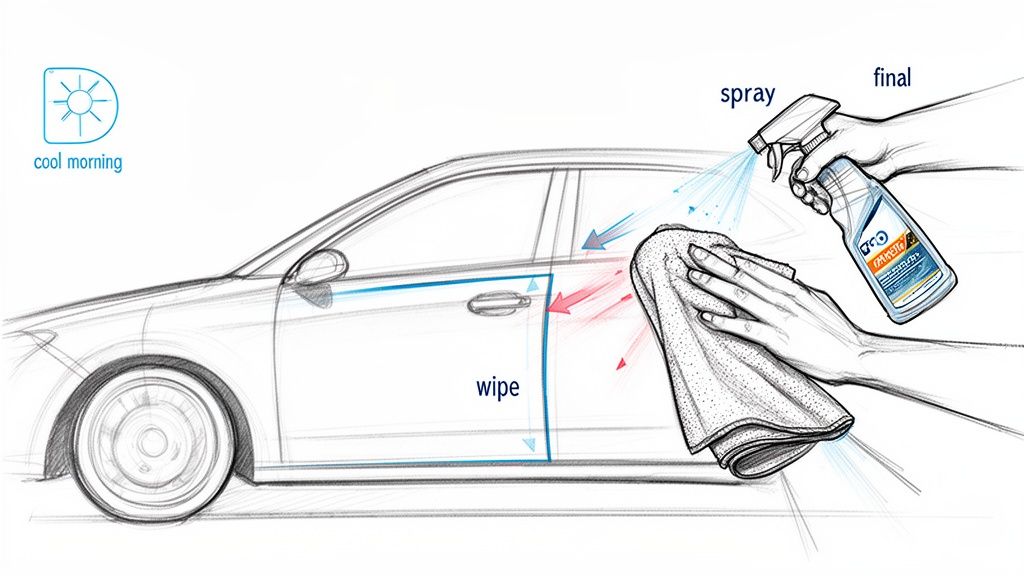
You absolutely have to start with a pristine canvas. A proper two-bucket wash is non-negotiable; you can't be grinding leftover dirt and grit into your finish. After the wash, gently dry the car with a plush, high-quality microfiber towel. Now, and only now, is your vehicle prepped and ready for the main event.
Mastering the Spray and Wipe Method
This is where the magic happens, and a product like Titan's Ultra Ceramic Spray truly shows its value. The golden rule? Work methodically, one panel at a time. And never apply it in direct sunlight or on a hot surface. If the paint is hot to the touch, the spray will flash off way too quickly, leaving you with stubborn, frustrating streaks.
Your most important tools for this job are two separate, clean microfiber towels. Pros call this the two-towel method for a reason—it’s the simplest, most foolproof way to guarantee a uniform, streak-free finish.
- Towel #1: The Applicator. Lightly mist the Ultra spray either onto your first towel or directly onto the panel. Gently wipe the product across the surface, using straight, overlapping lines to get even coverage.
- Towel #2: The Buffing Towel. Without hesitation, grab your second, completely dry towel. Immediately buff the area to a brilliant, deep gloss, making sure to remove every last bit of residue.
This simple one-two punch is the secret sauce. It prevents you from oversaturating the surface and ensures you're leveling the product perfectly. Honestly, it’s this small bit of attention to detail that separates a good result from a truly professional one. And while you're at it, apply the same technique to your plastic trim and wheels. That small extra step creates a comprehensive shield and unifies the look of your entire vehicle.
This methodical approach isn't just about getting a mirror shine; it's about respecting the advanced coating underneath. Titan’s Elastomer coatings, like Alpha Quartz, are engineered with unique flexibility to resist cracking from temperature changes. A proper maintenance application complements this trait, ensuring the entire protective system functions as one cohesive unit.
Perfecting Your Technique
Here's a pro tip: less is more. A few light mists per panel are all you'll ever need. Overloading the surface is the single most common mistake and the number one cause of streaking.
If you do happen to see a high spot or a streak, don't panic. Just take a clean, slightly damp microfiber towel to gently level the area, and then immediately buff it dry with a fresh towel. It's an easy fix.
By following this process, you’re not just wiping down your car. You're actively rejuvenating its protective layer. You're feeding the coating, supercharging its hydrophobic properties, and boosting that unbelievable gloss. To see how these principles tie back to the initial install, our guide on applying ceramic coating to your car provides a much deeper dive into the foundational techniques. This simple but effective routine is your key to maintaining a finish that consistently turns heads.
So, How Often Should You Really Apply It?
One of the first questions I always get from clients is, "How often do I need to use this stuff?" It’s a great question, and the honest answer is: it depends. There’s no magic number here. The right schedule is all about your car's lifestyle and the battles it fights every day.
Let's paint a picture. Think about a daily commuter that sits in an industrial lot all day, gets blasted with road salt in the winter, and never sees a garage. That car is in the trenches. For that vehicle, a quick application once a month is a smart move. It adds a fresh sacrificial layer that keeps the primary coating from getting clogged and overworked.
Now, contrast that with the prized weekend warrior, the one that lives under a cover in the garage. That car might only need a touch-up every few months, just to keep the surface feeling slick and the water behavior sharp.
Let the Coating Tell You What It Needs
Your car will give you signals when it's time for a little boost. You just have to learn how to read them. The two most obvious signs are how water behaves on the surface and how slick the paint feels.
- Look at the Water Beads: Is water still forming those perfect, tight little spheres that just fly off the paint? Or are they starting to look a little lazy and flat, sheeting off slowly?
- Check the Surface Slickness: After a good wash, does the paint still have that signature, buttery-smooth feel when you (gently!) run the back of your clean hand over it?
If you see a drop-off in either of these, it’s the coating’s way of asking for a top-up. This isn’t about waiting for a problem; it’s about staying one step ahead.
When you use a product like Titan's Ultra Ceramic Spray, you're doing more than just adding protection—you're performing a deep clean. It lifts away the bonded grime that a normal wash can leave behind, which is crucial for keeping our advanced Elastomer coatings, like Alpha Quartz, at peak performance.
This kind of proactive maintenance is what keeps these sophisticated coatings doing their job. It preserves that unique flexibility that prevents micro-cracking when the temperature plummets or when bugs hit the car's surface. That elasticity is key.
The unbelievable technology going into these products is a big reason the high-performance ceramic coatings market is projected to rocket from USD 11.44 billion in 2023 to USD 23.42 billion by 2033. People are investing in serious protection, and they expect it to last. You can dive into the full breakdown of this explosive market growth on Spherical Insights.
It all circles back to a simple, consistent maintenance routine. Getting the frequency right directly impacts how long the coating will last, something we dig into in our guide explaining how long ceramic coatings last. By listening to what your vehicle needs and giving it the right care, you’re making sure that initial investment pays off for years.
Common Application Mistakes and How to Fix Them
Even with a fantastic product like Titan's Ultra Ceramic Spray, little hiccups can happen during application. But don't sweat it—this isn't permanent paint. Think of this section as your troubleshooting playbook, designed to help you quickly fix any minor issue and get that perfect, glass-like finish you’re after.
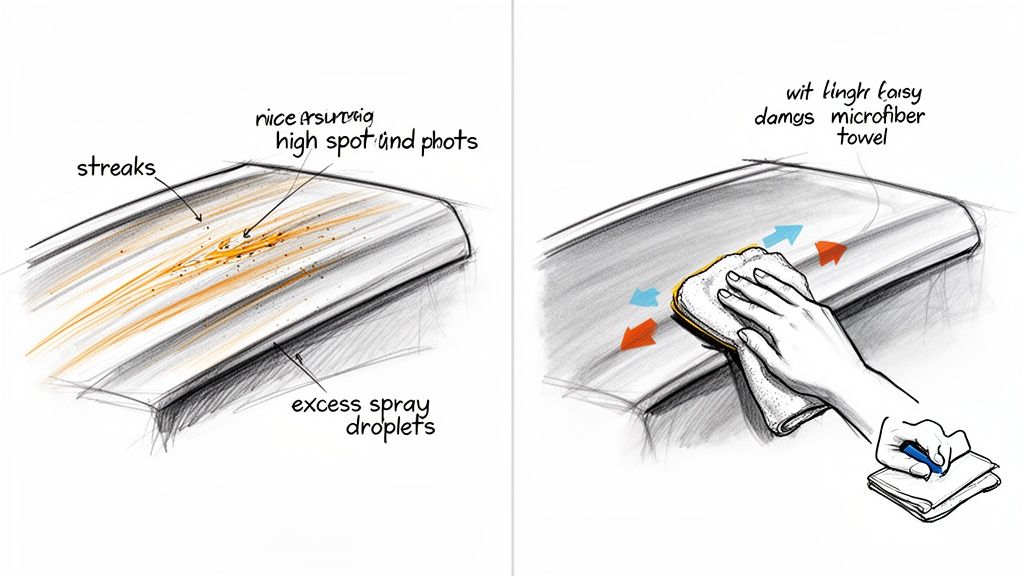
Let's dive into the most common problem we all run into: finding streaks or "high spots" after you thought the job was done. A high spot is just an area where a little bit of excess product didn't get fully leveled out before it started to cure. On the paint, it usually looks like a slightly darker, oily-looking smudge.
What causes this? Almost always, it's one of two things: either you applied a bit too much product, or the panel was too hot, causing the spray to flash (dry) almost instantly. The good news is the fix is incredibly easy. No panic necessary.
Correcting High Spots and Streaks
I remember a client, let's call him Alex, who was using a maintenance spray for the first time on his beautiful black sedan. He was so determined to get perfect coverage that he went a little too heavy-handed. After stepping back to admire his work under the garage lights, his heart sank when he saw a few hazy streaks on the hood.
He thought he'd messed up the whole finish. But the solution was literally right there in his hands. All it took was a fresh, clean microfiber towel, lightly misted with a bit more Ultra Ceramic Spray, and a gentle wipe over the streaked area. This simple step re-liquifies the product, giving you a second chance to level it properly. He immediately followed up with a second, dry microfiber to buff the area to a flawless, uniform shine. Just like that, the streaks were gone.
This little trick is your get-out-of-jail-free card. The secret is to catch it early and use a gentle touch.
Remember, the goal with a maintenance spray is to lay down an incredibly thin, even layer. If you see a streak, it just means there’s a little too much product there. Reactivating it with a damp towel and buffing it dry is all you need to do for a perfect finish.
Avoiding Sneaky Contamination Mistakes
Streaking is easy to fix, but other subtle mistakes can cause bigger headaches. These usually happen before you even pick up the spray bottle.
- Applying Over a Dusty Surface: We've all been tempted to do a quick touch-up on a car that looks "mostly clean." Don't do it. Even a fine layer of dust gets trapped under the spray, and when you start buffing, you're essentially grinding those tiny abrasive particles into your clear coat. Always work on a freshly washed and dried surface.
- Using a Contaminated Towel: Dropping a microfiber towel on the ground is the cardinal sin of detailing. It instantly becomes a magnet for grit and dirt. If you drop a towel, it's done. Put it in the laundry pile and grab a fresh one. Using it is like taking fine-grit sandpaper to your paint.
Understanding why these shortcuts are a bad idea is half the battle. When you control the key variables—a clean car, clean towels, and the right technique—every application will be a success. With these tips in your back pocket, you can confidently fix any minor slip-up and keep your finish looking absolutely pristine.
Expanding Protection to Your Windshield and Glass
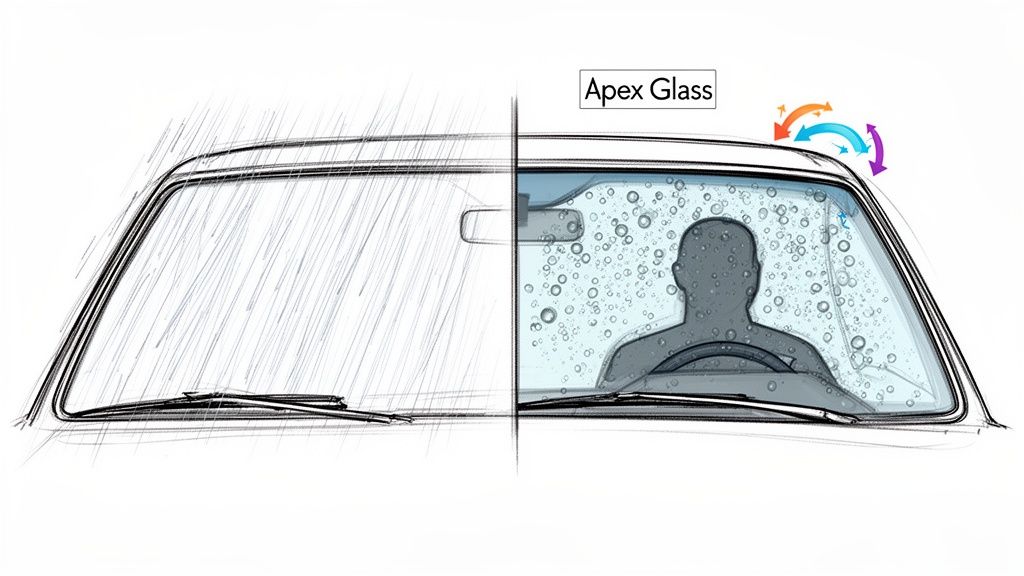
True vehicle protection doesn't stop at the paint. To create a complete shield, you've got to bring that same focus to another critical surface: your glass. This isn't just about looks anymore; it's about safety and clarity on the road.
Imagine driving through a sudden downpour, the kind where visibility instantly drops to near zero. It's a knuckle-whitening experience for anyone. Now, picture that same storm, but with Titan’s Apex Glass Ceramic Coating on your windshield. Instead of a blinding sheet of water, the rain forms into tiny beads and flies right off, keeping your view clear and making the drive completely stress-free.
Achieving Total Vehicle Clarity
This super-slick, hydrophobic barrier is just as straightforward to apply and maintain as our paint protection products. It’s engineered to bond directly with the glass, repelling not only water but also dirt, ice, and road grime. Cleaning becomes a simple wipe-down.
Combining the power of Ultra Ceramic Spray on your paint and Apex on your glass creates a comprehensive protective shield. Your vehicle won't just look stunning—it'll be safer to operate in any weather. It's truly the final piece of the total car care puzzle.
This all-in approach is catching on fast. The global ceramic spray coating market hit USD 9.2 billion in 2024, and the automotive segment alone was valued at USD 1.42 billion. This reflects a massive shift as more owners demand next-level surface protection.
Beyond Coatings: Glass Enhancement
Maintaining crystal-clear glass is a non-negotiable part of any serious detailing routine. If you want to dive deeper into the benefits and application process, our guide on a ceramic coating for your windshield has all the details.
Of course, coatings aren't the only way to upgrade your glass. Many owners also explore the convenience and benefits of mobile window tint services to round out their vehicle's protection. By focusing on both paint and glass, you ensure a complete and effective strategy.
We Get These Questions All The Time
If you're wondering about the finer points of maintenance sprays, you're not alone. Let's tackle some of the most common questions we hear from detailers and enthusiasts to get you on the right track.
Can I Just Use a Maintenance Spray Instead of a Full Ceramic Coating?
I see this question a lot, and the answer is a hard no. Think of it this way: a professional ceramic coating, like our Titan Alpha Quartz, is the foundation of your home. It’s a tough, semi-permanent layer that chemically bonds with the paint to create a durable shield.
A ceramic coating maintenance spray, on the other hand, is like a fresh coat of paint on that foundation. Our Ultra Ceramic Spray is designed to be a sacrificial layer—it protects the coating, boosts the gloss, and keeps that slick, hydrophobic effect topped up. It’s a crucial supporting actor, but it can't replace the leading star.
Will Another Brand's Spray Mess Up My Titan Coating?
"Mess up" might be too strong a word, but you'll definitely be doing your coating a disservice. It's not likely to cause immediate, catastrophic failure, but you'll be putting a lid on what makes a Titan coating special.
Our coatings are built with flexible Elastomer technology, a specific chemistry designed to expand and contract with your vehicle's panels, preventing the micro-cracking that plagues lesser coatings. A generic, overly rigid SiO2 spray from another brand essentially puts a brittle shell over our flexible one. It works against the very engineering you paid for. To get the performance you expect, you really need to stick with products designed to work together as a complete system.
Help! How Do I Fix Streaks or High Spots?
First off, don't panic. High spots are almost always the result of just two things: using a little too much product or letting it sit for too long before buffing it off. The good news is, the fix is incredibly simple.
Grab a clean microfiber towel and get it slightly damp—either with a spritz of water or, even better, a tiny bit more of the maintenance spray itself. Gently wipe the streaky area. This reactivates the product and allows you to spread it evenly. Immediately follow up with a second, completely dry microfiber towel to buff the area to a perfect, streak-free shine. That’s it. The high spot will vanish.
Ready to see what a maintenance spray built specifically for your coating can do? Titan Coatings engineered the Ultra Ceramic Spray to be the perfect partner for our advanced Elastomer coatings. It's the key to unlocking maximum performance, wild gloss, and the longevity your vehicle deserves.
0 Comments