
Getting rid of brake dust isn’t just about scrubbing. The real secret is using a pH-neutral iron remover that actually dissolves the baked-on metal particles. From there, it’s about gentle agitation with the right brushes and a good, solid rinse. The goal is to break that stubborn bond between the hot, sharp metal fragments and your wheel’s finish without scratching everything up in the process.
Winning the War Against Corrosive Brake Dust
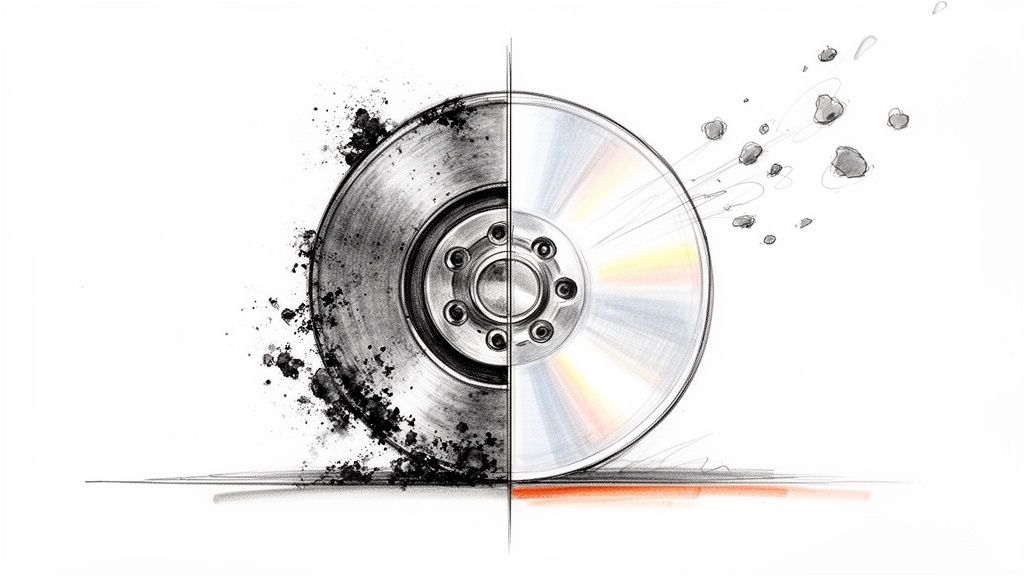
We’ve all been there. You pull up after a great drive, the car is looking sharp, but the whole picture is ruined by wheels caked in that ugly, corrosive black dust. For years, I felt like I was fighting a losing battle. My Saturday afternoons became a frustrating loop of scrubbing with harsh chemicals, only to see those stubborn, pitted spots refuse to budge.
That constant cycle of aggravation forced me to look at the problem differently. I realized the goal shouldn’t be just cleaning the brake dust off, but stopping it from becoming a nightmare in the first place. This guide is all about that change in mindset—moving from a reactive chore to a proactive strategy.
More Than Just an Eyesore
Let’s be clear: this isn’t just about looks. That black powder is a genuine threat to your wheel’s finish and, believe it or not, your health. It’s a nasty cocktail of carbon fibers, tiny metal shavings, and adhesives from the brake pads. When it gets hot, it bakes onto your wheel’s surface and literally eats through the clear coat.
The health risks are just as serious. Recent research has started to reveal just how hazardous these airborne particles are. A Yale study found that brake dust can inflict more damage on lung cells than modern diesel exhaust. The study highlights metals like copper—a key ingredient in many brake pads—as a major culprit in aggravating respiratory issues like asthma.
This really drives home a critical point: managing brake dust is as much about protecting your long-term health and your car’s value as it is about keeping things looking clean. The best defense is a great offense.
A New Approach to Wheel Care
I’ll never forget a client’s car that was a detailer’s nightmare. The brake dust was practically welded to the intricate alloy wheels. After a long, painstaking restoration using a quality iron fallout remover, we applied a protective ceramic coating. The next time I saw the car, the owner couldn’t believe it. A simple rinse was all it took to make the wheels look freshly detailed.
That experience cemented my belief in proactive protection. It’s also smart to understand basic brake maintenance. For example, knowing what brake service includes can help you keep your entire braking system in top shape, which can even affect how much dust you get. It’s all part of a smarter, more effective way to keep your wheels looking brand new. An iron remover is a must-have for the deep-cleaning part of the process, and you can find a professional-grade one here: https://titancoatings.us/iron-fallout-remover/
Brake Dust Removal At a Glance
To give you a quick overview, here’s a breakdown of the different approaches we’ll cover, from quick washes to long-term preventative measures.
| Method | Best For | Effort Level | Long-Term Solution? |
|---|---|---|---|
| Quick Wash | Regular maintenance, light dust | Low | No |
| Deep Clean with Iron Remover | Heavy, baked-on deposits | Medium | No, but restorative |
| Protective Wheel Coatings | Preventing future buildup | Medium (initial application) | Yes (1-2 years) |
| Low-Dust Brake Pads | Reducing dust at the source | High (requires installation) | Yes (for life of pads) |
This table helps put things in perspective. While regular cleaning is essential, the real game-changer is combining it with a long-term solution like a coating or better brake pads.
Gearing Up: Your Essential Wheel Cleaning Arsenal
Jumping into a wheel cleaning job without the right gear is a recipe for frustration and, worse, potential damage. Trying to scrub away brake dust with the wrong tools is a surefire way to scratch and mar your wheel’s finish. Before you even get started, let’s assemble a toolkit that will get the job done safely and effectively.
This isn’t about buying every fancy gadget you see. It’s about building a smart, specialized arsenal where every tool has a specific job—to obliterate grime without harming your wheels.
The Non-Negotiables
First things first, let’s cover the absolute must-haves. These are the foundational pieces for any serious wheel cleaning session.
Two Dedicated Buckets: This is non-negotiable. One bucket is for your soapy water, the other is a plain water rinse for your tools. This simple trick prevents you from dragging the gritty, metallic brake dust you just cleaned off right back onto the wheel, or even worse, onto your car’s paint later.
A Quality pH-Neutral Wheel Cleaner: I can’t stress this enough. Aggressive, acidic cleaners are the enemy of nice wheels. They might cut through grime quickly, but they can also permanently etch, stain, or dull your wheel’s finish. A good pH-neutral cleaner is strong enough to break down tough contaminants but gentle enough for sensitive surfaces like polished aluminum, chrome, or clear-coated alloys.
The Right Brushes for the Job: You need a small team of specialized brushes, because one size definitely does not fit all when it comes to wheel architecture.
- Wheel Barrel Brush: A long, flexible brush designed to reach deep into the barrel of the wheel where most of the brake dust collects.
- Soft Face Brush: Look for something with soft, feathered bristles (like Boar’s hair) for gently cleaning the face of the wheel without introducing scratches.
- Lug Nut Brush: This small, detail-oriented brush is perfect for getting into the tight corners around lug nuts and valve stems where dirt loves to hide.
The Supporting Cast for a Showroom Shine
With the basics in hand, a few more items will take your results from “clean” to “spotless,” ensuring every nook and cranny is addressed.
Getting the right tools makes the entire process of removing brake dust faster, safer, and honestly, a lot more satisfying. While you’re building your kit, it’s also a great time to check out our guide on the best soaps for cars to make sure the rest of your vehicle gets the same top-tier treatment.
A huge mistake I see all the time is people using their main car wash mitt on the wheels. Brake dust is full of tiny, sharp metal particles. Using that mitt on your paint afterward is like sanding it down, creating a web of swirl marks that are a real pain to fix.
Finally, let’s talk about protecting yourself. The chemicals and brake dust can be surprisingly harsh.
- Nitrile Gloves: Protect your hands from drying out from the cleaners and from the nasty grime itself.
- Eye Protection: A simple pair of safety glasses is a smart move. You don’t want wheel cleaner splashing back into your eyes.
Having this toolkit ready to go is the first and most critical step. With these items on hand, you’ll be ready to tackle even the most baked-on brake dust with complete confidence.
The Deep Clean Method for Baked-On Brake Dust
Sometimes, a quick wash just isn’t going to cut it. We’ve all been there—you’re dealing with that stubborn, baked-on brake dust that seems to have fused itself to your wheel’s finish. This is where you need to bring out the heavy artillery. Forget the standard soap and water; we need a more meticulous, almost scientific approach to dissolve the metallic particles that regular cleaners simply can’t touch.
The process I’m about to share is what truly separates a quick rinse from a professional restoration. It’s a method I’ve perfected over years of dealing with high-performance cars whose owners thought their wheels were permanently stained. Trust me, with the right chemistry and technique, even the most neglected wheels can be brought back to a showroom shine.
This visual guide breaks down the essential flow for a professional-grade wheel cleaning job.
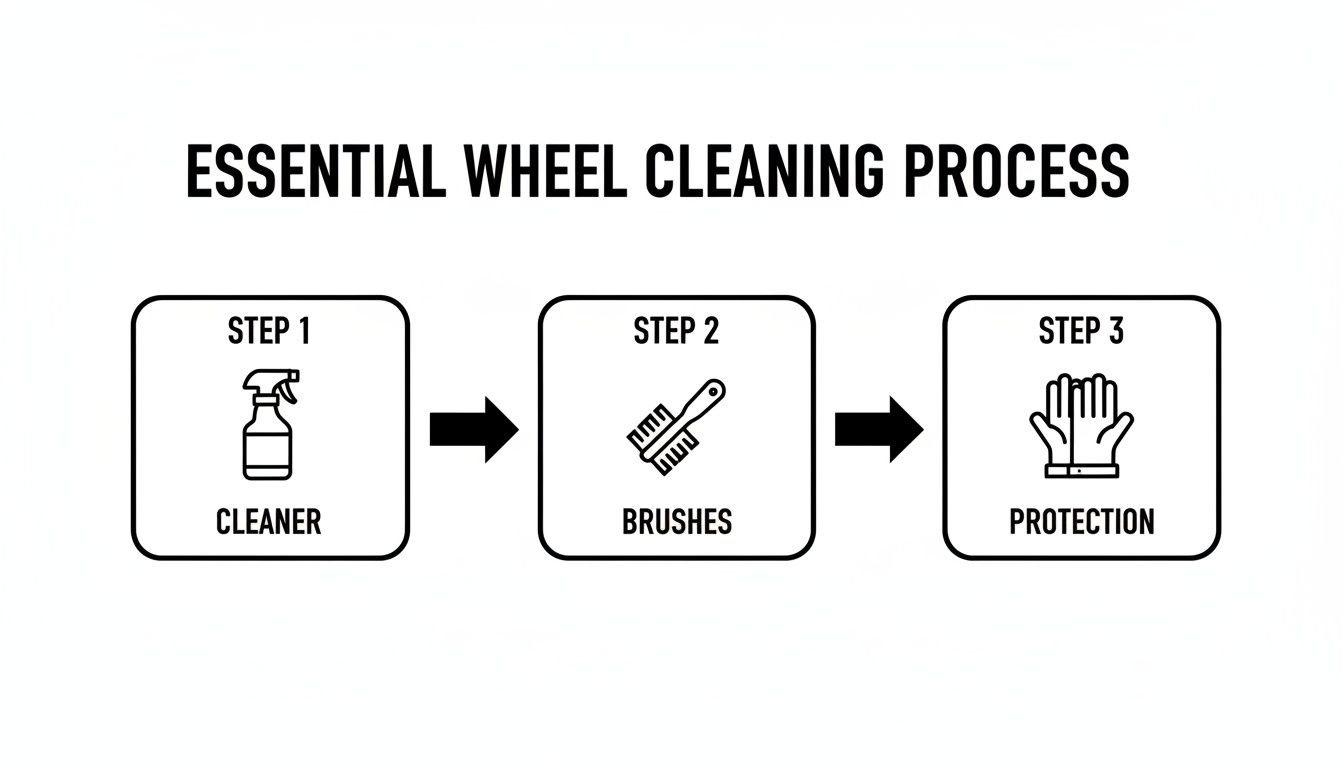
This simple flow—cleaner, brushes, protection—drives home the point that a safe and effective deep clean comes from a systematic approach, not just more elbow grease.
The Science of Iron Removers
The absolute hero in this battle is a dedicated iron remover. Unlike your all-purpose cleaners or standard car soaps, these are highly specialized formulas engineered for a specific chemical reaction. Their sole mission is to target and obliterate the ferrous (iron) particles that make up the vast majority of brake dust.
When you spray an iron remover onto a cool, dry wheel, you get to watch the magic happen. The liquid, often clear or lightly colored, starts turning a deep, dramatic purple or red as it makes contact with the iron. This color-changing spectacle, often called “bleeding,” is your visual proof that the chemical is working hard, actively dissolving those metallic bonds and lifting the grime right off the wheel’s surface.
This chemical reaction is the entire game. You aren’t just scrubbing the surface; you’re fundamentally breaking down the contaminant at a molecular level. This allows it to be safely rinsed away without resorting to aggressive, damaging friction.
The market for these products is huge, valued at over USD 2.5 billion. But a lot of old-school brake cleaners rely on harsh chemicals that can easily etch or damage delicate alloy finishes if you don’t rinse them perfectly. This is why modern, pH-balanced formulas are so crucial—they’re both ruthlessly effective and completely safe for all wheel types.
Mastering Agitation Techniques
Once you’ve let the iron remover dwell for a minute or two—and watched the color change intensify—it’s time for some gentle agitation. The goal here is to work the product into every last nook and cranny without scratching the finish. This is where your specialized brushes are essential.
- The Inner Barrel: I always start with the hardest-to-reach area. Grab a long, flexible barrel brush and get deep inside the wheel. This is where most of the brake dust collects, and cleaning it out makes a massive visual impact.
- The Wheel Face: Next, switch to a soft-bristled face brush. Gently work the cleaner around the spokes and face of the wheel in a methodical pattern. Don’t rush this part; make sure you cover every inch.
- The Nooks and Crannies: Finally, use a small detailing or lug nut brush to get into the tight spots—around the lug nuts, the valve stem, and any intricate design elements where grime loves to hide.
Using multiple brushes ensures a truly comprehensive clean. If the surface still feels gritty after agitation, you might need to go one step further. Our guide on how to properly clay bar your car is a great resource for that next level of decontamination.
Rinsing and Drying for a Spotless Finish
After agitating every surface, rinse everything thoroughly. Use a strong stream of water from your pressure washer or hose to flush out the barrels, lug nut holes, and the areas behind the spokes. You want to remove every last trace of the cleaner and the dissolved gunk.
Don’t drop the ball on the final step: drying. Letting water air-dry will leave you with ugly water spots, completely undoing all your hard work. Grab a dedicated, clean microfiber towel or, even better, a forced-air blower to get the wheels completely dry. This prevents mineral deposits from etching into your freshly cleaned surface.
Now, with the wheel perfectly clean and dry, you’ve created the ideal canvas. The surface is stripped of all contaminants and is ready for the most important part of this whole process: applying protection. A deep clean is restorative, but without a protective layer, you’ll be right back here in a few weeks. The next step is what will keep your wheels looking this good with minimal effort.
The Ultimate Prevention with Titan Coatings
Cleaning your wheels is a reaction. Protection is a strategy. After you’ve put in all that work to get your wheels spotless, the last thing you want is for them to be caked in that familiar black powder just a few days later. This is where you can completely change the game.
I’ll never forget detailing a client’s performance sedan with intricate multi-spoke wheels where the brake dust was practically welded on. It was a nightmare. After we finally restored them, we applied our Alpha Quartz Elastomer Coating. The next time I saw the car, the owner was blown away. A simple, low-pressure rinse was all it took to make the wheels look brand new again.
That’s the real-world difference our technology at Titan Coatings makes. We help you move from constant, back-breaking scrubbing to effortless maintenance.
The Power of Elastic Coatings
What makes our protective solutions so different is a unique approach to durability. Most traditional hard coatings are brittle, almost like a thin sheet of glass. They might offer good initial hardness, but they’re prone to cracking and chipping from road impacts and the constant temperature swings your wheels endure.
That’s why we pioneered elastomer coatings. As the first company to introduce this technology to the market, we used advanced nano-tube technology and our proprietary Dark Matter tech to create a protective layer that’s as hard as glass but remains incredibly flexible.
This elasticity is the secret sauce. The coating flexes with the wheel’s surface instead of fighting against it, so it won’t crack under the stress of a hot track day or a frozen winter morning. It also absorbs the impact from small road debris, preventing the chips that compromise standard coatings.
This flexible strength ensures the barrier against brake dust stays intact for years, not just a few months.
Making High-Level Protection Accessible For Everyone
Professional-grade protection shouldn’t be reserved for high-end detailing shops. We’ve always believed that every car enthusiast, from seasoned mobile detailers to weekend warriors, deserves access to top-tier tech that’s both effective and easy to use.
This is exactly why we developed products like our Alpha Quartz. It’s designed for a straightforward installation, making it great for DIYers and professionals. It provides that durable, elastic protection that won’t crack under temperature changes or from bug impacts.
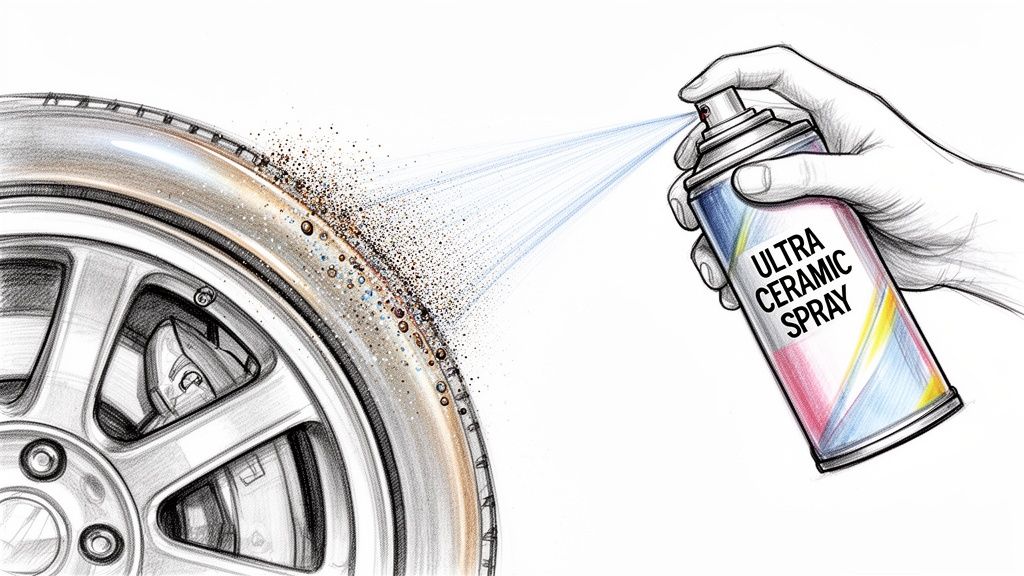
For those looking for an even quicker solution, we created Ultra Ceramic Spray. This product packs our advanced ceramic chemistry into a super user-friendly spray-and-wipe formula. It’s the perfect way to add a slick, hydrophobic layer of protection in minutes, making future cleanups ridiculously easy.
- Alpha Quartz: Our flagship elastomer coating—perfect for a long-term, durable solution for both professionals and dedicated DIYers.
- Ultra Ceramic Spray: A fast and easy way to get powerful ceramic protection, ideal for quick top-ups or as a standalone sealant.
To see just how transformative these solutions can be, check out our in-depth guide on ceramic coating for rims.
Expanding Protection Beyond Your Wheels
The same thinking—creating slick, durable, easy-to-clean surfaces—applies to more than just your wheels. Brake dust is a focused problem, but your entire vehicle is constantly under attack from environmental contaminants. So, we took our expertise and applied it to other critical areas, like your glass.
Our APEX Glass Ceramic Coating, for example, is designed to create an intensely hydrophobic surface on your windshield and windows. Once applied, it drastically improves visibility in the rain. Water beads up and flies right off the glass at speed, which makes driving in bad weather significantly safer and less stressful.
Here at Titan Coatings, we offer a range of solutions to keep your vehicle looking its best and make your life easier.
Titan Coatings Protective Solutions
| Product | Key Feature | Application Level | Primary Benefit |
|---|---|---|---|
| Alpha Quartz | Flexible elastomer technology | DIY/Professional | Long-term, durable wheel & paint protection |
| Ultra Ceramic Spray | Easy spray-and-wipe formula | DIY/Enthusiast | Fast hydrophobic protection & maintenance |
| APEX Glass Coating | Intense water repellency | DIY/Professional | Dramatically improved wet-weather visibility |
Each product is engineered with a specific goal in mind, but they all share the same core philosophy: proactive protection is always better than reactive cleaning.
Keeping That Showroom Shine on Your Coated Wheels
You’ve already won half the battle by getting a durable Titan coating on your wheels. The hard part is done. Now, keeping them looking incredible for years just comes down to simple, consistent care. Forget the days of harsh chemicals and scrubbing until your knuckles are raw. We’re talking about a smarter, gentler routine.
This new mindset is all about working with your coating, not against it. That means using high-quality, pH-neutral soaps that lift away grime without stripping your protection. It also means retiring those old, gritty rags and switching exclusively to fresh, plush microfiber towels to avoid putting swirls and scratches back into the finish you worked so hard to perfect.
Your New, Effortless Maintenance Plan
The best part about coated wheels? They make your life so much easier. You don’t need to block off an entire afternoon just for wheel cleaning anymore. A simple, repeatable schedule is all it takes to stop brake dust before it even thinks about sticking around.
- Once a Week: Just give the wheels a quick, gentle rinse. A hose or a light pass with a pressure washer is perfect for knocking off any loose dust that’s settled since your last drive.
- Every Two Weeks: Treat them to a proper wash. A good pH-neutral soap and a soft wash mitt will take care of any stubborn road film and make that coating pop.
This is how you win the war on brake dust for good. You’re creating a new reality where your wheels look fantastic with barely any effort—and isn’t that what we all want? With passenger cars making up the vast majority of vehicles on the road, more and more owners are looking for ways to cut down on cleanup time, which is exactly why protective coatings are becoming so popular. You can dig into this trend and the growing market for brake dust reduction on Factmr.com.
Here’s the bottom line: you did the heavy lifting by getting the wheels coated. Now, maintenance is all about easy upkeep. A gentle clean on a regular basis is infinitely better than an aggressive scrubdown once in a blue moon.
For those times you want to really amplify that gloss and make water bead like unbelievable, a good maintenance spray is the perfect finishing touch. If you want to learn the right way to keep that finish slick and protected, check out our guide on using a ceramic coating maintenance spray. It’s a simple step that really boosts your coating’s performance and longevity, ensuring your wheels always look their absolute best.
Your Top Brake Dust Questions, Answered
Got questions about dealing with brake dust? You’re not alone. Here are some of the most common ones we hear from fellow car enthusiasts, along with our expert take.
Can I Just Grab Some Dish Soap or Household Cleaner?
Please don’t. I can’t tell you how many times I’ve seen beautiful wheels ruined by someone trying to save a few bucks with an all-purpose cleaner. These products are way too aggressive for automotive finishes. They can easily strip the protective clear coat right off your wheels, leading to discoloration, fading, and permanent damage.
Stick with a dedicated, pH-neutral wheel cleaner. It’s formulated to dissolve metallic dust without attacking the finish. It’s the only way to be sure you’re cleaning safely.
How Often Do I Really Need to Clean My Wheels?
That depends. If you’re running with standard, uncoated wheels, you’ll want to give them a solid cleaning every one to two weeks. This is especially true if you do a lot of city driving with constant stop-and-go traffic, which generates a ton of dust.
Now, if you’ve protected your wheels with a flexible coating like our Alpha Quartz, the game completely changes. The dust just can’t stick. Most of the time, a quick rinse during your regular car wash is all you need to knock off any light buildup.
Will a Ceramic Coating Make My Wheels 100% Brake Dust-Proof?
Not quite, but it’s the next best thing. A good coating creates a super slick, tough barrier on the wheel’s surface. Think of it like a non-stick pan. While your brakes will still generate dust (that’s unavoidable), the coating prevents that corrosive dust from grabbing hold, baking on, and pitting the finish.
The result? Instead of spending ages scrubbing with harsh chemicals, a simple low-pressure rinse is usually enough to make them look factory-fresh again. It turns a miserable chore into a quick, satisfying task.
At Titan Coatings, our goal is to engineer smart solutions that simplify car care. Our Alpha Quartz elastomer coating leverages advanced nano-tube and Dark Matter tech to form a uniquely hard-yet-flexible barrier. It stands up to the intense heat cycles from braking without cracking, giving you protection that actually lasts.
Ready to win the war against brake dust for good? See what the long-lasting, flexible protection of Alpha Quartz can do for your wheels.
0 Comments