
So, how long does a ceramic coating actually last on a car? It’s the number one question we get, and the honest answer isn’t a simple number. While some brands make wild promises, you can realistically expect anywhere from one to over five years of solid protection.
The real-world durability of a coating isn’t just about what’s in the bottle; it’s a direct result of the product’s chemistry, how well it was applied, and how you care for it afterward.
Understanding the Real Lifespan of Ceramic Coatings
Let’s cut through the marketing noise. You’re investing in your vehicle’s appearance and protection, and you deserve a straight answer on how long that investment will pay off.
Think of it like the tires on a high-performance car. The manufacturer gives you a mileage estimate, but your actual results depend on the quality of the tire, the roads you drive on, and your driving style. Ceramic coatings work the same way—the final lifespan is a team effort between the product, the installer, and you, the owner.
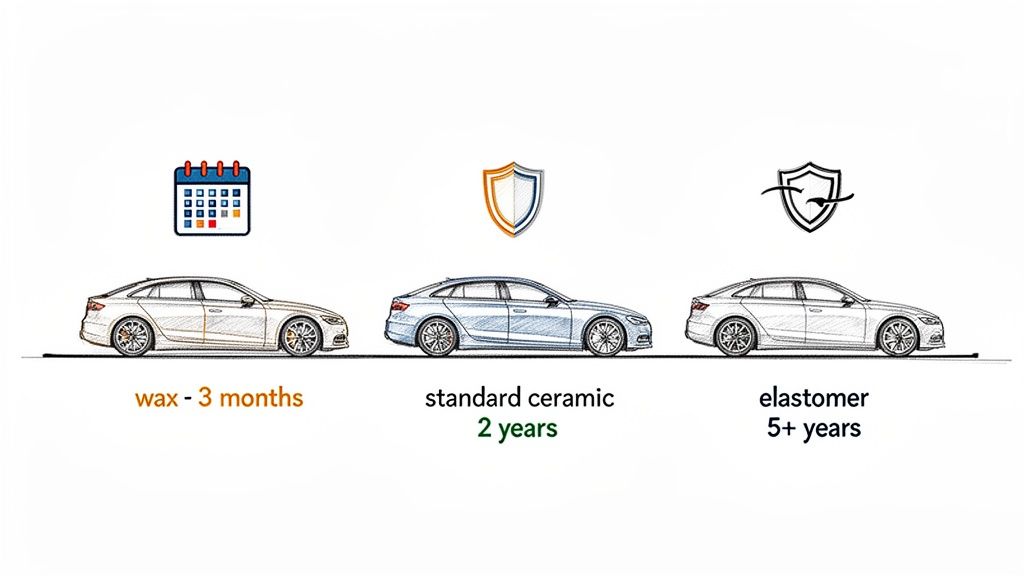
Imagine Alex, a car guy who was absolutely fed up with the endless cycle of waxing his pride and joy every few months. The gloss was great for a week or two, but it just didn’t last. That constant reapplication just wasn’t worth the effort. His search for something better—something permanent—led him straight into the world of ceramic coatings.
From Temporary Shine to Lasting Protection
Alex started with one simple goal: protect his car’s paint for years, not just a couple of months. He quickly learned that professional-grade ceramic coatings typically last between 2 to 5 years, which is a massive leap from the fleeting protection of traditional waxes. For a daily driver, that’s easily 30,000 to 50,000 miles of relentless gloss and water-beading action.
But he also discovered that not all coatings are built the same. The science behind the formula is what truly separates the good from the great. It’s not just about creating a hard shell; it’s about creating a resilient one.
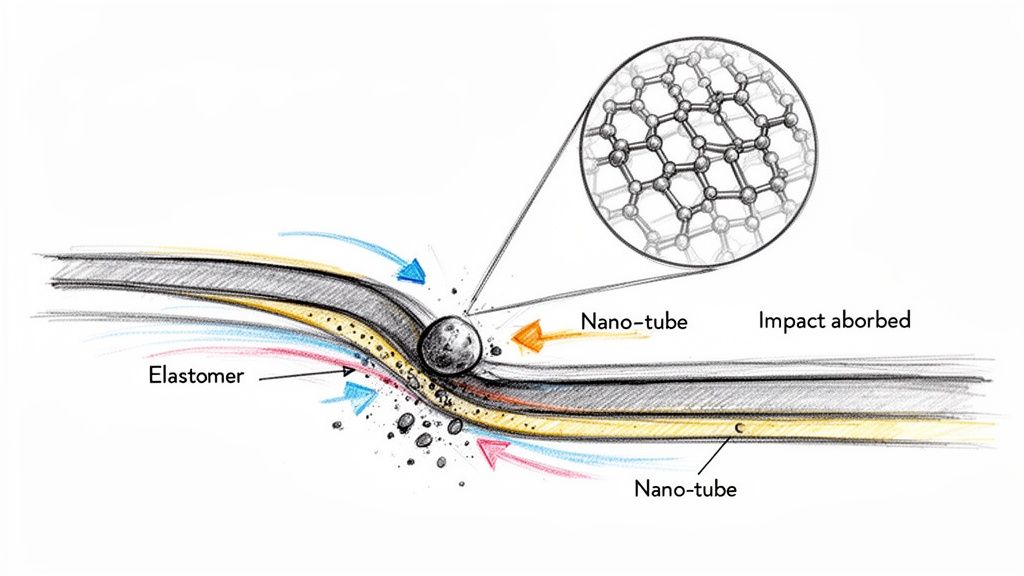
This is where the next generation of protection, Elastomer coatings, comes in. Traditional ceramic coatings are hard, but they can be brittle. Elastomers are engineered to be both hard and flexible, which allows them to absorb minor impacts and flex with the paint during temperature swings without cracking.
The Spectrum of Durability
Here’s a quick look at the different types of coatings you’ll find and what you can genuinely expect from them. This is the same hierarchy Alex discovered on his journey to find the perfect protection.
For a clearer picture, here’s a quick comparison of what you can expect from each level of coating technology in the real world, where your car faces everything from road grime to harsh sunlight.
Ceramic Coating Lifespan at a Glance
| Coating Type | Typical Lifespan (Years) | Typical Lifespan (Miles) |
|---|---|---|
| DIY Ceramic Spray | 0.5 – 1 Year | 5,000 – 10,000 |
| Consumer-Grade SiO2 | 2 – 3 Years | 20,000 – 30,000 |
| Professional-Grade | 3 – 5 Years | 30,000 – 50,000 |
| Advanced Elastomer | 5+ Years | 50,000+ |
This table makes it clear: you get what you pay for. While a spray is a great entry point, investing in a professional-grade or elastomer coating delivers a truly long-term solution.
Let’s break down that hierarchy:
- DIY Ceramic Sprays: Fantastic entry-level products, like Titan’s Ultra Ceramic Spray. They’re perfect for beginners or as a “topper” to refresh an existing coating, giving you 6-12 months of protection with an unbelievably easy installation.
- Consumer-Grade SiO2 Coatings: These are the DIY kits you see online. They offer a respectable 2-3 years of defense when applied correctly.
- Professional-Grade Coatings: Applied only by certified detailers, these thicker, more robust formulas can easily last 3-5 years.
- Advanced Elastomer Coatings: This is the top of the mountain. Products like Titan’s Alpha Quartz use advanced nano-tube technology to create a flexible, self-healing layer that often exceeds 5+ years of durability.
This progression showed Alex that choosing the right technology was the key to finally breaking the cycle of waxing and polishing. Of course, none of this matters if the coating doesn’t bond properly, which is why understanding how these coatings cure is such a crucial piece of the puzzle. A perfect cure is what locks in that long-term performance from day one.
Why Elasticity Is the Future of Durability
Not all ceramic coatings are created equal, and this is where the conversation about longevity gets really interesting. For years, the industry’s holy grail was simple: hardness. Traditional coatings are designed to be a rigid, glass-like shell over your car’s paint. But think about it—what happens when something hard gets hit? It chips, it cracks, or it shatters.
This is precisely where Titan Coatings rewrites the rulebook. We were the first company to introduce Elastomer coatings to the market, leveraging our proprietary nano tubes and Dark Matter tech. This isn’t just detailing chemistry; it’s a new class of protection that’s both incredibly hard and remarkably flexible.
Think of it like a modern skyscraper. It’s not designed to be perfectly rigid. Instead, it’s engineered to sway and flex with the wind and seismic activity. A tower that couldn’t bend would crack under pressure. Your car’s coating faces the same forces, just on a microscopic scale.
The Problem with Brittleness
Traditional ceramic coatings, for all their strength, have a fundamental weakness: they’re brittle. When a rock chip strikes the surface or the vehicle’s panels expand and contract with temperature changes, this rigidity becomes a liability.
- Impacts from road debris: A small stone can create a micro-fracture in a brittle coating, compromising the protection in that area.
- Temperature extremes: The shift from a freezing winter night to a hot, sunny day causes your car’s metal panels to expand and contract. A rigid coating can’t move with the panel, leading to stress cracks over time.
- Vibrations and Flex: Everyday driving causes vibrations that a stiff coating struggles to endure, slowly degrading its bond to the paint.
This inherent brittleness is a massive reason why so many coatings fail before their time. They just can’t keep up with the dynamic, demanding environment of a daily-driven vehicle.
A Story of Innovation: Alpha Quartz
Let’s talk about Mark, a mobile detailer who built his reputation on quality. He kept running into the same problem with the high-end ceramic coatings he was using. A year or two after application, clients would come back with tiny, spiderweb-like cracks in the coating, especially on darker cars that absorbed more heat. He was frustrated, and his clients were disappointed. He needed a real solution that could handle the intense temperature swings and rough roads his customers faced.
Mark discovered Titan’s Alpha Quartz, our flagship elastomer coating. He was skeptical at first, but the science behind it was compelling. Powered by our proprietary Dark Matter tech and a unique nano-tube structure, Alpha Quartz was engineered to behave differently. It doesn’t just form a hard shell; it creates a flexible, rubberized matrix at the nano level.
Our Elastic coatings are hard like glass but flexible. This allows the coating to absorb and dissipate the energy from impacts, much like the sole of a running shoe cushions your foot. Instead of cracking when a bug hits the surface or when temperatures change from frozen to hot, the coating flexes and returns to its original state.
Mark decided to put it to the ultimate test: his own truck. After a year of harsh weather, long highway drives, and countless bug impacts, the results were unbelievable. There were no micro-fractures, no stress cracks—just the same deep gloss it had on day one. He found that Alpha Quartz’s unique elasticity not only extended how long the ceramic coating would last but was also incredibly easy to install, which was a total game-changer for his mobile business. You can learn more about how Titan’s elastomer technology is setting a new standard for durability.
The Titan Difference, Made Simple
So, how does this flexibility actually translate into a longer lifespan for your car? It’s pretty straightforward:
- Impact Resistance: It absorbs the shock from small pebbles and road debris, preventing chips and cracks.
- Thermal Resilience: It flexes with your car’s paint during temperature changes, from freezing cold to blistering heat, eliminating the risk of stress fractures.
- Vibration Damping: It moves with the vehicle, maintaining a stronger, more durable bond over tens of thousands of miles.
This is why elasticity is the future. It’s not just about being hard; it’s about being tough and resilient. It’s the difference between a coating that merely survives and one that truly thrives, providing superior protection that endures for years to come.
What Really Makes or Breaks a Ceramic Coating’s Lifespan?
So, you see a coating advertised to last five years, but your buddy’s only lasted two. What gives? A ceramic coating’s lifespan isn’t some fixed number printed on a bottle; it’s a direct result of a few critical factors. Getting these right is the difference between a short-lived shine and years of rock-solid protection.
Think of it like building a house. You wouldn’t dream of putting up walls on a shaky, uneven foundation, right? The same logic applies here. The bond between a nano-coating and your car’s paint is only as good as the surface it’s applied to.
The Foundation: It All Starts with Surface Prep
Let’s be blunt: surface preparation is, without a doubt, the single most important factor in a coating’s longevity. This isn’t a step you can rush or cut corners on. It’s the critical work that creates a perfectly clean, smooth canvas for the coating to grab onto and form a true chemical bond.
A proper prep job is a multi-stage affair:
- Decontamination: After a deep wash, you need to go further. Chemical sprays dissolve baked-on iron particles, and a clay bar treatment physically lifts out stubborn gunk like tar and sap.
- Paint Correction: This is where the magic happens. A skilled polisher removes swirls, light scratches, and oxidation, revealing a flawless, mirror-like surface.
- Final Wipe-Down: Just before the coating goes on, an isopropyl alcohol (IPA) solution is used to wipe down every panel. This removes any lingering polishing oils or residues that could block the coating from bonding directly to the clear coat.
Skip this, and you’re setting the coating up for failure. It will just sit on top of the grime and imperfections instead of locking into the paint.
Application Quality: The Pro vs. The DIY
Imagine two identical cars, both getting a bottle of Titan’s Alpha Quartz. The first owner, Dave, is a weekend warrior who applies the coating in his driveway. The second owner, Maria, takes her car to a certified professional detailer.
Dave does a pretty good job, but the shifting sunlight makes it tough to see “high spots”—areas where the coating wasn’t leveled perfectly. Maria’s installer, on the other hand, works under specialized lights in a controlled bay, ensuring every inch is perfectly uniform. A year later, Dave’s high spots are failing and look blotchy, while Maria’s car is still a glistening sheet of glass.
This story highlights just how crucial the application itself is. Even the most advanced coating in the world will fail if it’s applied poorly. The right technique, a clean environment, and letting the coating cure properly are what unlock its full protective potential.
The Constant Battle: Environmental Assaults
Once cured, that coating becomes your car’s personal bodyguard, taking hits 24/7. Where you live and drive plays a huge role in how long it can hold up.
A car basking in the Arizona sun is under constant attack from UV radiation, which works to degrade the coating. Meanwhile, a car up in snowy New England is getting blasted with corrosive road salt for months on end. Bird droppings, acid rain, and tree sap are the universal enemies that put a coating’s chemical resistance to the test day in and day out.
While a top-tier coating is built to handle this abuse, a car that’s garage-kept and driven in mild weather will always outlast one that lives outside in a harsh climate. This is where advanced formulas like Titan’s elastomer coatings really prove their worth; their flexible structure helps them absorb these impacts without cracking under the strain. You can learn more in our guide on how to protect car paint from these threats.
Your Habits: The Final Piece of the Puzzle
Finally, your maintenance routine is the last piece of the longevity puzzle. You can invest in the best coating applied by the best pro, but if you run your car through a cheap tunnel wash with its abrasive brushes every week, you’re literally sanding the protection away.
Good maintenance is simple. Stick to pH-neutral soaps, use a two-bucket wash method to avoid scratching, and dry with soft microfiber towels. On the flip side, harsh chemicals and neglecting to wash off corrosive contaminants will slash a coating’s life expectancy.
When cared for, a quality ceramic coating can help a vehicle retain up to 80% of its original paint quality after 5 years. But achieving that is a partnership between the coating’s technology and your own commitment to proper care. Ultimately, the durability of any coating is a team effort.
Don’t Just Protect Your Paint
When you think about protecting your car, your mind probably jumps straight to the paint. That makes sense—it’s the biggest, most visible part. But true, comprehensive protection means looking at the entire vehicle.
Let’s play this out. Picture yourself driving down the highway when a sudden downpour hits. It’s one of those blinding sheets of rain where your wipers can’t keep up, smearing water across the glass and making you grip the steering wheel until your knuckles are white. It’s stressful, and frankly, it’s dangerous.
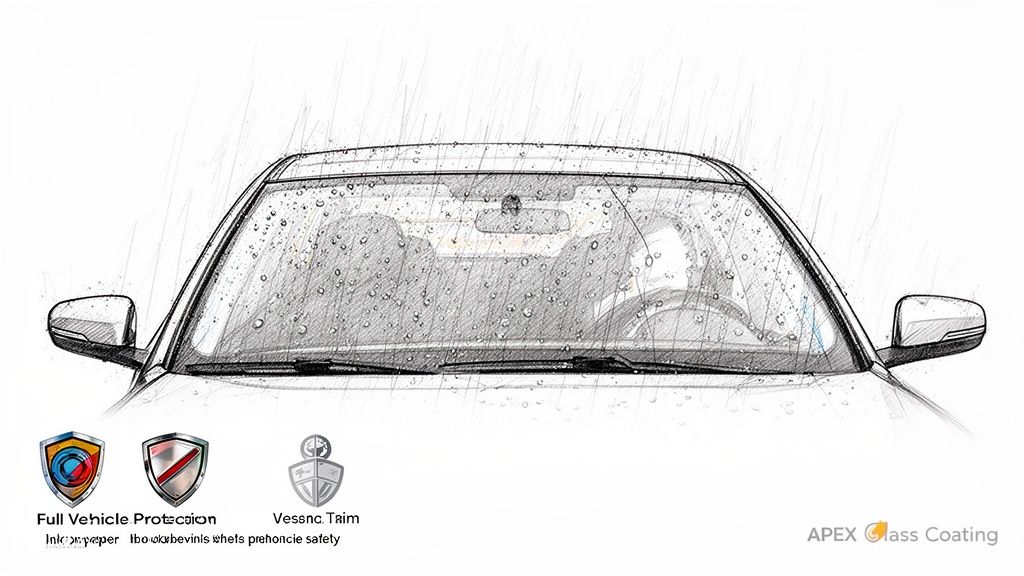
Now, imagine that same drive, but this time your windshield is treated with Titan’s APEX Glass Ceramic Coating. The rain hits the glass and instantly beads up, whisking away as you drive. Your view stays crystal clear. The tension is gone. That’s the difference a protected surface makes, and it’s a game-changer.
A Clearer, Safer Drive Is A Must
We get so caught up in how long a coating lasts on paint that we forget about the most critical surface for safety: the glass. A quality hydrophobic glass coating isn’t just a neat trick for car shows; it’s a serious safety upgrade.
By forcing water to bead and roll away, it dramatically improves your visibility, making driving under rain completely stress-free. Better visibility means faster reaction times and a much less stressful drive. Plus, it’s incredibly easy to use. A quick application of APEX Glass Coating provides this level of clarity for months, making it one of the highest-value upgrades you can do. You can see for yourself why a ceramic coating for your windshield is a no-brainer for any driver.
Think Beyond the Glass: The Total Protection Mindset
A truly protected vehicle is shielded from top to bottom. Think about your wheels—they take a beating from corrosive brake dust, road grime, and winter salt. A dedicated wheel coating creates an ultra-slick barrier that stops all that filth from baking on, making cleanup almost effortless.
The same goes for your black plastic trim. A good coating prevents it from fading to a chalky grey after a few seasons of sun exposure. This holistic approach isn’t just about looks. It’s about preserving your entire investment.
A car that is uniformly protected—from its paint and glass to its wheels and trim—doesn’t just look better; it ages better. This comprehensive care is what separates a well-maintained vehicle from one that starts showing its age prematurely.
Protection That’s Easy for Everyone
The best part is that achieving this level of total protection is well within reach. Our signature elastomer coating, Alpha Quartz, is designed for an incredibly easy installation with great results, which is why it’s a favorite for both DIYers and professional mobile detailers. Its unique elasticity means it flexes instead of cracking from rock chips or temperature swings, giving it serious staying power.
And for those moments when you need a quick boost of protection, our Ultra Ceramic Spray is the answer. It’s a simple spray-and-wipe formula that lays down a powerful, hydrophobic shield in just a few minutes, delivering amazing results with minimal effort. By using the right product for each surface, you build a complete fortress around your car, keeping it safer, cleaner, and more valuable for years.
How to Spot a Failing Ceramic Coating
Even the toughest coatings, like the elastomer-based ones from Titan, won’t last forever. They put up a hell of a fight against the elements for years, but eventually, they’ll start to show their age. Learning to spot the signs of a failing ceramic coating isn’t about waiting for a catastrophe; it’s more like a regular health check for your car’s paint. Stay on top of it, and you’ll know exactly when it’s time for a topper or a full re-coat, ensuring your vehicle never goes a day unprotected.
The biggest tell-tale sign, and the easiest one to spot, is when the hydrophobic properties start to fade. You remember that amazing water beading when the coating was fresh, right? Where water looked like it was afraid to touch the paint? When you see that effect weaken, that’s your first clue. Instead of tight, perfect little beads that zip right off the surface, you’ll start to see water looking lazy—smearing out, clinging on, or slowly “sheeting” off in uneven patches. That’s the coating telling you it’s getting tired.
Loss of Slickness and Shine
Next up, trust your eyes and your hands. A healthy ceramic coating is incredibly slick to the touch. Run a clean microfiber towel over it, and it should feel like glass. As the coating wears down, you’ll start to feel just a bit more friction. That buttery-smooth, glassy feel won’t be as pronounced.
At the same time, you’ll notice that deep, wet gloss that made your car look better than new is starting to dial back. It won’t look bad, by any means, but that signature candy-like shine will look a little duller, a little less vibrant. This happens slowly over time, so it can be hard to notice day-to-day. A great trick is to compare new photos to pictures you took right after the coating was applied—the difference will jump right out at you.
The Return of Hard Work
Let’s be honest, one of the best parts of a ceramic coating is how ridiculously easy it makes washing your car. So when that starts to change, pay attention. If you notice that dirt, road grime, and dust are beginning to stick to the paint again and you’re having to put more elbow grease into your washes, the coating’s self-cleaning magic is wearing off.
These are the clues that your wash routine is getting harder:
- Stubborn Contaminants: Things like bird droppings and bug guts suddenly need more persuasion to come off and might even leave a faint etch mark behind.
- Increased Washing Frequency: You feel like you have to wash the car more often just to keep it looking decent.
- Reduced Self-Cleaning: A good rain shower used to be a free rinse, but now it just seems to move the dirt around.
Think of it like a brand-new non-stick frying pan. When it’s fresh out of the box, an egg slides right off. After a few years of cooking, you find yourself having to scrub a little. Catching these signs early means you can easily revive the surface with a maintenance product like our Ultra Ceramic Spray to top up the protection and squeeze more life out of it before a full reapplication becomes necessary.
Looking for these signs isn’t about admitting defeat; it’s just smart car care. By keeping an eye on these three things—water behavior, slickness, and how easy it is to clean—you stay in control. You’ll know exactly how your coating is holding up and what it needs to keep doing its job, protecting your investment and keeping your car looking its absolute best for years to come.
Your Guide to Maximum Coating Maintenance
Getting a high-quality coating on your car is just the starting line. If you really want to get every last bit of gloss and protection out of it, consistent, smart maintenance is the key. We’re not talking about complicated, all-day rituals here. It’s about a few simple, effective habits that actually make taking care of your car more rewarding.
Think of your coating as a suit of armor. It’s incredibly tough, but even the best armor needs to be kept clean to do its job. How you partner with your coating in its upkeep is what separates a three-year coating from one that looks amazing and performs flawlessly for five years or more.
The Essential Maintenance Playbook
Your game plan for success starts with the wash. First things first: stay away from those abrasive automatic car washes with their paint-swirling brushes. They’re a coating killer.
Instead, the two-bucket wash method is your best friend. This simple technique is a game-changer because it keeps the dirty, gritty water separate from your clean, soapy water. This prevents you from dragging that grit right back across your paint and creating those dreaded micro-scratches.
You also need to be picky about your soap. Always, and I mean always, use a pH-neutral car shampoo. Harsh cleaners—the acidic or alkaline stuff—will chemically attack and strip your coating over time, weakening its bond and killing its performance. Gentle, balanced formulas are your go-to; they clean the surface without messing with the protection underneath.
Drying and Boosting Performance
How you dry your car is just as important as how you wash it. Never let your car air dry. That’s how you get those pesky mineral deposits (water spots) that can actually etch into the coating if you’re not careful.
Your best bet is to use a high-quality, plush microfiber drying towel or even an electric leaf blower to gently whisk the water away without scratching the surface.
This simple flowchart is a great way to visualize a quick health check for your coating using nothing but a little water.
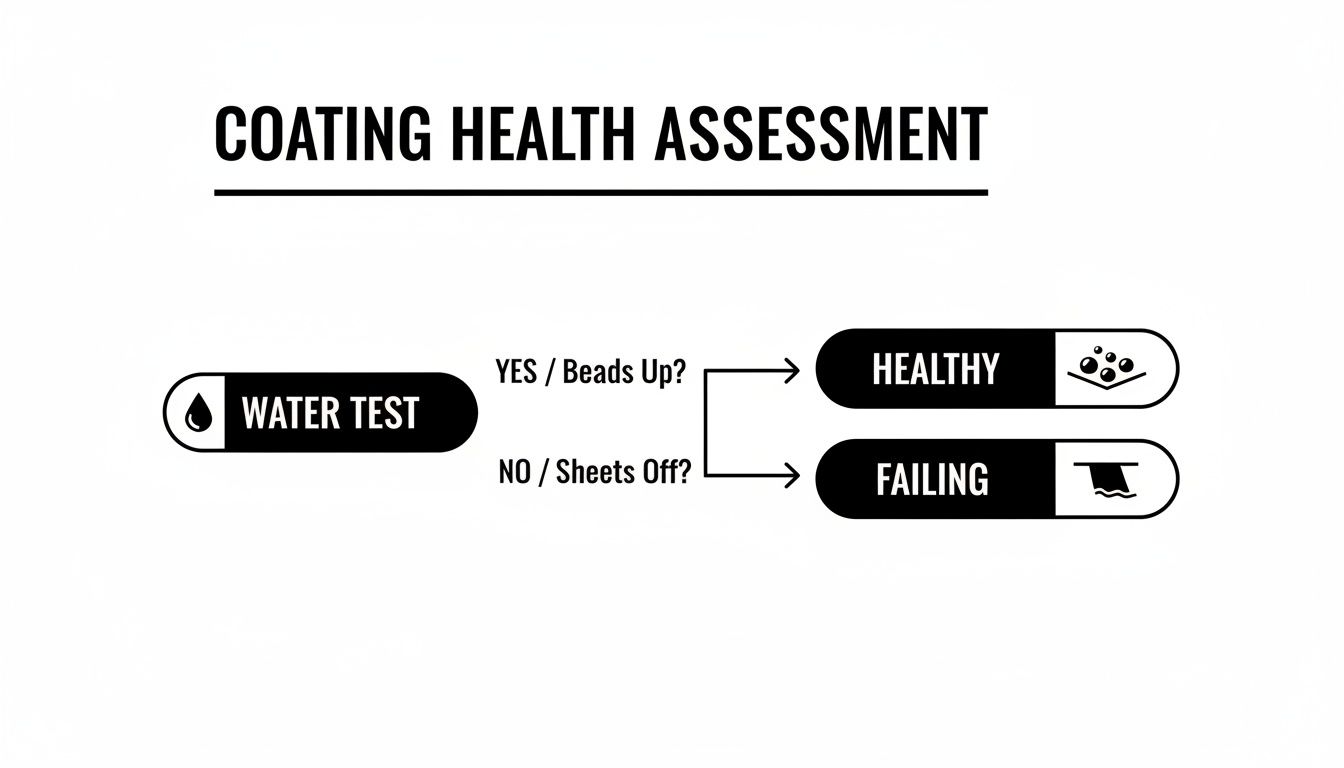
As you can see, if the water forms tight, uniform beads, your coating is in great shape. If it starts to cling and “sheet” off, that’s your first sign that its performance is starting to fade.
To keep that beading action strong, using a ceramic topper or booster spray is your secret weapon. A product like Titan’s Ultra Ceramic Spray is made specifically to rejuvenate your main coating. Think of it as a booster shot—it tops off the hydrophobic properties, amps up the gloss, and adds a fresh, sacrificial layer of protection. A quick application every few months is an incredibly easy way to stretch the life of your base coat.
Regular maintenance isn’t a chore; it’s a proactive strategy. By using the right products and techniques, you’re not just cleaning your car—you’re actively preserving the coating’s integrity and maximizing its lifespan.
Finally, you have to be vigilant. Get aggressive contaminants like bird droppings, bug guts, and tree sap off your car immediately. These things are nasty and highly acidic, and if you let them bake in the sun, they will etch your coating. A quick spritz of a detailer spray and a gentle wipe with a microfiber cloth can prevent permanent damage.
For a deeper dive into all the steps, you can explore our complete guide on ceramic coat maintenance to really master the process.
Following these straightforward tips makes you a true partner in your vehicle’s protection. You’ll ensure it stays shielded, glossy, and ridiculously easy to clean for years to come.
Your Ceramic Coating Questions Answered
We get these questions all the time from car owners and even other detailers. Let’s cut through the noise and tackle the big ones you’re probably wondering about. Getting straight answers will help you understand what to realistically expect from a coating.
Can a Ceramic Coating Really Last for 10 Years?
Honestly, that 10-year claim is more marketing than reality. Even the best pro-grade coatings, with an absolutely perfect maintenance routine, typically give you a solid 5 to 7 years of peak performance.
Our advanced Elastomer coatings from Titan are designed to push the high end of that range, mainly because their built-in flexibility helps them resist cracking and chipping over time. If a car lives in a garage, sees low mileage, and gets babied, you might get closer to those big numbers. But my advice? Be skeptical of “lifetime” promises and look at the actual technology and real-world results instead.
Does Layering Ceramic Coatings Make Them Last Longer?
Yes, but it’s not as simple as just piling it on. Adding a second or third layer of a professional coating can definitely boost its thickness, deepen the gloss, and add to its overall durability. Think of it like adding extra coats of clear coat, to a point.
However, the real key is how well that first layer bonds to the paint. That initial bond is everything. For a DIY enthusiast, a smarter approach is to apply one great base coat like Alpha Quartz, let it cure properly, and then keep it topped up every few months with a booster like Ultra Ceramic Spray. That’s far more effective than trying to stack multiple layers without professional technique.
What Happens When a Ceramic Coating Wears Off?
A quality coating doesn’t just peel off like sunburnt skin or old, cheap paint. It’s a much more graceful exit. Over years of battling the elements, UV rays, and road grime, the coating slowly and evenly thins out.
You’ll start to notice the signs. The water won’t bead up into those perfect little spheres anymore, and the paint might look a little less glossy than it used to. The good news is, your original paint underneath is completely unharmed. It’s simply back to its original, unprotected state. At that point, you just need to prep the surface and you’re ready for a fresh application.
Ready to see what truly flexible, long-lasting protection looks like? The unique elastomer technology in Titan Coatings products like Alpha Quartz shields your vehicle against everything the road throws at it—from brutal temperature swings to bug guts and rock chips.
Discover the difference for yourself and check out our line of easy-to-use coatings at the Titan Coatings Shop.
0 Comments