
Imagine you’ve just spent a full Saturday detailing your car. It’s gleaming, perfect. Then, a week later, a surprise rain shower, a few splattered bugs, and that deep shine is already a memory. This frustrating cycle of wash, wax, repeat is what drove chemists to ask: "What if we could create a shield for cars that actually lasts?" This question led to a groundbreaking answer: the polymer coating.
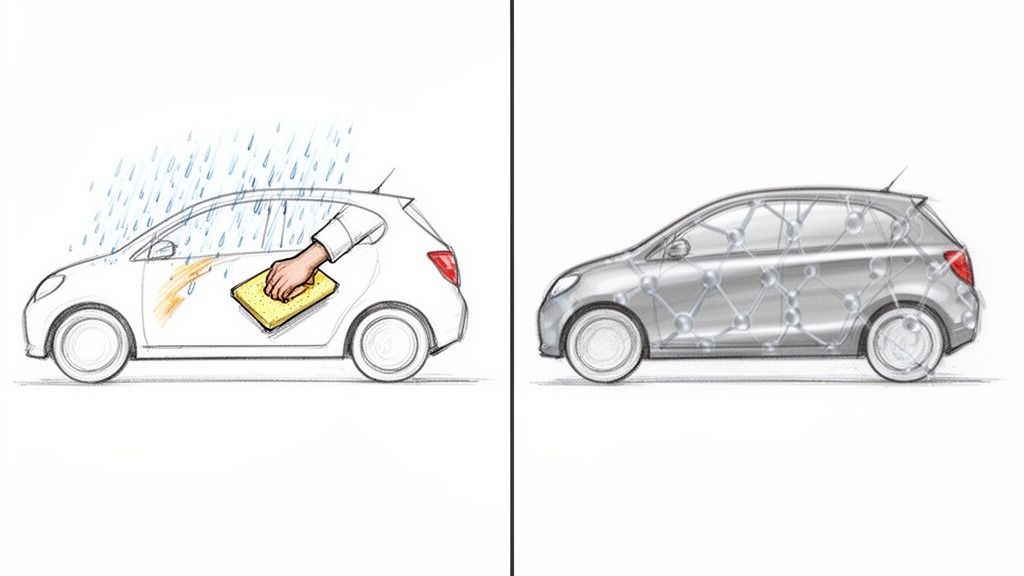
A polymer coating is a liquid shield for your car. It’s a synthetic formula that, when applied, doesn’t just sit on top of your paint—it chemically bonds with it. This creates a tough, resilient barrier made of long-chain molecules called polymers, offering protection that outlasts traditional waxes by a country mile.
The Evolution of Car Protection
If you've ever spent an afternoon meticulously waxing your car, only to see that deep, wet shine disappear after the first downpour, you know the frustration. That was the old way. For years, the cycle was simple: wash, clay, polish, wax, and repeat a few weeks later. The gloss was great, but the protection was fleeting.
This endless cycle is what pushed car care enthusiasts and chemists to find a better solution. They needed something that offered more than just a temporary glow. They needed real, lasting defense against the elements. This search led them away from simple waxes and into the world of advanced surface science.
A polymer coating is a completely different beast. Unlike a carnauba wax that just lays on the surface, a polymer physically bonds to the paint's clear coat. This creates a cross-linked, semi-permanent shield that essentially becomes one with your vehicle's finish. Think of it less like a jacket and more like a second skin.
From Temporary Shine to Lasting Armor
The whole point of this technology is to build a fortress on your paintwork that can withstand the daily grind. This molecular-level bond guards your car against all sorts of attacks:
- UV Rays: Acts like a powerful sunscreen, preventing the sun from oxidizing and fading your paint.
- Acid Rain: Neutralizes the harmful acidic compounds that can eat away at your clear coat.
- Bird Droppings: Creates a barrier to stop the corrosive enzymes in bird waste from etching the finish.
- Road Grime: Makes the surface so slick that dirt, tar, and road salt have a tough time getting a grip.
This shift toward durable, bonded protection is more than just a car care trend; it’s part of a massive industrial movement. Polymer coatings are now a cornerstone technology in the automotive, marine, and aviation industries, where failure isn't an option.
We’re seeing this demand drive huge growth. The global industrial coatings market was valued at USD 164.43 billion in 2023 and is on track to hit USD 222.25 billion by 2035. That’s not just hype; it’s a clear signal that people want tougher, smarter solutions.
This is where innovators like Titan Coatings are really pushing the envelope. As the first company to introduce elastomer coatings using revolutionary nano-tube and Dark Matter technology, they're turning a weekend chore into long-term peace of mind. To learn more about how to safeguard your vehicle's finish, check out our deep dive into automotive paint protection coating. It’s a genuine leap forward for anyone serious about keeping their car looking its best.
Polymer Coatings vs. Traditional Waxes at a Glance
To put it all in perspective, here's a quick breakdown of how modern polymer technology stacks up against the old-school waxes we all grew up with. The differences are pretty stark.
| Feature | Polymer Coatings | Traditional Waxes (e.g., Carnauba) |
|---|---|---|
| Durability | 6 months to 2+ years | A few weeks to 3 months |
| Bonding | Chemically bonds to the paint (cross-linking) | Sits on top of the surface (lays on the paint) |
| Protection | Excellent against UV, chemicals, and environmental fallout | Limited; primarily offers gloss and minor water beading |
| Water Behavior | Strong hydrophobic properties (tight, uniform beading) | Good initial hydrophobicity, but fades quickly |
| Application | More technique-sensitive; requires a clean, prepped surface | Easy to apply and buff off, very forgiving |
| Maintenance | Low; easier to wash and keep clean | Requires frequent re-application to maintain protection |
As you can see, while traditional waxes still have their place for a quick shine, polymer coatings offer a far more robust and lasting solution for serious vehicle protection.
The Science Behind Flexible Armor
To really get what a polymer coating is, you have to look at the chemistry that makes it work. Think of it like a microscopic chain-link fence being built right on your car's paint. The process, called polymerization, forges and links countless individual molecules into incredibly long, strong chains. These chains then interlock, creating a tough yet flexible shield that bonds directly to your vehicle's clear coat.
This is where the story gets interesting, because it marks a real shift in how we think about paint protection. For years, ceramic coatings have been praised for their hardness, but that very rigidity can be a double-edged sword. Like a sheet of glass, they can develop micro-cracks from the stress of a rock chip or even just drastic temperature changes. Once that barrier is breached, the protection starts to fail.
The Power of Elasticity
Seeing this problem, the team at Titan Coatings brought something new to the table: elastomer coatings. By pioneering the use of advanced nano-tube and Dark Matter technology, they engineered a material that behaves differently. Imagine something as hard and glossy as glass, but with the ability to stretch and flex like rubber. That unique elasticity is its superpower.
This flexibility allows the coating to absorb impacts and handle thermal stress without breaking a sweat.
- Impact Resistance: When a bug or a piece of road debris smacks the surface, an elastomer coating gives a little, dissipating the energy instead of cracking under the pressure.
- Thermal Expansion: It expands and contracts right along with your car's panels, from a freezing winter night to a scorching summer afternoon, which means the protective layer never compromises its integrity.
"The key difference is durability through flexibility. While rigid coatings fight impacts and eventually lose, our elastic coatings yield and rebound, preserving the finish for years longer. It’s the difference between being brittle and being resilient."
It’s this marriage of hardness and elasticity that delivers a level of real-world durability that was previously out of reach. You can dive deeper into the unique properties of these formulas and learn more about Titan Coatings' elastomer technology, which is truly redefining long-term protection.
The Growing Market for Smarter Protection
This move toward more durable, adaptive coatings isn't just some niche trend—it's part of a massive global shift. The polymers market, which is the foundation for all these advanced formulas, is an absolute giant. It was valued at USD 771.73 billion in 2023 and is on track to hit USD 1,284.34 billion by 2035.
That explosive growth is what fuels the constant innovation you see in specialized coatings. We're getting smarter materials that do more than just add a layer of gloss. It’s a clear sign that the entire industry is demanding more intelligent and resilient solutions for protecting surfaces.
Choosing the Right Polymer Shield
Not all polymer coatings are created equal. When you're looking for the right protection, it helps to think of it like choosing armor for your car. The options have evolved over the years, creating a simple "good, better, best" hierarchy that makes it easier to match a product to your real-world needs.
A "good" starting point is a high-quality polymer sealant. It'll give you a fantastic gloss and make water bead up nicely for a few months. Moving up to "better" gets you into the world of rigid ceramic coatings, famous for their rock-hard durability and that deep, candy-like shine. But the "best" tier? That’s where the truly innovative technology lives—products designed to fix the inherent weaknesses of older coating types.
The Superiority of Flexible Protection
This is where groundbreaking formulas like Titan's Alpha Quartz Elastomer Coating really shine. Its secret weapon is elasticity.
Think about it from a detailer's perspective. They used to get constant callbacks from clients whose expensive, rigid coatings were failing. A stray rock chip on the freeway or even just the daily expansion and contraction of the car's metal panels in the sun would cause tiny micro-cracks. A brittle coating is a fragile one, and that’s a major failure point.
The solution was to switch to a flexible coating. Alpha Quartz, with its advanced nano-tube technology, can absorb impacts and flex with temperature changes. It doesn't crack or shatter under pressure. That means bug splatters, road debris, and thermal stress are no longer a death sentence for your car's protection.
This simple chart helps visualize how impact resistance is the key factor when choosing between a flexible or a brittle coating.
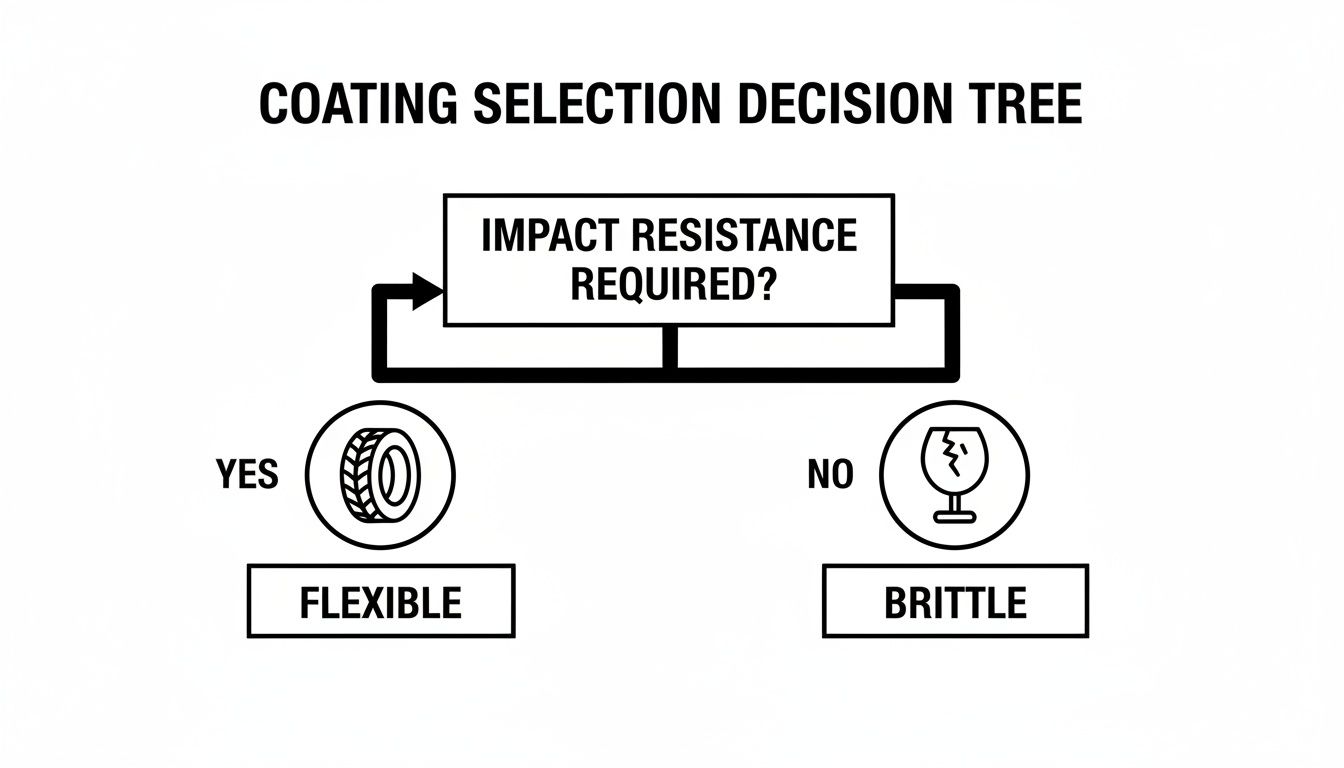
The takeaway is simple: for a vehicle that actually gets driven, a flexible shield offers more reliable, longer-lasting protection because it avoids the structural failures that plague rigid coatings.
Choosing Your Armor: Polymer Coating Comparison
Picking the right product can feel overwhelming, but breaking it down by type makes it much easier. This table compares the most common options to help you decide which armor is right for your ride.
| Coating Type | Key Feature | Durability | Best For |
|---|---|---|---|
| Polymer Sealant | Ease of Application | 3-6 Months | DIYers and those looking for a quick, glossy boost. |
| Ceramic Coating | Extreme Hardness & Gloss | 2-5 Years | Car enthusiasts seeking a deep shine and strong scratch resistance. |
| Elastomer Coating | Flexibility & Impact Resistance | 5+ Years | Daily drivers in harsh climates or anyone wanting maximum, long-term protection against real-world damage. |
Ultimately, the best choice depends on your goals, your budget, and how you use your vehicle. A flexible elastomer provides the most comprehensive defense, but modern ceramics and sealants still offer great value.
Reliability for Professionals and DIYers
This kind of resilience makes a flexible coating like Alpha Quartz a smart, profitable choice for professional detailers and a virtually foolproof option for DIYers who want the best possible durability. The ease of installation and stellar results make it a go-to for mobile detailers and weekend warriors alike. And the demand for this level of protection is exploding.
The corrosion protection segment of the polymer coatings market was valued at USD 33.41 billion in 2024 and is expected to jump to USD 58.39 billion by 2033. That massive growth, detailed by industry analysts at SkyQuest Technology, shows just how many people are looking for tough, long-term solutions like Titan's.
Of course, it’s always smart to weigh all your options. To get a complete picture, check out our guide comparing paint protection film vs. ceramic coating. Making an informed choice is the first and most important step toward keeping your car's finish looking perfect for years to come.
Get Professional Results, Minus the Hassle
So, you want that professional-grade shine and protection, but you don't have a whole weekend to dedicate to detailing? I get it. For the busy car enthusiast with an afternoon to spare, there's a fantastic solution that bridges the gap between basic waxes and pro-level ceramic coatings.
This is where the magic of modern chemistry comes in. We now have true sprayable polymer coatings that are a world away from those old-school detail sprays. These are sophisticated, durable formulas engineered to deliver months of real protection with an application process that couldn't be simpler. It's the perfect sweet spot for DIYers and mobile detailers who demand performance without the complexity.
Effortless Application, Incredible Results
The real beauty of a product like Titan's Ultra Ceramic Spray is just how straightforward it is. You don’t need special tools, a dust-free garage, or a degree in chemistry. The application is genuinely rewarding—transforming a clean car into a gleaming, protected masterpiece in a matter of minutes.
It really boils down to three simple steps:
- Spray: Lightly mist the coating onto a cool, clean panel.
- Wipe: Use a fresh microfiber towel to gently spread the product evenly.
- Buff: Flip to a dry side of the towel and buff off the light haze to reveal an unbelievable shine.
That’s it. This simple spray-and-wipe process forges an instant chemical bond with your car's clear coat, leaving behind a slick, ultra-hydrophobic layer. The proof is right there in front of you—water beads into tight, perfect little spheres and just sheets off the paint. It’s an incredibly satisfying sight that tells you the shield is active.
You can see how the benefits of simplicity and high performance are front and center on the Titan Ultra Ceramic Spray product page.
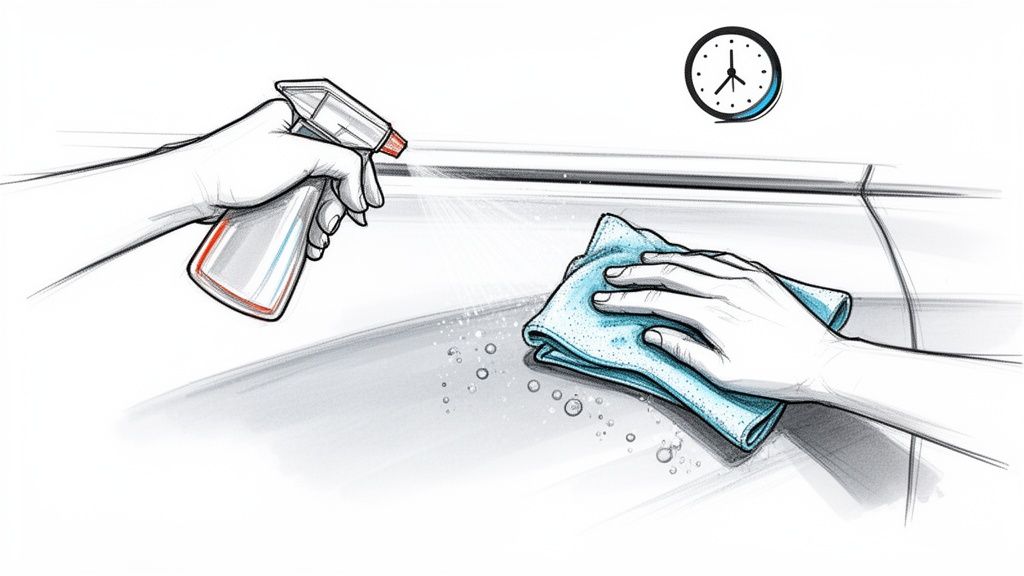
The big takeaway here is how advanced polymer technology has been packed into a delivery system that anyone can master. Elite protection is no longer out of reach.
A Versatile Tool for Any Detailer
These sprayable polymer coatings are also the Swiss Army knife of the detailing world. Use it as a standalone sealant, and you'll get months of solid durability.
But it also works brilliantly as a "topper" to refresh an existing ceramic or elastomer coating. A quick application can boost its hydrophobic properties and bring back that just-coated gloss. For those just starting out, our guide on applying ceramic coating to your car offers a great foundation that shows just how much easier this spray-on method is.
Whether you're a seasoned pro looking for a quick maintenance solution or a weekend warrior wanting the best, this technology is a must-have in your detailing kit.
Achieving Crystal Clear Vision in Any Weather
So far, we’ve talked a lot about protecting your car’s paint. But what about one of the most critical surfaces on your entire vehicle—the windshield?
Picture this: you're driving along when a sudden, blinding downpour hits. Your wipers are going full-blast, but all they're doing is smearing a sheet of water across the glass, turning the road ahead into a blurry, dangerous mess. In moments like that, a clear view isn't just nice to have; it’s a critical piece of safety equipment.
This is exactly why a dedicated polymer glass coating is one of the most important upgrades you can make. It's not about looks; it's about making every drive safer and a whole lot less stressful.
Turning Your Windshield into a High-Tech Shield
A proper polymer coating designed for glass transforms that ordinary surface into a super-slick, hydrophobic shield. This isn't your average rain repellent that you spray on and it's gone in a week. A true nano polymer coating, like Titan's APEX Glass Ceramic Coating, forges a durable, chemical bond with the glass, changing how water behaves on a molecular level.
Instead of smearing across the surface, rainwater instantly pulls together into tight, perfectly round beads. As soon as you hit about 35-40 mph, the airflow over your car simply whisks these beads away. The effect is a stunningly clear view of the road, often to the point where you don't even need to use your wipers in a steady rain.
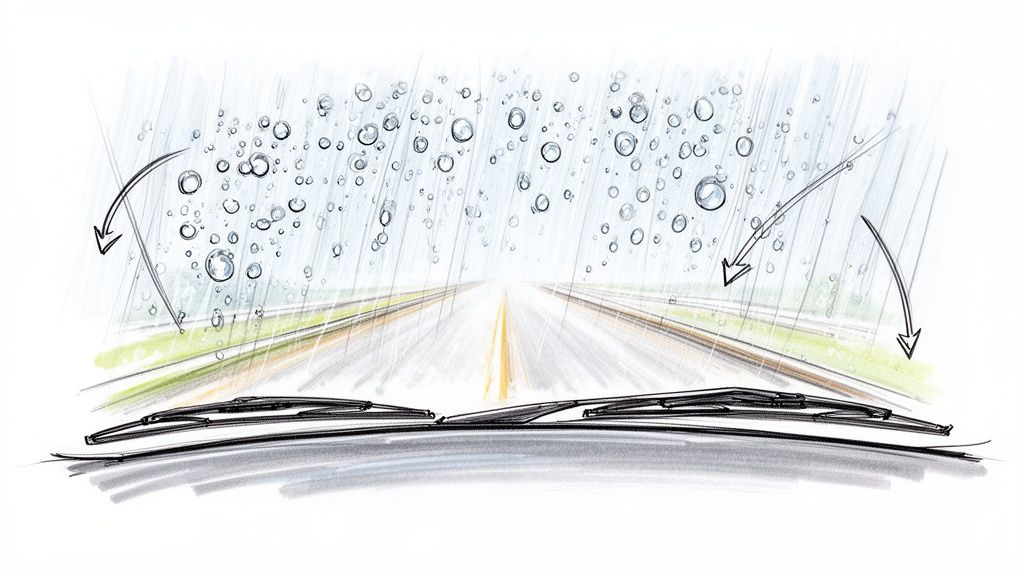
The entire goal is to create a safer driving environment by dramatically improving your visibility, no matter what the weather throws at you.
More Than Just Rain Repellency
The perks of treating your glass go way beyond just shedding water during a storm. This technology is actively working to reduce the strain and fatigue that come with driving in tough conditions.
- Cuts Down on Nighttime Glare: The coating creates a perfectly smooth, non-porous surface, which helps minimize that distracting and often dangerous glare from oncoming headlights on wet roads.
- Makes Cleaning Effortless: Ice, frost, road salt, and even baked-on bug guts have a tough time clinging to the coated glass. A quick wipe is usually all it takes to clean them off.
- Reduces Driver Fatigue: Think about how mentally draining it is to constantly squint and strain to see through a smeared windshield. A crystal-clear view helps you stay relaxed, focused, and alert.
By turning your windshield into a self-clearing surface, a polymer coating does more than just keep you dry—it keeps you alert. It’s a proactive safety feature that works for you every time it rains.
For anyone who puts a premium on a safer, more confident drive, this is an essential upgrade. If you want to dive deeper, you can find more information on how a dedicated ceramic coating for your windshield enhances both visibility and protection.
Time to Rethink Your Car's Armor
If you've been stuck in the endless cycle of waxing and sealing, it's time for a change. We've walked through how modern polymer coatings are a different beast altogether—offering durability, flexibility, and a level of protection that older products just can't touch. This isn't just another wax; it's a fundamental shift in how we protect our vehicles.
Think back to the story of the detailer whose clients kept coming back with cracked coatings. He's not getting those callbacks anymore. The cars he services now have a tough, gleaming shield that's built to last for years, not just a few weeks. That’s what happens when you invest in real surface science.
The Right Tools for the Job
We've highlighted some of the best gear out there, each engineered to give your vehicle a serious defensive upgrade:
- Titan Alpha Quartz: This is your best bet for truly flexible protection. Its elastomer-based formula is hard like glass but flexible, designed to expand and contract with your car's panels, preventing cracks from temperature swings or minor impacts.
- Titan Ultra Ceramic Spray: If you want amazing results without the fuss, this is it. A simple spray-on polymer that delivers months of intense water-beading and is a game-changer for DIY enthusiasts and mobile detailers.
- APEX Glass Ceramic Coating: Don't forget your glass. This is a real safety upgrade, dramatically improving your visibility in downpours and making rainy-day driving far less stressful.
Now, the ball is in your court. Whether you’re a professional detailer looking to stand out or a car lover committed to keeping your ride pristine, stepping up to this technology is a smart move for the long haul.
For detailers and car wash owners offering these advanced services, getting the word out is crucial. You can learn more about effective marketing strategies, including insights from TV advertising for car washes.
Choosing the right coating isn't just about a better shine. It's about a smarter, more efficient strategy for preserving your vehicle for years to come.
Stop settling for a shine that disappears after the next storm. Head over to the Titan Coatings shop and give your car the tough, flexible armor it deserves. Your vehicle is a major investment—it's time to protect it like one.
Got Questions? We've Got Answers.
We get a lot of questions about polymer coatings. It's newer technology, so that's understandable. Here are some of the most common ones we hear, broken down in simple terms to help you figure out what’s best for your car.
How Is a Polymer Elastomer Coating Different from a Ceramic Coating?
Think of it like the difference between glass and a high-tech polymer. The biggest distinction comes down to flexibility.
While both polymer and ceramic coatings give you that incredible hardness and chemical resistance, an elastomer coating like Titan's Alpha Quartz is engineered with nano-tube technology to bend without breaking. This built-in elasticity lets it absorb small impacts and handle dramatic temperature swings without developing the micro-cracks that can plague more rigid coatings.
The bottom line? That flexibility often translates to much longer-lasting, more resilient protection compared to traditional ceramic coatings, which can become brittle over time.
Can I Apply a Product Like Ultra Ceramic Spray Myself?
You bet. Products like Titan's Ultra Ceramic Spray were created with the weekend warrior and mobile detailer in mind. We wanted to make professional-grade protection accessible to everyone.
Honestly, the process couldn't be simpler: just spray it on a clean panel and wipe it off with a good microfiber towel. That’s it. For just a few minutes of your time, you get months of amazing water beading, a slick glossy finish, and serious protection.
Is a Polymer Glass Coating Really Worth It for Safety?
This is a big one, and the answer is an emphatic yes. A high-quality glass coating like APEX Glass Ceramic Coating isn't just about looks; it's a genuine safety upgrade for your vehicle.
By creating a super-slick, hydrophobic surface on your windshield, it completely changes how you drive in the rain. Water beads up so tightly that it just flies off the glass as you drive, dramatically improving your visibility. You'll find yourself using your wipers far less, and that annoying glare from headlights on wet roads is significantly reduced. It makes for a much less stressful, and therefore safer, drive.
Ready to see the road ahead with total clarity, rain or shine? Titan Coatings' APEX Glass Ceramic Coating turns nerve-wracking rainy drives into a non-issue. It’s incredibly easy to apply and delivers a crystal-clear view you have to experience to believe.
Protect your windshield and drive safer today with APEX Glass Ceramic Coatings.
0 Comments