
Trying to find the “best” auto paint protection film? Let’s cut through the noise. The truth is, the right film for you is the one that gives you a tough, invisible, and self-healing barrier against the realities of daily driving.
We’re talking about high-quality thermoplastic urethane films that stand up to rock chips, scratches, and all the nasty stuff the environment throws at your car. It’s all about preserving that factory finish and protecting your investment.
An Invisible Shield for Your Car’s Paint
Remember that flawless, mirror-like shine your car had the day you drove it off the lot? Now, think about what it faces every single day. Loose gravel from dump trucks, bug guts on the highway, a rogue shopping cart in a crowded parking lot… it’s a constant battle.
This is exactly why paint protection film (PPF) has become non-negotiable for anyone who truly cares about their vehicle. It’s not just a plastic sheet; it’s a high-tech, transparent shield engineered to take the hits so your paint doesn’t have to. Think of it as your car’s first line of defense, a sacrificial layer of advanced thermoplastic urethane.
What Modern PPF Really Does
Picking the right protection isn’t about just grabbing a popular brand name. It’s about understanding what makes a film work and matching it to your car, your driving habits, and how you want your car to look years from now. The best auto paint protection film is always a personal choice.
Your car’s paint is under constant assault from both physical impacts and chemical contaminants. PPF is an engineered solution that creates a sacrificial, regenerative barrier, stopping damage before it ever reaches your clear coat.
This invisible shield is designed to be incredibly tough yet forgiving. Its main job is to absorb the impact from small road debris that would otherwise leave behind permanent, ugly paint chips. It’s like a screen protector for your car’s most vulnerable areas.
But modern films go way beyond just stopping rocks. They also offer crucial resistance to:
- Chemical Stains: Say goodbye to permanent etching from bug guts, bird droppings, and acid rain.
- UV Exposure: The film helps block the sun’s harsh rays, preventing your paint from fading and oxidizing over time.
- Minor Abrasions: It defends against those light swirl marks and scratches from automatic car washes, brushing against a hedge, or other accidental bumps.
Consider this your first step in building a complete protection plan. To get a head start on protecting your vehicle from day one, you might want to check out our guide on the best paint protection for new cars. We’ll walk you through everything you need to know.
Understanding Modern PPF Technology
Let’s be clear: not all paint protection films are the same. Not even close. The differences are baked right into the science, and understanding what’s going on under the surface is key to choosing the right film for your ride. Think of a premium PPF like a high-tech running shoe; the real performance comes from its layered construction, where each part has a critical job to do.
A modern, high-quality PPF is really a three-part system working in perfect sync. It starts with an advanced adhesive layer, which is engineered to grab onto your car’s clear coat securely but release cleanly years later without a hint of damage. The heart of the film is its polyurethane core—this is the muscle. Usually around 6 to 8 mils thick, this layer is what absorbs the impact from flying rocks and debris, stopping them dead in their tracks before they can chip your precious paint.
But the real magic happens in the topcoat. This isn’t just a simple clear layer; it’s where the most impressive features live, turning a passive barrier into an active, intelligent shield.
The Science Of Self-Healing
One of the most unbelievable features of a top-tier PPF is its self-healing ability. Picture this: you get a light scratch or swirl mark from a drive-thru car wash or a stray grocery bag. On your car’s paint, that’s a permanent flaw. But on a quality PPF, that same blemish can literally disappear.
The topcoat is made of special elastomeric polymers. When you introduce a little heat—either from the sun or a heat gun—these polymers can flow back into their original, smooth state, effectively erasing minor scratches right before your eyes.
This means the daily grind of driving doesn’t have to leave its mark. Your car’s finish stays looking flawless and showroom-fresh for years. It’s a truly resilient defense system.
Hydrophobicity and Enhanced Aesthetics
Another massive performance benefit is hydrophobicity, which is just a fancy way of saying the film hates water. A hydrophobic surface forces water to bead up tightly and roll right off, taking dirt and grime along for the ride. This makes washing your car unbelievably easy and helps it stay cleaner between washes.
Of course, protection shouldn’t come at the cost of style. Modern films are designed to enhance your car’s look, not hide it.
- High-Gloss: The go-to choice for most. It’s designed to be completely invisible while making your paint’s color and depth pop even more than before.
- Stealth/Matte: Want a custom look? This finish instantly transforms any glossy paint into a sleek, modern satin finish while providing the exact same rugged protection.
When you’re shopping for a film, these are the performance metrics that really separate the good from the great.
Key PPF Performance Metrics at a Glance
This table breaks down the essential features you should be looking for in any high-quality auto paint protection film.
| Feature | What It Does | Why It Matters |
|---|---|---|
| Self-Healing | The topcoat uses elastomeric polymers to repair minor scratches and swirls when exposed to heat. | Keeps the film looking pristine and free of the fine scratches that dull a car’s finish over time. |
| Hydrophobicity | The surface is engineered to repel water, causing it to bead and roll off easily. | Makes the vehicle much easier to clean and helps it stay clean longer by shedding water and dirt. |
| Stain Resistance | Protects against chemical etching and staining from bug guts, bird droppings, and road tar. | Prevents permanent damage to your paint from common environmental contaminants. |
| Optical Clarity | The film is designed to be virtually invisible, with no “orange peel” texture. | Ensures the beauty of your car’s original paint shines through without distortion. |
Ultimately, a great PPF is one that offers a complete package—invisible protection that actively works to keep your car looking its best.
The chart below shows how PPF provides a total solution for the most common issues that plague a car’s paint.
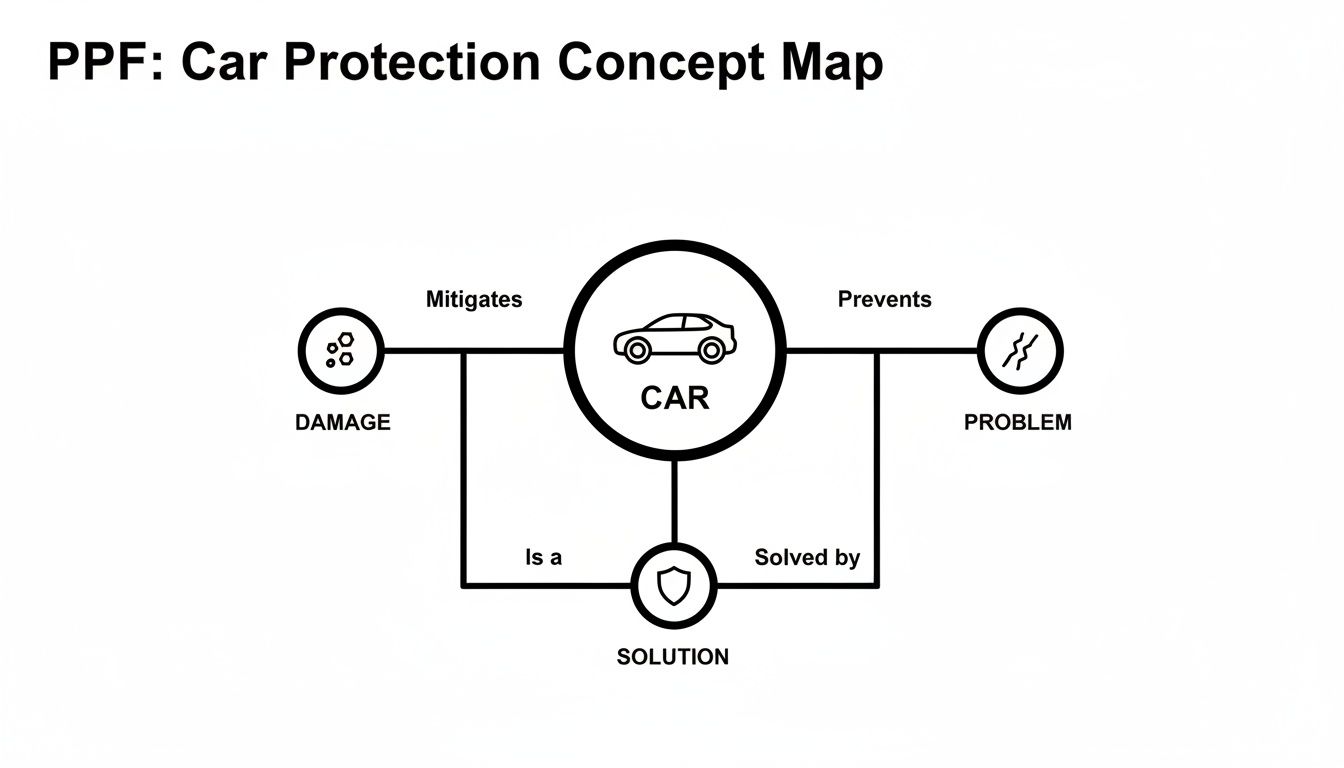
It all comes down to protecting the foundation of your vehicle’s appearance: its paint. The thickness and condition of that paint are everything. If you want to get a better handle on what you’re actually protecting, our guide on how to measure paint thickness is a great place to start. In the end, it’s the powerful combination of a safe adhesive, a tough core, and an advanced topcoat that makes modern PPF the best invisible armor you can get for your car.
Why Even the Best PPF Needs a Partner
So, you’ve picked out a top-tier paint protection film for your car. That’s a huge win. You’ve got a tough, self-healing shield ready to stop rock chips and scratches cold. But what about the threats you can’t see? Even the highest-quality PPF has its limits when facing a constant barrage from the environment.
Let me tell you a story we hear all the time. A car enthusiast—let’s call him Alex—spared no expense on a full-front PPF job for his new sports car. He loved knowing his paint was safe from road debris, but after a year, he noticed something was off. The film’s finish wasn’t as slick or glossy. Water didn’t fly off like it used to, and washing the car felt like a chore again. The PPF was doing its job against physical hits, but its surface was losing the war against the elements.
This is the reality for any surface that’s left exposed, and that includes the top layer of a premium PPF. It’s constantly baked by harsh UV rays that can slowly dull its clarity and kill its water-repelling properties. Then you have chemical contaminants like acid rain, bird droppings, and industrial fallout that can start to etch and stain the film, leaving it looking tired and faded.
The Missing Piece of the Protection Puzzle
Alex realized his car’s armor wasn’t quite complete. His PPF was like a knight’s suit of plate mail, but it was missing that final, crucial layer of defense. This is where a specialized coating isn’t just a nice add-on; it’s an essential partner for your film. Adding a ceramic coating over PPF is like giving that armor a slick, non-stick, and chemically resistant finish. If you want to really get into the weeds on this, you can dig deeper into the comparison of Paint Protection Film vs Ceramic Coating.
This synergistic approach is exactly why the vehicle protection market is booming. The global paint protection film market is on track to hit a value of about USD 525.17 million in 2026, jumping up from USD 498.23 million in 2025. This growth is all about the rising demand for total vehicle preservation, which makes sense when you see that a massive 73.64% of all PPF usage is in the automotive world. You can find more details on these market trends and their drivers in this industry report on paint protection films.
Introducing the Power of Elastic Technology
Here’s the thing about traditional ceramic coatings: they’re hard, but they can also be brittle. When you put a rigid coating on a flexible surface like PPF, that inflexibility can become a problem. It can lead to micro-cracking when the film expands and contracts with temperature changes or minor impacts.
This is the exact problem we at Titan Coatings set out to solve. We were the first to bring elastomer coatings to the market, using groundbreaking nano-tube technology to create a protective layer that’s both hard as glass and incredibly flexible.
By combining the impact resistance of PPF with the chemical resistance and hydrophobicity of an elastomer coating, you create a multi-layered defense system that is far more effective than either product could be on its own.
For Alex, this was the game-changer he needed. Applying a coating over his PPF totally transformed his car’s finish. It brought back that deep, wet gloss and made the surface so slick that water and dirt just slid right off. The coating now acts as the sacrificial barrier, taking the heat from UV exposure and chemical attacks while preserving the expensive film underneath.
This is where Titan’s unique elastomer coatings really shine. They are engineered to be tough yet pliable, meaning they bond perfectly with PPF and move right along with it. This elasticity makes our coatings incredibly durable. Brutal temperature swings from freezing cold to scorching heat won’t cause them to crack. Bugs splattering on the grille at highway speeds won’t compromise the coating. It’s the perfect partnership, extending the life and boosting the performance of even the best auto paint protection film.
For a deeper dive into how these two technologies work together, explore our detailed comparison of PPF vs. ceramic coating.
Taking Your PPF to the Next Level with Titan Coatings
Paint protection film is a fantastic first line of defense for your car’s paint. But what if you could turn that simple shield into a complete, high-performance armor system? That’s exactly why we started Titan Coatings. We saw an opportunity to go way beyond the industry standard, creating a new class of protection that doesn’t just sit on top of PPF but actively makes it better.
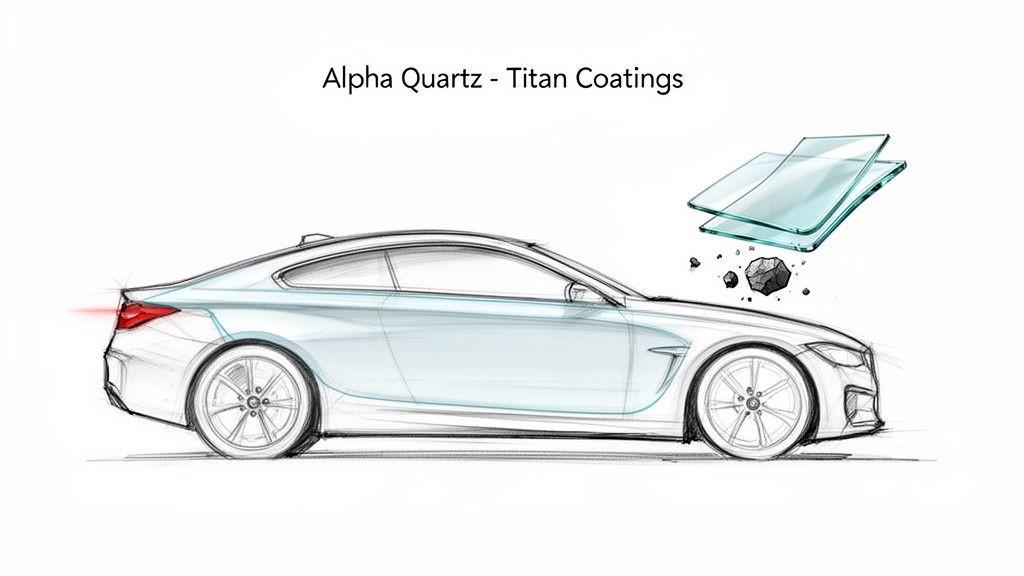
This mission drove us to develop something entirely new in automotive care. Leveraging our exclusive nano-tube and Dark Matter tech, Titan became the first company to ever bring elastomer coatings to the market. While traditional ceramic coatings form a rigid, glass-like layer, our elastomer technology was built from the ground up to be elastic. This one fundamental difference makes our coatings the perfect partner for the flexible, dynamic nature of PPF.
Alpha Quartz: The Ultimate PPF Companion
Our flagship, Titan Alpha Quartz, was engineered to solve the inherent problem of putting a hard coating over a soft, flexible film. It delivers the best of both worlds: a surface that’s hard as nails but remains incredibly flexible. This unique combination directly addresses the biggest environmental challenges a PPF-wrapped vehicle faces every day.
Think about it: a standard ceramic coating is like a thin sheet of glass. When you put it over a flexible material like PPF that expands and contracts with heat, that rigid layer can develop micro-cracks. Titan’s elastomer coatings are designed to flex with the film, creating a durable, seamless bond that won’t fail under pressure.
This elasticity delivers two huge real-world advantages:
- Extreme Temperature Resilience: Your car’s surface endures brutal temperature swings, from freezing winter nights to scorching summer days. Alpha Quartz stretches and contracts right along with the PPF, so the coating won’t crack or delaminate. You get consistent, reliable protection all year round.
- Superior Impact Absorption: When a bug or a piece of gravel smacks your car on the highway, a brittle coating can be compromised. The give in Alpha Quartz helps absorb and spread out that impact energy, protecting both the coating and the precious film underneath.
Better yet, Alpha Quartz was designed for real-world application. Its straightforward installation makes it a go-to for professional detailers who need dependable results and for dedicated DIY enthusiasts who demand professional-grade protection they can apply with confidence.
Building a Complete Protection System
A truly protected vehicle is more than just shiny paint. After all, your ability to see the road is just as critical as your car’s finish. That’s why we’ve developed a full suite of products designed to work together, creating a total shield for your vehicle.
This idea of comprehensive care is catching on fast. Europe, for example, is the largest global market for paint protection films, accounting for 31.48% of worldwide sales in 2024. Projections show this could climb to nearly 35% by 2035, a trend fueled by the region’s massive auto industry and a deep-rooted culture of vehicle preservation. You can dive into more of these global PPF market insights from Grandview Research.
Titan’s Full-Vehicle Protection Solutions:
- APEX Glass Ceramic Coating: Give your windshield and windows the same advanced protection as your paint. APEX creates an intensely hydrophobic surface that sends water flying off the glass, dramatically improving your visibility in a downpour and making rainy drives far less stressful. Plus, its easy application gives you crystal-clear results in minutes.
- Ultra Ceramic Spray: Great protection deserves great maintenance. Our Ultra Ceramic Spray is the perfect way to top up your coating and keep it performing its best between washes. It’s incredibly simple to use and instantly restores that slick, glossy finish, keeping your car looking freshly detailed while reinforcing its protective shield.
When you pair the best auto paint protection film with Titan’s elastomer technology, you aren’t just protecting your vehicle—you’re upgrading it. This system ensures every critical surface, from the paint to the glass, gets the most advanced and durable protection on the market.
To see the science behind our groundbreaking flexible coatings, you can learn more about Titan Coatings’ unique elastomer technology.
Choosing Your Installation Path
You’ve picked the perfect film and the right coating—that’s a huge step. But the real magic happens during installation. This is where your investment truly comes to life, and the big question is, do you roll up your sleeves and do it yourself, or do you hand the keys over to a seasoned pro?
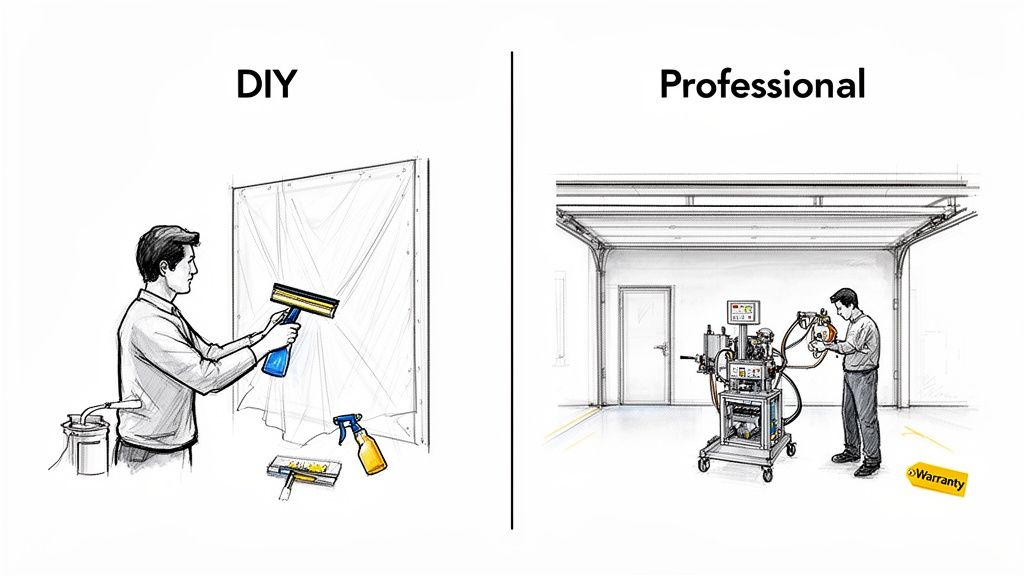
Honestly, there’s no single “right” answer here. It all comes down to your budget, your skills, and what your time is worth. Think of it like buying a suit: an off-the-rack option can look good, but a custom-tailored one provides a flawless, lasting fit. Let’s break down both paths so you can make the best choice for your ride.
The DIY Enthusiast Route
For the hands-on car lover, the DIY path can be incredibly satisfying. There’s a special connection you get with your vehicle when you do the work yourself. But be warned: this isn’t a weekend whim. It demands patience, an almost surgically clean workspace, and the right set of tools.
Your success as a DIYer hinges on the products you use. You need something designed for user-friendliness, not just for pros. Titan’s Alpha Quartz elastomer coating was engineered with this in mind, with an easy application process that lets dedicated car enthusiasts achieve professional-grade results right in their own garage. For upkeep, our Ultra Ceramic Spray keeps maintenance dead simple.
The secret to a great DIY job? It’s all in the prep work. A dust-free environment and a slow, methodical approach are non-negotiable. Rushing is the #1 reason for bubbles, lifted edges, and other imperfections that will drive you wild later.
The Professional Installation Advantage
For most car owners, going to a professional is the smarter play. A skilled installer brings years of muscle memory, specialized tools, and a controlled environment that’s nearly impossible to duplicate at home. They know how to tackle tricky curves and ensure every edge is perfectly tucked for a truly invisible finish. You’re not just paying for labor; you’re buying peace of mind and an expert’s touch.
Finding a great installer is easier than ever. The North American paint protection film market was valued at USD 287.56 million in 2025 and is projected to hit USD 479.50 million by 2033. That explosive growth means more qualified pros are out there, ready to do the job right.
When you’re shopping for an installer, don’t be shy. Ask the tough questions:
- Have you worked on my specific car model before?
- Do you use pre-cut kits or do you custom-cut from bulk film?
- What, exactly, does your warranty cover? (You want to see coverage for yellowing, bubbling, and any installation mistakes).
- Can I see some of your work?
A top-tier installer will be proud to show you their portfolio and answer every question. Remember, choosing the right professional is just as critical as choosing the best auto paint protection film in the first place. If you’re weighing the financial side, our guide on ceramic coating vs PPF cost can help you understand the full investment.
Still Have Questions About Paint Protection Film?
Even after digging into the tech, the benefits, and what it takes to get it on your car, you probably still have a few questions. That’s a good thing. You’re about to make a real investment in your car’s future, and you should feel completely confident before pulling the trigger.
Let’s clear the air and tackle the most common questions we hear from car owners about PPF. My goal here is to get rid of any doubt and show you why pairing the right film with a high-performance coating is the ultimate way to protect your ride.
How Long Does Paint Protection Film Last?
A quality paint protection film is designed to go the distance, typically lasting anywhere from 5 to 10 years. Of course, that number can swing based on the quality of the film you choose, the climate you live in, and how you take care of it. But the film itself is only half the story.
You can push that lifespan even further by adding a protective coating over it. A flexible coating like Titan’s Alpha Quartz becomes a renewable, sacrificial barrier. It takes the hit from UV rays and chemical attacks, protecting the PPF underneath so it stays clear and keeps its self-healing abilities for years longer. It’s the best way to make sure you get every penny’s worth out of your investment.
Can I Put a Ceramic Coating Over My PPF?
Not only can you, but you absolutely should. It’s the pro-level move for anyone serious about protection. Applying a ceramic coating over PPF completely changes the game.
It cranks up the film’s performance by adding unbelievable hydrophobicity (water just beads up and rolls off), which makes washing the car almost effortless. Plus, it adds a deep, wet-looking gloss and a crucial shield against harsh chemicals and the sun.
Titan’s Alpha Quartz was engineered from the ground up to be elastic, making it the ideal partner for the flexible nature of PPF. It creates a tough bond that stretches and moves with the film, so you never have to worry about the micro-cracking you might see with older, more rigid ceramic coatings.
It’s a true partnership where each layer makes the other one better. You end up with a finish that’s tougher, glossier, and way easier to maintain than just PPF on its own.
Is Paint Protection Film a Good Investment?
Look, if you’re the kind of person who cringes at the thought of rock chips, wants to protect your car’s resale value, and would rather enjoy the drive than worry about every piece of road debris, then yes—PPF is one of the smartest investments you can make. The upfront cost is almost always less than what you’d pay to repaint just a single body panel after a nasty rock chip.
When you add in the fact that your car will look showroom-fresh for years and the sheer peace of mind you get, the value is obvious. Most car enthusiasts I know consider it a must-have upgrade for any vehicle they genuinely care about.
How Do I Maintain PPF with a Titan Coating on It?
This is the best part. Once your PPF is topped with a Titan coating, keeping it clean is a breeze. The most important thing is to be gentle. Stick to the two-bucket wash method with a pH-neutral shampoo to avoid creating swirl marks, and stay away from those automated car washes with the giant, gritty brushes.
The slick surface from the Titan coating means dirt and grime have a hard time sticking, so they wash away with very little effort. To keep that protection topped up between washes, grab a bottle of Titan’s Ultra Ceramic Spray. It’s a quick and easy way to add another layer of ceramic goodness, boost the shine, and keep your car looking like it just left the detail shop. A simple routine like this will keep your car’s armor in peak condition.
At Titan Coatings, we’re all about building a complete system for protection. When you combine a top-tier PPF with our advanced elastomer coatings, you’re creating a shield that’s truly in a class of its own. Ready to give your vehicle’s glass the same level of stress-free, hydrophobic protection? Check out our APEX Glass Ceramic Coating and see the road ahead with perfect clarity.
0 Comments