
Mark had just finished coating his black coupe, rolled it into the sun, and got that deep, liquid reflection every detailer chases. One wash later, fine swirls showed up across the door. The wash soap wasn’t the problem. The cheap car washing cloth was.
The Unsung Hero of a Scratch-Free Shine
That story plays out more often than is readily admitted. A vehicle can be polished correctly, protected correctly, and still get marked up by a towel that looks harmless in your hand. The softer and glossier the finish appears, the more brutally honest it becomes about bad towel choice.
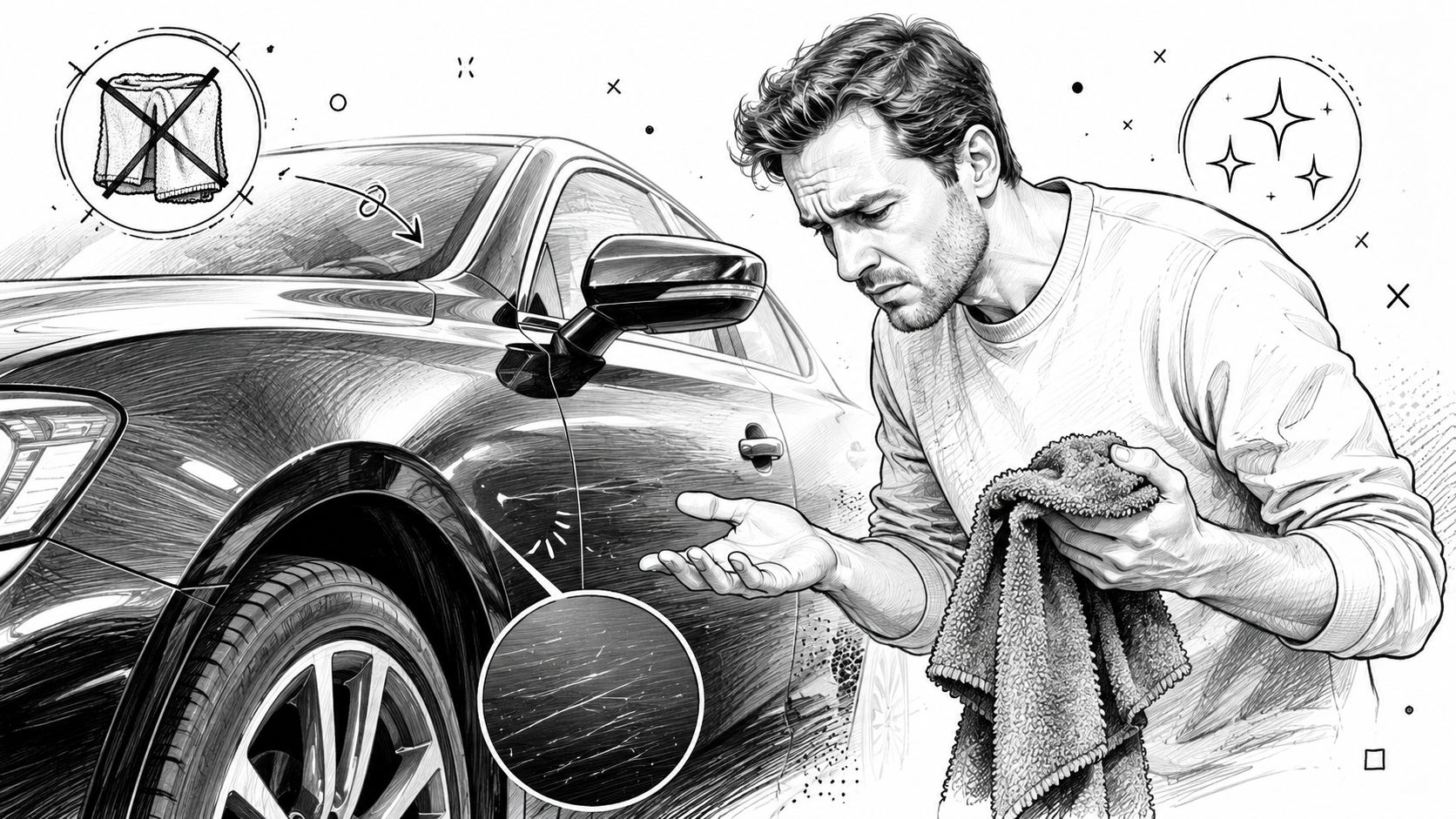
A proper car washing cloth isn’t just a rag. It’s a contact tool. It decides whether dirt gets lifted away from paint or dragged across it. It decides whether drying is gentle or abrasive. On dark paint, you see the difference immediately. On lighter colors, the damage waits until the right angle of sunlight exposes it.
Why pros treat towels like precision tools
Professional detailers don’t lump all microfiber together because the work punishes lazy habits. The industry itself tells you how established that standard has become. The U.S. car wash and auto detailing market reached $18.7 billion in 2026 and included 16,879 businesses, according to IBISWorld’s car wash and auto detailing industry data. In other words, towels, wash media, and drying cloths sit inside a large, mature service ecosystem. They aren’t side accessories anymore.
That matters even more now because paint protection has changed. Modern coatings have raised the stakes. If you’re maintaining a finish protected by elastomer-based chemistry, your cloth choice has to match the sophistication of the surface. A coating can be hard, slick, and resilient, but it still sees every bit of friction you put into the wash process.
Practical rule: If a towel’s history is unknown, don’t put it on paint.
The cloth can protect or undo your work
Advanced coatings changed what detailers expect from a finish. Titan’s elastomer approach is built around a coating that’s hard like glass but flexible, which matters when temperatures swing from frozen conditions to hot panels and when the surface takes minor impacts. That flexibility helps the coating resist the cracking issues detailers worry about on stressed surfaces.
But none of that gives you permission to use a bargain-bin towel with rough edges, stiff fibers, or embedded debris.
A coated vehicle still gets washed by hand. It still gets dried. It still gets wiped around badges, trim, glass, and high spots. Every one of those contact points runs through the cloth in your hand. That’s why experienced detailers separate towels by task, contamination level, and surface risk. The cloth is humble only until it leaves marks. Then it becomes the most important thing in your cart.
Choosing the Right Cloth for Every Detailing Task
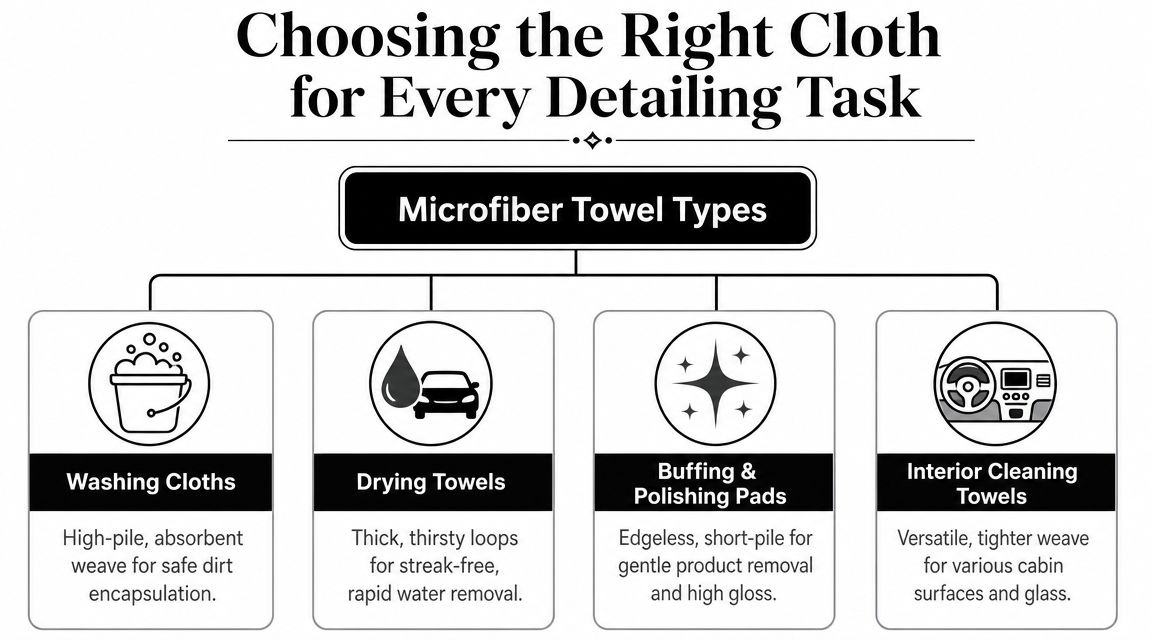
The fastest way to get better results is to stop asking, “What’s the best microfiber towel?” and start asking, “What job is this towel doing?” That one shift eliminates most bad choices.
Start with GSM, then narrow by risk
A useful baseline comes from this microfiber towel guide from OCD Car Care, which points to 200 to 300 GSM for glass and light dusting, 350 to 500 GSM for general paint-safe wiping, and 500+ GSM for drying or delicate paint contact. That’s a solid framework because absorbency and plushness rise with GSM, but it only works if you match the towel to the job.
Here’s the practical breakdown:
- Glass and mirrors need a lower-pile towel. Too much plush fiber smears residue and leaves lint.
- Paint wipe-downs want a safer middle ground. The 350 to 500 GSM range is well-suited for this purpose.
- Drying after a wash needs a heavier, thirstier towel. More fiber mass helps absorb water before you build friction.
- Wheels and filthy lower panels should never share a towel bin with paint.
Weave and edge matter more than most people think
A towel can have the right GSM and still be wrong for the surface. Weave controls behavior. Edge construction controls risk.
| Task | What works | What fails |
|---|---|---|
| Paint buffing | Plush or balanced microfiber with soft or edgeless finish | Stiff borders and rough stitching |
| Drying | Thick drying towel with strong water pickup | Thin general-purpose towel that drags |
| Glass | Low-pile, tighter weave | Plush towel that smears and fuzzes |
| Dirty work | Dedicated utility towel | Reusing a paint towel for grime |
If you’re comparing options online, a purpose-built exterior microfiber towel is a good example of the kind of dedicated paint towel worth studying. Not because one towel solves everything, but because exterior paint requires its own category.
For a deeper breakdown of towel styles, pile, and safe use on coated vehicles, Titan also has a detailed guide to best detailing microfiber towels.
A towel should fit the contamination level first, and the surface second. That’s how you avoid cross-contamination.
A simple selection system that works
Keep your setup boring and disciplined:
- One towel family for paint. Soft, clean, and never used anywhere else.
- One for drying. Larger, thicker, always inspected before touching horizontal panels.
- One for glass. Low-pile only.
- One for interiors. Separate from exterior work.
- One for wheels and dirty trim. Once a towel lives here, it stays here.
That’s the difference between random towel ownership and an actual detailing system.
Washing and Drying on Ceramic Coated Surfaces
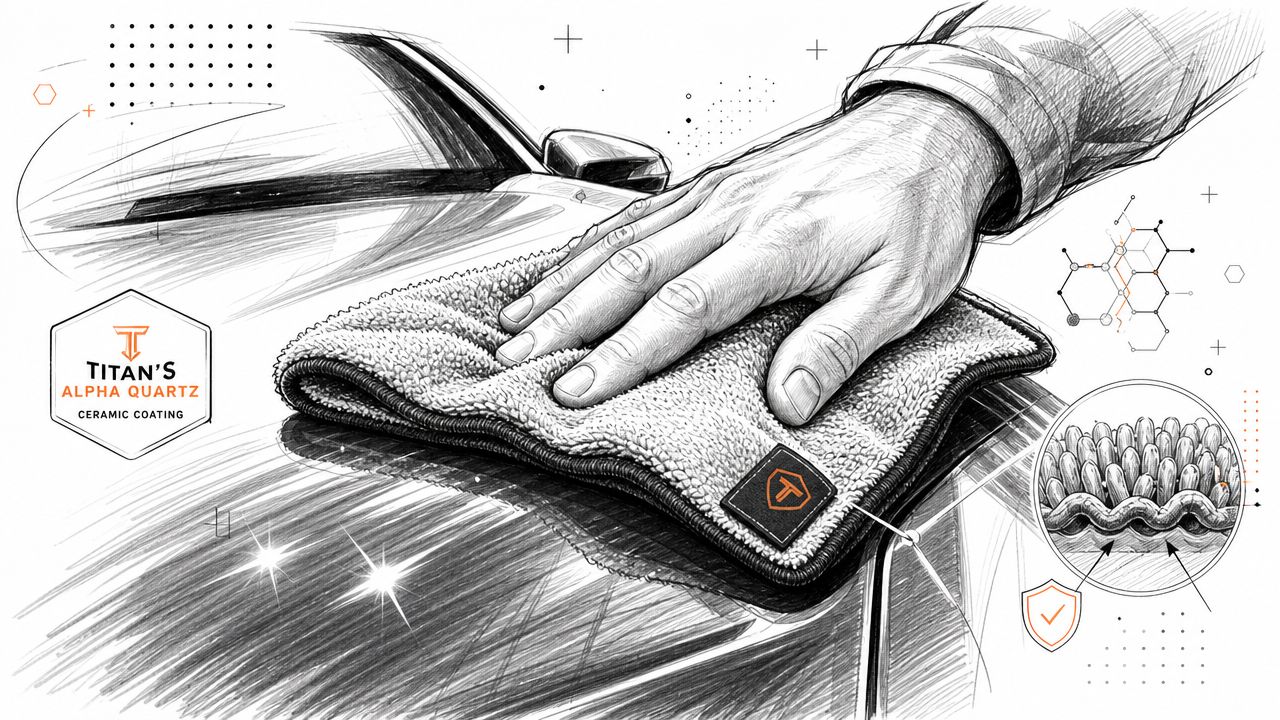
A ceramic coated car exposes every rushed movement. That’s especially true when you’re maintaining a flexible, high-tech surface like Titan’s Alpha Quartz, where the coating is designed to be hard like glass yet flexible enough to better handle temperature swings and minor impact stress. The coating is durable. Your wash technique still has to be disciplined.
Friction is the real enemy
On an unprotected surface, poor technique dulls the finish over time. On a coated surface, poor technique shows up as unnecessary marring against a finish you specifically invested in to preserve. That’s the painful part.
A coated car should be washed with a calm, low-friction routine. Rinse thoroughly. Let the wash media do the lifting. Don’t grind contamination into the paint because the coating feels slick. Slickness helps. It doesn’t replace process.
A solid maintenance routine for coated vehicles is laid out in Titan’s guide on how to wash a car with ceramic coating. The principles are familiar to pros and worth following every single time.
The wash method that protects the coating
Use a dedicated wash mitt or wash media for the contact wash, then reserve your car washing cloths for controlled follow-up work and drying. The key is not just tool quality. It’s tool sequencing.
Good habits look like this:
- Rinse first: Remove loose grit before any towel or mitt touches the panel.
- Work top down: Cleaner upper panels first, dirtier lower panels last.
- Use straight passes: Controlled movement is easier to manage and inspect.
- Switch towels early: If a towel starts loading up, retire it from that step.
- Dry by blotting or gentle dragging: Let absorption do the work.
Where slick maintenance products help
One useful option in the drying phase is to pair the towel with a drying aid so the microfiber glides instead of grabs. That’s where a product like Ultra Ceramic Spray fits naturally. Used lightly during drying, it adds slickness and helps the towel move across the panel with less resistance while leaving behind a sacrificial maintenance layer.
That matters on coated vehicles because the cloth and chemistry should work together. A dry towel on a drying panel can chatter, skip, or feel grabby. A lubricated towel stays calmer. The finish stays calmer too.
Don’t “polish dry” a coated car with your towel. Lift water. Don’t scrub for shine.
Mobile detailers benefit from this approach even more because they need repeatable results in driveways, parking structures, and uneven weather. The less friction you build into the process, the safer your wash becomes.
The Secret to Streak-Free Glass and Windshields
Glass tells on you faster than paint. One wrong towel and the windshield turns into a smeared mess the second the sun hits it or headlights catch it at night. Most of the time, the mistake is simple. The towel is too plush.
Why your paint towel fails on glass
A towel that feels luxurious on paint can be the wrong instrument for windows. Thick nap hangs onto product residue, shifts it around, and often leaves lint behind. Glass prefers a tighter, lower-pile cloth that cuts residue cleanly and flashes off without haze.
If you’ve ever cleaned a windshield twice and still seen streaks, that’s usually a towel problem, not just a cleaner problem.
A coated windshield changes the whole experience
The payoff comes when the glass itself is protected. A windshield coating changes routine maintenance from labor into upkeep. During a sudden rainstorm, that difference becomes obvious fast. Water sheds more cleanly, visibility stays calmer, and the windshield doesn’t feel like it’s fighting you.
That’s where Titan’s Apex Glass & Windshield Coating guidance fits into the conversation. A dedicated glass coating and the right cloth work as a system. The coating helps water behavior and cleanup. The towel preserves clarity without dragging residue back across the surface.
For maintenance, keep it simple:
- Use one dedicated glass towel only
- Fold it into quarters for clean working faces
- Wipe one direction on the interior, another on the exterior
- Retire the towel if it starts linting or smearing
A coated windshield doesn’t ask for aggressive maintenance. It asks for clean maintenance. That’s a major advantage for DIY owners and mobile detailers who need reliable results without turning every window into a long correction session.
How to Wash and Maintain Your Microfiber Cloths
A microfiber towel doesn’t slowly become unsafe. Usually, it gets ruined by bad laundry habits, then starts disappointing you all at once. It loses bite on glass, loses absorbency on paint, and starts pushing residue instead of lifting it.
Heat and residue are what kill towels
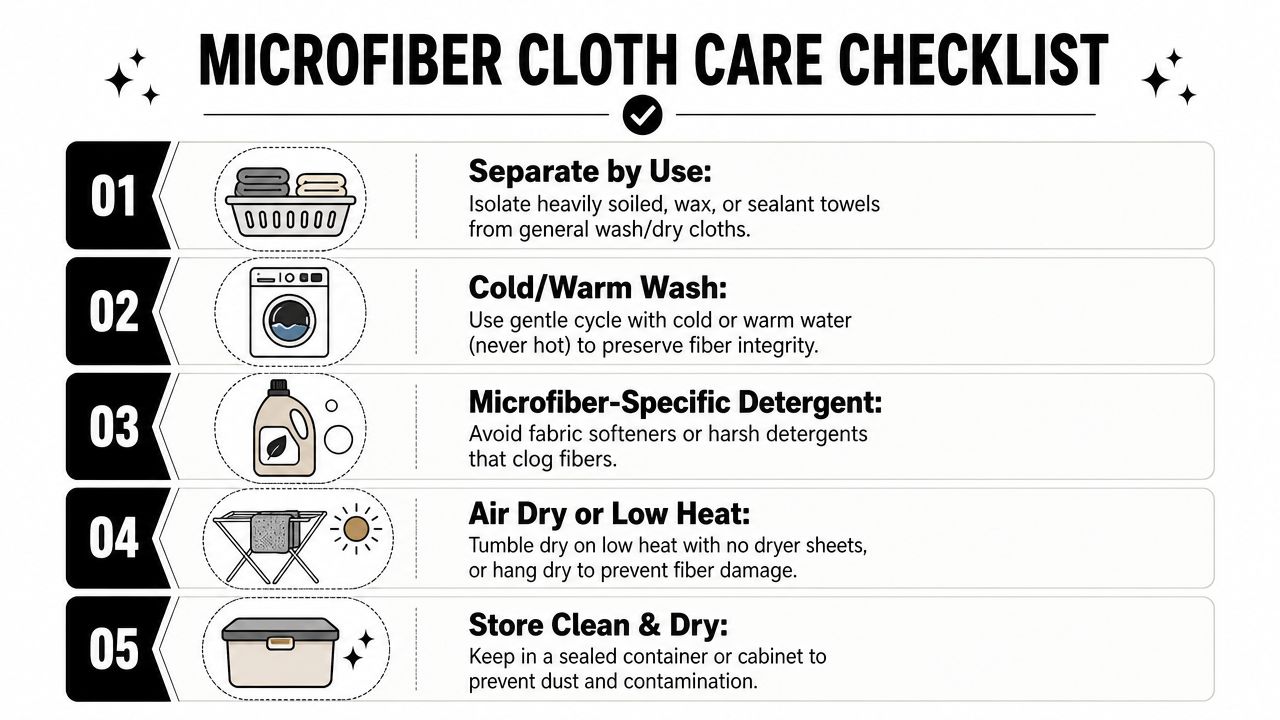
The most important care rule is simple and absolutely essential. Kleen-Rite’s microfiber care guidance advises avoiding hot water above 40°C/105°F, skipping fabric softeners, and using low heat or air drying to protect fiber structure and absorbency.
That aligns with what detailers observe in practice. High heat hardens fibers. Softener clogs them. Cotton lint contaminates them. A towel can still look clean and perform terribly.
The laundry routine that keeps towels paint-safe
Use a process, not guesses:
Sort by task before washing
Paint towels, glass towels, interior towels, and wheel towels should never go into the same wash load if you can avoid it.Wash only with microfiber or lint-free loads
Cotton is a contamination source. It leaves fibers behind that wreck towel performance.Use a mild detergent
Better yet, use a purpose-made microfiber towel cleaner if your towels regularly pick up sealants, sprays, or detailing residue.Run an extra rinse when needed
Residue left in the towel is often why buffing becomes grabby.Dry on low or air dry
If the dryer runs hot, you’re gambling with every plush towel you own.
Shop rule: The towel that touches wheels should never come back to paint duty.
A simple storage system saves good towels
After they’re clean, keep them clean. Don’t leave them loose on a shelf where dust, polishing residue, or shop debris can settle into the fibers.
A practical setup is color-coding by job:
- Blue towels for glass
- Black or dark towels for wheels and dirty trim
- Light colors for paint and coating removal
- Another dedicated color for interiors
The exact color doesn’t matter. The discipline does. Good microfiber care isn’t housekeeping. It’s part of paint preservation.
Common Cloth Mistakes That Ruin a Perfect Finish
The biggest towel mistakes aren’t dramatic. They’re small shortcuts repeated often. That’s what ruins finishes.
The mistakes that separate clean cars from properly detailed cars
Dropping a towel on the floor and using it anyway is one of the fastest ways to put hidden grit into paint. Using one towel for wheels and then upper doors is worse. Holding onto old towels because they “still look soft” is another common trap. Safe microfiber isn’t judged by sentiment.
A useful industry gap worth paying attention to is this: CarPro’s discussion of towel choice by task highlights that the core issue isn’t just GSM. It’s matching the towel to the task and the contamination level, especially on ceramic-coated vehicles. That’s the part many casual wash routines still miss.
What actually works in the field
A clean finish usually comes from boring discipline:
- Inspect before contact: If the towel has debris, stiffness, or matted fibers, pull it.
- Demote aggressively: Old paint towels can become door-jamb or engine-bay towels.
- Use glass-specific technique: If you want a strong non-automotive reference for clear wiping fundamentals, Pine Country’s window cleaning methods are worth reviewing because the streaking logic carries over.
- Stick to a repeatable wash system: A disciplined two-bucket car wash method reduces how much contamination ever reaches your cloths.
The deeper lesson is simple. A car washing cloth should be treated like a precision instrument, not a generic cleaning accessory. That matters on every vehicle. It matters even more on a finish protected by modern elastomer coating technology, where the goal isn’t just shine today but stability through heat, cold, wash cycles, and real-world use.
The people who get that right usually aren’t doing anything flashy. They’re choosing the correct towel, keeping it clean, and refusing lazy shortcuts. That’s how a finish stays sharp.
If you want to protect paint, glass, and daily drivability with coating systems built around advanced materials, take a look at APEX NANO – Titan Coatings. Their lineup includes solutions for paint, windshield, and maintenance workflows, including elastomer-based coating options designed for durability with flexibility across changing conditions.
0 Comments