
At 11:40 on a Tuesday, the office lot is usually the last place anyone expects serious paint work. People are hustling into calls, eating lunch in their cars, and glancing at the clock. Then a mobile detail van rolls in, a tech unloads hoses, polishers, towels, and a compact power setup, and by the time the owner walks back out, the car doesn't look like it survived another workday. It looks reset.
That's usually when people ask the question in plain terms. What is mobile detailing, really? Is it just a car wash with better branding, or is it a real alternative to a studio? After years of working from driveways, apartment garages, office parks, and fleet yards, I can tell you it's a lot closer to a rolling workshop than a bucket-and-sponge service.
Understanding Mobile Detailing
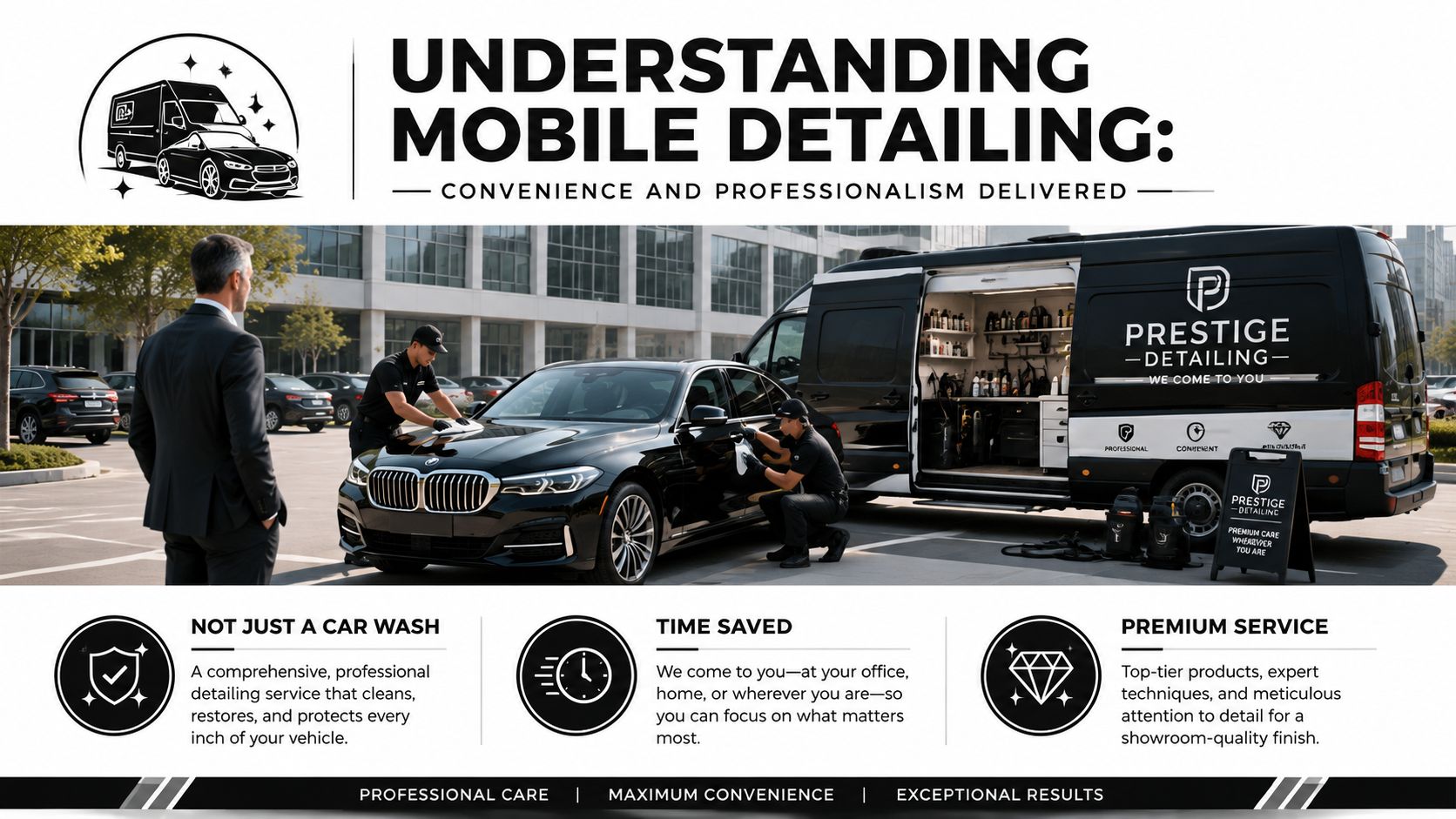
One of the most common jobs I've seen starts with a client who can't spare half a day to sit in a waiting room. They've got meetings stacked, kids to pick up, or a fleet of work vehicles that can't leave the site. A mobile detailer shows up where the vehicle already is, brings the tools, brings the process, and works around the client's schedule instead of disrupting it.
That's the core of mobile detailing. It's professional vehicle cleaning, correction, and protection performed on-site using portable equipment, water tanks, power systems, eco-friendly products, and specialized tools. It's not a quick spray-down at the curb. It's a service model built to deliver shop-grade results without asking the customer to drive to a fixed bay.
What makes it different
A proper mobile setup usually includes:
- Portable washing tools that let the tech clean safely on-site
- Water and power solutions so the work doesn't depend on the customer's garage
- Paint care equipment such as clay media, polishers, pads, and lighting
- Protection products that can range from quick spray sealants to advanced coatings
- Interior tools for carpets, leather, plastics, glass, vents, and trim
The reason this model has taken off is simple. People want convenience, but they don't want to give up quality to get it. That's one reason the global mobile car wash and detailing market reached USD 126.3 billion in 2025, with projections of USD 136.9 billion in 2026 and USD 306.6 billion by 2036, according to Future Market Insights on the mobile car wash and detailing market.
It's not just washing
I remember detailing a dark sedan for a finance director who thought he was booking a wash. What he got was a decontamination, trim cleaning, glass polishing, interior reset, and paint enhancement that pulled a surprising amount of gloss out of tired paint. By the end, he wasn't comparing it to the gas-station tunnel wash. He was comparing it to a studio appointment he no longer had to schedule across town.
Practical rule: If the service can safely clean, refine, and protect a vehicle at your location, it belongs in the mobile detailing category.
For readers who want a broader walk-through of the process from the vehicle owner's perspective, this guide on how professionals detail a car gives useful context.
Typical Services and High-Level Workflow
A lunchtime office-lot job tells you almost everything about how mobile detailing works when it's done right. The client hands over the keys at noon. The car has dust on the paint, brake residue on the wheels, fingerprints on the piano-black trim, and coffee splashes in the console. The goal isn't speed for its own sake. The goal is organized, safe work.
What a mobile detailer usually offers
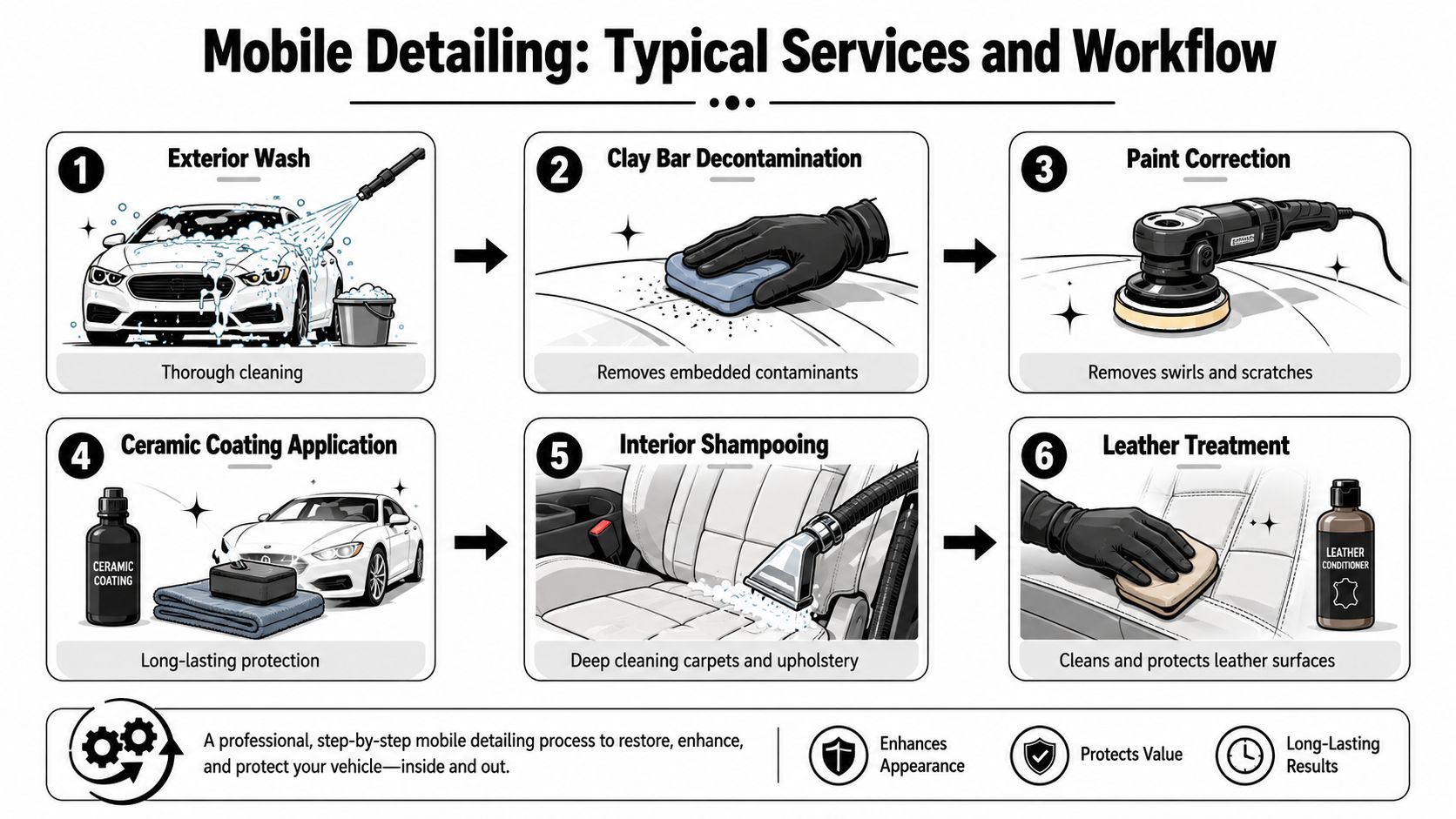
A serious operator often provides a mix of these services:
- Exterior wash and wheel cleaning for paint, tires, barrels, and jambs
- Clay bar or chemical decontamination to remove bonded grime
- Paint correction to reduce swirls, haze, and light defects
- Ceramic coating application for longer-term surface protection
- Interior shampooing and extraction for carpets, mats, and fabric
- Leather and trim treatment to clean and condition touch surfaces
Every van has its own rhythm, but the workflow stays familiar.
How the job usually unfolds
The first step is setup and inspection. A good detailer walks the vehicle, checks the paint, notes fragile trim, spots water-sensitive areas, and confirms the service scope before the first towel touches the car.
Then comes the wash stage, usually followed by decontamination. If the surface feels rough after the wash, it isn't ready for wax, sealant, or coating. It needs contamination removed first or the finish will trap defects under protection.
A standard sequence often looks like this:
- Arrival and site check, including shade, drainage, and access
- Wheels and lower panels first, because they carry the heaviest grime
- Safe hand wash, often with a controlled method to reduce marring
- Decontamination, mechanical or chemical depending on the paint condition
- Polishing or protection, based on the package
- Interior cleaning and final touch points
- Final inspection with the client
If a detailer can't explain the order of operations, the result usually shows it.
One issue customers rarely think about until it matters is runoff. A lot of websites say the van brings its own water and power, but that's not the whole story. 60% of urban clients fear runoff liability, and true water neutrality means using under 10 gallons via recovery systems, especially in HOA-restricted communities, according to this mobile detailing FAQ on water neutrality and runoff concerns.
That's why workflow isn't just about shine. It's about containment, control, and choosing methods that fit the property. If you want to understand the refinement stage better, this piece on what paint correction involves helps connect the wash process to actual defect removal.
Essential Equipment and Supplies
You can tell a lot about a mobile detailer by what comes out of the van first. If it's random spray bottles and one bath towel, the day is going to be long. If it's organized bins, labeled chemicals, a compact pressure washer, extension reels, a vacuum, machine polishers, and dedicated coating applicators, that job has a chance to end well.
What earns a place in the van
Mobile detailing gear has to do two jobs at once. It has to be portable, and it has to produce consistent results outdoors. That changes what detailers buy.
A practical setup usually includes:
- Portable pressure washer or rinseless wash tools for controlled cleaning
- Water tank and recovery planning for locations where runoff matters
- Independent power solution for vacuums, polishers, and lighting
- Dual-action polisher and pad system for safe paint refinement
- Wet-dry vacuum and interior brushes for cabins that need attention
- Pump sprayers and coating applicators for protection work
- Microfiber sorting system so glass towels don't end up on rocker panels
The right supplies matter just as much. One outdoor job I remember involved a vehicle parked from morning frost into afternoon heat. That kind of swing exposes weak products fast. A rigid coating can become the weak point if it doesn't tolerate expansion and contraction.
Why product behavior matters outside
That's where newer coating technology changed how many mobile detailers work. Titan Coatings pioneered Elastomer coatings with nano-tube and Dark Matter Tech®, creating a finish that's hard as glass yet flexible enough to expand and contract in extreme temperature shifts without cracking, as described by Titan Coatings' explanation of its Elastomer coating technology.
That flexibility matters in the field. A mobile detailer doesn't always get a climate-controlled bay. They work in cold mornings, hot pavement, windy driveways, and bug-heavy summer routes. A coating that stays intact through those conditions is more practical than one that looks good only in ideal conditions.
For detailers who are building out their vans or upgrading their kits, this mobile detailing equipment list is a helpful reference point.
Outdoor detailing rewards simple, durable gear. The less fiddling you do on-site, the more attention you can keep on the paint.
A product worth noting in this context is Alpha Quartz, especially for mobile operators and DIY users who want straightforward application and strong visual payoff. Its appeal is simple: easier install, good finish, and the kind of flexibility that helps the coating resist cracking when temperatures swing from frozen mornings to hot afternoons. That same elasticity also helps when the front end takes routine bug impact during daily driving.
Comparing Mobile Detailing and Other Options
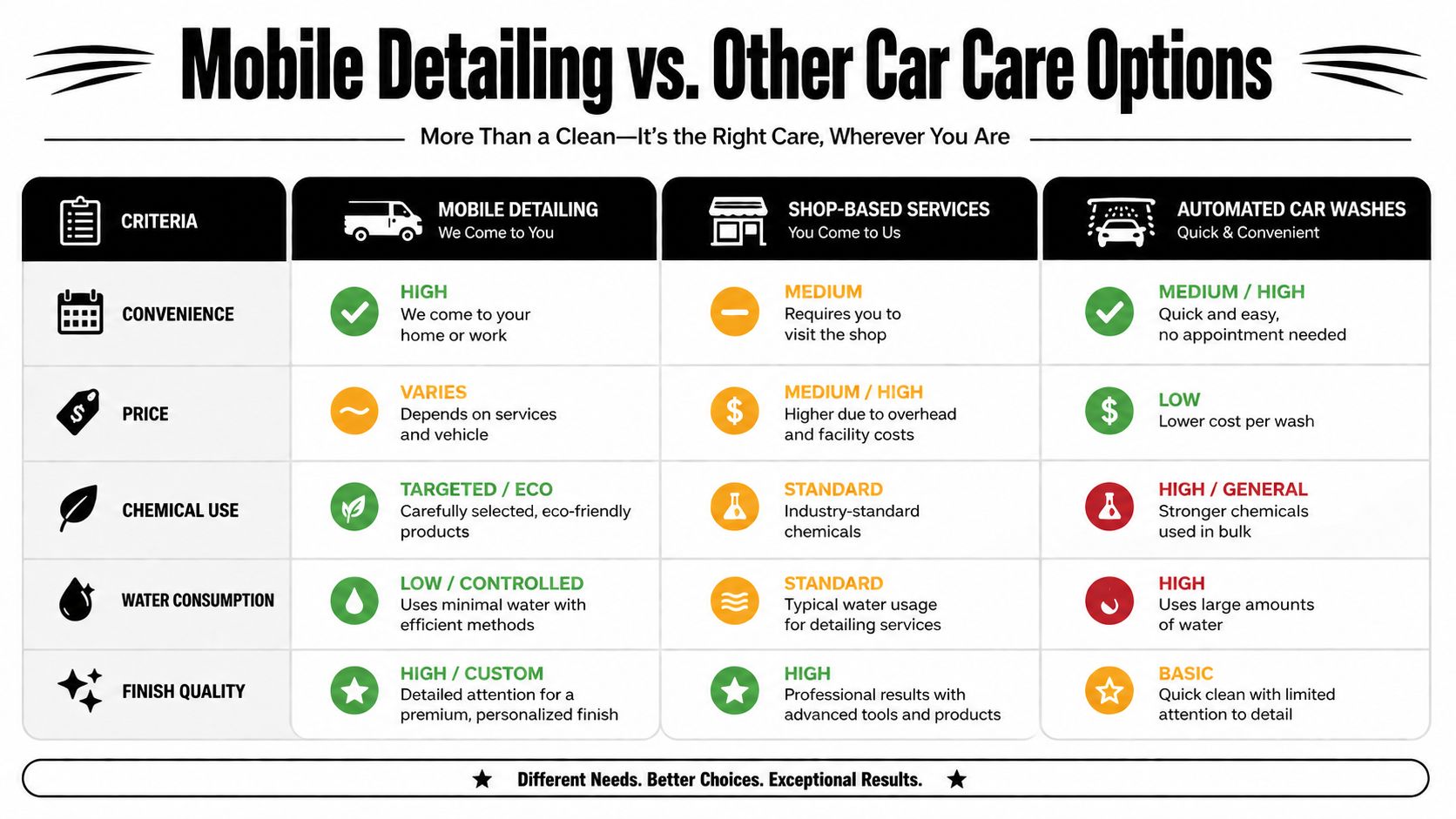
Most drivers don't choose between good and bad. They choose between convenient, fast, thorough, and affordable. Instead, the comparison isn't mobile detailing versus nothing. It's mobile detailing versus a shop appointment or an automated wash.
Side-by-side reality
| Option | Best for | Tradeoff |
|---|---|---|
| Mobile detailing | Owners who want on-site service and tailored care | Outdoor conditions require skill and planning |
| Shop-based detailing | Controlled environments and larger correction jobs | You have to deliver the vehicle and wait |
| Automated car wash | Fast basic cleaning | Limited finish quality and little customization |
A tunnel wash works when the goal is to knock off surface dust quickly. A shop works when the vehicle needs a controlled environment for intensive correction. Mobile detailing sits in the middle in the best way. It brings customized service to the customer while still allowing for serious paint, interior, and protection work.
Where mobile stands out
I've watched customers switch after one rainy commute. Their windshield was clean, but visibility still felt smeared and nervous. A proper glass treatment changes that experience more than people expect.
That's where a product like Apex Glass ceramic coating fits the mobile model well. It's easy to use, practical for windshield and glass work, and aimed at the result drivers care about most in bad weather: clearer visibility and less stress when rain starts stacking on the road. For mobile detailers, it's also a realistic add-on because it doesn't require the footprint of a major correction job.
A useful way to frame the options:
- Choose automated if you only care about a quick exterior rinse
- Choose a shop if the car needs extended indoor correction time
- Choose mobile if convenience matters but you still want hands-on, vehicle-specific care
For people weighing long-term protection routes, this comparison of paint protection film vs ceramic coating helps clarify where coatings fit and where they don't.
A good mobile detail doesn't try to mimic a tunnel wash. It solves a different problem. It brings precision work to the place where the car already sits.
Benefits and Pricing Factors for Mobile Detailing
The biggest benefit of mobile detailing usually isn't shine. It's control over your day. The car gets serviced at your office, in your driveway, or at your fleet yard while you keep moving. For busy owners, that's the difference between postponing maintenance and getting it done.
Why people keep booking it
A mobile detailer can tailor the work to the vehicle instead of funneling every car through the same routine. One owner may need pet hair removal and leather cleaning. Another may want a decontamination wash and a quick spray ceramic upgrade. Another may care most about windshield performance before a storm season commute.
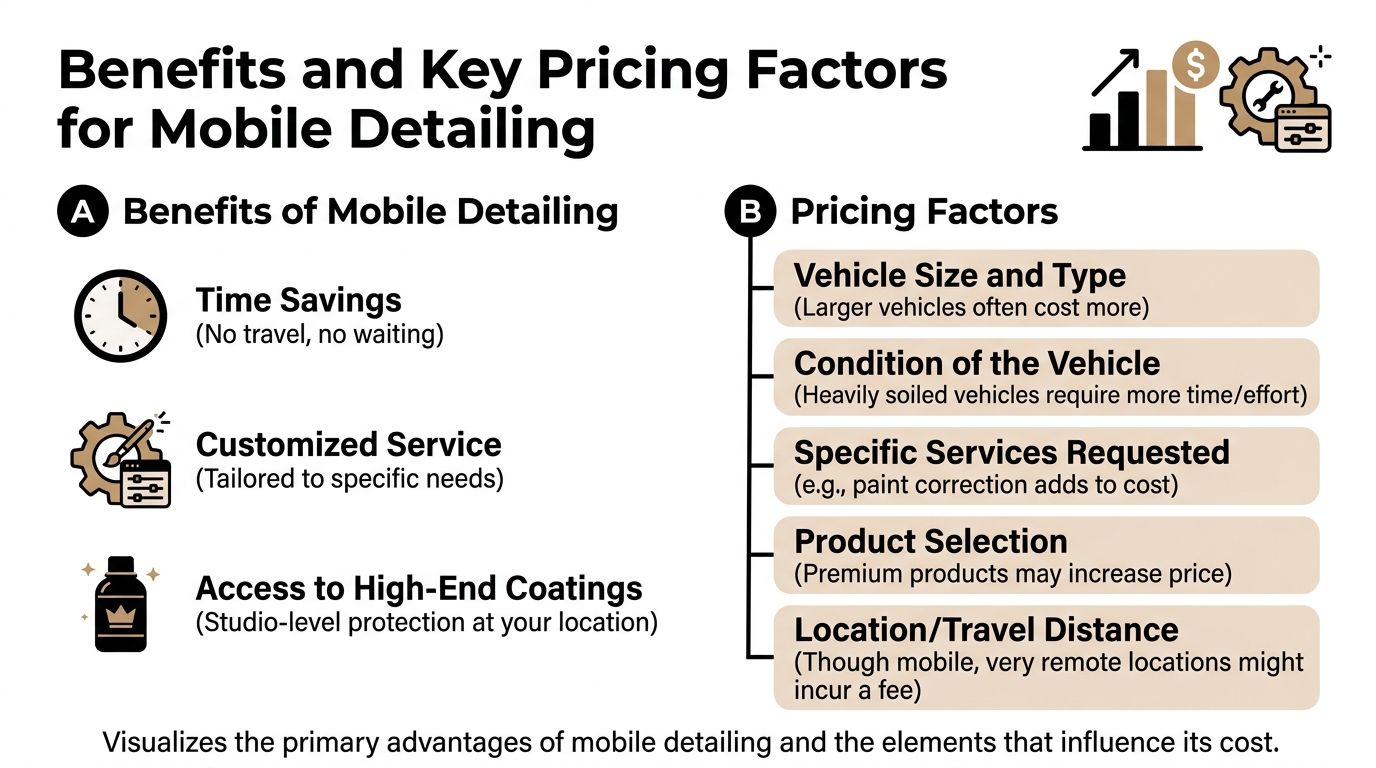
The value shows up in specific ways:
- Time saved because there's no drop-off and pickup shuffle
- Customized service based on the vehicle's actual condition
- Access to premium protection outside a traditional studio environment
That last part matters. A lot of drivers assume better coatings are locked behind a shop door. They aren't. Mobile operators can apply quality protection if the prep and maintenance plan are handled properly.
What changes the price
Pricing usually moves up or down based on condition and scope, not mystery. A compact, well-kept commuter is different from a neglected SUV with stained carpets, dog hair, and rough paint. Add paint correction, glass coating, or premium spray protection, and labor and material use change with it.
The common factors are straightforward:
- Vehicle size and type
- Current condition
- Service package requested
- Product selection
- Travel and site conditions
One mistake customers make is treating coating work like a one-time event with no follow-up. That's where frustration starts. 45% of mobile clients buy ceramic coatings but don't follow the maintenance-wash protocol, which can lead to hydrophobic failure within six months if pH-neutral upkeep is skipped, according to this discussion of client questions around coating maintenance.
That's why a simple product such as Ultra Ceramic Spray has earned a place in the conversation. It's easy to install, gives strong visual results, and makes sense for owners who want practical protection without turning maintenance into a chemistry project. It also works well for touch-up routines between major details.
Maintenance note: The coating sale isn't the end of the job. The wash plan is part of the protection.
Tips for Customers Choosing a Detailer
The best mobile detailers make you feel calm before they ever touch the paint. Their quote is clear. Their van looks organized. Their process makes sense. They answer questions without getting defensive.
The weakest operators usually reveal themselves just as quickly. The quote is vague. The promises are oversized. The answers get slippery when you ask about water recovery, insurance, or aftercare.
Questions worth asking before you book
When you're choosing a detailer, ask for specifics:
- Insurance and business legitimacy so you know who's working on the vehicle
- Before-and-after examples that match your type of job
- Water and runoff handling if you live in an apartment complex or HOA community
- Product and maintenance details if you're booking any coating package
- Written service scope so you know what's included and what isn't
I've seen customers hire the first person with a pressure washer and regret it when trim gets stained or the paint ends up marred. A trustworthy detailer won't dodge process questions. They'll welcome them.
Small signs that matter
One client told me she decided against a booking because the operator wouldn't explain how he handled glass or what product he used on the windshield. That was smart. Glass is one of those areas where vague answers usually mean rushed work.
For drivers who care about safer wet-weather visibility, it's worth asking whether the detailer offers a dedicated glass treatment such as Apex Glass and whether they can explain the prep behind it. Easy application only matters if the surface is cleaned properly first.
A helpful outside reference on the people side of hiring is this UK trades guide on customer trust. It isn't about detailing alone, but it does a good job highlighting the signals that make service businesses feel dependable before the work begins.
Good detailers explain their process in plain language. Pushy detailers hide behind buzzwords.
A final red flag is the hard upsell. If every conversation turns into a premium package regardless of your car's condition, walk away. The right service should fit the vehicle, the owner, and the way the car is used.
Tips for Mobile Detailers Best Practices
The operators who last aren't always the ones with the flashiest vans. They're the ones who can repeat a clean process on difficult days, communicate clearly, and keep quality steady when the schedule gets tight.
Build for repeatability
Mobile detailing still occupies a relatively small slice of the broader detailing world, which creates room for disciplined operators. Mobile detailing represents 2.8% of the global auto detailing market but is growing at an 8 to 10% CAGR, according to Market Intelo's overview of the auto detailing services market.
That opportunity favors detailers who standardize early. Not robotic service. Repeatable service.
Key habits help:
- Package your services clearly so clients know what basic, mid-tier, and protection-focused work includes
- Plan your route tightly because wasted driving kills production
- Document vehicle condition before you begin any correction or coating work
- Teach maintenance at delivery so customers don't ruin the result by accident
Solve the business problems early
Many new operators obsess over polishers and pressure washers but ignore risk management. That catches up fast when you start working on customer vehicles in office lots and residential communities. If you need a plain-English reference on coverage, this guide on how contractors get proper coverage is worth reading.
The same goes for water planning. A self-contained rig with a sensible layout saves time every single day. For detailers designing or refining that setup, this guide on mobile detailing water tank setup is useful.
A few best practices stand out in the field:
- Protect your schedule. Don't overbook correction and coating work into narrow windows.
- Use customer education as retention. Explain wash methods, glass care, and coating maintenance at handoff.
- Offer realistic upgrades. Products that are easy to install and easy to maintain usually produce fewer callbacks than overly ambitious packages.
- Target underserved territory. Apartment-heavy neighborhoods, office corridors, and small fleet accounts often need reliable operators more than glossy marketing.
One practical path is to keep a ladder of offerings. Entry-level wash and interior work gets people in the door. Easier-install protection products such as Ultra Ceramic Spray can bridge casual clients into maintenance plans. Alpha Quartz makes sense for mobile detailers and DIY-minded customers who want stronger results without a fussy process.
The field punishes complicated systems. Simpler packages, cleaner communication, and better aftercare usually win.
Conclusion and Next Steps with Titan Coatings
By the time most people understand what mobile detailing is, they stop comparing it to a basic wash. They start seeing it for what it really is. A professional service model that brings skilled paint, interior, glass, and protection work to the customer instead of dragging the customer to the shop.
The strongest mobile detailers do more than show up with water and towels. They think about runoff, site conditions, product behavior, surface prep, and aftercare. They know a coating isn't just something you apply. It's something you maintain. They know glass work changes how a driver feels in the rain. They know flexibility matters when a protected vehicle lives through frozen mornings and hot pavement afternoons.
That's also why coating technology matters so much in mobile work. Titan created its own coating technology and was the first company to introduce Elastomer coatings to the market by using nano tubes technology and Dark Matter Tech®. The result is a surface that's hard like glass and flexible, which helps it last longer because the coating can move with temperature shifts instead of cracking. That flexibility also helps when bug impact and everyday road abuse hit the front end.
For drivers, the next step is simple:
- Compare quotes carefully
- Ask how the detailer handles water neutrality
- Ask what maintenance is required after any coating service
- Choose products that fit how you use the vehicle
For detailers, the path is just as clear:
- Build a repeatable setup
- Keep your process clean and explainable
- Use products that work in mobile conditions
- Educate every client at delivery
If you want to explore the product side further, it's worth browsing the Titan Coatings website and the Titan Coatings shop. Drivers focused on wet-weather clarity should pay attention to Apex Glass ceramic coating for windshield and glass care. Operators who want an easier install with strong results should look at Alpha Quartz. And for quick application with a strong finish, Ultra Ceramic Spray has obvious appeal for both mobile detailers and DIY users.
Mobile detailing works best when convenience doesn't lower the standard. Done right, it raises it.
If you want coatings built around real-world use instead of showroom theory, visit APEX NANO – Titan Coatings. Explore Elastomer technology, glass solutions, and easy-to-apply ceramic options that fit mobile detailers, DIY users, and drivers who want lasting protection with less compromise.
0 Comments