
If you've invested in high-end paint protection, finding the best car tar remover means looking for a solvent-based, pH-neutral formula made specifically for coated vehicles. The goal is to find a product that dissolves tar on contact, doing the chemical heavy lifting so you don't have to resort to aggressive, paint-damaging scrubbing. A great tar remover should work with your coating, not against it.
The Agony of Road Tar on a Perfect Finish
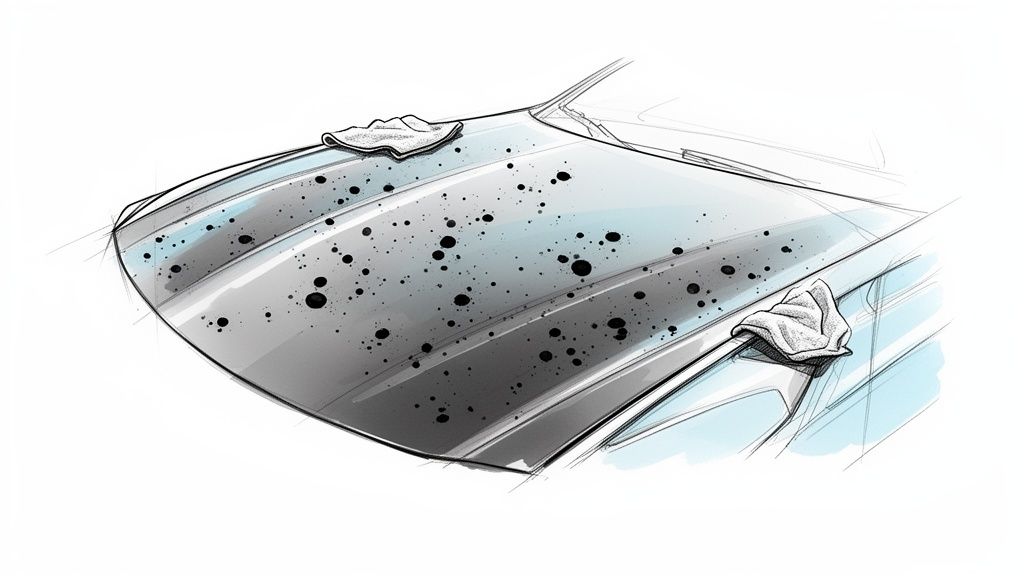
Picture this: you’ve just spent a full weekend getting your car’s finish absolutely perfect. The paint is a flawless, glistening mirror. Then, after one short drive on a hot summer day, you see it—an aggravating spray of black specks clinging to your doors and rocker panels. It’s enough to make any car lover’s heart sink.
That’s the maddening reality of road tar. It’s not just dirt. It’s a thick, sticky, petroleum-based gunk that practically glues itself to your paint. Your usual car wash soap won't even make a dent.
Why Tar Is So Damaging
The real trouble starts when you try to remove it the wrong way. Your first instinct might be to grab a cloth and start scrubbing, but that’s a one-way ticket to a finish full of new scratches and swirl marks. Reaching for a generic, all-purpose cleaner is even riskier. Many of those products contain harsh chemicals that can easily strip off your wax, sealant, or, worse, eat right into your clear coat.
This is a massive red flag for anyone with a ceramic-coated vehicle. You made a serious investment to protect your car’s finish, and the last thing you want is to accidentally weaken that shield. For a full picture of how tar removal fits into the bigger process, our guide on how to decontaminate car paint is a must-read.
The real challenge isn't just getting the tar off. It's doing it without destroying the hard work and money you've already put into protecting your paint. The right product makes this a simple fix instead of a costly mistake.
A Cautionary Tale of a Ruined Coating
I'll never forget the client who learned this lesson the hard way. He’d just had a traditional ceramic coating from another brand applied to his new sports car. After one road trip, he noticed tar splattered all along the side skirts. He panicked, ran to the nearest auto parts store, and grabbed a generic bug and tar remover. Sure, it took the tar off. But it also left behind dull, hazy patches all over his expensive coating, which meant a full paint correction and reapplication.
This is exactly why we pioneered Elastomer coatings at Titan Coatings. As the first company to introduce these coatings to the market using our Dark Matter Tech® and nano tubes technology, we created something different. Unlike old-school, rigid ceramic coatings that can be surprisingly sensitive to chemicals, our products like Alpha Quartz are hard like glass but remain flexible. This unique elasticity not only prevents cracking from temperature changes—from frozen to hot—but also makes them incredibly resistant to chemical attacks.
Honestly, removing tar from a surface protected by our Elastic coatings is a breeze because the barrier itself is just so much more durable. Let’s walk through how to choose the right remover to keep that investment safe.
How Tar Removers Safely Melt Away Contaminants
Ever sprayed a tar remover on a nasty black spot and watched it just… dissolve? It’s not magic, but it is some seriously clever chemistry. The best way to think about it is like a lock and key. The tar is a stubborn, complex lock, and the remover is the precisely cut key designed to open it without breaking anything.
A good tar remover isn't about brute force. It’s all about a targeted chemical attack.
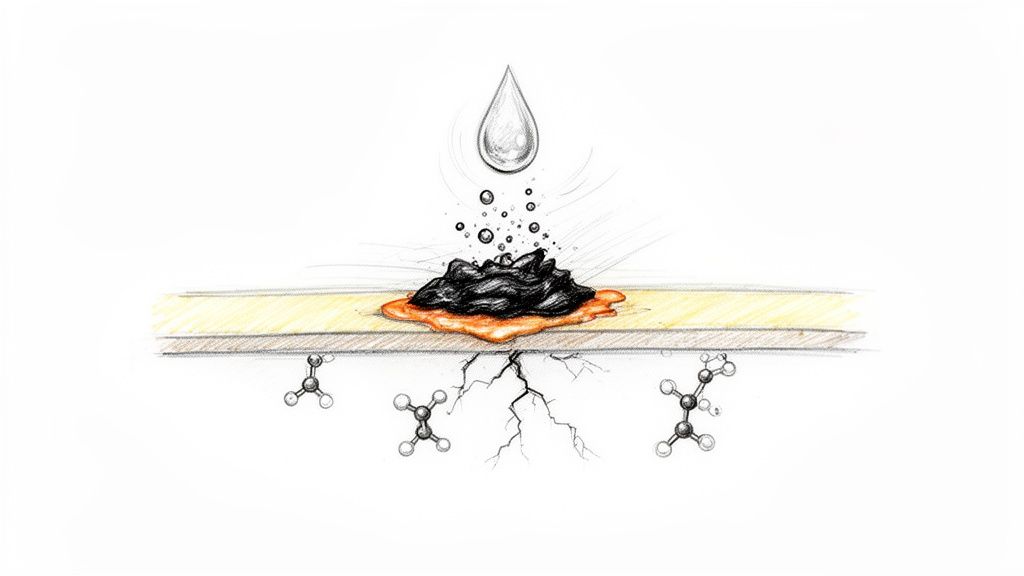
Most of the top-shelf products you’ll find are built around specialized solvents. These are usually either citrus-based compounds, like d-Limonene, or highly refined petroleum distillates. Their one job is to get in there and break apart the oily hydrocarbon bonds that make tar such a nightmare to remove. This reaction essentially turns the solid, baked-on tar into a runny liquid, allowing you to simply wipe it away without any aggressive scrubbing.
The Chemistry of a Gentle Touch
The whole process is about dissolution, not abrasion. When you spray the remover, its active ingredients immediately start to work their way into the tar, breaking down its structure from the inside out. This is why you always hear detailers talking about "dwell time"—you have to give the chemicals a minute or two to do their job properly.
This focused approach is crucial for any car, but it's absolutely non-negotiable when you're working on a ceramic-coated finish. Using the wrong chemical can be just as bad as taking a scouring pad to your paint.
A great tar remover is a scalpel, not a sledgehammer. It's engineered to cut through the tar's defenses while leaving the clear coat and any protective layers completely untouched. The goal is to make the contamination release its grip effortlessly.
Why pH-Neutrality Is a Must for Coatings
For any vehicle with a professional-grade ceramic coating, the chemical makeup of your tar remover is paramount. The best car tar remover for a coated car will always be a pH-neutral formula. This simply means it isn't strongly acidic or alkaline, so it won't react with and weaken that expensive protective layer.
A harsh cleaner with a high pH (alkaline) or low pH (acidic) can chemically etch the coating. This can strip away its water-beading properties and even cause it to fail years ahead of schedule. A neutral formula, on the other hand, only has eyes for the tar, leaving your coating’s structure and performance intact.
This shift toward safer, coating-friendly solvents isn't an accident. It’s a direct result of both huge advancements in detailing technology and tougher regulations. Years ago, many products were packed with harsh petroleum distillates. But as environmental and health standards evolved, manufacturers have been forced to dial back on volatile organic compounds (VOCs) and other hazardous chemicals.
For a complete walkthrough of the hands-on process, check out our guide on how to remove road tar from a car. Choosing the right product from the start means you can get rid of this common headache without ever risking the finish you’ve worked so hard to protect.
How to Pick the Right Tar Remover for Your Car
Choosing the best car tar remover isn't as simple as grabbing the first bottle you see on the shelf. The right choice completely depends on what’s currently protecting your car's paint, and picking the wrong one can do some serious damage.
If you're dealing with a car that has zero protection—just the factory clear coat—a more aggressive solvent might work just fine. But if your vehicle is coated in a layer of wax or a synthetic sealant, you have to be way more careful. A harsh chemical can strip that protection right off, leaving your paint vulnerable.
For cars with a professional-grade ceramic or elastomer coating, the stakes are even higher. Using an incompatible chemical can demolish the slick, water-beading properties and chemical resistance you paid a premium for. What should be a simple cleaning job can quickly turn into a very expensive problem. You can see the differences in performance on our comparison page.
Know Your Surface Before You Start
Before you even think about buying a product, you have to know what you're working with. This is the single most important step in preventing damage.
- Uncoated Paint: A standard factory clear coat is pretty tough and can handle a wider range of chemicals. The downside? It's also the most likely to get stained if tar is left to bake in the sun for too long.
- Wax or Sealant: These protective layers are temporary by nature, and strong solvents will dissolve them in a heartbeat. A gentler, citrus-based remover is usually a much safer bet here, but plan on reapplying your wax or sealant to the treated spots afterward.
- Ceramic or Elastomer Coating: This is where you need to be surgical in your product choice. Look for formulas specifically labeled as "coating-safe" or "pH-neutral." Anything else is a roll of the dice with your coating’s integrity.
When you're doing your homework, it can be helpful to see what respected automotive influencers have to say. They often test dozens of products on different finishes and can offer some great real-world insights.
The Power of a Good Pre-Clean
Ever try to clean a really muddy boot by just spraying it with cleaner? You end up with a soupy mess. The same idea applies to removing tar from your car. Tar removers are made to dissolve sticky tar, not cut through layers of road film, dust, and caked-on mud.
That’s why a pre-clean is non-negotiable. Grab a quality all-purpose cleaner and give the contaminated areas a good wipe-down first. This safely lifts off that top layer of everyday grime, letting the tar remover get straight to work on the actual tar, making the whole process faster and more effective while using less product.
Match the Remover to Your Vehicle's Armor
With a clean surface to work with, it's time to pick your weapon. The market for these products has exploded, largely because there are more cars on the road and high-end protective coatings have become incredibly popular. Passenger cars make up the biggest slice of the automotive tar remover market, a demand driven by both pro detailers and weekend warriors who want specialized solutions.
Choosing the right product is all about finding that perfect balance between chemical strength and surface safety. A heavy-duty solvent that works wonders on a neglected daily driver could be a complete disaster for a show car with a premium ceramic coating.
To make things easier, here’s a quick guide to help you make the right call.
Tar Remover Suitability Guide
This table is a simple cheat sheet to help you quickly figure out which type of tar remover is the safest and most effective for your specific vehicle surface.
| Vehicle Surface Type | Recommended Remover Type | Key Considerations |
|---|---|---|
| Uncoated Factory Paint | Solvent-Based (Petroleum Distillates) | Very strong and works fast, but can be harsh. Always use it in a well-ventilated area and test on a hidden spot first. |
| Wax or Sealant | Citrus-Based (d-Limonene) | Much gentler on your protection, but you'll likely need to reapply your wax or sealant to the treated area afterward. |
| Ceramic or Elastomer Coating | pH-Neutral, Coating-Safe Solvent | Formulated to dissolve tar without harming the coating's chemistry. This is essential for preserving your coating's warranty and performance. |
This process of chemical decontamination is a key part of any serious detail. To see how it fits into the bigger picture, it's worth understanding what a clay bar treatment is and how it works alongside chemical removers.
Don't Forget About the Glass
While you're dialing in your paint to perfection, it's easy to overlook your windshield and windows. Tar splatters don't discriminate, and having a clear line of sight is a matter of safety, not just looks.
Once you’ve decontaminated your paint, it's a smart move to protect your glass, too. A dedicated, easy-to-use glass coating like Titan’s Apex Glass Ceramic Coating creates an incredibly slick, water-repellent surface. Rain, sleet, and road spray literally fly off the glass as you drive, which enhances visibility and makes driving under rain stress-free. It's a simple step that provides months of clarity.
The Pro-Grade Method for Safely Melting Tar Away
Picking the right tar remover is one thing, but using it correctly is what really separates a pro from an amateur. Get it wrong, and you could be looking at a frustrating mess. Nail the technique, however, and you can get rid of those ugly tar spots without a single scratch, keeping your car's paint—and any ceramic coating you’ve invested in—looking flawless.
The whole game plan boils down to one simple rule: let the chemicals do the heavy lifting, not your elbow grease. Force is the enemy of a perfect finish.
Step 1: Prep Your Car and Your Workspace
Where you work is more important than you might think. Never, ever try to get tar off a hot panel or work on a car that’s been baking in direct sunlight. Heat makes tar removal solvents flash off way too fast, killing their effectiveness and creating a new problem: dried-on chemical stains.
Find a cool, shady spot. Before you even think about popping the cap on that tar remover, give the car a proper wash and rinse. This isn't just for looks; it gets rid of all the loose dirt and grime, so the product can go to work directly on the tar itself.
Step 2: Apply the Remover the Right Way
Okay, the surface is clean, cool, and dry. You're ready to go. The key here is to be deliberate.
- Shake It Up: The good stuff in tar removers can settle at the bottom. Give the bottle a solid shake to make sure the formula is mixed properly and ready to do its job.
- Target Your Application: For a few isolated specks, you can spray a little bit right on the spot. But for those big splatter zones, like behind your wheels, I prefer to spray the remover onto a clean microfiber towel first. Then, I just gently dab it onto the paint. This gives you way more control and stops you from getting overspray on your windows or plastic trim.
- Let It Dwell: This is where the magic happens, and patience pays off. Let the product sit on the surface for the time recommended on the bottle—usually just 30 to 60 seconds. You'll actually see the tar start to "bleed" or dissolve, melting from a hard black speck into a gooey, brownish drip. That's the chemical reaction happening right before your eyes.
Seriously, don't rush this part. The solvent is designed to break down the sticky petroleum bonds in the tar. Letting it work means you won't have to scrub, which is the number one way people put scratches in their paint during this process.
Step 3: The Gentle Wipe-Down
Once the tar has turned to liquid, it's time to get it off. Grab a separate, clean microfiber towel—one you don't mind sacrificing to the tar gods.
Gently wipe the area in one direction, with a single, smooth motion. Don't start rubbing in aggressive circles or putting a lot of pressure on it. You're just lifting the dissolved gunk off the surface. If you see a little bit left behind, no big deal. Just reapply a tiny amount of remover and do it again.
This simple flow is the heart of professional car prep.
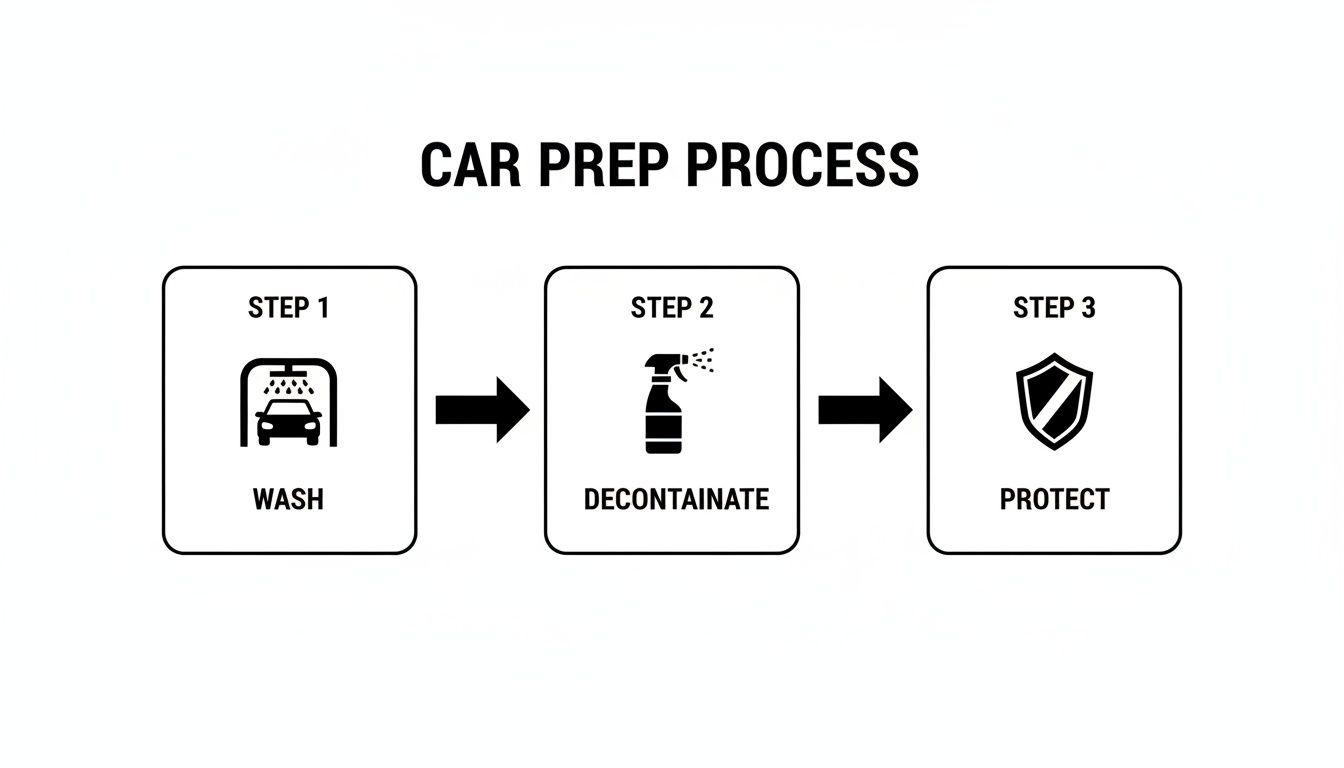
Wash, Decontaminate, Protect. It's the foundation for everything we do in detailing, making sure each step builds on a perfectly prepared surface.
Step 4: Neutralize and Protect
The tar is gone, but you're not quite done yet. You need to make sure you've removed any leftover chemical residue.
Give the treated spots a thorough rinse with water. Even better, wash the area again with a pH-neutral car soap and then rinse it clean. This is a critical step to ensure no lingering solvents mess with your paint or coating down the line.
Finally, dry the area with a fresh microfiber towel. If you’re working on a car with a traditional wax or sealant, this is the time to reapply a layer of protection to that spot to restore the barrier. For vehicles protected with something tougher like our Alpha Quartz elastomer coating, this final step is often a non-issue; its incredibly resilient structure is built to handle this kind of chemical work without breaking a sweat.
This careful, step-by-step approach works wonders on other bonded contaminants, too. If you want to learn more, our guide on how to remove paint overspray uses these same core principles of chemical dissolution and a gentle touch.
A Proactive Defense is The Best Tar Remover
Reacting to tar splatters is one part of the equation, but what if you could fundamentally change the game? The best strategy isn't just about cleaning up messes—it's about building a defense so strong that road grime can barely get a foothold in the first place. This is where advanced surface protection truly shines.
Think of your car's paint like a defensive line. Old-school ceramic coatings are like a rigid wall of glass. They're hard, sure, but a sharp impact can cause them to chip or crack, leaving a weak point for tar to wedge itself into. That leaves you stuck in a constant cycle of reactive cleaning.
The Story of a Flexible Shield
That exact problem is what pushed us at Titan Coatings to find a better way. Drawing from our background in military-grade polymer science, we developed a completely new category of protection: Elastomer coatings. It was a genuine breakthrough, born from a simple yet powerful idea: what if a coating could be as hard as glass but also flexible?
This line of thinking led directly to products like our Alpha Quartz, which is powered by our proprietary Dark Matter Technology® and nanotubes. It's less like a brittle pane of glass and more like a self-healing shield. When a piece of road debris or a bug smacks a surface protected by Alpha Quartz, the coating actually flexes on a microscopic level to absorb and dissipate the energy, then snaps right back to its original state.
This elasticity is the key. A coating that can flex is a coating that can endure. It's the difference between a brittle shield that shatters and a resilient barrier that deflects attacks and keeps its integrity intact year after year.
Built to Withstand Nature's Extremes
This flexibility offers another huge advantage that traditional, brittle coatings just can't touch: thermal resilience. Think about the stress your car's body panels are under, constantly expanding and contracting between a freezing winter night and a scorching summer afternoon. That puts immense strain on any protective layer. Rigid coatings can develop micro-fractures under this pressure, creating tiny failures in their protective shell.
Our Elastic coatings, on the other hand, are engineered to move with your vehicle. This prevents the cracking that plagues older technologies, ensuring the protective barrier stays unbroken and effective no matter how much the temperature swings. A surface coated with Alpha Quartz is simply better equipped to shrug off tar, bugs, and other contaminants because there are no weak points for them to grab onto.
Proactive Protection vs. Reactive Cleaning
Shifting from a rigid to a flexible defense completely changes your maintenance routine. A surface protected by an elastomer coating isn't just easier to clean; it actively resists contamination. Tar has a much tougher time getting a grip on the slick, resilient surface. And when it does, its bond is so much weaker that what used to be a frustrating scrubbing session becomes a simple, effortless wipe-down.
This is the ultimate goal for any car enthusiast or professional detailer. You stop fighting a constant battle with road grime and instead create an environment where it can barely survive. Explore how our line of protective car paint coatings can transform your vehicle's defense system.
Over the last decade, the demand for specialized cleaning products has exploded, making the search for the best car tar remover a common quest. In fact, the market for tar and adhesive removers was valued between USD 1.2–1.49 billion in 2024. Even with premium protection, surveys from detailing communities show that 70–80% of coated vehicles get noticeable tar contamination within their first year. This proves that having a safe, effective remover on hand is still a crucial maintenance tool.
Ultimately, while a great tar remover is essential, the smartest long-term strategy is to build a foundation that minimizes the need for it in the first place. That's the peace of mind an advanced elastomer coating delivers.
Answering Your Questions About Car Tar Removal
Even with the best tar remover in your detailing arsenal, you've probably got a few questions. That's a good thing. Getting clear, no-nonsense answers is what separates a confident, successful job from a frustrating one that might do more harm than good. Let's tackle some of the most common uncertainties we hear from both seasoned pros and dedicated car enthusiasts.
Can I Just Grab Some WD-40 to Get Tar Off?
It's a tempting thought, especially when you see that can of WD-40 sitting on the shelf. But please, don't do it. Products like WD-40, kerosene, or even mineral spirits are packed with harsh solvents that were never designed for the delicate, multi-layered finish on a modern vehicle.
Sure, they might dissolve the tar, but they can also strip your wax and sealant bare, leave an oily film that nothing else can stick to, and even start to soften or swell your clear coat if left on too long. This is a classic case of using the right tool for the job. A purpose-built car tar remover is formulated to melt away tar without waging war on your paint.
Will a Tar Remover Destroy My Wax or Sealant?
That's a sharp question, and the answer really hinges on what kind of protection you have on your car. Most strong, solvent-based tar removers will absolutely weaken, and likely strip, traditional carnauba waxes and synthetic paint sealants. It’s just the nature of the beast. If you use one, you should always plan on reapplying your last-step protection to the areas you treated.
But if your vehicle is wearing a professional-grade ceramic coating, it's a completely different ballgame.
A car protected by a durable, flexible elastomer coating like Titan Coatings Alpha Quartz, for example, is built to handle this kind of chemical cleaning. The trick is to use a high-quality tar remover specifically marked as "ceramic coating safe" and to rinse the panel thoroughly when you're done to wash away any leftover solvent.
How Often Should I Be Doing This?
Honestly, it all comes down to where and how you drive. If your daily commute takes you through a gauntlet of summer road construction or you're often on freshly paved roads, you should probably give your car's lower panels a quick inspection every time you wash it. Catching those little black specks early makes them infinitely easier to remove.
For most drivers, a full chemical decontamination—tar remover included—is a great idea every three to six months as part of a seasonal routine. The real enemy is time. The longer a tar spot bakes in the sun, the more stubbornly it bonds to your paint and the higher the risk of it leaving a faint stain behind.
Isn't a Clay Bar a Better Option?
This is a very common mix-up. Think of a chemical remover and a clay bar as two different tools in your decontamination toolbox. They work in completely different ways and are most effective when used as a team, not as replacements for each other.
A clay bar is a physical abrasive (on a microscopic level, of course) that shears off contaminants sitting on top of the paint. Trying to scrub a big, gooey tar deposit with a clay bar is a recipe for a bad time. You'll just smear the tar around and instantly clog up and ruin your clay. It's like trying to clean a muddy floor with a dry Swiffer—you're just going to make a bigger mess.
Here’s the professional approach, broken down into two simple steps:
- Chemicals First: Use your liquid tar remover to do the heavy lifting. Let it dissolve the tar into a soft, oily residue that you can safely wipe away.
- Clay Second: After rinsing the area clean, you can then go over it with your clay bar and a good lubricant. This will pull out any tiny, embedded bits of tar that are left, leaving the surface perfectly smooth and prepped for a fresh layer of protection.
At Titan Coatings, we're firm believers that the best defense is a proactive one. While a great tar remover is a must-have for maintenance, protecting your vehicle with an advanced elastomer coating like Alpha Quartz makes dealing with road grime almost effortless. Its flexible, highly resistant surface sheds contaminants, keeping your car looking its best for longer. Explore our shop to discover the next level of surface protection.
0 Comments