
The search for the perfect DIY ceramic coating often starts with that familiar weekend ritual. You pour hours into washing, claying, and waxing your car, only to step back and admire a brilliant shine that, sadly, disappears after a few weeks. For a long time, real, long-term paint protection was a secret handshake among professional detailers with their specialized gear and closely-guarded formulas. Not anymore.
Why Pro-Level Paint Protection Is Now a DIY Reality
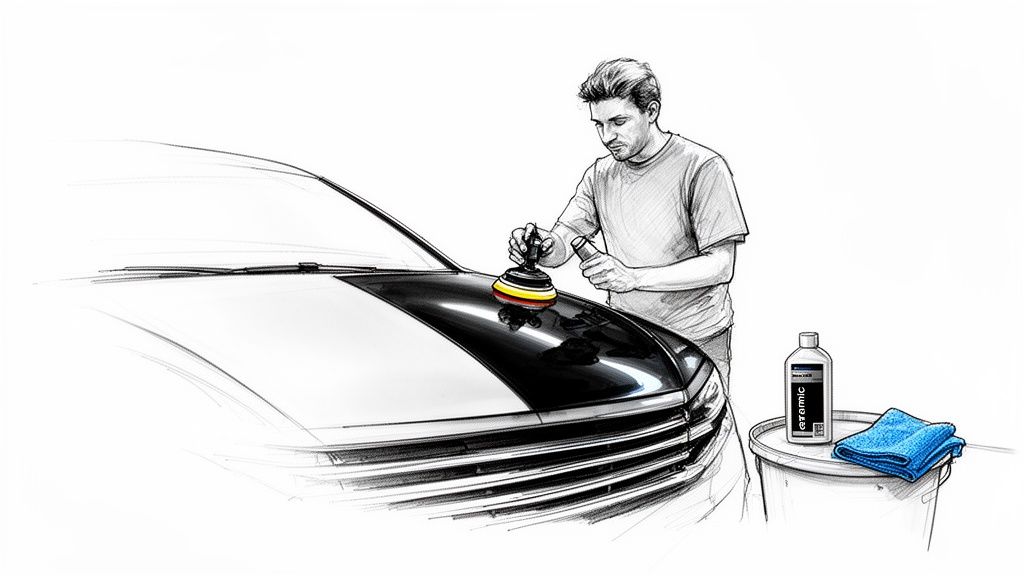
Think about a car enthusiast like Alex. He was stuck in a cycle of temporary fixes, just like many of us. Every month, he’d meticulously reapply wax, only to watch it wash away after a couple of storms. His car's paint was left exposed to road salt, bird droppings, and the harsh sun. The fleeting gloss just wasn’t worth the constant grind.
Alex’s frustration sent him searching for something better, and he stumbled into the world of DIY ceramic coatings. This was a complete departure from temporary gloss, offering a durable, semi-permanent defense for his paint. This stuff isn't just a stronger wax; it's a massive leap forward in chemical engineering, now bottled for your home garage.
The demand for this kind of protection is exploding. The global ceramic coatings market was valued at USD 11.87 billion in 2024 and is on track to more than double to USD 27.12 billion by 2035. This incredible growth is proof that car owners everywhere are catching on. You can explore the full market research on this trend to see just how fast things are changing.
The Rise of Advanced DIY Formulations
This shift is all thanks to companies like Titan Coatings, which completely changed the game by introducing the first Elastomer coatings to the automotive world. Using advanced nano-tubes and their own Dark Matter Technology®, Titan took military-grade polymers and made them user-friendly.
So, what makes that a big deal? Classic ceramic coatings are hard as glass. That's fantastic for scratch resistance, but it also makes them brittle. When your car bakes in the sun and then gets hit by a cool rain, the temperature shock can cause these rigid coatings to develop tiny, microscopic cracks, which eventually undermines the protection.
Titan's groundbreaking Elastomer coatings solve this problem by being both hard and flexible. They form a resilient shield that can expand and contract right along with your vehicle's panels, preventing those cracks and ensuring the coating lasts.
This flexibility means the protection you apply in your own garage won't fail when a bug splatters on your bumper at 70 mph or when a harsh winter freeze sets in. Products like Titan's Alpha Quartz put this elastic, durable technology directly into the hands of enthusiasts like Alex, letting them achieve years of deep gloss and relentless protection—without the professional price tag. The game has truly changed.
Getting to Grips with Modern Coating Technologies
To find the right DIY ceramic coating for your car, you’ve got to see past the marketing hype and get down to the science. The world of paint protection has come a long way from old-school carnauba waxes. Today's formulas are sophisticated chemical marvels designed to defend your paint for years, not months. The real difference between them comes down to a few key ingredients.
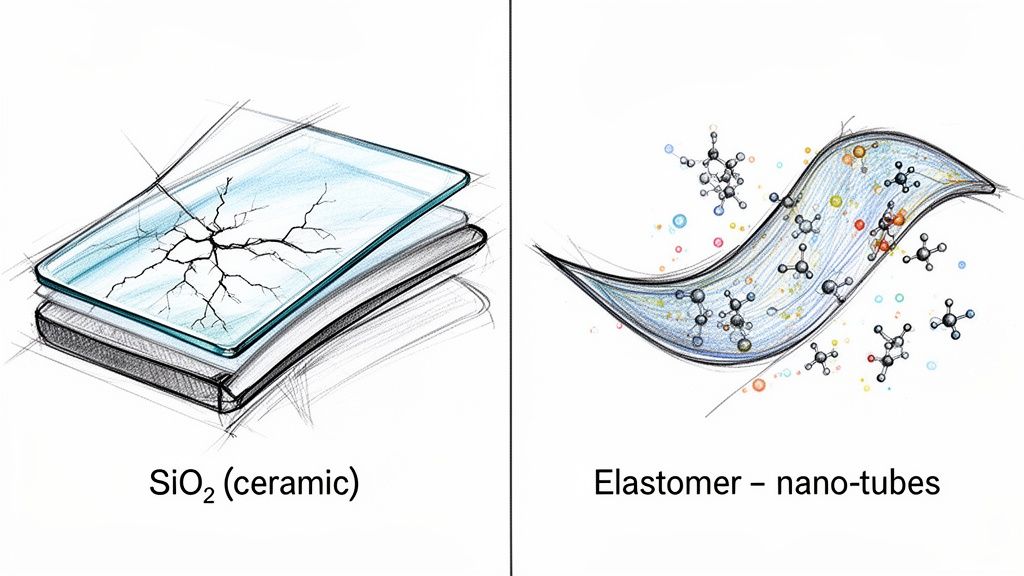
For a long time, Silicon Dioxide (SiO2) was the king of the castle. It's the core component in traditional ceramic coatings and the reason they're known for their rock-hard finish, deep gloss, and unbelievable water-beading. When you apply an SiO2 coating, it cures into a microscopic glass layer over your paint, creating a tough shield against the elements.
But that glass-like hardness has a hidden downside. Think of a standard ceramic coating as a thin, rigid sheet of glass laid over your car. It’s incredibly strong against scratches, but it’s also brittle. This becomes a real problem because your car’s body panels are constantly expanding in the summer heat and shrinking in the winter cold.
The Brittleness Problem
These endless temperature cycles put a ton of stress on a rigid coating. Over time, that stress creates microscopic cracks. You can't see them, but they’re big enough to break the seal, allowing moisture and grime to sneak underneath and cause the coating to fail from within. This is precisely why many traditional ceramics just don't hold up in climates with extreme temperature swings.
This limitation is what sparked the development of graphene-infused coatings. Graphene is an impressive material, known for its strength and ability to dissipate heat. Adding it to a ceramic formula can help reduce water spotting and make the surface feel a bit slicker. It was a step in the right direction, but it didn't solve the fundamental issue of the coating being too rigid. If you want to dive deeper, you can explore the differences in our guide comparing graphene vs. ceramic coatings.
The Elastomer Advantage: Where Flexibility Meets Hardness
This is where Titan Coatings changed the game. As the very first company to bring elastomer coatings to the market, Titan cracked the code on the brittleness problem. The solution was a formula that is both hard and flexible, using advanced nano-tubes and proprietary Dark Matter Technology® to create a protective layer that acts more like reinforced, flexible glass.
Instead of a rigid shell that can fracture under stress, Titan’s elastomer technology creates a resilient shield that flexes right along with your car’s body panels. This elasticity is the secret to next-level durability.
In the real world, this flexibility is a massive advantage.
- Temperature Stability: The coating expands and contracts with your paint, whether it's a freezing winter night or a scorching summer day. This prevents the micro-cracking that kills traditional ceramics.
- Impact Resistance: When a rock or a big bug hits your car, the flexible layer absorbs and spreads out the impact energy, drastically reducing the chances of a chip or permanent mark. A rigid coating is far more likely to just shatter at the point of impact.
This unique blend of toughness and adaptability is what makes Titan's technology a true breakthrough. A product like Alpha Quartz, which is an easy-to-install elastomer coating, gives you that incredible gloss and chemical resistance you're looking for, but with a level of resilience that helps it last far longer. It’s not just about adding a layer of protection; it's about applying a smarter, more durable defense that can handle whatever the road throws at it.
Comparing the Top DIY Ceramic Coatings
Choosing the right DIY ceramic coating isn't about falling for the shiniest bottle or the most outrageous marketing claims. The market is absolutely flooded with options, and every single one promises the moon. To make a smart choice, you have to look at what really matters on the road: durability, how easy it is to apply, resistance to chemicals, and that killer water-beading action.
There's a reason the North American market for these coatings is exploding. It was valued at a massive USD 11.26 billion in 2024, driven by car lovers like us who want professional-level protection we can apply ourselves. This huge spike in the DIY scene shows that people are hungry for the best possible solutions they can get their hands on.
Let's cut through the fluff and see how the leading technologies really stack up when the rubber meets the road. We'll pit Titan's advanced elastomer coatings against more traditional options to see where the real advantages lie. You can explore the full range of options in their online shop to find the perfect match.
Durability Under Pressure
Durability isn't just a number on a box; it's about how a coating handles the daily abuse your car takes. Traditional SiO2 (silicon dioxide) coatings are known for their hardness, which is great against light swirls. But that rigidity is also their biggest weakness.
Picture your daily driver slogging through a harsh winter. The constant freeze-thaw cycles make the car's metal panels expand and contract. For a brittle SiO2 coating, that stress can cause micro-cracking, which breaks down the protective layer and leads to premature failure.
This is exactly where Titan's Alpha Quartz Elastomer Coating changes the game. Its elastomer foundation is engineered for flexibility. It literally moves with your car's panels, absorbing the stress from temperature swings without cracking. This built-in elasticity makes it fundamentally tougher in extreme climates, ensuring the protection you apply lasts for years, not just one season.
The Application Experience
For any DIYer, the application process is just as critical as the final performance. A tricky application can leave you with high spots, streaks, and a finish that looks worse than when you started. A lot of pro-grade coatings have a ridiculously short "flash time," giving you just seconds to wipe off the excess before it’s locked in for good.
That's a common headache, but modern formulas have made the whole process much more forgiving.
- Titan's Alpha Quartz: This stuff was designed with the enthusiast in mind. It has a manageable flash time that gives you a clear window to level the coating and nail that perfect, streak-free finish. Its consistency makes for a smooth, even application, removing the stress you'd get from a pro-only product.
- Titan's Ultra Ceramic Spray: If you're after speed and simplicity, this is your answer. You just spray it on and wipe it off. It won't give you the multi-year durability of Alpha Quartz, but it delivers incredible gloss and hydrophobic properties in an application that takes minutes, not hours.
The real takeaway here is you no longer have to pick between pro-level results and a stress-free application. Today’s best products bridge that gap, empowering you to get a flawless finish right in your own garage.
DIY Ceramic Coating Feature Comparison
To see how these differences play out, let's put some of the top DIY options side-by-side. This table breaks down how Titan's elastomer and spray formulas compare against a couple of common competitors—a standard SiO2 coating and a popular graphene-infused one. For a more detailed look, you can check out Titan's product comparison page.
| Product Feature | Titan Alpha Quartz | Titan Ultra Spray | Competitor A (Traditional SiO2) | Competitor B (Graphene) |
|---|---|---|---|---|
| Technology | Elastomer + Dark Matter Tech™ | SiO2 Hybrid Spray | Standard SiO2 | SiO2 + Graphene Powder |
| Durability | Up to 5 years | 6-12 months | 1-2 years | 2-3 years |
| Flexibility | Exceptional | Good | Low (brittle) | Low to Moderate |
| Application | Easy, forgiving flash time | Extremely Easy (Spray/Wipe) | Moderate, can be finicky | Moderate, prone to high spots |
| Gloss Level | Extreme, candy-like | High, slick finish | Good | Very Good |
| Hydrophobics | Excellent, tight beads | Excellent, fast sheeting | Good | Very Good |
| Best For | Maximum long-term protection | Quick results & maintenance | Budget-conscious DIYers | Enthusiasts wanting new tech |
Notice how Titan Alpha Quartz stands out in durability and flexibility—that's the elastomer technology at work, providing a more resilient shield against the elements.
Chemical Resistance and Hydrophobic Power
Your car is under constant attack from things like acidic bird droppings, bug guts, and harsh road salt. A top-tier coating needs to form an impenetrable barrier to fend them off.
While most good coatings offer decent chemical resistance, the real test is how they hold up over time. A flexible elastomer coating like Alpha Quartz maintains its structural integrity even after taking minor hits from road debris, meaning there are no weak spots for chemicals to seep through. Its unique structure, powered by nano-tubes and Dark Matter Tech, creates a dense, cross-linked shield that's exceptionally resilient.
And then there's that deeply satisfying water beading. A powerful hydrophobic effect doesn't just look cool; it makes your car radically easier to clean.
A perfect example of this technology in action is Titan's APEX Glass Ceramic Coating. Apply it to your windshield, and it completely transforms how you drive in the rain. Water beads into tight little spheres and zips right off the glass, dramatically improving your visibility and making wipers almost unnecessary at highway speeds. This is the kind of practical, safety-enhancing performance that defines a world-class coating system.
If you're ready to assemble the perfect protection package for your ride, our guide on choosing a DIY ceramic coating kit is the perfect place to start.
Your Guide to a Flawless DIY Application
Getting that professional, dripping-wet shine in your own garage doesn’t come down to fancy equipment. It all boils down to a disciplined, meticulous process. The final look is a direct result of the work you put in upfront. A truly flawless DIY application has three make-or-break stages: Preparation, Application, and Curing. Nail these, and you'll lock in a brilliant, durable finish that lasts.
Before you even dream of cracking open that bottle of ceramic coating, your car’s paint needs to be flawlessly clean. I’m talking about a level of clean that goes way beyond a typical Saturday car wash. Any lingering contaminants—be it iron fallout, old wax, or road grime—will get trapped underneath the coating. This will kill the bond and ruin the finish from day one. That’s why a thorough wash, decontamination, and paint correction are the absolute foundation of a great coating job.
This simple decision tree can help you zero in on the right coating for your goal, whether you need bulletproof protection for a daily driver or a quick, easy shine for your weekend cruiser.
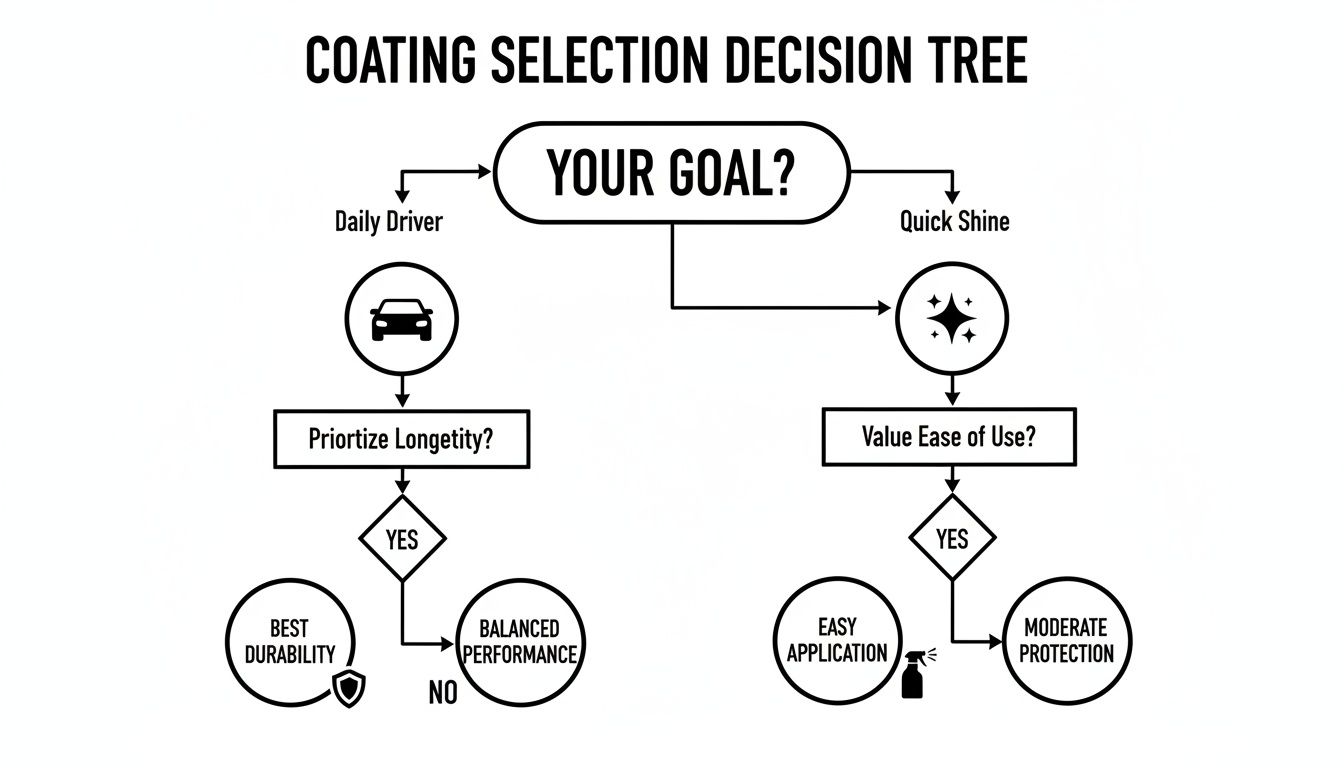
As you can see, choosing the best DIY ceramic coating for your car is all about what you value most—longevity, ease of use, or a balance of both.
Stage 1: The Critical Preparation Phase
Let me be blunt: prep work is 90% of the job. Rushing this is the single biggest mistake you can make. Think of it like painting a house—you wouldn't slap a fresh coat of paint on dirty, peeling walls, right? It's the same idea here, but the stakes for your car’s finish are much higher.
Here’s the essential workflow to get your surface perfectly prepped:
- Thorough Wash: Start with a quality, pH-neutral car soap and the two-bucket method to avoid adding new scratches. This gets all the loose dirt and grime off.
- Chemical Decontamination: Next, hit the paint with an iron remover. This stuff dissolves the tiny metal particles from brake dust that get embedded in your clear coat. You’ll see it “bleed” purple as it works—that’s how you know it’s pulling all that gunk out.
- Mechanical Decontamination: Follow up with a clay bar or a clay mitt. This step physically pulls off any stubborn, bonded contaminants like tree sap or road tar that the chemicals missed. Your paint should feel as smooth as glass when you’re done.
- Paint Correction: This is where the magic happens and what separates a good job from a great one. Using a polisher, you’ll remove any swirls, fine scratches, and oxidation. A ceramic coating protects, but it also magnifies whatever is underneath. This step ensures you're locking in perfection.
- Final Wipe-Down: The last step before you coat is to wipe down every panel with an IPA (isopropyl alcohol) solution or a dedicated panel prep spray. This removes any leftover polishing oils and guarantees the coating has a pure, clean surface to bond to.
Stage 2: The Application Process
With your paint looking perfect, it’s time to apply the coating. You’ll want to work in a well-lit, climate-controlled space, like your garage. The sweet spot for temperature is usually between 60-80°F (15-27°C). Trying to apply a coating when it's too hot or cold will mess with its flash time and can make your life difficult.
Let's use Titan's Alpha Quartz Elastomer Coating as our example, since its user-friendly formula is perfect for enthusiasts who want professional results.
The secret to a perfect application is working in small, manageable sections—think 2×2 feet at a time. This methodical approach keeps the coating from drying out too fast and ensures you’re always in control.
Put a few drops of Alpha Quartz onto your suede applicator and wipe it onto the panel in a tight cross-hatch pattern—first side-to-side, then up-and-down. This ensures you get even, complete coverage. Now, watch the surface closely. You're looking for the "flash," which looks like an oily, rainbow-like haze. That's your signal to gently level the coating with a clean microfiber towel. Immediately follow up with a second, fresh towel to buff away any remaining residue. Use a good detailing light to scan for any "high spots" (dark, streaky patches) and knock them down before they have a chance to cure.
Stage 3: The Curing Stage
Once the final panel is applied and buffed to a mirror shine, you're almost there. The coating now has to cure, which is the chemical process where it hardens and cross-links with your car's clear coat.
For the first 24 hours, the car needs to stay inside, away from any rain or moisture. For the first week, avoid washing it or exposing it to any harsh chemicals. The coating will feel hard to the touch within a few hours, but it takes up to a week to fully cure and achieve its maximum strength and water-beading properties. Protecting it during this crucial window is key to getting the durability you paid for.
For a deeper dive, you can check out our comprehensive guide on how to apply ceramic coating to a car. Following these steps will make sure all your hard work pays off with years of incredible gloss and protection.
Extending Protection Beyond Your Paint
If you're serious about protecting your car, you have to think beyond just the paint. Real-deal protection means covering every single vulnerable surface, from the windshield to the plastic trim. This is the difference between a good detail and a truly exceptional one—a comprehensive approach that elevates your car's look and your entire driving experience.
This isn't just a niche idea; it's a global movement. The demand for total vehicle care is exploding, with the Asia-Pacific region expected to dominate the ceramic coating market, holding over 50% of the global market share by 2035. It's clear that drivers everywhere are catching on to the benefits of shielding every part of their vehicle from UV rays, harsh weather, and oxidation.
Crystal Clear Vision in Any Weather
One of the most immediate and impactful upgrades you can make is treating your glass. We’ve all been there: driving down the highway when a sudden downpour hits. Your wipers are on full blast, but they’re just smearing water across the windshield, making it nearly impossible to see. It’s a stressful, dangerous situation.
Now, imagine that same scenario with a windshield treated with Titan’s APEX Glass Ceramic Coating. It's a completely different world. Rainwater instantly beads up into perfect little spheres and flies right off the glass as you drive, even at normal speeds. Your wipers almost become an afterthought. A nerve-wracking drive is transformed into a calm, controlled cruise, giving you one of the most practical safety upgrades a coating can offer.
Applying a dedicated glass coating isn’t just about looks; it's a functional upgrade that directly improves your safety and reduces driving stress. The intense water-beading makes navigating a rainstorm feel almost effortless.
Making Maintenance a Breeze
The perks of specialized coatings don't stop when the rain does. That same slick, protective layer that repels water also makes cleaning your car ridiculously easy.
- Bug Splatter: After a summer road trip, bug guts can be a baked-on nightmare that can even etch your glass. With APEX Glass, they wipe off with almost no effort.
- Ice and Frost: If you live in a cold climate, you know the morning ritual of scraping ice. A coated windshield resists ice bonding, so you can often clear it with a quick swipe instead of a fight.
This philosophy of using the right product for the right job is why coatings like Titan’s elastomer-based Alpha Quartz are so effective for paint. Its flexible formula helps it absorb impacts from things like bug strikes, while APEX Glass provides specialized, hardened protection for your windows.
By using the right tool for each surface, you create a layered defense system. You can see how this stacks up against other methods in our guide on Paint Protection Film vs. Ceramic Coating. It’s this complete strategy that ensures every inch of your car is properly shielded.
How to Maintain Your Ceramic Coated Vehicle
So you've put in the work, applied a top-tier DIY ceramic coating, and now your car has that incredible, dripping-wet gloss. The job isn't quite done, though. Now it's all about protecting that investment. It's a common myth that a ceramic coating is some kind of indestructible force field that you can ignore. The reality is that it's a high-performance shield that, with a little bit of care, will give you years of jaw-dropping shine and protection.
Think of it this way: you wouldn't drop a race-tuned engine in your car and then fill it up with the cheapest, lowest-grade oil you can find. Your coating is no different. It needs the right kind of upkeep to perform at its peak. The great news? This is way, way easier than the endless cycle of waxing you've left behind.
The Foundation of Proper Coating Care
The single most important thing you can do is nail your washing technique. Stay away from harsh, high-pH soaps and abrasive automatic car washes—they are the sworn enemies of your coating. Over time, they'll wear down that protective layer and kill the shine you worked so hard for.
Instead, build your routine around these simple rules:
- Use a pH-Neutral Soap: This is non-negotiable. It cleans away dirt and grime without chemically attacking the coating itself.
- Master the Two-Bucket Method: One bucket for your soapy wash mitt, one for rinsing it clean. This simple habit is the best way to stop dragging dirt back across your paint, which is what causes those dreaded swirl marks.
- Dry with a Quality Microfiber Towel: Ditch the old bath towels and chamois. Use a plush, clean microfiber drying towel to gently blot the water off the surface. No aggressive wiping needed. This prevents scratches and annoying water spots.
While a ceramic coating is a fantastic way to protect your paint and make cleaning easier, remember to factor in overall vehicle maintenance costs as part of your car ownership budget, which can vary significantly between different types of vehicles.
Rejuvenating Your Coating and Boosting Performance
After a few months, you might notice the water isn't beading and flying off the paint quite as dramatically as it first did. Don't panic! This is usually just a fine layer of road grime or mineral deposits sitting on top of the coating, temporarily masking its hydrophobic properties. A ceramic maintenance spray is the perfect fix.
A quality topper, like Titan’s Ultra Ceramic Spray, is your secret weapon. Think of it as a sacrificial layer. You just mist it on and wipe it off after a wash every few months. It instantly brings back that slick, glassy feel, deepens the gloss, and restores that unbelievable water-beading. It’s a 15-minute job that adds months of extra protection.
This little bit of regular upkeep doesn't just keep your car looking amazing; it also seriously extends the life of your base coating, like Alpha Quartz. By following these simple steps, you'll make sure your ride continues to turn heads with that "just-coated" look for years to come. For a deeper dive, you can learn more about proper ceramic coating maintenance procedures.
Got Questions? We've Got Answers
Stepping up from wax to a ceramic coating is a big move, so it's smart to have questions. You're not just protecting your car; you're investing time and effort. Let's tackle some of the most common things people ask before they dive in.
Just How Hard Is It to Apply a DIY Ceramic Coating?
Honestly, it's more about patience than professional skill. While it’s definitely more involved than slapping on a coat of wax, modern formulas are built with the home enthusiast in mind. A product like Titan's Alpha Quartz Elastomer Coating, for example, is surprisingly forgiving.
The real work is in the prep. A spotless wash, full decontamination, and a proper paint correction are non-negotiable. If you can stay focused, work in small, manageable sections, and pay close attention to the details, you can get a pro-level result.
Will a Ceramic Coating Hide My Scratches and Swirls?
Nope. In fact, it's the opposite. A ceramic coating is a completely clear, glass-like layer. It locks in whatever is underneath, and the amazing gloss it adds will actually put a spotlight on every swirl, scratch, and imperfection. This is precisely why the paint correction stage is so critical. You have to perfect the paint before you protect it.
What's the Real Difference Between Elastomer and Regular Ceramic Coatings?
It all comes down to flexibility. Think of traditional ceramic coatings as a thin sheet of glass—very hard, but also brittle. Temperature swings and small impacts from road debris can cause them to develop tiny micro-cracks over time.
Titan's elastomer coatings are a different breed entirely, a technology they brought to the forefront. They are engineered to be both hard and flexible. This means they can absorb small impacts and flex with your vehicle's body panels as they expand and contract, which prevents those cracks from ever forming. The result is simply better, longer-lasting protection.
How Long Does a DIY Ceramic Coating Really Last?
The lifespan depends on a few things: the quality of the product you choose, the climate you live in, and how you maintain it. A quality ceramic spray, like Titan’s Ultra Ceramic Spray, can give you solid protection for many months.
But if you go with a professional-grade DIY elastomer coating like Titan's Alpha Quartz, you're looking at years of protection with proper care. The key is consistent maintenance—stick to pH-neutral soaps and stay away from the harsh chemicals and brushes at automatic car washes.
Ready to give your car a new level of protection that actually flexes with the demands of the road? Titan Coatings brings advanced elastomer technology right to your garage. Check out the incredible durability and shine of Titan's Alpha Quartz Elastomer Coating today and give your car the lasting defense it truly deserves.
0 Comments