
So, you’ve just had your car ceramic coated. The paint looks like liquid glass, water beads off it like magic, and you’re feeling pretty smug about the whole thing. But then, a thought creeps in, maybe before a weekend car show: “Could I make it look even better? Can I wax over this?”
The short answer is yes, you absolutely can wax over a ceramic coating. But the real question isn't can you, it's should you? And if so, what should you use?
The Real Deal: Coatings vs. Toppers
Think of it this way: your ceramic coating is the permanent armor for your vehicle's paint. It’s the tough, durable shield doing all the heavy lifting. A wax or, more appropriately, a "topper," is a temporary, sacrificial layer that you put on top for a little extra pop.
It’s less about just stacking products and more about understanding how they work together to get the result you want without compromising the coating you paid good money for.
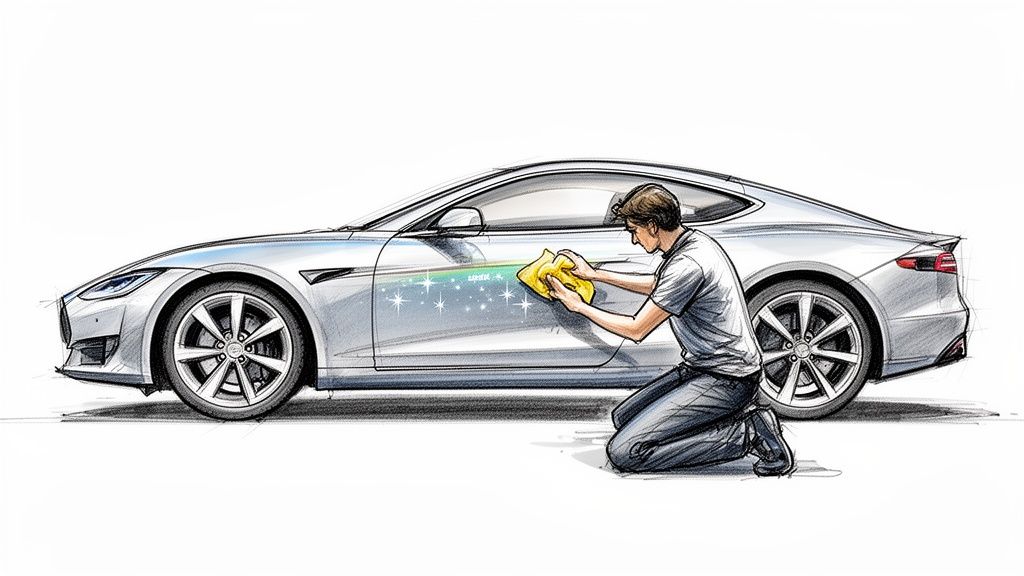
A Solid Foundation Makes All The Difference
Here’s something most people don’t consider: the quality of your base ceramic coating dictates how well any topper will perform. This is where modern coatings, like the flexible Elastomer technology from Titan Coatings, have completely changed the game.
Older, traditional ceramic coatings are incredibly hard, but that hardness can also make them brittle. Titan’s coatings, on the other hand, are engineered to be hard and flexible. Thanks to innovations like Dark Matter Tech®, they can expand and contract with your car's body panels through freezing winters and blazing hot summers without developing micro-cracks. This creates a far more stable and reliable foundation, making it the perfect canvas if you decide to add that extra aesthetic layer.
A high-quality ceramic coating is your core defense, providing long-term protection that wax simply can't match. A compatible topper is best used for specific situations, like enhancing shine for a show or adding a temporary sacrificial layer.
To get a clearer picture of their distinct roles, let's break down the fundamental differences between a ceramic coating and a traditional wax.
Ceramic Coating vs Wax At A Glance
| Feature | Ceramic Coating | Traditional Wax |
|---|---|---|
| Primary Purpose | Long-term chemical & UV protection, hardness | Short-term gloss enhancement, minimal protection |
| Chemistry | Covalent bond with clear coat (becomes part of it) | Sits on top of the surface (lays on paint) |
| Longevity | 2-7+ years | 2-3 months |
| Hydrophobics | Extreme, long-lasting water beading | Good initially, fades quickly |
| Protection Level | High resistance to chemicals, bird droppings, UV | Low resistance, easily washed away |
Ultimately, these two products are designed for entirely different jobs. A coating is a semi-permanent shield, while wax is a short-term beauty treatment.
In the world of professional detailing, the consensus is clear: while a coating alone provides 2-5+ years of robust defense, applying a compatible, non-abrasive topper can boost gloss retention by an estimated 20-30%. You can dive deeper into the difference between wax and ceramic coating to really understand how these technologies differ at a molecular level. The key is choosing the right kind of topper to complement, not cover up, your coating's performance.
Understanding the Science Behind the Shine
To really get why putting wax on a ceramic coating isn't just possible but sometimes beneficial, you have to picture how your car's paint is structured. I always tell people to think of their ceramic coating as a high-tech, chemically bonded screen protector for their paint. It’s incredibly tough, semi-permanent, and built for the long haul.
A wax or a modern sealant, on the other hand, is like a thin, stylish case you slip over the top. It doesn’t replace the screen protector; it just adds a different look and feel while taking the brunt of daily wear and tear.
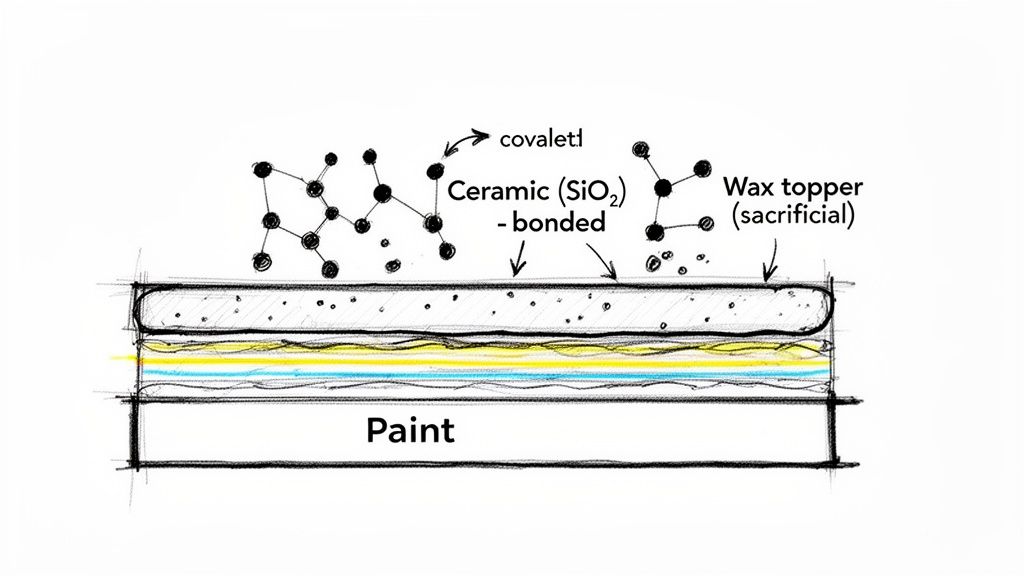
When you zoom in to the molecular level, most ceramic coatings are built on silicon dioxide (SiO2). This creates a powerful covalent bond right to your vehicle’s clear coat, forming a super-slick, low-energy surface that water just flies off of. Old-school carnauba waxes are organic and oily, so they have a tough time getting a good grip on this inorganic, glass-like layer. That's a fundamental mismatch.
The Titan Coatings Advantage
This is exactly where the quality of your base coating becomes the most important factor. Here at Titan Coatings, our technology completely rewrites the rulebook. We were the first to bring Elastomer coatings to the market, powered by a blend of nano-tube technology and our proprietary Dark Matter Tech®. The result is a surface that has the hardness of glass but with a unique flexibility.
The real magic of our elastic coatings is their ability to adapt. Traditional hard coatings can turn brittle and develop tiny fractures over time, but ours flexes, giving you far superior, long-lasting integrity.
This elasticity is huge. It stops the micro-cracking that can happen when your car goes from a frozen morning to a sun-baked afternoon. It also means the coating can better absorb small impacts, creating a much more stable and durable foundation for any "sacrificial" layer you want to add on top. When your base layer is this resilient, a topper can do its job of adding gloss and slickness without ever compromising the core protection underneath. If you're curious about the deep dive, you can learn more about what a ceramic coating is and how this next-gen chemistry really works.
Why Flexibility Equals Durability
This isn't just a small feature—it's a complete shift in how paint protection works.
- Temperature Resilience: The coating expands and contracts right along with your car’s metal panels, preventing the stress fractures that plague rigid coatings.
- Impact Absorption: Those elastic properties help to spread out the energy from minor impacts, like bug guts or small road debris, which cuts down on the chance of chipping.
- Superior Bonding: A stable, crack-free surface gives compatible SiO2-based toppers a much better anchor, helping them last longer and perform at their peak.
At the end of the day, a strong, flexible foundation doesn't just protect better—it creates the perfect canvas for you to chase that next-level, show-car shine.
The Pros and Cons of Topping Your Coating
So, you're wondering if you can wax over a ceramic coating. It's a great question, and the answer isn't a simple yes or no. You're essentially weighing the temptation of an unbelievable "wet look" finish against the risk of messing with the high-tech protection you paid good money for.
Let's walk through it. On one hand, the appeal is undeniable, especially if you're prepping for a car show or just love seeing your ride at its absolute best. The right topper can lay down a stunning layer of gloss that adds incredible visual depth, making your paint look a foot deep. It also creates a sacrificial barrier that takes the hit from bird droppings or water spots, saving the coating itself. You might even notice the water-beading effect gets a temporary, supercharged boost.
The Upside: A Deeper Shine and a Sacrificial Shield
Let's be honest: the main reason anyone thinks about topping a coating is for the looks. A high-quality ceramic coating is already brilliant, but a great topper can push it to the next level.
- Enhanced Gloss: You can get a warmer, richer glow that makes the paint pop, especially in the sun or under showroom lights.
- Added Protection: Think of it as a screen protector for your coating. This temporary layer absorbs the daily grime and minor environmental assaults.
- Boosted Hydrophobics: Many modern toppers can refresh that slick, just-coated feel, making water dance right off the surface.
The Downside: Potential for Masking and Mistakes
Now for the flip side. The risks are real, and you need to be careful. The biggest mistake you can make is grabbing the wrong product off the shelf. If you use an old-school cleaner wax with abrasives, you're not just adding a layer—you're actively grinding away at your expensive ceramic coating. That completely defeats the purpose.
Even if you choose a "safe" product, you're still temporarily masking the coating's own self-cleaning and protective abilities. Apply it wrong, and you could be left with a streaky, hazy mess that’s a real headache to fix.
From a professional standpoint, while a traditional carnauba wax just won't stick well to a slick ceramic surface, modern synthetic polymer sealants are a different story. They can bond just enough to work. In fact, some can even extend a coating's life by 15-25% by adding another layer of UV protection. As you can discover more insights about a professional's perspective on ApexAutoShieldTX.com, the secret is using a product designed to play nice with a coating, not fight against it.
Ultimately, it all comes down to your goal. If you want maximum, long-term performance from your coating with the least amount of fuss, just leave it alone. But if you’re chasing that extra 10% of visual perfection for a special event, a compatible topper is the answer.
For most people, the perfect middle ground is a dedicated ceramic coating maintenance spray. It’s designed specifically to boost the gloss and slickness of your coating without any of the risks of traditional waxes. It’s the smart way to enhance without compromise.
Choosing the Right Products for the Job
After you’ve invested in a ceramic coating, one of the biggest mistakes you can make is grabbing that old can of carnauba wax off the shelf. Think of it this way: a traditional wax is an organic, oily substance. A ceramic coating is an inorganic, glass-like shield. They just don’t play well together.
Applying a classic wax over a modern coating is like trying to put a vinyl sticker on a non-stick pan. It won’t bond properly, it will mask the coating’s incredible water-beading properties, and it will break down in a matter of weeks, leaving behind a greasy, dust-attracting mess. You need a maintenance product that’s chemically designed to work with your coating, not fight against it.
The Power of a Purpose-Built Topper
This is where SiO2-infused spray sealants and specialized ceramic detail sprays come in. These products share the same chemical DNA—silicon dioxide—as your coating. Instead of just sitting on top, they form a true chemical bond, essentially becoming a fresh, sacrificial layer. It's less of a cover-up and more of a booster shot for your paint’s protection.
A product built for this exact purpose makes all the difference. We actually developed our Titan Coatings Ultra Ceramic Spray to be the perfect maintenance topper for our professional-grade coatings. It’s formulated to refresh the slickness, crank up the gloss, and supercharge the water-beading, making your car look like it was just coated yesterday.
We recently heard from a DIY guy named Mark who used Ultra on his Titan-coated muscle car before a local show. He wanted that extra pop to stand out. In his own garage, with just a couple of microfiber towels, he was able to get a flawless, mirror-like finish in under 30 minutes. He couldn’t believe how easy it was to get results that turned heads all day long.
Using a compatible topper is the secret to maintaining that "just coated" look. It ensures you're enhancing the coating's performance without introducing any elements that could degrade its longevity or effectiveness.
Comparing Topper Options for Ceramic Coatings
To help you decide what’s best for your needs, here’s a quick breakdown of the most common choices. Getting familiar with the different types of automotive sealants for car paint is the first step toward making the right call for your vehicle.
| Topper Type | Best For | Durability | Application Method |
|---|---|---|---|
| SiO2 Spray Sealant | Long-term sacrificial layer and hydrophobicity boost | 3-6 months | Spray on, wipe off with microfiber |
| Ceramic Detail Spray | Quick gloss enhancement before shows or events | 2-4 weeks | Mist and wipe, perfect for light dust removal |
| Traditional Carnauba Wax | Not recommended; provides a temporary warm glow | 1-2 weeks | Labor-intensive application, poor bonding |
Picking the right product from the start means your efforts will actually pay off, leaving you with a finish that’s not just stunning but also properly protected for the long haul.
A Step-by-Step Guide to a Flawless Application
Getting that perfect, show-ready finish on top of your ceramic coating is all about the details. It's more than just a quick spray and wipe. To get the most out of any topper, you have to nail the prep work first. This guide will walk you through the process, helping you sidestep the common pitfalls that leave behind a streaky, frustrating mess.
Step 1: The Perfect Wash
It all starts with a clean slate. You need to get rid of every bit of loose dirt and road grime without damaging the coating you’ve worked so hard to protect. Using a pH-neutral car soap isn't just a suggestion—it's essential. Anything too acidic or alkaline will slowly eat away at your ceramic coating.
Always work in the shade, and grab two buckets. The two-bucket method is a classic for a reason: it keeps the dirty water separate from your clean, soapy water, dramatically reducing the chances of dragging grit back across your paint.
Step 2: Complete Decontamination and Drying
Even a thorough wash can leave behind stubborn, bonded contaminants. For a truly slick, glass-like surface, a clay bar treatment is the next step. A clay bar gently pulls out those embedded particles that your wash mitt can't touch, creating a perfectly smooth canvas for your topper to bond to. If you haven't done it before, our guide on how to properly clay bar your car breaks it down simply.
Once the surface is totally clean, dry it meticulously with a plush, high-quality microfiber towel. You want to eliminate every drop to prevent water spots from forming.
Step 3: The Application
Alright, time for the fun part. Let's use Titan’s Ultra Ceramic Spray as our example, since it's built to play well with existing coatings. The key is to work methodically.
- Focus on one small section at a time—think a single door panel or half the hood.
- Give the panel a light, even mist of the Ultra Ceramic Spray. Less is often more.
- Without letting it sit, immediately grab a clean microfiber towel and spread the product evenly across the panel.
- Switch to a second, completely dry microfiber towel and gently buff the area to a high-gloss, streak-free shine.
Step 4: Don’t Forget the Glass
While you're dialing in that perfect shine on the paint, give your glass some attention, too. For incredible clarity and safety in bad weather, a product like Titan's APEX Glass Ceramic Coating is a game-changer. It's incredibly easy to use and creates a ridiculously hydrophobic layer that sends rain beading and flying off your windshield. Driving through a downpour becomes stress-free, dramatically enhancing visibility and safety.
This flowchart breaks down how to choose the right topper based on what you're trying to achieve.
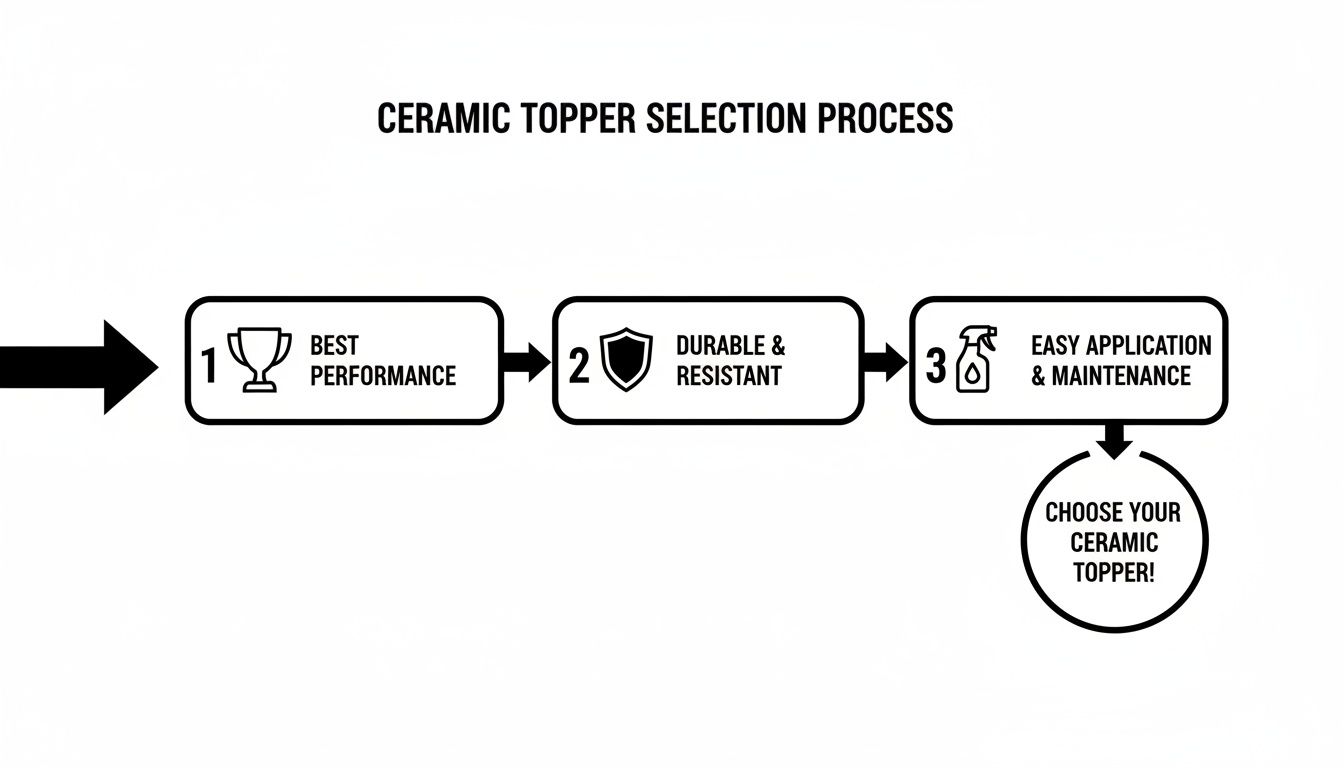
As you can see, your end goal—whether it's the absolute best shine, maximum durability, or just easy maintenance—points you toward the perfect product for the job.
Why Your Foundation Coating Matters Most
It’s easy to get lost in the weeds talking about waxes, toppers, and maintenance sprays. We can debate the pros and cons all day, but we'd be missing the most important piece of the puzzle. The real hero protecting your car isn't the temporary gloss you add for a weekend car show; it's the foundational coating fused to your paint.
Everything—the performance, the longevity, the jaw-dropping shine—all comes back to the quality of that primary shield.
This is where we at Titan Coatings do things a bit differently. Our story didn't start in a detailing shop. It began in the world of military-grade polymers. We took the lessons learned from creating resilient, battle-tested materials and brought that spirit of innovation to the automotive world. The result was something truly special.
The Power of a Flexible Foundation
Our flagship professional product, Alpha Quartz, was the very first Elastomer coating to hit the market, and it completely changed the game. Its secret weapon is a unique combination of glass-like hardness and incredible flexibility, an innovation powered by our nano-tube and Dark Matter tech.
Here’s a simple way to think about it: A typical ceramic coating is like a thin sheet of glass. It’s hard, sure, but it’s also brittle. Titan’s Elastomer coatings are more like Gorilla Glass—they have that same tough surface but are engineered to flex and absorb impacts without cracking.
This elasticity means our coatings don't just sit on the surface; they adapt to the real world.
- Temperature Resilience: Metal expands and contracts with temperature. From blistering summer heat to frozen winter nights, our coatings flex right along with your car's panels, preventing the stress cracks that can plague rigid coatings.
- Impact Absorption: The coating is engineered to absorb the kinetic energy from things like rock chips and nasty bug splatters, dissipating the force and preventing chips where a stiffer coating might fail.
Ultimately, the best, most durable finish starts with the best foundation. A Titan coating gives you that core, an unparalleled canvas for shine and protection. Whether you decide to add a topper like our Ultra Ceramic Spray for extra pop or just let the coating’s natural brilliance shine, you can rest easy knowing the protection underneath is uncompromisingly strong.
You can see a full comparison of our advanced coatings to understand just how different this technology really is.
Got Questions? We've Got Answers
Let's tackle some of the most common questions we hear from detailers and enthusiasts. When you've invested in a ceramic coating, it's smart to be cautious about what you put on top of it. Here are some straight-up answers.
How Often Should I Top Up My Ceramic Coating?
Honestly, it all comes down to the product you're using and what you're trying to achieve.
If you just want that "wow" factor for a car show or a weekend cruise, a quick detail spray like Titan's Ultra Ceramic Spray is perfect. A quick spritz every few washes is all it takes to bring back that slick, just-coated look.
But if you're looking for a tougher, sacrificial layer of protection, a dedicated SiO₂ sealant is the way to go. Applying one of those every 3 to 6 months gives you an extra shield against the elements. The goal is always to enhance the coating, not bury it.
Will Putting Wax on Top Void My Coating’s Warranty?
This is a big one, and the answer is usually no—if you use the right stuff. Sticking with compatible, non-abrasive products designed for coated cars is the safe bet.
Where you'll get into trouble is with "cleaner waxes" or any product packed with abrasives or harsh chemical solvents. That kind of stuff can easily damage your coating and will absolutely void the warranty. Play it safe: stick with pH-neutral soaps and toppers made specifically for ceramic coatings.
What About a Classic Carnauba Paste Wax?
You can, but I wouldn't recommend it. It's like putting bicycle tires on a race car—it just doesn't make sense.
Carnauba waxes are oily and organic, which means they have a tough time bonding to the super slick, inorganic surface of a ceramic coating. You'll get a temporary shine, but it won't last. Worse, that oily finish often becomes a magnet for dust and can actually dull the sharp, glassy look of your coating. Modern synthetic sealants are just engineered to work better with today's technology.
Think of it this way: the superior flexibility of Titan's Elastomer coatings, like Alpha Quartz, means they resist cracking as temperatures fluctuate. That rock-solid foundation is the perfect base for a compatible maintenance product, ensuring you're only adding to the protection, never taking away from it.
How Can I Remove an Old Topper or Wax?
Easy. If you've been using a light spray sealant, a good, thorough wash with a quality pH-neutral car shampoo will usually take it right off.
For something a bit more stubborn, you can grab a dedicated panel prep spray or a pre-wash solution. These are designed to gently dissolve old waxes and oils without harming the ceramic coating underneath. It's a quick way to strip things back and get your coating back to its natural, super-hydrophobic state.
0 Comments