
Ever wonder how some cars manage to look like they just rolled out of a high-end detail shop, day after day? The secret isn't constant, back-breaking washing and waxing. It’s a smart, simple maintenance step using a car quick detailer.
A quick detailer is much more than a simple spray cleaner. It's a specialized formula designed to safely wipe away light dust, fingerprints, and smudges that accumulate between full washes. But its real magic lies in its ability to boost gloss, restore that just-waxed slickness, and add a quick, sacrificial layer of protection. Think of it as the ultimate finishing touch to keep your car looking pristine with minimal effort.
The Secret to a Lasting Showroom Shine
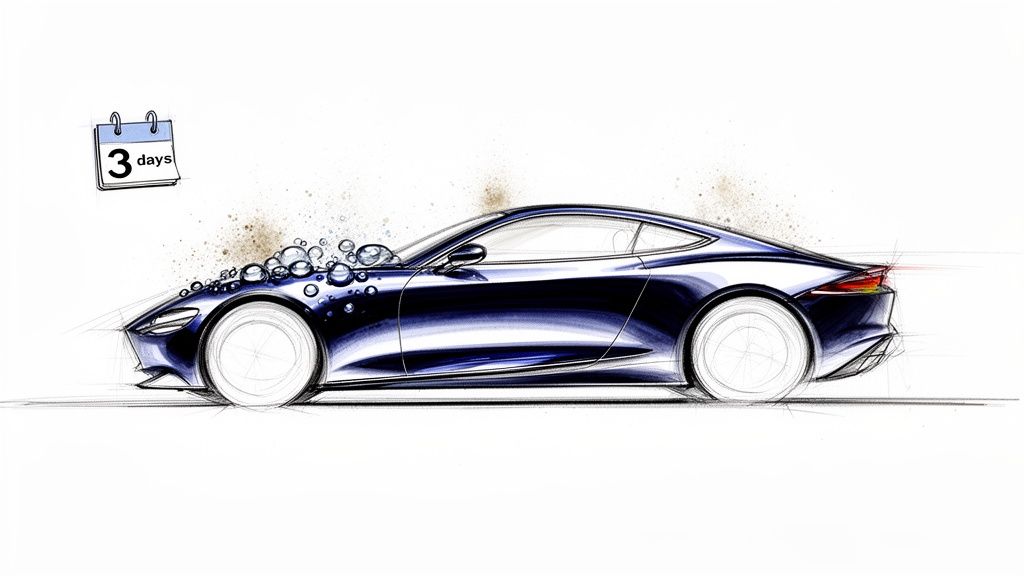
Picture your car with that deep, liquid gloss still shimmering days after a wash, effortlessly shedding dust and water. This isn't a fantasy reserved for professional detailers; it's completely achievable for any enthusiast who understands the power of smart maintenance.
Let’s talk about a common frustration. A car lover—we’ll call him Alex—was constantly annoyed that his car's brilliant shine would dull just a day or two after a thorough wash. He thought the solution was more waxing, a time-consuming chore that wasn't giving him the results he wanted. His breakthrough came when he realized the answer wasn't more effort, but a smarter strategy built around a high-quality car quick detailer.
More Than Just a Quick Wipe-Down
Today's formulas are a world away from the basic cleaners of the past. They've evolved into advanced gloss enhancers and protective top-ups. This is where products like Titan Coatings' Ultra Ceramic Spray can completely change your maintenance game. It doesn’t just clean; it lays down a sacrificial layer of ceramic protection that revitalizes the surface.
If you’re just getting into maintaining a coated vehicle, getting the fundamentals right is crucial. You can learn more about the proper techniques by reading our guide on how to wash a car with ceramic coating to build a solid foundation.
Adding a quality quick detailer to your arsenal extends the life of your paint's primary protection, whether that's a traditional wax, a modern sealant, or one of our advanced Elastomer coatings. The payoff is a level of depth and clarity that makes pro-level results an everyday reality.
A great quick detailer acts as the bridge between washes. It’s not just about aesthetics; it's about actively preserving the protective layers you've worked so hard to apply, ensuring they last longer and perform better.
Choosing the Right Quick Detailer Spray
Walking down the car care aisle is overwhelming. You're faced with a wall of bottles, all promising an impossibly perfect shine. But here's the reality: the technology inside those bottles varies wildly, and grabbing the wrong one can do more harm than good.
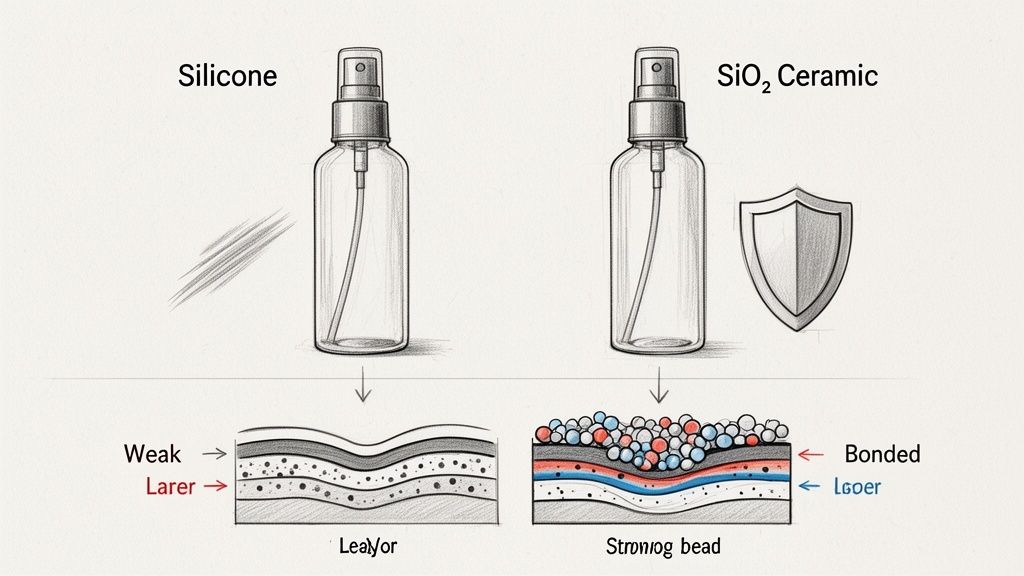
I’ve seen it happen countless times. A car owner uses a basic, silicone-heavy detailer they found on sale, only to complain about an oily, streaky finish that seems to attract dust like a magnet. That’s because those old-school formulas just sit on top of the paint, creating a temporary, greasy layer that doesn't really bond with the surface.
Thankfully, the game has changed. Modern formulas have left simple silicones in the dust.
The Rise of Ceramic-Infused Sprays
This is where things get interesting. Today’s advanced sprays, like our Ultra Ceramic Spray, are packed with Silicon Dioxide (SiO₂). If that sounds familiar, it’s because it’s the same core ingredient that gives professional ceramic coatings their incredible strength and water-beading magic.
Instead of just smearing a shiny layer on top, this technology creates a semi-durable, molecular bond with your car's paint. It’s a completely different approach, and the results speak for themselves. You get real, tangible benefits that older formulas just can't touch:
- Serious Water Beading: The surface becomes intensely hydrophobic, forcing water to bead up and shoot right off, taking dirt and grime along for the ride.
- Real Staying Power: This isn't a one-day shine. The protective layer lasts for weeks, not days, standing up to rain, sun, and road spray.
- Deep, Crisp Gloss: It adds a sharp, clear depth that makes the paint look richer and wetter, not just slathered in oil.
Once you make the switch, there's no going back. The frustrating streaks vanish, replaced by a slick, hard finish that genuinely stays cleaner for longer. It’s no surprise that the demand for these products is exploding—the car detailing market is projected to jump from USD 4.2 billion in 2025 to USD 6.1 billion by 2035, largely driven by enthusiasts who want pro-level results at home.
The table below breaks down exactly what you're getting when you step up to a modern, ceramic-infused formula.
Quick Detailer Technology Comparison
This quick comparison highlights the massive gap between yesterday's technology and the performance you can get from a modern ceramic spray.
| Feature | Traditional Detailer | Titan Ultra Ceramic Spray |
|---|---|---|
| Active Ingredient | Silicone, waxes, or polymers | Silicon Dioxide (SiO₂) |
| Bonding Mechanism | Sits on the surface | Chemically bonds to the paint |
| Durability | A few days | Several weeks to months |
| Water Behavior | Weak beading, can cause sheeting | Extreme hydrophobic beading |
| Finish | Can be oily or streaky, attracts dust | Slick, hard, and adds a deep, clear gloss |
| Protection | Minimal gloss enhancement | Adds a legitimate layer of UV and dirt protection |
| Best For | Traditional carnauba waxes | Ceramic coatings, paint sealants, or bare paint |
As you can see, it’s not just about a better shine; it's about smarter, longer-lasting protection.
Key Takeaway: The single most important rule is to match your detailer to your protection. Using an SiO₂ spray on a ceramic-coated car is like giving it a booster shot—it recharges the protection and brings that unbelievable water-beading back to life.
Matching the Detailer to Your Protection
So, how do you choose? It all comes down to what's already on your paint.
If your car is protected with a traditional carnauba wax, a simple, wax-friendly detailer will do the job. But if you’ve invested time and money in a modern paint sealant or a true ceramic coating, using an old-school silicone spray is a step backward. It can actually mask the properties of your high-tech coating, reducing its performance.
This is especially critical for cars wearing state-of-the-art protection like Titan’s proprietary Elastomer coatings. These coatings are engineered to be hard as glass yet flexible enough to resist micro-cracking. Using a compatible maintenance product like Ultra Ceramic Spray is essential. You're not just cleaning the surface; you're feeding and reinforcing that advanced protection. This synergy is the key to getting the longevity and performance you paid for and is a core part of mastering how to use a spray-on car sealant.
Nailing Your Application Technique
Having the best quick detailer in your arsenal is a great start, but the real magic happens when you apply it. This is where you translate a good product into that jaw-dropping, streak-free shine that makes people look twice. It's a process every enthusiast has to master—learning that even a top-tier spray needs the right touch to unlock its true potential.
First things first, and this is non-negotiable: always work on a cool, clean surface. Seriously. Trying to use a detailer on hot paint in direct sunlight is a recipe for a streaky, smudgy disaster. The product flashes off almost instantly, leaving a residue that’s a pain to remove. Trust me, I’ve been there, chasing smudges across a warm hood. Do yourself a favor and pull the car into the shade or wait for the panels to cool down. This one simple change makes all the difference.
Just as important is your towel choice. Don't sabotage your efforts with a cheap, scratchy microfiber. A low-quality towel is your paint's worst enemy, leaving behind lint and tiny scratches. Invest in a few high-quality, plush microfiber towels. Look for a high GSM (grams per square meter) rating—anything in the 350-500 GSM range is perfect for this. Their deep, soft pile is designed to safely trap dust and pull it away from the surface, not grind it in.
The "Spray, Spread, and Flip" Method
The secret to a flawless finish lies in the "spray, spread, and flip." It’s a simple rhythm that becomes second nature once you get the hang of it.
- Mist the Surface Lightly: Tackle one small section at a time—think half a door or a quarter of the hood. Give the panel a light mist of your quick detailer. The key here is lightly. You’re not trying to drown it. Two to three sprays per section is usually all you need. Drenching the panel is a classic rookie mistake that just creates more work and leads to streaks.
- Gently Spread the Product: Grab your folded microfiber towel and, with one side, gently wipe in a single direction. This first pass is just for spreading the product evenly and lifting any light dust. You're not buffing yet, just ensuring full coverage.
- Flip and Buff: Immediately flip your towel to a clean, dry side and gently buff the area to a brilliant shine. This final wipe removes any leftover residue and reveals that slick, reflective finish you’re after.
Following this method ensures you’re not dragging dirt around and that your final buff is always done with a clean part of the towel.
One of the biggest mistakes I see is people using too much pressure. Let the product and the towel do the work for you. All you need is a gentle, gliding motion to get a perfect, streak-free shine. Rubbing too hard can actually create static, which just attracts more dust right back to your freshly cleaned paint.
A Few Pro Tips for That Perfect Finish
Ready to take your results up a notch? Here are a couple of tricks I've picked up over the years.
Windy day? To manage overspray, try spraying the detailer directly onto your microfiber towel instead of the car. This gives you total control and stops the mist from getting all over your windows and trim.
It also helps to have a system. I always work from the top of the car down, saving the lower panels for last since they're usually the dirtiest. This logical flow prevents you from accidentally dragging grime from the rockers onto the doors or hood.
And remember, a quick detailer is for light dust, fingerprints, and fresh bird droppings—not for a car caked in mud. For anything more than light contamination, you'll want to look at a more robust cleaning method, like those we cover in our guide to the best dry wash for cars.
Stick to these steps, and you’ll have the skill and confidence to get that perfect finish, every single time.
Looking After Your Ceramic Coating Investment
So, you've made the smart move and protected your vehicle with a ceramic coating. That's a serious investment, and you'll want to do everything you can to keep it looking and performing its best for years to come. This is where a good car quick detailer becomes your new best friend—it's not just for a quick shine, but a critical part of your coating's maintenance routine.
The whole point is to enhance the protection you paid for, not fight against it. Slapping a generic, silicone-heavy spray from the auto parts store onto a premium coating is a huge mistake. It can clog the pores of the coating, kill its incredible water-beading ability, and leave a greasy, dust-attracting film. What you need is a pH-neutral, SiO₂-infused spray designed to work with your coating, not against it.
The Titan Advantage: Flexible Protection
This is exactly where Titan Coatings' technology changes the game. As the first company to introduce Elastomer coatings to the market, we moved past the old-school, rigid ceramic coatings that were prone to cracking. Our Elastomer-based coatings, like our flagship Alpha Quartz, represent a complete rethink of surface protection.
By engineering it with nano-tube technology and our own Dark Matter tech, we developed a coating that's glass-hard yet incredibly flexible. That elasticity is the key. It means the coating can absorb small impacts from bug splatters and road debris, and handle wild temperature swings—from a frozen winter morning to a blazing summer afternoon—without getting those tiny micro-cracks that plague traditional ceramics.
A brittle coating is a vulnerable one. Our elastic coatings are designed for the real world, flexing under stress instead of fracturing. This inherent durability is what ensures your investment provides superior protection for years, not just months.
Using a compatible detail spray like our Ultra Ceramic Spray is the perfect way to "top-up" this advanced system. It adds a fresh, slick sacrificial layer that takes the hit from harsh UV rays and bird droppings, preserving the tough Elastomer base underneath. And, of course, it instantly brings back that unbelievable water-beading you love.
This simple "spray, spread, and flip" technique is all it takes to keep your coating in peak condition.
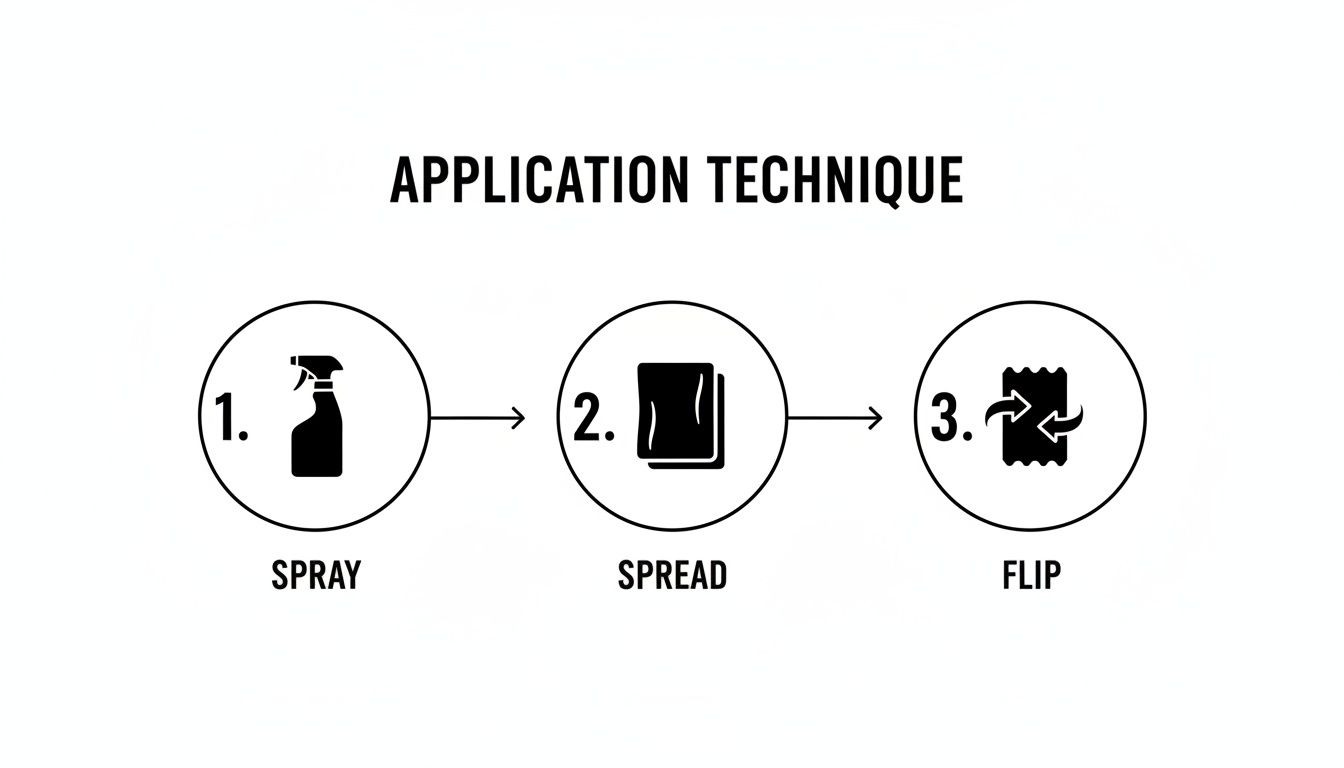
Following this process lifts away light dust and fingerprints safely, all while laying down a streak-free layer of fresh protection.
Rejuvenating Your Protective Layer
Here's an easy way to think about it: your Alpha Quartz coating is the armor, and the Ultra Ceramic Spray is the shield. The spray reinforces the surface, taking the daily abuse so the armor underneath stays pristine and ready for anything. It’s a simple maintenance step that makes a world of difference. To get the full picture, take a look at our complete guide on how to maintain a ceramic coating.
This proactive approach is fast becoming the industry standard. It's no surprise when you see the global car detailing market is projected to jump from USD 1.68 billion in 2025 to USD 2.49 billion by 2029. A huge part of that growth comes from mobile detailers who rely on high-performance, efficient products like ours to deliver stunning, long-lasting results for their clients on the go.
Achieving Crystal Clear Vision on Glass
We've all seen it: a beautifully detailed car with a deep, liquid shine, completely let down by streaky, hazy windows. True detailing excellence means getting every surface right, and your glass is arguably the most important one for your safety.
Clear vision isn't just about looks; it's a non-negotiable part of safe driving, especially when the weather turns sour.
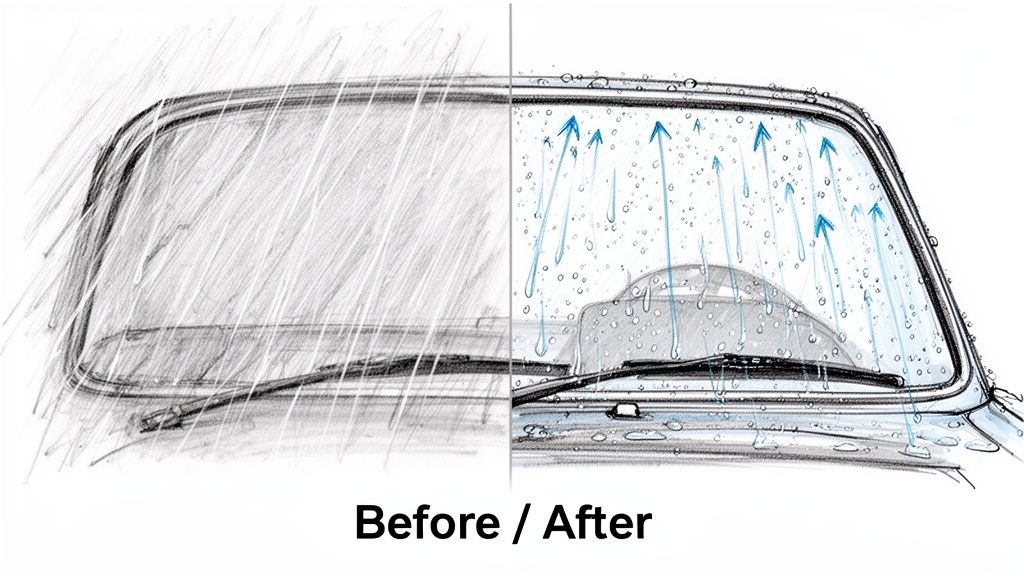
Think about driving through a sudden downpour. Your wipers are on full blast, but they’re just smearing water across the windshield, making the road ahead a blurry, stressful mess. Now, imagine that same scenario, but this time the rain hits the glass and instantly forms tight little beads that zip right off, leaving your view perfectly clear. That’s the difference a high-quality glass coating makes.
Transform Your Windshield into a Safety Feature
This is exactly where a product like Titan's APEX Glass Ceramic Coating comes into play. It’s a straightforward formula designed to create an incredibly slick, hydrophobic surface on all your exterior glass.
The payoff is a huge improvement in visibility. A chaotic drive in the rain becomes a calm, controlled experience because water sheets away so effectively. At highway speeds, you might find you don't even need your wipers, turning a stressful situation into a stress-free drive.
Applying it is simple, but as with any coating, prep is everything.
- Clean Thoroughly: First, give the glass a deep clean with a quality glass cleaner to get rid of all the surface grime.
- Decontaminate: Next, grab a clay bar. This step is crucial for pulling out embedded contaminants that washing alone can't touch, ensuring the coating bonds perfectly.
- Final Wipe-Down: A quick wipe with an isopropyl alcohol (IPA) solution removes any lingering oils or residues, leaving a pristine surface.
- Apply the Coating: Use the included applicator to spread the APEX coating evenly, wait for it to flash, and then buff it off to a crystal-clear shine.
A truly detailed car is one where every surface is not just clean, but actively performing. Coating your glass is a simple step that pays huge dividends in safety and driving comfort, proving that great detailing goes beyond the paintwork.
The demand for these high-performance products is skyrocketing. The global car detailing market is projected to jump from USD 42.64 billion in 2025 to USD 56.39 billion by 2030, according to an in-depth market analysis on Mordor Intelligence.
This growth shows that both enthusiasts and pros are hunting for solutions that deliver amazing aesthetics and real-world functional benefits—like the enhanced safety from a well-treated windshield. For an even deeper dive, our comprehensive guide on how to ceramic coat a windshield walks you through every step for flawless results.
Your Top Quick Detailing Questions, Answered
Even the most seasoned detailers had questions when they started. Using a car quick detailer seems simple enough, but a few key details separate a good result from a flawless one. Let's tackle the common questions I hear all the time to get you detailing like a pro.
How Often Should I Use a Detailer?
This really comes down to how you use your car and what kind of protection it's wearing.
If it’s your daily driver, a quick wipe-down once a week is a great habit. It’s perfect for lifting fresh dust and fingerprints, keeping that just-washed look alive all week long.
Now, if your car is protected with a serious, long-term coating—say, something like Titan's flexible Alpha Quartz—you can ease up a bit. For coated cars, reaching for a compatible SiO₂-based spray like Ultra Ceramic Spray every few weeks is the sweet spot. Think of it as a booster shot for your coating; it revives that amazing water-beading action and lays down a slick, glossy layer over the tough base coat.
Can I Use It on a Dirty Car?
Let me be crystal clear on this one: absolutely not. A car quick detailer is designed for one job—handling very light dust and smudges on a surface that is already clean.
If you try to use it on a car caked in mud or heavy road film, you're just asking for trouble. You'll essentially be grinding all that abrasive grit right into your paint with your microfiber towel. The result? A mess of new swirl marks and fine scratches. When a car is genuinely dirty, nothing replaces a proper, safe wash.
Will It Remove Scratches?
Nope. A quick detailer has zero scratch-removing power. It’s not a polish. Its job is to gently clean, add a pop of gloss, and leave behind a temporary bit of protection.
Sure, some of the more advanced formulas might contain fillers that can temporarily hide the tiniest of micro-swirls, but that’s just a cosmetic trick. The effect is superficial and will be gone after the next wash. To actually remove scratches for good, you need a dedicated polish and the abrasive power of a machine polisher to level the clear coat.
Waterless Wash vs. Quick Detailer: What's the Difference?
It’s easy to get these two confused, but they play very different roles. I like to think of them on a spectrum of cleaning power.
- Waterless Wash: This one is the heavier hitter. It's packed with more lubricants and cleaning agents specifically designed to safely lift and encapsulate a moderate amount of dirt when you can't do a full wash. It’s the go-to when a car is too dirty for a quick detailer but not quite filthy enough for the whole bucket-and-hose routine.
- Quick Detailer: This is all about the finishing touch. Its main mission is gloss enhancement. It has just enough lubrication to handle light dust on an already clean car, making it the perfect final step after a wash or for a quick touch-up before a car show.
Getting the maintenance right also means understanding how different products interact. We dive deep into this topic in our guide that explains if you can wax over a ceramic coating.
Ready to take your shine to the next level with a product built for today's advanced paint protection? Titan Coatings' Ultra Ceramic Spray is engineered to be the perfect partner for modern coatings, giving you an unbelievable, streak-free gloss and real-deal protection. Discover the difference and get yours today.
0 Comments