
Washing your car when it's freezing outside might seem counterintuitive, but trust me, it’s one of the most important things you can do to protect your investment. Letting road salt, sand, and chemical de-icers cake onto your paint and undercarriage is a recipe for disaster. A strategic wash on a mild winter day is your single best defense against the season's relentless assault.
Why You Can't Afford to Skip Winter Washes
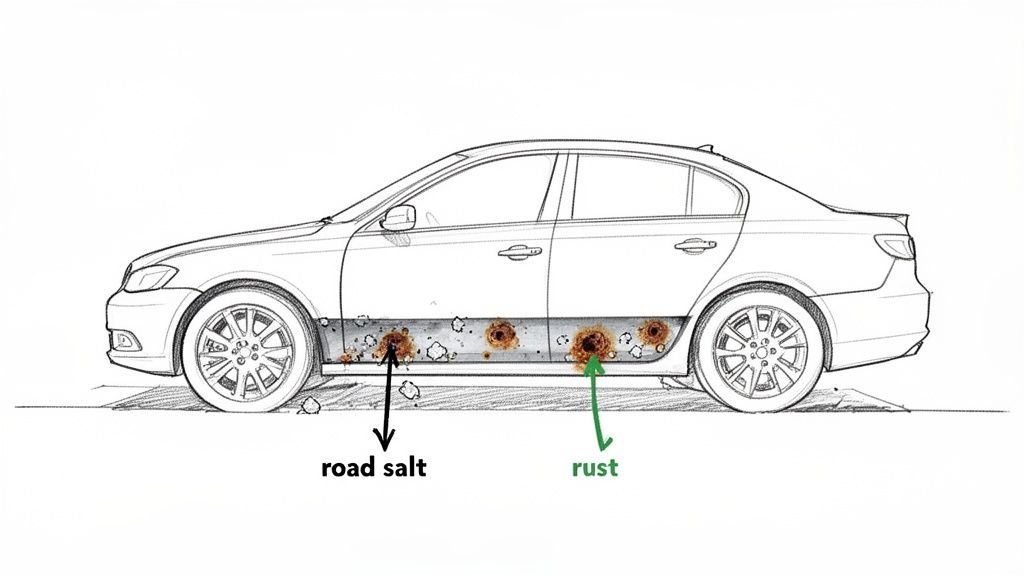
Think of road salt as the silent killer of your car's finish and structural integrity. It's not just about looking good; it's a constant battle to preserve your vehicle's value. I see it all the time: people wait until the first warm spring day to wash their car, thinking the cold is too harsh. That's a huge mistake.
The Gritty Reality of Road Salt
The de-icing agents dumped on winter roads are a nasty mix of sodium, calcium, and magnesium chlorides. They're great at melting ice, but they're also incredibly corrosive. When this stuff mixes with slush, it creates a salty, gritty brine that sticks to every single part of your vehicle.
This abrasive mixture works its way into the smallest nooks and crannies of your undercarriage, suspension, and body panels. As the temperature bounces up and down, the corrosion process kicks into overdrive. Metal parts that are constantly bathed in this salty spray start to rust at a frightening pace.
Your brake lines, exhaust system, and even the vehicle's frame are prime targets. What starts as a tiny rust spot can quickly become a serious structural issue, jeopardizing your safety and tanking your car's resale value.
The High Cost of Doing Nothing
Let me tell you about a client, Mark. He had a truck he absolutely loved, but during one particularly brutal winter, he figured he'd just wait for spring to give it a good cleaning.
By April, he was horrified to find rust bubbling up along his rocker panels and around the wheel wells. A trip to the body shop delivered the bad news: the damage was deep. Salt had eaten right through the metal, and he was looking at some very expensive repairs—all of which could have been avoided with a few winter washes.
And Mark's story isn't unique. Road departments across the U.S. spread over 20 million tons of salt each year. This creates a corrosive gauntlet that can easily lead to over $1,000 in rust-related repairs for an unprotected vehicle in a single season. You can dig deeper into how winter impacts the car care industry on the Kleen-Rite Corp. blog.
Your Best Defense Is a Flexible One
Simply washing isn't enough; you need a durable barrier against these chemical attacks. This is where modern protective coatings completely change the game. At Titan Coatings, we pioneered this space as the first company to introduce Elastomer coatings to the market, using revolutionary nano tubes technology and our proprietary Dark Matter tech.
Traditional ceramic coatings are hard, but they can get brittle and fail in extreme cold. Our Elastic coatings are engineered differently—they're hard like glass but remain flexible. That flexibility is the secret to their longevity.
This means that as your car's metal panels expand and contract with unbelievable temperature swings from frozen to hot, the coating flexes right along with them. It won't crack under the stress, ensuring you have a seamless, impenetrable shield all winter long. Our Alpha Quartz is a prime example of this next-level elastic protection in action.
Getting Ready for a Cold Weather Wash
Before you even think about grabbing a hose, a little bit of prep work can be the difference between a great wash and a frozen, frustrating mess. Think of this as your pre-flight check—it sets you up for a safe, effective clean that actually protects your car’s finish from the harsh winter elements.
The absolute key to success is timing. I always tell people to aim for the warmest, sunniest part of the day, which is usually between 10 AM and 2 PM. This little window gives you a huge advantage. Temperatures are at their peak (even if that's just barely above freezing), and the sun will help you with the drying process, which drastically cuts down the risk of water freezing on your paint or inside your door seals.
Choosing Your Wash Bay and Assembling Your Gear
Where you wash is almost as important as when. If you have a garage—even an unheated one—use it. Getting out of the wind is a game-changer. That biting wind can flash-freeze water on your car's surface almost instantly. Working in a garage gives you a controlled space to get the job done right. Washing outside is doable, of course, but you have to be much faster and more deliberate with every step.
Next, let's talk tools. This is not the time to cut corners.
- Two-Bucket Wash System: This is non-negotiable for me. One bucket for your soapy water, one for clean rinse water. It's the simplest and most effective way to stop yourself from dragging salt and grit all over your paint, preventing those nasty swirl marks.
- pH-Neutral Soap: Don't grab the dish soap. Harsh, high-alkaline soaps will strip away any wax, sealant, or ceramic coating you have. A quality pH-neutral car soap will get the grime off without wrecking your car's protective layer.
- Warm Water: If you can, use lukewarm water in your buckets. It makes a noticeable difference in breaking down that stubborn, salty road film, and frankly, it's a lot easier on your hands.
To make sure you're fully prepared before the water starts flowing, I've put together a quick checklist. Running through this beforehand saves a ton of headaches.
Cold Weather Car Wash Preparation Checklist
| Category | Essential Item | Pro Tip for Cold Weather |
|---|---|---|
| Timing & Location | Sunny, midday slot (10 AM-2 PM) | Check the forecast for a day that's expected to be above 32°F. |
| Location | Garage (if possible) | Even an unheated garage blocks the wind, which is your biggest enemy. |
| Water Supply | Lukewarm Water | Fill buckets from an indoor tap to help dissolve salt and grime faster. |
| Wash System | Two Buckets with Grit Guards | This is critical to trap salt and prevent scratching your paint. |
| Cleaning Agent | pH-Neutral Car Soap | Protects existing waxes, sealants, or ceramic coatings. |
| Pre-Treatment | De-icing Spray | Use on frozen locks/handles before you start. Never use hot water! |
| Pre-Treatment | Salt Remover / Pre-Wash Foam | Essential for breaking down heavy road salt buildup without scrubbing. |
| Drying | High-Quality Microfiber Towels | Have at least 2-3 large, clean towels ready for a quick, scratch-free dry. |
Having these items staged and ready to go means you can work efficiently and safely, minimizing the time your car spends wet in the cold.
Dealing with Salt and Ice Before You Start
Before the main event, you have to tackle winter's two biggest villains: caked-on road salt and ice. A good pre-rinse is a must, but when the buildup is bad, you need a more focused attack. I always start with a specialized pre-wash foam or a dedicated salt remover spray. This lets the chemicals do the heavy lifting, dissolving that corrosive gunk before you ever touch the paint with a mitt. If you want to dive deeper into this, we have a complete guide on how to properly decontaminate car paint.
If you find your locks, handles, or mirrors are frozen solid, be gentle. Whatever you do, never pour hot water on them. The thermal shock can easily crack glass or damage plastic trim. A proper de-icing spray is the best tool, but in a pinch, a little isopropyl alcohol on a cloth will do the trick to gently thaw those frozen spots.
A lot of people believe you shouldn't wash a car if it's below 32°F because they're worried about frozen doors. But from my experience, it's perfectly safe as long as you time it right on a slightly warmer day and make sure the car is completely dry before the sun goes down. In fact, washing in the cold is more important because road salt is incredibly corrosive, especially in low humidity. Some studies even show that unprotected paint can suffer up to 40% more damage in winter compared to summer.
With your timing locked in, your gear ready, and the initial ice and salt dealt with, you’re officially prepared to give your car the safe, thorough cleaning it needs to make it through winter unscathed.
The Smart Way to Wash and Dry in Freezing Temps
This is where your technique really comes into play. A successful car wash in cold weather isn’t about speed; it's about being methodical to clean the car right without letting ice become your enemy. Trust me, rushing this part is the #1 reason people end up with frozen doors, locks, and a whole lot of frustration.
The first strategic move? Start low. Your undercarriage, wheels, and the lower body panels get absolutely hammered with the worst of the road salt. Hit these areas first with your pressure washer or hose. The goal is to blast away that heavy, corrosive grime before you have a chance to drag it all over the rest of your paint.
This quick checklist hits the high points of planning your wash before a single drop of water touches your car.
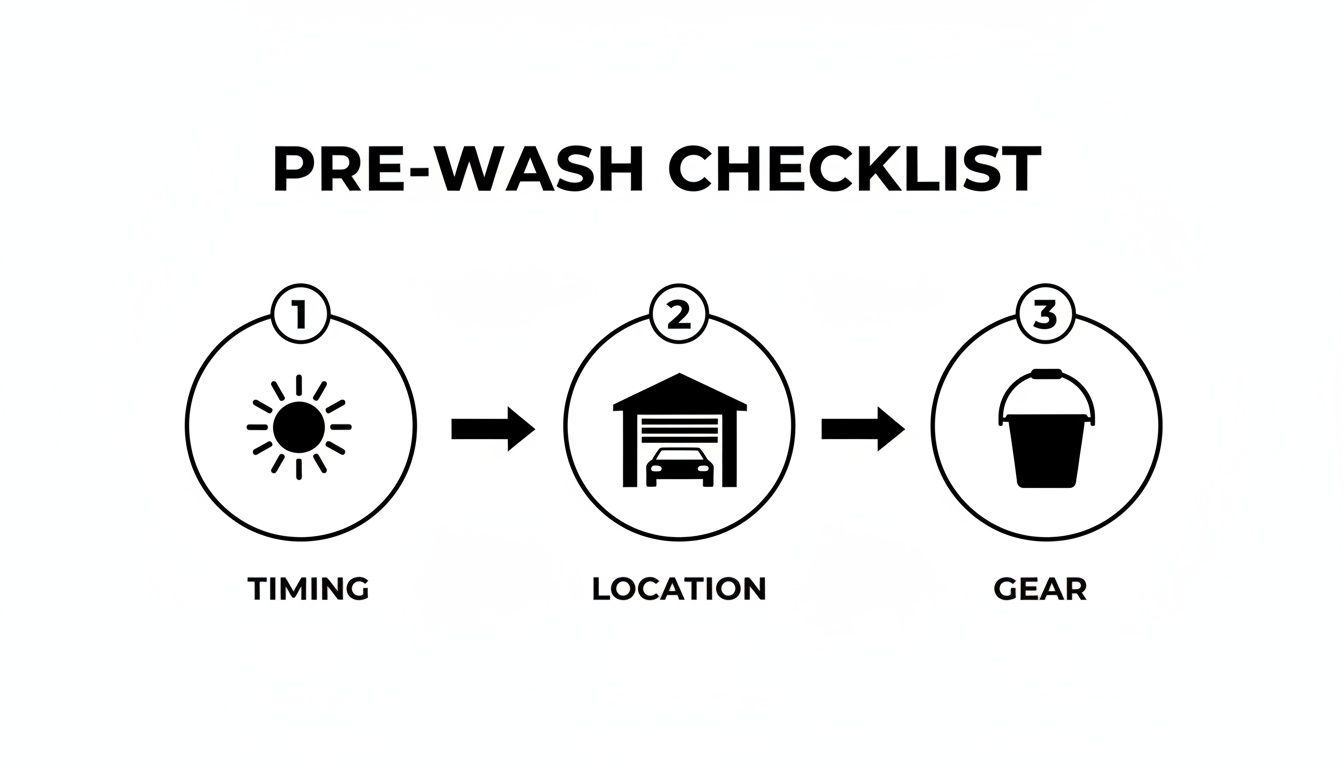
Thinking through the process—from timing your wash with the sun to having the right gear ready—is what separates a smooth job from a frozen disaster.
Working in Small, Smart Sections
With the filthiest parts pre-rinsed, you can move on to the body. The golden rule here is to work from the top down, but—and this is critical—in small, manageable sections. Don't try to soap up the whole car at once. Think one panel at a time: the roof, then the hood, then one door.
This is your best defense against flash-freezing. Wash one panel completely, then rinse it immediately before moving on. This simple rhythm prevents soap and water from sitting long enough to turn into a sheet of ice, especially if a gust of wind kicks up. Using lukewarm water helps, too. It cuts through grime better than ice-cold water and buys you a few precious extra seconds before freezing is a threat.
The key is constant motion. Never let the car sit soapy or wet for long. Washing one panel, rinsing it, and moving on creates a rhythm that keeps water flowing and prevents ice from gaining a foothold. It might feel slower, but it's the safest and most effective approach.
The Critical Art of Drying a Cold Car
Washing is only half the battle. I'd argue that drying is even more important when you're up against freezing temperatures. This is the step that prevents all those classic winter wash headaches like frozen doors and iced-over mirrors.
You've got two great options here: a dedicated car air blower or a stack of high-quality, ultra-absorbent microfiber towels.
- Air Blower: This is what the pros use, and for good reason. A powerful blower forces water out of every crack, crevice, and panel gap. It's unbeatable for clearing water from mirror housings, trim pieces, door jambs, and grilles—all the places where trapped water will absolutely freeze solid.
- Microfiber Towels: If you don’t have a blower, a plush drying towel is your next best friend. Use the "blotting" or "draping" technique. Just lay the towel flat on a panel and gently pat it dry, or drag it slowly across the surface. Whatever you do, avoid aggressive rubbing; that’s a quick way to create micro-scratches.
Whichever tool you use, become obsessive about the details. Open every door and thoroughly dry the jambs and all the weather stripping. Wipe down the rubber seals around your windows and trunk. A few extra moments spent here will save you from the helpless feeling of yanking on a door that's frozen shut the next morning.
The Protective Advantage in Winter
I remember a client, David, who was meticulous about keeping his car clean, even in the dead of winter. We had just protected his new sedan with our Alpha Quartz elastomer coating. He washed it one freezing afternoon, following the panel-by-panel method, and called me afterward, amazed. The water flew off the surface so fast that drying was almost an afterthought.
This is where an advanced protective coating makes a real, tangible difference. Our elastomer coatings, which are built with Dark Matter tech, aren't brittle like glass. They have a unique flexibility that allows the coating to expand and contract right along with the car's metal during those wild temperature swings from frozen to hot. A normal, rigid coating can crack under that stress, but an elastic one endures. Even when bugs hit the car's surface at high speed, the coating's elasticity prevents damage.
That slick, flexible surface does more than just protect the paint; it makes your winter maintenance incredibly easy. Salt and road grime struggle to get a grip, and water beads up and rolls right off. In situations where a full wet wash just isn't an option, this level of protection makes other methods far more effective. You can learn more about the benefits of a professional dry wash for cars and see why a properly coated surface is the perfect foundation for it.
When you combine smart washing techniques with a truly durable and flexible protective layer, you turn a risky winter chore into a simple, safe routine.
Building a Flexible Winter Shield with Alpha Quartz
A clean car in the middle of winter is a great feeling, but it's a temporary win. If you want to truly conquer the onslaught of road salt and freezing temperatures, you need more than just a good wash technique. You need a smart, durable shield that works for you around the clock.
Think about it from a detailer's perspective. You've just spent hours getting a client's car absolutely perfect in frigid weather. The last thing you want is for a single drive through a slushy, salted road to undo all that meticulous work. This is where you can offer something that doesn't just add a temporary shine, but provides a real, long-term defense against winter's worst.
The Problem with Brittle Protection
Traditional ceramic coatings are fantastic, but they have an Achilles' heel in extreme climates. They cure into a hard, glass-like layer, and that rigidity can be a problem. A car's metal panels are constantly contracting in the freezing cold and then expanding as the engine or sun warms them up. This constant cycle puts stress on that inflexible coating, which can lead to micro-fractures over time, compromising the very protection it's supposed to provide.
That's where the science behind protective coatings has really evolved.
Flexibility Is The New Strength
This is the whole idea behind Alpha Quartz, our advanced Elastomer coating. This isn't just another ceramic product. We engineered it from the ground up with our proprietary Dark Matter tech and nano tubes to be both incredibly hard and remarkably flexible. That elasticity is a total game-changer for a car wash in cold weather and your overall winter defense strategy.
This unique flexibility allows the coating to expand and contract right along with the vehicle's surfaces during those wild temperature swings. It moves with the metal instead of fighting against it. This simple but critical difference prevents the coating from cracking under pressure, guaranteeing a seamless, uninterrupted shield that truly lasts.
It’s like the difference between a pane of glass and a sheet of high-tech polycarbonate. One is tough but shatters under stress; the other flexes to absorb the impact. This elastic quality is precisely what gives Alpha Quartz its superior longevity and performance, especially when the temperature drops below freezing. You can check our shop to see our full line of products and use our comparison page to find the perfect solution for your needs.
How an Elastic Shield Makes Winter Washes Easier
The benefits of this flexible shield go way beyond just being durable. Alpha Quartz creates an intensely hydrophobic and slick surface that makes life so much easier for the car owner.
Here’s what that means in the real world:
- Effortless Cleaning: Road salt, slush, and grime have a tough time sticking to the slick surface. A lot of it will slide right off as you drive, and whatever is left can usually be blasted away with a simple low-pressure rinse.
- Fewer Washes Needed: Because your car stays cleaner for longer, you can extend the time between full washes without worrying about corrosive damage from salt and chemicals.
- Serious Chemical Resistance: Road salt is a billion-dollar vehicle killer for a reason. Its corrosive power is amplified in cold, damp conditions. Our formulas, developed using learnings from the extreme aviation and marine industries, are nano-engineered to neutralize these attacks. In fact, these self-healing polymers have been shown to cut salt-induced damage by as much as 75% in real-world tests. For more on this, check out the insights on the corrosive effects of road salt on Turtlewaxpro.com.
This level of advanced protection completely changes how you approach winter car care. You’re no longer just reacting to the mess—you have a proactive defense system working for you 24/7. It’s a technology that ensures your vehicle’s finish is preserved for years, not just weeks.
The magic is in the coating's unique molecular structure. If you’re curious about the science behind it, you can learn more about how Titan's Elastomer coatings work and see what really sets them apart from the traditional ceramic market. This durable, elastic shield not only repels contaminants but also delivers a deep, glossy finish that looks incredible, even in the dead of winter.
Mastering Winter Visibility with Apex Glass Coating
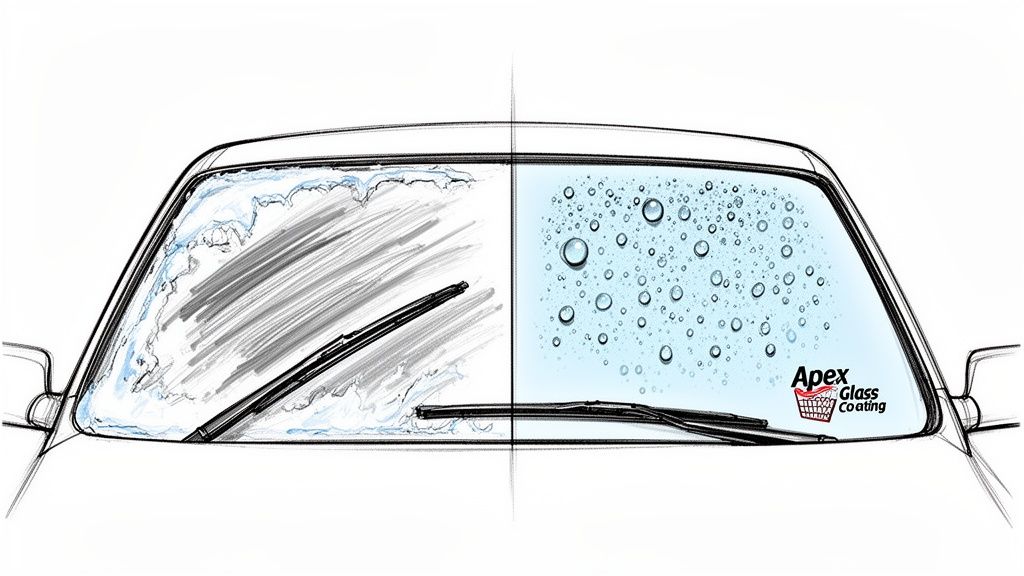
Once you’ve protected your car’s paint, it's time to tackle the single most important factor for safe winter driving: your visibility. A clear line of sight is everything when you're on the road. But freezing rain, slush, and that nasty road spray can turn your windshield into a smeared, obstructed mess that even brand-new wiper blades can't handle.
We’ve all been there. You're driving home, and a sudden squall hits. Freezing rain starts pelting the glass, and the truck ahead is kicking up a blinding spray of salty slush. You crank the wipers to max speed, but all they do is smear the grime back and forth, turning the road into a blurry, distorted nightmare. It's a genuinely dangerous situation where you feel completely out of control.
The Apex Advantage in Icy Conditions
Now, imagine that same drive, but with one game-changing difference. Your windshield is treated with Titan Apex Glass Ceramic Coating. This time, when the freezing rain and road spray hit the glass, they don't smear. They instantly bead up into tiny, perfect spheres and get whisked away by the wind as you drive, leaving your view almost perfectly clear. Your wipers barely even need to move.
That’s the incredible power of Apex’s advanced hydrophobic properties. It creates an ultra-slick, non-stick surface that water, ice, and grime simply can't cling to, enhancing visibility and making driving under rain stress-free.
- Amazing Water Repellency: Rain, sleet, or slush beads up and flies right off the glass.
- Easier De-Icing: The slick surface gives ice nothing to grip onto, making your morning scrape-off routine so much easier.
- Less Wiper Use: Since water clears itself, you'll use your wipers far less, which saves the blades from wear and tear and prevents that awful smearing.
This isn't just about convenience—it's a massive upgrade in driving safety and confidence right when you need it most.
A clear, unobstructed view in a winter storm isn’t a luxury; it's a non-negotiable safety requirement. A quality glass coating transforms your windshield from a passive surface that collects grime into an active defense system that repels it, keeping your vision sharp and your reactions quick.
A Simple Application for a Stress-Free Winter
Maybe the best part about Apex Glass Ceramic Coating is how easy it is to apply. You don’t need to be a pro detailer to get incredible, long-lasting results. The process is simple and can be done right in your own garage, giving you a powerful layer of protection that will last the whole season.
With one straightforward application, those white-knuckle winter drives become a thing of the past. When your visibility is crystal clear, you can finally focus on the road instead of fighting with your windshield.
Answering Your Top Winter Car Wash Questions
Even for seasoned pros, washing a car when the temperature drops can raise a few questions. Getting it right isn't just about a clean car; it's about protecting your vehicle from the harsh reality of winter. Let's tackle some of the most common things people ask.
How Often Should I Wash My Car in the Winter?
If you live where roads are treated with salt and de-icing chemicals, you should aim to wash your car every 7 to 10 days. The real enemy here is time—the longer those corrosive materials sit on your paint and undercarriage, the more damage they can do. After a big snowstorm or when you see that chalky white residue building up, that’s your cue to wash as soon as the weather gives you a safe window.
This is where a high-quality protective coating becomes your best friend. A durable, flexible coating like Alpha Quartz creates an intensely hydrophobic barrier that sheds slush and grime much more effectively. That extra layer of defense can often buy you a little more time between washes.
Is It Safe to Use an Automatic Car Wash in Freezing Weather?
It can be, but you have to choose wisely. Your best option is always a touchless automatic wash. These avoid the giant, spinning brushes that can easily grind salt and grit into your paint, causing a swirl-marked mess.
Make sure the wash you choose has a powerful undercarriage spray—this is non-negotiable for blasting salt off your frame and suspension components. A high-velocity air dryer at the end is just as crucial.
Pro Tip: Even after the best touchless wash, spend two minutes with a dry microfiber towel wiping down your door jambs, around the locks, and all the rubber weather stripping. This is the single most effective way to keep your doors from freezing shut.
Can I Apply a Protective Coating in the Cold?
This is a hard no. Applying a professional-grade coating is a science, and it absolutely requires a controlled environment. You should never try to apply a coating like Alpha Quartz outdoors in freezing temperatures.
For the chemical bonds to form correctly and the coating to cure into a durable shield, the work needs to be done in a heated, well-ventilated space (like a garage). The ambient temperature must stay consistently above 50°F (10°C) from start to finish. If you don't have a space that meets these requirements, your best bet is to have it professionally installed to guarantee the results.
What's the Single Biggest Mistake People Make?
Hands down, the most common and damaging mistake is rushing the drying process. It's so easy to focus on getting the grime off that you completely overlook getting the water off. This is where the real problems start.
When water gets trapped in door locks, between body panels, in window seals, or behind your mirrors, it freezes. As it turns to ice, it expands, and that expansion exerts a surprising amount of force. Over a winter, this can destroy rubber seals, crack plastic trim, and even push panels out of alignment. Take the extra time to get every last drop with a quality drying towel or a heated air blower.
For a coating that’s engineered to flex with extreme temperature changes and make winter cleanup a breeze, nothing beats Titan Coatings. Check out our groundbreaking Alpha Quartz elastomer coating and see how its unique elastic properties can give your vehicle a durable, crack-resistant shield all season long.
0 Comments