
When it comes to your windshield, a ceramic coating is a game-changer. It's not just a wax or a temporary spray; it's a liquid polymer that forms a chemical bond with the glass itself. This creates a super-slick, transparent layer that’s incredibly hydrophobic, meaning it aggressively repels water. The result? Rain beads up instantly and sheets right off, dramatically improving your view and making the glass a breeze to clean.
The Unseen Shield for Your Windshield
You know the feeling. You're cruising along when, out of nowhere, the heavens open up. The road ahead dissolves into a blurry, dangerous mess. Even with your wipers frantically slapping back and forth, you're leaning forward, squinting, and gripping the wheel a little too tightly. It’s a situation every driver dreads.
Now, imagine that same scenario, but this time, something is different. The rain hits your windshield and instead of smearing, it forms into tiny, perfect beads that simply whisk away as you drive. Your visibility is so clear it’s almost like the rain isn't even there. This isn’t science fiction; it’s precisely what a top-tier ceramic coating for your windshield does.
Driving with Unbelievable Clarity
This guide is all about how this impressive technology transforms one of the most nerve-wracking driving conditions into a safer, more controlled experience. The magic behind it is a scientific principle called extreme hydrophobicity. This "water-fearing" behavior creates a self-cleaning surface that seriously cuts down your need for wipers, particularly when you're moving at highway speeds.
Of course, not all coatings are made the same. Here at Titan Coatings, we pushed the boundaries with our exclusive nano-tube technology and Dark Matter tech, becoming the first to bring Elastomer coatings to the market.
What makes this formulation special is that it creates a coating that's as hard as glass but also incredibly flexible. That elasticity is the key, allowing the coating to handle the stress of extreme temperature swings—from a freezing winter night to a blazing summer afternoon—without cracking or failing.
Throughout this guide, we'll dive into how innovative products like our Apex Glass Ceramic Coating deliver this durable, invisible shield. It’s a coating designed not only to make driving in the rain stress-free but also to be exceptionally easy to apply, giving you professional-level results that will completely change your expectations for automotive glass. Get ready to see the road like never before.
Why a True Ceramic Coating Leaves Rain Repellents in the Dust
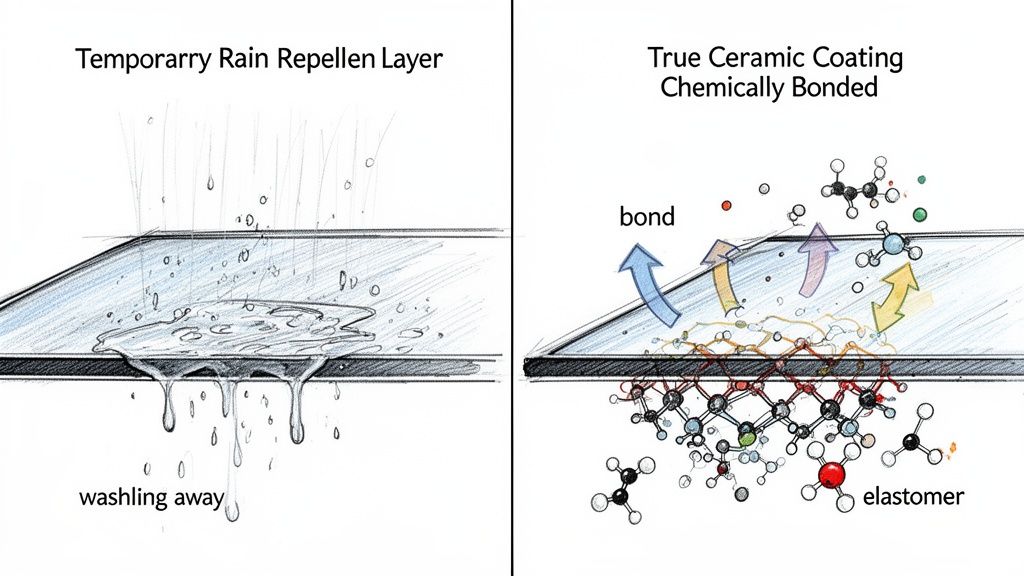
If you've ever grabbed a rain repellent spray off the shelf at an auto parts store, you know the drill. It works… for a little while. But a true ceramic coating for your windshield isn't just a temporary fix; it's a completely different approach to visibility and protection.
Think of it this way: a typical rain repellent is like a cheap raincoat. It sits on top of the surface and eventually wears out from the constant abuse of wiper blades, car washes, and the elements. A real ceramic coating, on the other hand, is more like a high-tech-infused fiber that becomes one with the fabric. It forms a powerful, molecular-level bond with the glass, creating a semi-permanent shield that's built to last.
This deep, chemical connection is what separates a professional-grade solution from a temporary one.
The Problem with Being Too Stiff
Here’s a weakness many traditional ceramic coatings have: they're rigid. Your windshield isn't static; it's constantly vibrating, taking hits from road debris, and expanding and contracting with every temperature swing. A brittle, inflexible coating just can't keep up. It develops micro-fractures under stress, which quickly compromises its performance and shortens its lifespan.
This is exactly the problem we set out to solve at Titan Coatings. We were the first to bring Elastomer coatings to the market, using a unique combination of nano-tube technology and Dark Matter tech to create something entirely new.
We engineered a coating that’s hard like glass, yet flexible. This groundbreaking resilience means it can absorb impacts and handle extreme temperature changes without breaking down. The coating moves with the glass, sidestepping the cracking and failure that plagues old-school, rigid formulas.
That elasticity is the secret sauce. A coating that can’t adapt to stress is a coating that's designed to fail. If you want to get into the weeds on this, you can learn more about the differences between rain repellents and ceramic coatings.
Durability That Actually Pays Off
It’s no secret that people want better, longer-lasting protection for their vehicles. The global ceramic coating market was valued at $9.3 billion in 2019 and is on track to blow past $13.6 billion by 2026. The automotive world is the biggest driver of this growth, poised to claim nearly 38% of the entire industry.
The proof is in the results. Detailers consistently report that ceramic-coated windshields maintain 95% clarity after three years—a massive leap from the 70% clarity you'd get from traditional treatments.
These numbers tell a clear story: longevity is king. That temporary rain repellent might get you through a few storms, but you'll be reapplying it constantly. A professionally formulated elastomer coating like Titan's Apex Glass Ceramic Coating is engineered to perform for years. It enhances visibility and makes driving under rain stress-free.
To make it even clearer, let's break down the head-to-head differences using our comparison page as a guide.
Ceramic Coatings vs Traditional Rain Repellents
This table shows exactly why a true ceramic coating is a genuine investment in safety and clarity, not just another temporary product.
| Feature | True Ceramic Coating (e.g., Titan Apex Glass) | Traditional Rain Repellent |
|---|---|---|
| Bonding Mechanism | Forms a semi-permanent, chemical bond with the glass. | Sits on the surface and wears away with friction and time. |
| Durability | Lasts for years, offering long-term protection. | Lasts for weeks to months, requiring frequent reapplication. |
| Flexibility | Elastomer technology allows it to flex with the glass, preventing cracks. | Typically rigid, can become brittle and fail under stress. |
| Protection Level | Offers robust protection against chemical etching, bug splatter, and UV rays. | Primarily offers water repellency with minimal protective benefits. |
The takeaway is simple. While both aim to improve your view in the rain, a true ceramic coating delivers a level of durability and multi-faceted protection that older technologies just can't match. You can browse our full range of advanced solutions in our shop.
What Can You Really Expect from a Coated Windshield?
Coating your windshield is one of those small changes that makes a surprisingly big difference. You might think it's all about making rain bead up and fly off, and while that's the most dramatic effect, the real benefits go much deeper. It’s about making your daily drive safer, easier, and just a little less stressful.
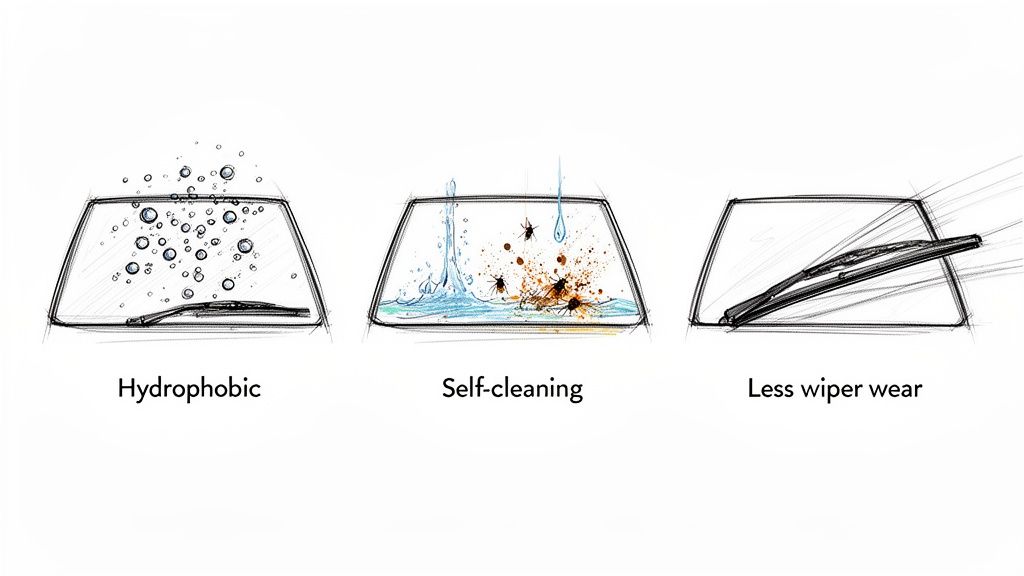
Picture this: you're on the highway, and the sky opens up. Instead of frantically turning your wipers to max speed and squinting through a sheet of water, you watch as the rain forms tiny, perfect beads that simply skate off the glass. Your view remains remarkably clear. That’s the magic of a powerful hydrophobic barrier in action, turning a white-knuckle drive into a much calmer experience.
A Shield Against Grime and Stains
The same physics that makes water slide right off also works against everyday grime. The surface becomes so slick that dust, pollen, and road film struggle to get a grip. A light rain shower can actually wash your windshield for you, carrying away the loose dirt.
This protective layer also stands up to the tough stuff.
- Bug Guts: We all know how bugs can weld themselves to the glass. On a coated surface, they sit on top of the barrier, making cleanup a simple wipe-down instead of a heavy scrubbing session.
- Bird Droppings: The acids in bird droppings can permanently etch glass. A ceramic coating acts as a sacrificial shield, taking the hit so your glass doesn't have to.
- Tree Sap & Tar: Those sticky messes that usually require harsh chemicals? They have a much harder time bonding to a coated windshield, making them far easier to remove.
One of the biggest unsung benefits is how it deals with mineral buildup. The coating’s slick surface prevents the minerals in hard water from bonding, which means you won't have to fight with those cloudy, stubborn hard water stains ever again.
Your Wiper Blades Will Thank You
We’ve all heard it: that awful, shuddering sound of wiper blades skipping and chattering across a semi-dry windshield. That isn't just annoying; it’s friction, and it's slowly destroying the edge of your wiper blades.
A proper glass coating creates such a low-friction surface that your wipers glide effortlessly. They move smoothly and silently, which not only works better but can dramatically extend their lifespan, saving you the cost and hassle of frequent replacements.
This complete package of benefits is precisely what we aimed for when developing Titan's Apex Glass Ceramic Coating. It’s not just a paint coating repurposed for glass; it’s a dedicated formula engineered to chemically bond with the unique surface of a windshield. The goal was to create a durable, optically perfect shield that keeps your view pristine, no matter the weather. We made it straightforward enough for anyone to apply and get professional results, making every drive a safer and more enjoyable one.
Ultimately, when you invest in a high-quality ceramic coating for your windshield, you're doing more than just prepping for the next storm. You're giving your vehicle a lasting upgrade in clarity, cleanliness, and protection.
Your Step-By-Step Guide to a Flawless Application
Getting a professional-grade finish on your windshield isn't some secret art reserved for high-end detailers. It’s something you can absolutely master in your own driveway. The key isn't a magic trick; it’s all in the prep work and following a clear, methodical process. Do it right, and you'll create an invisible shield that genuinely changes how you see the road.
This is about more than just a clean windshield; it's about being part of a huge shift in how we care for our cars. The global ceramic coating market is booming, hitting an incredible $12.15 billion in 2024 and on track to more than double to $25.60 billion by 2034. For the pros, this is a game-changer. Properly coated windshields resist 98% of common contaminants, which means happier customers and fewer callbacks.
We’ve seen this demand firsthand. At Titan Coatings, we took the same technology trusted in some of the world's harshest environments—from the blistering Australian outback to frozen tundras—and adapted it for you. We designed products like our Apex Glass Ceramic Coating to be straightforward, so you can get that perfect, stress-free result at home.
Stage 1: The Deep Clean
Before you even think about popping the top on that coating bottle, your glass has to be surgically clean. I’m talking about a level of clean that goes way beyond a simple spray-and-wipe. Any spec of dirt, oil, or old residue left behind will sabotage the coating’s ability to form the strong chemical bond it needs to perform and last.
Start with a high-quality, dedicated glass cleaner. Get rid of the obvious surface-level grime, bug splatters, and fingerprints. Don't be shy—give it a couple of passes to make sure you've lifted everything off.
Next up is the clay bar. This is where you go from "clean" to "pristine." Even after washing, your glass is covered in microscopic junk—industrial fallout, tiny specks of tree sap, and mineral deposits. You can't see them, but you can feel them. A clay bar, used with a good lubricant, gently pulls all those bonded contaminants out, leaving the glass perfectly smooth to the touch.
Stage 2: The All-Important Decontamination
Pay close attention here, because this is the step most people rush, and it’s the most critical part of the entire prep process. To create a completely sterile surface for the coating to bond to, you have to strip away every last trace of oil, clay lubricant residue, and any other invisible film.
The best tool for the job is a simple isopropyl alcohol (IPA) solution, usually mixed 50/50 with distilled water.
- Spray It On: Don't be timid. Generously spray the IPA solution across the entire windshield.
- Wipe It Down: Grab a clean, high-quality microfiber towel and wipe the whole surface. Be methodical. Work in sections, top to bottom, side to side, so you don’t miss a single spot.
- The Final Buff: With a second, completely dry microfiber towel, give the glass one last wipe-down. This picks up any lingering IPA residue. When you’re done, the glass should feel almost “squeaky” clean.
Stage 3: Applying the Coating with Precision
Alright, it’s showtime. Make sure you’re working in a well-lit space, out of direct sunlight and with good ventilation. Applying in the sun is a classic mistake—it can cause the coating to "flash" (dry) way too fast, making an even application nearly impossible.
Using Titan's Apex Glass Ceramic Coating, put a few drops onto your applicator pad. Now, begin applying it to the glass using a systematic cross-hatch pattern. Go over the area in straight, overlapping lines from top to bottom, and then immediately repeat the process from side to side. This simple technique is the secret to getting perfect, gap-free coverage.
You'll quickly see the coating begin to "flash" as the carrier solvents evaporate. It will look a bit like an oil slick or a rainbow on the glass—that’s your cue that the active ingredients are bonding and it’s almost time for the next step. If this is your first time, we have a more in-depth guide on how to apply ceramic coating that walks you through every detail.
Stage 4: Curing for Lasting Protection
Once the coating has flashed—which usually takes just a few minutes, depending on the temperature and humidity—it's time to level the residue. Take a fresh microfiber towel and gently wipe over the treated area to knock down the high spots and remove the excess product. Then, grab a second clean towel and buff the glass to a brilliant, streak-free shine.
The final step is also the easiest: just let it cure. The coating needs uninterrupted time to fully harden and anchor itself to the glass pores. For the first 24 hours, it is absolutely crucial to keep the windshield dry. No car washes, no sprinklers, and try to avoid rain. This initial curing window is what locks in the coating’s durability and incredible water-beading magic.
Protecting Your Entire Vehicle with Titan Coatings
The same incredible science that brings stunning clarity to your windshield can be put to work safeguarding every other surface of your vehicle. A truly protected car isn’t just about clear glass; it’s about creating a complete shield against whatever the road throws at it. This is where the depth of Titan Coatings' technology really comes into its own, extending far beyond specialized glass formulas to preserve your entire vehicle for the long haul.
Taking this comprehensive approach to vehicle care is more important than ever. The automotive windshield market alone, valued at $23.99 billion in 2026, is set to skyrocket to $35.18 billion by 2032, with advanced coatings like these driving much of that growth. And it’s not just the pros; the DIY automotive ceramic kit market is expected to more than double from $720 million to $1.583 billion between 2026 and 2036. Clearly, enthusiasts are demanding better protection.
This simple guide breaks down the essential steps for applying a ceramic coating to get professional-grade results every time.
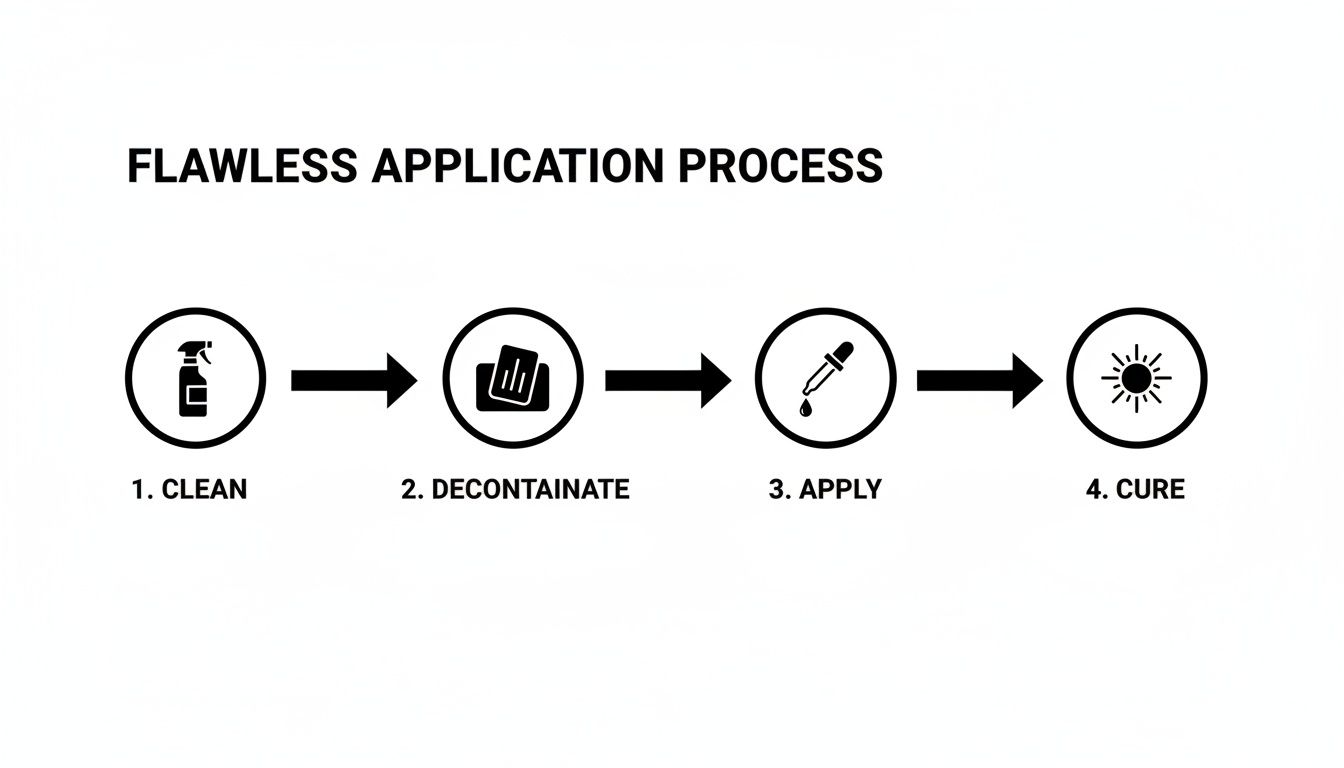
As you can see, a flawless finish has everything to do with meticulous prep work before the coating even touches the surface.
The Power of Flexible Armor for Your Paint
Think about what your car's paint endures daily. It’s a constant battle against harsh UV rays, bug guts, and brutal temperature swings that cause the metal panels to expand and contract. Your typical rigid ceramic coating can really struggle with this kind of stress, eventually becoming brittle and developing tiny micro-cracks.
That's the exact problem we engineered our Titan Coatings’ elastomer technology to solve. We developed a professional-grade coating that’s both hard as nails and incredibly flexible. This unique elasticity is the secret sauce—it allows the coating to absorb the energy from small impacts and move with the surface as temperatures fluctuate, all without failing. Products like Alpha Quartz are easy to install and deliver great results, standing up to bug impacts and temperature shifts without cracking.
Imagine a rigid coating trying to handle a frozen winter night followed by a warm, sunny afternoon—it's likely to crack under that strain. Our elastomer-based coatings, on the other hand, just flex. This built-in resilience is the key to their legendary durability, keeping that deep gloss and tough protection locked in for years.
Simple, Powerful Protection for Everyone
We firmly believe that top-tier protection shouldn't be reserved just for professional detailers with years of experience. For the weekend warrior who wants incredible results without the learning curve of a full professional application, we created Ultra Ceramic Spray. It packs serious protection into a ridiculously easy-to-use spray format.
It delivers that signature unbelievable water-beading, solid chemical resistance, and slick-to-the-touch finish that makes washing your car faster and genuinely more enjoyable. It's the perfect way to top up a professional coating or to give your vehicle a powerful, standalone layer of protection with almost no effort.
Choosing the right product for each surface can feel a bit overwhelming, which is why we’ve put together resources to help you build a complete protection system. By understanding how Titan Coatings' elastomer technology provides a superior defense, you can be confident that every part of your vehicle is shielded by the most durable solutions available today.
How to Maintain Your Coated Windshield
So, you've coated your windshield and you're loving that unbelievable water-beading action and crystal-clear view. Awesome. The good news is, keeping it that way is incredibly simple. It’s not about adding a bunch of chores to your weekend; it's just about smart, easy upkeep to protect your investment.
The golden rule? Be gentle. A professional-grade coating is incredibly resilient, but it’s not invincible against harsh chemicals. When you wash your car, always reach for a pH-neutral car shampoo. Why? Because aggressive, high-alkaline soaps and potent degreasers are the coating's worst enemy. Over time, they can slowly chip away at the chemical bond, weakening its hydrophobic power and cutting its lifespan short.
Regular washing is your best friend here. Don't let things like bird droppings, baked-on bug guts, or those pesky hard water spots linger. Even with a tough coating acting as a shield, these contaminants are often acidic or full of minerals that will try their best to etch into the surface, clogging up the pores of the coating and hurting its performance.
Keeping the Hydrophobic Effect Strong
The whole point of maintenance is to keep that glass surface as clean and slick as the day it was coated. A clean surface is a hydrophobic surface. Here are a few tricks of the trade to make sure your coating goes the distance:
- Embrace the Two-Bucket Method: It sounds simple, but it's a game-changer. One bucket for soapy water, one for clean rinse water for your wash mitt. This stops you from grinding dirt back onto the glass, which is a surefire way to create micro-scratches.
- Steer Clear of Bristle Car Washes: Those giant spinning brushes might seem convenient, but they can be surprisingly abrasive. Plus, you have no idea what harsh chemicals they're soaked in. If you can't hand wash, a touchless automatic wash is a much safer bet.
- Dry with a High-Quality Microfiber: After a wash, gently pat the windshield dry with a clean, plush microfiber towel. This prevents water spots from forming, a must-do if you live in an area with hard water.
I see this all the time: people wait until the water-beading starts to fade before they think about maintenance. The secret is being proactive, not reactive. A quick, gentle wash every week or two prevents any nasty buildup and keeps the coating in its prime, so it’s always ready for whatever the weather throws at you.
Boosting Your Coating for Maximum Life
Want to take things a step further and really max out the performance and longevity? A dedicated maintenance product is the way to go. After washing and drying, a quick mist-and-wipe with a product like Titan's Ultra Ceramic Spray can make a world of difference.
This isn't about replacing the coating—it's about topping it off and rejuvenating it. Think of it like a booster shot. The spray lays down a fresh, slick hydrophobic layer right on top of your base coat, instantly amplifying the water-beading and adding a slick, glossy finish. It's a five-minute job that pays huge dividends in performance.
For a deeper dive, check out our complete guide on how to maintain ceramic coating. Follow these simple steps, and that coated windshield will keep giving you safer, stress-free visibility for years to come.
Common Questions About Windshield Coatings
Even with all the benefits clear, it’s completely normal to have a few questions before you pull the trigger on a ceramic coating for your windshield. Getting straight answers is the best way to feel good about the investment. Let's dig into some of the most common questions we get from enthusiasts and detailers.
Can I Use a Regular Car Ceramic Coating on My Windshield?
This question comes up all the time, and the answer is a hard no. You really don't want to do that. Ceramic coatings designed for your car's paint are built to bond with clear coat, not glass. Slap a paint coating on your windshield, and you’re asking for wiper blades that skip, chatter, and leave a streaky mess that's worse than what you started with.
Glass-specific formulas like Titan's Apex Glass Ceramic Coating are a different beast entirely. They're engineered to create a perfect covalent bond with the silica in the glass itself. This gives you that amazing clarity, an ultra-slick surface, and powerful water-beading without getting in the way of your wipers.
How Long Does a Ceramic Coating for a Windshield Last?
This is where a true ceramic coating really separates itself from the pack. While durability depends on the quality of the product, your local weather, and how you care for it, a top-tier coating can last for years. That's a massive leap from the few weeks or months you get from a typical rain repellent spray.
It all comes down to the chemistry. Titan's groundbreaking elastomer technology creates a shield that's as hard as glass but has a bit of flex. This unique resilience stops it from cracking under thermal stress or getting worn down by your wipers, giving you protection you can actually rely on for the long haul.
Will a Ceramic Coating Affect My Wiper Blades or Sensors?
Not a chance—as long as it’s a quality, glass-specific coating that’s been put on correctly. A professionally formulated coating won’t damage your wiper blades. In fact, the surface becomes so slick and friction-free that it actually reduces the strain on your wipers, helping them glide smoothly and last longer.
The coating itself is a nano-thin layer, completely optically clear and invisible to the naked eye. It won't obstruct any cameras or interfere with sensors for systems like automatic rain detection or lane-keep assist.
Is Applying a Windshield Ceramic Coating Difficult?
Honestly, not really, especially if you're using a product designed with the user in mind. The most important step, the one that makes or breaks the whole job, is the prep work. If you're meticulous about getting that glass perfectly clean and decontaminated before you start, the application itself is straightforward.
Products like Titan's Apex Glass Ceramic Coating are made to be easy to apply and buff off. It puts the power in your hands to get professional, streak-free results right in your own garage, transforming your view of the road.
Ready to make driving in the rain a non-event? Explore the advanced elastomer technology of Titan Coatings and see how our Apex Glass Ceramic Coating can provide years of unmatched visibility and protection for your windshield.
0 Comments