
Keeping that fresh-from-the-detailer shine on your ceramic-coated car isn’t about luck; it’s about smart maintenance. The single most important factor in making a coating last is a consistent routine that includes safe washing, timely decontamination, and using the right products to keep it performing at its peak. This is more than just washing your car—it’s about actively protecting your investment.
Protecting Your Investment in That Showroom Shine
Think back to the day you first saw your car after its Titan coating was applied. That unbelievable gloss, the slickness you could feel, the way water danced off the paint… it was incredible. You didn’t just buy a car wash; you invested in serious, long-term paint protection. The real question is, how do you keep it looking that good for years?
This guide isn’t here to give you another weekend chore list. It’s about shifting your mindset to a strategic approach to preservation. We’re going to dive deep, moving past the basics to cover how to properly care for a professional-grade coating, especially one built on Titan’s game-changing Elastomer technology.
Let me tell you about a client of mine, Mark, who lives in Chicago. He had a traditional ceramic coating put on his car and was thrilled with it—until winter hit. The brutal temperature swings, from freezing nights to sunny afternoons, seemed to sap the life out of his coating. The water beading weakened, and the gloss just wasn’t the same. The coating was failing under the stress.
This is exactly where Titan’s technology, as the first company to introduce Elastomer coatings to the market, completely rewrites the rules.
The Advantage of Elastic Coatings
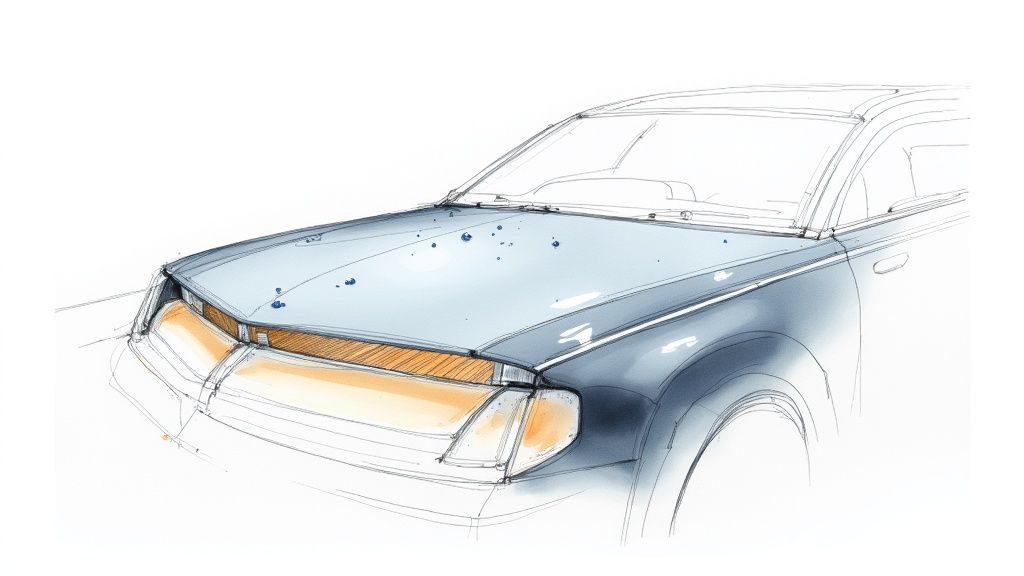
Most ceramic coatings are incredibly hard, but they’re also brittle, almost like a thin layer of glass. When faced with the constant expansion and contraction of your car’s body panels due to temperature changes, they can develop microscopic fractures. Over time, these tiny cracks compromise the entire coating.
Titan coatings are engineered differently. They are designed to be both hard and flexible, thanks to some seriously advanced tech you won’t find anywhere else:
- Elastomers: As pioneers of this technology, we use these polymers to introduce a rubber-like elasticity. This allows the coating to flex with temperature changes from frozen to hot, preventing it from cracking down and ensuring it lasts longer.
- Nano Tubes Technology: On a microscopic level, these provide a powerful, resilient framework, reinforcing the coating’s structure for unparalleled strength.
- Dark Matter Tech®: This is our secret sauce—a proprietary formula that cranks up the chemical resistance and overall durability, creating one tough shield.
This trifecta means the coating doesn’t break down when a car goes from a freezing garage to the hot sun. To get the most out of that incredible durability, though, a proper maintenance plan is non-negotiable.
The point of a maintenance routine isn’t just to keep the car clean. It’s to preserve the coating’s core functions: the water-beading (hydrophobicity), the deep gloss, and, most importantly, the protection.
When Mark eventually got a new car and had it protected with Titan, the difference was night and day. That coating laughed off the Chicago winter, maintaining its slickness and gloss without a hiccup. A simple maintenance routine, boosted with a specialized topper like Titan Coatings HYPER-TOPPER, kept his car looking like it just rolled out of my bay, month after month.
This guide will walk you through exactly how to get those same lasting results.
Mastering the Art of the Safe Hand Wash
The single most important part of your ceramic coating maintenance is the hand wash. It’s that simple. If you get it right, your coating will perform flawlessly for years. But get it wrong, and you risk putting swirls and fine scratches right back into the paint you just paid to perfect.
I’ve seen it happen. A car owner spends a whole weekend applying a beautiful coating, only to drag trapped grit across the finish with a single, dirty bucket during that very first wash. It’s a gut-wrenching moment, and it’s exactly what we’re going to help you avoid.
First things first: automatic car washes are off-limits. They are the enemy of a ceramic coating. Their harsh, high-pH detergents are designed to strip everything off a car’s surface, and they’ll weaken your coating’s hydrophobic properties in a hurry. Those giant, spinning brushes? They’re just loaded with grit from hundreds of other cars, ready to inflict a web of new scratches. A proper hand wash is the only way to go.
The two-bucket wash method is the gold standard here. It’s not just a fancy trick for enthusiasts; it’s a systematic approach designed to isolate dirt and stop you from rubbing it all over your paint. For a ceramic-coated car, this isn’t a suggestion—it’s a requirement.
The Two-Bucket Method Explained
The idea behind this is brilliantly simple. You have two buckets: one for your soapy wash solution and one filled with plain rinse water. The key is to put a Grit Guard in the bottom of each one. This little plastic insert traps all the dirt and grime at the bottom, so you can’t pick it back up with your mitt.
Here’s how the workflow looks in practice:
- Dunk your wash mitt in the “wash” bucket to load it up with suds.
- Gently wash one panel of the car. Just one.
- Now, before going back for more soap, dunk the dirty mitt into the “rinse” bucket. Scrub it against the grit guard to release all the dirt you just picked up.
- Once the mitt is clean, you can go back to the “wash” bucket for fresh soap and move on to the next panel.
This process ensures the dirt you pull off the paint stays in the rinse bucket, keeping your soapy water clean and your finish safe.
The Right Tools and Techniques for a Flawless Wash
Beyond the buckets, a few other pieces of gear and some solid techniques are non-negotiable. The quality of your tools directly translates to the quality of your results. If you’re building out your detailing kit, this overview of must-have carwash equipment is a great starting point for understanding what really makes a difference.
Always start with a thorough pre-rinse. A pressure washer is ideal, but a strong jet from a garden hose works too. This step is critical because it blasts away the majority of loose dust and road grime before you ever have to touch the paint.
Next up is your shampoo. This isn’t the place to cut corners. You absolutely need a high-quality, pH-neutral car shampoo. Aggressive, high-alkaline soaps will slowly eat away at your coating, killing its water-beading magic. A pH-neutral formula cleans effectively without attacking the protective layer. We’ve put together a guide with our top picks for a ceramic car wash to help you choose wisely.
When you start washing, work from the top of the vehicle down. This keeps the dirt from the lower, grimier sections from being dragged up onto cleaner panels. Save the rocker panels and wheels for last. Using a premium microfiber wash mitt, glide it over the surface in gentle, straight lines. Never scrub in circles or apply heavy pressure—that’s how swirls are born.
You’re not trying to scrub the dirt off; you’re letting the slickness of your Titan coating release it. The contamination should lift away with minimal effort, captured by the fibers of your wash mitt. Let the tools and the soap do the work for you.
Drying Without Adding Scratches
How you dry the car is just as crucial as how you wash it. The most common mistake I see is people grabbing an old bath towel or a chamois, both of which can be surprisingly abrasive. You have much better, safer options.
- Plush Microfiber Drying Towel: Get a large, high-GSM (grams per square meter) microfiber towel made specifically for drying cars. Don’t wipe with it. Instead, lay it flat across a panel, gently pat it, and then lift. Or, you can slowly drag it across the surface with zero pressure.
- Touch-Free Air Blower: This is the absolute safest method. A dedicated car blower (or even a clean leaf blower) lets you push the water right off the paint without ever making physical contact. This completely eliminates any risk of scratching and does a fantastic job of clearing water from mirrors, grilles, and panel gaps.
Drying properly prevents water spots. Those annoying white dots are mineral deposits left behind when water evaporates, and if you let them sit, they can actually etch into the coating. The global ceramic coatings market was valued at USD 12.15 billion in 2024 and is projected to hit USD 25.60 billion by 2034—you’ve invested in a premium product, and this simple final step is key to protecting that investment.
How to Revive and Boost Your Coating’s Performance
Over time, you might notice your coating isn’t behaving quite like it did on day one. Maybe the water isn’t sheeting off as fast, or the paint doesn’t feel as slick to the touch. This is a common concern, but it’s almost never a sign that your coating is failing.
It’s actually a clear signal that your coating is doing its job—taking the abuse so your paint doesn’t have to. The surface has simply become clogged with bonded contaminants, which are masking its true hydrophobic properties. Think of it like a good non-stick pan that’s developed a layer of burnt-on residue; the pan itself is fine, but the gunk is keeping it from working right. Your mission is to safely get that contamination off and ‘reset’ the surface.
Unmasking Your Coating with Chemical Decontamination
Contaminants really come in two main flavors: bonded ferrous particles and all that sticky, organic junk from the road. Ferrous particles are tiny bits of iron—mostly from brake dust and industrial fallout—that embed themselves into the coating. You usually can’t see them, but you can feel them as a gritty texture when you run your hand over the paint (in a plastic bag). Then you’ve got the obvious stuff like road tar, tree sap, and bug splatter that just sticks to the surface.
In the old days, the go-to solution for this was a clay bar. But for a ceramic-coated vehicle, aggressive claying can be serious overkill and might even cause micro-marring if you’re not extremely careful. This is why chemical decontamination has become the professional’s choice. It’s safer, way more efficient, and dissolves contaminants without all that aggressive friction.
This three-step process is a great way to visualize your regular maintenance wash.
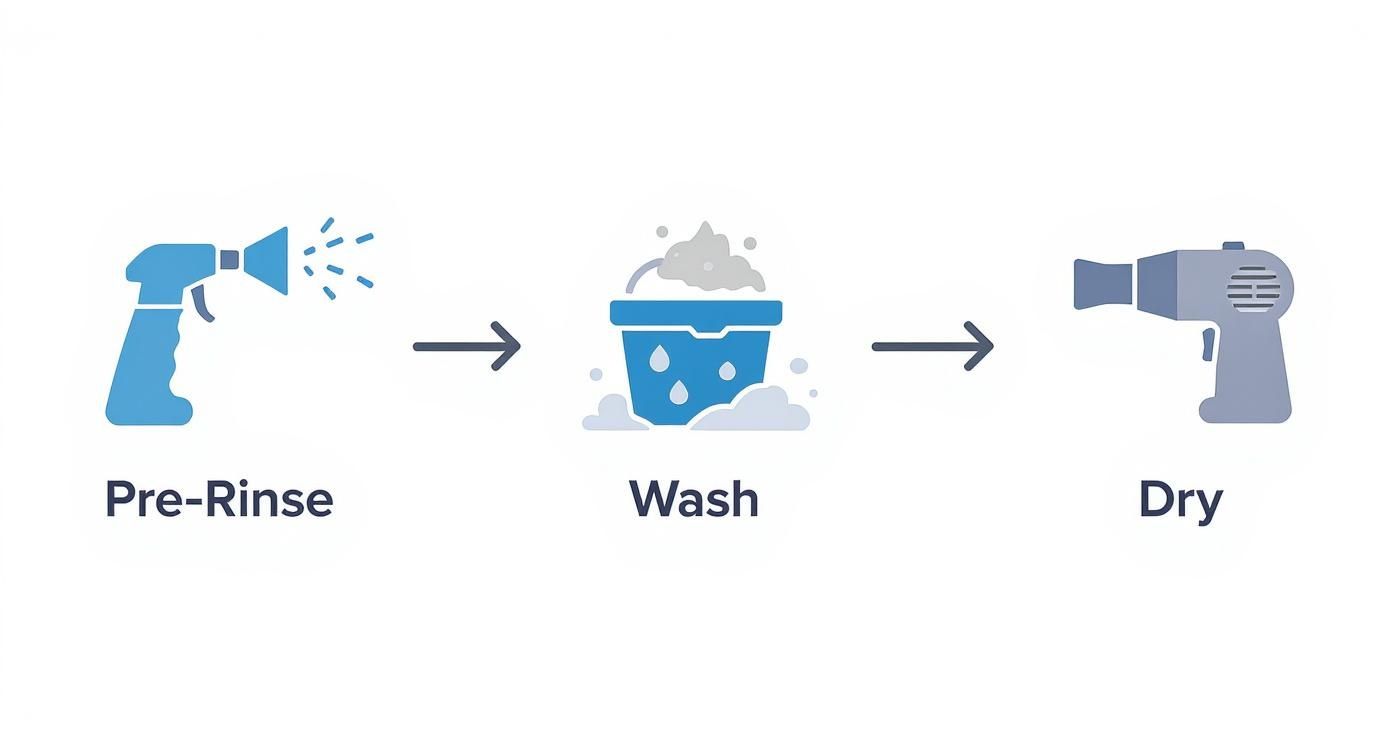
While that graphic shows the basic wash, a full decontamination fits right in after the wash and before you dry and add any protection. It’s a straightforward process, but you need the right products.
- Wash First: Always, always start with a thorough two-bucket hand wash to get all the loose dirt and grime off the surface.
- Iron Remover: While the car is still wet, spray an iron remover liberally over the paintwork. Within minutes, you’ll see the chemical reaction happening in real-time as the product turns a deep purple or red. We call this ‘bleeding,’ and it’s the product literally dissolving those embedded iron particles.
- Rinse Thoroughly: After letting the product dwell for the manufacturer’s recommended time (usually 3-5 minutes, but never let it dry on the paint), rinse the vehicle completely.
- Tar Solvent: For those stubborn little black tar spots, apply a dedicated tar remover to a microfiber towel and gently wipe the affected areas. The solvent will dissolve the tar, letting you wipe it away without any real scrubbing.
This chemical-first approach is hands-down the safest way to deep clean your coating and bring back that slick, hydrophobic magic.
The Secret Weapon: A Maintenance Topper
Once your coating is clean and decontaminated, it’s time for the secret weapon for long-term performance: a maintenance topper. This is arguably the most crucial step in any serious ceramic coating maintenance plan.
Let’s think about a real-world client. She’s diligent about washing her Titan-coated car, but after six months of daily driving, she notices the water beading isn’t as tight as it used to be. The gloss is still there, but that “wow” factor from the hydrophobics has faded. Is her expensive coating wearing out? Not a chance. It’s just ready for a boost.
A quick application of a product like Titan Coatings HYPER-TOPPER changes everything. After washing and drying her car, she mists the topper onto a panel, spreads it with one microfiber towel, and gives it a final buff with a second, dry towel. Instantly, the surface is incredibly slick again. The next time it rains, the water beading is just as intense as the day the coating was first applied.
A maintenance topper is not just a glorified quick detailer. It’s a sacrificial layer of protection that sits on top of your primary coating, taking the brunt of environmental exposure and reinforcing the entire protective system.
Why Toppers Are Essential for Longevity
These maintenance sprays are specifically designed to refresh and enhance your primary coating. They are often silica-based (containing SiO2), just like the coating itself, which allows them to bond effectively and restore those key properties we all love. For a deeper dive into the options, our guide on choosing a ceramic coating spray can help you sort through what’s out there.
Here’s why adding a topper to your routine is a total game-changer:
- It Acts as a Sacrificial Layer: The topper takes the daily hits, preserving the much thicker, more durable base coating underneath.
- It Boosts Hydrophobics: It brings back that amazing water-beading effect, which not only looks incredible but also helps the car stay cleaner by carrying dirt away with the water.
- It Adds Slickness and Gloss: A fresh layer of topper restores that slick, just-coated feel and adds an extra pop of gloss to the finish.
- It Extends the Coating’s Life: By regularly refreshing this top layer, you dramatically extend the effective lifespan of the entire coating system.
This proactive approach is what separates a good maintenance routine from a great one. It’s a key reason the automotive segment of the ceramic coatings industry is blowing up. Projections show the overall market size, which hit USD 13.08 billion in 2025, is expected to more than double to USD 27.98 billion by 2035. The automotive sector is a huge piece of that pie, claiming 32% of the market.
With Titan’s unique Elastomer technology, your base coating is already incredibly resilient. It’s engineered to be hard like glass yet flexible, which prevents the micro-cracking that plagues traditional ceramics during temperature swings. When you pair that robust foundation with a dedicated topper like HYPER-TOPPER, you’re creating a multi-layered defense system that is incredibly tough to beat. This combination is what ensures your vehicle’s finish stays protected, glossy, and easy to clean for years, not just months.
Ceramic Coating Maintenance Schedule
To keep things simple, here’s a quick-reference table outlining a solid maintenance schedule. Sticking to a routine like this is the best way to guarantee you get the most out of your coating’s performance and longevity.
| Maintenance Task | Recommended Frequency | Purpose |
|---|---|---|
| Routine Wash | Every 1-2 weeks | Removes loose dirt and grime before they can bond to the surface. |
| Apply Maintenance Topper | Every 1-3 months | Boosts hydrophobics, adds slickness, and acts as a sacrificial layer. |
| Chemical Decontamination | Every 3-6 months | Removes embedded iron and tar to restore coating performance. |
| Professional Inspection | Annually | A detailer can assess the coating’s health and address any issues. |
Think of this schedule as a guideline. If you park outside, drive in harsh conditions, or just love seeing your car looking its absolute best, you might perform these tasks more frequently. The key is consistency.
Common Maintenance Mistakes You Need to Avoid
You’ve invested in a top-tier protective system for your vehicle, but even the best coating can be sabotaged by a few bad habits. These are the surprisingly common mistakes I see all the time, but the good news is they’re incredibly easy to fix once you know what to look for.
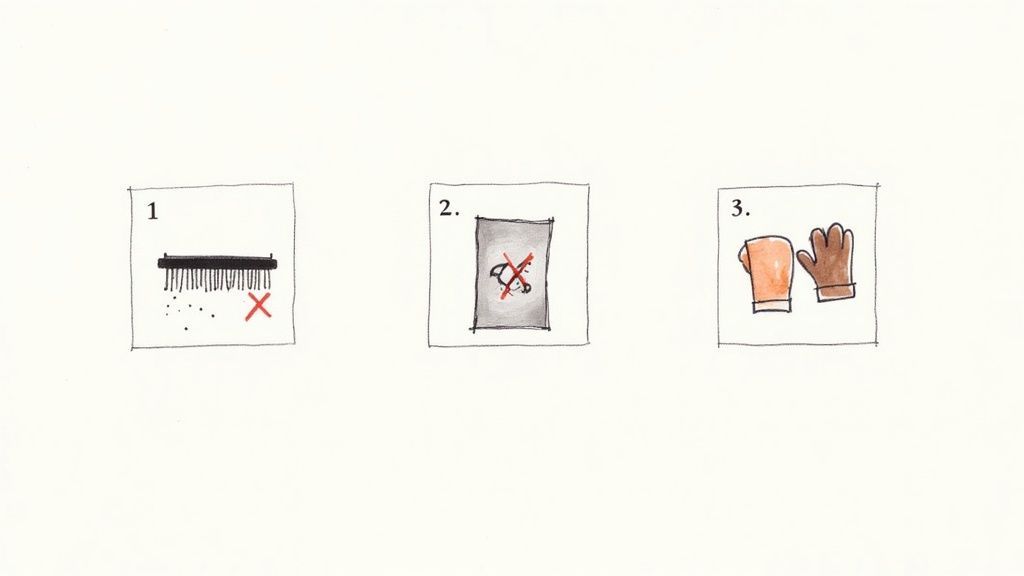
The single most damaging thing you can do? Take your car through an automatic car wash. I know they’re convenient, but the price your coating pays is just too high. Those giant spinning brushes are caked with abrasive grit from every dirty truck and car that went before you, which is a perfect recipe for inflicting a web of fine scratches on your beautiful finish.
Even the “touchless” options are a problem. They often blast your car with harsh, high-pH soaps that can chemically attack your coating, stripping away its hydrophobic properties and leaving it looking dull and flat.
Neglecting Environmental Contaminants
This one is a classic case of complacency. It’s easy to see water beading up and flying off the paint and start to think your car is invincible. That mindset leads people to ignore things like bird droppings and bug guts, which is a critical error.
Let me give you a real-world example. I had a client, David, who saw a bird dropping on his hood but figured his tough coating could take it. He left it there for a week under the hot summer sun. By the time he finally washed it off, the acidic compounds had already etched into the coating’s surface, leaving a faint but permanent dull spot.
This is exactly why you have to act fast.
- Bird Droppings: These are incredibly acidic and can start to cause chemical etching in just a few hours, especially in direct sunlight.
- Bug Splatter: The acidic guts of insects have the same etching effect if they’re left to bake onto the surface.
- Tree Sap: While not as acidic, hardened sap is a nightmare to remove safely and can require solvents you really don’t want to use often.
My advice? Keep a bottle of quick detailer and a clean microfiber towel in your car. A quick, gentle wipe can stop a small problem from turning into a permanent blemish.
Using the Wrong Tools and Products
Your tools are just as important as your technique. Using old, dirty, or just plain wrong equipment is a surefire way to damage the very surface you’re trying to protect.
I once worked with a car owner who was completely frustrated because his coating wasn’t slick anymore. After asking a few questions, the culprit became clear: he was using the same wash mitt for the entire car—including the filthy wheels and lower panels—then drying it with an old bath towel. He was unknowingly dragging brake dust and road grime all over his paint with every single wash.
You can avoid this by building a dedicated, high-quality car care kit.
- Separate Wash Mitts: Always use one premium microfiber mitt for the upper body panels and a second, different-colored one for the wheels and dirty lower areas.
- pH-Neutral Shampoo: Harsh soaps will degrade your coating over time. Stick with formulas made specifically for coated vehicles.
- Clean Microfiber Towels: Never, ever use old bath towels. Invest in a few plush, high-GSM microfiber towels for drying and buffing to prevent scratching.
A mistake I see all the time is the poor application of maintenance sprays. People either use way too much product, don’t spread it evenly, or use a dirty towel, which results in nasty high spots and streaks that are a pain to remove once they cure. Just follow the product instructions to the letter.
Thinking the Coating is Set-and-Forget
The biggest misconception of all is treating a ceramic coating as a “set-it-and-forget-it” shield. While Titan’s flexible elastomer technology offers incredible resilience against temperature swings and environmental stress, it isn’t magic. It still needs regular care.
A coating’s primary job is to make your car easier to clean, not to eliminate the need for cleaning altogether.
When you neglect regular washes, a layer of traffic film and grime builds up. This film “clogs” the coating, masking its hydrophobic properties and making you think it has failed. The popularity of these protective layers is exploding—the global ceramic coatings market was valued at USD 11.87 billion in 2024 and is projected to hit USD 27.12 billion by 2035. You can read the full research about these market trends to see just how massive this industry has become.
A simple, consistent maintenance routine is what truly unlocks the value of this amazing technology and keeps your car looking its best.
Knowing When to Call in a Professional Detailer
Your dedication to maintaining your ceramic coating is the single most important factor in keeping that flawless, just-detailed look. But let’s be honest, even the most committed car owner can benefit from bringing in an expert for a periodic check-up. Think of it as a partnership: your diligent care combined with a professional’s trained eye is the secret to getting the absolute most out of your Titan coating.
Let me tell you about two car owners, Sarah and Tom. Both got their cars coated with a top-tier Titan product. Sarah is on it—she washes her car every two weeks and tops it off every few months. Tom does the exact same thing. But a year later, Sarah’s car just pops a little more; the gloss seems deeper. Her secret? She booked an annual inspection with her certified detailer.
The Value of an Annual Professional Inspection
An annual inspection isn’t just a fancy car wash; it’s a comprehensive health check for your vehicle’s protective layer. A pro has the right tools and, more importantly, the experience to see things you just can’t in your driveway. They can spot high-wear areas you might overlook and remove stubborn contamination that a regular wash simply won’t touch.
During this check-up, a detailer typically gets down to business:
- Assessing Coating Health: Using specialized lighting, they’ll hunt for any signs of degradation or weak spots in the coating.
- Measuring Coating Thickness: With a paint depth gauge, they can get a real sense of how the coating is wearing, especially on high-friction spots like the hood or rocker panels.
- Performing a Deep Decontamination: They can safely eliminate deeply embedded contaminants that even a good DIY iron remover might miss, essentially hitting the “reset” button on the surface.
This kind of professional oversight is what separates a coating that’s just getting by from one that is truly performing at its peak.
Handling Scratches and Damage The Right Way
It happens to the best of us. A rogue shopping cart finds your door, or a low-hanging branch leaves its mark on a fender. Your gut reaction might be to panic, assuming the coating is toast. This is precisely when a professional becomes your best friend.
Whatever you do, don’t grab a bottle of polish and try to fix it yourself. Polishing a coated panel will absolutely remove the coating in that area, creating an unprotected gap in your car’s armor.
A certified detailer can perform a surgical repair. They have the skill to carefully polish only the damaged spot to remove the scratch from the clear coat underneath. After prepping the surface, they can reapply the coating to that small area, blending it seamlessly with the rest of the panel. We cover the kind of meticulous work this involves in our guide on how to apply ceramic coating to a car.
This targeted approach saves you the major headache and expense of stripping and recoating the entire car. It’s the perfect example of how your maintenance routine and expert support work together. If you’re ready to get an expert eye on your vehicle, you can easily book a professional detailer who knows the ins and outs of advanced coatings. By pairing your hard work with professional check-ups, you’re guaranteeing your investment provides that jaw-dropping gloss and protection for years.
Your Top Questions About Ceramic Coating Care, Answered
Once you’ve got a ceramic coating, a few questions always pop up. It’s totally normal. Let’s walk through the most common ones I hear from clients, so you can feel confident you’re doing right by your vehicle’s finish.
Can I Run My Coated Car Through an Automatic Car Wash?
I get this one all the time, and my answer is always a hard no. It’s just not worth the risk.
Most of those automatic car washes, even the “touchless” ones, use really aggressive, high-pH soaps to blast away dirt. These harsh chemicals are poison for a ceramic coating, slowly eating away at its hydrophobic properties and dulling the finish. And the ones with brushes? They’re basically swirl-mark machines.
Stick with a proper two-bucket hand wash using a quality, pH-neutral soap. It’s the only way to guarantee you’re not undoing the very protection you paid for.
How Often Should I Use a Maintenance Topper Spray?
Think of a maintenance topper as a booster shot for your coating. For a car that sees daily action, hitting it with a topper every 1-3 months is a great rule of thumb.
The real test, though, is how the surface is behaving. If you notice water isn’t beading up as tightly as it used to, that’s your cue.
I had a client, Alex, who drives through a ton of new construction for his commute. After about two months, he called me saying his Titan coating wasn’t shedding water like it did on day one. I had him do a quick wipe-down with Titan Coatings HYPER-TOPPER, and boom—that amazing slickness and beading was right back. It just adds a fresh sacrificial layer, reinforcing our unique Elastomer coatings without needing a full decontamination wash.
Just be sure to follow the directions on the bottle. A little goes a long way, and overdoing it can lead to streaking.
Remember, the flexibility of Titan’s Elastomer coatings, powered by nano-tube and Dark Matter tech, gives them incredible resilience. They are hard like glass yet flexible, preventing the micro-cracking that plagues traditional ceramics in extreme hot or cold temperatures. A topper simply keeps this advanced surface performing at its absolute peak.
What’s the Fix for a Scratch on My Ceramic Coating?
If you spot a light scratch, my best advice is to resist the urge to fix it yourself. Don’t grab the polisher. If you try to polish it out, you’ll burn right through the coating in that spot, leaving your paint exposed.
Your best bet is to bring it to a professional detailer. We can properly assess how deep the scratch is. Often, it’s a simple matter of a very localized paint correction, followed by a reapplication of the coating just to that small area. It’s a much smarter (and cheaper) solution than re-coating an entire panel.
Is a Chemical Decontamination Wash Really Necessary?
Absolutely. This is a non-negotiable step in long-term coating care. You can’t see them, but over time, tiny iron particles from brake dust and industrial fallout will embed themselves onto your coating’s surface.
This contamination clogs the pores of the coating, creating a rough texture that kills the water beading. It can make a perfectly healthy coating feel like it’s failing.
Using a chemical iron remover every 3-6 months is the solution. It safely dissolves these embedded particles without any harsh scrubbing, instantly bringing back that slick, glassy feel. It’s one of the most satisfying parts of a proper maintenance wash.
Ready to experience the ultimate in coating maintenance? The Titan Coatings HYPER-TOPPER is specifically engineered to refresh and enhance our groundbreaking Elastomer coatings, restoring that signature slickness and intense water beading. Elevate your maintenance routine by visiting https://www.titancoatings.us today.
0 Comments