
Picture this: your car's paint, dripping with a deep, liquid gloss that looks like it just rolled out of the paint booth. It's not just shiny; it repels water and grime with almost magical ease. This kind of finish used to be the exclusive domain of high-end detailing shops, but not anymore.
The game has completely changed. We've moved past simple carnauba waxes and into a new era of advanced polymer science that you can apply right in your own garage.
The Evolution Of Paint Protection
It wasn't that long ago that getting a true ceramic finish was a complex, multi-day ordeal best left to the pros. Today, products have been engineered that put professional-grade shine and durable protection into the hands of both seasoned detailers and weekend warriors. This guide is your complete playbook for mastering the ceramic spray coating process from start to finish.
This shift from wax to ceramic isn't just a minor trend—it's a massive movement in the car care world. The ceramic coating spray market was valued at an incredible USD 1.2 billion in 2024 and is on track to hit USD 3.8 billion by 2033. That kind of growth tells you everything you need to know: people want better, more accessible protection.
A New Generation Of Coatings
The real magic, though, is in the technology. While lots of products offer a basic ceramic shield, a few pioneering companies are pushing the envelope. Titan Coatings, for example, was the very first to bring Elastomer coatings to the market, leveraging groundbreaking nano-tube and Dark Matter technology.
So what does that actually mean for your car's paint? Think of it this way: traditional ceramic coatings are hard, but that hardness can also make them brittle. Titan's elastic coatings, on the other hand, are engineered to be both hard and flexible. This combination is what makes them so incredibly durable.
Expert Tip: This built-in flexibility allows the coating to handle extreme temperature swings—from freezing winters to scorching summers—without cracking or failing. It can even absorb the energy from minor impacts, like bug splatters at highway speeds, keeping the finish intact far longer than a rigid coating ever could.
Here’s a quick comparison of the key differences between old-school carnauba waxes and a modern ceramic spray like Titan Ultra.
Traditional Wax vs Modern Ceramic Spray Coating
| Feature | Traditional Wax | Ceramic Spray Coating |
|---|---|---|
| Durability | 1-3 months | 6-12 months or more |
| Protection | Basic UV protection | Superior UV, chemical, & scratch resistance |
| Application | Labor-intensive, requires buffing | Simple spray-on, wipe-off process |
| Hydrophobics | Good initial beading, fades fast | Extreme, long-lasting water repellency |
| Gloss | Warm, natural shine | Deep, candy-like gloss |
As you can see, the leap forward is significant. Modern spray coatings simply outperform waxes in every meaningful way, from how long they last to the level of protection they offer.
Moving Beyond The Basics
As paint protection technology keeps advancing, it's smart to understand where different products fit in. You'll often hear the Ceramic Coating vs PPF debate, and while paint protection film offers a physical barrier, modern coatings provide a powerful chemical shield that dramatically enhances the paint’s appearance.
Products like Titan's Ultra Ceramic Spray are designed to bridge that gap between a full-blown professional coating and something anyone can use. They deliver that intense, wet-look gloss and unbelievable water beading you're after.
If you want to dive deeper, you can explore the full range of products at the Titan Coatings shop. Now, let's get ready to transform your vehicle's finish and protect it from the elements like a pro.
Mastering the Art of Surface Preparation
Let's get one thing straight: a brilliant finish is born from meticulous prep work. I've seen it a thousand times—the final gloss and durability of your ceramic spray coating have almost everything to do with the steps you take before you even open the bottle. Skipping this stage is the number one mistake that separates a disappointing, short-lived result from a truly professional one.
Think of it like painting a masterpiece; you'd never start on a dirty, uneven canvas. It's the exact same principle for your car. The clear coat is your canvas, and getting it flawlessly clean and contaminant-free is non-negotiable if you want that unbelievable gloss and a rock-solid bond.
The Foundation of a Flawless Finish
Everything starts with a really good wash. A proper two-bucket wash is your first line of defense, safely lifting away all the loose dirt and road grime without grinding it into the paint and creating new swirls. This isn't just a quick rinse; it's about clearing the decks for the real deep cleaning to come.
Next, you have to bring out the chemicals. This is where you attack the nasty, embedded stuff that washing alone can't even touch.
- Iron Removers: These are crucial. They react with and dissolve all those embedded iron particles—mostly brake dust—that show up as tiny, rust-colored specks. Spray it on, watch it "bleed" purple, and rinse it away.
- Tar Removers: For all that stubborn tar, sticky road grime, and old adhesive residues, you'll need a specialized solvent. These products break that stuff down so you can just wipe it away without a fight.
This chemical decontamination is essential. You're literally purging the pores of your car's clear coat to get it truly, deeply clean.
Achieving a Perfectly Smooth Surface
With the chemical gunk gone, it's time to handle the physical contaminants. This is where a clay bar treatment becomes your best friend. As you glide a lubricated clay bar over the paint, it physically grabs and pulls out bonded grit like tree sap, paint overspray, and industrial fallout. You'll be shocked at what comes off. The goal is a surface that feels perfectly smooth to the touch, just like glass.
If you're new to this critical step, you can get a full breakdown by reading our guide on what clay barring a car does.
Now, for those of us who are chasing true perfection, paint correction is the final, game-changing step. Polishing the paint with a machine polisher removes imperfections like swirl marks, fine scratches, and oxidation. This doesn't just make the paint look better; it creates an optically pure surface that lets the ceramic spray bond more effectively and dramatically amplifies the paint's depth and clarity.
An immaculately clean and corrected surface ensures the coating can form a direct, powerful bond with the clear coat. This is the secret to unlocking its full potential for gloss, unbelievable water beading, and long-term protection—especially for advanced formulas like those from Titan Coatings.
Nailing the Flawless Ceramic Spray Application
Alright, the hard work is done. Your car's surface is prepped to perfection, and now you’re at the final stage—the part where you get that unbelievable, dripping-wet gloss. This is where your attention to detail really pays off.
For this walkthrough, we’ll be talking about a product like Titan Coatings' Ultra Ceramic Spray. It's a favorite among both DIY weekend warriors and pro mobile detailers because it’s incredibly forgiving to apply but delivers a finish that looks anything but amateur.
Here’s the number one rule: always work in a cool, shaded spot. Direct sunlight is your worst enemy here. It’ll make the product flash and dry way too fast, leaving you with a streaky, blotchy mess that’s a nightmare to fix. And don't even think about spraying down the whole car at once. Your new mantra is "less is more," and you’ll be working in small, manageable 2×2 foot sections.
The prep work you just finished is what makes this next step possible.
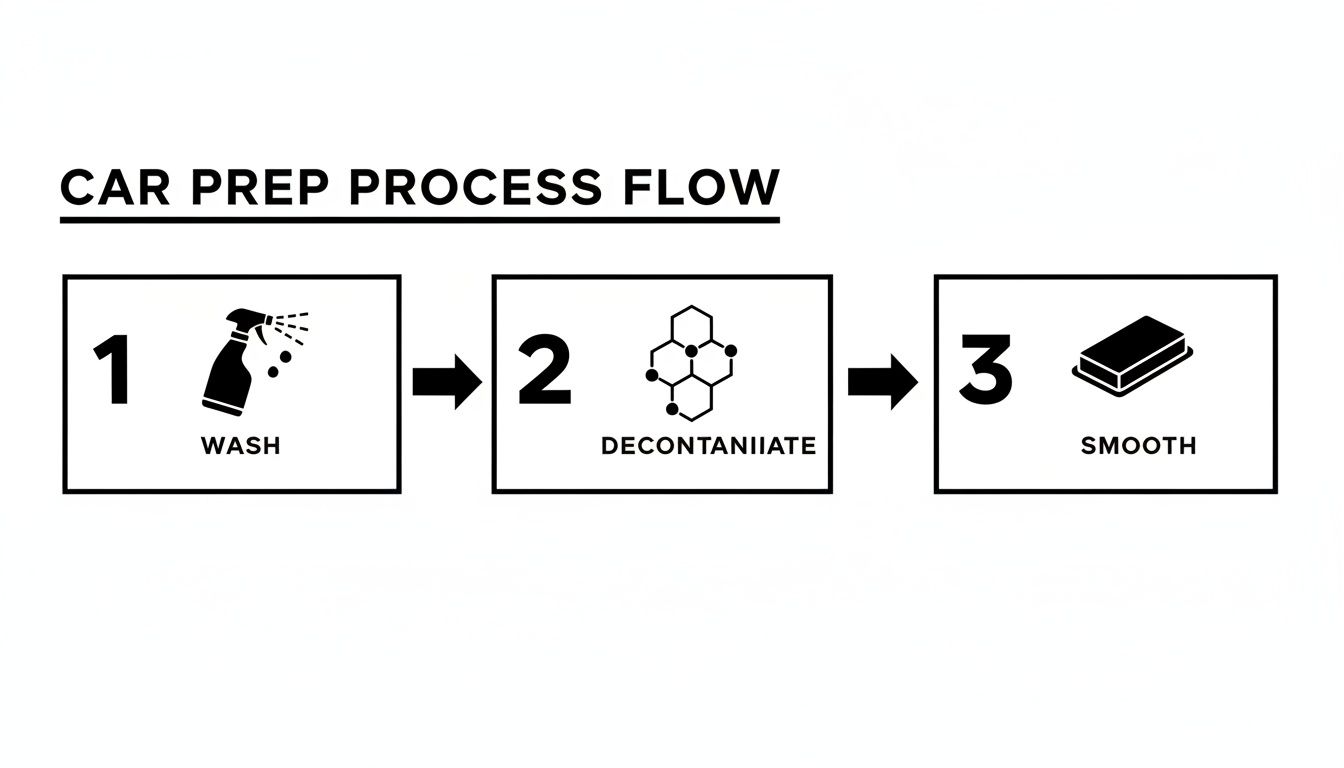
By creating a truly clean slate, you're guaranteeing the ceramic spray has a raw, pure surface to bond to. That's how you get maximum durability and shine.
The Spray, Spread, and Buff Method
Getting this right comes down to a simple rhythm. You’ll need a couple of high-quality, plush microfiber towels—one for applying, one for buffing. Don’t skimp on your towels.
- Mist the Surface Lightly. A couple of light sprays onto your 2×2 foot section is all it takes. The single most common mistake I see is people hosing the panel down. That’s a fast track to high spots (those oily-looking smudges) and a ton of extra buffing.
- Spread it Evenly. Immediately grab your first clean microfiber and gently wipe the product across the section. I like to use straight, overlapping passes, first vertically and then horizontally, to make sure I don’t miss any spots.
- Buff to a High Shine. Don't wait around. Pick up your second, bone-dry microfiber towel, flip it to a clean side, and buff the area until it’s crystal clear and slick. You’re not rubbing hard; you’re just removing the excess residue, leaving the bonded ceramic layer behind.
Once one section is done, move right next to it, overlapping your new section with the old one by an inch or so to ensure you don’t leave any gaps. Just keep repeating this process, panel by panel, until you’ve covered the entire vehicle. If you want to dive even deeper, our full guide on applying ceramic coating to a car breaks it down even further.
Common Mistakes to Avoid
Even with a product as user-friendly as Ultra Ceramic Spray, a few simple slip-ups can mess up your results. Knowing what they are is half the battle.
Here's a pro tip: High spots are just product that wasn't fully leveled or buffed off before it started to cure. If you catch one within a minute or two, don't panic. Just mist the spot again lightly to reactivate the coating, and immediately buff it away with a clean towel.
What to watch out for:
- Working in the Sun or on a Hot Panel: The coating will basically cook onto the surface, making it impossible to spread or buff off cleanly. Always work in the shade, and make sure the paint is cool to the touch before you start.
- Using Too Much Product: More is not better. Drenching the panel won't add extra protection or gloss. It just makes the buffing a workout and dramatically increases your chances of getting a streaky finish.
- Using Dirty or Cheap Towels: A dirty microfiber will literally undo all your hard prep work by dragging contaminants across the paint. Worse, it can create fine scratches. Always start with fresh, high-quality towels for your coating application.
Stick to these guidelines, and you’ll be well on your way to achieving that slick, glossy finish that makes a professionally detailed car stand out from the crowd.
Protecting More Than Just Your Paint
When we talk about protecting a vehicle, most people immediately think about the paint. A deep, glossy finish is what turns heads, after all. But true protection goes way beyond that—other surfaces are just as critical for your safety and the car's longevity.
Think about the last time you were caught in a torrential downpour, squinting through a smeared windshield as your wipers frantically tried to keep up. That's a white-knuckle experience nobody enjoys.
That kind of stressful driving is precisely why specialized ceramic spray coatings were developed for more than just paint. Visibility is everything, and your windshield is your first line of defense. A dedicated treatment here can completely transform your experience behind the wheel.
Making Rainy Drives Stress-Free
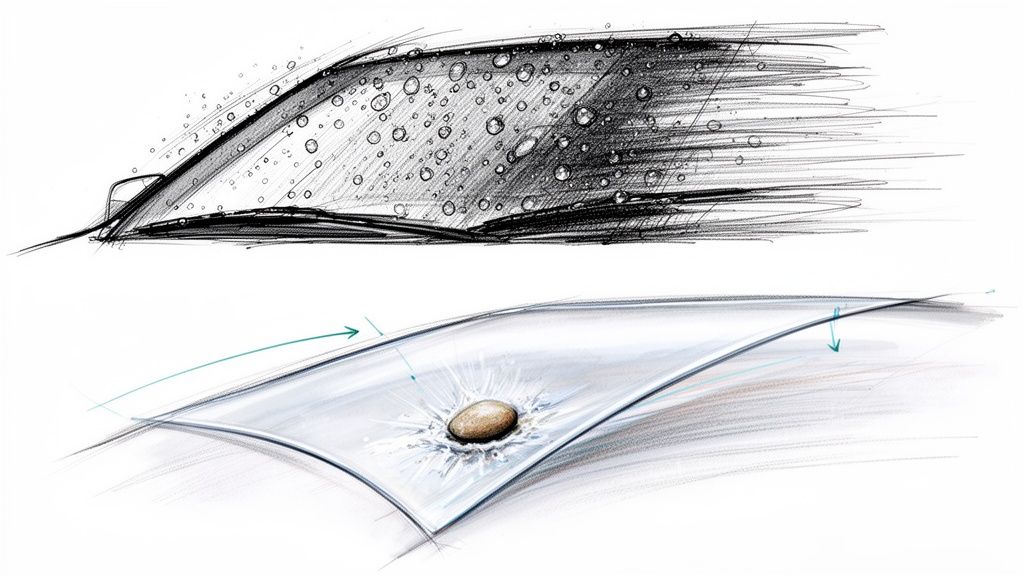
This is where a product like Titan's Apex Glass Ceramic Coating becomes an absolute game-changer. It’s engineered specifically for glass, creating an invisible, super-slick layer that forces water to behave differently. Instead of smearing, rainwater instantly pulls into tight beads and gets whisked away by the airflow over your car, even at moderate speeds.
The result? Dramatically better clarity and far less reliance on your wipers. For anyone who drives in a wet climate, this isn't just a cool feature; it’s a real safety upgrade. The best part is it's incredibly easy to apply, making it a go-to for DIYers and pros alike. You can dive deeper into the science behind our ceramic coating for windshields to see the difference for yourself.
The Next Evolution in Paint Defense
While glass protection is vital, defending your paint from the realities of the road requires a different kind of technology. Traditional hard coatings are incredibly brittle and can be surprisingly vulnerable. This is where Titan Coatings changed the game by pioneering Elastomer coatings.
Let me tell you about a mobile detailer I know. He applied a standard, rigid ceramic coating to a client’s black sports car. A week later, the frustrated client was back. A piece of road debris had hit the hood, and while it didn't punch through the paint, it created a noticeable chip—a tiny spiderweb crack—right in the coating itself.
The next time around, he used Titan’s Alpha Quartz, an Elastomer coating built with groundbreaking nano-tube and Dark Matter tech. A few months later, the same client returned after a long road trip. The front end had taken a beating from bugs and small rocks, but this time, no chips. Nothing.
That’s the power of flexibility. Alpha Quartz is hard like glass but flexible like rubber. This elasticity allows it to absorb and dissipate the energy from minor impacts. Where a rigid coating would shatter, this elastomer coating flexes, preserving the finish underneath.
This unique property also means it can handle extreme temperature swings—from freezing winters to blistering summer heat—without cracking. It provides a level of real-world resilience that older technologies simply can't match, and its ease of use makes it perfect for DIY enthusiasts and mobile detailers. It’s the next logical step in vehicle protection, delivering both hardness and the flexibility needed to actually survive the road.
Maintaining Your Coating for Lasting Brilliance
Alright, so you've applied the ceramic spray, and your car looks absolutely stunning. The real trick is keeping it that way. The good news? It’s a heck of a lot easier than dealing with old-school waxes. This isn't about back-breaking work; it's about smart, simple habits that lock in that unbelievable gloss.
Everything starts with how you wash your car. If you take away only one thing from this section, let it be this: always use a pH-neutral car shampoo. Harsh chemicals, whether acidic or alkaline, are the mortal enemy of your coating. They'll eat away at that protective layer you spent your time applying, so stick with a quality, gentle car soap. It's your first and most important line of defense.
Smart Washing for Long-Term Shine
To keep from putting new swirls and scratches into that perfect finish, the two-bucket wash method is still king. It's a classic for a reason. One bucket holds your soapy water, the other is just for rinsing your wash mitt. This keeps you from dragging all the grit you just pulled off the paint right back across the surface. A little discipline here goes a long way.
Every few washes, it's a good idea to give your coating a little pick-me-up. This is where a ceramic-infused topper or a solid quick detail spray comes into play. Think of it as a booster shot. A quick spray and wipe down not only amps up the gloss but also recharges the hydrophobic effect, so you get those tight, perfect water beads again.
This topper acts as a sacrificial layer. It takes the hit from UV rays, bird bombs, and road grime, preserving the core ceramic spray coating underneath and seriously extending its life.
The Value of Modern Coatings
This dead-simple maintenance is exactly why so many people are ditching traditional products. The market growth is just staggering. The automotive and transportation segment alone is expected to grab 32% of the ceramic coatings market share by 2035. People are voting with their wallets for longevity, UV protection, and the easy-clean properties that make upkeep a breeze. To learn more about this industry shift, you can explore the full research on ceramic coating market trends.
This is especially true when you get into advanced formulas like Titan's Elastomer coatings. Their flexibility, which comes from cutting-edge nano-tube technology, means they don't get brittle or crack from heat cycles or minor impacts. That built-in resilience makes them tougher and easier to live with for the long haul. A good wash routine is really all it takes to keep them looking and performing like day one. For a much deeper dive, check out our complete guide on ceramic coating maintenance.
Answering Your Top Ceramic Spray Questions
When you're diving into ceramic sprays, a few questions always pop up. Whether you're a seasoned pro or just getting started on your own car, getting these details right makes all the difference. Let's tackle some of the most common ones I hear.
How Is a Ceramic Spray Different From a Pro-Grade Coating?
It really boils down to two things: the concentration of SiO2 and how tough it is to apply.
A professional, elastomer-based coating like Titan's Alpha Quartz is the real deal. We're talking about a super-concentrated formula that creates a flexible, almost semi-permanent shell on your paint that can last for years. But applying it is serious business—it requires a controlled environment and a skilled hand.
On the other hand, a ceramic spray coating is designed for everyone. It’s a much more user-friendly formula with a lower SiO2 concentration that you just spray on and wipe off. You won't get years of protection—think months—but you'll get that incredible "wet" gloss and unbelievable water-beading without the hassle.
Can I Just Spray This Stuff Over My Old Wax?
I get this question all the time, and the answer is a hard no. For a ceramic coating to work its magic, it needs to form a direct chemical bond with your car's clear coat.
If you leave a layer of old wax or sealant on the surface, you’re basically putting up a wall. The spray will just sit on top of that old product and disappear as soon as the wax wears off. That’s exactly why the decontamination and IPA wipe-down steps are non-negotiable. Skipping them is the fastest way to see your coating fail.
Help! What Do I Do About Streaks and High Spots?
First, don't panic. High spots—those oily, darker patches—happen when you don't fully level the product before it starts to flash, or cure. The key is catching them quickly.
If you spot a high spot within a few minutes, you can usually fix it by lightly re-spraying the area. This reactivates the coating, giving you a second chance to buff it away with a clean microfiber towel.
If it’s already cured, you’ll need a bit more muscle. A tiny dab of a light polishing compound on a microfiber applicator, worked gently by hand, can level it out. This is a perfect example of why working in small, manageable sections under good lighting is so important. It lets you catch these little mistakes before they become a bigger headache.
What’s the Big Deal With Elastomer Coatings?
This is where the technology from Titan really shines. A lot of traditional ceramic coatings are rigid. Picture a super-thin sheet of glass—when it gets hit by a rock or goes through a wild temperature swing, it can form tiny micro-cracks.
An elastomer coating from Titan is built differently. It's engineered to be flexible. Thanks to some incredible nano-tube technology, it's as hard as glass but can flex and move under stress. This elasticity helps it absorb impacts and handle temperature shifts without cracking. In the real world, that translates to protection that’s not just tougher, but lasts a whole lot longer.
Ready to see what next-level protection looks like? Titan Coatings has advanced solutions for every surface of your vehicle. Grab a bottle of our Ultra Ceramic Spray and experience the difference for yourself.
0 Comments