
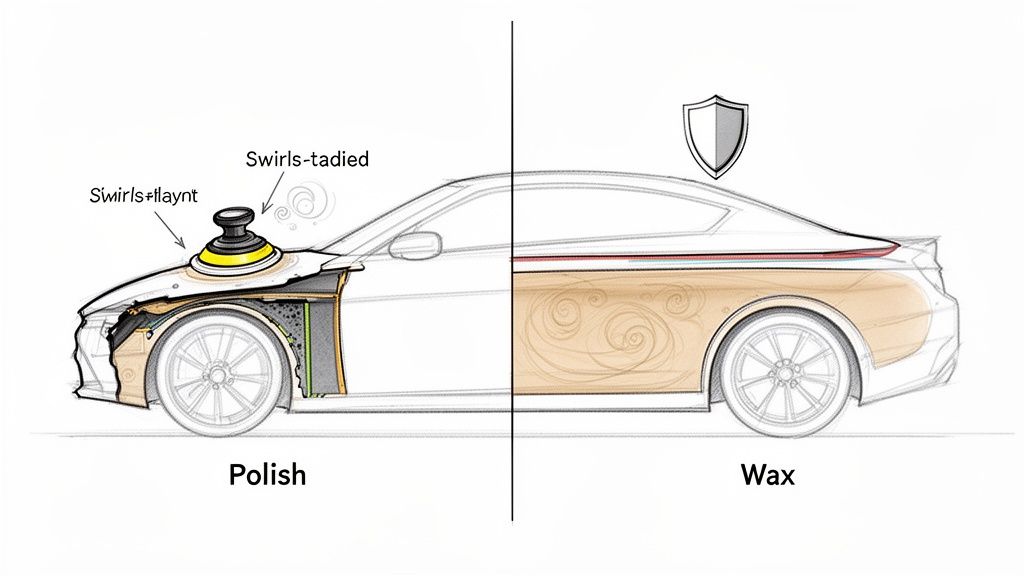
The most fundamental misunderstanding in car care is thinking polish and wax do the same thing. They don't. In fact, they have opposite jobs. Polish is a corrective abrasive that creates shine by removing imperfections, while wax is a protective layer that shields that shine and adds its own gloss.
Imagine you're refinishing a piece of wood furniture. You first have to sand it down to get a perfectly smooth, raw surface. That’s your polish. Only then do you apply a coat of varnish to protect that smooth finish. That's your wax. One fixes the surface, the other preserves it.
Correction Versus Protection: The Core Difference
If you've ever spent a Saturday afternoon carefully waxing your car, only to step back and see the same ugly swirl marks staring back at you in the sunlight, you've experienced this difference firsthand. It's a common mistake. You can't just cover up flaws with wax; you have to remove them first.
Polishing and waxing are two completely different stages of the detailing process, not interchangeable steps.
Defining the Roles
Polishing is all about correction. A good car polish is packed with tiny, precision-milled abrasives that gently shave down an incredibly thin layer of your car's clear coat. By leveling the surface this way, the polish permanently removes the microscopic peaks and valleys that we see as swirl marks, fine scratches, and dull, hazy paint.
Waxing, on the other hand, is about protection. A traditional car wax is completely non-abrasive. It's a blend of natural or synthetic oils and polymers that sits on top of the paint, filling in the microscopic pores and creating a sacrificial barrier. This thin layer is what stands between your paint and things like UV rays, acid rain, bird droppings, and road grime.
The market itself reflects this clear separation. Car polish, making up about 10.5% of U.S. automotive care revenue in 2021, is sold as a surface preparation product. Waxes and sealants are a completely separate category, accounting for a 25% market segment dedicated solely to paint protection.
Polish vs. Wax: A Quick Comparison
Knowing when to reach for the polish and when to grab the wax is what separates a decent-looking car from a truly flawless one. Here’s a simple breakdown of how they stack up.
| Feature | Car Polish (Correction) | Car Wax (Protection) |
|---|---|---|
| Primary Goal | To remove defects and restore true optical clarity. | To shield the paint from damage and add gloss. |
| Action | Abrasively levels the clear coat's surface. | Adds a sacrificial layer on top of the paint. |
| Targets | Swirl marks, light scratches, oxidation, haziness. | UV radiation, water spots, dirt, contaminants. |
| Application | Performed only when defects are visible. | Applied regularly (every few weeks or months). |
| Result | Creates a deep, reflective, true shine from the paint itself. | Enhances existing gloss and provides a temporary barrier. |
The simplest way I explain it is this: Polish fixes the foundation. Protection—whether it's wax or a modern coating—safeguards the result. You can't protect a brilliant shine that you haven't created yet.
At the end of the day, polishing is the real workhorse. It’s the step that actually creates that jaw-dropping, mirror-like finish by perfecting the paint surface itself. Once that canvas is flawless, you need a durable shield to keep it that way. For a deeper dive into this critical first stage, check out our guide on what is paint correction.
How Car Polish Restores Your Vehicle's Shine
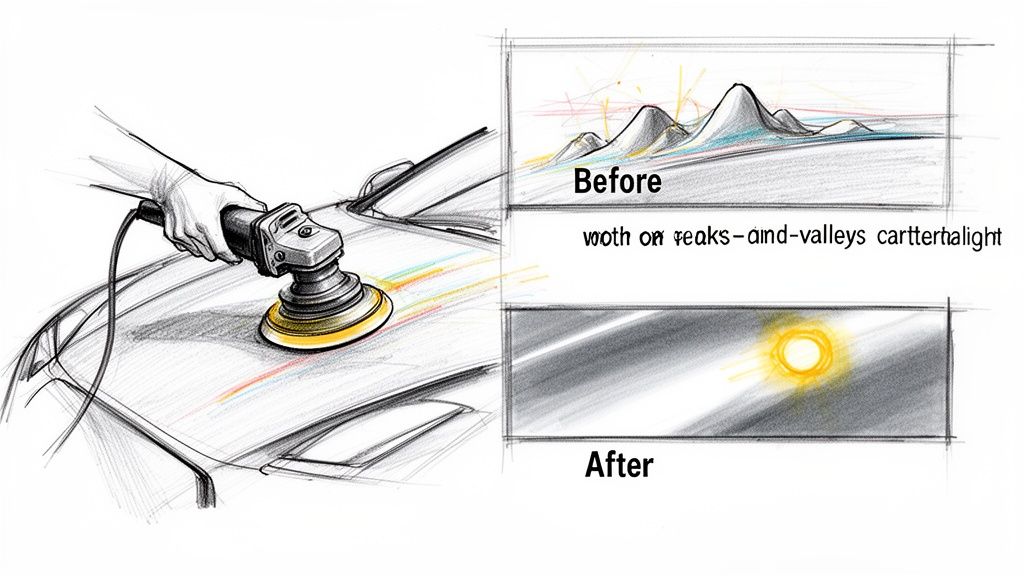
Ever wondered why a car's paint starts to look dull and lifeless? It’s not just dirt. The real culprit is an uneven surface. Over time, daily driving, road grit, and even a quick car wash can create a web of microscopic scratches, swirl marks, and etchings across your paint's clear coat.
These tiny imperfections catch and scatter light in thousands of different directions instead of reflecting it back to you in a uniform way. That scattered light is what your eyes perceive as a faded, hazy finish.
Car polish is the true fix because it’s a corrective product, not a cosmetic one. It doesn’t just hide the flaws—it physically removes them. The magic is all in its abrasive technology.
Leveling The Surface With Abrasives
Think of car polish as an extremely fine liquid sandpaper for your clear coat. It’s formulated with microscopic abrasive particles that are designed to gently shave off an incredibly thin layer of paint. As you work the polish into the surface, you’re literally leveling out those microscopic peaks and valleys.
This process eliminates the defects that were scattering light, restoring a perfectly flat, smooth surface. Once it's smooth, the paint can reflect light directly and evenly, which is what gives you that deep, rich, wet-look gloss. The shine comes from the paint itself, not from something sitting on top of it.
The core difference between polish and wax is that polish creates the shine by perfecting the surface, while wax merely protects the shine that already exists. A perfect finish starts with correction, not protection.
Compounds Versus Finishing Polishes
Not all polishes are the same. They exist on a spectrum, from aggressive compounds to ultra-fine finishing polishes, and choosing the right one is key.
- Compounds: These are the heavy hitters. Packed with larger, more aggressive abrasives, they're used to tackle significant defects like deeper scratches, heavy oxidation, and severe swirl marks.
- Finishing Polishes: These are all about refinement. They contain much finer abrasives to clean up any slight haze left by compounding or to remove very minor imperfections, creating that final, jewel-like pop and a true mirror finish.
Polishing is the essential step that creates a flawless canvas. Once your paint is truly corrected and perfected, it's ready for a durable layer of protection—like a modern ceramic coating—to lock in that hard-earned shine for years to come. If you're ready to master the technique yourself, our in-depth guide shows you exactly how to polish car paint like a pro.
Why Modern Coatings Run Circles Around Traditional Waxes
For generations, carnauba wax was the gold standard. If you talk to any old-school car lover, they’ll have stories about spending entire weekends applying and buffing wax to get that perfect, deep shine. But let's be honest, that routine gets old fast. The protection from a traditional wax job is fleeting, often lasting just a few weeks before you have to do it all over again.
Imagine you're that dedicated enthusiast, sick of the endless cycle of reapplication. You've spent hours polishing your paint to perfection, only for the wax to wear off almost immediately. That's the exact frustration that pushed the industry to find something better—a real solution that gives you lasting protection without the constant upkeep.
A Giant Leap Beyond Wax
The global market for car polish and wax is massive, hitting around USD 5.3 billion in 2023. This boom is driven by more people owning cars and a growing passion for DIY car care. But while the market is growing, the technology is evolving far beyond what simple wax can do.
This evolution is exactly what you see in products like Titan's Ultra Ceramic Spray. It's not just another wax; its formula is inspired by advanced military-grade polymer research, representing a huge jump in performance. It was designed to perfectly bridge the gap between temporary waxes and full-blown professional ceramic coatings.
The real magic is in the bond. Wax just sits on top of your paint like a temporary oily layer. A modern ceramic spray, however, creates a semi-permanent chemical bond with the paint's clear coat, forming a much harder and more resilient shield.
Professional Results, DIY Simplicity
The best thing about this new wave of technology? It’s incredibly easy to use. Old-school waxes have their own tricky application methods, and professional coatings can be intimidating. Ultra Ceramic Spray cuts through all that complexity with a simple spray-and-wipe application.
This makes it a fantastic choice for anyone, from detailing beginners to busy mobile pros who need to deliver reliable results quickly. Instead of a few weeks of protection, you get months of serious hydrophobicity—water beads and practically flies off the surface. The finish is a deep, candy-like gloss that most waxes can only dream of.
It's the smart, modern answer to the age-old question of how to protect a beautifully polished finish. If you want to dig deeper into how this tech stacks up, you can learn more about the difference between wax and ceramic coating.
The Future of Protection: Elastomer Coatings
The old-school debate over polish vs. wax is quickly being overshadowed by technology that completely redefines paint protection. For years, professional detailers have been stuck in a tough spot with traditional ceramic coatings. Sure, they offered incredible hardness, but that rigid, glass-like structure was also their biggest downfall.
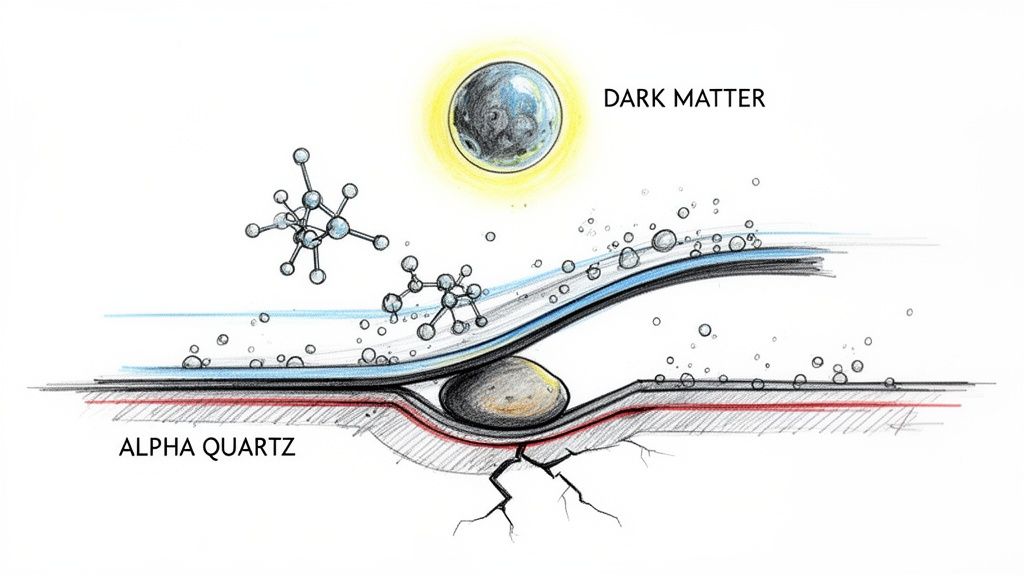
Imagine this scenario: a detailer applies a high-end ceramic coating, only for the client to come back a few months later with micro-cracking all over the paint. The coating was simply too brittle to handle the natural expansion and contraction of the car's panels as temperatures swung from freezing cold to blistering heat. This constant fight for a truly resilient solution pushed the industry to find something better.
The Elastomer Revolution
This is where Titan Coatings stepped in and changed the game, introducing the first-ever elastomer coatings. By using our proprietary nano tubes technology and Dark Matter tech, we developed a coating that directly solves the core problem of brittleness.
Our flagship product, Alpha Quartz, cures to be as hard as glass but keeps an incredible amount of flexibility. That elasticity is its secret weapon. Our elastic coatings last longer because this flexibility means temperature changes won't affect the coating; it won't crack down when going from frozen to hot temperatures.
Instead of cracking under stress, an elastomer coating flexes. This allows it to absorb impacts from road debris and withstand severe temperature changes without failing, ensuring the protection lasts for years, not months.
This breakthrough is why the market is shifting so fast. The car wax and polish sector is seeing a massive growth of 12.90% CAGR between 2024 and 2033, with market projections hitting USD 12.6 billion. This explosion is fueled by people demanding advanced protective solutions that go way beyond what old-fashioned wax can deliver.
Why Flexibility Equals Longevity
Think of a traditional ceramic coating as a thin sheet of glass. It's hard, but one small rock chip can cause it to shatter. Now, picture an elastomer coating as a sheet of flexible, hardened rubber. It gives you the same scratch resistance but can bend and absorb energy instead of breaking.
This unique blend of hardness and flexibility makes Alpha Quartz the ultimate protective layer for a freshly polished surface.
- Impact Resistance: It can absorb the shock from small stones and bugs, preventing chips and cracks from ever reaching your paint.
- Thermal Stability: The coating expands and contracts right along with your car’s body panels, so it won’t crack when you pull out of a freezing garage into the hot sun.
- User-Friendly Application: Alpha Quartz was designed for an easy install, making it a perfect solution for both DIY car lovers and professional detailers who need reliable, top-tier results.
It offers a level of durability that waxes and even conventional ceramics just can't touch. Polishing creates the perfect canvas; an elastomer coating is the high-tech, flexible armor that keeps it that way for the long haul. You can learn more about the science behind Titan Coatings’ elastomer technology and see for yourself why it’s the future.
Comparing Protection Options: Wax vs. Modern Coatings
To put it all into perspective, let’s see how a traditional wax stacks up against today’s advanced coatings. The difference in performance, durability, and the level of protection is night and day.
| Feature | Traditional Wax | Titan Ultra Ceramic Spray | Titan Alpha Quartz Elastomer |
|---|---|---|---|
| Durability | Weeks to a few months | 6-12 months | 5+ years |
| Protection Type | Sacrificial layer, minimal chemical resistance | Chemical & UV resistance, high gloss | Extreme chemical, UV, & impact resistance |
| Hardness | Soft, easily removed | Hard (SiO2-based) | Extremely hard (Alpha Quartz) |
| Flexibility | Minimal | Rigid, can micro-crack | Highly flexible, resists cracking |
| Application | Easy, but frequent reapplication needed | Spray-on, wipe-off | Professional-grade, requires prep |
| Best For | Enthusiasts seeking temporary gloss | DIYers wanting durable protection | Ultimate long-term, professional protection |
It’s clear that while waxes have their place for a quick shine, they can't compete with the long-term, rugged protection of modern elastomer and ceramic technologies. For anyone serious about preserving their vehicle's finish, the choice is obvious.
Enhancing Driving Safety With Glass Coatings
Let's be honest, proper car care goes way beyond just the paint. We’ve all been there: driving home when a sudden, blinding downpour hits. Your wipers are on full blast, but they're just smearing water across the windshield, turning the road ahead into a blurry, stressful mess. It's a dangerous, all-too-common scenario, but it doesn't have to be your reality.
This is where the idea of protection—so critical for your paint—becomes an essential safety feature for your glass. While polishes fix imperfections, advanced coatings are what transform your driving experience by protecting your most important window to the world: the windshield. We're not just talking about shine here; we're talking about absolute clarity when conditions are at their worst.
From Blurry Vision To Perfect Clarity
Think of a modern glass coating as an invisible, high-tech shield. It completely changes how water behaves on your windshield. Instead of letting rain flatten out and "sheet" across the glass, a quality coating creates an intensely hydrophobic surface. This forces water to form tight, perfect little beads that simply can't cling on.
Titan's APEX Glass Ceramic Coating is built for this exact job. Once it's on, rainwater beads up instantly. At even moderate driving speeds, the airflow just whisks those beads right off the glass. The difference is night and day—you get a massive improvement in visibility, and you’ll find yourself using your frantic, smearing wipers far less. It makes driving in heavy rain a much calmer, safer, and stress-free experience.
The real difference between an untreated and a coated windshield comes down to control. An untreated surface is totally at the mercy of the weather. A coated one actively repels it, giving you a clearer, safer view of the road.
Making Advanced Safety Accessible
Of course, before you protect the glass, you need to make sure it's in good shape. If you have minor issues, it’s worth learning how to repair windscreen scratches to create a perfect foundation. Prepping the surface properly is key to making sure the coating bonds perfectly and performs at its best.
The great news is, you don't need a professional setup to get this level of safety. APEX Glass was designed for an incredibly simple application process that anyone can handle. This puts the power to upgrade your vehicle's safety right in your hands, turning a nerve-racking drive in the rain into a controlled, confident one.
Ready to see how this technology can make your drives safer? You can learn more about our ceramic coating for windshields.
Choosing the Right Paint Care Strategy for You
The age-old debate between polish and wax really just comes down to one simple truth: polish corrects, while a coating protects. Figuring out which road to take depends entirely on what you want to achieve, the current state of your car's paint, and frankly, how much time you're willing to put in.
Making the right choice isn't just about getting a good result; it's about moving past old-school methods and taking advantage of the incredible advances in car care technology we have today. Your journey starts by asking one question: what’s my main goal?
This simple decision tree lays it all out.
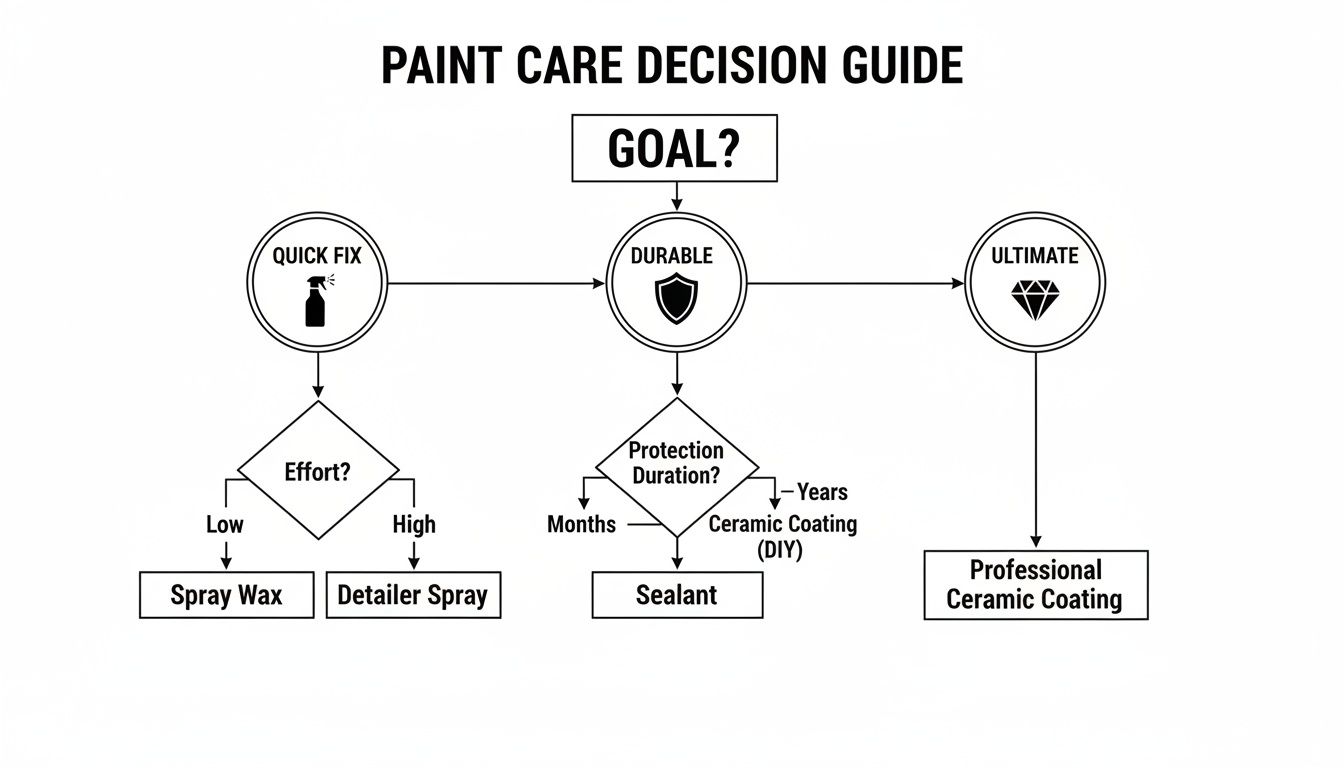
As you can see, the outcome you're chasing—whether it's a quick shine, solid protection, or that flawless, better-than-new finish—points you directly to the right products and process.
Your Path to a Perfect Finish
Let's break down what these choices look like in the real world.
For a Quick Touch-Up: Is your paint already in pretty good shape? If you're just looking for a fast way to boost the gloss and add a little temporary protection, a classic polish and wax job will get it done. It’s the traditional route, but be prepared for frequent reapplications to keep it looking fresh.
For Durable and Easy Protection: If you're an enthusiast who wants a deep, lasting shine without the hassle of a full professional coating, Titan's Ultra Ceramic Spray is your go-to. It gives you months of serious hydrophobic protection and is as easy as spraying on and wiping off. The performance blows any traditional wax out of the water.
For the Ultimate, Long-Term Armor: For those who won't settle for anything less than the best, the strategy is clear: a full paint correction followed by a layer of Titan's Alpha Quartz. This isn't just protection; it's a long-term investment in your vehicle. Our advanced elastomer technology creates a shield that’s hard as glass yet flexible, offering years of resilience against chips, cracks, and harsh temperatures, all while locking in that perfect, corrected finish.
Common Questions About Polish & Wax
Still have a few questions floating around about the whole polish vs. wax debate? You're not alone. Let's tackle some of the most common ones to get you on the right track.
Can I Just Wax My Car and Skip the Polish?
Technically, yes, you can. But it's like painting a wall without sanding it first—you're just covering up the problems.
Wax is purely for protection and shine. If your paint is already riddled with swirl marks, light scratches, or oxidation, the wax will simply seal those flaws underneath. In some cases, the added gloss can actually make the imperfections stand out even more. For that deep, wet look everyone wants, you need to polish first. Polishing creates that perfectly smooth, glass-like surface, giving the wax a flawless canvas to protect.
What Makes Alpha Quartz Different From a Normal Ceramic Coating?
This is a great question because it gets to the heart of modern paint protection. Most traditional ceramic coatings are incredibly hard, which sounds great on paper. The problem is, that hardness makes them rigid and brittle. Your car's body panels are constantly expanding and contracting with temperature changes, and that rigidity can lead to micro-cracking over time.
Titan's Alpha Quartz isn't a ceramic—it's an elastomer coating. Using our proprietary Dark Matter Technology® and nano tubes, it cures as hard as glass but stays flexible. That elasticity is the game-changer. It allows the coating to absorb small impacts and flex with the paint, preventing the cracking that plagues conventional ceramics and offering far more durable, long-term protection.
So, How Often Do I Need to Polish and Protect My Car?
Think of it this way: polishing is surgery, and protecting is a check-up. You only perform surgery when there's a problem. If your paint looks great, you don't need to polish it. With good washing habits, you might only need to polish every year or two.
Protection, on the other hand, is all about regular maintenance. The schedule really depends on what you're using.
- Traditional Wax: You'll be lucky to get more than a few weeks of real protection.
- Synthetic Sealant: Stretches that out to a few months.
- Titan Ultra Ceramic Spray: A solid choice for DIYers, giving you up to 6 months of serious protection.
- Titan Alpha Quartz Elastomer Coating: This is the professional-grade solution. We're talking years of durable, low-maintenance armor for your vehicle's paint.
If you're tired of temporary fixes and ready for flexible, long-lasting armor for your perfected finish, it's time to look beyond old-school waxes. Titan Coatings engineered Alpha Quartz to provide a level of durability that traditional products simply can't match. See what the future of paint protection looks like with Titan's Alpha Quartz Elastomer Coating today.
0 Comments