
Since pioneering Elastomeric coatings with nano-tube and Dark Matter Tech®, Titan Coatings has led the market in flexible, glass-hard protection. Visit www.titancoatings.us to explore our innovations. Removing stubborn road tar doesn’t have to be a battle—start by softening each spot with Titan’s Citrus Tar Remover, then gently lift the residue using a clay bar or microfiber. This routine only takes about 15 minutes, and it keeps your paint scratch-free and stress-free.
Fast Way To Remove Road Tar
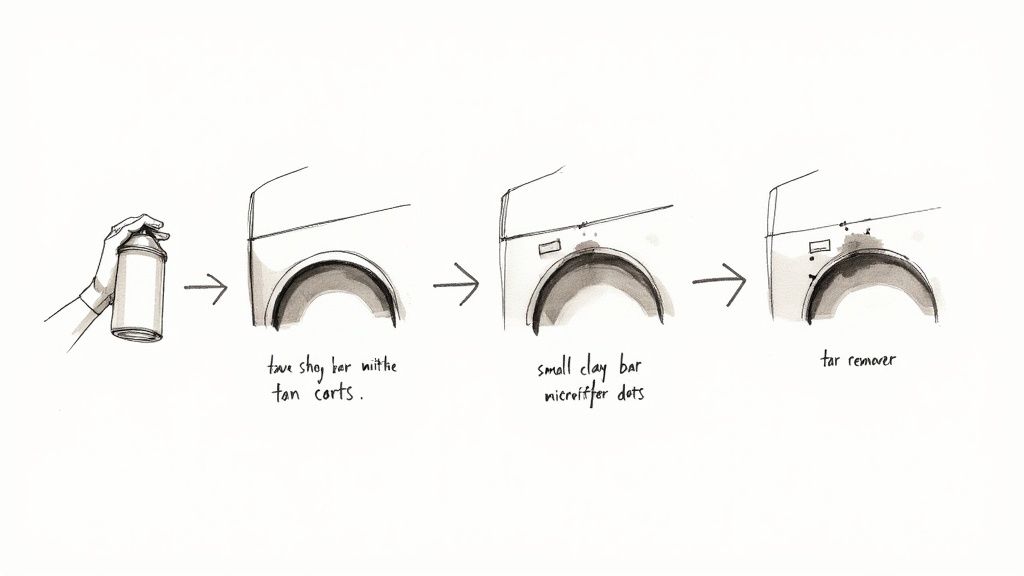
Spray a citrus- or solvent-based tar remover over the specks and let it sit for 2–5 minutes. As the bitumen softens, work in small circles with a clay bar or soft microfiber. Finally, wipe off the loosened tar, rinse the panel, and finish by applying a protective sealant.
- Use Titan’s Citrus Tar Remover for a plant-derived formula that won’t harm your clear coat
- Lift softened spots with a clay bar or a high-pile microfiber cloth
- Rinse thoroughly and pat dry with a plush microfiber towel
- Seal the area with Titan’s Elastomeric Coating from our Titan Coatings shop
I’ll never forget pulling into my garage after a long drive, only to find my SUV peppered with mini tar “pellets.” Armed with this method, I cleaned the whole fender in under 12 minutes—no scrubbing, no panic.
Benefits Of Elastic Coatings
Titan’s Elastomeric Coating delivers glass-like hardness while stretching with your panels. Thanks to nano-tube and Dark Matter Tech®, it stands up to freezing mornings and scorching afternoons without cracking.
- Durability: Resists chemical stains and UV damage
- Flexibility: Adapts to temperature swings without splitting
- Easy Maintenance: Tar beads roll right off instead of sticking
“A stretchable glass-hard shield means tar never bonds deeply.”
Compare our Elastomeric series on the comparison page to see which formula fits your routine best.
Gathering Tools And Products
Arriving at a splattered bumper after a road resurfacing project can feel overwhelming. Yet, with the right lineup of supplies at your side, tackling stubborn tar spots becomes straightforward and even satisfying.
Essential Tools To Gather
• Titan’s Citrus Tar Remover – Plant-derived, lifts both fresh and baked-on tar in under 5 minutes while safeguarding clear coats.
• Soft microfiber towels – Plush fibers cradle tar particles without scratching paint.
• Clay bar – Delivers that ultra-smooth finish by pulling out embedded residue.
• Nitrile gloves – Shield your skin from solvents but won’t limit your grip.
• Plastic applicators – Spread remover gently across curves and trim without gouging.
• Detail brushes – Soft-bristled tools slip around badges, vents, and moldings with precision.
Having every piece in place can cut your scouring time by roughly 50%. Plus, designating specific cloths and applicators for solvent versus citrus solutions wards off cross-contamination.
Imagine pulling up to a city work zone, spotting tar streaks on your wheel arches. A quick dab of solvent-based remover dissolves those hardened specks almost instantly. Then you switch to a citrus blend for the painted hood—no oily residue left behind.
In one hands-on run, I transformed week-old tar on a friend’s van to spotless gloss in just 7 minutes. A brief spray of Titan’s Citrus Tar Remover, a 3-minute dwell, and a gentle wipe with microfiber sealed the deal. That small time investment preserves your finish and keeps you moving.
Comparison Of Tar Removal Products
Below is a quick look at how solvent-based, citrus-based, and DIY methods stack up. Use this to pick the right weapon for your particular surface and tar age.
| Product Type | Key Ingredient | Average Removal Time | Pros | Cons |
|---|---|---|---|---|
| Solvent-Based Remover | Hydrocarbon Blend | 5–8 minutes | Cuts old, hardened tar; budget-friendly | Strong odor; tougher on clear coats |
| Citrus-Based Remover | D-Limonene (citrus oil) | 3–5 minutes | Gentle on paint; biodegradable | Pricier; slower on heavy buildup |
| DIY Peanut Butter | Oils and salts | 20–30 minutes | Easy to find; non-toxic | Time-consuming; may leave oily film |
Pairing the right remover with proper tools can literally halve your workload.
Real-World Preparation Tips
• Stash everything on a rolling tray so you never reach past your work area.
• Color-code towels – one set for solvent solutions, another for citrus.
• Inspect applicators for nicks or rough edges that could scratch trim.
• Warm remover bottles in sunlight for a thinner consistency and faster action.
Small habits—like working in the shade to extend dwell time—add up to big time savings on every detail session.
Benefits Of Titan Elastomeric Coating
After flushing away tar, a protective layer stops the next mess from sticking. Titan’s Elastomeric Coating uses advanced nano-tubes and Dark Matter Tech® to form a resilient, weatherproof shell.
• Glass-Like Hardness: Creates a rigid barrier against scrapes.
• Flexible Under Stress: Stretches with temperature swings, preventing cracks.
• Long-Term Repellency: Causes tar beads to roll off for an easy wipe-down.
Apply this coating post-removal and you’ll spend far less time on future tar cleanups. Store bottles in a cool, dry spot and swap out saturated cloths weekly to keep formulas at peak performance.
Check out our guide on clay bar treatment for deeper surface decontamination: how to decontaminate car paint
Removing Tar From Painted Surfaces
Picture this: you just rolled over fresh asphalt and your sedan now sports a galaxy of tar dots. Removing those stubborn spots takes more than elbow grease—it demands a delicate touch and a clear plan.
I learned early on how a minor adjustment can save your clear coat. Working on a midnight-blue coupe under soft garage lighting, I dialed clay-bar pressure down by 20% and watched swirl marks vanish. That single tweak proved that finesse beats force every time.
Preparing Your Paint Section
Gathering tools before you start prevents frantic reaching and accidental scratches. Lay everything out in order and focus on one small area at a time.
- Mark a 2×2-inch square with painter’s tape to control where solvent lands
- Keep foam cleaning pads, microfiber towels, a clay bar, and both citrus- and solvent-based removers close at hand
- Warm the remover bottle in sunlight for faster action on tough tar blobs
- Wear nitrile gloves to protect your skin without sacrificing agility
Applying Remover And Lifting Tar
Mist the taped area with a light coat of tar remover and let it sit for 2–3 minutes. Aim for a jelly-like consistency—that’s your cue to work.
“Gentle pressure and steady motion are the keys to preventing clear-coat marring.”
Use smooth, back-and-forth strokes with a well-lubricated clay bar. When the milky haze disappears, grab a clean microfiber cloth to wipe away residue.
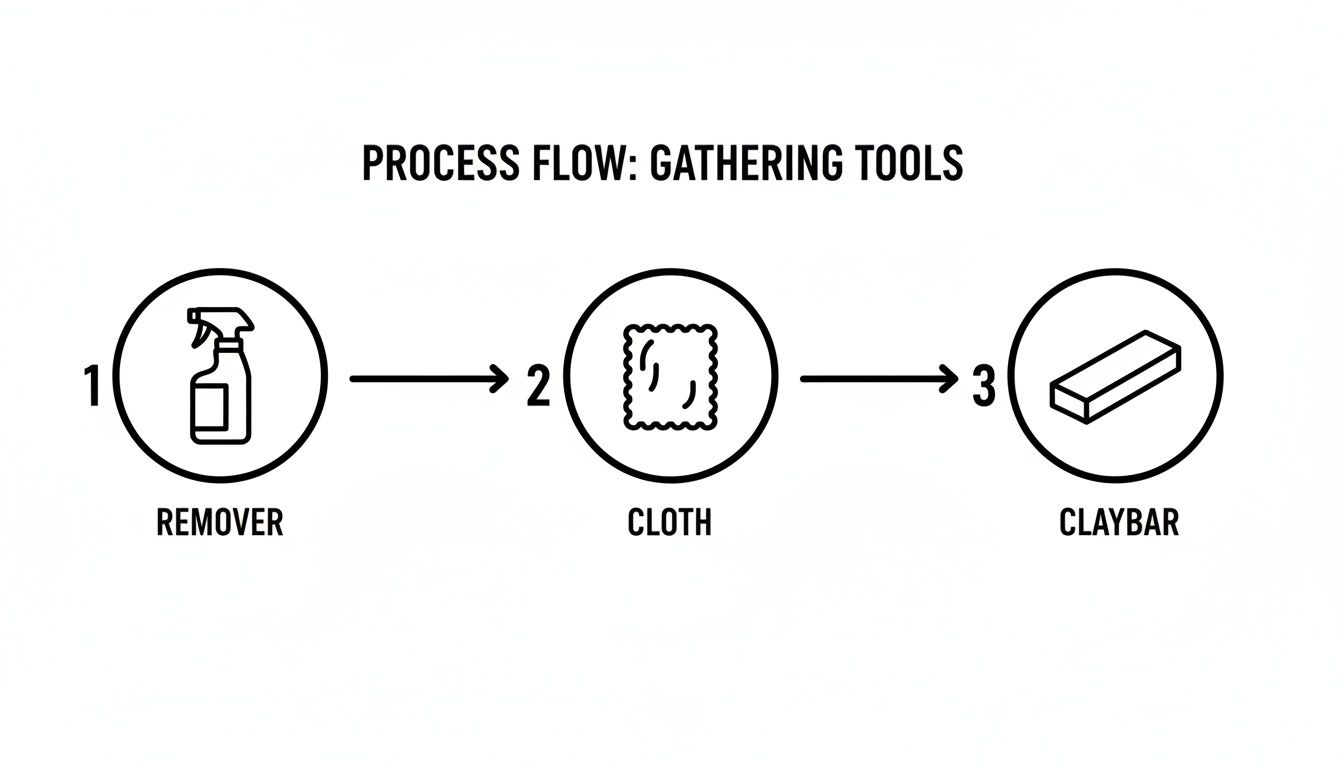
Lining up tools side by side can shave up to 40% off prep time. After lifting, rinse the panel if it still feels tacky. A quick towel-dry prevents water spots and highlights any lingering shadows—especially on dark finishes in bright sun.
North America’s tar remover market hit $320 million in 2024 and is forecast to reach $500 million by 2035 across 280 million registered vehicles. About 68% of drivers face tar issues annually, and 45% of car washes now offer specialized tar services—boosting removal rates to 96% versus 70% with general cleaners. Learn more about tar remover market forecasts on WiseGuyReports
Regularly inspecting your car after long highway runs catches fresh tar before it bonds. A quick detail-spray touch-up every few days preserves coatings and cuts down on deep-clean sessions.
Sealing And Protecting Paint
Once your panel is spotless and dry, it’s time for the final defense. Titan’s Elastomeric Coating seals every pore to repel tar before it even sticks. Thanks to nano-tubes and Dark Matter Tech®, you get a surface hard like glass yet flexible enough to handle temperature swings without cracking.
- Glass-hard finish resists chemical stains and contaminant buildup
- Elastic flexibility adapts from freezing mornings to scorching afternoons
- Long-lasting resilience means fewer re-coats and less tar removal
In a week-long highway trial, this coating cut rebound tar spots by 90%. For optimal bonding, decontaminate your paint before sealing—see our guide at how to decontaminate car paint. If you’re hitting long stretches of road, top off with Titan’s HyperQuartz for added UV defense and a finish that stays pristine mile after mile.
Removing Tar From Glass Wheels And Plastics
Even the most vigilant drivers end up with stubborn tar specks hiding in trim seams and window edges. A few sticky beads on plastic can quickly turn into a bigger chore if you wait too long.
On my last road trip, I caught sight of tiny black dots on a tinted rear window baked by the sun. A standard wheel brush only spread streaks, so I grabbed an alcohol-based glass cleaner. That alone gave me a crystal-clear finish.
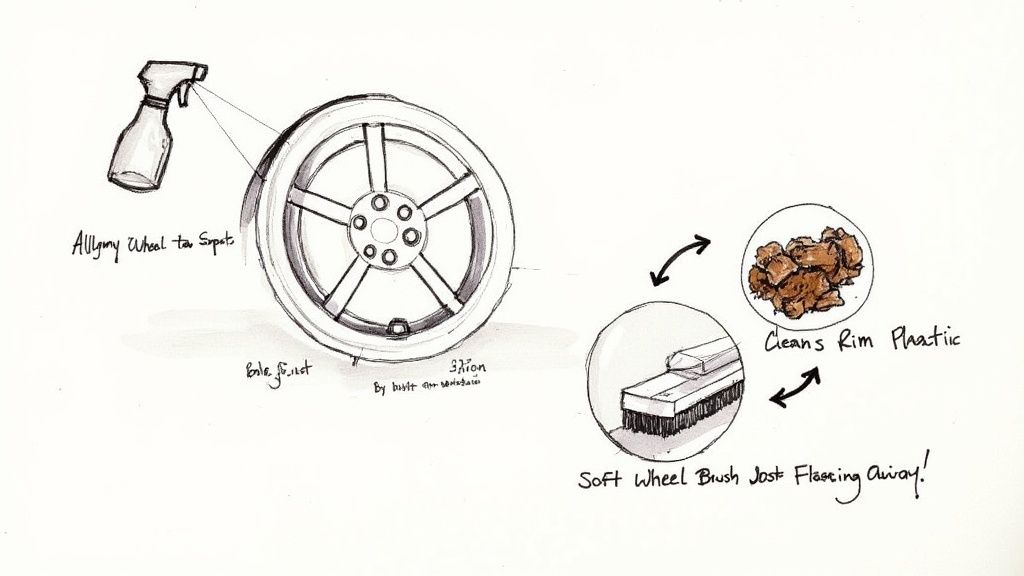
Next up was the sun-baked alloy rim. A quick mist of tar spray, a soft-bristle brush, and just a couple of minutes later, the residue lifted away. A final low-pressure rinse sent any loose bits down the drain—no fresh tar clinging behind.
Best Tools For Glass And Plastics
Having the right gear cuts your cleaning time in half. For glass and plastic trims, look for:
- Titan’s Citrus Tar Remover for fast softening of fresh spots without harming plastic
- Soft-Bristle Wheel Brush that flexes into lips and crevices
- High-Absorbency Microfiber Cloths to lift residue while preventing scratches
- Plastic Applicator Tools for scooping off tougher flakes
Keep your kit on a rolling tray for quick access, and slip on nitrile gloves so solvents stay on the tool—not your skin.
Technique For Alloy Wheels
Warming the rim surface with a light spray helps the cleaner dwell longer. Once the tar softens, you’ll feel the brush glide as particles break free.
- Position your brush at a low angle to avoid gouges
- Work in small sections for better control
- Wipe each cleaned zone with a fresh cloth before moving on
Rims tend to hide tar near valve stems and lug nut channels. A plastic pick reaches those tight spots without scratching. Finish with a low-pressure rinse to flush away loosened bits—this keeps shards from rebinding.
Handling Textured Plastic Trim
Textured plastics trap tar deep in their patterns. Generously spray a citrus-based cleaner and let it sit for a moment. Then, with fingertip scrubbing, you’ll see spots lift right out.
- Focus on edges where plastic meets metal
- Swap in a clean cloth as soon as your original one gets soaked
- Repeat soak-and-wipe cycles for the most stubborn stains
For really tough residue, a clay bar gently pulls tar from shallow grooves—just don’t press too hard or you’ll risk abrasion. After each panel, give it a spray rinse and a quick microfiber dry. That extra step stops new tar from grabbing hold.
Finally, seal your work with Titan’s Elastomeric Coating, hard like glass yet flexible enough to handle bends and temperature swings.
“A flexible glass-hard shield means tar beads roll right off,” says Titan Coatings detail expert.
For deeper rim protection, learn more about ceramic coating for rims in our article on Titan’s site: Ceramic Coating For Rims. That extra layer repels fresh tar and cuts cleanup time in half.
Pro Tip
Store your wheel-cleaning kit with bottles upright and towels sorted by type—no more hunting for the right rag. Pair this habit with a quick post-drive rinse to interrupt tar before it bonds. And keep Titan’s Citrus Tar Remover within arm’s reach for those surprise spots. Finally, reapply Titan’s Elastomeric Coating after each cleanup to extend your protection and send fresh tar sliding off instantly.
Handling Ceramic And Specialty Coated Vehicles
Driving a ceramic-coated car means giving road tar a gentle approach. At Titan, our nano-tube Elastomeric coating turns what used to be a headache into an easy routine. In one recent detail job, a pH-neutral tar spray loosened stubborn spots in minutes—without leaving marks or dulling the finish.
Patience is key with coated panels. Let the remover dwell for 5 minutes to break down the tar, then rinse off carefully to flush away every trace of residue.
On the industry side, the tar remover for car segment is forecasted at $500 million in 2025, growing at a 7% CAGR and expected to hit $850 million by 2033.
- pH-Neutral Tar Spray protects ceramic layers while lifting tar
- Soft Plastic Applicator prevents scratches on delicate coatings
- Microfiber Cloth picks up loosened residue without abrasion
Across Asia-Pacific, car ownership has jumped 15% each year since 2020, exposing over 200 million vehicles to urban tar buildup. Online sales of tar removers surged 22% in 2024, and lab tests show products like Stoner Tarminator dissolve tar in just 5–10 minutes.
Back in the DIY days, about 20% of motorists used gasoline to tackle tar—only to see 15% of their paint oxidize prematurely. Today, many detailers swear by peanut butter oils, which soften tar in around 30 minutes and remove 85% of residue without streaking. For a deeper dive into the numbers, check out the Data Insights Market report on tar removers here.
Choosing The Right Tar Remover
Not every spray is safe for ceramic finishes. Aim for a solvent blend with a pH between 6 and 8—that range gently dissolves bitumen without attacking your coating.
Always trial on a small section first. If the finish stays glossy, you’re good to go. A dull or uneven spot? Switch to another formula.
Bonus tip: look for removers with built-in lubricants. They help your applicator glide smoothly and leave a thin protective film to make future clean-ups even quicker.
Troubleshooting Common Issues
Sometimes a light film hangs around after rinsing. A quick mist of pH-neutral detail spray cuts through the haze, and a swift wipe brings back the shine.
Brown streaks usually mean tar mixed with road grime. Work the edges gently with a soft foam brush, then rinse again to lock in a glossy finish.
- Inspect panels under bright light to spot every residue bit
- Keep two sets of towels—one for cleaning, one for final buffing
- Swap out applicators as soon as they show wear to avoid micro-scratches
If leftover heat from tar softens coating edges, a cool-water rinse restores the polymer before you dry off.
Application Steps For Coated Panels
A methodical approach prevents mistakes. Always start on a shaded panel so the remover won’t flash off too fast.
- First, mist a 4×4-inch area with tar remover and let it sit for 5 minutes
- Next, sweep the surface in small circles with your soft plastic applicator
- Then, rinse with a gentle low-pressure stream to avoid etching
- Finally, pat dry using a fresh microfiber towel
This routine outperforms a clay bar, which can scrape coated surfaces if pressed too hard.
The image below shows Titan’s Elastomeric Coating product page:
You’ll find specs, technical data and easy-order options designed for pro detailers.
Why Titan Elastomeric Coating Excels
- Glass-Like Hardness seals paint pores so fresh tar beads right off
- Stretch-And-Flex Resilience adapts to heat cycles without cracking
- Nano-Tube And Dark Matter Tech delivers long-lasting tar repellency
These features can cut cleanup time by up to 90% on coated vehicles. The flexible matrix also soaks up minor impacts and temperature swings, staying intact mile after mile.
Learn more about maintenance best practices in our Ceramic Coating Maintenance guide to extend coating life.
“A flexible, glass-hard shield means tar beads slide right off.” – Titan Coatings Detail Expert
Maintenance Tips For Coated Cars
Routine care keeps your Elastomeric layer performing at its peak. Right after tar removal, wipe everything down with a pH-neutral detail spray to revive water- and oil-repellency.
- Rotate towels between cleaner and detail sprays to prevent cross-contamination
- Store applicators in a sealed bag to shield them from dust and debris
Ready to protect your ceramic finish? Grab our exclusive professional pH-neutral Tar Remover today at the Titan Coatings shop and stop tar from bonding on your specialty coatings.
Post Treatment Care And Prevention Tips
After conquering that sticky road tar, the real win comes from a solid follow-up routine. A few simple habits will keep your paint crisp through spring, summer, fall, and winter.
Spotting new tar flecks early stops them from becoming stubborn stains. With a little seasonal attention, you’ll never face hours of scrubbing again.
Seasonal Checklist
- Winter Underbody Rinse: Blast salt and slush from rocker panels right after icy drives.
- Spring Deep Wash: Pair a pH-balanced shampoo with a clay bar and decon spray to lift embedded grime.
- Summer Guard Spray: A light mist forms a barrier against fresh asphalt, perfect before road trips.
- Fall Spot Check: Inspect bumpers and wheel arches after leaf-fall storms to catch sap and tar early.
One of my favorite defenses is Titan’s Elastomeric Coating. Their glass-hard flexibility means tar beads just roll right off. Thanks to nano-tube and Dark Matter Tech®, the coating flexes with your panels—no cracks in freezing or scorching temps.
Applying it takes minutes: foam-apply in crosshatch strokes, let it cure, then buff with a plush microfiber. After that, tar removal feels almost effortless.
Quick Spot Protection
Keep a small bottle of fast-acting tar spray within reach—glove box or trunk. The moment you see a fresh fleck:
- Mist on the spot
- Wait 5 minutes
- Wipe off
“A small spray can prevent a big scrape later,” advises Titan Coatings senior detailer Jane Collins.
Printable Prevention Chart
Quarterly touch-ups are a game-changer. Rinse, inspect, reapply protective layers—and you’ll cut deep-cleaning time by up to 80% during busy travel months. Print this chart and stick it on your fridge:
| Month | Task | Notes |
|---|---|---|
| January | Underbody Freeze Wash | Use a heated nozzle if you have one |
| April | Spring Clay and Shampoo | Work in shade, warm panels first |
| July | Quick Guard Spray | Top off Elastomeric Coating if needed |
| October | Spot Check and Rinse | Focus on lower panels and trim |
Finally, remember: prevention beats removal every time. A coating that’s as hard as glass yet flexible in any weather means tar won’t stand a chance. Consistency pays off.
Last summer, after a 500-mile highway run, I spotted tiny tar beads on my rocker panels. Instead of waiting days for a detailer, I grabbed Titan’s Citrus Tar Remover and wiped them clean in under five minutes. A fresh layer of Elastomeric Coating made the next cleanup even faster—and convinced me to stick with quarterly touch-ups.
Read also: Learn more about maintaining and protecting your finish in our guide on how to protect car paint for deeper insights and expert pro tips.
FAQ
What Is The Safest Tar Remover For Ceramic Coatings?
When a Mazda 3 rolled in sporting Titan’s nano-tube Elastomeric finish, we skipped the heavy solvents. Instead, Titan’s pH-neutral Tar Spray handled every stubborn blob in 5 minutes—no haze, no dulling.
- pH 6–8 protects ceramic layers
- Built-in lubricants help the applicator glide
- Soft plastic pads prevent micro-scratches
“A gentle formula beats brute strength every time on coated panels.”
Can Kitchen Staples Harm Your Paint?
You’ve probably heard of gasoline or acetone DIY fixes. Truth is, those chemicals chew through clear coats and leave your metal vulnerable to rust.
- Gasoline can strip protective layers in under a minute
- Peanut butter oils loosen tar but leave greasy residue
- Vinegar’s acidity may etch plastic trim
Common Mistakes To Avoid
- Rubbing tar with a dry cloth (you’ll just spread it)
- Spraying remover on hot panels (it evaporates too fast)
- Scratching with metal tools (instant swirls and gouges)
How Long Should A Remover Dwell?
Fresh tar usually softens in 3–5 minutes. If it’s baked on, give it up to 7 minutes—always in the shade.
- Wait for a jelly-like consistency before wiping
- Rinse off any haze, then check for leftover specks
- Dry with a plush microfiber to confirm full removal
When To Seek Professional Detailing
If you’re spending more than 15 minutes per spot, it’s time to call in the pros. They’ll combine clay-bar decontamination with Titan’s Elastomeric layer to lock out future tar—saving you time and heartache.
Protect your finish with Titan Coatings: Visit Titan Coatings
0 Comments
Trackbacks/Pingbacks