
You know that feeling, right? You’re on the highway at night, and out of nowhere, a downpour hits. Your wipers are on full blast, but they’re just smearing the water, turning the road ahead into a blurry, dangerous mess of reflections and headlights. You grip the steering wheel tighter, your stress levels skyrocket. It’s a miserable and frankly unsafe way to drive.
Now, picture this instead: The rain starts, but as soon as the drops hit your windshield, they don’t flatten out or smear. They instantly form tight little beads and get whisked away by the airflow, leaving your glass remarkably clear. You barely even need your wipers. That’s not a fantasy—it’s the reality of driving with a high-quality rain repellant ceramic coating. It’s the difference between a tense, treacherous drive and a confident, stress-free journey.
A New Standard in Protection
For a long time, the only options were temporary sprays or waxes that would give up the ghost after just a few weeks. We knew there had to be a better way. At Titan Coatings, as the first company to introduce Elastomer coatings to the market using nano-tube and Dark Matter tech, we set a completely new standard. This isn’t just another temporary fix; it’s a durable, semi-permanent shield. If you want to dive deeper into how this works, understanding the best hydrophobic car coating is a great place to start.
Unlike traditional, rigid ceramic coatings that can be as brittle as glass, Titan’s elastic coatings are engineered to be both incredibly hard and remarkably flexible. This combination is what truly changes the game for durability.
Built for Real-World Conditions
So, why does that flexibility matter so much? Imagine your car’s surfaces constantly expanding and contracting with temperature swings, from a freezing winter morning to a blazing hot afternoon. A rigid coating can’t handle that stress and eventually develops micro-cracks, which lets the protection fail. Even an impact from a bug on the highway can cause a fracture.
Our elastomer technology, on the other hand, moves and flexes right along with the surface. This resilience means the coating won’t crack under pressure, ensuring its protective barrier and water-beading magic last for years, not weeks. It’s simply a smarter, more robust approach designed for the real world your car lives in, day in and day out.
The Science of Flawless Water Beading
Ever watched water bead up and roll right off a lotus leaf, leaving it perfectly clean and dry? That incredible natural trick is the very inspiration behind a premium rain-repellent ceramic coating. This isn’t just about making water run off your car; it’s about controlling it at a microscopic level.
The magic boils down to two simple ideas: surface tension and contact angle. Water molecules have a natural tendency to cling together, which is what forms droplets in the first place. When those drops hit a surface, the angle they make is everything. A low contact angle means the water spreads out, clinging to the glass or paint. But a high contact angle forces the water into a tight, almost perfect sphere, ready to be whisked away by wind or gravity.
Why Contact Angle Matters
For a surface to be truly hydrophobic, it needs a contact angle of over 110 degrees. This is the scientific gold standard for creating those satisfying, bowling-ball-like water beads we all love to see. Getting there isn’t something a simple spray wax can do; it requires some serious nanotechnology.
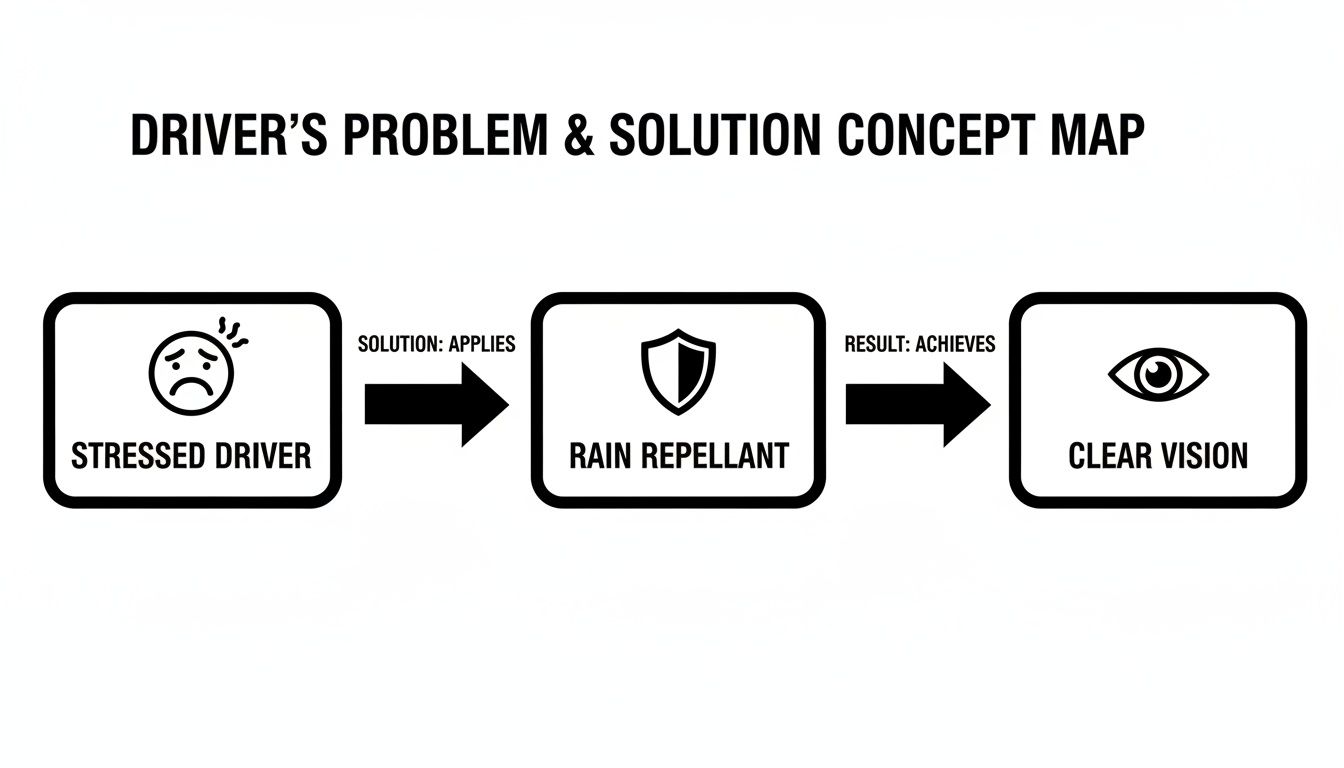
This is all about reducing the stress of driving in bad weather by giving you a crystal-clear view of the road.
Think about your car’s paint or glass. Even when it feels perfectly smooth, it’s actually full of microscopic hills and valleys. Water gets trapped in these imperfections, clinging on for dear life. A ceramic coating fills every last one of those tiny pores, creating an ultra-slick, non-porous shield that gives water nothing to grab onto. This is one of many innovative technologies in auto repair that’s completely changing what’s possible for vehicle protection.
The Titan Coatings Difference: Dark Matter Tech®
Here at Titan Coatings, we’ve taken this science to the next level with our proprietary Dark Matter Tech®. This isn’t your average nanotech. We’ve engineered a formula that creates an unbelievably dense and slick surface. The particles create a powerful chemical bond with your vehicle’s clear coat, forming a shield so perfect and uniform that water has no choice but to bead up and fly off. For a more detailed look at the basics, check out our guide on what ceramic coatings are and how they work.
This technology is what separates a short-lived water-sheeting effect from true, long-lasting hydrophobic performance that can handle storm after storm. It’s the difference between a temporary fix and a durable, semi-permanent solution.
The demand for this kind of protection is exploding. The global market for rain repellent coatings has rocketed to USD 1.54 billion, largely because the automotive and aviation industries simply can’t compromise on clear visibility. For car enthusiasts and professional detailers, this means we now have access to military-grade polymers that don’t just repel water but also fight off corrosion.
Our formulas, like those built with Dark Matter Tech®, have been proven in the harshest climates on earth. It’s no surprise that cars with these advanced coatings can see 30-50% better water beading—a game-changing advantage in any downpour. This is how cutting-edge science translates directly into a safer, more confident drive.
More Than Rain: A Multi-Layered Defense System
While watching water bead up and fly off your paint is satisfying, the real power of a rain-repellent ceramic coating is the comprehensive, multi-layered defense it creates for your entire vehicle. It’s like an invisible suit of armor, built to fend off a constant barrage of environmental threats that go way beyond a simple downpour.
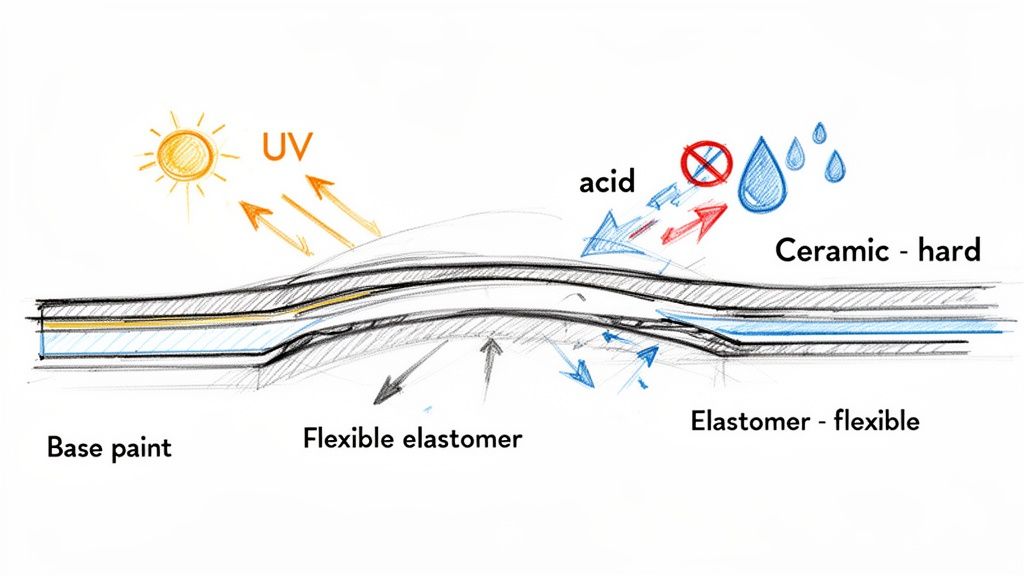
Think of it as a complete shield. This advanced protection isn’t just about water; it’s about resisting the harsh chemicals in bird droppings and acid rain that can permanently etch your clear coat. It also provides powerful UV protection, acting as a high-performance sunscreen for your paint to prevent the fading and oxidation that make a car look old before its time.
The Problem With Traditional Coatings
For years, the industry standard was a traditional ceramic coating. These coatings are incredibly hard, forming a glassy, sacrificial layer that offers good protection. But that very hardness is also their greatest weakness. Picture a thin sheet of glass—it’s tough, but it’s also rigid and brittle.
In the real world, that rigidity is a huge liability. Your car’s body panels are always expanding and contracting with temperature changes, from freezing nights to scorching summer days. A rigid coating can’t flex with this constant movement, which eventually leads to microscopic cracks. The same thing happens with small impacts from road debris. Over time, these tiny fractures compromise the entire protective layer, letting moisture and contaminants creep underneath.
Titan’s Elastomer Breakthrough: A Flexible Revolution
This is where Titan Coatings rewrote the rulebook. We pioneered the first elastomer coatings, a groundbreaking approach that combines the best of both worlds. Our unique formulas, which are the heart and soul of products like Alpha Quartz, are as hard as traditional glass coatings but have the flexibility of rubber.
This is the key to superior, long-lasting protection.
Our elastic coatings are engineered to absorb impacts and endure thermal expansion without cracking. They bend and flex with the surface, maintaining a seamless, unbroken shield that traditional rigid ceramics simply cannot match.
We’ve found that this elasticity makes the coating far more durable in real-world conditions. It means that punishing temperature swings won’t cause it to fail, and impacts from road debris are absorbed rather than causing fractures. This resilience ensures the coating performs at its peak for years, not just months. While weighing protection options, it’s worth understanding the core differences we outline in our guide comparing paint protection film vs. ceramic coating.
Let’s break down the practical differences. While standard ceramics offer a hard shell, our elastomer technology provides a resilient, self-healing shield that adapts to the environment.
Titan Elastomer Coatings vs. Traditional Ceramic Coatings
| Feature | Traditional Ceramic Coating | Titan Elastomer Coating (e.g., Alpha Quartz) |
|---|---|---|
| Flexibility | Rigid and brittle, prone to micro-cracking. | Highly flexible; expands and contracts with the surface. |
| Impact Resistance | Susceptible to fracturing from small impacts. | Absorbs and dissipates energy from road debris. |
| Durability | Longevity is reduced by environmental stress. | Maintains integrity through extreme temperatures. |
| Bonding | Forms a hard, glassy layer on top of the paint. | Creates a seamless, adaptive membrane. |
This table shows why the shift to elastomer-based coatings isn’t just an upgrade—it’s a fundamental change in how we think about protecting a vehicle’s finish for the long haul.
Market Growth And Proven Performance
The incredible benefits of this technology are no secret. The global market for ceramic coatings, essential for top-tier rain-repellent applications, has swelled to a massive USD 12.15 billion and is projected to more than double by 2034. This surge is driven by car lovers and professional detailers who demand self-cleaning surfaces and lasting protection.
In the automotive world, these coatings provide up to 99% UV resistance and can extend clear coat life by 5-7 years, showcasing their immense value. You can dig into more data about this booming ceramic coating market to see the full scope of its growth.
Ultimately, Titan’s elastomer technology provides a durable, resilient shield that goes far beyond just repelling rain. It’s a multi-faceted defense system designed to preserve your vehicle’s beauty and integrity against the toughest conditions, ensuring it looks its best for years to come.
Choosing Your Ideal Protective Shield
Knowing the science behind rain-repellent ceramic coatings is great, but picking the right one for your car is what really matters. Different formulas are engineered for different jobs, and making the right choice means you’ll get the best possible results—whether that’s perfectly clear glass in a storm or a stunning, deep gloss on your paint.
Let’s cut through the noise and look at two specialized solutions from Titan Coatings, available right on our shop page. Each one is built for a specific purpose, letting you create a complete defense system for your vehicle. One is for your glass, and the other is for your bodywork.
For Unbeatable Visibility: Apex Glass Ceramic Coating
Picture yourself driving through a torrential downpour, yet your windshield is so clear you barely even need the wipers. That’s exactly what Apex Glass Ceramic Coating was designed to do. This formula has one laser-focused job: making your glass incredibly hydrophobic to enhance visibility and make driving under rain stress-free.
When applied, it forms a slick, invisible layer that forces rainwater to bead into tight little spheres. As you drive, the wind just sweeps them away. The result? A dramatically clearer view of the road ahead, which helps reduce fatigue and makes driving in bad weather so much less stressful.
One of the best things about Apex Glass is how easy it is to use. We designed it so that both seasoned pros and weekend DIYers can get fantastic, professional-grade results. You don’t need a bunch of fancy tools to get rain-repellent performance that can last up to two years—way longer than any temporary spray.
Think of this coating as your first line of defense against the elements. When water can’t stick to your glass, you’re not just getting a cleaner car; you’re getting a safer drive every single time it rains.
For Flexible, Long-Lasting Bodywork Protection: Alpha Quartz Elastomer Coating
While Apex takes care of the glass, your paint needs a totally different kind of shield—one that can handle all the abuse the road throws at it. This is where Alpha Quartz comes in. Unlike old-school, brittle ceramic coatings, Alpha Quartz is built on our game-changing elastomer technology.
So, what does that mean? It’s hard like glass but flexible like rubber. Here’s why that’s a huge deal:
- It Prevents Cracking: A car’s body panels are always expanding and contracting with temperature changes, from frozen to hot. A rigid coating can’t keep up and eventually develops tiny cracks, which leads to failure. Alpha Quartz actually flexes with the surface, so the protective barrier stays completely intact.
- It Absorbs Impacts: Small rocks, road debris, and even bugs hit your paint with a lot of force. A traditional coating can chip or fracture. Thanks to its elasticity, Alpha Quartz absorbs that energy, preventing damage and keeping your finish looking flawless.
This flexibility is the key to its incredible durability. Alpha Quartz delivers that deep, wet-looking gloss we all love while protecting your paint from UV damage, chemical stains, and bird droppings for years. The search for the best ceramic coating for cars really comes down to finding this perfect mix of hardness and resilience. For a full breakdown of how our products stack up, check out our comparison page.
Just as picking the right coating is key to protecting your vehicle, businesses need to select the right defenses for their digital assets. For a deep dive into securing your online presence, check out these Website Security Best Practices. Choosing the right shield—for your car or your business—ensures you have strong, lasting security. Whether it’s Apex Glass for a clear view or Alpha Quartz for a tough-as-nails finish, the right choice makes all the difference.
How To Achieve Professional Results at Home
You don’t need a high-end detailing shop to get that flawless, professional-grade finish. With the right product and a bit of patience, you can pull off some unbelievable results right in your own garage. Let’s walk through how a car enthusiast named Sarah completely transformed her vehicle’s glass using Titan’s Apex Glass Ceramic Coating.
The secret to a rock-solid, lasting bond? It’s all in the prep work. Sarah knew that even glass that looks clean is covered in invisible contaminants that will stop a coating from bonding correctly. Skipping prep is like trying to paint a dusty wall—it just won’t stick, and you’ll be redoing it in a month.
The Critical Prep Work
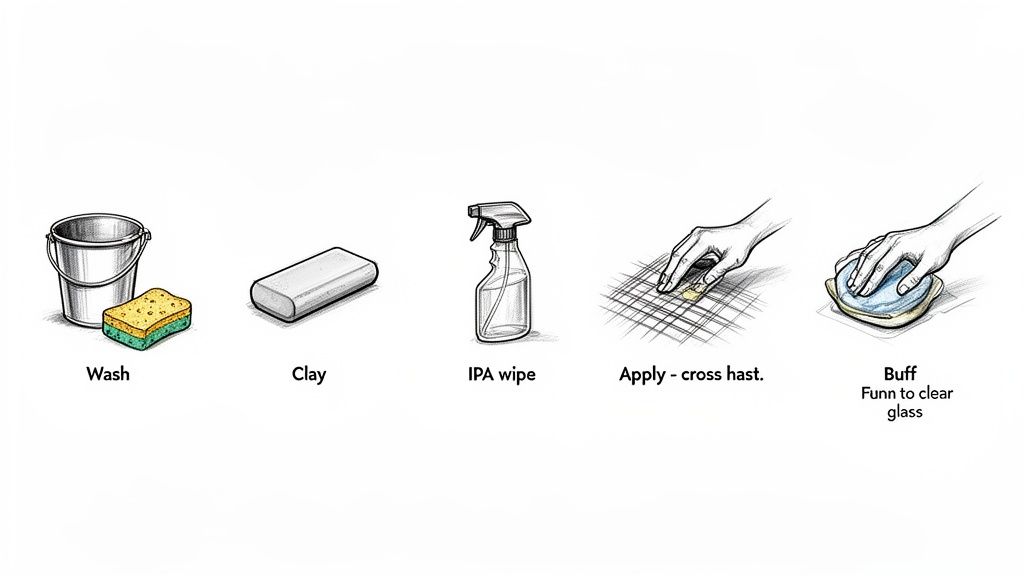
Before Sarah even thought about opening the bottle, she followed a few non-negotiable steps to get the glass perfectly pristine. This is the foundation for everything that follows.
- Thorough Wash: First up, she gave the windshield a deep clean with a quality car shampoo. This gets rid of all the loose dirt, grime, and road film.
- Clay Bar Treatment: Next, she went over the entire glass surface with a clay bar. This crucial step pulls out stubborn, embedded gunk that washing can’t touch, leaving the glass feeling incredibly smooth.
- IPA Wipe-Down: The final, and arguably most important, prep step was wiping the glass with an Isopropyl Alcohol (IPA) solution. This strips away any lingering oils, residues, or fingerprints, creating a perfectly sterile surface for the coating to grab onto.
With the prep done, it was time for the real magic.
Applying the Coating Like a Pro
Glass prepped and ready, Sarah was set to apply the Apex Glass Ceramic Coating. She put just a few drops onto the applicator pad and started spreading it over a small section of the windshield. The key here is using a methodical cross-hatch pattern—first going side-to-side, then up-and-down—to ensure you don’t miss a spot.
After waiting a couple of minutes, she noticed the coating began to look slightly oily with a rainbow-like sheen. That’s the “flash,” and it’s your signal that the coating is ready to be buffed off. Using a clean microfiber towel, she gently wiped away the excess. Then, she grabbed a second clean towel to buff the glass to a crystal-clear, slick-as-ice finish.
The whole process was simpler than you’d think. For a deeper dive, you can also check out our complete walkthrough on DIY ceramic coating for cars.
The goal is a thin, even layer. One of the most common mistakes is putting on too much product, which can lead to “high spots” that are a pain to remove. Always work in small, manageable sections and keep a close eye out for that flash.
The demand for these powerful, DIY-friendly coatings has exploded for a reason. Hydrophobic ceramic coatings drove the market to 13,099 tons, powered by enthusiasts who know these products can cut their cleaning frequency by an incredible 60%. This is the kind of technology where a coating can prevent 95% of water adhesion—something that’s absolutely vital for visibility and safety on the road. You can learn more about how these advanced hydrophobic coatings are shaping the market.
By following these simple steps, Sarah got a result that looked like it came straight from a professional detailer’s bay. It just goes to show that jaw-dropping, rain-repellent performance is well within anyone’s reach.
Answering Your Top Ceramic Coating Questions
Alright, we’ve walked through the science and seen just how impressive these next-gen rain-repellent ceramic coatings are. But you probably still have a few questions rolling around in your head. Let’s tackle the ones we hear most often from car owners who are on the fence.
How Long Does a Titan Ceramic Coating Actually Last?
This is the big one, and frankly, it’s where our coatings truly shine. Longevity isn’t just a feature; it’s engineered into the core of our products, thanks to our unique elastomer technology. While many traditional ceramic coatings give you maybe 1-2 years, our flagship formulas like Alpha Quartz are built to protect your vehicle for many years with just basic, proper care.
What’s the secret? It’s all about groundbreaking flexibility. Think of it like this: rigid coatings are brittle and can develop tiny micro-cracks from heat cycles and minor impacts. Ours has an elastic quality that allows it to flex and endure that punishment. For our Apex Glass Ceramic Coating, you’re looking at unbelievable hydrophobic performance for up to two years—a world away from those spray-on products that are gone after a few rainstorms.
Can I Apply a Ceramic Coating Myself?
You bet. We’re car lovers too, and we believe in empowering fellow enthusiasts to get incredible results right in their own garage. Many of our products, including the Apex Glass Ceramic Coating and Alpha Quartz, are designed specifically to be user-friendly for the DIYer.
That said, for some of our professional-grade coatings, we’ll always recommend having a pro handle it. The prep work is everything. A certified Titan installer has the right tools, a controlled environment, and the hands-on experience to get the paint surface surgically clean, which is absolutely critical for the coating to bond correctly and last for years.
What Is the Best Way to Wash a Ceramic Coated Car?
Keeping your coating in top shape is surprisingly easy. The best approach is the classic two-bucket wash method using a quality, pH-neutral car shampoo. The most important thing to avoid is harsh, high-alkaline detergents and especially those automatic car washes with spinning brushes that can abrade the surface.
Stick with a clean microfiber wash mitt for washing and a plush microfiber towel or an air blower for drying. You’ll immediately notice one of the best perks: dirt and grime slide right off. Washing becomes faster, easier, and a lot less of a chore. Just a simple, gentle wash every so often is all it takes to keep your Titan coating working like new.
There’s a myth that ceramic-coated cars never need washing. While they definitely stay cleaner for way longer, you still need to wash off surface contaminants to keep those hydrophobic properties sharp and effective.
Is a Ceramic Coating Worth the Investment?
Without a doubt. Look, the upfront cost is higher than a bottle of wax or a sealant, but you have to think long-term. A ceramic coating is an investment in your vehicle’s future, protecting its value and appearance. Waxes last weeks; sealants might give you a few months.
A Titan elastomer coating, on the other hand, delivers years of hardcore protection against UV damage, chemicals, and light scratches, all while giving you that incredible deep gloss and water-beading action. When you add up all the time and money you’d spend constantly reapplying those lesser products, the value of doing it right once becomes crystal clear. It’s not just protection; it’s peace of mind.
Ready to experience stress-free driving in the rain with a crystal-clear view? The incredible hydrophobic power of Titan Coatings is just a click away.
Discover the easy-to-use Apex Glass Ceramic Coating and see the difference for yourself.
0 Comments