
A good spray on car sealant isn’t just a fancy wax. It’s a synthetic shield that chemically bonds to your car’s paint, creating a tough, durable layer of protection that old-school waxes just can’t match. We’re talking months of defense against UV rays, road grime, and acid rain—not weeks.
The Future of Car Protection Is Sprayed On, Not Waxed Off
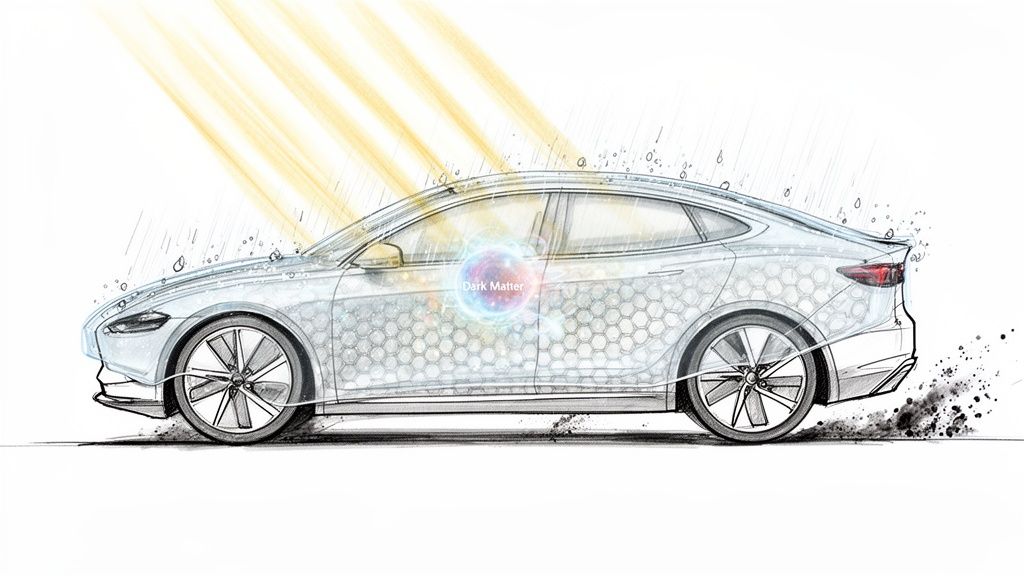
Think of your car wrapped in a flexible, glass-like barrier that shrugs off everything you throw at it. Scorching sun, road salt, bird droppings—you name it. This isn’t some far-off concept; it’s what modern spray sealants deliver today, and it’s completely changing the game for pros and enthusiasts alike.
Alex’s Story: A Search for a Shine That Lasts
Let me tell you about Alex. He’s a die-hard car guy who used to lose entire weekends detailing his pride and joy. He lived for that deep, wet shine you get from a fresh coat of carnauba wax. But the satisfaction never lasted. A few good rainstorms or a couple of weeks of commuting, and that showroom gloss would vanish, leaving the paint looking tired and exposed.
It was a frustrating cycle: wash, clay, polish, wax, and repeat. Alex was sick of watching his hard work literally wash down the drain. He needed something that did more than just look pretty for a little while—he needed real, durable protection that could stand up to the daily grind.
Discovering a New Kind of Defense
His search for a better way led him deep into detailing forums and product reviews. A new category of protective car paint coatings kept popping up, and one name, in particular, caught his eye: Titan Coatings. He could tell this wasn’t just another wax in a different bottle. It was a whole new philosophy on paint protection.
Titan was the first to bring elastomer coatings to the market, an unbelievable formulation driven by nano-tube structures and their own Dark Matter tech. Alex quickly figured out these weren’t just buzzwords. They represented a massive leap in how a coating could actually perform on a vehicle.
Unlike traditional ceramic coatings that can become brittle and rigid over time, Titan’s elastomer technology creates a shield that’s as hard as glass but also incredibly flexible. That unique combination is the secret sauce to its unmatched durability and resilience.
The Power of Flexibility
This flexibility is the real game-changer. Think about it. While traditional hard coatings are tough, they can be vulnerable to micro-fractures from a car’s panels expanding and contracting with temperature swings—like going from a freezing winter morning to a sun-baked afternoon. That thermal stress can push a rigid coating to its breaking point.
Titan’s elastic coatings, on the other hand, move with the vehicle’s surface. They adapt. This means they won’t crack under pressure, ensuring the protective barrier stays completely intact, season after season. For Alex, this was the lightbulb moment. He realized that true, long-term protection had to be engineered for the real world, not just to look good sitting in a garage.
This is the new era of vehicle care. It gives DIY guys like Alex and seasoned professionals the power to achieve a level of defense that was unthinkable a decade ago. The future isn’t about endlessly waxing your car; it’s about applying a smart, resilient shield that works harder, so you don’t have to.
Why Spray Sealants Are Redefining Car Detailing
Let’s be honest, the move to a modern spray on car sealant isn’t just a small upgrade from your grandpa’s can of paste wax—it’s a total game-changer for how we protect our cars. Both pro detailers and serious enthusiasts are making the switch, and it’s not just a fad. The reason is simple: you get far superior results with a fraction of the work. This is about more than a quick shine; it’s a strategic move to give your paint a durable, long-lasting shield.
At its core, this shift is about breaking free from the back-breaking cycle of traditional waxing. We’ve all been there: the meticulous application, waiting for it to haze over, then buffing like wild, all for a shine that’s gone in a few weeks. A quality spray sealant turns that hours-long ritual into a job you can knock out in minutes, all while delivering protection that old-school carnauba could only dream of.
The Science of a Smarter Shield
The real difference-maker here is the chemistry. Waxes just sit on top of your paint, creating a temporary barrier. Advanced spray sealants, on the other hand, form a true chemical bond with your vehicle’s clear coat. That bond is what provides months of tough, reliable protection against the stuff that ruins paint: harsh UV rays, acid rain, bird bombs, and caked-on road grime.
At Titan Coatings, we’ve taken that science to the next level. As the first company to introduce elastomer coatings using nano-tube and Dark Matter technology, our proprietary formulas are more than just marketing buzzwords. They represent an entirely new class of protection. These are elastic coatings, which means they are hard like glass yet flexible.
What does that actually mean for your car? While a traditional wax breaks down fast, a Titan coating gives you a persistent, glass-like defense that stays flexible. This flexibility is key—it prevents the coating from getting brittle and cracking when temperatures swing between freezing and hot, which is a common failure point for lesser, more rigid products. This allows them to last much longer.
OEM Demands and Market Growth
This isn’t just a trend bubbling up in garages and detail shops. The auto industry itself is driving the change. Car manufacturers, especially in the EV space, are obsessed with finding lightweight, high-performance solutions. Heavy paste waxes are out; efficient, durable coatings are in. A spray sealant delivers the kind of high-tech protection these modern vehicles need without adding a single ounce of unnecessary weight.
The numbers back this up. The global market for automotive spray sealants is on track to hit USD 4.41 billion by 2033. This isn’t some niche product category; it’s the new standard being set by innovation in how cars are built and maintained.
Unlocking Professional Results at Home
For the weekend warrior or dedicated car lover, this whole evolution is incredibly empowering. You no longer need to clear your Saturday and stock up on a dozen different products to get a truly professional-grade finish. With a top-tier ceramic coating spray, you can give your car that deep, liquid-gloss look and rock-solid protection in less time than it used to take for a simple wash and wax.
That efficiency is huge. It gives you back your valuable time while delivering better, more predictable results. The benefits are right there in front of you: you save hours of labor, you dramatically extend the life of your paint, and you get a jaw-dropping finish that looks like you just paid a pro detailer a small fortune. It’s simply a smarter, more effective way to protect your investment.
A Practical Guide to Applying Sealant for a Showroom Finish
This is where the real work begins—and the real magic happens. Getting that unbelievable, liquid-glass finish from a spray sealant isn’t about having a lucky touch. It’s about following a deliberate process and respecting every single detail. If you’re thinking this is just a quick “spray on, wipe off” job, think again. This is your masterclass in technique, designed to give you the confidence to get results that truly pop.
Here’s a hard-earned truth from years in the detailing bay: the success of your sealant is decided long before you even pick up the bottle. A perfectly prepped surface isn’t just clean—it’s surgically decontaminated. Picture your car’s clear coat as a canvas. You can’t paint a masterpiece on a dirty one. Any leftover oils, old waxes, or hidden contaminants create a barrier, stopping the sealant from forming the tight chemical bond it needs for long-term durability and gloss.
Laying the Foundation for a Perfect Bond
Your prep work kicks off with a solid two-bucket wash to get the loose dirt off without adding new swirls. But that’s just scratching the surface, literally. To get the paint truly ready, you have to go deeper. This is where a clay bar treatment is non-negotiable.
As you glide the clay across the paint, you’ll pull out all the nasty bonded contaminants that a wash simply can’t touch—things like industrial fallout, rail dust, and stubborn tree sap. You can actually feel the surface change from gritty and rough to buttery-smooth under your fingertips. It’s incredibly satisfying.
After claying, there’s one final, critical step: an isopropyl alcohol (IPA) wipe-down. A simple 15-20% IPA solution cuts through any remaining polishing oils, waxes, or even fingerprints, leaving the clear coat completely naked and ready to bond. For a deep dive into this crucial stage, check out our guide on how to decontaminate car paint. It’s an essential read.
A Story of Superior Application
Let’s walk through a real-world scenario. It’s Saturday morning, the car is prepped, and you’re ready to lay down some protection. You grab a bottle of Titan Coatings’ Vulcan TX155, an elastomer-based coating famous for its incredible durability and surprisingly forgiving application. This is the moment your technique makes all the difference.
First things first, you’re working in the garage, away from direct sunlight, and the paint is cool. After a good shake of the bottle, you lightly mist a small 2′ x 2′ section of the hood. We’re talking just a couple of sprays; more is not better here.
Using a clean, short-pile microfiber towel, you gently spread the product in a crosshatch pattern (up-and-down, then side-to-side) to make sure you get even coverage.
Don’t just wipe it right off. This is where you need to watch and feel. You’ll see the product start to “flash” or get a bit hazy. That’s your visual cue that the carrier solvents are evaporating and the coating is starting to bond with the paint. You’ll also feel it. As you do a gentle test wipe, the towel will have a slight tackiness or grab. That tactile feedback is your signal that it’s time to buff.
The Art of the Final Buff
For this last part, grab a second, completely clean, high-pile microfiber towel. This is your “money towel”—it’s only for the final buff.
With very light pressure, wipe away the hazy residue. You’ll immediately see a deep, slick, and ridiculously glossy finish emerge. The pro tip here is to use a good light source and check your work from several different angles. You’re hunting for “high spots”—dark, streaky patches of excess product—and leveling them out before they have a chance to fully cure.
Working panel by panel with this methodical approach is the key to maintaining total control and getting a flawless, uniform finish over the entire vehicle.
The evolution in car care is undeniable, moving from old-school, time-consuming methods to powerful and efficient modern solutions.
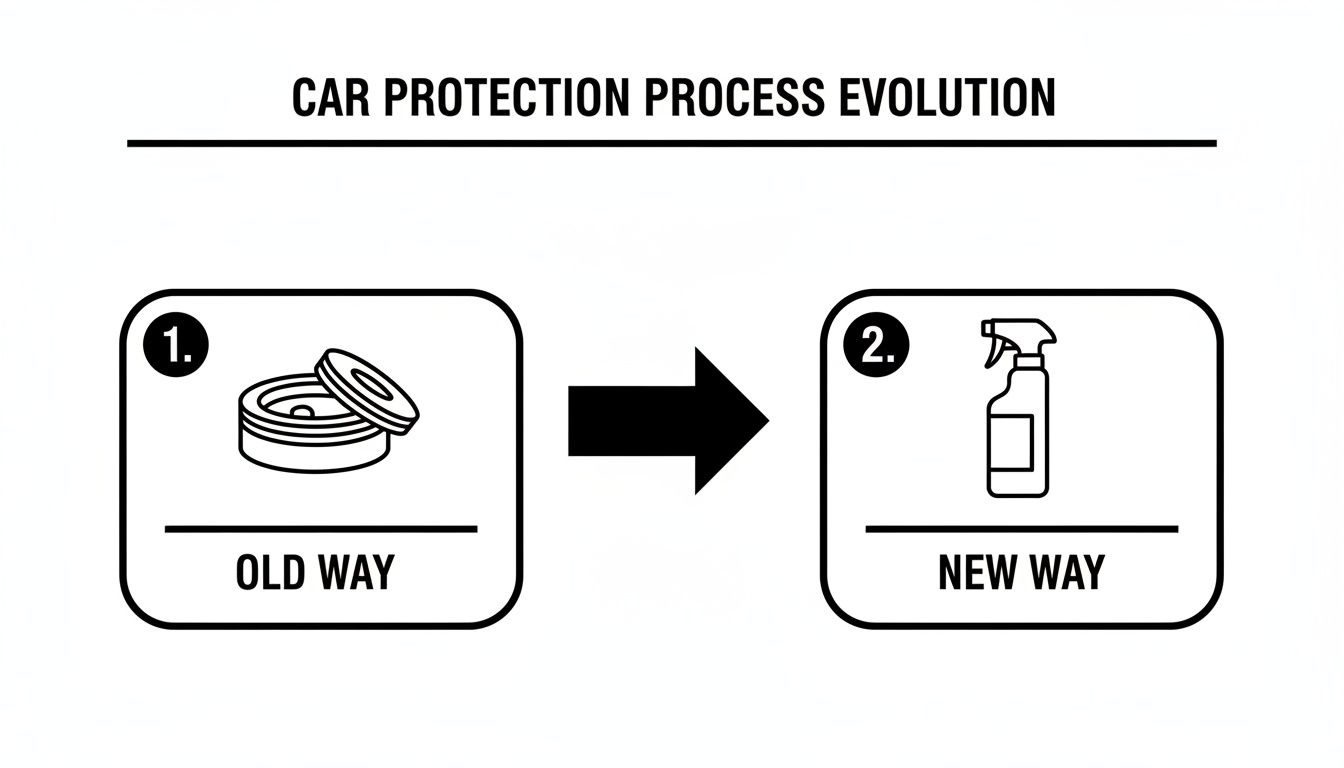
This image really highlights the jump from the labor-intensive carnauba waxes of the past to today’s spray-on technologies that deliver far better protection with a fraction of the effort.
This isn’t just about making our lives easier; it’s a huge industrial shift. The global sealants market is valued at an estimated $16.8 billion in 2024 and is expected to surge to $22 billion by 2030. The automotive world is a major driver of this growth, as everyone from manufacturers to pro detailers moves away from temporary waxes and embraces advanced sprays that are lighter and perform better.
Choosing the Right Titan Coatings Sealant for Your Car
Stepping into the world of advanced car care can feel overwhelming, especially when you’re faced with different products all promising incredible results. The thing is, not every spray on car sealant is built for the same job. The real secret is matching the right technology to what you actually need—whether you’re a weekend enthusiast chasing a flawless shine or a pro detailer who needs bulletproof durability for a client’s daily driver.
The demand for easy-to-use, long-lasting paint protection has exploded. Just to give you an idea, back in 2019, the polyurethane segment of this market was already valued at a massive USD 2.42 billion, according to research on the automotive sealants market by Technavio. That boom created a lot of noise, but it also opened the door for specialists like us at Titan to push the boundaries with new tech.
Here at Titan Coatings, we don’t believe in a “one-size-fits-all” product. Every car and every owner has a different story. That’s why we’ve developed a focused lineup where each product uses our unique elastomer technology to do a very specific job. Let’s get past the generic advice and dig into how you can build the perfect protection plan for your vehicle.
Base Coats vs. Maintenance Toppers
First things first, you need to understand the two main players in the spray sealant game: foundational base coats and maintenance toppers.
Think of a base coat as your primary layer of defense. It’s the tough, durable shield that bonds directly to your car’s paint for the long haul. A maintenance spray, or topper, is what you use over that base coat to refresh its water-beading, amp up the gloss, and add a quick, sacrificial layer of protection.
Let’s look at two of our core products from our shop page to see how this works in the real world:
- Vulcan TX155: This is your foundational armor. As our top-tier, professional-grade elastomer coating, Vulcan TX155 is built for maximum durability and chemical resistance. It’s the one you reach for when you’ve prepped a surface perfectly and want to lay down a super-tough, semi-permanent shield.
- Hyper-Seal: This is your versatile maintenance hero. Hyper-Seal is fantastic as a standalone sealant for fast, jaw-dropping results, but it’s also designed to be the perfect topper for a coating like Vulcan TX155. It brings back that amazing slickness and water-beading in just a few minutes.
Our comparison page shows you exactly what I mean.
A quick glance at the chart helps you zero in on the key differences in durability and gloss, making it easy to pick the right product for your goal.
Matching the Sealant to Your Detailing Style
So, which route should you take? It all comes down to your personal goals and how you like to take care of your car.
Titan Coatings Spray Sealant Feature Comparison
To make the choice even clearer, here’s a quick reference table. It breaks down the strengths of our two flagship spray sealants so you can instantly see which one fits your detailing routine.
| Product Feature | Vulcan TX155 | Hyper-Seal | Ideal Use Case |
|---|---|---|---|
| Primary Role | Foundational Base Coat | Maintenance Topper/Standalone | Laying down a durable shield or refreshing an existing coating. |
| Durability | Semi-Permanent (Years) | Months of Protection | Long-term resilience vs. quick, high-impact results. |
| Application | More involved; requires pristine surface | Simple Spray & Wipe | For dedicated detailing sessions vs. fast, routine upkeep. |
| Key Benefit | Extreme chemical resistance and flexibility | Intense gloss, slickness, and hydrophobics | Maximum defense against elements vs. ultimate visual pop. |
This table isn’t about which product is “better”—it’s about which tool is right for the job you have in front of you.
The Weekend Warrior:
You love your car, but your time is precious. You want that head-turning look without dedicating an entire weekend to it. For you, Hyper-Seal is the perfect place to start. It delivers unbelievable gloss and a slick-to-the-touch finish with a dead-simple spray-and-wipe application. You get months of solid protection without the huge time commitment.
The Professional Detailer (or Hardcore Enthusiast):
Your reputation is on the line. Clients expect perfection, and you need products that can handle the worst conditions imaginable. Your process should start with Vulcan TX155 as the base coat. Its unique elastomer properties—being hard like glass yet flexible—mean it won’t crack or fail under stress, providing an incredibly resilient foundation. You’ll then maintain that perfect finish with occasional top-ups of Hyper-Seal to keep the coating performing at its absolute peak. For a deeper dive, check out our guide on finding the best automotive sealants for car paint.
This two-step combination is how you deliver the ultimate package: uncompromising durability and a flawless finish that defines a truly professional service.
Maintaining Your Sealed Finish for Lasting Brilliance
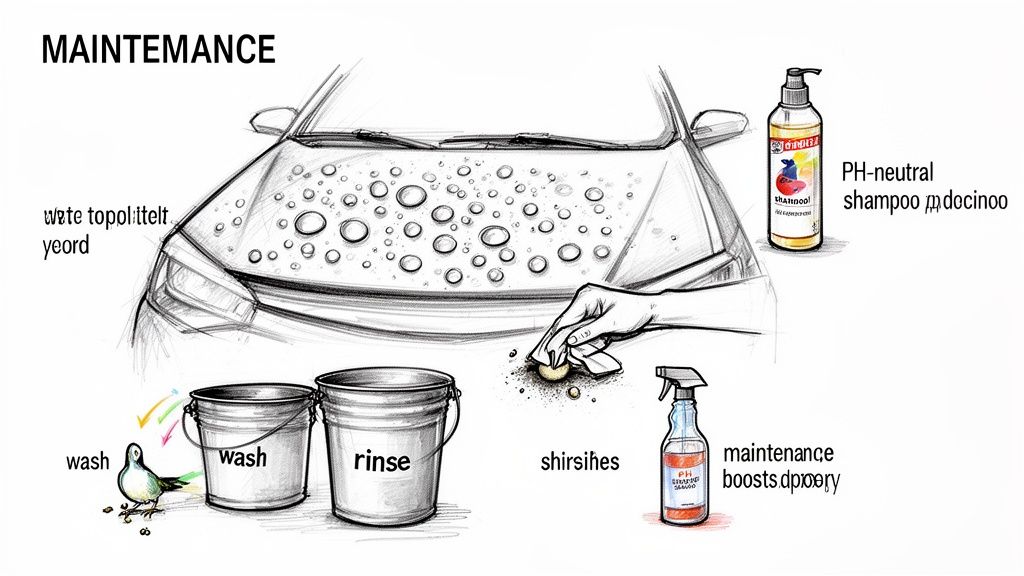
You’ve done the work and applied a premium spray on car sealant. That deep, wet-looking gloss is incredible, right? But the real win is keeping it that way, month after month. The secret isn’t more work; it’s about building a smart, simple routine that protects your investment.
Titan Coatings’ unique elastomer technology gives you a head start. It creates a protective layer that’s tough as glass but also incredibly flexible. This is its secret weapon—it expands and contracts with your car’s panels as temperatures swing from a freezing morning to a scorching afternoon. No cracking, no failing, just constant protection. Your job is simply to keep that advanced surface clean and performing at its peak.
The Right Way to Wash a Coated Car
This is where most of the magic happens. Your washing technique is the single most important part of your maintenance plan. The goal is simple: get the dirt off without dulling the finish, introducing swirls, or stripping the sealant. It’s also where a lot of people go wrong.
I can’t tell you how many times I’ve heard people recommend dish soap for a “really deep clean.” Honestly, it’s one of the worst things you can do. Those detergents are made to strip grease and oil, and they’ll do the exact same thing to your sealant, slashing its lifespan.
Let’s do it the right way instead.
- Stick with pH-Neutral Shampoo: Grab a quality car wash soap that’s specifically labeled pH-neutral. These are engineered to lift grime gently without attacking the sealant’s chemical bonds.
- Master the Two-Bucket Method: It sounds simple, but it’s a game-changer. One bucket for soapy water, one for clean rinse water. After washing a panel, dunk your mitt in the rinse bucket before going back to the soap. This keeps the grit you just removed from going right back onto your paint.
- Dry Smart, Not Hard: Forget old bath towels or aggressive rubbing. Use a plush, high-quality microfiber drying towel. Gently pat the car dry or lay the towel flat and pull it across the panel to blot up water safely.
Boosting Performance with a Maintenance Spray
Even with the perfect wash routine, your sealant will benefit from a regular top-up. That’s where a dedicated maintenance spray comes in. Think of it as a sacrificial layer that takes the daily beating, all while re-energizing the main coating underneath. For this, Titan Coatings’ Hyper-Seal is the perfect partner.
Using a product like Hyper-Seal is like a quick tune-up. Every few washes, a quick application will:
- Revive the Water Beading: It instantly brings back that satisfying, tight hydrophobic effect.
- Pump Up the Gloss: It adds a fresh layer of slickness and makes the shine pop.
- Extend Protection: It reinforces the sealant, helping it last longer and perform better.
The process is incredibly fast. After washing and drying, just mist a light coat of Hyper-Seal onto a panel, spread it with one microfiber towel, and immediately buff off with a second clean, dry one. You’re adding maybe 10-15 minutes to your wash, but the results in looks and longevity are massive.
A well-maintained sealant isn’t just for show—it’s a functional shield. Consistent care is what allows it to properly defend your paint from everything life throws at it, from UV rays to acid rain. The principles are very similar to professional-grade coatings, and you can get more great tips from our guide on how to maintain a ceramic coating.
Handling Real-World Contaminants
Life’s messy. Your car is going to get hit with bird droppings, bug guts, and tree sap. The absolute key is to deal with them quickly. These things are nasty and acidic, and if you let them bake in the sun, they can permanently etch your paint.
When you see a spot, don’t just start scrubbing. Lay a damp microfiber towel over it for a few minutes. This softens the contaminant, allowing you to lift it away gently without fighting it—and without damaging your sealant.
While keeping your sealed finish pristine is key, it’s just one part of a bigger picture. A truly well-kept vehicle benefits from a comprehensive car maintenance checklist that covers everything. By making these easy habits part of your routine, you turn that initial application of a spray on car sealant into a long-term strategy for keeping your vehicle looking its absolute best.
Got Questions? We’ve Got Answers.
When you’re dealing with professional-grade detailing products, it’s natural for questions to pop up. Let’s walk through some of the most common ones we hear from both seasoned pros and dedicated DIYers about using a spray on car sealant. Getting these details right is what separates an okay finish from a truly jaw-dropping one.
One of the first things people want to know is what really separates these new sealants from the waxes they grew up with. It’s a fantastic question because the answer gets right to the core of why this technology is such a massive leap forward.
So, How Is a Spray Sealant Different from Old-School Wax?
Here’s the best way to think about it: traditional carnauba wax is like a nice, warm coat for your car. It looks great and offers a thin layer of protection, but it’s just sitting on top of the paint, ready to wash away in a few weeks.
A spray on car sealant, especially an advanced elastomer like those from Titan Coatings, is a whole different beast. It’s less like a coat and more like a chemically-bonded suit of armor for your paintwork.
We’re talking about a strong, cross-linking bond that fuses with your car’s clear coat. This isn’t just a temporary layer—it’s a semi-permanent shield that provides months of hardcore protection against UV rays, bird droppings, acid rain, and road grime. It’s a completely different league of defense.
Our proprietary elastomer technology pushes this concept even further. We’ve engineered it to combine the tough, glossy shell of a ceramic with incredible flexibility. This allows the coating to breathe, expanding and contracting with your car’s body panels as temperatures fluctuate, which prevents the micro-cracking that plagues more rigid coatings over time.
Can I Just Spray This Over My Existing Wax or Coating?
This is a make-or-break question, and the answer for a base coat is a hard “no.” You absolutely have to apply a sealant to a perfectly bare, decontaminated surface.
Any lingering wax, polish oils, or leftover residue will create a barrier that stops the sealant from properly bonding to the clear coat. If it can’t bond, its durability will plummet from months to weeks, if you’re lucky.
The only exception here is when you’re using a product as a maintenance topper. For instance, our Hyper-Seal is engineered to be applied over an existing elastomer or ceramic coating. In this scenario, it’s not trying to form that foundational bond; it’s simply boosting the gloss and water-beading properties of the primary shield.
For the main application, always start with a squeaky-clean slate.
What Are the Biggest Mistakes People Make When Applying This Stuff?
I’ve seen it all over the years, and even the pros can get complacent and make simple errors. From my experience, about 90% of all application problems boil down to three classic mistakes:
- Skipping the Prep Work: We sound like a broken record, but it’s that important. If the paint isn’t meticulously clean, the sealant has nothing to bond to. A thorough wash, clay bar, and an IPA wipe-down are not optional steps; they are essential.
- Going Too Heavy on the Product: With modern sealants, more is definitely not better. Drenching the panel just creates an oily, streaky mess that’s a nightmare to buff off once it starts to cure. All you need is a fine, even mist.
- Fighting the Elements: Never, ever apply a sealant in direct sunlight or to a hot panel. The heat accelerates the curing process, causing the product to flash almost instantly. You’ll never be able to spread it evenly or buff it to a clear finish. Always work in the shade on a surface that’s cool to the touch.
Steer clear of these common traps, and you’ll be well on your way to achieving that flawless, rock-hard finish every single time.
Ready to see what next-generation paint protection looks like? The unique elastomer technology from Titan Coatings delivers a hard, flexible shield that outlasts and outperforms everything else on the shelf. We’ve designed our full range for the most demanding enthusiasts and professionals.
Discover the perfect Titan Coatings product for your vehicle
0 Comments