
Picture this: you've just spent hours detailing your car, achieving that perfect, mirror-like shine. It looks incredible. Then, just a week later, it’s covered in a fine layer of dust, a few bird droppings, and the beginnings of those aggravating swirl marks. It’s a familiar story for car enthusiasts who rely on old-school waxes that offer a fleeting gloss but little real protection. This is where the story of your car's finish can take a dramatic turn.
Ceramic coating is a liquid polymer that forms a chemical bond with your vehicle’s paint, creating a semi-permanent, glass-like layer of protection. Forget about waxes that just sit on the surface and wash away. This is a nanoscopic shield that integrates with your car’s clear coat, giving you serious durability and an unbelievable, deep gloss that lasts for years.
The Ultimate Shield: What Is Ceramic Coating, Really?
We’ve all been there. You drive your new car off the lot, admiring that perfect, mirror-like paint. Then, a few weeks later, you're staring at a web of swirl marks and a collection of stubborn stains. It’s a frustrating cycle for car owners who rely on outdated products—a constant battle against the elements that you just can't seem to win.
This is where ceramic coatings completely change the game. At its heart, this is advanced paint protection built on nanotechnology. The magic ingredient is usually silicon dioxide (SiO₂), a compound that, at a microscopic level, is suspended in a liquid. When a professional applies it, this liquid seeps into the invisible pores of your car's clear coat.
As the liquid carrier evaporates, the nanoparticles lock together, forging an incredibly tight, cross-linked bond with the paint. This curing process creates a transparent layer of armor that's worlds tougher than any wax or sealant. It’s not just another layer on top of your paint; it becomes a new, functional part of the surface itself.
Beyond a Simple Shine
The real genius of this technology is how much it does. It’s not just about looking good—it’s about actively defending your investment.
- Intense Hydrophobicity: The coating’s structure forces water to bead up into tight spheres and roll right off, taking dirt and grime along for the ride. This is the famous "self-cleaning" effect in action.
- Serious Chemical Resistance: It puts up a barrier against the nasty stuff—bird droppings, bug guts, acid rain—preventing them from etching into your clear coat and causing permanent damage.
- Powerful UV Protection: Think of it like a permanent sunscreen for your paint. It blocks the harsh ultraviolet rays that cause fading, oxidation, and that chalky, dull look over time.
To give you a clearer picture, let's break down how ceramic coatings stack up against the products you're probably used to.
Ceramic Coating at a Glance
| Attribute | Ceramic Coating | Traditional Wax or Sealant |
|---|---|---|
| Durability | Years | Weeks or a few months |
| Bonding | Covalently bonds to paint | Sits on top of the surface |
| Protection | Excellent (UV, chemical, etc.) | Limited |
| Hardness | Adds measurable hardness | None |
| Gloss | Deep, candy-like shine | Warm, temporary shine |
| Hydrophobicity | Extreme and long-lasting | Good, but fades quickly |
| Maintenance | Drastically simplified | Frequent reapplication needed |
This table really highlights the leap in performance. You're moving from a temporary cosmetic product to a long-term protective solution.
A huge misconception is that ceramic coatings are just a more expensive wax. They aren't. They represent a fundamental shift in surface science. A wax might give you a nice gloss for a weekend, but a ceramic coating provides a durable, bonded shield that fundamentally changes your paint’s properties for long-term defense.
This core idea—a hard, protective layer—has been the industry standard for a while. But it's also where older technology hits a wall. Traditional, rigid coatings can develop micro-cracks when the surface flexes with temperature changes. This is exactly the problem we tackled at Titan Coatings, pioneering the next generation of flexible elastomer coatings that deliver both hardness and resilience. To dive deeper into how this works on your paint, check out our detailed guide on ceramic coating for car paint.
The Elastomer Revolution: Why Hardness Isn't Everything
For a long time, the detailing world was obsessed with one thing: hardness. The thinking was pretty simple—the harder the coating, the better the protection. It makes sense, right? But as traditional ceramic coatings became popular, a major flaw in that logic started to show. Their super-rigid, glass-like structure was actually a weakness. It was brittle.
Think about what your car goes through every day. It sits in the hot sun, and the metal panels expand. Then the temperature drops at night, and they contract. This constant movement, combined with vibrations and the occasional rock chip, puts a ton of stress on that rigid layer of protection. Eventually, it gives. You end up with micro-cracks that destroy the coating from the inside out.
The Problem With Being Too Rigid
This is exactly where we at Titan Coatings saw a chance to do something different. We realized that true, long-lasting protection isn't just about being hard; it’s about being resilient. It’s about having intelligent flexibility. So, as the first company to introduce elastomer coatings to the market, we developed our unique technology using nano tubes and proprietary Dark Matter Tech®.
What's the difference? Imagine a pane of window glass versus the screen on your phone. One is hard but shatters easily. The other is also hard, but it's designed to flex and absorb impacts. That’s the exact principle we brought to paint protection. Our coatings are tough enough to resist scratches but flexible enough to handle the real world.
This flowchart breaks down the basic choice every car owner has to make.
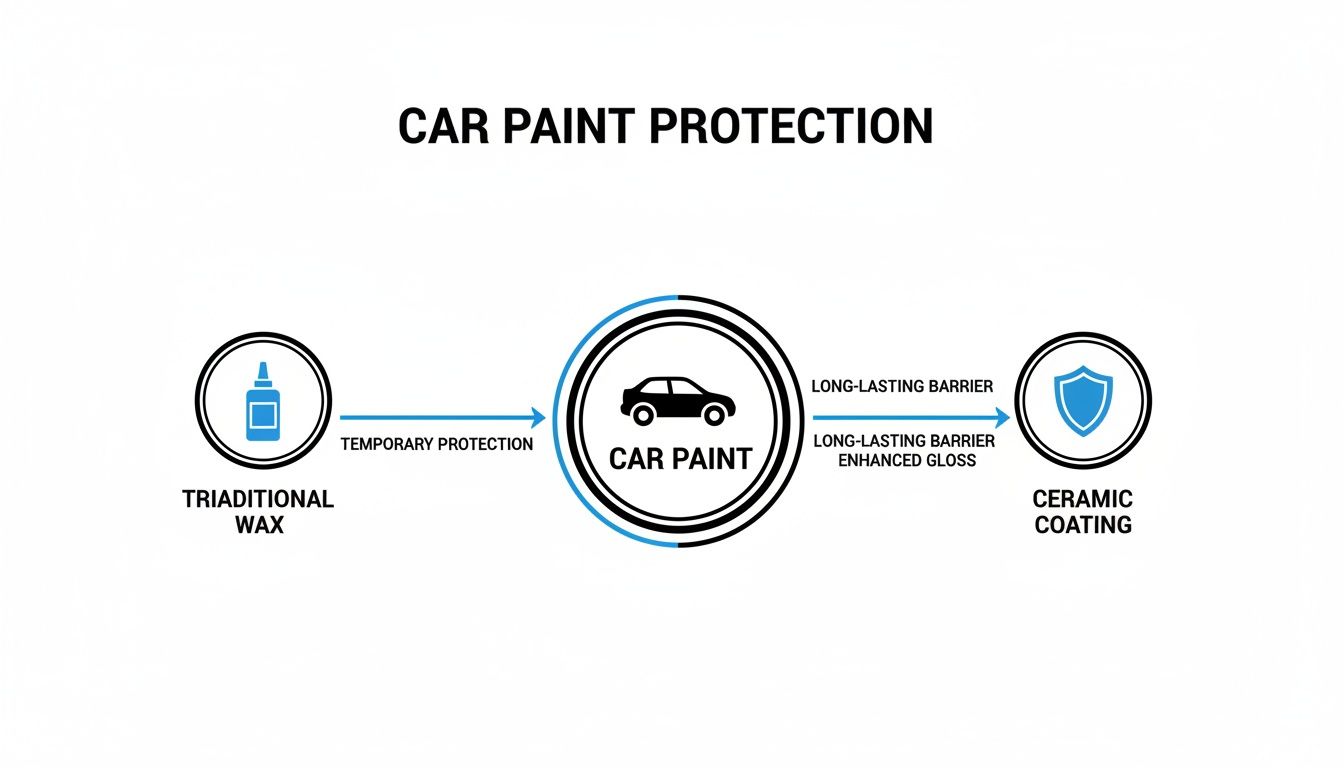
As you can see, wax is just a temporary fix. A true ceramic coating becomes a bonded, semi-permanent shield for your paint.
Introducing Intelligent Flexibility
The story behind our Alpha Quartz coating really drives this point home. One of our professional detailer partners had a client with a high-end sports car protected by a big-name traditional ceramic coating. After one tough winter, the finish looked hazy and lifeless. A closer look revealed a web of tiny fractures all over the surface, a direct result of the car moving between a warm garage and freezing cold roads.
We stripped off the failed coating and applied Alpha Quartz. The next spring, the car came back looking perfect—as glossy as the day we finished it. The elastomer technology had allowed the coating to expand and contract right along with the car's body panels, absorbing all that stress instead of cracking under pressure. That’s real-world proof.
Our elastic coatings are hard like glass and flexible, a combination that makes them last longer. Temperature changes, from frozen to hot, no longer compromise the coating because it won't crack down due to its built-in flexibility.
This durability goes way beyond just handling temperature swings. Those same elastic properties help shrug off minor impacts from things like gravel and bugs. Instead of chipping or cracking the coating, the impact energy is dissipated as the coating flexes and bounces back. It's what separates next-gen protection from old-school, rigid formulas.
And if you want to protect every part of your ride, our guide on the best ceramic wheel coating is a great next step. This modern approach to protection is how you keep a vehicle looking pristine for years, not just a few seasons.
A Look Inside the Titan Coatings Arsenal
Knowing the science is great, but what really matters is how that technology performs on the road. At Titan Coatings, we’ve poured our expertise into creating a lineup that serves everyone, from professional detailers running a high-end shop to the enthusiast who lives for that perfect weekend shine. Each bottle we produce is a testament to our drive to redefine what's possible in paint protection. You can explore our full range of products at our shop.
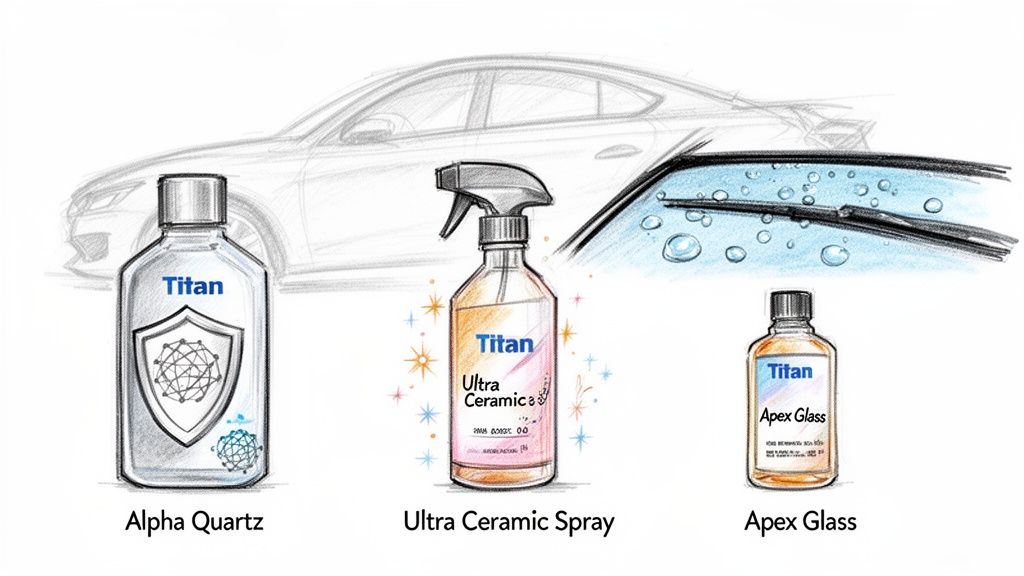
This isn’t about just having a bunch of different products on the shelf. It’s about giving you the right tool for the job. We believe everyone deserves access to this level of protection, whether you’re operating a six-figure detailing business or just taking care of your pride and joy at home.
For the Pro: Alpha Quartz Elastomer Coating
When professional detailers are looking for the absolute best, they reach for Alpha Quartz. This is our flagship, where our cutting-edge elastomer technology is on full display. We built it for extreme durability and a jaw-dropping gloss, but what truly sets it apart is its intelligent flexibility.
Think about a client's car that’s just been through a brutal winter. Traditional, rigid coatings often develop tiny micro-cracks as the vehicle's panels expand and contract with temperature swings. The gloss fades, the protection fails. Alpha Quartz was engineered to solve this exact problem. It flexes right along with the vehicle's surfaces, so whether it's going from a freezing garage to a scorching summer day or taking a hit from a bug at 70 mph, the coating won't crack. This is what real, long-term protection looks like. You can dive deeper into the science behind Titan Coatings' elastomer technology to see what makes it unique.
For the DIY Enthusiast: Ultra Ceramic Spray
We firmly believe that professional-grade results shouldn't be reserved for professionals. That's why we created Ultra Ceramic Spray. It’s the perfect answer for the DIYer who wants an incredibly straightforward application but refuses to compromise on a killer, long-lasting finish.
Don't mistake this for one of those watered-down "booster" sprays. This is a true ceramic coating, just engineered for an easier install with great results. You get that amazing water-beading, a deep, wet gloss, and real-world durability, all from your own garage. Its forgiving formula means you can apply it with confidence and get fantastic results that last, completely changing the game for at-home car care.
The key to our product line is accessibility. We've taken the complex science of our professional coatings and engineered it into user-friendly formats, empowering everyone to achieve a higher standard of vehicle protection.
Specialized Protection: Apex Glass Ceramic Coating
A truly protected car is more than just shiny paint. Your visibility is a massive part of staying safe on the road, which is why we developed Apex Glass Ceramic Coating. This is a purpose-built formula designed to make your windshield and windows incredibly hydrophobic.
Here’s a story we hear all the time: a customer gets caught in a sudden, torrential downpour at night. That's normally a white-knuckle driving experience. But with Apex applied, the rain instantly forms into perfect little beads and flies right off the glass as soon as they hit 35-40 mph. Visibility stays crystal clear, making driving in the rain a stress-free experience.
It’s an easy-to-use product that makes a huge difference in your driving comfort and safety. When you treat every surface with specialized protection, you're building a comprehensive shield around your entire vehicle. You can review the full product comparison chart to see how each solution fits a specific need.
The Real-World Payoff of Advanced Paint Protection
So, why go for an advanced coating instead of just a good old-fashioned wax? It comes down to getting real, tangible value that you can see and feel every single day. This is about more than just a quick shine—it's about making your life easier and keeping your car looking incredible, long-term.
The first thing you’ll notice is how unbelievably well it repels water. We call this hydrophobicity. A surface with a Titan elastomer coating basically forces water to bead up into tight, perfect spheres that just roll right off. This creates a powerful "self-cleaning" effect; a simple rain shower can wash away light dust and grime, meaning your car stays cleaner for way longer between washes.
A Deeper, Richer Finish You Can't Unsee
Protection is one thing, but how it makes your paint look is where the magic really happens. A quality coating gets into the microscopic pores of your car's clear coat, creating an absolutely perfect, slick surface that reflects light with stunning clarity. The result is a deep, rich gloss that looks perpetually wet, making your car’s color pop with a kind of vibrancy that wax just can't touch.
And this isn't just a temporary glow-up. The coating is a frontline defense against everything that makes paint look old and dull.
- UV Ray Protection: It acts like a powerful sunscreen, blocking the harsh ultraviolet radiation that fades your paint and causes it to oxidize over time. Your car’s original color stays true.
- Chemical Stain Resistance: It creates an impenetrable barrier against acidic stuff like bird droppings and bug guts, stopping them from etching into the clear coat and leaving permanent marks.
Investing in advanced paint protection provides tangible benefits, notably in maintaining the vehicle's pristine aesthetic condition which can significantly influence its resale value, a topic often explored in broader discussions about car maintenance and its impact on vehicle valuations market insights.
Comparing Your Paint Protection Options
Choosing the right protection can feel overwhelming, so let's break down how the main options compare. While something like Paint Protection Film (PPF) is the king of stopping rock chips, and a simple wax gives you a basic, temporary shine, Titan's elastomer coatings hit a sweet spot. They blend serious flexibility with impressive hardness and a killer finish.
For a deeper dive, check out our full article covering the https://titancoatings.us/ceramic-coating-benefits/.
To help you see the differences at a glance, this table lays out the leading paint protection methods available today.
| Feature | Titan Elastomer Coating | Paint Protection Film (PPF) | Wax or Sealant |
|---|---|---|---|
| Durability | Multi-Year, Flexible Bond | 5-10 Years, Self-Healing | Weeks to Months, Topical |
| Minor Scratch Resistance | Excellent | Best (Absorbs Rock Chips) | Minimal |
| Gloss and Hydrophobicity | Exceptional | Good (Can Be Enhanced) | Good (Temporary) |
| Cost Investment | $$ | $$$ | $ |
| Flexibility | High (Resists Cracking) | Very High | Not Applicable |
At the end of the day, a professional coating is an investment in long-term value. It radically simplifies how you maintain your car, keeps it looking brand new for years, and shields it from the daily abuse of the road. You'll spend a lot less time worrying about your paint and a lot more time just enjoying that flawless finish.
What Goes Into a Professional Coating Application?
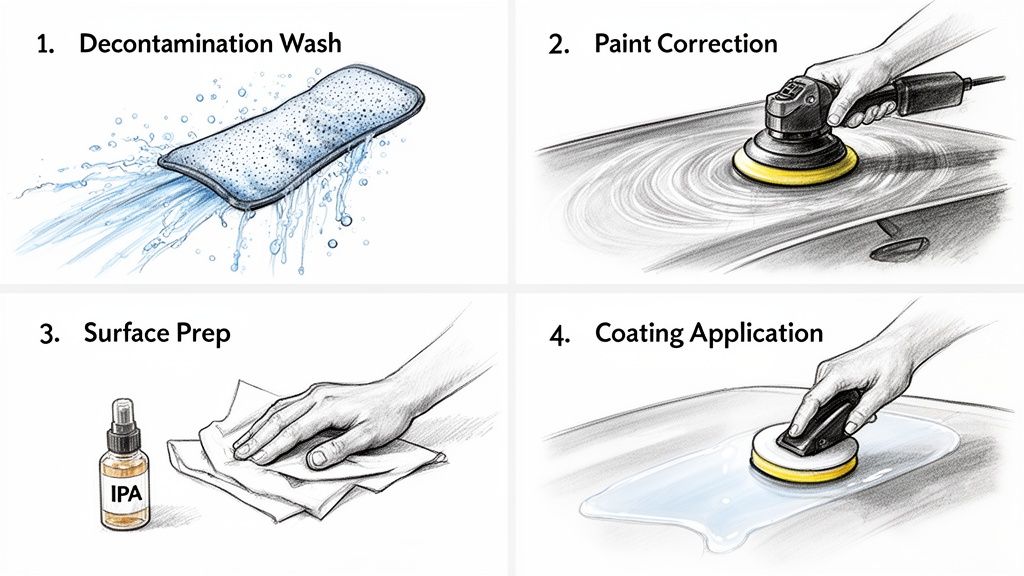
Applying a ceramic coating isn't magic. It's a meticulous craft where the final shine is a direct result of painstaking prep work. A long-lasting, glass-like finish can only be built on a perfectly prepared surface, which is why the steps before the coating goes on are arguably the most critical part of the entire job.
Think of it like painting a classic car. You wouldn't just spray a new coat of paint over rust and scratches and expect a show-winning result, would you? The same rule applies here. The quality of the prep work is what dictates how well the coating bonds to the paint, how incredible it looks, and ultimately, how many years it will protect your vehicle.
Stage 1: The Decontamination Wash
First things first, the vehicle needs a wash that goes way beyond your typical Saturday morning scrub. This isn't just about removing loose dirt; it's a deep, decontamination wash meant to strip away every last bit of grime, both visible and invisible.
We're talking about using things like a clay bar or a clay mitt to physically lift and pull out embedded contaminants—stubborn stuff like industrial fallout, rail dust, and road tar—that have worked their way into the clear coat. The goal here is simple: get the paint surgically clean and create a perfectly bare canvas.
Stage 2: Paint Correction
Now for the most important part of the whole process: paint correction. This is where the real artistry happens. It's the methodical process of using machine polishers to remove all the imperfections from the clear coat—swirl marks, light scratches, water spots, and oxidation.
Any flaw you leave in the paint will be locked in and magnified once the ceramic coating is applied. This stage is non-negotiable for a professional result.
A ceramic coating is like putting a sheet of glass over your paint. It will amplify whatever is underneath. If you coat a swirled, dull finish, you're just putting a glossy, hard shell over those ugly imperfections for everyone to see.
This is where the line between a professional installer and a weekend warrior is often drawn. A true pro will spend hours, sometimes even days, perfecting the paint before they even think about opening a bottle of coating. If you want to dive deeper, you can learn more about how to apply ceramic coating in our detailed guide.
Stage 3: The Final Prep Wipe
Once the paint is flawless, there's one last cleaning step. We need to completely strip any polishing oils, waxes, or fingerprints left behind. This is usually done with a specific panel wipe product or an isopropyl alcohol (IPA) solution.
This final wipe-down ensures the surface is 100% sterile, which is essential for the coating to form the strongest possible chemical bond directly with the vehicle's clear coat.
Stage 4: Applying the Coating
Finally, the moment we’ve been working toward. The coating is carefully applied in a thin, even layer, one small section at a time. We let it "flash" (which is when the solvents begin to evaporate), and then gently level the residue with a fresh microfiber towel to reveal that unbelievable, high-gloss shine.
This is exactly why we formulate different coatings for different people. A professional-grade coating like our Alpha Quartz is built for a certified installer who has perfected the art of paint correction. At the same time, a product like our Ultra Ceramic Spray is designed to be far more user-friendly, allowing DIY enthusiasts to get incredible, durable results without needing years of machine polishing experience.
Why Advanced Vehicle Protection Is So Hot Right Now
Let's be clear: ceramic coatings aren't just a fad. This is a real shift in how we think about protecting our cars. For years, the best we had were waxes and sealants that looked great for a little while but faded fast. Today, people want something that lasts, something that really performs, and that's where the new generation of surface science comes in.
This move from a temporary shine to durable, semi-permanent protection is a huge opportunity. For pro detailers, mastering advanced elastomer coatings like the ones we've developed at Titan is how you separate yourself from the pack. It allows you to offer genuinely superior results that command a premium price—and deliver on the promise. When you can tell a client your coating won't crack or fail when the weather goes from hot to cold, that's a serious advantage.
The Market Is Speaking Loudly
And it's not just a gut feeling; the numbers back it up. The global ceramic coatings market was valued at around USD 13.08 billion in 2025 and is on track to hit USD 27.98 billion by 2035. That's a compound annual growth rate of 7.9%.
The automotive and transportation slice of that pie is projected to be a massive 32% by 2035, which just goes to show how much demand is coming from detailers, their clients, and forward-thinking studios. If you want to dive deeper into the data, you can discover more insights about this growing market on Research Nester.
For the hands-on enthusiast, this boom means you can finally get your hands on pro-level tech. Products like our Ultra Ceramic Spray bring that advanced chemistry right into your garage, making it simpler than ever to get a tough, slick finish without needing a professional setup.
This isn't just for high-end collectors anymore. Everyday car owners are catching on that protecting their paint from day one is one of the smartest investments they can make. It keeps the car looking incredible and directly preserves its resale value down the road.
This growing demand also pushes us to innovate. Take driving safety, for instance. We saw a need and developed our Apex Glass Ceramic Coating in response. By making your windshield incredibly hydrophobic, rain doesn't smear—it beads up and zips right off. It completely changes how you drive in a storm, making it far less stressful. As more people experience tangible benefits like this, the hunger for total vehicle protection is only going to keep growing.
Common Questions About Ceramic Coatings
Getting into the world of ceramic coatings can bring up a lot of questions. Let's tackle some of the most common ones head-on so you can feel confident about what you're getting for your vehicle. We'll clear the air on a few things and show you where Titan's technology really stands out.
Is Ceramic Coating Completely Scratch-Proof?
This is probably the biggest myth out there. While a high-quality coating gives you fantastic resistance against light wash-induced swirl marks, it is not bulletproof. It won't stop a key from scratching your door or a rock from chipping your hood on the highway.
Think of it as a super-durable sacrificial layer that takes the daily abuse instead of your factory clear coat—not a suit of armor. For a truly knockout combination against physical damage, many people pair a ceramic coating on top of Paint Protection Film (PPF).
How Long Does a Ceramic Coating Actually Last?
This one really boils down to three key factors: the quality of the coating itself, how well the surface was prepped before application, and how you take care of it afterward. Something like our Ultra Ceramic Spray is a perfect entry point for the DIY enthusiast, giving you months of serious protection.
On the other hand, our professional-grade elastomer coatings like Alpha Quartz are a different beast entirely, built to last for years. Their secret is flexibility. This unique trait stops the micro-cracking that plagues older, more rigid coatings as they expand and contract with temperature swings.
The durability of Titan's elastomer coatings comes from their ability to be hard like glass yet remain flexible. This prevents them from becoming brittle and failing under the stress of daily driving, from frozen temperatures to scorching heat.
Can I Apply a Ceramic Coating Myself at Home?
You absolutely can. We created products like our Ultra Ceramic Spray specifically for car lovers who enjoy working in their own garage. The application is straightforward, and the results are phenomenal.
Now, while a skilled DIYer could tackle our professional-grade coatings, the final look depends entirely on flawless paint correction beforehand. That's why for a product like Alpha Quartz, we usually recommend a certified installer. They have the tools and experience to create that perfect foundation, ensuring the coating performs at its peak. But our DIY options are a fantastic way to get a huge upgrade at home.
Do I Still Need to Wash a Coated Car?
Yes, but you'll find it’s a whole lot easier and faster. A coating’s hydrophobic (water-fearing) properties make the surface so slick that dirt and grime have a tough time sticking. Water beads up instantly and rolls right off, carrying a lot of the contamination with it. It’s a cool "self-cleaning" effect.
You’ll still need to wash the car properly to remove any abrasive grit, but you won't have to do it nearly as often, and the effort involved is cut way down. Just stick to a good pH-neutral soap and safe washing techniques, and you'll keep that incredible gloss for years to come.
Ready to give your vehicle the best protection on the market? Titan Coatings offers a full lineup of advanced elastomer coatings that deliver unmatched durability and a stunning finish. Whether you're a professional detailer or a passionate car lover, our products are engineered to perform.
Experience the difference of a flexible, long-lasting shield. Explore our full range of products, including the game-changing Alpha Quartz elastomer coating today.
0 Comments