
Ever been caught in a sudden downpour on the highway? You know the feeling. Your wipers are going full blast, but they're just smearing the water, turning the world outside into a blurry, stressful mess. It's a white-knuckle experience every driver dreads.
Now, picture that same storm. But this time, as rain hits your windshield, the drops instantly bead up and shoot off the glass, carried away by the wind. Your wipers are barely working, maybe even off completely. The road ahead is crystal clear. You're calm, confident, and in total control.
The Difference is Clearer Than You Think
This isn't some futuristic fantasy. It's the very real, tangible benefit of a high-quality windshield ceramic coating. This isn't your average rain repellent that wears off after a few car washes. We're talking about a liquid polymer that forms a chemical bond with the glass itself, creating a semi-permanent, invisible shield.
This shield fundamentally changes how your windshield deals with the elements:
- Unbelievable Water Behavior: The surface becomes super-hydrophobic. Water has nowhere to cling, so it beads up and rolls right off, drastically improving your visibility in wet conditions.
- Effortless Cleaning: Ever spent an afternoon scrubbing baked-on bugs or scraping stubborn ice? With a coated windshield, grime, bugs, and even ice have a tough time sticking, making cleanup almost ridiculously easy.
- Added Toughness: It provides a thin, hard layer of protection that helps guard against minor scratches and damage from harsh chemicals.
A great windshield coating is more than a convenience—it's a serious upgrade to your vehicle's safety system. It's about turning a nerve-wracking drive into a safe, effortless experience, no matter the weather.
This is where the science gets really interesting. Innovators like Titan Coatings are pushing the boundaries, being the first company to introduce elastomer coatings using advanced nano-tube technology and Dark Matter Tech®. Think of it as a protective layer that’s hard like glass but also incredibly flexible.
That flexibility is key. It means the coating can handle extreme temperature changes—from a frozen-over morning to a blazing hot afternoon—without cracking or degrading. It’s built to last. Products like Titan's APEX Glass Ceramic Coating bring this professional-grade technology to everyone, ensuring every drive you take is a safer and clearer one, making driving under rain stress-free.
How Does a Windshield Ceramic Coating Actually Work?
To really get what a windshield ceramic coating does, you have to look past those satisfying water-beading videos and get into the science. It isn't magic; it’s some seriously clever molecular engineering that completely changes the surface of your glass.
Think about your windshield under a high-powered microscope. To us, it looks perfectly smooth. But on a microscopic level, it’s a rugged landscape full of tiny peaks and valleys. This is why water clings, dirt sticks, and ice gets a stubborn grip.
A ceramic coating essentially paves over that rugged landscape. It’s a liquid polymer, usually built around nanoparticles like Silicon Dioxide (SiO₂), that flows into every one of those microscopic pores and imperfections, creating a perfectly level surface.
The Secret to Durability is The Chemical Bond
Now, this is the crucial part that separates a true ceramic coating from an old-school wax or rain repellent. Those products just sit on top of the glass, waiting to be worn away. A ceramic coating, on the other hand, forms a covalent bond.
This is a powerful chemical connection where the coating literally fuses with the glass, becoming a new, permanent part of the windshield. It can't just wash off or wear away easily because it's chemically locked in place.
This process transforms the surface from that porous, jagged terrain into an ultra-slick, uniform shield. The new layer is so flat and dense that contaminants have almost nothing to cling to.
The result is a surface so smooth it becomes hydrophobic—it actively repels water. Instead of smearing across the glass, water droplets form into tight, near-perfect beads that get whisked away by the wind, even when you're just cruising around town.
It’s this fundamental change in the surface that makes a coating a real long-term solution. And people are catching on. The global ceramic coating market shot up from $9.3 billion in 2019 and is on track to hit $13.6 billion by 2026, with a huge part of that growth coming from drivers wanting this exact kind of durable protection.
Beyond SiO₂: The Elastomer Revolution
While SiO₂ is the backbone of most coatings, we knew we could push it further. This is where Titan’s story really kicks into gear. We saw that traditional, rigid ceramic coatings could get brittle over time, even cracking under the stress of daily driving. So our engineers went back to the drawing board.
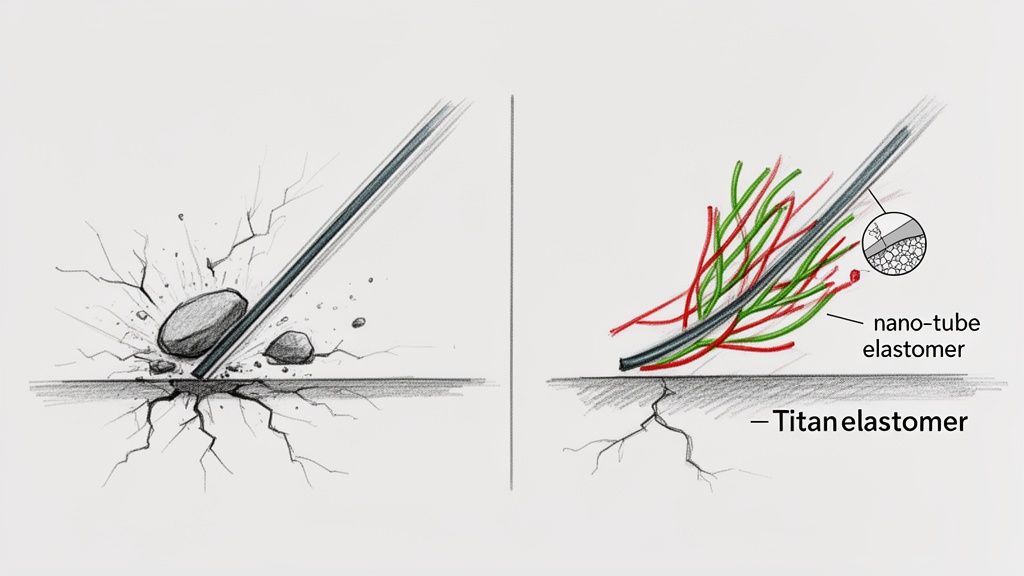
By incorporating advanced nano-tube structures and our proprietary Dark Matter Tech®, we pioneered the industry's first elastomer coatings. These coatings aren't just hard—they're also incredibly flexible. This elasticity is a total game-changer for durability on a dynamic surface like a windshield.
- Temperature Resilience: Our elastic coatings can expand and contract right along with the glass through freezing winters and scorching summers, preventing cracks. Temperature changes between frozen and hot won't affect the coating.
- Impact Absorption: That little bit of flex helps it shrug off minor impacts from bugs and road debris that might chip or compromise a brittle coating. It’s hard like glass and flexible, which makes it last longer.
This infographic perfectly illustrates the difference between a stressful drive with poor visibility and the calm, clear view you get with a coated windshield.
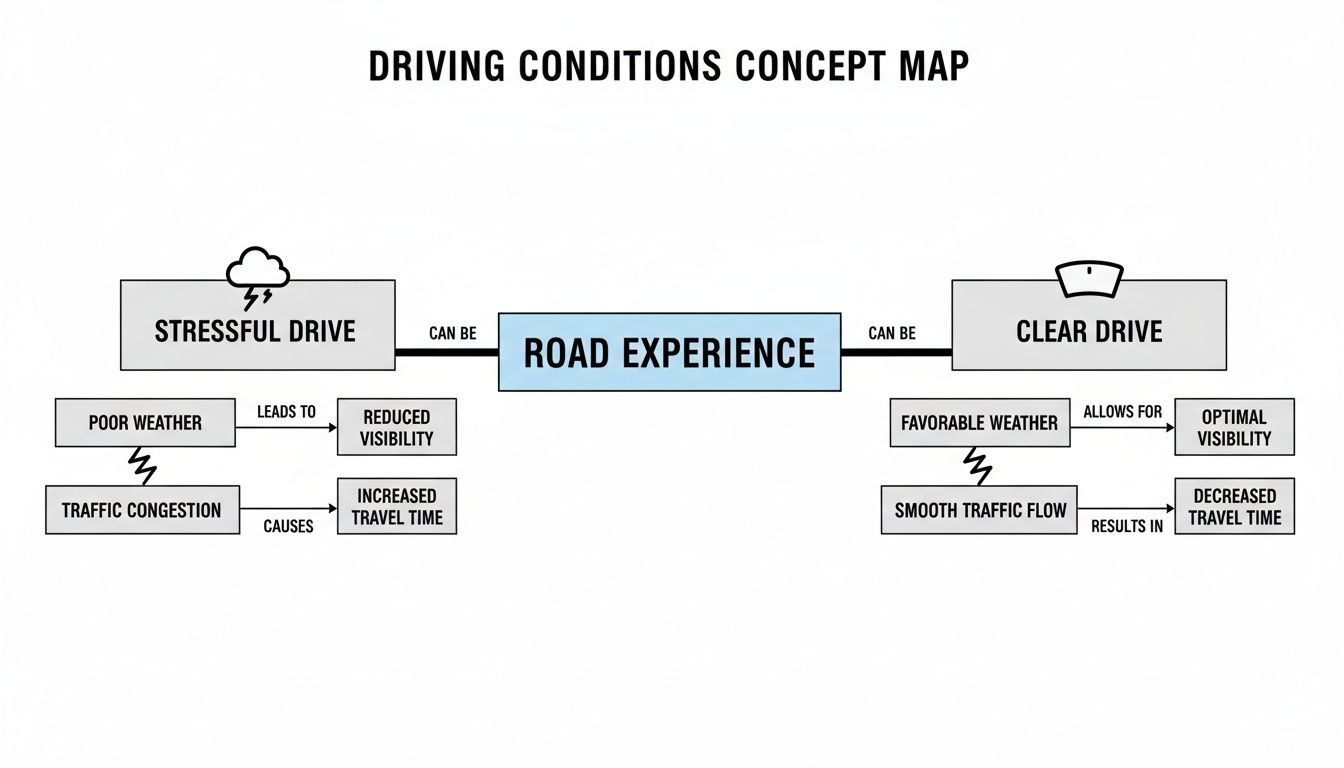
It’s easy to see how a hydrophobic surface directly translates to a safer, less stressful drive, especially when the weather turns nasty.
By creating this smooth, bonded, and flexible layer, a proper windshield ceramic coating does more than just make rain bead up. It provides a lasting shield that makes driving safer and keeping your glass clean a whole lot easier. If you want to dig even deeper, you can explore more about applying ceramic coating to glass surfaces.
The Titan Coatings Difference: Why Flexibility Beats Hardness
For a long time, the world of ceramic coatings was built on a compromise. You could get incredible hardness and a mirror-like shine, but that protection came at a cost: it was rigid and brittle. This created a nagging problem for detailers and car owners alike. Under the daily grind of driving—from tiny rock chips to jarring temperature swings—these hard-as-nails coatings would develop micro-fractures, which spelled the beginning of the end for their performance.
At Titan Coatings, we looked at this problem and saw an opportunity to do something completely different. We didn't want to just make a harder coating; we wanted to make a smarter one.
So, we went back to the drawing board and pioneered the market's first elastomer coatings, powered by our proprietary Dark Matter Technology®. The goal was simple but audacious: create a protective layer that was hard like glass but flexible like rubber.
Think about it. A coating that doesn't just sit on top of your windshield like a fragile sheet of glass, but one that actually flexes and moves with it. This engineered elasticity is what sets our technology apart. It allows the protective layer to absorb and dissipate energy from impacts and stress, rather than just cracking under the pressure.
From Frozen Winters To Scorching Summers
One of the biggest killers of a traditional windshield ceramic coating is thermal shock. A windshield can go from below freezing overnight to baking in direct sunlight in just a few hours. That constant expansion and contraction puts a huge strain on a rigid coating, leading to the cracks that cause it to fail.
Our elastomer technology completely sidesteps this issue. Because our coatings are flexible, they can expand and contract right along with the glass. No stress fractures. No degradation. No loss of those amazing hydrophobic properties. Your windshield stays protected, season after season. It’s a level of durability that’s born from flexibility. You can learn more about what makes Titan's elastomer technology the new gold standard for surface protection.
This focus on advanced materials is exactly where the industry is heading. The automotive windshield market is on track to hit $23.2 billion by 2026, with innovations like hydrophobic layers becoming non-negotiable for modern vehicle safety. In fact, advanced coatings can improve night visibility by 15% and cut down on fogging by up to 60%, showing just how critical this technology is for real-world driving.
The APEX Of Glass Protection: Titan APEX Glass Coating
This isn't just some lab-brewed theory; we've bottled this elastomer advantage into our flagship glass coating, Titan APEX. Our goal was to take our most advanced chemistry and make it accessible to everyone, from professional detailers to weekend warriors. We wanted to deliver professional-grade results without needing a professional's workshop.
APEX’s easy-to-use formula lets any enthusiast apply a truly durable, flexible, and hyper-slick coating. The result? Driving in a downpour becomes a non-event as water simply vanishes from your line of sight. This enhanced visibility makes driving in the rain a stress-free experience.
What truly sets APEX apart is that it’s the embodiment of our entire philosophy. It's not just another product; it’s the physical solution to a fundamental problem—brittleness—that plagued coatings for years.
When you apply APEX, you’re not just adding a temporary rain repellent that washes away. You're installing a semi-permanent, elastic shield that actively fights back against the very things that cause other coatings to break down. This means you get superior longevity, unmatched optical clarity, and genuine peace of mind every time you get behind the wheel. The difference isn't just in how water beads; it's in how the coating endures, month after month.
To really see the difference, let’s compare APEX to the other options out there. While traditional products offer a quick fix, they lack the foundational science needed for long-term performance and protection. You can explore our full product lineup on our shop page and see how they stack up on the comparison page.
Titan APEX Glass Coating vs Traditional Windshield Treatments
| Feature | Titan APEX Glass Ceramic Coating | Traditional Rain Repellents | Standard Waxes/Sealants |
|---|---|---|---|
| Core Technology | Advanced Flexible Elastomer | Fluoropolymer or Silicone-Based | Carnauba Wax or Synthetic Polymers |
| Durability | 1-2 Years | 1-3 Months | 1-4 Weeks |
| Chemical Resistance | High (Resists harsh cleaners, road salts) | Low (Breaks down with wiper fluid, car washes) | Very Low (Strips away easily) |
| Impact & Stress Resistance | Excellent (Flexes to absorb impacts and thermal shock) | None (No protective properties) | None (No protective properties) |
| Wiper Compatibility | Excellent (Reduces chatter and blade wear) | Fair to Poor (Can cause wiper skipping or smearing) | Poor (Builds up on blades, causes smearing) |
| Application | DIY-friendly, wipe-on/wipe-off process | Easy spray-on or wipe-on | Easy, but often requires frequent reapplication |
| Optical Clarity | Crystal Clear, no distortion | Can cause slight hazing or streaks if applied incorrectly | Can smear and reduce clarity, especially at night |
| Cost vs. Value | Higher initial cost, but superior long-term value | Low cost, but requires constant reapplication | Very low cost, but offers almost no real durability |
As you can see, the choice is pretty clear. While waxes and temporary repellents have their place, only an elastomer-based coating like Titan APEX provides the robust, long-lasting protection your windshield truly needs. It's an investment in clarity, safety, and durability that pays off every time it rains.
More Than Just a Rain Repellent: The Real-World Wins of a Coated Windshield
Everyone loves to see water bead up and fly off their windshield. It's the highlight reel of any ceramic coating. But honestly, that's just the tip of the iceberg. A professional-grade coating on your glass is less about the party trick and more about a fundamental upgrade to your daily drive—improving safety, cutting down on maintenance frustrations, and protecting your glass from the elements.
Let’s talk about something you might not expect: improved optical clarity. Ever drive at night and feel like the glare from oncoming headlights is just a bit too much? A quality coating smooths out the microscopic pits and valleys inherent in glass. This creates a perfectly uniform surface that stops light from scattering, which means less distracting glare and less strain on your eyes. It’s a subtle but significant improvement you'll appreciate every time you drive after dark.
Of course, that ultra-slick surface is also a mean defensive shield against everything the road throws at you.
A Forcefield Against Daily Grime
Think about the last time you spent ages trying to scrub dried-on bug guts off your windshield after a summer road trip. Or those stubborn water spots from a rogue sprinkler that seem to have permanently etched themselves into the glass. A ceramic coating makes those headaches a thing of the past.
- Bug Splatter: The acidic mess bugs leave behind can actually damage glass over time. A coating puts a stop to that by preventing them from bonding, so they wipe away without a fight.
- Hard Water Spots: Mineral deposits are a classic enemy. The coating's intense water-repellency means water doesn't have time to sit, evaporate, and leave those ugly spots behind.
- Ice and Frost: If you live in a colder climate, you'll love this. Ice and frost just can't get a good grip on the slick surface, making your morning scrape a whole lot easier—if you even need to do it at all.
- Chemical Attack: Road salt, tree sap, and bird droppings are no match. The coating acts as a barrier, preventing them from making direct contact and causing chemical etching.
It's this kind of long-term, durable protection that's driving the automotive ceramic coatings market, which is expected to jump from $12.69 billion in 2025 to a massive $22.93 billion by 2032. Drivers are catching on. Advanced formulas create a tough nano-layer that can slash how often you need your wipers by up to 40% in the rain.
Forget Scrubbing: The "Self-Cleaning" Effect
Here’s where it gets really satisfying. That same slickness that repels rain also kicks dirt and grime to the curb. Most of the time, a quick rinse with a hose is all you need to wash away what used to require a full-on scrubbing session.
This "self-cleaning" property is a game-changer. It means less time spent washing your car and more time enjoying a perfectly clear view of the road. It’s a simple, practical benefit that just makes owning a car easier. You can explore a deeper dive into these advantages on our page explaining the full benefits of ceramic coatings.
The Bottom Line: It's All About Driver Safety
When you boil it all down, every one of these benefits points to the most critical thing of all: your safety. When a sudden downpour hits on the highway, a coated windshield evacuates water almost instantly, keeping your line of sight wide open when you need it most.
We know from countless studies that better visibility directly leads to faster reaction times. In a bad storm, having that extra split-second to react can be the difference between a near-miss and a serious accident.
This is why a windshield coating is so much more than a cosmetic luxury. It’s an active safety feature that’s always working to protect you, your family, and everyone else on the road. While we're focused on the unique properties of coatings, it's worth noting that other treatments can round out your vehicle's protection. For instance, understanding the benefits of car window tinting can help you create a complete strategy for a safer, more comfortable drive.
How to Apply Your Windshield Ceramic Coating
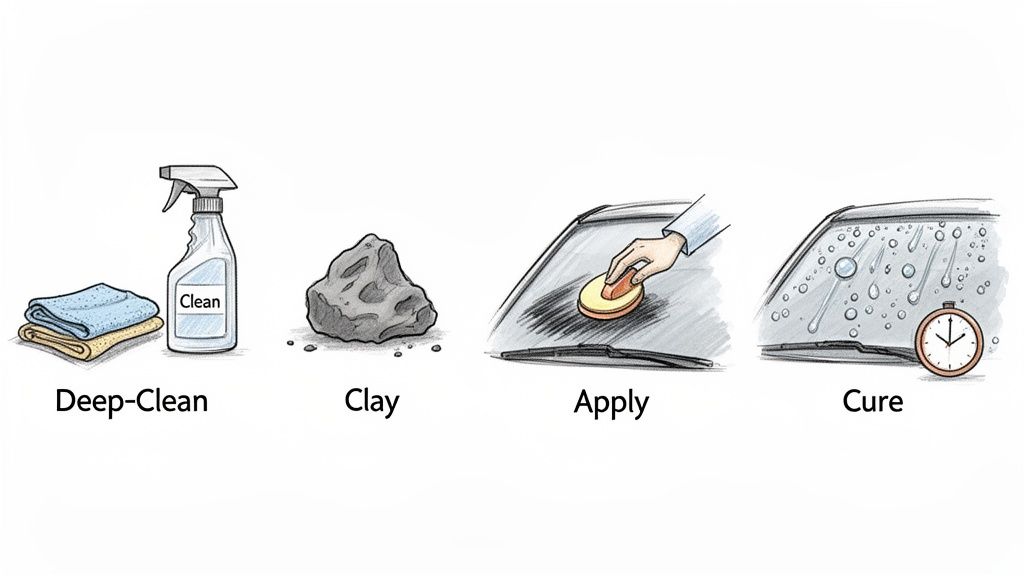
Getting that flawless, long-lasting windshield ceramic coating finish is all about the details. It's a common misconception that the magic is in the application itself. The real secret? Meticulous, uncompromising prep work. That's what ensures the coating forges the strongest possible chemical bond with the glass, unlocking its full hydrophobic power and toughness.
Whether you're a seasoned pro in a shop or a dedicated weekend warrior in your garage, the process is the same. Skimp on the prep, and you're just throwing your money and time away. Follow these steps, and you'll get a result that delivers years of clarity and protection.
Step 1: The Foundation of a Perfect Finish
Before you even think about cracking open that bottle of coating, the glass needs to be surgically clean. I'm not talking about a quick spray and wipe; this is a deep, multi-stage process designed to remove every last trace of contamination that could block the coating's bond.
- Deep Cleaning: Start with a high-quality glass cleaner to get rid of the easy stuff—surface dirt, dust, and grime. Always work in the shade on cool glass to keep your cleaner from flashing off too quickly.
- Decontamination: This is where the real work begins. Grab a clay bar or a clay mitt and a good lubricant to pull all the embedded gunk out of the glass's microscopic pores. You'll be shocked at the contaminants you can feel coming off a windshield that looks perfectly clean.
- Surface Prep Wipe: This is the final, non-negotiable step. A thorough wipe-down with an isopropyl alcohol (IPA) solution or a dedicated panel prep spray strips away any lingering oils, residues, or lubricants. What you're left with is a completely sterile surface, perfectly primed for the coating.
Honestly, this prep stage is where most applications succeed or fail. Rushing through it is the number one reason coatings underperform or don't last.
Step 2: Polishing for Optical Perfection (If Needed)
Have an older vehicle with some stubborn water spots or that annoying haze from the wipers? A light polish can be a game-changer. Using a glass-specific polish with a machine polisher and a dedicated pad can erase those minor flaws and restore the glass to pristine clarity.
This step is often optional, especially for newer cars. If your glass is already in great shape after claying, you can skip right to the application. But if you do polish, remember to repeat the IPA wipe-down to get rid of every last bit of polishing oil.
"A common mistake we see is applying a coating over a contaminated or imperfect surface. The coating will only lock in and amplify those imperfections. Taking the extra 30 minutes to properly prep the glass is the best investment you can make for a multi-year result."
Step 3: The Application Itself
Alright, now for the main event. Products like Titan's APEX Glass Ceramic Coating were engineered to give you professional-grade results without needing years of experience.
- Apply a Few Drops: Squeeze just a few drops onto your applicator pad. With modern coatings, a little goes a very long way.
- Work in Small Sections: Apply the coating to a small, manageable section of the windshield, like a 2×2 foot area. Use a cross-hatch pattern (up-and-down, then side-to-side) to guarantee even, consistent coverage.
- Watch for the "Flash": After 30-90 seconds (this varies with temperature and humidity), you’ll see the coating turn into a rainbow-like haze. That's the solvent "flashing" off, and it's your cue to start wiping.
- Buff to a Streak-Free Shine: With a clean, high-quality microfiber towel, gently wipe away the residue. Immediately follow up with a second, perfectly clean towel for a final buff, ensuring the surface is crystal clear and totally streak-free.
Looking for an even simpler route to hydrophobic protection? Titan's Ultra Ceramic Spray is a fantastic alternative. While it's a spray-on product, the same prep principles apply if you want the best performance and durability. Its ease of installation delivers great results, making it an excellent choice for quick top-ups or for anyone just getting started with coatings.
If you want a complete walkthrough of the entire vehicle coating process, we have more detailed instructions on how to apply ceramic coating to a car.
Step 4: Curing and Initial Care
You're not quite done when you put the last towel down. The coating needs time to cure—to fully harden and cross-link. For the first 24 hours, it is absolutely critical to keep the windshield dry. Don't wash the car, and do your best to keep it out of the rain.
After that initial day, the coating will continue to harden and get even tougher over the next week. Follow these simple rules, and you'll get to enjoy that perfectly clear, protected windshield that makes driving in a downpour a genuinely stress-free experience.
So, you’ve got your windshield coated and you're enjoying that incredible clarity and water-beading magic. Now, how do you keep it that way? The secret to making that performance last for years isn’t some complicated, time-consuming ritual. It’s actually ridiculously simple.
Keeping that hydrophobic power at its peak is all about avoiding the harsh stuff. Abrasive chemicals and rough cleaning methods are the enemy; they'll just wear the coating down prematurely. Treat it right, and it'll last.
The Dos and Don'ts of Coated Glass Care
Your main goal is simple: clean the glass without hurting the protective layer. Good news—this lines up perfectly with how you should be washing your car anyway.
DO Use pH-Neutral Shampoos: When you wash your car, grab a quality, pH-neutral car shampoo. These are formulated to be tough on dirt but gentle on protective layers like coatings and sealants.
DON'T Use Harsh Automated Washes: Steer clear of those automated car washes with the giant, spinning brushes. They might be fast, but those stiff bristles can create tiny scratches and slowly chew away at your coating. If you need an automatic wash, touchless is always the safer bet.
DO Use Clean Microfiber Towels: This one’s a biggie. Always dry your windshield with a fresh, clean microfiber towel. Using the same towel you used on your dirty wheels or lower panels can drag grit across the glass, ruining the finish.
This simple routine is really all it takes to keep that slick, water-repelling surface doing its job every single day.
Supercharge Your Coating with a Maintenance Spray
A good wash routine is your foundation, but if you want to keep that "just applied" performance, a dedicated maintenance spray is your best friend. Think of it as a quick tune-up for your windshield's protection.
A maintenance spray is like a booster shot. It tops off the protective layer, re-energizes the water-beading effect, and adds a fresh dose of slickness. Doing this every few washes is the single best way to get the absolute most life and performance out of your coating.
This is exactly where Titan's Ultra Ceramic Spray shines. We designed it to work hand-in-hand with our professional coatings. It's beyond easy to apply—just a quick mist and a gentle wipe after a wash brings back that amazing water behavior and crystal-clear view. It’s the ultimate shortcut to making sure your windshield sheds rain, dirt, and grime for the long haul.
Want to learn more? Dive into our complete guide on how to use a ceramic coating maintenance spray.
With just a tiny bit of effort, you can enjoy the game-changing benefits of your ceramic coated windshield season after season. It’s the perfect example of the true low-maintenance value built into every one of Titan's advanced coatings.
Frequently Asked Questions
It's smart to have questions before you commit to coating your windshield. After all, it’s your window to the world when you're on the road. Let's tackle some of the most common questions we hear from drivers and detailers to help you make the right call.
Will a Ceramic Coating Affect My Wipers or ADAS?
Absolutely not—when you use a quality coating, that is. A professionally applied layer like ours is incredibly thin and optically perfect, so it won't get in the way of your wipers. In fact, you'll probably find yourself using them a lot less. The water just flies off, which means less wear and tear on your wiper blades over time.
As for Advanced Driver-Assistance Systems (ADAS), you're all clear. The coating is completely compatible. It doesn’t distort the view for cameras or block the sensors your car relies on, so all your safety features will work just as they were designed to.
How Long Does a Windshield Ceramic Coating Last?
This is where the difference between a real coating and a temporary spray becomes crystal clear. Those off-the-shelf repellents might give you a few months of performance, but a professional-grade elastomeric coating from Titan Coatings is built for the long haul. We're talking years of protection.
The secret is in our unique flexible technology, which is at the heart of products like our Alpha Quartz Ceramic Coating.
Glass expands and contracts with temperature, and wipers put constant stress on the surface. Traditional, rigid coatings can't handle that movement and eventually crack. Our coatings are designed to flex, preventing those micro-fractures that cause other products to fail. Its elasticity ensures it does not crack under temperature changes from frozen to hot or when bugs hit the car's surface.
With just a little basic care, you can expect performance that leaves waxes and temporary sprays in the dust.
Can I Apply a Ceramic Coating to an Older Windshield?
You sure can, but the prep work is non-negotiable. It's important to remember that a coating protects, it doesn't repair. If you have any chips or deep scratches, get those fixed by a glass professional first.
For older glass that just looks a bit hazy or has minor pitting, a light polish before you apply the coating can work wonders, bringing back a lot of that factory clarity. Once the surface is clean and smooth, the coating will lock in that clarity, fill in microscopic pores, and protect the glass from getting worse. It's a fantastic way to breathe new life into an older windshield.
Ready to see the road ahead with total confidence, no matter what the weather throws at you? The advanced, flexible elastomer technology from Titan Coatings offers a level of protection and clarity that you have to see to believe.
Experience it for yourself with our easy-to-use APEX Glass Ceramic Coating and give your windshield the tough, water-shedding shield it deserves.
0 Comments