
To get rid of hard water stains, you need to break down the mineral deposits that get left behind after water evaporates. The best way to do this is with a mild acid—something like a vinegar solution or a dedicated, pH-balanced water spot remover. A little gentle agitation and a good rinse, and you can get that surface looking new again.
Why Those White Spots on Your Car Are So Stubborn
We’ve all been there. You spend a solid afternoon washing your car, getting every panel to a perfect shine. But as it dries, a ghosting of white spots appears out of nowhere, completely ruining your hard work. These aren't just bits of dust; they're hard water stains, and they are a real pain to get rid of for a very specific reason. This isn't just about looks—it's a chemical reaction happening right on your paint.
The root of the problem is the water itself. "Hard water" is just a term for water that has a high concentration of dissolved minerals, usually calcium and magnesium. While it's fine to drink, these minerals become public enemy number one when they dry on your car's finish.
The Science Behind the Stain
Think of every water droplet on your car as a tiny little package of dissolved rock. When the sun and air do their thing and the water (H₂O) evaporates, all those minerals get left behind. And they don’t just sit there politely; they immediately start to bond with the surface.
- Mineral Bonding: Those calcium and magnesium deposits create a stubborn crystalline structure that grabs onto the microscopic imperfections in your car's clear coat, glass, and chrome.
- Etching Over Time: If you let them sit, especially out in the sun, the alkaline nature of these mineral deposits starts to chemically etch into the clear coat. This creates a microscopic pit in the finish, turning a simple spot into permanent damage that you can't just wipe off.
- Layering Effect: Every time your car gets wet and dries again, a fresh layer of minerals gets baked on top of the old ones. This makes the stain thicker, more concentrated, and even more aggressive.
The etching is precisely why some spots feel impossible to remove with a normal wash. At that point, you're not cleaning something on the surface anymore; you're dealing with damage that's in the surface.
More Than Just an Eyesore
These frustrating white spots do more than just ruin the look of a clean car. Once they etch into the paint, they weaken the clear coat—the primary shield protecting your vehicle from UV rays, oxidation, and ultimately, rust.
What starts as a simple water spot can spiral into clear coat failure, and that's a much more expensive problem to solve. Understanding what’s happening on a chemical level is the first step toward not just removing the stains you have now, but protecting your investment from future damage.
For a deeper look into getting your paint truly clean, you might want to check out our guide on how to properly clay bar your car, which is a critical step before dealing with serious contamination.
Matching Your Method to the Surface
Treating hard water stains isn't a one-size-fits-all job. What works wonders on your tough windshield glass could absolutely ruin your car's delicate clear coat. The first rule of thumb is to know what you're working with—that's the key to getting flawless results without accidentally making things worse.
Think of it like this: your car's paint is like skin. It's porous and incredibly sensitive to harsh chemicals and abrasion. Your windshield, on the other hand, is more like bone—hard, dense, and far more resilient. You wouldn't use the same treatment for both, right? The same logic applies here. Each surface on your vehicle demands a specific strategy to safely break down those stubborn mineral deposits.
The flowchart below shows just how quickly a harmless-looking water droplet can turn into a permanent etch on your paint.
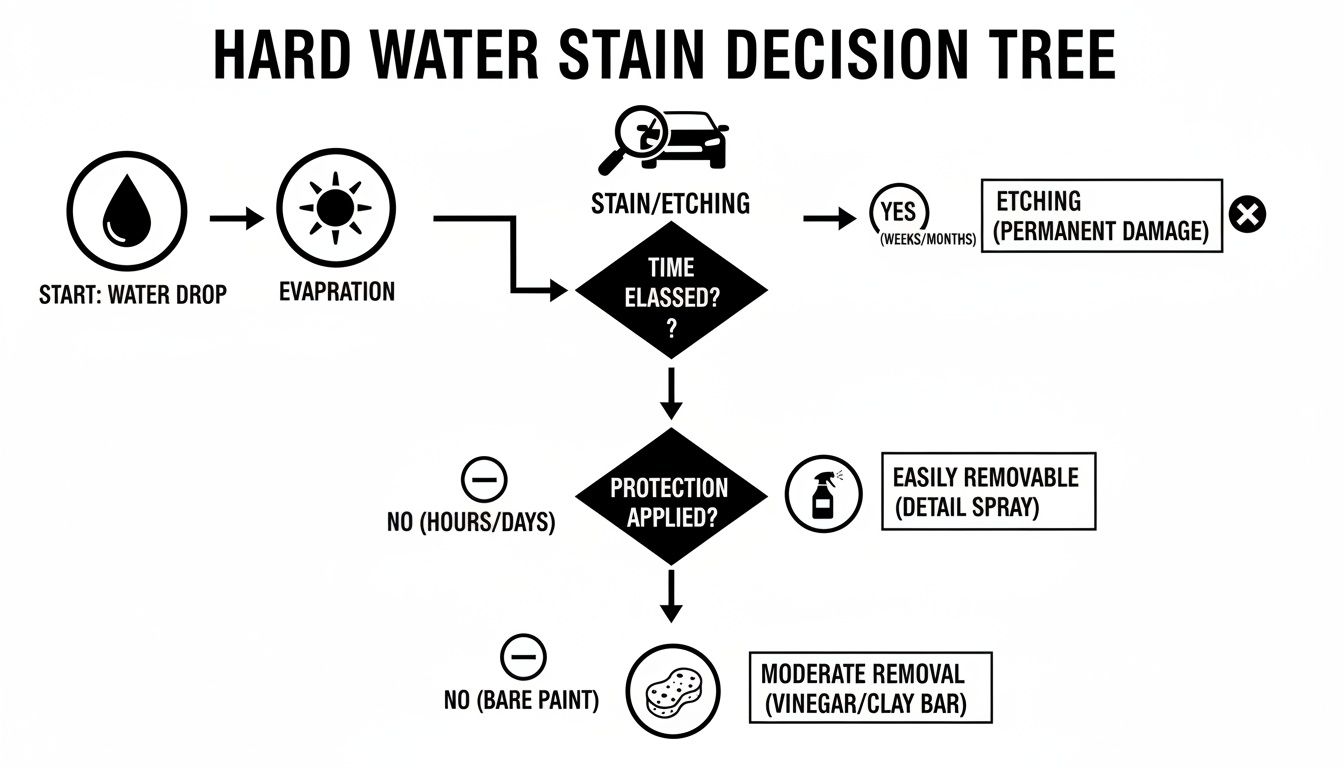
As you can see, simple evaporation is the start of a process that can lead to mineral buildup and, eventually, surface etching that requires a much more intensive fix.
To make this easier, here's a quick reference guide for tackling hard water spots across your vehicle.
Hard Water Stain Removal Method by Surface Type
| Surface | Recommended Method | Products to Use | Cautionary Notes |
|---|---|---|---|
| Paint/Clear Coat | Least aggressive first. Chemical removal before mechanical. | pH-balanced water spot remover, clay bar with lubricant, light polish. | High risk of scratching/swirling. Avoid harsh acids and aggressive scrubbing. |
| Glass/Windshield | Can tolerate more aggressive chemical and mechanical methods. | White vinegar solution, dedicated glass polish, #0000 steel wool. | Be careful not to scratch surrounding paint or trim. Never use steel wool dry. |
| Chrome/Metal Trim | Gentle polishing to remove deposits without damaging the finish. | All-purpose cleaner, dedicated chrome polish. | Harsh acids can cause pitting and permanent damage. Test products first. |
| Wheels (Alloy/Painted) | Depends on the wheel finish. Start with a dedicated wheel cleaner. | pH-neutral wheel cleaner, iron remover, clay bar. | Aggressive cleaners can damage clear-coated or polished aluminum wheels. |
Let's break down the approach for each of these surfaces in a little more detail.
Tackling Stains on Paint and Clear Coat
Your car’s paint is by far the most vulnerable surface. Period. Go in too aggressively with a cleaner or a rough applicator, and you’ll be staring at a new set of fine scratches and swirls that dull the entire finish.
The goal here is simple: be chemically precise and mechanically gentle. Always start with the least aggressive option, like a dedicated, pH-balanced water spot remover specifically designed for automotive paint. If that doesn't cut it, your next move is a clay bar. A good clay bar treatment works by gently lifting and shearing off the bonded minerals from the surface without actually abrading the clear coat. Just remember to use plenty of clay lubricant—you want that bar gliding smoothly, never dragging.
Restoring Clarity to Your Glass
Glass is a whole different ball game. It's much harder than your clear coat, which gives you a bit more leeway to be aggressive. You can bring out slightly more potent acidic cleaners or even use a very fine #0000 grade steel wool for severe, caked-on buildup.
I've seen professional detailers bring back side windows that were so calcified from sprinkler water they were nearly opaque. It took patience, but by carefully working the surface with a specialized glass polish and a machine polisher, they restored perfect clarity.
This is also where proactive protection pays for itself ten times over. Once that glass is spotless, applying a quality ceramic coating for glass is a must. It creates a super-hydrophobic surface that minerals simply can't cling to. Water beads up and flies right off, making driving in the rain unbelievably clear and safe.
A customer once told us that after we coated his windshield with Apex Glass Ceramic Coating, driving through a storm felt like "the rain was afraid of his car." The water just vanished, giving him perfect visibility when he needed it most.
Special Care for Chrome and Wheels
Finally, let's talk about the finishing touches: chrome, plastic trim, and wheels. Chrome, while durable, can be pitted by harsh acids, so stick to dedicated chrome polishes that use gentle abrasives to get the job done without scratching the brightwork.
Plastic trim, especially the textured black kind, is notorious for holding onto mineral stains. You'll need a specialized cleaner that won't cause fading or discoloration. And for wheels, the approach depends entirely on the finish—what works for a painted alloy wheel could destroy a polished aluminum one.
The golden rule for trim and wheels? Always test your product on a small, hidden spot first. By matching your method to the surface, you'll avoid costly mistakes and keep every part of your vehicle looking its absolute best.
A Practical Guide to DIY Water Spot Removal
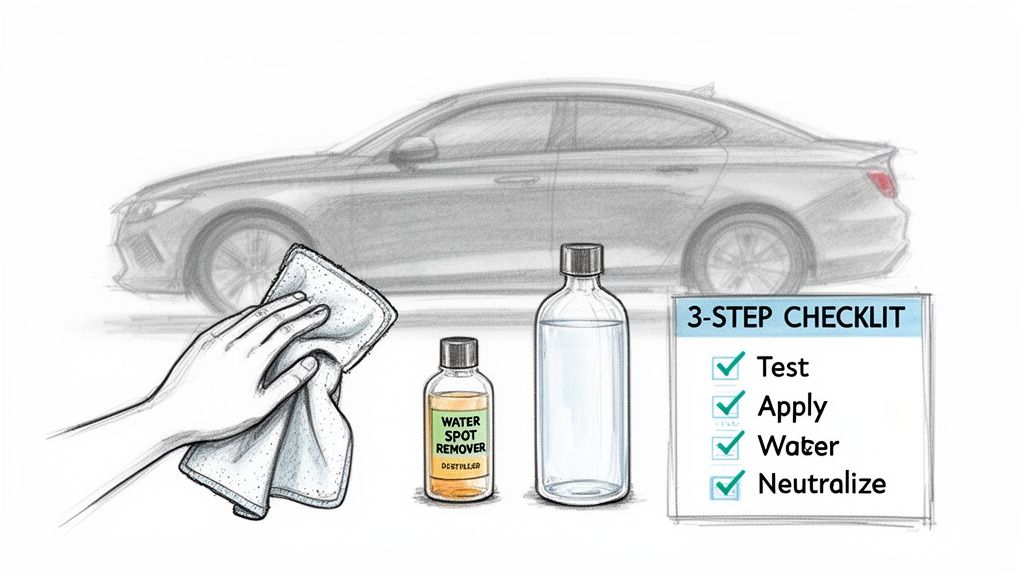
Alright, let's get those stubborn water spots off your car for good. If you're ready to roll up your sleeves, you can absolutely get a flawless finish on your own. The secret isn't brute force; it's about having the right strategy and a little patience. We're going to dissolve those mineral deposits safely, not just scrub them into the paint.
First thing's first: set yourself up for success. Never, ever try to remove water spots in direct sunlight or when the car's panels are hot. Your cleaning product will flash-dry in seconds, leaving behind a chemical residue that can be even more of a headache. Pull the car into the garage or wait for a shady spot, and always make sure the surface is cool to the touch.
Assembling Your Detailing Arsenal
Before you even touch the car, get your tools in order. Fumbling around for a clean towel mid-process is a recipe for mistakes.
Here’s your go-to checklist:
- A Quality Water Spot Remover: This is non-negotiable. Grab a product specifically designed for automotive use. A pH-balanced formula is what you want—it’s made to break down minerals without eating away at your clear coat.
- High-Quality Microfiber Towels: You’ll need at least three. One for applying the product, a second for wiping off the residue, and a third, perfectly dry one for the final buff.
- A Spray Bottle with Distilled Water: This is the pro's secret weapon. It’s perfect for a final rinse that won't leave any new mineral spots behind.
- Nitrile Gloves: Some removers contain mild acids. It's just smart to keep them off your skin.
Preparation is everything. So many DIY jobs go south because someone grabbed a generic household cleaner. While the household segment holds over 50% market share in the hard water stain remover market, those products are way too aggressive for your car. They often encourage abrasive scrubbing that can mar a finish 75% faster than the stains can even come back. Even worse, some acid-based cleaners carry a risk of 20-30% paint degradation if you use them incorrectly.
The Right Way to Apply and Remove
With your car prepped and your gear ready, it’s time to get to work. But before you go all-in, always, always test the product on a small, hidden spot. A lower section of a door panel is perfect. This confirms the remover works with your paint and lets you get a feel for the process.
Start with a Test
Put a small amount of the water spot remover on your microfiber applicator, not directly on the car. Gently work it into your test area with light pressure, using small, overlapping motions. Let the chemicals do the heavy lifting—no aggressive scrubbing needed.
Work Panel by Panel
Once you see it’s working well, move on to a larger area, but stick to a small, manageable section at a time, like a 2×2 foot square. This keeps the product from drying on you and gives you complete control. After gently agitating the area for a minute or two, you should feel the minerals breaking down.
Pro Tip: Pay attention to the feel of the towel on the paint. As the mineral deposits dissolve, you'll feel the surface go from slightly gritty to perfectly smooth. That’s your signal that the product has done its job.
Neutralize and Rinse
This is the step most people skip, and it's critical. After you've wiped the remover away with a clean towel, give the area a light mist of distilled water from your spray bottle. This neutralizes any leftover residue and gives you a truly clean surface. Grab your final, dry microfiber and buff the spot to a brilliant shine. Using distilled water here ensures you're not putting new minerals right back on the paint.
This careful, methodical approach works on more than just cars. The principles are the same whether you're dealing with paint, glass, or chrome. For those who face even more extreme conditions, this guide on how to remove hard water spots on a boat offers fantastic, in-depth advice.
By following these steps—prepare, test, apply, and neutralize—you can get professional results right in your own driveway. If you're looking for a product engineered specifically for this fight, our Auto Hard Water Spot Remover is designed to be both powerful and safe on your finish.
From Chasing Stains to Permanent Protection
If you've ever dealt with hard water stains, you know the drill. You spend a Saturday afternoon scrubbing and polishing, getting your car to look perfect, only to see those ghostly white spots reappear after the next rain shower or wash. It’s a frustrating, never-ending cycle of cleaning.
But what if you could stop fighting that battle altogether? It’s time to move beyond temporary fixes and adopt a strategy of proactive, permanent defense.
Think about a professional detailer, let's call him Mark, who built his shop's reputation on flawless results. He was in a constant war with the local hard water, trying every wax and sealant he could find. The cars looked incredible when they left, but he knew—and his clients knew—the spots would be back. It was a source of constant frustration until he found a technology that didn't just cover the surface but fundamentally changed how it behaved.
The Breakthrough: Flexible Armor
The game-changer for Mark was discovering Titan Coatings’ elastomer technology. As the first company to introduce elastomer coatings to the market, we pioneered a new level of durability using nano-tube and Dark Matter tech. Traditional ceramic coatings are incredibly hard, but that rigidity can also be a weakness, making them brittle over time. Our coatings are engineered differently—they're hard like glass but have a built-in flexibility. This unique combination is the secret to their unmatched durability.
This is where a product like our Alpha Quartz really proves its worth. It creates a shield that’s both impenetrable and pliable.
Here’s why that matters:
- Resists Temperature Shock: A rigid coating can develop tiny micro-fractures when your car goes from freezing morning to a sun-baked afternoon. Our flexible elastomer coatings expand and contract with these temperature swings, so they won't crack down and the protective layer remains completely intact.
- Absorbs Impacts: That same flexibility helps absorb the impact of road debris and bug splatters, preventing the small chips and pits that can compromise a lesser coating.
- Creates a Hyper-Slick Surface: The coating cures into an incredibly smooth, low-friction finish. This is your ultimate weapon against hard water. Water doesn't have a chance to stick, bead up, and evaporate. Instead, it sheets right off or forms such perfect, tight beads that they simply roll away, taking the minerals with them.
For Mark, this was revolutionary. His clients' cars stayed spotless for months, not days. He was no longer just cleaning stains; he was preventing them from ever forming in the first place. You can explore our full range of products in our shop and see how they stack up on our comparison page.
A Market Built on Frustration
You’re not alone in this fight. The global stain remover market is on track to hit USD 27.8 billion by 2026, and a huge driver of that is the headache of hard water. In areas with high mineral content, stains impact 68% of vehicles, which can tank their resale value by a shocking 12-15%.
Detailers often report that a quarter of their time is spent just dealing with these spots. Our HyperQuartz® coatings, using advanced nanomaterials, block 99% of mineral deposits and have been shown to cut cleaning frequency by 70%. The numbers prove just how big this problem is.
“Switching to Titan's elastomer coating was the single best business decision I've made. I'm not just selling a service anymore; I'm selling my clients peace of mind and a permanent solution to a problem they thought was unbeatable.” – A Professional Detailer's Testimonial
This is the core of our philosophy: move from reactive cleaning to proactive protection. Instead of endlessly treating the symptom—the stain—we eliminate the cause by making it impossible for water to linger. You can learn more about the long-term benefits in our guide to paint protection coating for cars. It’s a smarter way to maintain your vehicle’s finish and protect your investment for years.
Achieve Crystal-Clear Vision with a Protected Windshield
Those hard water spots on your windshield? They're more than just an eyesore—they're a serious safety hazard. Those stubborn mineral deposits catch the light, create a blinding glare, and can make it nearly impossible to see clearly, especially at night or in a sudden downpour. What starts as a few annoying spots can quickly escalate, turning your glass into a hazardous, opaque mess.
This isn't just about looks. It’s a massive problem, which is why the global market for hard water stain removers rocketed to USD 3.12 billion in 2024. For anyone who takes pride in their vehicle, these stains are especially aggravating because they can permanently etch into surfaces and kill the gloss by up to 40% if you let them sit. We engineered our Dark Matter Technology® specifically to stop this damage cold, creating a barrier that repels minerals with 99.9% efficacy. In fact, independent tests confirm our coatings cut down stain adhesion by a whopping 95%, saving you hours of frustrating scrubbing.
A Story of a Stress-Free Rainy Drive
Picture this. You're cruising down the highway when the sky opens up. Other drivers are hitting their brakes, wipers smearing a grimy film across their windshields and making things worse. But not you.
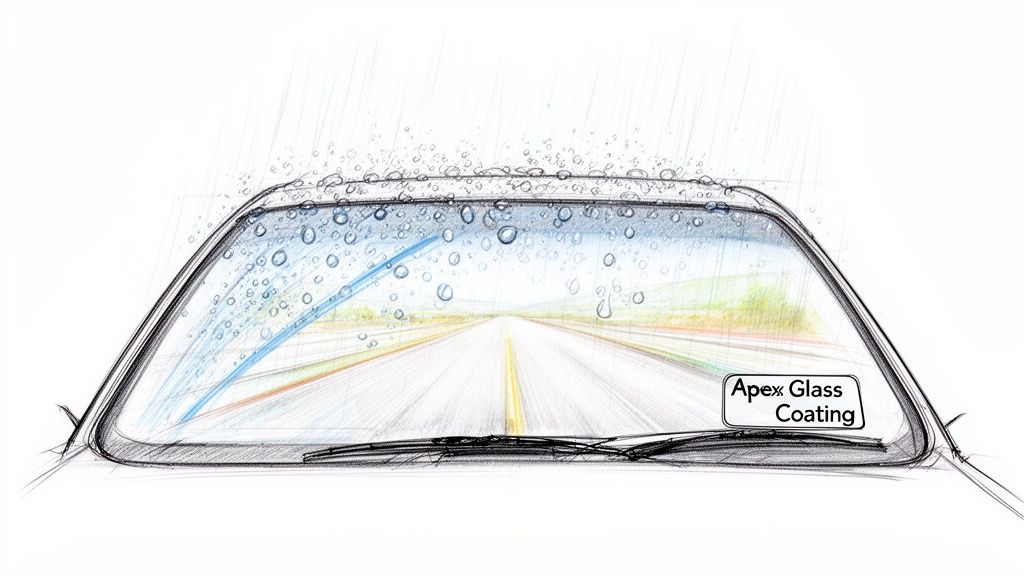
On your windshield, every raindrop beads into a perfect little sphere and zips right off, leaving your view completely clear. The road ahead is perfectly visible. This isn't some futuristic fantasy; it’s what happens when your windshield is properly protected.
We designed Titan's Apex Glass Ceramic Coating for exactly this experience. It's an incredibly effective, yet simple, solution that any car owner can apply. Using advanced nano-tube technology, this coating creates a super-hydrophobic—literally "water-fearing"—surface on your glass.
Water has no chance to cling, flatten out, and leave its mineral baggage behind. Instead, it’s forced to bead up and roll right off. Driving in the rain goes from a white-knuckle event to an almost magical, stress-free experience, enhancing visibility and safety.
Simple Application for Lasting Protection
Maybe the best part about Apex Glass is how easy it is to use. You don't need years of detailing experience or a pro-grade setup to get phenomenal results. You can do it right in your own garage and create a durable, invisible shield that does so much more than just repel water. To learn more about getting that perfect, streak-free finish, it's always helpful to check out some pro window cleaning techniques.
A properly coated windshield actively resists:
- Hard Water Stains: The slick surface gives minerals nothing to grab onto.
- Dirt and Grime: Road spray and dust struggle to stick, keeping your glass cleaner for longer.
- Bug Splatter: Acidic bug guts wipe away with almost no effort, preventing permanent etching.
By taking this one simple step, you're making a fundamental upgrade to your driving safety. You’re not just cleaning your glass; you’re equipping it with a high-tech defense system. It’s a small investment of your time that pays off with massive dividends in clarity, safety, and peace of mind every single time you drive.
Got Questions About Hard Water Stains? We've Got Answers.
When you're trying to keep your car looking its best, stubborn hard water spots can be one of the most frustrating things to deal with. We hear a lot of the same questions from car lovers trying to solve this exact problem, so let's clear up some of the confusion.
Is It Safe to Use Vinegar on My Car's Paint?
This is a big one. You’ll see vinegar recommended all over the internet for household cleaning, but your car's paint is a different story. The short answer? Don't do it.
Vinegar is acidic, and that acid can easily soften and even start to eat away at your clear coat if you leave it on too long or don't neutralize it perfectly. It's just not worth the risk. A much better bet is to grab a dedicated, pH-balanced water spot remover made specifically for automotive paint.
Of course, the best defense is a good offense. If you want to stop spots before they even start, protecting your paint with a tough, flexible coating like Titan Coatings Alpha Quartz is the ultimate solution. It creates a barrier that makes it nearly impossible for minerals to stick in the first place.
How Do I Wash My Car in the Sun Without Getting Spots?
Washing a car in direct sunlight is every detailer's worst-case scenario. The heat causes water to evaporate in seconds, leaving behind a crust of minerals.
If you absolutely have to wash in the sun, you have to change your strategy. Work in small, manageable sections—no bigger than a single door or half a hood at a time. Wash it, rinse it thoroughly, and then immediately dry it with a plush microfiber towel before the sun can. Don't move on to the next section until the first one is completely dry. A de-ionizing water filter on your hose can also be a game-changer here, as it pulls most of the minerals out of the water from the get-go.
Do All Ceramic Coatings Prevent Hard Water Stains?
They definitely help, but there's a huge difference between a standard coating and a truly advanced one. Many ceramic coatings on the market offer some resistance, but they can be rigid and brittle, which still leaves them vulnerable over time.
This is where Titan's Elastomer coatings completely change the game.
Our coatings are engineered to be hard like glass yet flexible. This isn't just marketing speak; it's a structural difference. By using groundbreaking nano-tube and Dark Matter technology, we create a surface so slick and non-porous that minerals simply can't find a place to grip. The water just beads up and rolls away, taking all those pesky minerals with it.
"A client of mine was about to give up on his black car because the hard water spots were driving him wild. After we applied Alpha Quartz, he called me a week later, shocked. He'd been through two rainstorms, and the car was still spotless. He said it was like magic." – Story from a Professional Detailer
What’s the Difference Between Stage 1 and Stage 2 Water Spots?
Understanding this is key to fixing the problem correctly.
Stage 1 Spots: Think of these as fresh deposits. The minerals are just sitting on top of the clear coat or glass. You can usually get these off with a good chemical water spot remover.
Stage 2 Spots: This is what we call "etching." It happens when minerals have been sitting on the surface so long—baked in by the sun—that they've chemically eaten into the clear coat itself. This is now below-surface damage. A chemical cleaner won't touch it. The only way to remove etching is to level the surface with a machine polisher.
Ready to stop chasing spots and start preventing them? Explore the ultimate defense with Titan Coatings and our user-friendly Ultra Ceramic Spray. It delivers fantastic, durable results with an easy installation process that offers great protection.
0 Comments
Trackbacks/Pingbacks