
Mark had the paint dialed in. The body was glossy, the trim was crisp, and then the eye dropped to the wheels. They were dull, scarred, and cloudy enough to make the whole car look unfinished.
The Journey to a Flawless Wheel Finish
Alloy wheels are typically overlooked until they show wear. Then they're all you can see. A sharp body line, fresh tires, clean glass, all of it gets undercut by wheels with oxidation on the lip, brake dust baked into corners, and curb rash catching light from every angle.
That frustration usually starts the same way. The owner washes the car, adds tire dressing, steps back, and realizes the wheels still look tired. Not dirty. Tired. That difference matters because dirt washes off. Damaged metal doesn't.
Why polished wheels demand more than a quick buff
A lot of DIY advice makes polishing sound like a one-step shine job. It isn't. Metal polishing has a long history that goes back centuries, and modern finishing evolved into a staged abrasion-and-buffing process used not only for appearance, but also to help prevent oxidation, tarnishing, and corrosion, as outlined in this history of metal polishing.
That history explains why good alloy wheel polishing still feels old-school in the best way. You refine the surface in stages. You remove damage first. Then you chase clarity. Then you protect what you created.
Polished aluminum rewards patience and exposes shortcuts. Every missed scratch shows up at the end.
The first hard lesson most enthusiasts learn is that shine can hide very little. If the wheel face still has sanding marks, pitting, or uneven oxidation, compound won't magically erase it. It just makes flaws look sharper.
What separates a show finish from a temporary glow
A weekend gloss-up and a real restoration are not the same thing. One makes the wheel look better for a few days. The other resets the surface so the finish has depth, consistency, and a clean base for protection.
That's where many wheel projects go sideways. People treat polishing as the finish line. In practice, polishing is the bridge between correction and preservation.
Here's the working mindset that gets better results:
- Fix the surface first: If damage remains, no polish will create a true mirror.
- Refine in stages: Each step should remove the marks from the previous one.
- Protect immediately: Bare polished metal starts losing ground the moment it's exposed.
A polished wheel that isn't protected is on borrowed time. Brake dust, moisture, road film, and heat start working against it right away. The shine only becomes valuable when it lasts.
Assess and Prepare Your Wheels Like a Pro
The biggest mistake in alloy wheel polishing happens before any compound touches the wheel. People assume every alloy wheel should be polished like bare aluminum. That's how good wheels get damaged.

Know what finish you're actually looking at
Some wheels can be polished as exposed metal. Others should not be treated that way at all. Aggressive polishing can remove protective coatings on clear-coated, diamond-cut, or anodized wheels, which is why the first real question isn't just how to polish, but whether you should polish that wheel in the first place, as explained in this wheel finish guide from Chemical Guys.
If I'm checking a set in the shop, I look for a few tells:
- Bare aluminum signs: Oxidation looks chalky or gray, and metal polish tends to darken quickly.
- Clear-coated signs: The surface behaves more like paint. Defects sit in or under a film rather than in exposed metal.
- Diamond-cut or machined signs: The wheel has a directional cut pattern that polishing can blur or distort.
- Anodized or specialty coated signs: The finish looks uniform and protected, but not like raw metal.
If you're not sure, take the conservative path. Clean and decontaminate first. Don't assume polish is the answer.
Clean until the wheel tells the truth
A dirty wheel lies to you. Brake dust masks pitting. Old dressing hides stains. Road film can make coating failure look like oxidation. Before any correction decision, the wheel needs to be stripped down to an honest surface.
Use dedicated tools that can reach barrels, lug recesses, and spoke backs. A proper set of car wheel cleaning brushes helps because wheel faces rarely hold the worst contamination. The inner barrel usually does.
A solid prep routine looks like this:
- Rinse first: Knock off loose grit so you're not dragging abrasive debris across the finish.
- Use a wheel-safe cleaner: Let chemistry loosen brake dust and old grime.
- Agitate every contour: Spokes, pockets, barrel, valve area, and around lug holes.
- Rinse again and inspect in good light: That's when coating edges, pitting, and curb rash become obvious.
Practical rule: If the wheel still feels rough after cleaning, don't start polishing. You'll grind contamination into the surface.
Decide between polishing, sealing, or recoating
Not every wheel needs a full correction. Sometimes the smarter move is preservation, not aggression.
A quick decision filter helps:
| Wheel condition | Best next move |
|---|---|
| Light grime on coated wheel | Clean and protect |
| Bare aluminum with oxidation | Sand and polish as needed |
| Clear-coated wheel with failing finish | Strip and refinish, or recoat |
| Diamond-cut wheel with damage | Consider specialized refinishing instead of hand polishing |
That discipline saves time and saves wheels. A clean, protected coated wheel often looks better long term than a badly “polished” one with half its finish removed.
From Damaged to Flawless Repairing Curb Rash and Corrosion
Curb rash is where alloy wheel polishing stops being cosmetic and starts becoming metalwork. You're no longer just improving shine. You're reshaping damage, leveling edges, and trying to make the repair disappear under reflection.

Start with the defect, not the whole wheel
When a wheel has curb rash, beginners often sand too much area. That creates a large dull patch and a lot of unnecessary rework. The better approach is to localize the correction first, then feather the repair into the surrounding surface.
Professional polishing workflows commonly start around 200 to 220 grit for defect removal, then move through 400, 600, 800, 1000, 1500, and up to 2000 grit before polishing compound is used. Skipping grit steps is a primary cause of poor results, according to this professional grit progression reference.
That sequence matters because each grit is supposed to remove the scratch pattern left by the one before it. If you jump ahead too quickly, the wheel may feel smooth but still look hazy under light.
Dry sanding and wet sanding both have a place
Dry sanding cuts faster. Wet sanding refines better. If the rash is pronounced, dry sanding at the start gives control and visible feedback. Once the shape is corrected, wet sanding helps smooth the surface and reduce deep scratch carryover.
Use this logic:
- For curb rash edges: Start with the coarsest grit needed to level the raised damage.
- For corrosion spots: Remove only what's necessary to get past the pitting.
- For broad refinement: Move into wet sanding as the surface evens out.
One caution is often underestimated. Mobil's guidance, summarized in the verified material behind this workflow, warns against removing too much material during curb-rash correction because wheel balance can be affected. That means you are correcting cosmetics, not machining a wheel by guesswork.
What works in real hands
A sanding block gives better control on lips and flatter sections. Finger pressure alone tends to create waves. On spoke transitions and recesses, smaller backing pads help you stay precise without flattening nearby contours.
If a wheel has clear coat issues rather than true metal damage, the path changes. In some cases, the better next step is refinishing rather than polishing. Understanding related surface failure proves helpful here, especially with issues like clear coat peeling on automotive finishes.
The wheel doesn't care how long you've worked on it. It only reflects the quality of the last sanding step.
Mistakes that keep showing up at final polish
Bad polishing jobs are usually bad sanding jobs in disguise. The defects don't vanish. They just wait until the wheel gets glossy enough to reveal them.
Watch for these common failures:
- Skipping intermediate grits: The final finish looks cloudy because deeper scratches were never removed.
- Pressing too hard: You can gouge the metal, round off crisp edges, or create low spots.
- Ignoring tight areas: Lug pockets and spoke roots stay dull and jump out once the face is polished.
- Leaving residue between steps: Loose abrasive carries forward and scratches the next stage.
A simple checkpoint method helps. After each grit, dry the surface fully and inspect under direct light. If the scratch pattern is mixed, you're not ready to move on.
A practical repair sequence
For most bare or stripped alloy wheel damage, the process is straightforward:
- Clean and inspect fully
- Level curb rash with controlled coarse sanding
- Feather the repair into adjacent metal
- Progress through finer grits without skipping
- Finish at a refinement level suitable for compound work
- Clean the wheel before any buffing begins
That dirty work is where the finish is won. Compounding only reveals how disciplined the preparation was.
The Art of the Mirror Shine Compounding and Polishing
Once the sanding pattern is uniform, the wheel stops fighting you and starts responding. This is the stage where alloy wheel polishing becomes more tactile. You can feel when the compound is cutting properly, when the pad is loading up, and when the metal is close to giving you that liquid reflection.

Compound removes marks. Polish creates clarity
Think of the polishing stage as three different jobs, not one.
A coarse compound removes the finest sanding marks left behind. A medium polish starts improving reflectivity and cleaning up compounding haze. A finishing polish sharpens the gloss and gives the metal that clean, mirror-like snap.
If you blur those roles together, the result is usually disappointing. A finishing polish won't remove enough defect. A heavy compound on repeat may create gloss, but not refinement.
Tool choice matters less than discipline
A drill attachment, cone, mini buff, or bench-style wheel can all work. What matters is control, clean media, and matching the tool to the wheel design. Tight spokes and recesses need smaller polishing heads. Open barrel sections let you use broader contact surfaces.
For consistent correction, keep separate media for each product. A dedicated set of 6-inch polishing pads helps maintain consistency because compound contamination is one of the fastest ways to re-scratch a nearly finished wheel.
A key professional technique for uncoated aluminum is to continue working the polish for about 30–60 seconds after it turns black, which signals that oxidized residue is being lifted. Detailers also use a dedicated buffing wheel or pad for each compound to prevent cross-contamination, as noted in this uncoated aluminum polishing tutorial.
If your finish gets duller as you polish, stop and check the pad. You're often looking at loaded residue or contaminated media, not a bad product.
Pressure, speed, and movement
The right polishing pass never feels violent. Too much pressure loads the surface, overheats the metal, and can leave smeared residue or fresh swirl marks. Too little pressure lets the pad skate without enough cut.
Use a controlled approach:
- Moderate speed: Enough to let the abrasive work, not so much that heat builds fast.
- Steady movement: Keep the tool moving so one spot doesn't get overworked.
- Short sections: Wheels have too many curves for oversized working areas.
- Frequent wipe-downs: Residue hides the true finish.
Many polished wheels become uneven; the face gets attention, but lug holes, spoke backs, and inner contours keep the haze. On a silver wheel you might get away with that. On polished metal, you won't.
Reading the surface like a detailer
You don't polish by the clock. You polish by visual change.
Here's what to watch for:
| Surface behavior | What it usually means |
|---|---|
| Residue turns dark | Oxidation is being lifted |
| Gloss rises but looks smeary | Pad may be overloaded |
| Sharp lines reflect clearly | Refinement is improving |
| Random scratches reappear | Cross-contamination or missed sanding marks |
A lot of final quality comes from wiping and inspecting between stages. That sounds basic, but it's one of the least respected habits in wheel restoration. The wheel should be clean before you judge it. Otherwise you're grading residue, not finish.
The best polished wheels don't just shine in soft light. They stay crisp under harsh light, from multiple angles, with no cloudy pockets waiting to embarrass you outside.
Locking In the Shine with Elastomer Coating Technology
Mark got to the point most enthusiasts dream about. The rash was gone, the oxidation was cut back, and the wheels finally matched the rest of the car. Then the obvious question hit him. How long will this last?
A polished wheel is vulnerable the moment you finish it
Bare polished metal looks exceptional because the surface is refined so precisely. That same surface is also exposed. Brake dust lands hot. Water leaves minerals. Road film sticks fast. If the wheel sits unprotected, the finish starts moving backward almost immediately.
Many guides stop too early. They teach correction, then leave the wheel to survive on maintenance alone. That's a weak plan for a part of the car that deals with heat, contamination, and constant wash cycles.
Why flexible protection matters on wheels
Wheel protection needs more than hardness. It also needs compliance. A rigid layer can look good on day one and struggle when the surface expands and contracts through temperature swings. A more advanced approach is an elastomer-based coating that combines a glass-like surface character with flexibility.
That flexibility is the interesting part. A coating that stays flexible is less likely to become brittle as temperatures move from frozen conditions to intense wheel heat. It also makes practical sense on surfaces that see constant vibration, debris impact, and repeated cleaning.
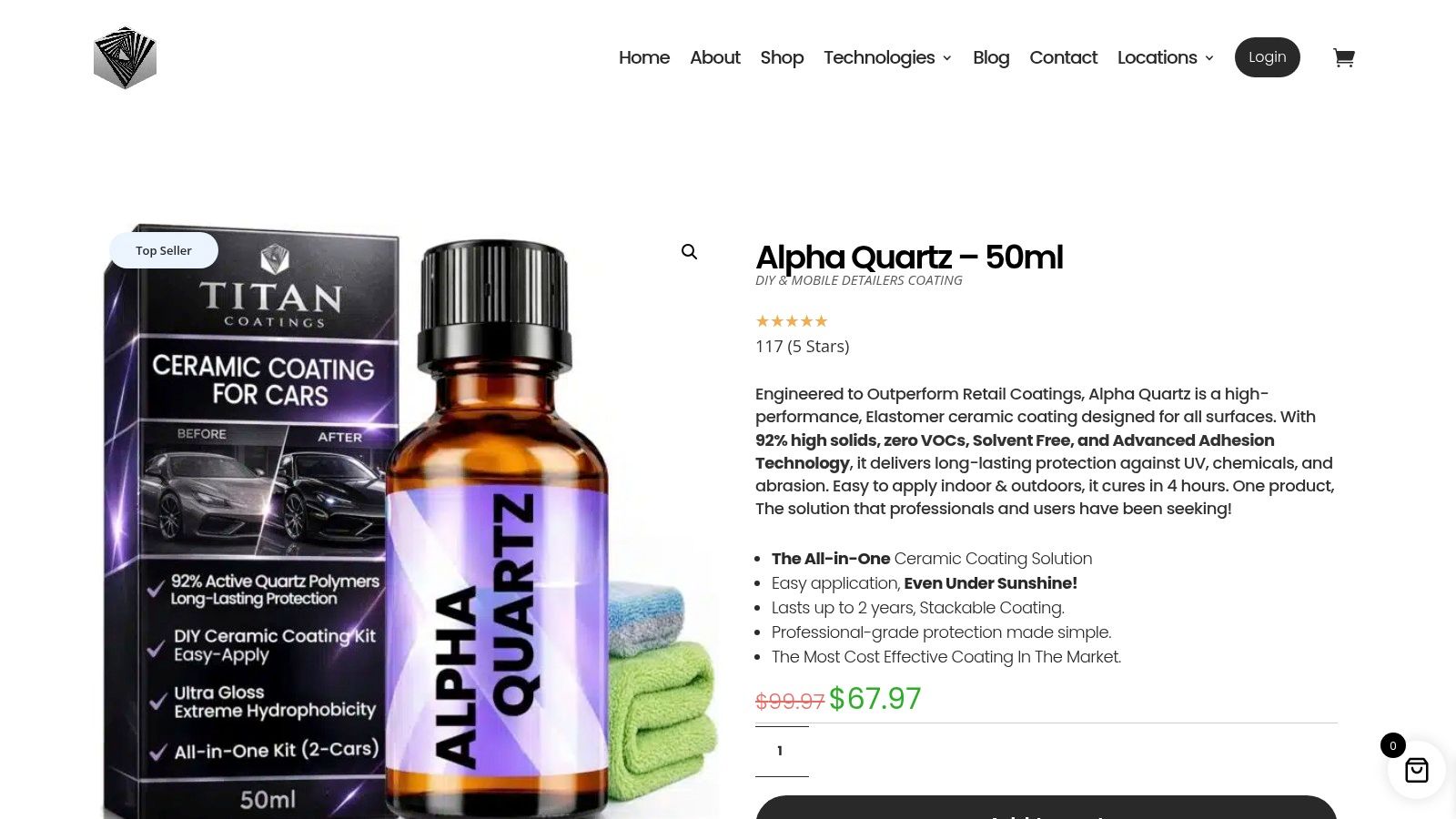
Titan describes its coating technology around elastomer chemistry, nano tubes technology, and Dark Matter tech. In practical terms, the appeal is simple. You want a protective layer that helps preserve the finish you spent hours creating, rather than one that becomes another failure point.
A broader move toward advanced surface protection also reflects why many professionals now look beyond traditional wax-type wheel protection. For readers comparing newer material approaches, this overview of eco-friendly coating options is a useful place to continue that research.
The point of polishing isn't to create a brief shine. It's to create a surface worth protecting.
The real trade-off after polishing
Once the wheel is corrected, you have two choices. Keep repolishing it as contamination and oxidation return, or lock in the finish and reduce how hard the wheel has to work for its looks.
That's the part many enthusiasts only understand after doing the job once. The sanding and buffing are labor. Protection is the advantage.
Here's the practical comparison:
- Unprotected polished wheel: Higher visual payoff at first, but more maintenance pressure.
- Protected polished wheel: Better retention of gloss, easier cleaning, less need to rework the metal.
- Wrong protection on the wrong finish: More effort later, especially if residue, staining, or coating failure enters the picture.
The best alloy wheel polishing job isn't complete when the metal reflects. It's complete when the reflection has a realistic chance of surviving daily use.
Long-Term Care and Troubleshooting Your Polished Wheels
Freshly polished wheels don't stay sharp by accident. They stay sharp because the owner changes how they maintain them. Wash gently, avoid harsh cleaners, and don't let brake dust sit until it bakes in.
Guidance for aluminum wheel care suggests repeating the polishing process every 1–3 months depending on conditions, with more frequent care in areas exposed to salt, dust, or heavy brake dust, according to this wheel maintenance reference. If the wheel is protected properly, that schedule becomes more about inspection and upkeep than full correction.
Keep the finish from sliding backward
Use a simple routine:
- Wash early: Don't wait for heavy buildup.
- Use finish-safe tools: Especially around barrels and spoke pockets.
- Inspect after drying: Water can hide residue until it evaporates.
- Top up protection when needed: Maintenance products work best before the finish looks tired.
If brake contamination is already starting to cling, this guide on how to remove brake dust is worth reviewing before you reach for stronger methods.
For total vehicle care, don't stop at the wheels. A maintenance topper like Titan's Ultra Ceramic Spray fits the same logic of easy protection, and Apex Glass Ceramic Coatings are worth a look if you want clearer wet-weather visibility on the glass with a simple application process. Mark learned the right lesson in the end. The mirror finish wasn't the victory. Keeping it was.
If you want protection technology built for real-world surfaces, explore APEX NANO – Titan Coatings. Their lineup includes advanced solutions for paint, wheels, and glass, including elastomer-based coating technology designed to stay hard like glass while remaining flexible through temperature swings, plus options like Alpha Quartz, Ultra Ceramic Spray, and Apex Glass Ceramic Coatings for easier long-term maintenance and visibility.
0 Comments