
The car looked right from ten feet away. Deep paint, straight body lines, clean wheels. Then the owner raised the soft top, and the whole mood changed. The fabric was stained, the seams were loaded with grit, and the roof looked older than the car.
A neglected roof does that to a convertible. It doesn't just spoil the look. It changes how the car feels, how it seals, how it ages, and how much confidence you have every time dark clouds show up.
More Than Just a Roof The Soul of a Convertible
A soft top is part trim, part structure, part weather barrier. Treat it like a painted panel and you'll shorten its life. Treat it like a disposable cover and you'll eventually pay for that mistake with leaks, mildew, stains, or a top that never looks clean no matter how much product you throw at it.
The convertibles that stay sharp year after year usually have owners who understand one simple truth. Soft top care is preventive maintenance first, cosmetics second. That shift matters.
Mercedes-Benz puts it plainly in its guidance for owners. The area between the soft top and the body needs to be kept free of deposits because trapped leaves, pine needles, and other debris can lead to water intrusion. That warning turns routine roof care into a leak-prevention job, not just a wash-day extra. You can read that manufacturer guidance in the Mercedes-Benz soft top care notes.
What neglect really looks like
Most soft tops don't fail all at once. They fade in stages.
- First comes contamination. Dust, pollen, bird droppings, and tree fallout settle into the surface and around the seams.
- Then water management gets worse. Debris builds in the roof gaps, storage area, and drainage paths.
- After that, appearance drops fast. The top starts looking chalky, blotchy, or tired even after a wash.
- Finally, function suffers. Water finds weak points. Folds hold grime. Seams start telling on you.
That's why detailers who know convertibles don't stop at the visible fabric. They inspect edge seals, seam lines, body gaps, and the area where the roof stores. A top can look decent from above and still be on its way to leaking from the sides or rear edge.
Practical rule: If you only clean what you can see at eye level, you're missing the part that usually causes trouble.
Why owners get this wrong
A lot of people inherited old advice. Wash it once in a while. Hit it with a protectant now and then. Hope for the best. That approach might make the roof darker for a short time, but it doesn't address the primary threats, which are trapped contamination, leftover chemical residue, and poor drying habits.
The roof is the soul of a convertible because it changes the whole car. Top down, the car feels open. Top up, the roof becomes shelter. If the top is stained, brittle-looking, or leaking, the car never feels finished.
Good soft top care keeps the car honest. It keeps the roof looking like it belongs on the body, not like an afterthought. And when it's done right, the payoff isn't just visual. It's quieter ownership, fewer headaches after rain, and a convertible that still feels special when everyone else's looks worn out.
Know Your Material The First Step to Success
The biggest mistake in soft top care happens before cleaning starts. People guess the material and grab whatever cleaner is on the shelf. That's how you turn a manageable job into permanent damage.
Fabric and vinyl don't respond the same way
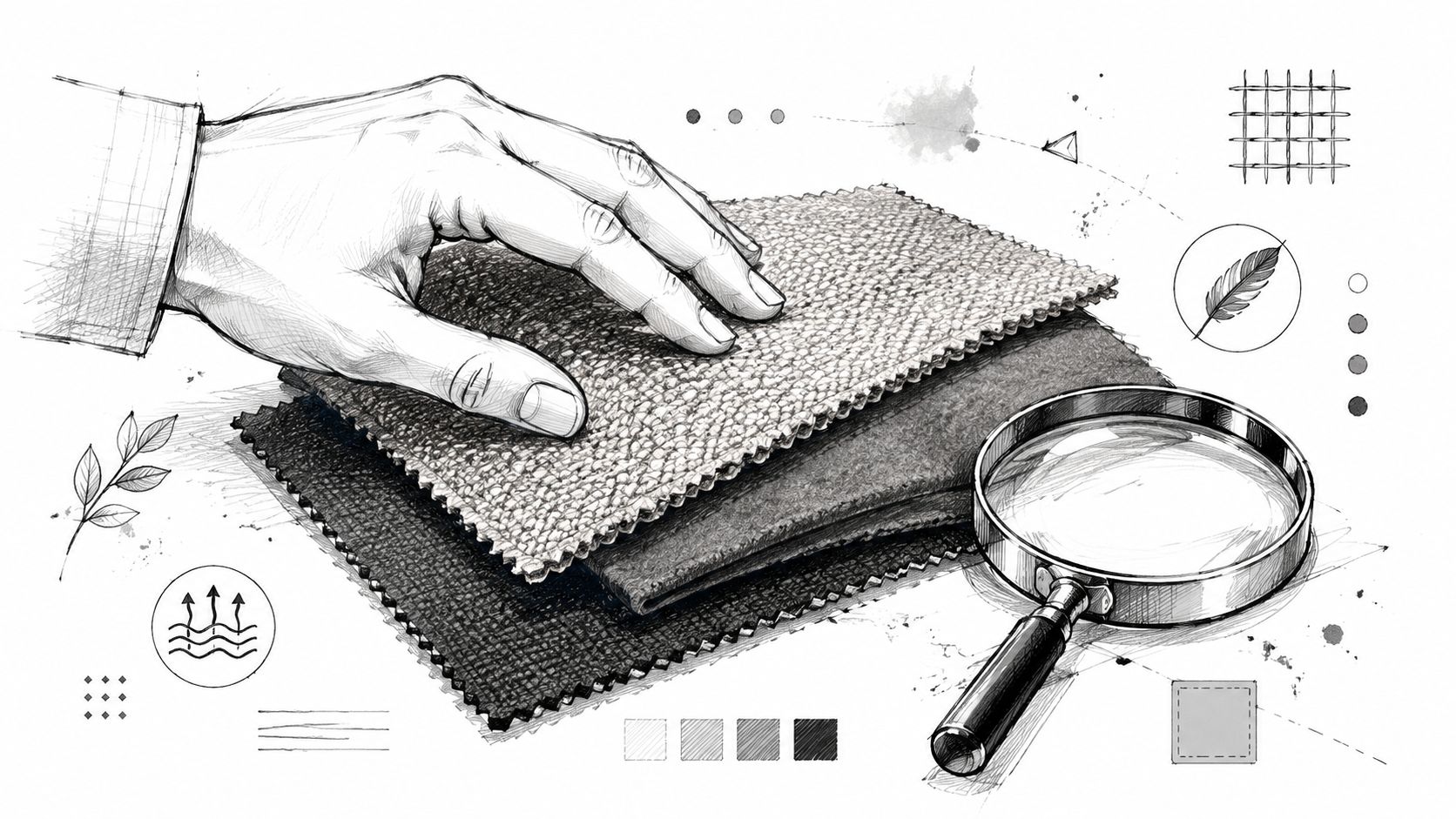
A fabric top usually has a woven face. You can often see texture in the fibers, and the surface tends to hold dust in a way that looks matte and slightly fuzzy. A vinyl top is smoother, more uniform, and usually feels less porous to the touch.
That difference decides everything. Brush choice changes. Cleaner choice changes. Protection chemistry changes. Even how much pressure you can safely use changes.
One reason this matters so much is product compatibility. Verified guidance in the soft-top enthusiast and detailing space warns against chemistries that can harm vinyl coatings, including silicones, organic solvents, petroleum distillates, and plasticizers. The same guidance also reflects a maintenance mindset where owners reapply sealer on a schedule, not as a one-time fix. In that discussion, owners reported reapplying soft-top sealer about every 3 months, with one can lasting roughly 3 seasons, and the process emphasized cleaning, full drying, then applying protection in 2 coats with about an hour between coats. That maintenance pattern appears in the R3VLimited soft top care discussion.
A quick inspection before any water touches the roof
Don't start by spraying. Start by looking.
Check these areas first:
- Seams and stitching: Look for lifted threads, frayed edges, and dirt packed into seam valleys.
- Fold lines: These collect abrasion and old residue.
- Rear window perimeter: This area often traps grime and can telegraph where water has been sitting.
- Roof gaps and edges: Debris here tells you whether the top has been storing moisture and organic matter.
- Spot contamination: Bird droppings, sap, and pollen need a plan before agitation starts.
A soft top usually tells you what it needs if you inspect it dry. Once it's wet, subtle defects are harder to read.
The tool kit that makes the job safer
A pro setup for soft top care is simple, but every item has a reason.
| Tool | Why it matters |
|---|---|
| Vacuum with brush attachment | Lifts loose grit before you grind it into the material |
| Soft-bristle brush | Agitates cleaner without chewing up the surface |
| Microfiber towels | Handles trim wipe-down and overflow without lint-heavy mess |
| Dedicated wash bucket | Keeps roof work separate from dirtier body panels |
| Material-specific cleaner | Prevents chemistry mismatch |
| Good lighting | Helps catch residue and missed staining |
If you work around wraps, trim, or mixed materials on modern vehicles, it helps to think in compatibility terms across the whole exterior. Titan's guide on ceramic coating for vinyl wrap is useful in that broader sense because the same discipline applies here. Know the surface first, then choose the chemistry.
A rushed start usually creates the problems people blame on the top itself. In reality, the top often wasn't fragile. The process was.
The Art of the Deep Clean Without Damage
A proper wash changes a roof. A sloppy one scars it.
The difference comes down to sequence. Fabric tops especially punish impatience. If grit stays on the surface, the brush turns it into abrasion. If cleaner stays in the fibers, water repellency suffers and the roof starts attracting complaints like “it never beads anymore” or “it looks streaky in the sun.”
The workflow that keeps you out of trouble
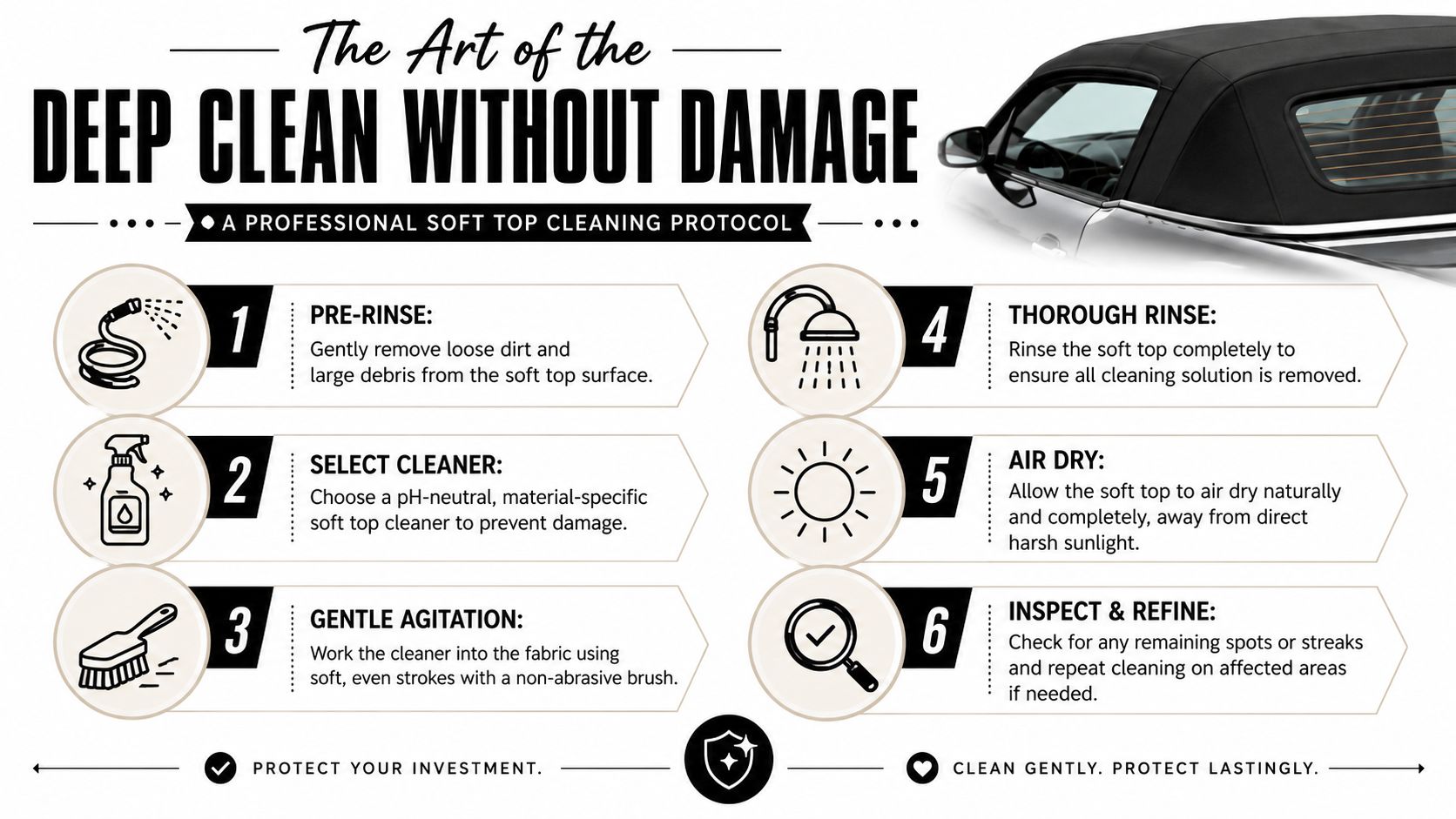
Haartz lays out a practical sequence for fabric roofs that detailers should respect. Remove loose grit, wash gently in the shade, and rinse until all residue is gone. The same guidance warns that over-aggressive brushing on cloth and cleaning in direct sun can cause abrasion and leave residue. It also notes that a 4-seat soft top may require about half a bottle of cleaner and half a bottle of protector when applied evenly, often in a crosshatch pattern on a damp surface. That workflow is covered in the Haartz seven-step soft top guide.
Here's the version that works consistently in the bay or driveway:
- Vacuum first. Use a brush attachment and pull off loose grit, pollen, leaf fragments, and dry debris.
- Work in shade. Heat makes cleaners dry too quickly and invites residue.
- Hand-wash gently. Use a soft brush and even pressure. Let the cleaner do the lifting.
- Rinse with intent. Don't stop when it looks clean. Stop when no residue remains.
- Keep the top raised while drying. That prevents moisture from getting trapped in folds.
- Inspect before protecting. If stains remain, address them before any protectant goes on.
For brushes, a dedicated soft-bristle detailing brush is the kind of tool that matters more than people think. Stiff bristles can make a decent roof look tired in one session.
Handling the contaminants that do the most damage
Routine dirt is easy. Real-world contamination is where most soft top care goes sideways.
Bird droppings, tree sap, and pollen deserve faster attention than ordinary dust. Verified guidance points out that quick removal matters because delays can lead to permanent staining and damage to the roof's protective layer. What that means in practice is simple. Don't save those spots for your next full wash if you can help it.
Use this approach:
- Bird droppings: Soften first. Don't grind them dry into the material.
- Tree sap: Work patiently and avoid harsh scrubbing.
- Pollen: Rinse and lift. Dry wiping often smears it deeper into texture.
- Unknown spots: Test your cleaner gently in a less noticeable area before repeated agitation.
If a stain needs force, your process is wrong. Increase dwell and control, not pressure.
What doesn't work
A few habits keep showing up on damaged tops:
- Hard scrubbing on cloth
- Cleaning in direct sun
- Using leftover body-panel chemicals
- Stopping the rinse too early
- Dropping the top before it's fully dry
The roof isn't forgiving. Good results come from restraint. Gentle contact, complete rinsing, and patient drying beat brute force every time.
The New Era of Soft Top Protection
Old-school protection had one big weakness. It was treated like a temporary dressing routine. Clean the top, apply a product, enjoy a short window of decent water behavior, then do it again before long. That still works to a point, but it's not where the category is heading.
The broader care market has been shifting toward longer-durability hydrophobic treatments, and the debate now is durability versus breathability under heavy UV and regular exposure. That shift is captured in the Detail King guide to convertible top care. It reflects what many detailers already see in practice. Owners want something that lasts longer and behaves more predictably than traditional wipe-on protection.
Why the old protectant cycle feels dated
Traditional protectants aren't useless. They're just often limited by how they're used. Many owners apply them over a top that isn't fully clean, not fully dry, or already holding residues in the weave. Then they judge the product instead of the prep.
What has changed is the way detailers think about the roof itself. It's no longer just trim that needs darkening. It's a technical exterior surface that folds, flexes, sees UV, catches fallout, and has to shed water while staying presentable.
That's why coating discussions have entered soft top care. Not all roofs, not all materials, and not all owners need the same solution, but the thinking has matured.
Where elastomer thinking fits
A systems-based approach looks for protection that doesn't become brittle as conditions change. That's where elastomer-based coating language gets attention. The idea is straightforward. You want a protective layer that has hardness, chemical resistance, and hydrophobic behavior, but also enough flexibility that movement and temperature swings don't work against it.
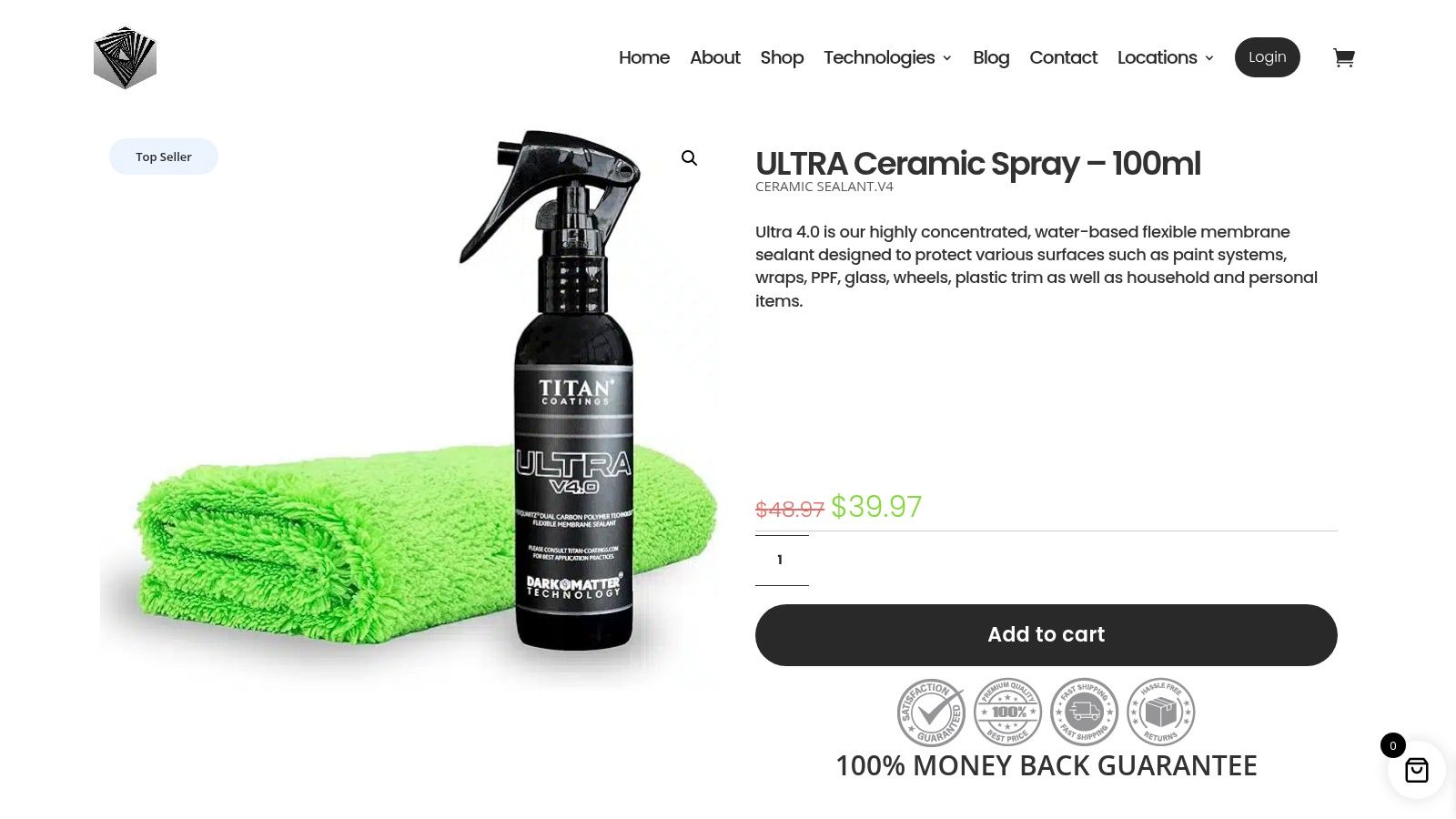
One option within that conversation is Titan Coatings Ultra Ceramic Spray, which the brand presents as part of its elastomer coating approach and Dark Matter Technology® lineup. For detailers and DIY owners, the appeal is practical. Spray-on application is simple, and the product fits the broader move toward modern sacrificial protection rather than short-lived cosmetic dressing. If you want to understand the broader UV-protection side of coating strategy across exterior surfaces, Titan also has a related resource on UV protection for car paint.
Modern protection only works when it matches the way the surface lives. A folding exterior panel needs more than shine and water beading.
What to watch before you protect
Even the best chemistry fails on bad prep. The roof must be fully dry. Coverage must be even. Folds and seams can't be hiding rinse residue or trapped contamination. If you rush application, you often lock in the very problems you were trying to solve.
This is also where realistic judgment matters. Breathability, appearance, durability, and maintenance cadence all matter. There isn't one universal answer for every soft top, but there is a clear direction of travel. The industry is moving past short-term dressing habits and toward protection systems that treat the roof like a high-exposure working surface.
That's a better standard. It respects the material, the labor, and the car.
Achieving Total Clarity and All-Surface Defense
A clean roof on a convertible can still look unfinished if the glass is fighting you. Hazy windshield behavior in rain, spotting, and neglected clear surfaces pull attention away from everything you just corrected on the top.
That's why the best soft top care jobs don't stop at the roof. They finish the driving environment.
The roof and the glass need the same discipline
Protection chemistry only behaves properly on a dry surface. Verified instructional guidance for soft-top protection recommends applying products only after the top is fully dry and then allowing about 12 to 24 hours of cure time before exposing it to moisture. That same guidance also warns that silicones and petroleum distillates can permanently harm vinyl-coated tops. Those points are covered in this soft top protection video guidance.
The lesson applies well beyond the roof. Whether you're protecting fabric, vinyl, or glass, cure time matters. Premature water exposure short-circuits performance. So does contamination left behind from rushed prep.
Where visibility becomes part of the detail
For drivers, windshield behavior in rain is not a cosmetic issue. It changes comfort, focus, and confidence behind the wheel. That's why glass protection belongs in the same conversation as soft top care, especially on convertibles that are already more exposed to the elements.
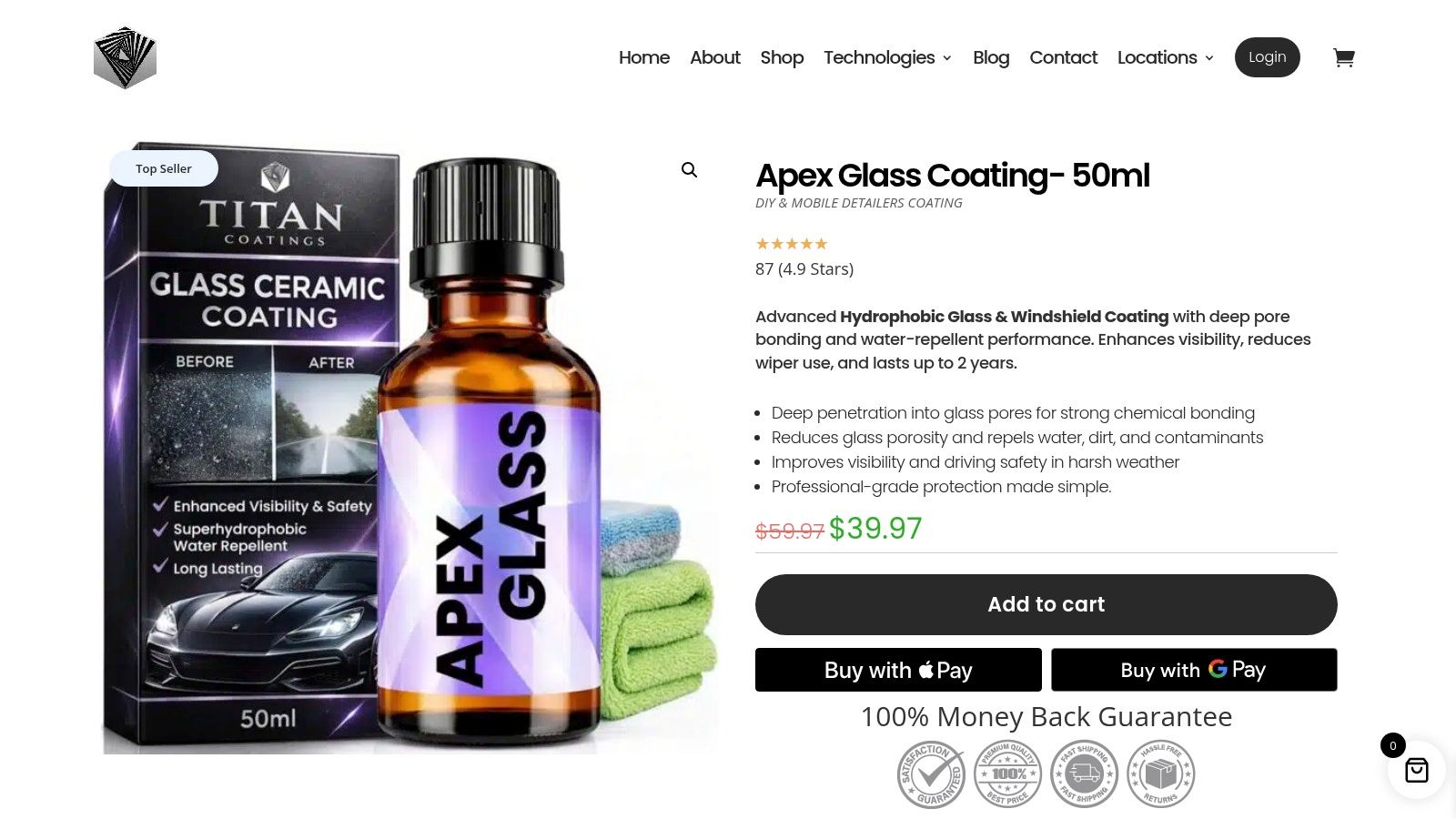
Titan's glass coating fits that systems-based logic. The use case is clear. Add a hydrophobic layer to the windshield and side glass so water moves off more cleanly and the driving experience feels less tense when weather turns.
A complete convertible detail often follows this order:
- Roof first: Clean, rinse fully, dry thoroughly.
- Glass second: Remove film, spotting, and residue before applying protection.
- Paint and trim after that: Finish the rest of the exterior so the car looks coherent from every angle.
Don't ignore the rest of the exterior
A convertible is one of the easiest vehicles to make look uneven. The top gets attention, but the paint is flat. The windshield repels nothing. The trim looks neglected. The result feels half-done.
That's where a broader coating plan helps. Titan's Alpha Quartz is part of that wider conversation for paint protection, and the brand positions it as an easy-install elastomer coating suited to DIYers and mobile detailers. The attraction isn't just gloss. It's the idea of a coating system built to remain stable through temperature swings and regular use without becoming brittle.
The most convincing detail isn't the shiniest panel. It's when the roof, glass, trim, and paint all look like they belong to the same level of care.
When the top sheds contamination more easily, the windshield stays clearer in rain, and the body surfaces hold their finish, the car doesn't just photograph better. It's easier to live with.
Your Bulletproof Soft Top Maintenance Schedule
Most soft tops don't need heroic correction. They need rhythm.
The owners who keep convertibles looking right usually follow simple habits and handle contamination before it settles in. That matters because bird droppings, tree sap, and pollen aren't ordinary dirt. Verified guidance stresses that removing them quickly is critical because delays can lead to permanent staining and damage to the top's protective coating, as noted in the Carwash.com soft top care tips.
The schedule that keeps problems small
Use a repeatable routine instead of waiting for the roof to look bad.
Weekly checks
- Clear debris from edges and gaps: Look around the roof perimeter and storage area.
- Scan for fresh contamination: Bird droppings and sap shouldn't sit.
- Check the last wash's finish: If you see residue streaking or flat water behavior, inspect your rinse process before blaming the protector.
Regular wash routine
- Use a gentle hand-wash setup: Dedicated buckets, clean mitts, and material-aware tools lower the risk of rubbing grit into the roof.
- Keep your process separate: Don't use the same dirty wash media from rocker panels on the top.
- Stick to a controlled method: A clean setup like a two-bucket car wash keeps contamination from cycling back into the roof.
Seasonal reset
This is when you slow down and inspect more carefully. Clean thoroughly, verify the top is fully dry, and apply the protection strategy that matches the material and owner expectations. If you maintain coated vehicles professionally and want more consistent inbound demand around specialty services, this Guide to automating car detailer SEO is worth reading because it shows how shops can turn expertise like soft top care into visible service pages and repeatable local discovery.
What a good maintenance plan avoids
A schedule works because it prevents three expensive habits:
- Waiting for visible failure
- Over-correcting with harsh cleaning
- Using random products with no material check
That's the whole game. Stay ahead of contamination. Wash with discipline. Protect with intent. A soft top that gets modest, regular care usually stays cleaner, seals better, and asks for less rescue work later.
If you want to build that kind of long-term protection into the rest of the vehicle, explore APEX NANO – Titan Coatings for coating options across soft top support surfaces, glass, paint, and full-vehicle care.
0 Comments