
Mark had done everything right. Fresh glass cleaner, new wiper blades, careful washes, microfiber only, and still his windshield showed fingerprints at the edges, faint wipe marks in morning sun, and that irritating haze that turns a rainy commute into work.
That’s the problem with untreated automotive glass. It can look clean and still perform poorly.
The Never-Ending Battle for Perfect Clarity
A lot of owners think the fight is just dirt. It isn’t. Instead, the battle is with oils, abrasion, and visibility loss under stress.
Mark was the kind of owner detailers like. He didn’t drag bath towels across paint. He didn’t ignore bird droppings. He kept glass clean. But every week the same pattern came back. Fingerprints near the A-pillars. Smudges after fuel stops. Fine swirls on the side glass that only showed up when the sun hit at the wrong angle. Then the storm hit on the freeway, and the windshield went from “good enough” to stressful in seconds.
That’s where it becomes clear that cleaning and protection aren’t the same thing.
Clean glass is not protected glass
A bare windshield can be spotless at noon and still become a mess at dusk or in rain. Water sheets instead of releasing. Oils spread instead of lifting. Wiper drag exposes every flaw in the surface. If the glass already has micro-marring, the problem gets amplified under headlights and street lighting.
When the damage goes beyond smudges and turns into chips or breakage, practical repair guidance matters. A useful reference is Bulls Eye Repair’s window guide, especially for understanding when cleaning won’t solve a structural glass issue.
For day-to-day maintenance, the routine matters too. Most people improve results just by changing how they prep and wipe the windshield. Titan breaks that down clearly in its article on the best way to clean an auto windshield.
Bare glass makes you work harder every single week. Protected glass changes the behavior of the surface itself.
The frustration car people know well
If you care about your vehicle, you know this cycle.
- You wash the car. The glass looks crisp until someone touches it.
- You wipe off a mark. The oil moves around and leaves a wider smear.
- You drive in rain. The windshield loses clarity right when you need it most.
- You inspect under sunlight. Fine scratches appear that weren’t visible in the garage.
This is why a scratch resistant glass oleophobic coating matters. It isn’t about making glass look fancy for a day. It’s about changing how the surface handles abuse from hands, towels, dust, weather, and repeated cleaning.
Why enthusiasts start looking for more
Once a driver sees the difference between untreated glass and coated glass, the priorities shift. It’s no longer just “How do I clean this better?” It becomes “How do I keep this surface from grabbing everything in the first place?”
That’s the right question. Because on automotive glass, prevention beats correction almost every time.
The Science of a Smudge-Free Scratch-Resistant Surface
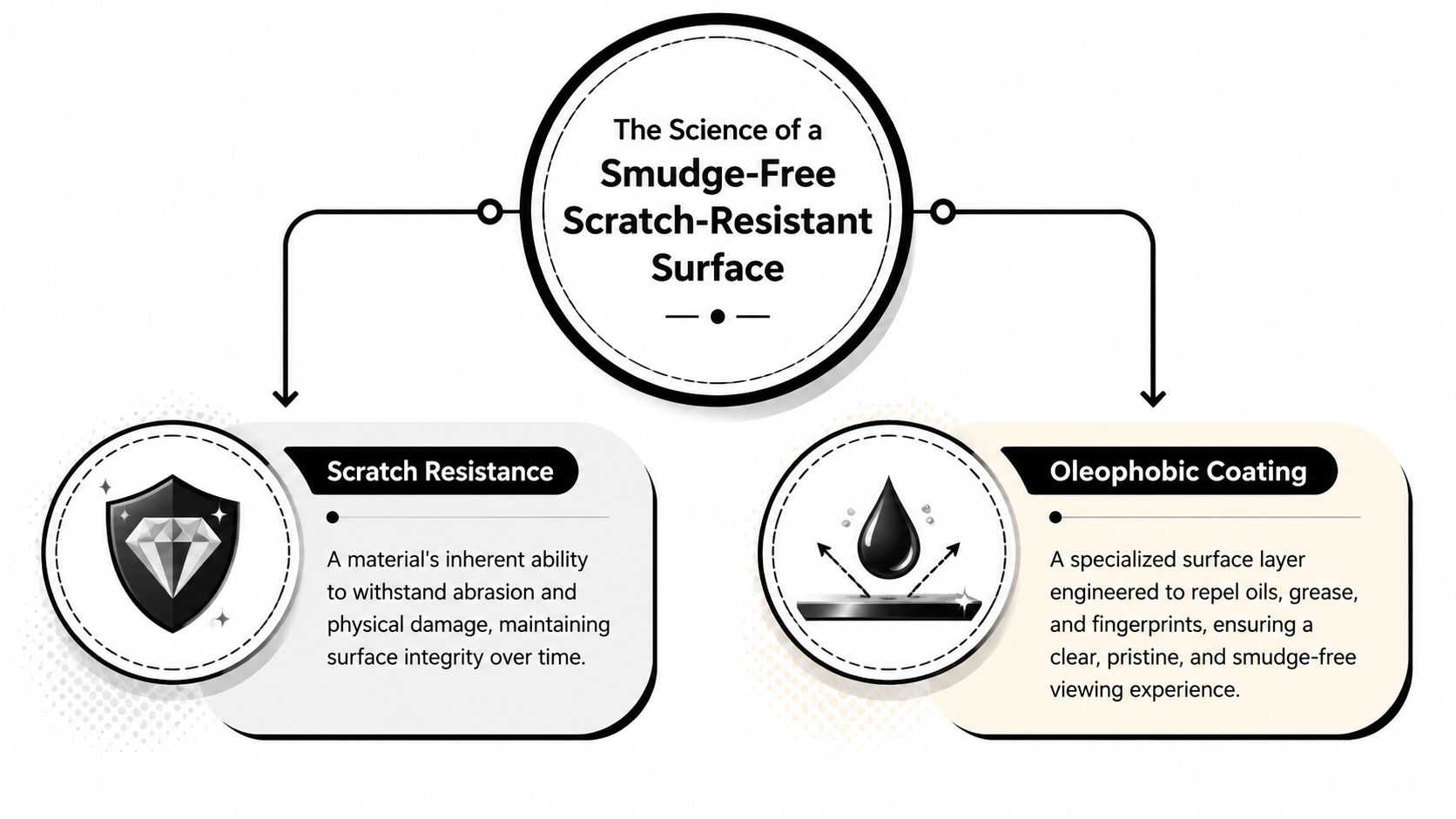
A good coating system does two different jobs. One job is resisting mechanical wear. The other is resisting contamination.
Those jobs sound similar in marketing copy, but they are not the same in materials science.
Scratch resistance and oleophobicity are different properties
Scratch resistance is about hardness and surface integrity. Think of it as the surface’s ability to handle daily abrasion without picking up visible damage as easily. On glass, that matters when dust, dirty towels, gritty wash mitts, and repeated wiping all try to score the surface.
Oleophobicity is different. It’s the anti-smudge side of the equation. A useful analogy is a non-stick pan, except for skin oils and road grime. An oleophobic layer lowers the tendency of oils to spread and cling, so fingerprints don’t bond as aggressively and wiping is easier.
This is why a windshield can be hard yet still annoying to clean. Hardness alone doesn’t stop oils from sticking.
Contact angle is how the industry measures behavior
This part gets ignored too often. Oleophobic and hydrophobic performance aren’t just ad copy. They’re measured by contact angle, which describes how a liquid sits on a surface.
Industry guidance notes that oleophobic performance is often described by contact-angle behavior. Around 60° to 80° for n-hexadecane indicates oleophobicity, and 105° to 120° for water-based contact angles is cited as an oleophobic surface range. By contrast, a water contact angle above 90° is typically considered hydrophobic, according to Omega Optical’s guide to hydrophobic and oleophobic coatings.
In plain language, higher angles mean the liquid is more likely to bead instead of flattening out and wetting the surface.
Practical rule: If a surface sheds water well but still grabs fingerprints, it may be hydrophobic without being strongly oleophobic.
Why smudges get easier to remove
Oleophobic topcoats are often designed to change the surface energy of glass. That shift matters because oil doesn’t anchor itself as easily, and a towel has less contamination to drag across the surface.
If you’re trying to improve maintenance habits before you ever apply a coating, this breakdown of the best window cleaning solution is a useful companion read. Chemistry and technique both matter.
For readers comparing dedicated glass protection options, Titan also has a focused overview of ceramic coating for glass, which helps separate windshield-specific performance from generic paint-coating claims.
What this means on a vehicle
A proper scratch resistant glass oleophobic coating aims to do three things at once:
- Reduce visible contamination
- Lower cleaning effort
- Preserve clarity under repeated use
That’s why the right glass coating feels different even when the windshield looks the same from ten feet away. You notice it when you wipe. You notice it in rain. You notice it under night lighting, where every smear gets punished.
The Old Compromise Hardness or Flexibility
For years, coatings forced owners and detailers into a bad choice.
Pick a very hard coating, and you usually gained stronger surface resistance but accepted brittleness. Pick a softer polymer sealant, and you gained some flexibility but gave up meaningful long-term defense against wear. On paper, both camps sounded reasonable. On a real vehicle exposed to heat, cold, vibration, impacts, and repeated washing, both had limitations.
Hard isn’t the whole story
Many people hear “hard as glass” and assume the problem is solved. It isn’t. The top surface that delivers anti-fingerprint performance is often extremely thin, while the deeper scratch-resisting function depends on the full coating stack and how well it bonds to the substrate.
That’s why abrasion testing matters more than catchy claims. Independent sources report more than 12,000 steel-wool rub cycles for a glass oleophobic coating, and the same guidance stresses that stack design matters because the oleophobic function can wear away while the underlying glass remains intact, as noted by JNS Glass on oleophobic coatings.
A coating can survive on paper and still lose the surface behavior that made it useful in the first place.
The two old categories
Here’s the compromise the industry lived with:
Traditional ceramic-heavy systems
These usually chase hardness. They can feel crisp and durable, but they don’t always like movement, thermal shock, or impact stress.Sealants and softer polymers
These can handle movement better, but they tend to offer less serious resistance to abrasion and repeated environmental wear.Untreated glass
This is the default most drivers live with. It cleans up nicely for a moment, then immediately starts collecting the same oils and wipe marks again.
For detailers, this creates a practical headache. You want the firmness and chemical resistance of a hard coating, but you also need something that won’t become the weak link when the surface flexes, heats, cools, and gets hit by debris.
Why flexibility became the missing property
A vehicle isn’t a lab slide. It sees frozen mornings, hot glass, road vibration, wiper friction, bug strikes, wash contact, and constant expansion and contraction. If a coating only performs when everything is calm, it won’t stay impressive for long.
Titan has written directly about this issue in its discussion of coating flexibility, and it’s a useful lens for anyone comparing rigid chemistry to real-world durability.
A coating that survives the brochure but fails on the road isn’t durable. It’s just hard.
That’s where the next leap had to happen. Not harder alone. Smarter under stress.
The Elastomer Revolution Titans Flexible Glass Technology
The actual breakthrough came when coating design stopped treating hardness and flexibility as opposites that could never coexist.
That old assumption held back a lot of products. You could build something rigid, or you could build something forgiving. Titan’s argument is that this tradeoff doesn’t have to define the category anymore. Using its elastomer platform, along with the company’s nano tube approach and Dark Matter technology language, the goal is a protective layer that behaves hard like glass but flexible under stress.
Why standard coatings lose performance in real use
Real-world automotive exposure is punishing. Third-party testing, for instance, indicates many standard coatings degrade heavily under UV, heat, and abrasion. Some oleophobic coatings show a 40 to 60% loss in oil repellency within 6 to 9 months on vehicles due to UV and thermal cycling stress, according to Abrisa Technologies’ application note.
That lines up with what detailers often see in the field. A surface may still bead some water, yet the fingerprint resistance and easy-clean behavior have already faded.
What elastomer chemistry changes
An elastomer-based approach targets the failure mode that brittle systems struggle with. Instead of acting like a rigid shell that resists until it can’t, the coating has some give built into it. That matters when the surface sees:
- Temperature swing from freezing conditions to hot sun on glass and painted panels
- Minor impact stress from bugs, grit, and everyday road contact
- Panel movement that can challenge a rigid, brittle layer over time
This is the logic behind Titan’s elastomer coating platform. The premise is straightforward. If the coating can flex with the substrate instead of fighting it, it’s less likely to crack or fail when conditions change.
Where Alpha Quartz fits
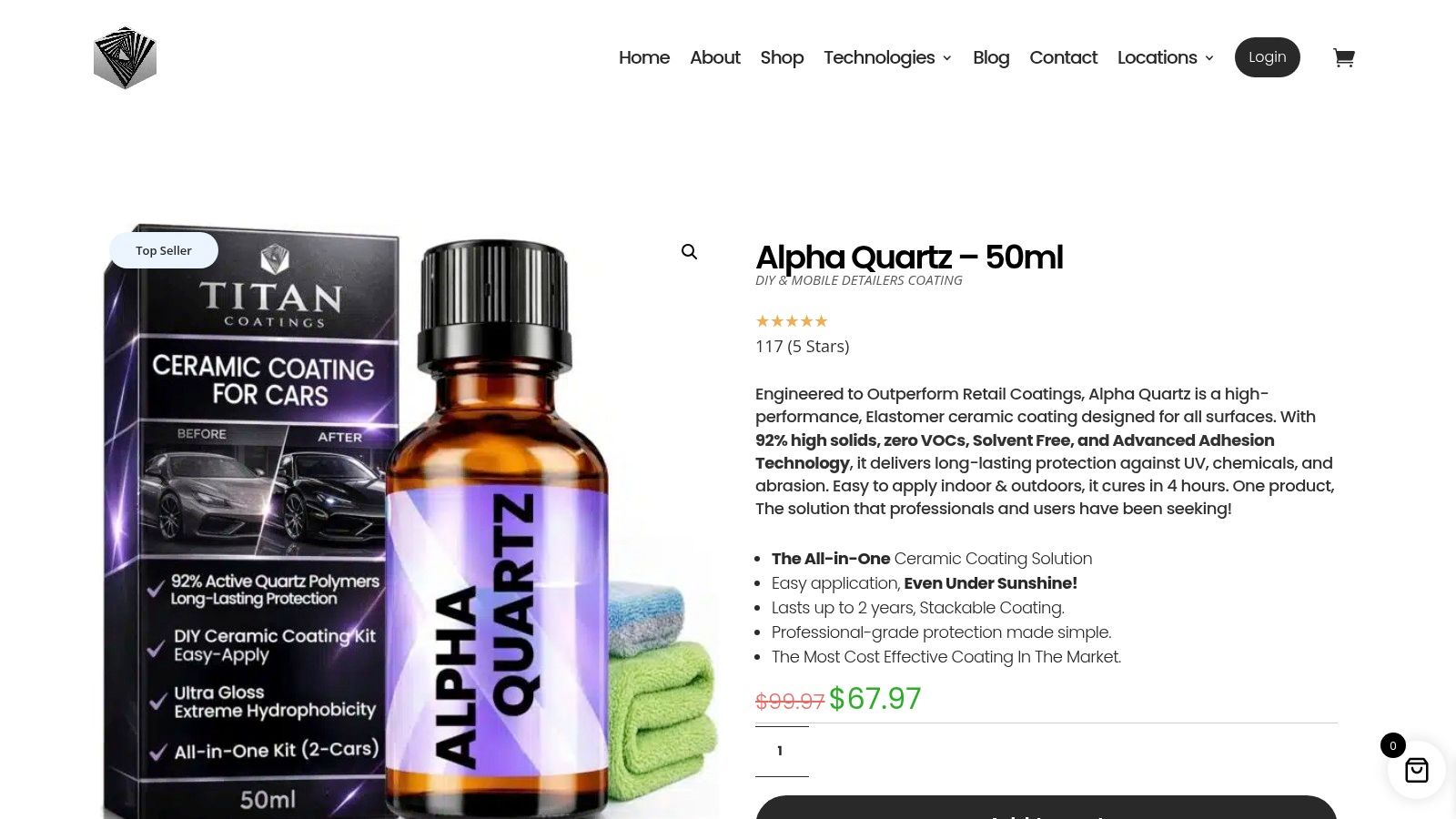
Alpha Quartz is the product that best represents this conversation for paint and exterior surfaces. It’s positioned for users who want a professional-grade result without an application process that turns into a science project. That makes it relevant to studio detailers, mobile operators, and serious DIY users alike.
What makes the concept interesting isn’t hype. It’s the material logic. A coating that combines glass-like hardness with elasticity is trying to solve the exact compromise that has frustrated the category for years.
The smarter coating isn’t the one that feels hardest in the bottle. It’s the one that still performs after heat cycles, wash cycles, and road abuse.
That distinction matters. Durability isn’t a mood. It’s a response to stress.
Crystal Clear Vision Apex Glass Coating in Action
The difference shows up fastest on a windshield.
A driver heads out before sunrise. The road is wet, spray is coming off trucks, and the kind of rain that usually creates a grey film on the windshield starts building. On untreated glass, the wipers work hard just to keep up. On properly protected glass, the water behavior changes. Beads form, release, and move off the surface with airflow instead of sitting there as a sheet.
That’s the use case where a dedicated glass formula earns its place.
Why windshield coatings need their own formula
Glass isn’t paint, and it shouldn’t be treated like paint. A windshield coating has to preserve optical clarity, hold up to constant wiper contact, and reduce the adhesion of water, grime, and oily contamination without creating visual side effects.
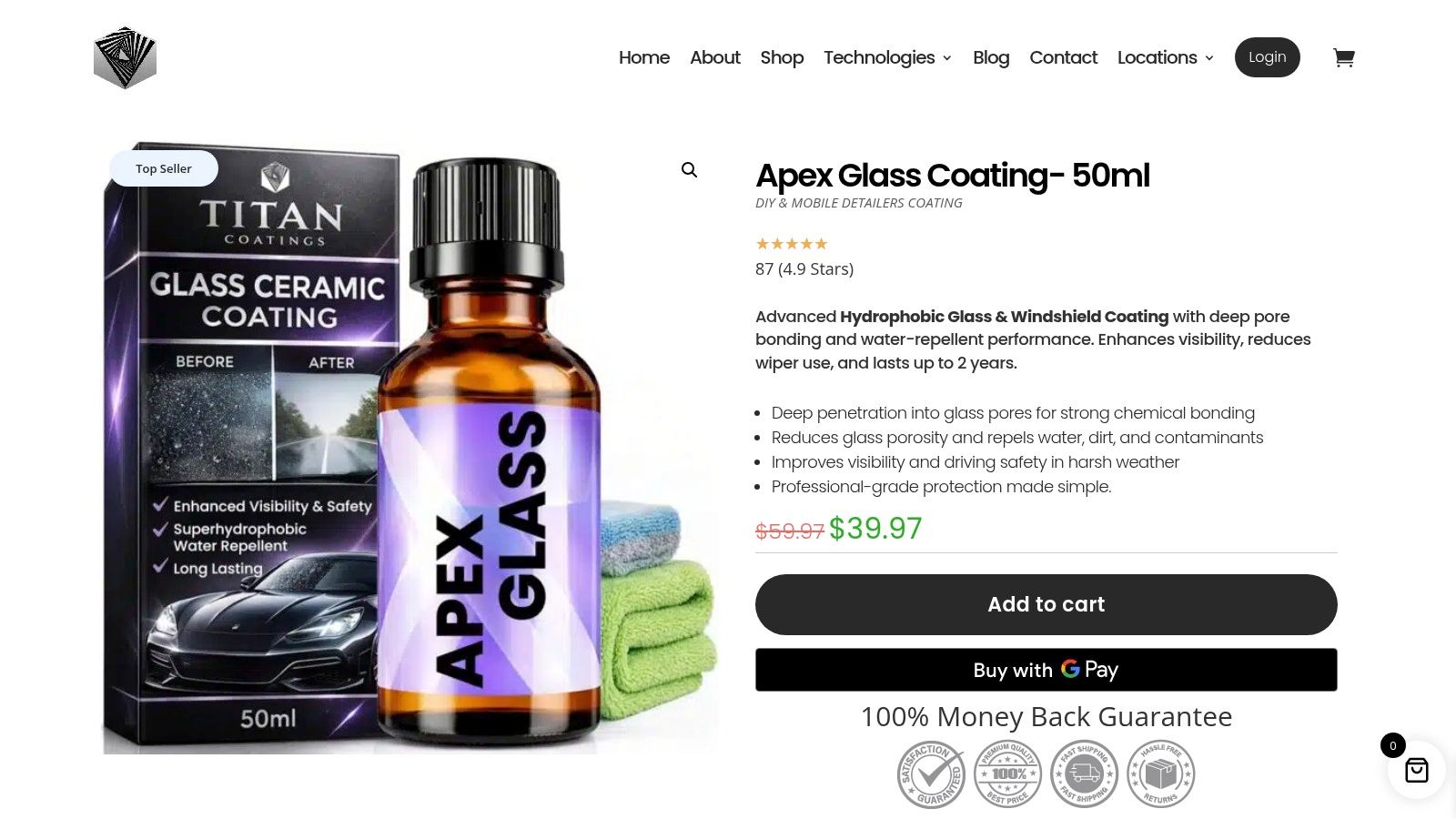
Apex Glass & Windshield Ceramic Coating is built for that job. On a practical level, the appeal is simple. It’s aimed at making the windshield easier to clean, easier to keep clear, and calmer to use in ugly weather. For mobile detailers and driveway DIY users, that ease of use matters almost as much as the final behavior of the glass.
What drivers usually notice first
Most users don’t start by talking about chemistry. They talk about stress.
They notice that rain doesn’t cling the same way. They notice the windshield clears faster. They notice bug residue and road film don’t fight back as aggressively during cleanup. And they notice that a quick wipe doesn’t instantly turn into a smeared mess.
That matters because visibility is a safety issue before it’s a detailing issue.
The practical upside on daily vehicles
A glass-specific scratch resistant glass oleophobic coating earns its keep when the car is used, not displayed. The daily benefits are familiar to anyone who commutes, travels highways, or details customer vehicles regularly:
- Less smearing from fingerprints and traffic film
- Faster cleanup after bugs and road grime
- Better water release in rain
- Lower frustration during routine maintenance
A lot of products claim all-surface capability. Windshields expose that shortcut quickly. They need chemistry tuned for glass, clear application habits, and reliable wipe behavior after cure.
If a glass coating makes the windshield look good in the garage but chatters, smears, or distracts in rain, it missed the job.
The right windshield product doesn’t just add gloss. It changes how the drive feels when conditions turn poor.
Choosing Your Armor A Guide for Detailers and DIYers
Most coating mistakes happen before the applicator ever touches the surface. People choose one product and expect it to do every job equally well.
A better approach is to match the chemistry to the surface and the owner’s habits. A windshield has different demands than paint. Maintenance toppers have a different role than a base layer. A mobile detailer also needs a product that installs predictably without wasting half the appointment on fighting flash behavior.
Pick by surface and use case
Here’s the simplest way to frame the line.
| Titan Coating Selection Guide | |||
|---|---|---|---|
| Product | Primary Use | Key Technology | Best For |
| Alpha Quartz | Exterior surface protection | Elastomer coating platform | Detailers and DIY users who want flexible, glass-hard protection on paint and exterior surfaces |
| Apex Glass | Windshields and automotive glass | Glass-focused ceramic coating | Drivers who want easier cleaning and better wet-weather visibility |
| Ultra Ceramic Spray | Maintenance and quick protection | Spray ceramic format | Owners and mobile detailers who want a simple upkeep product with easy application |
A practical way to choose
If you want the long-term foundational layer on painted and exterior surfaces, Alpha Quartz is the logical fit. It’s the product for people who care about the old hardness-versus-flexibility problem and want a modern answer to it.
If your priority is glass clarity and stress-free wet driving, Apex Glass is the specialist. It belongs on windshields, side glass, and the surfaces where smear resistance and water behavior matter most.
If you need something fast for upkeep, Ultra Ceramic Spray makes sense. It’s useful as a maintenance layer, a topper, or a simple stand-alone option when time and ease matter more than a full coating session.
For shops and mobile detailers
Shops usually do better when they stop selling “a coating” and start selling outcomes.
- Daily-driver package with paint protection plus glass coating
- Visibility package focused on windshield and all glass
- Maintenance package built around fast refresh appointments
For mobile detailers, easy installation is not a luxury. It’s part of profitability. Products that apply cleanly, level well, and don’t force constant correction are easier to repeat across different customer vehicles and weather conditions.
One place to browse current options directly is the Titan Coatings shop.
For DIY owners
DIY users should be honest about how they’ll maintain the vehicle. If you know you’ll keep up with gentle washes and occasional refreshes, a system approach works well. If you want one fast product and minimal ritual, a spray format may be more realistic.
The right choice isn’t the most technical one. It’s the one you’ll use correctly.
Application and Longevity Get the Most from Your Coating
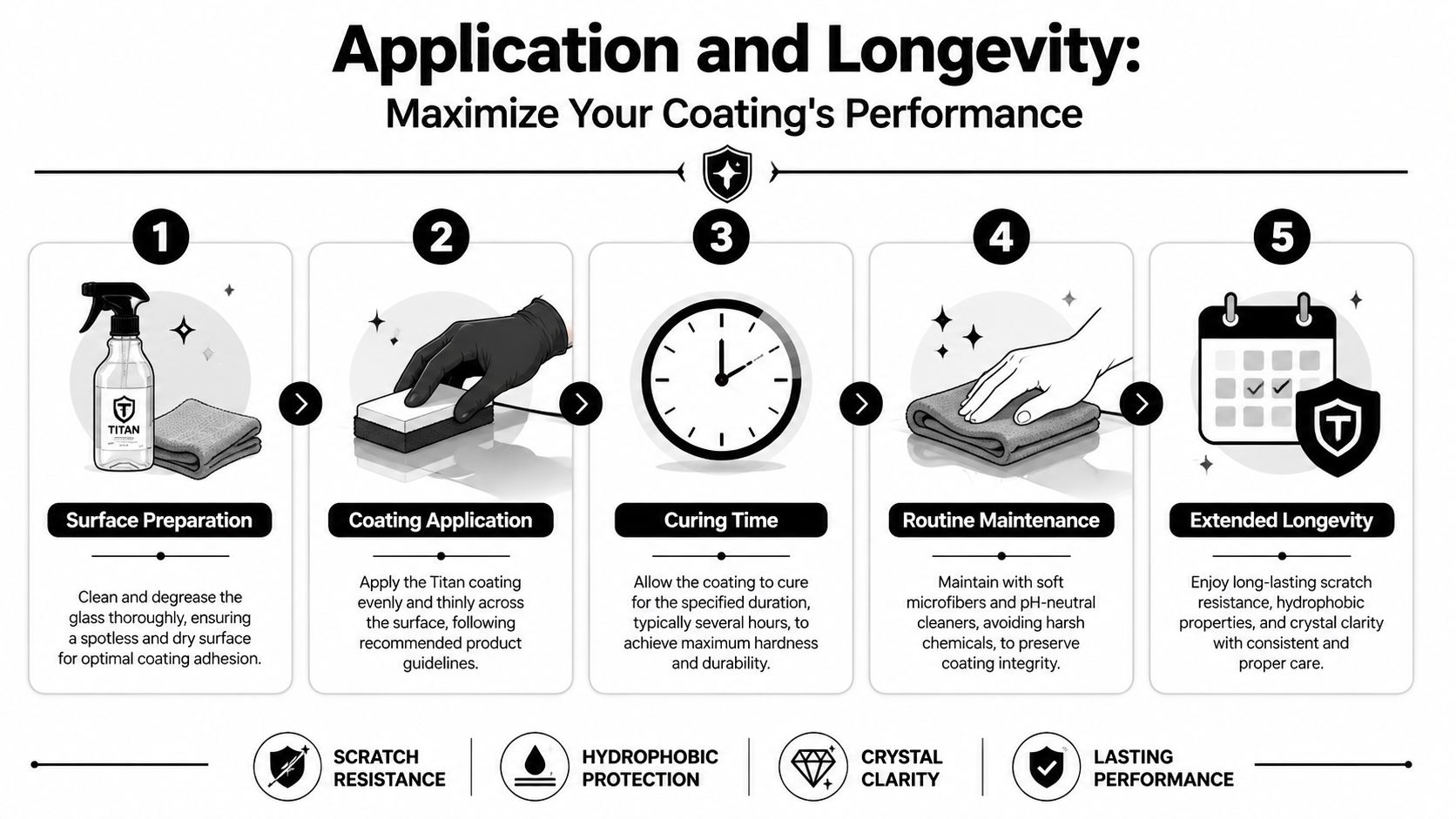
The best coating can still underperform if the glass is poorly prepped, over-applied, or maintained with the wrong habits. Most failures people blame on chemistry are really application and upkeep issues layered on top of normal wear.
That matters even more on glass, where clarity is the whole point.
Good results start with surface prep
The glass must be thoroughly clean, not just visually clean. That means removing road film, oils, old residues, and anything that interferes with bonding. If contamination stays behind, the coating bonds to that contamination instead of the glass.
After application, cure discipline matters. Don’t rush the surface back into abuse before the product has had time to set properly.
Why maintenance gets easier after coating
Oleophobic topcoats are often engineered as low-surface-energy fluoropolymer or siloxane layers. That low surface energy directly reduces adhesion forces between skin oils and the surface, so contaminants are less likely to smear under wiping pressure and are easier to clean, as described in this technical review of oleophobic coating behavior.
That’s the hidden advantage people feel right away. The surface doesn’t demand as much effort.
Habits that help longevity
A few habits make a big difference:
- Use clean microfibers so you’re not grinding residue back across the surface.
- Keep the glass decontaminated instead of layering cleaner over traffic film.
- Refresh protection when needed rather than waiting for the surface to become difficult again.
- Avoid harsh cleaning behavior that strips or abrades the top functional layer faster than necessary.
If you want a broader view on expected lifespan and maintenance cycles, Titan’s article on how long ceramic coating lasts on cars is worth reading.
Coating longevity isn’t just chemistry. It’s chemistry plus prep, curing, washing habits, and what the vehicle lives through every week.
A scratch resistant glass oleophobic coating works best when the owner understands that it’s a system, not a magic trick. Get the surface clean. Apply correctly. Maintain it with some discipline. Then the clarity, easy cleaning, and weather performance become repeatable instead of temporary.
If you want to explore coating options for paint, glass, and maintenance in one place, APEX NANO – Titan Coatings offers product pages, application information, and system-level guidance for detailers, DIY users, and vehicle owners who want protection that matches real driving conditions.
0 Comments