
My son lined up three dusty toy cars on the kitchen table and asked if they could get “the full detail.” By lunch, a milk jug, a sponge, and a cardboard box had turned into our favorite weekend build.
A Weekend Project for Your Little Car Enthusiast
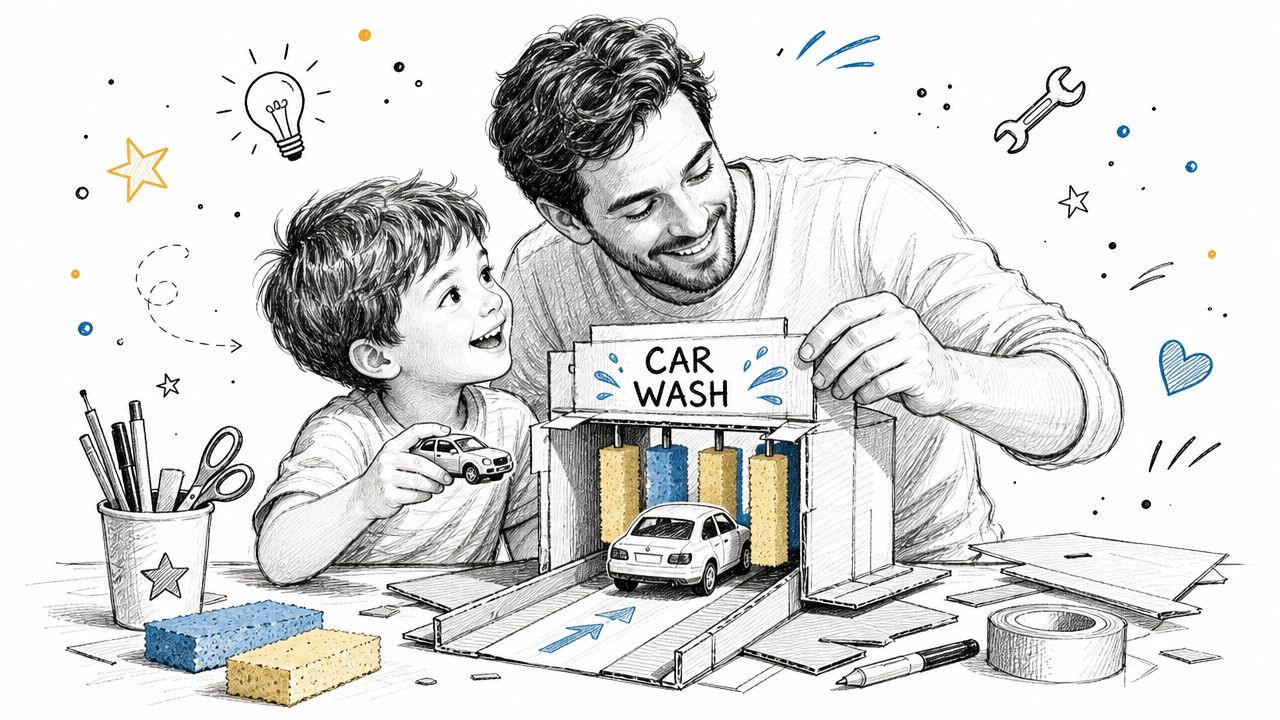
Saturday started with cereal crumbs, garage talk, and a child who wanted his toy SUV to look “shiny like dad's car.” That's how our DIY car wash toy began. Not as a craft pulled from a checklist, but as one of those small family moments that suddenly becomes the best part of the weekend.
I've always loved cars, not just driving them, but caring for them. Washing carefully, checking the glass, keeping the paint from looking tired. Kids notice that. They notice the mitt, the hose, the way you step back and admire clean bodywork in the driveway. So when my son wanted his own miniature version, it felt natural to build one together.
Why this little project feels bigger than it looks
A toy tunnel made from recycled materials doesn't sound dramatic. But give a child scissors-safe prep work, tape, a few sponge strips, and a lineup of toy cars, and suddenly they're solving problems like a tiny engineer. They decide where the brushes go. They test if the “truck” fits. They rebuild the entrance when the roof droops.
That hands-on spirit is why I like activities that boost creativity with Playz activities. Not because every afternoon needs a grand plan, but because kids remember the projects they helped shape with their own hands.
Practical rule: Let your child make at least one design choice that an adult wouldn't make. A purple wash tunnel or oversized sponge curtain usually becomes the detail they love most.
There's also a subtle lesson tucked inside the fun. When children wash a favorite toy, they start to understand care. They learn that the things we enjoy last longer when we clean them, store them, and treat them with attention. It's the same mindset behind good habits with the car in the driveway.
I found myself borrowing some of the same language I use when talking about actual washing technique. Gentle contact. Rinse first. Don't grind dirt across the surface. If you already love teaching kids through doing, this project fits beautifully beside simple family garage habits and practical car wash tips for better routine care.
The memory you're really building
The cardboard will eventually soften. The sponge strips may peel. The tunnel might survive two months or two afternoons, depending on how enthusiastic your little crew is.
That's not the point.
The point is the grin when the first toy car rolls through. The proud announcement that this one is “the foam lane.” The moment your child starts talking about your real car and asks why the windshield beads water or why some paint still looks fresh after sun and rain. A DIY car wash toy can be a craft. It can also be the start of a shared language between parent and child.
Gathering Your Supplies for the Mini Car Wash
The best version of this project uses things you probably already have in a cabinet, a recycling bin, or a craft drawer. That's part of the charm. It feels inventive, not expensive.
The strongest inspiration for our build came from an educational activity rather than a toy catalog. The Kohl Children's Museum documents a “DIY Toy Car Wash” lesson plan where children construct car wash tunnels using recycled materials like plastic milk jugs, duct tape, and sponges to clean toy vehicles, an activity designed to teach engineering and recycling concepts, as shown in their DIY Toy Car Wash lesson plan.
The structure pieces
Start with the frame. This is the part that decides whether your mini wash feels solid or floppy.
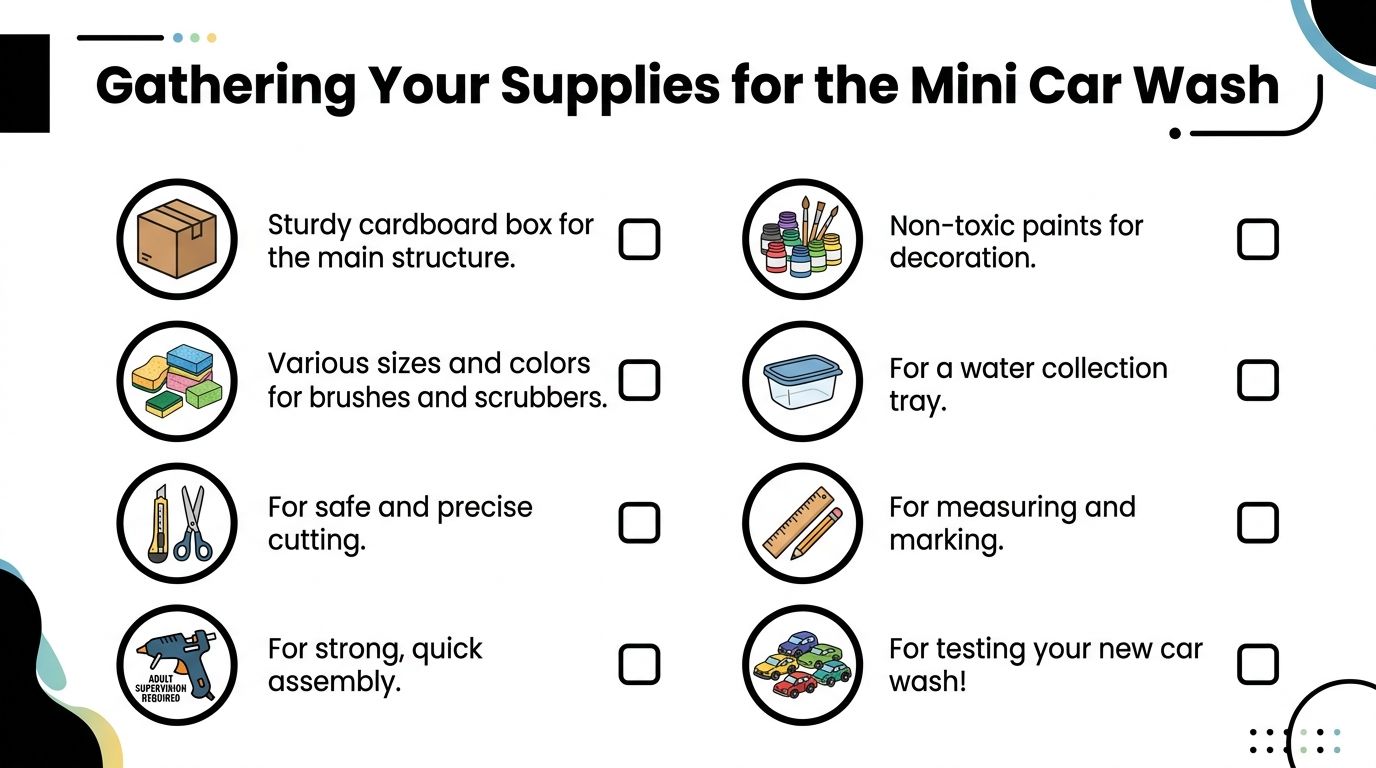
- Cardboard box or panel pieces for the main tunnel. A medium box works well because most toy cars can pass through without getting lost inside it.
- Clean plastic milk jug if you want a sturdier archway or a second wash station.
- Duct tape to reinforce corners and cover any cut edges.
- Scissors or craft knife for adult use when shaping the tunnel.
- Marker and ruler so you can sketch the entry opening before cutting.
If your child is younger, pre-cut the main opening and let them take over with decorating and placement. That keeps the build safe without taking away their ownership.
The brush and scrub elements
At this point, the DIY car wash toy starts to feel real.
- Sponges for hanging wash strips or side scrubbers.
- Felt strips if you want softer “brush curtains.”
- Bubble wrap for a textured scrub panel.
- Wooden rods or dowels if you're making spinning or fixed rollers.
- Hot glue gun for adult assembly on parts that need stronger hold.
I also like keeping one soft washing tool nearby for the grown-up version of the lesson. A quality car wash mitt for safe contact washing is a nice visual bridge when kids ask why toy cars get sponge strips while real cars get gentler materials.
The rinse and play station
This part turns the structure into an activity instead of a display piece.
| Item | Why it helps |
|---|---|
| Spray bottle | Gives kids control over the rinse without flooding the floor |
| Small tray or plastic bin | Catches drips and keeps the setup contained |
| Dish soap | Adds bubbles for outdoor wet play |
| Warm water | Helps soap mix more smoothly |
| Small towel | Creates a “drying zone” after the tunnel |
The decoration extras
Let this part be a little playful. Perfect symmetry isn't the goal.
- Paint or markers for signs like “Wash,” “Rinse,” and “Dry”
- Craft foam or paper circles for pretend control buttons
- Stickers for license plates, arrows, and goofy logos
- Toy cars in different sizes to test the opening
Let your child name the business. “Speedy Bubble Garage” or “Lightning Wash” usually beats anything an adult would come up with.
Once everything is on the table, the project stops feeling abstract. It starts looking possible.
Constructing Your Car Wash Masterpiece
Building the tunnel is the fun part because the project changes shape quickly. A flat box becomes a drive-through station in less than an hour, and kids can see progress almost immediately.
Building the main tunnel
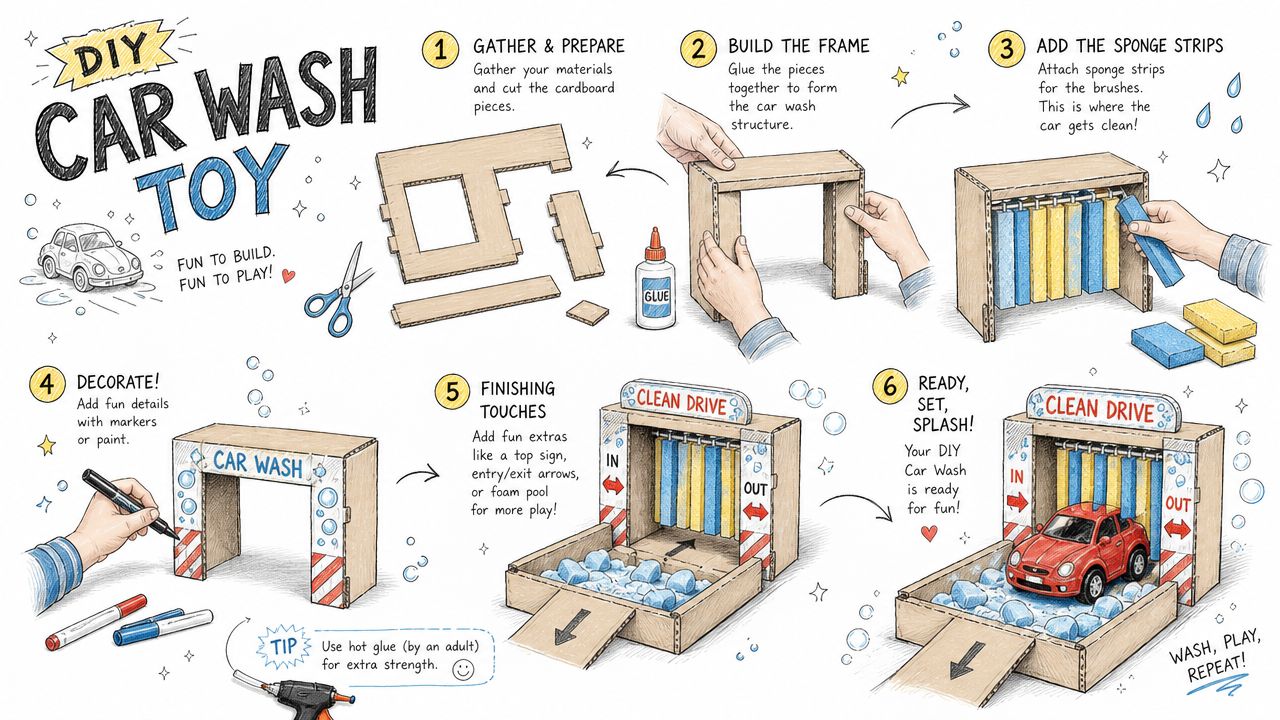
Set your cardboard box on its side or stand two panels into an arch. Mark an opening that's wider than your child's largest toy car, then cut slowly and keep the base broad enough that the tunnel won't tip during play. If you're using a milk jug, cut away the top, create an arch entrance, and tape over every edge that might feel rough.
The shape doesn't need to be perfect. Kids care more about whether the car fits and whether the brushes touch the roof than whether the tunnel has flawless lines.
A good simple layout looks like this:
- Entrance arch with enough clearance for the biggest toy
- Center zone where sponge or felt strips hang down
- Exit area for a towel-dry or “blower” station
- Base tray if you want wet play with easier cleanup
Installing the scrubbing rollers and curtains
This is the part that makes the toy feel alive. When the brushes move or sway, children immediately understand what the car wash is supposed to do.
If you're attaching felt to rods, secure it carefully. According to guidance summarized by crafters at Non Toy Gifts, expert crafters report an 85% success rate when using hot glue temperatures between 180°C–200°C to secure felt strips to wooden rods, while noting that 60% of failed builds result from improper rod insertion depth (less than 10mm), causing brushes to collapse. That's a wonderfully specific reminder that the little construction details matter.
Workshop note: If your brush bar keeps slipping out, don't add more decorations. Deepen the rod seating first and reinforce the side walls.
A few combinations work especially well:
- Hanging sponge strips create a classic tunnel effect and are easy for kids to push through.
- Felt curtains look tidy and give a softer sweep across toy roofs.
- Bubble wrap side pads add texture and a satisfying crackle.
- Two fixed rods at different heights help the wash reach both small cars and taller toy trucks.
For a parent who also enjoys real detailing, this part feels familiar. You're thinking about contact points, material softness, and how to create cleaning action without damaging the surface. It's miniature engineering.
Reinforcing the areas kids stress most
Children don't test toys gently. They ram cars in nose-first, press down on the roof, and often decide the tunnel should also function as a garage, a race gate, or a dinosaur cave.
So reinforce the stress points.
- Tape the bottom corners twice if the box flexes.
- Add side braces from scrap cardboard if the walls bow outward.
- Cover glue joints with tape tabs when pieces feel wobbly.
- Keep the structure low and wide instead of tall and narrow.
If your child wants a foam blast zone, place it at the entrance rather than the exit so the tunnel doesn't stay soaked the whole time. That small choice makes the build last longer.
For inspiration from the full-size world, it's fun to compare your sponge curtain with the thick suds you'd make using a foam cannon for real car washing. Kids love hearing that their toy setup has a “professional wash stage.”
Adding the finishing touches
Personality came to the forefront. We painted arrows on the floor path, added a “rinse light,” and stuck blue paper circles on the side as pretend controls. My son insisted on a “VIP lane” for his favorite race car. That lane was exactly the same as the regular lane, but the sign mattered.
You can add:
- A drying flap from microfiber scraps or soft cloth
- A payment booth from a small carton
- A waiting line drawn on cardboard
- A service board with washable marker prices, though I'd keep the focus on pretend play rather than realism
By the end, the project doesn't look like recycling anymore. It looks like a place where toy cars belong.
Playtime Ideas and Pro Cleanup Tips
Once the structure is built, the magic lies in how many ways kids can use it. One afternoon it's a bubbly wash station outside. The next day it becomes an indoor dry-detail tunnel with cloth strips and no water at all.
Wet play that stays manageable
For outdoor fun, a small tray, warm water, and a spray bottle are enough. You don't need a giant tub. The key is keeping the foam pleasant without making the cars too slippery.
Expert guidelines for toy car wash sensory play mandate a 1:8 volumetric ratio of dish soap to warm water to achieve optimal foam viscosity, and note that excessive soap concentration above 15% can reduce toy traction by 40% and increase spill incidents, according to this sensory play guidance.
That's why I mix the solution in a bottle first, then hand it over. Kids still get the bubbly payoff, but the wash lane doesn't turn into a skating rink for plastic cars.
Dry play for calmer afternoons
Indoor version. No puddles. Still fun.
Try these swaps:
- Fabric strips instead of soap for a no-mess brush tunnel
- Shredded paper “foam” in a tray for scooping and pretend washing
- A dry towel station where kids polish each car before parking it
- A checklist game where they inspect wheels, windows, and headlights
If your child enjoys open-ended sensory setups, I like pointing parents toward curated messy play ideas for parents. It helps when you want the next activity ready before the current one loses its shine.
Keep one towel at the exit and one under the tray. The first keeps cars from dripping everywhere. The second saves your floor.
Turning play into a gentle car-care lesson
Kids love matching your routine. If they wash a toy truck, they usually want to “help” with the family car next. That's a good moment to talk about soft tools, rinsing dirt away first, and why real paint needs gentler treatment than bathtub toys.
I keep those lessons simple and tactile. Feel the soft cloth. Watch dirt rinse off. See how clean glass changes what you can see. If you want a parent-friendly refresher on the actual process, a straightforward guide to how to hand wash a car properly fits neatly beside this toy project.
Cleanup gets easier when it's part of the game. Our rule is that every car goes through the wash, then parks on a towel, then the tunnel “closes for the night.” My son loves that part almost as much as the washing.
From Toy Cars to Real Rides A Lesson in Lasting Protection
The funniest moment came after the toy wash was finished. My son sprayed his little coupe, wiped the plastic windshield with a cloth, and said, “Now it needs protection so rain can't bother it.” That's the kind of sentence a car-loving parent never forgets.
Children understand protection faster than we think. They know their favorite things matter. They know scratches feel disappointing. They know a clean toy looks better and is more fun to show off. The leap from toy care to real car care is short.
Why the grown-up version matters
The family car sits outside in heat, cold, rain, bugs, road film, and endless daily handling. Cleaning is only one part of the story. Protection is what keeps that effort from disappearing too quickly.
Modern coatings become easier to explain if you use the same language kids already understand. A good protective layer should feel like a shield. It should be tough. It should also move with the surface instead of becoming brittle.
That's why elastomer-based protection stands out. Titan Coatings states that Titan Coatings pioneered the introduction of carbon nanotubes (CNTs) in the automotive coatings market in 2021, marking the first company to bring Elastomers coatings to market using nano tube technology combined with Dark Matter tech, as described on their technology overview. Their elastomer approach is especially interesting because the coatings are described as hard like glass and flexible, which addresses a very real problem for car owners. Temperature swings from frozen conditions to hot weather can be hard on surfaces, and flexibility helps prevent cracking.
A practical fit for DIY-minded car lovers
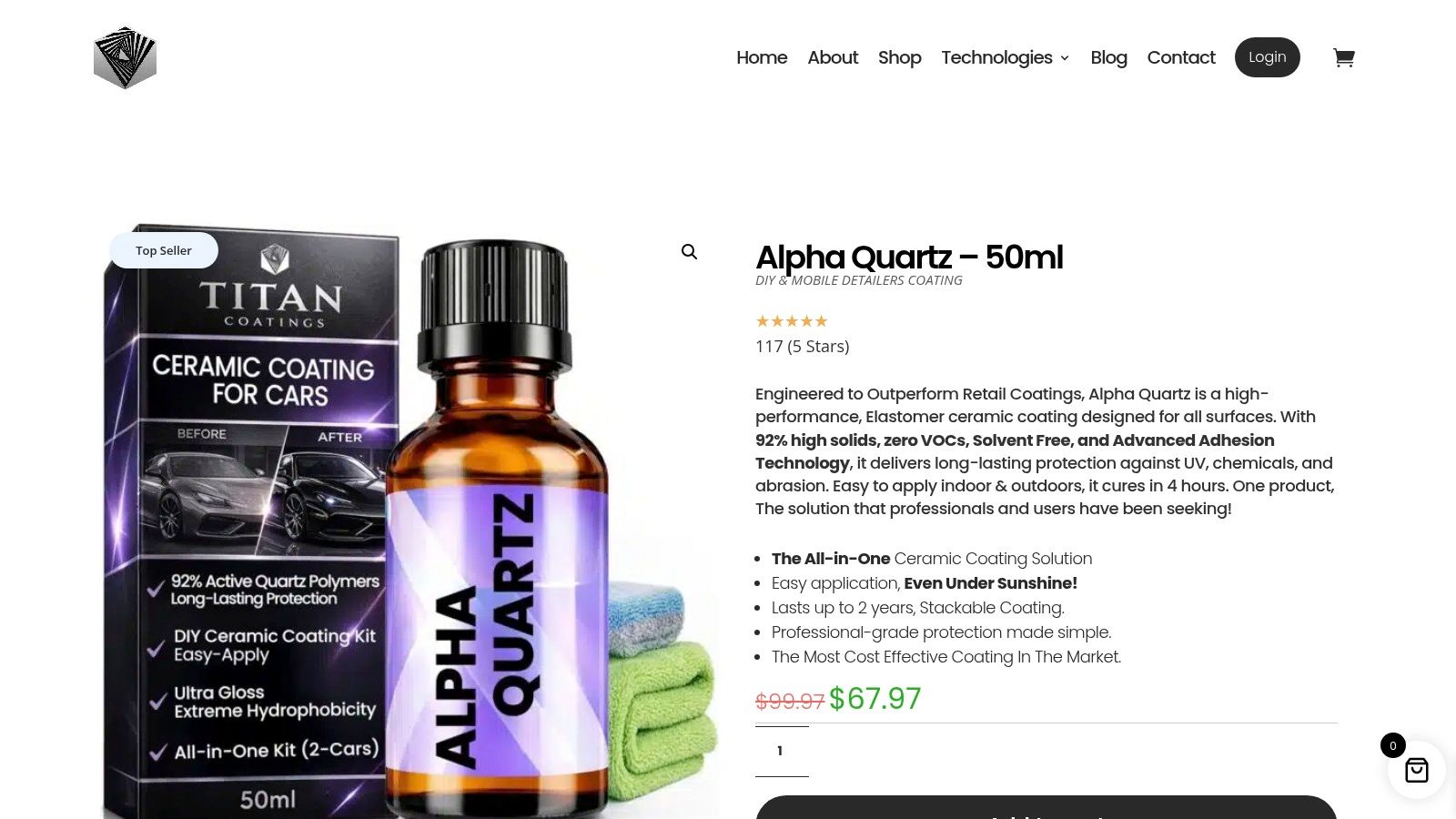
If you enjoy the satisfaction of building a toy wash tunnel with your child, you'll probably appreciate products that don't feel intimidating on a real vehicle. Alpha Quartz is often the kind of product that catches a DIY-minded parent's eye because it's positioned as easy to install and suitable for both hands-on owners and mobile detailers. That matters. A coating can sound impressive on paper, but if the application feels unreachable, many people never start.
The same goes for maintenance products. Ultra Ceramic Spray appeals to people who want a simpler routine with polished-looking results. It fits the rhythm of real life. Busy week, dusty car, quick reset.
For those who prefer bringing in a specialist after learning the basics at home, it also helps to understand what professional workflows look like. A good overview of professional mobile detailing services can help you compare the DIY route with having an expert handle the finish work.
Don't overlook the glass
Children always understand windshields because they use toy cars like tiny point-of-view machines. They peer through the front, guide the vehicle between blocks, and notice immediately when “the window” is cloudy.
That's why I like talking about glass protection separately from paint. Apex Glass is the kind of product that fits this conversation well because it's focused on the area drivers rely on every second of bad weather. Easy-to-use glass and windshield coatings matter because visibility shapes confidence behind the wheel, especially in rain. A smoother, better-protected windshield isn't just a cosmetic upgrade. It changes the daily driving experience.
If you're thinking beyond washing and toward long-term preservation, it helps to build the habit of protecting your car paint the smart way. That broader mindset starts with soap and a mitt, but it doesn't end there.
Your Weekend Project and a Lifetime of Pride
By Sunday evening, our cardboard tunnel had a slightly crooked roof, the sponge brushes were leaning left, and the floor around it was dotted with tiny wet tire marks. It was perfect.
A DIY car wash toy does something simple and valuable. It gives a child a way to imitate real care, and it reminds adults why that care feels satisfying in the first place. You clean what you love. You protect what you rely on. Sometimes those lessons start with a milk jug and three toy cars.
That instinct connects to a much bigger world. The U.S. car wash services market was valued at USD 15.28 billion in 2025 and is projected to reach USD 17.01 billion by 2033, according to Grand View Research's U.S. car wash services market overview. Even without a separate commercial category for toy versions, that larger market says something clear. People still care greatly about hands-on vehicle maintenance.
For busy parents and weekend enthusiasts, that's why quick maintenance products have a place. Ultra Ceramic Spray proves valuable in everyday situations because not every car-care moment can be a full correction and coating session. Sometimes you want an easy application, a cleaner finish, and the feeling that your vehicle still reflects the pride you put into it.
The best part of our project wasn't the tunnel itself. It was hearing my son say, while lining up his freshly washed cars, “We take care of our cars.”
If you're ready to bring that same pride to your own vehicle, explore APEX NANO – Titan Coatings. From Alpha Quartz for DIY-friendly paint protection to Apex Glass for easier windshield care in the rain, and Ultra Ceramic Spray for quick maintenance, their lineup is built for people who want durable results and straightforward application. You can also browse the Titan Coatings shop and learn more at Titan Coatings.
0 Comments