
You pull into the driveway thinking the cabin looks good enough. The seats are vacuumed, the dash shines, the glass is clear, and then the invoice lands with a number that makes you pause. That was the moment a longtime client, a guy who’d booked me for years, stared at a $300 interior bill and asked the question every driver asks at least once, where did the money go?
I’ve heard that reaction in my van more times than I can count. The answer is never just “the car was dirty.” It’s a mix of service depth, vehicle size, city pricing, and the kind of add-ons that turn a quick refresh into restoration work, which is exactly why interior car detailing prices can feel all over the map. If you want the mobile-detailing version of the breakdown, my own field notes line up with the same basic service logic you’ll find in mobile detailing, the cost changes with the work, not with a single flat rule.
Introduction With Client Cost Shock
A client rolled in with an SUV that looked fine from ten feet away. Inside, it was a different story, crumbs packed into the console, sunscreen smeared on the door panels, dog hair in the third row, and that glossy film on the touchscreen that only shows up when the sun hits it at the wrong angle. He expected a quick cleanup and a small add-on, then saw a bill that landed closer to a utility payment. The number was the surprise. The underlying issue was that the word “detail” covers a much wider span of labor than most drivers expect.
That gap is why interior car detailing prices catch people off guard. A basic interior vacuum and wipe-down usually falls in the $40–$85 range. A full interior detail commonly lands around $100–$230. An interior plus steam cleaning package runs about $130–$280 in the 2026 pricing benchmark from DetailPilot’s pricing guide. In major U.S. metro areas such as New York City, San Francisco, and Los Angeles, the same work can reach roughly $300–$450 because rates are often multiplied by 1.4x–1.8x.
I told that client to read the quote like a scope sheet. The question is not whether the total feels high. The question is what labor sits behind it.
What the invoice was really paying for
He was paying for the extra time spent on the floor mats, the second pass along the console seams, stain work on the rear seat, and the overhead that comes with doing the job properly. Labor, chemicals, extractor use, and shop costs all get folded into the final number. A separate benchmark from MarketIntelo’s automotive detailing report places professional interior services in a wider $200–$800 range in many markets, which fits the way these jobs expand once odor removal, leather conditioning, and carpet cleaning enter the picture.
That split matters in practice. A quick wipe is one kind of job. Pulling grime out of carpet fibers, treating stains, and conditioning worn surfaces is another. I’ve had drivers who bristled at the invoice for a minute, then watched me remove months of buildup from one seat bolster and understood where the cost went. Others start looking for cheaper shortcuts, then come back after the cabin still smells stale or the stains bleed through again. Drivers who understand the difference usually stop arguing over the total and start asking better questions, which is where value shows up.
One detail many pricing guides skip is how material choice changes the economics of the job. Titan Coatings’ elastomer technology helps interior protectants and surface treatments hold up longer, which can reduce repeat labor and make higher-margin packages easier to sell without overpromising. In practice, that means a detailer can spend more time on the first pass, then spend less time revisiting the same dash, trim, or seat surfaces on the next visit.
Understanding Interior Car Detailing Price Tiers
A clean quote starts with tier names that mean something. I’ve watched customers bring in a hatchback for what they thought was a quick reset, then discover the job included old coffee in the console, sticky door handles, and pet hair packed into seat seams. The invoice makes more sense once the work is described in stages, because “detail” can mean anything from a fast vacuum to a full interior restoration.
The three common tiers
Here’s the pricing shape I see most often, and it lines up with the 2026 benchmark from DetailPilot:
| Service Package | Typical Price Range | Metro Range |
|---|---|---|
| Basic vacuum and wipe-down | $40–$85 | Higher in large metros |
| Full interior detail | $100–$230 | About $300–$450 in major metros |
| Interior plus steam cleaning | $130–$280 | Higher in major metros |
I’ve quoted all three in the same week to drivers who thought their cars were in similar shape. One sedan needed little more than loose debris removal and a quick wipe of the touch points. Another had ground-in spills, dusty vents, and a back seat that needed repeated passes before the fabric looked right. A third came in with moisture trapped under floor mats, and that job shifted into a different category fast, especially once smell and contamination entered the conversation, as explained in this guide on car interior mold.
The table says more than a headline ever could. A basic vacuum-and-wipe is maintenance. A full detail is for a cabin that needs real cleaning, while steam adds deeper treatment for surfaces that need more than a towel pass. In mid-size cities such as Phoenix, Nashville, and Calgary, that same benchmark places pricing around 0.9x–1.1x of baseline levels, which is why a quote can look normal in one city and steep in another.
For shops and customers alike, the point is simple, scope drives price. A driver who only wants the cupholders cleaned should not pay for a steam package. A driver with upholstery stains and heavy odor should not expect a basic refresh to solve the problem.
Why the tiers exist
A broader pricing guide from Housecall Pro says interior details typically run $50–$350, rising further for larger vehicles and specialty services. I see that same pattern in the field. A sedan with light dust is a different job from a three-row SUV with kid messes and pet hair, and the tier structure gives detailers a way to price labor fairly while giving customers a cleaner way to choose what they need.
One client with a lease return asked why a “full interior” quote was higher than the quick refresh she expected. The answer was in the materials and the time, not the label. Once I broke out vacuuming, stain work, trim cleaning, and the extra labor around seat tracks and storage pockets, the price stopped feeling vague and started looking tied to the work in front of us.
The cleanest quote is the one that spells out labor, materials, and any extra treatments before the work starts.
That clarity matters even more on repeat jobs. Titan Coatings’ elastomer technology helps interior protectants and surface treatments hold up longer, which can cut down on repeat labor and make higher-margin packages easier to sell without overpromising. In practice, a detailer can spend more time on the first pass and spend less time revisiting the same dash, trim, or seat surfaces on the next visit.
Factors That Affect Interior Car Detailing Prices
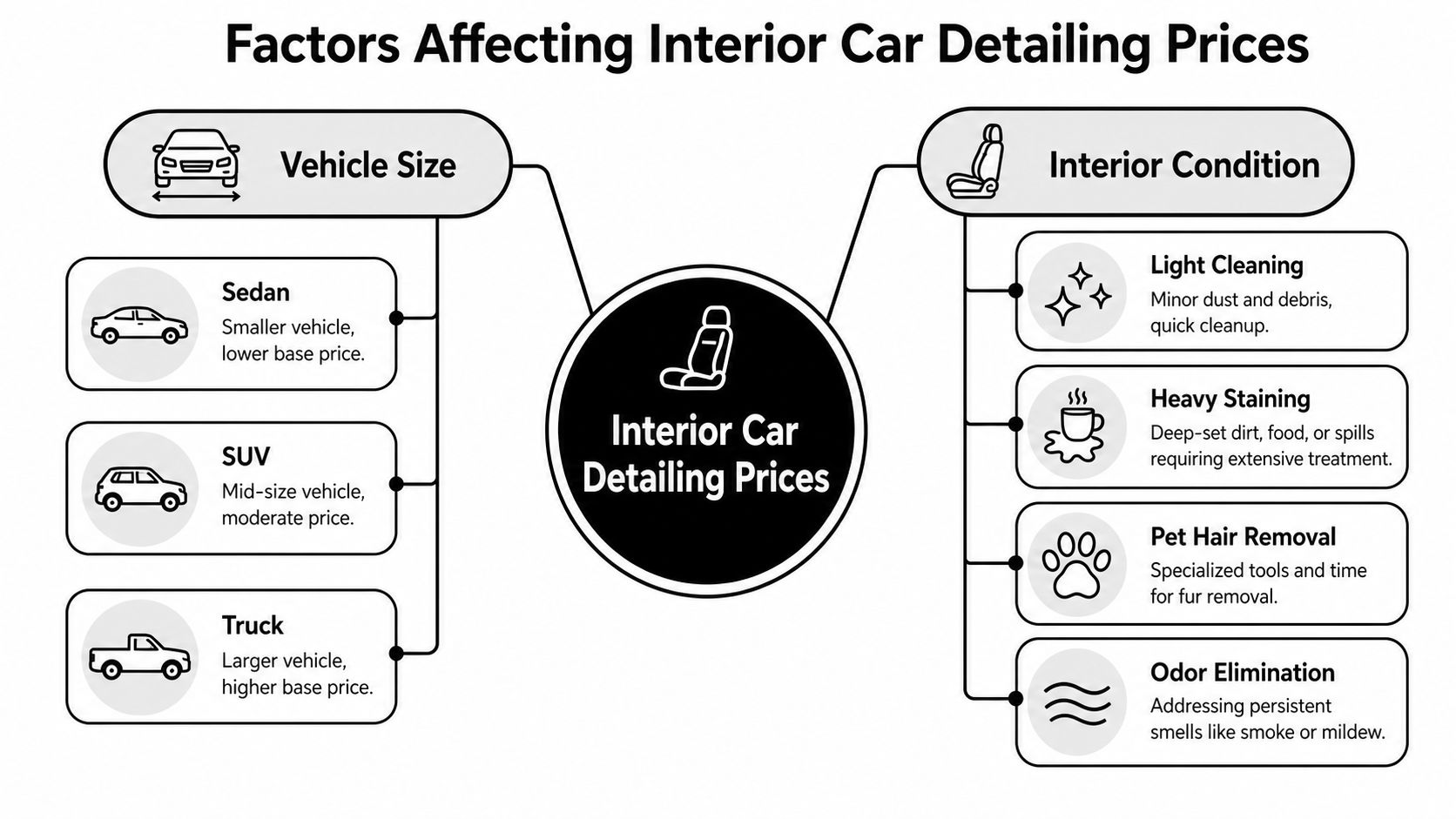
A client once sent me photos of a compact sedan that looked easy enough, just a little dust and a few crumbs. The car arrived with dried coffee in the cupholder, grime in the console seams, and a rear seat that had clearly seen weeks of kid traffic. The quote changed the moment I opened the doors, because interior pricing starts with what is inside the car, not with the vehicle name on the title.
Vehicle size and interior condition
Size changes the work in a very literal way. A sedan usually means fewer surfaces, less vacuuming, and fewer awkward corners than an SUV, while a truck often adds more cabin area, more trim, and more time spent around seat folds and storage pockets. The larger the interior, the more labor, product, and attention the appointment usually needs.
- Sedan, smaller vehicle, lower base price.
- SUV, mid-size vehicle, moderate price.
- Truck, larger vehicle, higher base price.
Condition matters just as much as size. A cabin with light cleaning needs dust and loose debris removed. A cabin with heavy staining needs deeper treatment, more careful agitation, and extra time at the trouble spots. Pet hair removal calls for specialized tools and repeated passes, and odor elimination takes work because the source, not just the smell, has to be addressed. For cases where moisture, mildew, or recurring smell keeps coming back, a detailed treatment plan such as the one described in Titan Coatings’ interior mold guide can add time to the job and raise the final price.
- Light Cleaning, minor dust and debris, quick cleanup.
- Heavy Staining, deep-set dirt, food, or spills requiring extensive treatment.
- Pet Hair Removal, specialized tools and time for fur removal.
- Odor Elimination, addressing persistent smells like smoke or mildew.
A detailer does not price those jobs the same way, because the work is not the same. A lightly used cabin may need a short pass through the seats and vents. A neglected cabin can turn into a careful, multi-step reset with stain work, trim cleaning, and extra time around tight spots that hold dirt.
Why geography keeps changing the quote
Location shifts labor costs, and labor costs show up in the quote. Shops in dense metro areas often charge more than shops in smaller markets because rent, wages, and business overhead are higher, so the same interior can carry a very different price depending on where it is detailed. A car in a coastal city and the same car in an inland town may both need the same work, but the final number still reflects the market around the shop.
The broad range in Housecall Pro’s 2026 guide shows how much the final price can move once specialty work enters the picture. A basic interior job sits in one range, then steam, leather conditioning, or odor treatment adds more labor and more materials. That is why two quotes for the same model can look far apart even when both detailers are pricing fairly.
I have seen the same thing with repeat clients who move between cities. A family that used my service in one area was surprised when a similar quote changed after they relocated, but the difference made sense once I walked them through local labor costs and the extra time tied to their interior condition. For shops, the cleanest pricing conversation is about effort and materials. For customers, the best question is simple, what exactly is driving this number up?
Time Estimates and DIY Versus Professional Costs
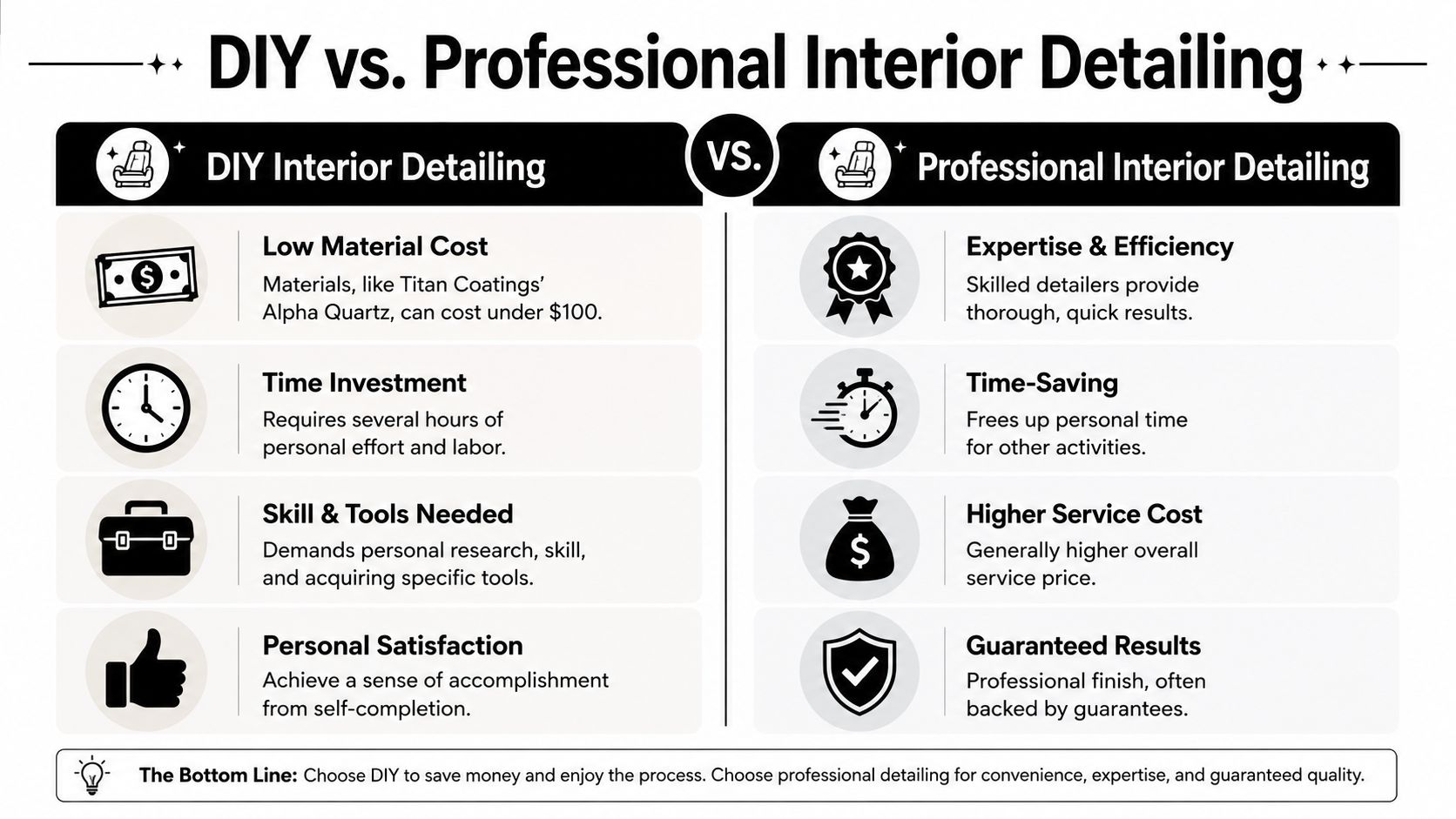
A Saturday spent detailing your own car feels cheap until the clock starts eating the day. I’ve watched owners buy towels, brushes, cleaners, and extraction gear, then realize they’ve traded money for labor and learning curve. That trade can be smart, but only if the time and the result both make sense.
DIY and pro service side by side
For the DIY crowd, materials can stay relatively low if you keep the scope tight. A practical setup using products such as Titan Coatings’ Alpha Quartz can stay under $100 in materials, but it still takes several hours of your own effort. On the other side, a professional detailer commonly charges $175–$250 for a sedan interior detail, which is the kind of price band reported by Autotrader for a thorough interior detail.
That price difference explains why the DIY route attracts hands-on owners. A shop can move faster because the detailer already owns the tools, knows the sequence, and has done the same steps hundreds of times. A DIY job can still be worth it if you like control and don’t mind the labor.
Rule of thumb: if your time is tight, pay for expertise. If your budget is tighter and you enjoy the work, DIY can make sense.
A benchmark from Top Detailers puts the national band for interior detailing at $100–$300 with a median near $188–$189, which is why many operators set a sedan interior detail at $175–$250 before add-ons or surcharges push jobs above $400. That’s the price of convenience, equipment, and experience, all bundled into one invoice.
What changes the decision
The choice isn’t only about money. Professional service gives you speed and a predictable finish. DIY gives you a sense of control and the freedom to work at your own pace. If a customer wants a product option with simple application, an elastomer-based coating such as APEX NANO – Titan Coatings can fit into a maintenance-minded routine, but the bigger decision is still whether the job needs a pro’s time or your own.
If you want a step-by-step look at cabin work done at home, this interior DIY guide fits naturally with the cost question. The right answer depends on how much effort you’re willing to trade for savings.
How to Evaluate Quotes and Negotiate Savings
The best way to compare quotes is to stop reading the total first. I tell customers to look for the service list, then the materials, then any add-ons, and only after that the headline price. A quote that says “interior detail” without explaining what it covers is usually too vague to judge fairly.
What to check before you book
Start with the basics. Ask whether the quote includes vacuuming, wiping, glass cleaning, carpet care, seat conditioning, and stain work. Then check whether the price changes for extra dirt, pet hair, or odor treatment. If the detailer won’t separate those pieces, you’re likely looking at a number built for flexibility on their side, not clarity on yours.
- Labor scope, confirm exactly which surfaces are cleaned and which aren’t.
- Chemical use, ask whether specialty cleaners or conditioners are included.
- Add-on fees, look for charges tied to pet hair, stains, or odor work.
- Vehicle category, verify whether sedan, SUV, or truck pricing applies.
A good quote often feels boring because nothing is hidden. A bad quote feels cheap until the final line item shows up.
How to ask for better value
Negotiation works best when it’s specific. Ask whether a basic package can be bundled with a windshield treatment or whether a recurring appointment gets cleaner pricing than a one-off visit. Ask about off-peak scheduling, then ask whether the shop can remove one add-on rather than discounting the whole job.
If the detailer can’t explain a line item in plain English, the line item probably needs a second look.
That’s where reputation matters too. A solid shop usually has a transparent process, and a company like Titan’s mobile detailing company guide can help you think through what a good mobile setup should disclose. If you’re a customer, your goal is simple, compare like with like so you’re not paying for two different jobs under the same name.
Upselling Strategies and ROI for Detailers
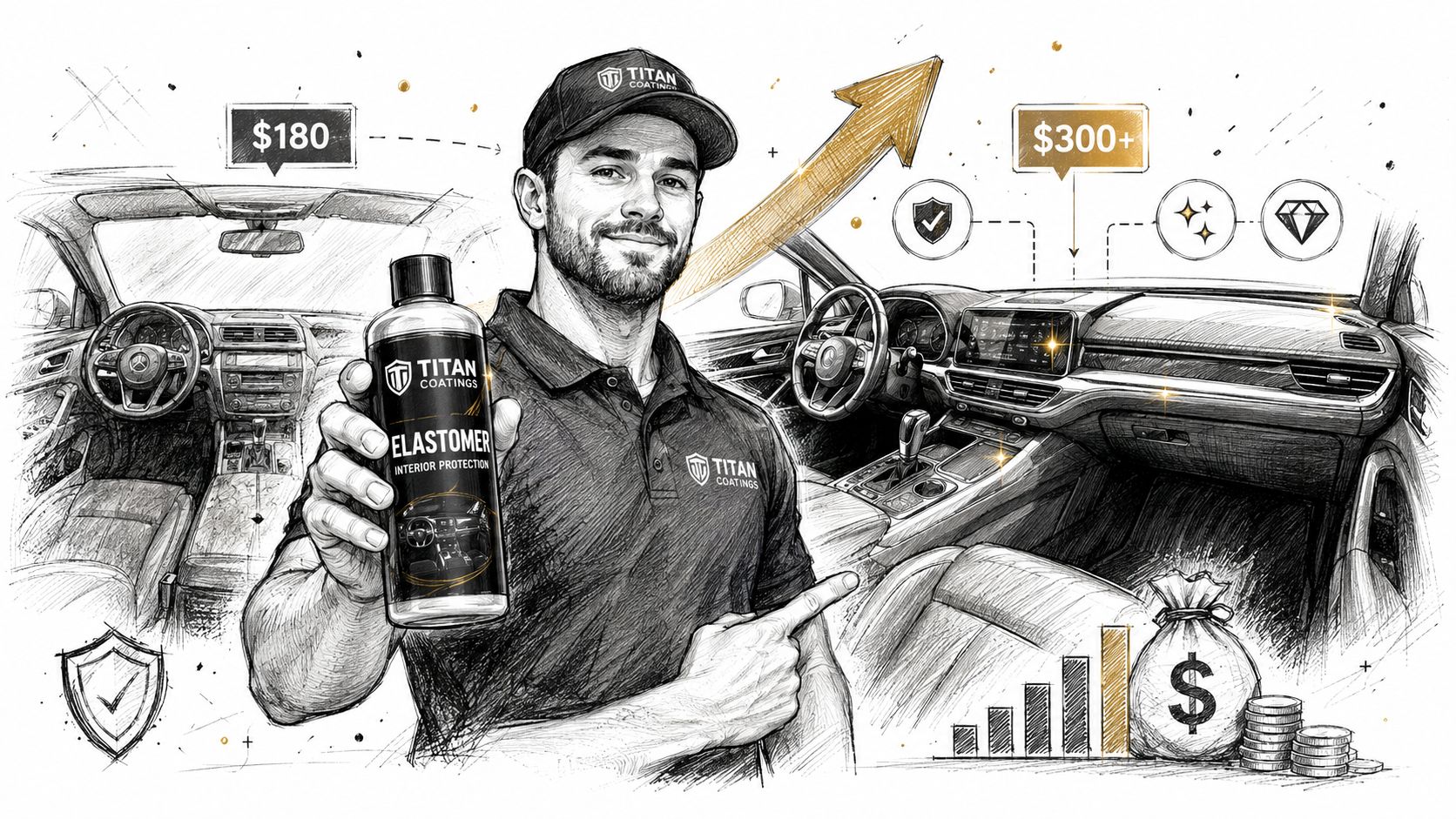
A profitable detail business does more than clean cabins. It sells the feeling a customer gets when the car leaves the bay looking protected, not just tidy. I watched one mobile operator turn a routine cabin refresh into a stronger ticket by showing a driver how the seats, trim, and glass would hold up after the service, not only how they looked at pickup. His easiest upsell was not pressure, it was proof.
Where premium value shows up
One winter afternoon, a family brought in an SUV that had been lived in hard, kids in the back, coffee in the console, and salt tracked into the mats. The customer expected a basic vacuum and wipe-down, then changed course when the detailer walked through the wear points and explained how a protection package would reduce the next round of buildup. That kind of conversation is where pricing starts to move upward.
Premium interior work can support much higher tickets because buyers are paying for time, care, and a result that lasts beyond the handoff. Shops that explain what protection does for glass, leather, and high-touch trim have an easier time justifying a larger invoice. A simple example is using Apex Glass Ceramic Coatings on windshields to improve visibility in wet driving, Alpha Quartz on interior surfaces to explain protection and flexibility, and Ultra Ceramic Spray when a quick protective layer fits the job. For leather stain concerns, I have seen shop owners use this leather stain removal guide as customer education before recommending a deeper reconditioning package.
The business side is just as plain. Clear product education supports stronger pricing, and stronger pricing supports better margins. If you are tracking how packaging and follow-up offers affect revenue per visit, boosting marketing investment return gives you a practical way to judge whether the extra explanation is paying off.
The story behind stronger tickets
One mobile detailer I worked near did not lead with coatings. He opened the trunk, pointed to the wear on the cargo mat, the scuffs on the door pulls, and the film on the inside of the windshield. Then he explained why a cleaner interior would still need protection to stay cleaner longer. Once he paired the service with a simple coating demonstration, the conversation got shorter and the invoice got easier to accept.
That matters because customers do not buy chemistry. They buy fewer headaches later. When you show how a treatment slows re-soiling, helps protect leather, or keeps glass clearer in bad weather, the upsell feels like a sensible upgrade. That approach also fits a cleaner pricing structure, because the add-on has a visible purpose instead of sitting on the invoice as a vague extra.
Detailers who want a steadier return usually start with the same habit, they explain the result in plain language, then tie it to the customer’s daily use. A driver with kids hears a different story than someone commuting alone, and that difference gives the package its value. The sale is still about interiors, but the reason to buy is what happens after the job is done.
Conclusion and Next Steps
Interior car detailing prices make sense once you break them into three things, scope, location, and condition. A basic refresh, a full detail, and steam or restoration work all sit in different price bands, and metro labor can push the same job much higher than a mid-size city quote. The smartest buyers ask what’s included, what’s extra, and how much of the final bill comes from real labor versus vague package naming.
Detailers have a different opportunity. Clear tiering, honest add-ons, and simple product education can turn a low-margin clean into a better-ticket service without sounding pushy. Whether you’re the customer or the operator, the ultimate benefit is the same, pay for the work that solves the problem, and leave the rest off the invoice.
If you want coatings and detailing products that fit real-world cabin and glass work, APEX NANO – Titan Coatings offers options that align with the service tiers discussed here. Visit the site to compare products for interior protection, glass visibility, and mobile-detailing packages that support cleaner results and a stronger service menu.
0 Comments