
At a frozen morning job, a mobile detailer reached for the wrong foam and watched dirty runoff turn into a warning sign. The client’s protected paint looked clean, but the aggressive wash chemistry had no place in a routine maintenance wash.
The Wash That Saved a Coating
The detailer stopped before touching the panels with a mitt. A quick check of the product label showed an aggressive formula intended for heavier cleaning, not a protected vehicle receiving regular care. The coating had taken months of preparation and careful application, yet the wash stage could undo the value of that work in minutes.
That moment captures the core role of car detail shampoo. It isn’t just a product that creates suds. It’s the chemistry used during the most frequent contact a vehicle may receive after waxing, polishing, sealing, or coating. The global car shampoo market was estimated at USD 2.728 billion in 2024, with projections of USD 2.828 billion in 2025 and USD 3.517 billion by 2032, representing a projected 3.8% compound annual growth rate over that forecast period, according to global car shampoo market projections. That scale reflects how universal shampoo has become in vehicle maintenance.
A good wash protects three things at once:
- The surface: It loosens soil without needlessly attacking waxes, sealants, or coatings.
- The finish: It provides lubrication so the wash mitt isn’t dragging grit across the paint.
- The business relationship: A detailer returns the vehicle clean without creating new defects or shortening the life of previous work.
Titan Coatings approaches that protection problem through its Elastomer coating technology, pairing a hard, glass-like surface with flexibility. The company describes its ElastoTek® system as a membrane-forming technology based on elastomers, polymers that can stretch and return to shape, with functional-group modification used to tune flexibility, chemical resistance, thermal stability, and adhesion, as explained in Titan Coatings’ technology overview.
The lesson from that frozen driveway was simple. Shampoo selection, controlled dwell, gentle contact, careful drying, and sensible aftercare all belong to the same protection strategy.
Choosing Your Car Detail Shampoo
The label should answer one question first: Is this shampoo designed for routine maintenance or aggressive soil removal?
Premium detailing shampoos are often formulated around a near-neutral pH target of 7.0 to 7.5, while a broader coating-safe guideline places the product below pH 8, according to car shampoo formulation guidance. More aggressive manual wash formulas can range from pH 9 to 12, which may be useful for heavy contamination or deliberate preparation, but carries a greater risk of stripping protective layers during regular washing.
| Attribute | Coating-Safe | Aggressive |
|---|---|---|
| Typical chemistry | Near-neutral, often pH 7.0 to 7.5 | More alkaline, commonly pH 9 to 12 |
| Surfactant marker | Amphoteric co-surfactants such as betaines | Stronger detergent emphasis |
| Recommended use | Routine maintenance on waxed, sealed, or coated vehicles | Heavy soil, pre-wash, or intentional preparation |
| Main priority | Lubrication, soil suspension, clean rinsing | Stronger cleaning action |
The surfactant system matters as much as the pH. Betaines, a type of amphoteric co-surfactant highlighted in formulation guidance, can signal a more coating-conscious design. That doesn’t mean every product containing a betaine is automatically ideal, but it gives a detailer a more useful label clue than foam height alone.
Foam is a tool, not a verdict
A thick blanket of foam can help hold chemistry against a panel and extend working time. It doesn’t prove that the shampoo suspends dirt effectively, rinses without residue, or provides enough lubrication for contact washing.
For coated vehicles, choose a near-neutral maintenance shampoo and follow its dilution guidance. A practical guide to car wash soap for ceramic coating can help align the product with the coating’s care requirements. Save stronger chemistry for situations that justify it, rather than using cleaning intensity as a substitute for correct technique.
Washing With Two Buckets and Foam
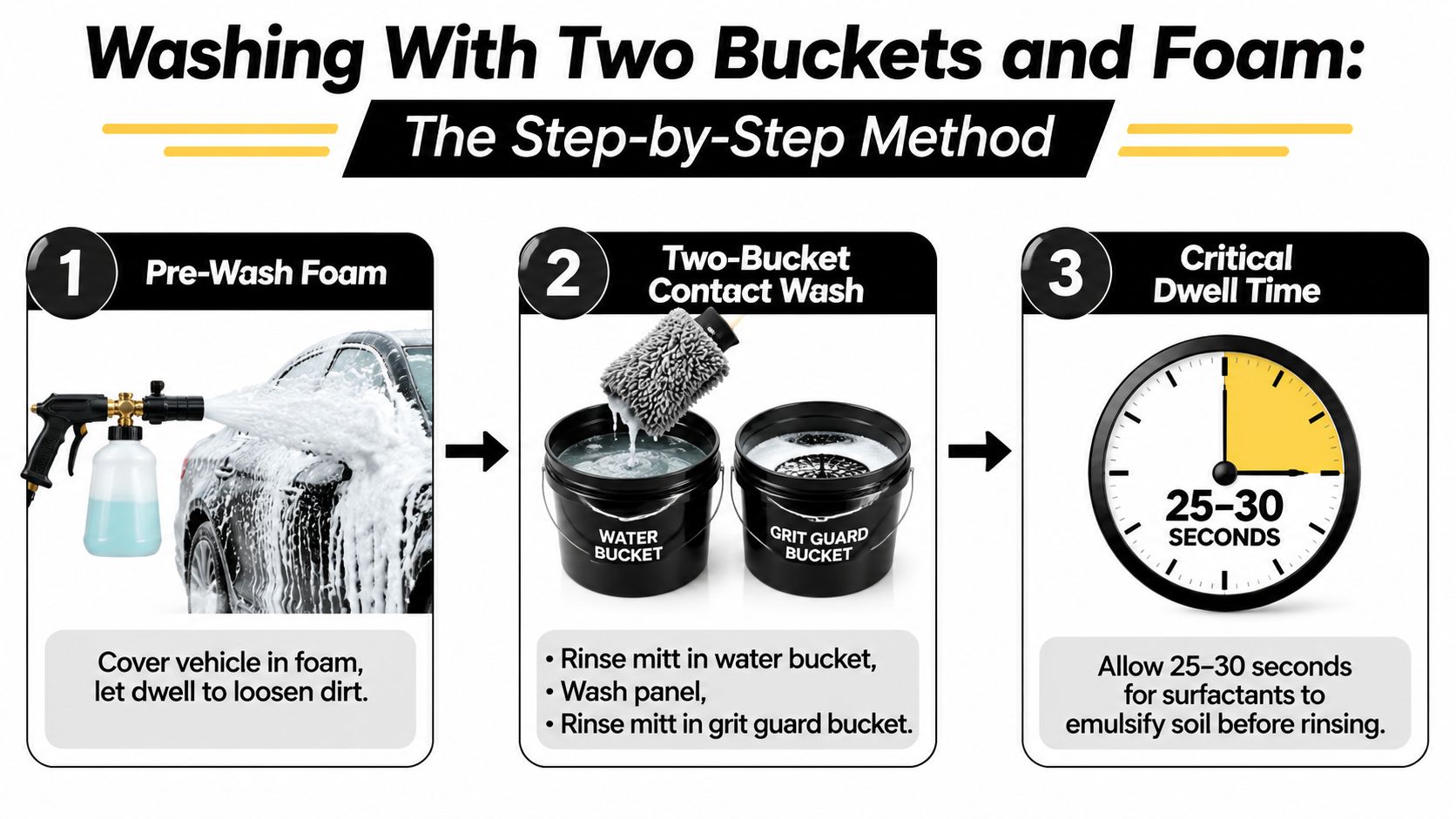
The bay should be organized before the water touches the vehicle. Set up a foam cannon or foam gun, a wash bucket with diluted shampoo, a separate rinse bucket, a mitt, a hose or pressure washer, and a grit guard in the rinse bucket. Keep microfiber towels nearby so the vehicle can be dried before water deposits become a problem.
Start with foam, then remove what you can without contact
Cover the vehicle with pre-wash foam, working from the upper panels toward the lower, dirtier areas. The foam stage is meant to loosen and suspend contamination before the mitt arrives. Don’t scrub the foam into the paint. Give the surfactants time to work, then rinse thoroughly.
Dwell time is the hinge of the process. Industry guidance describes an effective chemical contact window of roughly 25 to 30 seconds for wash-step action, as explained in the science of dwell time. That time allows surfactants to emulsify and suspend soil. If the shampoo dries, or if you rinse immediately, the chemistry hasn’t had enough opportunity to do its part.
Practical rule: Keep the surface wet, monitor the foam, and shorten the working time in direct sun or warm conditions.
Use the mitt only after the heavy soil is gone
Dilute the shampoo according to the manufacturer’s directions rather than adding extra product by instinct. More concentrate can create slower rinsing and more residue without delivering better cleaning. Dip the mitt into the wash bucket, clean one small panel with light pressure and straight passes, then rinse the mitt thoroughly in the separate bucket.
Work from the roof and glass downward. The lower doors, rocker panels, and rear surfaces usually carry more contamination, so they should be washed later with a mitt that has been rinsed carefully. The grit guard gives suspended particles a place to settle, but it doesn’t replace frequent mitt rinsing.
Rinse each completed area before the shampoo film dries. A professional two-bucket car wash method keeps the wash process controlled, reduces repeated contact with grit, and makes the shampoo work as a lubricant and soil-suspension system rather than just a source of foam.
Protecting Elastomer Coatings While Washing
A coating’s flexibility changes the way a detailer should think about maintenance. Titan Coatings describes its Elastomer technology as hard like glass while remaining flexible, creating a membrane that can resist everyday exposure without behaving like a completely rigid layer.
That combination matters during temperature change. Coating guidance notes that lower temperatures reduce material flexibility and can reduce chip resistance, while standards such as ASTM D4587, ASTM G154, and ASTM G155 are used to assess deterioration from heat, ultraviolet light, and water exposure, as described in this coating durability testing guide. A flexible coating is designed to accommodate movement more effectively than a brittle film, helping reduce the risk of cracking as conditions move from frozen to hot.
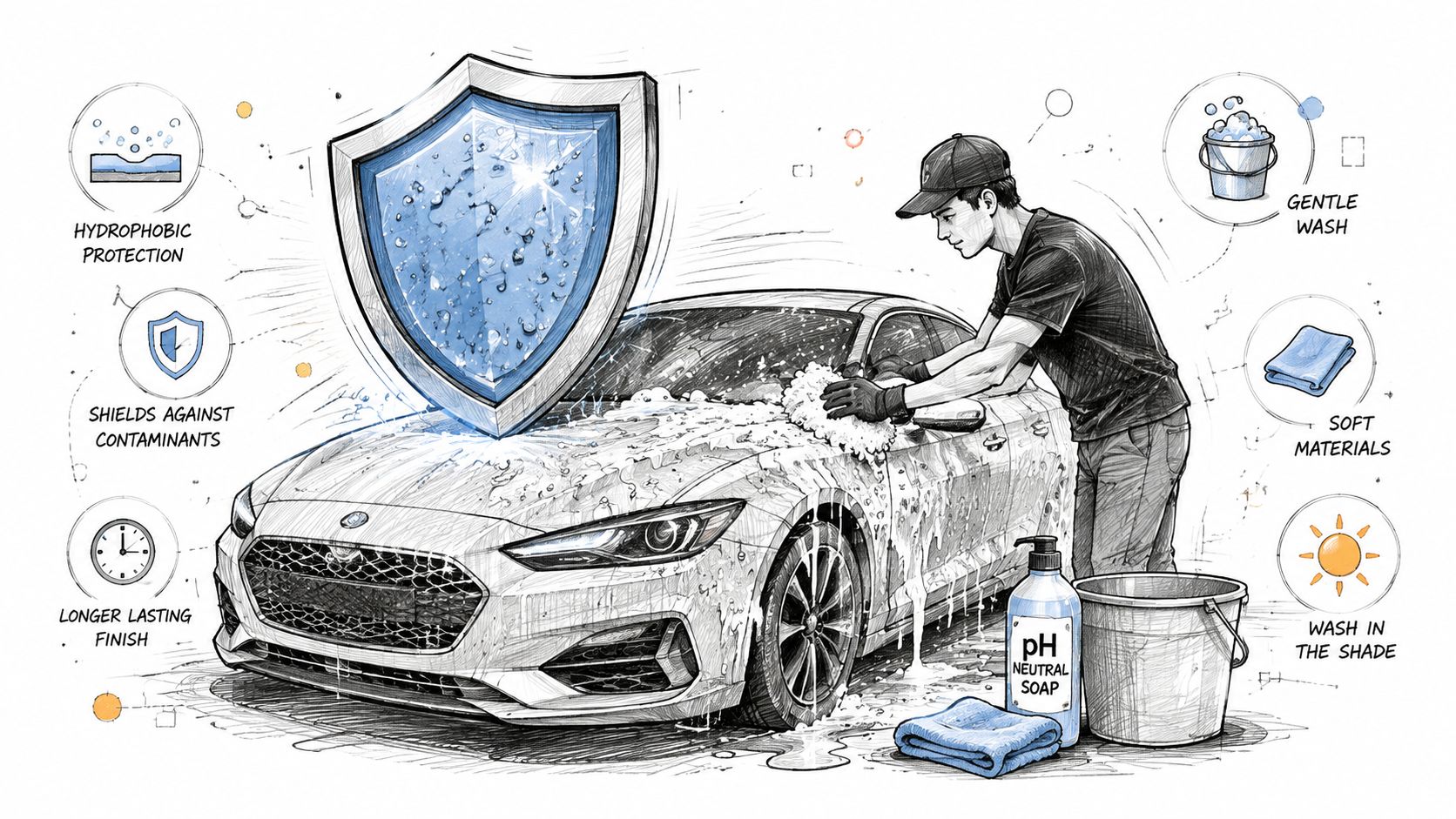
That doesn’t make shampoo choice irrelevant. A harsh routine wash can still attack the protection sitting above the paint, interfere with surface behavior, or force a detailer into unnecessary restoration work. A near-neutral shampoo is the sensible maintenance benchmark because it cleans accumulated soil without making aggressive chemistry part of every visit.
Titan also connects its coating development to Dark Matter technology and nano tubes. Peer-reviewed automotive materials research documents the use of CNTs, TiO2, SiO2, and carbon black in automotive paint coatings and vehicle components, while nano-filled elastomers have been reported to withstand thermal conditions above 300°C, according to this overview of nanomaterials in automotive applications. Those material concepts help explain why a coating conversation should include both hardness and flexibility, not gloss alone.
For routine care, the wash should preserve that membrane rather than challenge it. The practical ceramic coating wash guidance from Titan Coatings fits the same principle: clean carefully, avoid unnecessary aggression, and let the coating’s design support the maintenance routine.
Drying and Coating Aftercare
A clean vehicle can still leave the bay with marks. One rushed rinse left water trapped around a customer’s mirrors and door handles, so the detailer worked in sections with a clean, plush microfiber towel, laying it across each panel and pulling gently. A towel that has touched the ground, wheels, or rocker panels should stay away from upper paint.
Inspect before adding protection
Check the surface from several angles before applying anything. Look for shampoo film, trapped water around trim, glass streaks, and spots beneath door handles. If the panel is clean but still wet, a drying aid can reduce towel contact. It cannot replace a thorough rinse.
For glass, Apex Glass Ceramic Coatings gives detailers a dedicated aftercare option. Applied to a clean, prepared windshield or other glass, it is intended to support clearer rain behavior and visibility during wet driving. The Apex Glass product page outlines its application details for detailers and careful DIY users.
Paint needs a different approach. Alpha Quartz uses Titan Coatings Elastomer technology, giving DIY owners and mobile detailers a coating route built around a flexible membrane. That flexibility matters after the wash, when panels move through hot sun, cold weather, and repeated rinsing. The film is designed to accommodate those temperature shifts while remaining part of the paint’s protective surface. Review the Alpha Quartz product information before application, because preparation and manufacturer instructions shape the result.
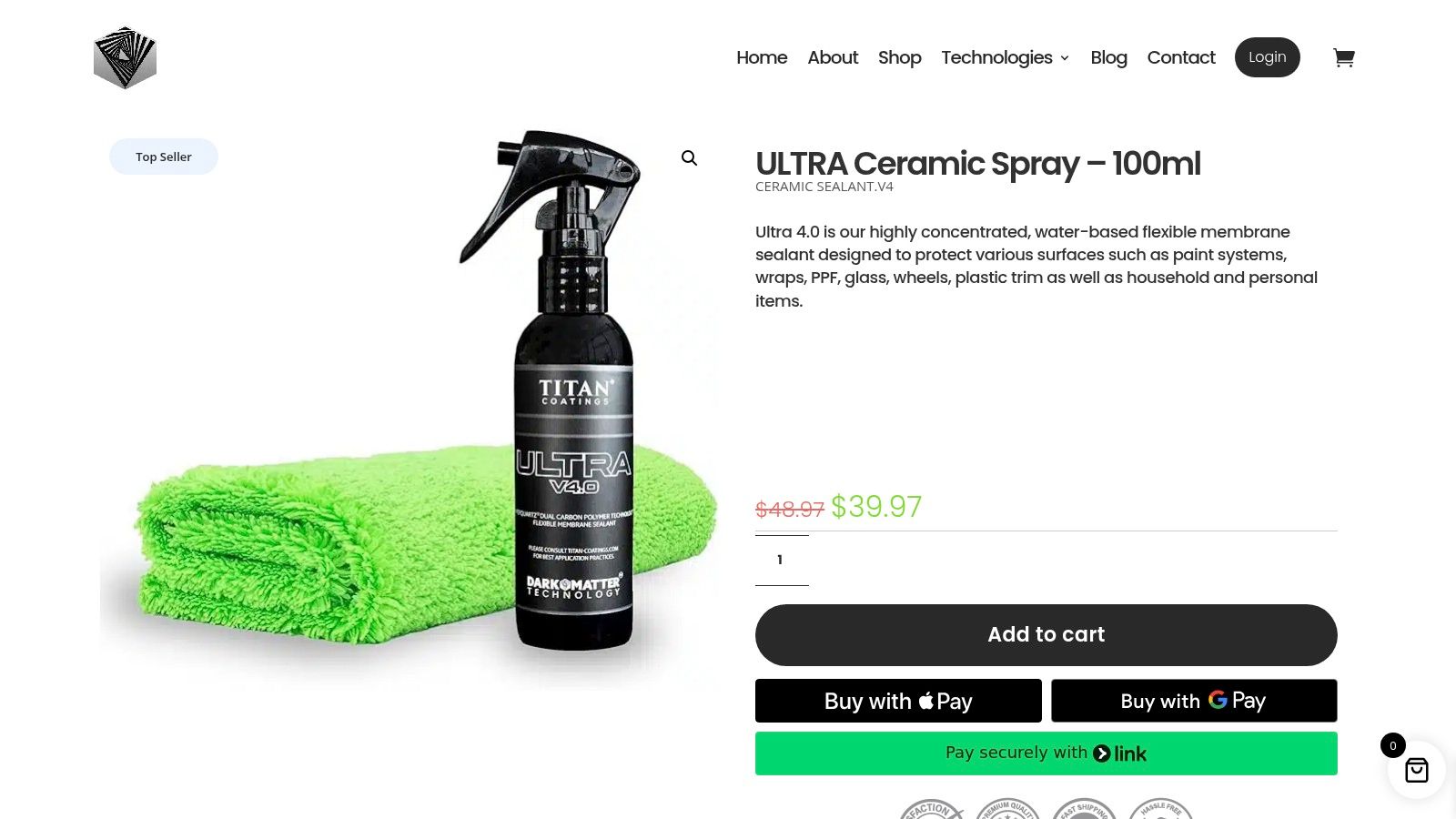
Ultra Ceramic Spray fits a lighter aftercare routine. Apply it to a clean, dry surface, spread it evenly, and buff it according to the Ultra Ceramic Spray instructions. Visible residue or water spots should be removed first. Follow the stated cure conditions, then keep the vehicle away from contamination during that period.
A controlled car wash drying process preserves the work already completed. Dry first, inspect second, and apply aftercare third.
Fixing Spots Streaks and Residue
Water spots usually begin with a simple timing error. Shampoo or rinse water dries on the panel before the detailer can remove it, leaving minerals behind. The repair starts with moving the vehicle into shade, rewetting a small area, and washing it again with the same controlled process rather than immediately reaching for a stronger chemical.
Streaks point to a different problem. They often come from incomplete rinsing, excessive product, a towel that’s already saturated, or a panel that was allowed to dry unevenly. Check the shampoo dilution, rinse the panel thoroughly, and switch to a clean microfiber side before increasing chemical strength.
Residue also exposes a common misunderstanding. A formulation study reported an optimized car shampoo viscosity of 2481.61 cP and measured dirt removal of 0.44 g, demonstrating that performance depends on balancing formulation properties rather than maximizing thickness or foam, according to the academic car shampoo formulation study.
Foam can improve dwell time, but foam height alone doesn’t tell you whether the surface is clean.
Use a coated test panel when evaluating a new shampoo. Look at lubrication, rinse behavior, soil suspension, and whether the surface dries residue-free. If the product leaves a film, reduce the dilution error first, then reassess the formula. For mineral deposits that remain after a careful rewash, follow a coating-safe spot-removal approach such as Titan’s water spot removal guidance rather than improvising with an abrasive method.
Pro Tips and Your Next Wash
A professional wash routine becomes reliable when the detailer tracks the small variables. Keep a near-neutral shampoo for routine maintenance, record how long the foam dwells before rinsing, and use clean mitts and towels for the areas carrying the most soil. Don’t judge a product by suds alone. Judge it by lubrication, clean rinsing, low residue, and how little rework it creates.
For studios and mobile detailers, Titan’s Elastomer approach adds a useful protection philosophy. A coating that is hard like glass yet flexible is intended to handle movement and temperature change from frozen conditions to hot conditions without cracking down as a rigid film might. That flexibility can matter when clients expect their coating to keep working through changing weather, road debris, and repeated maintenance washes.
Skin exposure deserves attention in professional workflows, too. A 2026 in-vivo study of sustainable car cleaning products found very good dermatological tolerance for both tested car shampoo concentrates, with no drastic or long-lasting skin changes measured, as reported in the PubMed study record. That finding doesn’t replace gloves, ventilation, or label directions, especially when concentrates are handled repeatedly.
Review Titan Coatings’ visual demonstrations on YouTube, then compare the technique with your own wash bay. When the next vehicle arrives, choose the chemistry before the foam cannon starts.
APEX NANO – Titan Coatings offers automotive coating options that connect careful car detail shampoo use with durable surface protection, including flexible Elastomer systems, glass coating, and ceramic spray solutions. Visit APEX NANO – Titan Coatings to review the products, application resources, and select the protection that fits your next detail.
0 Comments