
A freshly corrected vehicle can look flawless when it leaves the bay, yet the finish's long-term result depends on what happens before coating, during washing, and between appointments. The most reliable car paint protection tips work as a system: clean the surface properly, match protection to driving exposure, apply each product correctly, and maintain it deliberately. Titan's Elastomer approach adds an important material advantage, a finish that's hard like glass while remaining flexible, so movement caused by changes from frozen conditions to hot ones is less likely to create cracking. That flexibility supports durability, but it doesn't make any coating immune to sunlight, abrasion, contamination, or poor maintenance.
A strong workflow can serve a driveway DIYer, a mobile detailer, or a dealership reconditioning team coordinating commercial cleaning for auto dealers. Follow the vehicle through its protection lifecycle, from preparation and targeted film to coating selection, glass treatment, washing, storage, and inspection.
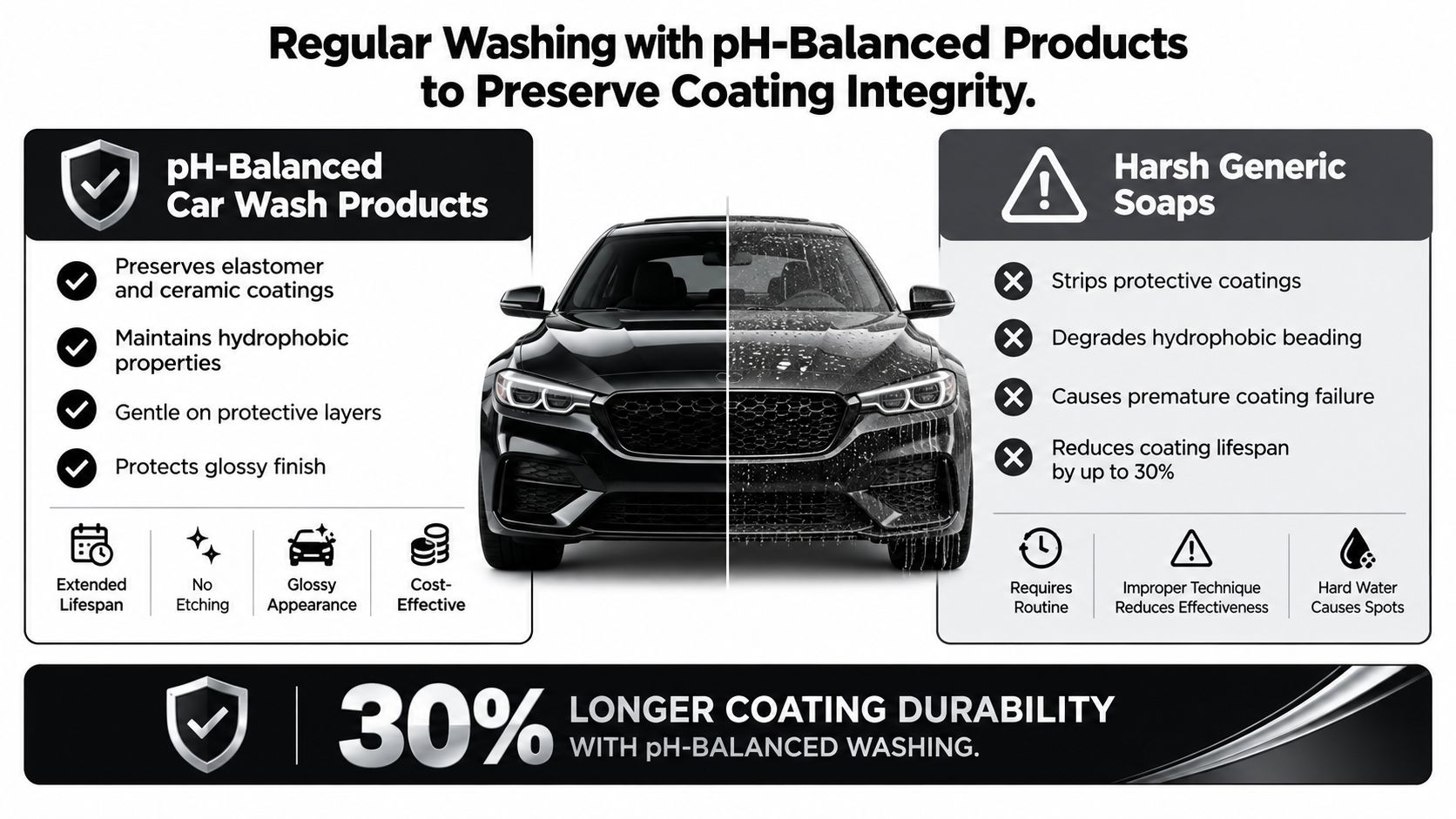
1. Wash Regularly With pH-Balanced Products
A coating can't perform well under a layer of grit, bird droppings, road film, or tree sap. On a mobile detailing job, the first mistake is often a rushed wash that moves contamination across the paint instead of lifting it away. Start in the shade or during a cooler part of the day, rinse the vehicle thoroughly, and work from the upper panels downward.
Use a dedicated, pH-balanced car shampoo rather than household detergent. The right wash solution removes traffic film without aggressively stripping the maintenance products that support the coating. Titan's car detail shampoo fits this maintenance-focused approach, but the technique matters as much as the bottle.
Build a low-abrasion wash routine
The two-bucket method remains practical because it separates wash solution from rinse water. Load a clean microfiber mitt with soap, wash one panel with light pressure, then rinse the mitt before returning to the shampoo bucket. Keep the mitt away from the ground, and use separate tools for wheels and paint.
Drying deserves equal attention. A clean microfiber drying towel or filtered air prevents mineral-rich water from sitting on the surface and forming spots. In harsh environments, wash more frequently. In moderate conditions, a consistent schedule still matters because contamination becomes harder to remove once it bonds to the clear coat.
Practical rule: Clean contamination before it becomes a polishing job. A coating makes washing easier, but it doesn't excuse delayed removal of acidic or abrasive deposits.
Avoid stiff brushes, dirty towels, and automatic processes that drag grit over the finish. If you're preparing a coated vehicle for a 24-hour car wash routine in Flagstaff, confirm that the method uses paint-safe chemistry and contact materials.
2. Apply Elastomer Ceramic Coatings to Match the Vehicle
A luxury coupe that lives in a garage needs a different application conversation from a highway commuter that faces road grit, insects, heat, and repeated temperature changes. Titan introduced its own Elastomer coating technology to the market using nanotube technology and Dark Matter Tech, combining a glass-like surface character with flexibility. That distinction matters because a rigid film can be vulnerable when the underlying vehicle and coating repeatedly expand and contract.
Titan's Elastomer coating technology is designed around that hard-yet-flexible concept. Alpha Quartz is positioned for DIY users and mobile detailers who want an approachable installation process with a premium coating workflow. Its elasticity is also relevant when bugs or ordinary road debris strike the surface, although no coating should be treated as impact-proof.
Prepare before opening the bottle
The application begins with paint preparation, not with the coating itself. Wash the vehicle, remove bonded contamination, inspect the clear coat under strong lighting, and correct defects before laying down protection. Apply indoors or in a controlled environment where dust, direct sun, and sudden moisture won't interfere with leveling.
Use the supplied microfiber applicator and spread a thin, even layer. Thick application doesn't automatically create better protection. Work in manageable sections, watch the product's flash behavior, and level high spots with a clean towel according to Titan's product directions. Follow the stated cure requirements before exposing the vehicle to water.
Temperature changes remain a major consideration. Titan's Elastomer finish is hard like glass yet flexible, which helps it accommodate movement between frozen conditions and intense heat without the same brittle-cracking concern associated with inflexible coatings. That's a material advantage, not a promise that preparation, application, or maintenance can be skipped.
3. Use Ultra Spray Ceramic When Application Speed Matters
A busy mobile detailer may arrive at a customer's driveway with limited working time, while a weekend owner may want meaningful protection without committing to a long, multi-stage installation. That's where Ultra Spray Ceramic makes sense. Its spray format simplifies coverage and can fit maintenance details, quick upgrades, and jobs where a traditional wipe-on coating isn't practical.
The trade-off is control. Spray application is convenient, but overspray, uneven passes, and excessive product can create inconsistent results. A clean, ventilated workspace is essential. The vehicle must be washed, fully dried, and free of residue before application, because a fast product still needs a clean bond surface.
Keep the spray pattern controlled
Shake the product thoroughly before use. Hold the container at the recommended distance, use light and even strokes, and avoid flooding one area. Work panel by panel so you can confirm coverage rather than trying to coat the entire car in one pass.
For a professional-looking result, use thin coats and allow the product to dry between applications according to the product instructions. Thin, controlled layers are easier to inspect and level than one heavy application. Keep a clean microfiber towel ready for any uneven residue, and inspect from multiple angles before moving on.
Titan's Ultra Ceramic Spray is a practical option when a detailer needs a straightforward spray workflow. It can also suit a car lover protecting a weekend vehicle, provided the installer respects surface preparation and cure guidance.
A quick application still deserves a slow inspection. The spray saves handling time, not the need for clean panels, even coverage, and careful finishing.
Use the product as part of a protection plan, not as a replacement for washing. Environmental fallout, UV exposure, and abrasion still reach the vehicle, and maintenance determines how the surface looks after the initial application.
4. Treat Glass and the Windshield for Better Rain Visibility
Paint receives most of the attention in a detailing bay, but glass directly affects the driver's view. A windshield covered with oily film, mineral deposits, or inconsistent water behavior can make rain more tiring, especially at night or in heavy traffic. Clean glass is the starting point, and a dedicated ceramic glass treatment can help water move away from the viewing area.
Titan's APEX Glass Ceramic Coating is designed for windshields and other glass surfaces. Its hydrophobic behavior encourages water to bead and move across the glass, which can reduce the amount of moisture that remains in the driver's sightline. The goal isn't to promise stress-free driving in every storm. The goal is to improve water behavior through proper cleaning and application.
Prepare the glass without shortcuts
Remove old film, wax residue, oily contamination, and mineral deposits before applying the product. Standard glass cleaner may not remove every bonded residue, so inspect the windshield under angled light and use an appropriate glass-safe preparation method. Apply in the shade or indoors, using small circular motions and an even hand.
Allow the product to cure according to Titan's instructions before exposing the glass to rain. Avoid unnecessary wiper use during the early curing period, and keep blades clean so they don't drag fresh contamination across the treated surface. The same attention should go to side windows and mirrors, where improved water movement can support all-around visibility.
For a step-by-step product reference, see APEX Glass Ceramic Coating. Glass treatments still require sound wiper blades, a clean windshield, and sensible speed in poor weather. Hydrophobic behavior improves maintenance and visibility conditions, but it can't eliminate glare, standing water, worn blades, or unsafe driving decisions.
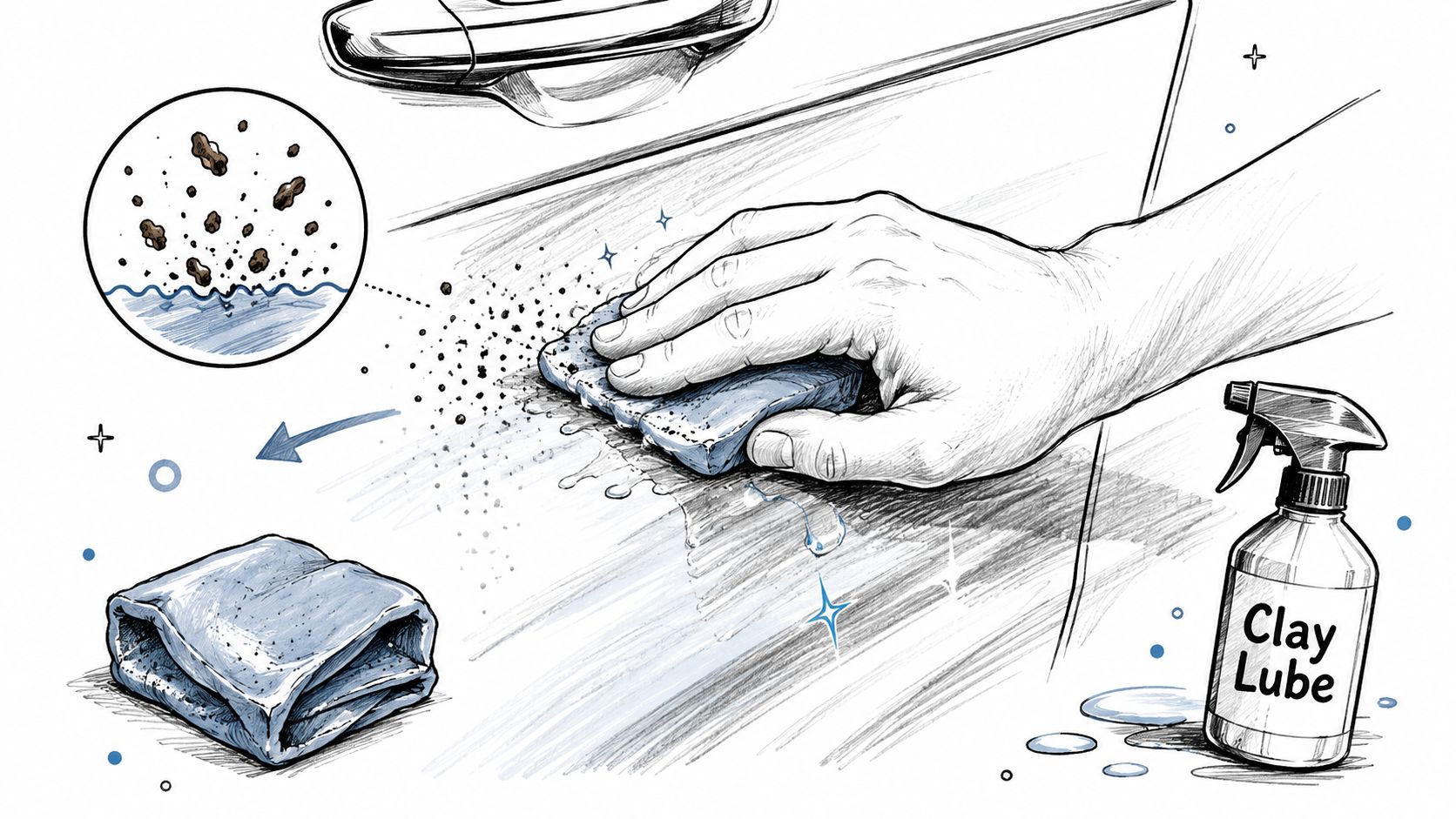
5. Decontaminate Paint Before Applying Any Coating
After the wash, run your fingertips across the paint inside a thin plastic bag. If the surface feels rough, bonded contamination remains. Brake dust, rail dust, industrial fallout, tar, and other particles can sit above the clear coat even when the vehicle looks clean from a few feet away.
A clay bar treatment removes that texture so the coating can contact the paint more consistently. Skipping this stage is like applying finish material over a dusty wall. The coating may still spread, but the surface won't provide the clean, uniform foundation needed for a professional result.
Clay in small, controlled sections
Wash and dry the vehicle first. Use quality detailing clay with a suitable lubricant, then divide the paint into small sections. Keep the pressure light and let the clay glide. If you feel resistance, add lubrication rather than pushing harder.
Fold the clay as it collects contamination so a dirty face doesn't keep rubbing against the panel. After each section, wipe the residue and inspect the surface. A final wash or controlled panel wipe should follow the clay step before coating.
- Use enough lubricant: A dry clay bar can create unnecessary marring.
- Work systematically: Small sections make it easier to identify missed contamination.
- Inspect before coating: Strong lighting reveals residue, haze, and remaining bonded particles.
A detailed guide to clay bar preparation helps DIY owners follow the sequence without guessing. This step is especially valuable on vehicles parked near industrial areas or driven through construction zones, where washing alone may not remove embedded particles. For another useful inspection perspective, review how Vektracer evaluates paint condition, particularly when the vehicle may need correction before protection.
6. Put Paint Protection Film Where Impacts Actually Happen
A ceramic coating improves chemical resistance, water behavior, and surface maintenance. It isn't a substitute for a physical barrier against every stone or piece of road debris. On a highway-driven daily vehicle, the front bumper, leading hood, mirror caps, and lower rocker areas usually face more impact exposure than the roof or rear quarter panels.
That's why partial PPF often makes more sense than automatically choosing full-body film. Independent market reporting places current PPF use below 2% of America's 284.6 million registered vehicles, despite a much larger group of owners being considered part of the premium protection market. The adoption gap reflects more than price. Awareness, installer availability, and the belief that PPF is only for luxury vehicles also influence the decision.
Build a targeted protection map
Start with the vehicle's use case. A garage-kept weekend car may need focused front-end protection, while an interstate commuter may justify film across additional leading surfaces. A car that spends most of its time parked and rarely sees gravel roads may gain more from a coating and disciplined washing than from full-body PPF.
Modern films can include self-healing properties, and the self-healing segment represented about 45% of the PPF market in 2025, according to Messe Frankfurt's industry coverage. Film performance still depends on installation quality, edge care, cleaning, and exposure.
Apply PPF before coating the surrounding paint, then choose a coating compatible with the film and installer's process. Keep pressure washers away from exposed seams, and use the same gentle, pH-balanced wash approach on the film. A strategic combination of film in impact zones and Titan Elastomer coating elsewhere can reduce unnecessary material while addressing the areas most likely to suffer chips.
For a clear explanation of the material and its role, consult what car paint protection film does.
7. Inspect the Coating Instead of Guessing
A customer may report that a coating is “gone” because water no longer beads dramatically. That diagnosis is incomplete. Contamination, mineral deposits, detergent residue, wiper wear, and surface oils can all change water behavior without proving that the protective layer has failed.
A professional inspection separates appearance from condition. Under proper lighting, check for uneven residue, staining, high spots, visible marring, contamination, and areas that behave differently from adjacent panels. Test water behavior only after the surface has been cleaned, and document findings with photographs so the owner can compare future visits.
Turn maintenance into a record
A six-month inspection rhythm is a useful practical baseline for vehicles exposed to intense sunlight, heavy weather, industrial fallout, or frequent highway use. The interval is a maintenance recommendation, not a universal product lifespan. Some cars need attention sooner, while lightly used, covered vehicles may need less intervention.
A useful inspection visit can include:
- Surface cleaning: Remove residue before judging coating behavior.
- Hydrophobicity check: Observe water movement on clean, comparable panels.
- Visual documentation: Photograph defects, contamination, and inconsistent areas.
- Maintenance decision: Choose cleaning, decontamination, topper, correction, or recoating based on evidence.
Don't judge a coating from one rainstorm. Clean the panel, inspect the finish, and compare similar areas before deciding what the vehicle needs.
Titan's Alpha Quartz and other Elastomer options still benefit from this disciplined follow-up. Flexibility can help the coating handle thermal movement, but it doesn't stop UV exposure, abrasion, chemical contamination, or poor washing from affecting the surface. Detailers should document the product used, preparation completed, maintenance performed, and any areas that need closer observation.
8. Reduce UV Exposure With Smart Storage
Sunlight is a long-term stressor for every exterior finish. Automotive coatings use UV absorbers to slow degradation in the clear coat and underlying layers, but technical literature shows that engineered protection gradually loses performance. One study recorded a 33% drop in UV absorbance and a 16% reduction in film thickness after 5,000 hours of exposure in testing discussed by NGenco's history of paint protection.
That result supports a simple detailing conclusion. A coating helps, but reducing the exposure is better than asking the coating to absorb every environmental burden. Park in a garage, carport, or shaded area whenever practical. Avoid leaving a coated vehicle beneath trees for long periods when sap, bird droppings, and falling debris create additional cleaning problems.
Store covers carefully
A quality car cover can help during extended storage, but only when the vehicle is clean before the cover goes on. Dust trapped between fabric and paint can create friction as the cover moves. Clean the cover regularly, and don't use one as a substitute for surface inspection.
Keep the garage clean and dry. A damp, contaminated storage space can still leave residues on the vehicle, even when direct sunlight is absent. For seasonal or long-term storage, remove debris before covering the car, confirm that the cover fits securely, and inspect the vehicle when it returns to regular use.
Titan's Elastomer coatings, including Alpha Quartz, are intended to remain flexible through temperature movement. That flexibility helps reduce concern about brittle cracking as conditions shift from frozen to hot, but it doesn't cancel UV aging. Parking under cover protects the coating itself and reduces the amount of washing and chemical exposure required throughout the year.
8-Point Car Paint Protection Comparison
| Item | 🔄 Implementation complexity | ⚡ Resource requirements & time | 📊 Expected outcomes | 💡 Ideal use cases | ⭐ Key advantages |
|---|---|---|---|---|---|
| Regular Washing (pH-Balanced) | Low, routine technique-dependent | Low materials; recurring time (weekly–biweekly) | Preserves coating integrity and hydrophobicity; reduces etching/water spots | All coated vehicles; routine maintenance; coastal/harsh environments | Cost-effective prevention; maintains gloss and color |
| Professional Elastomer Coating (Alpha Quartz) | Moderate–High, surface prep and cure critical | High, premium product, controlled environment, skilled labor, 24–48h cure | Long-lasting protection (3–5+ yrs); thermal resilience; superior gloss | Luxury cars, extreme climates, fleets seeking long-term protection | Durable + flexible; resists cracking and impact |
| Ultra Spray Ceramic Coating | Low, spray application with simple technique | Low–Moderate materials; fast application and cure (hours) | Good protection (2–3 yrs); rapid turnaround; consistent results | Mobile detailers, time-sensitive services, DIY weekend projects | Fast application; labor/time savings; low learning curve |
| Glass & Windshield Ceramic Coating | Moderate, precise glass prep and application | Low–Moderate; clean environment; 24h cure recommended | Enhanced visibility; strong hydrophobicity; reduced wiper use (2–3 yrs) | Rainy climates, taxis/rideshare, night drivers, fleets | Permanent glass bond; reduced glare; easier cleaning |
| Paint Decontamination & Clay Bar | Moderate, manual, technique-sensitive (1–2 hrs) | Moderate, clay, lubricant, time and careful labor | Removes bonded contaminants; improves adhesion and coating longevity | Pre-coating prep for all vehicles, especially industrial/urban areas | Ensures proper bonding; reveals defects; boosts gloss |
| Paint Protection Film (PPF) for High-Impact Areas | High, precision installation recommended | High, material cost, professional install, occasional maintenance | Physical chip protection; self-healing; preserves finish and resale value | Highway-driven vehicles, luxury cars, high-impact zones | Impact barrier + synergy with coatings; near-invisible protection |
| Regular Inspection & Professional Maintenance | Low–Moderate, scheduled assessments (~every 6 months) | Moderate, professional fees, testing tools, recurring service | Early issue detection; extends coating life; maintains warranty | High-value vehicles, commercial fleets, warranty holders | Proactive care, documentation, prevents costly recoating |
| UV Protection & Garage Storage Practices | Low, behavioral + some investment | Low–Moderate, garage/cover/tint investment | Reduces UV degradation (extends life to 5–7+ yrs); lowers maintenance | Long-term storage, classic cars, sunny climates, covered fleets | Low-tech, high-impact preservation; reduces maintenance frequency |
Turn Protection Into a Repeatable Routine
The best car paint protection plan begins before the coating bottle is opened. Wash thoroughly, inspect the finish, remove bonded contamination, and correct defects that you'll otherwise seal beneath the protection. Decontamination gives Alpha Quartz, Ultra 4.0, or another compatible product a cleaner surface to contact, while careful application prevents high spots, uneven coverage, and avoidable rework.
Choose the coating according to the vehicle and the installer. Alpha Quartz suits a DIY owner or mobile detailer who values Titan's Elastomer construction, with a surface that's hard like glass while remaining flexible through temperature changes. That flexibility is important when the vehicle moves between frozen conditions and hot ones because a coating that can flex with the surface is less prone to brittle cracking. It still needs correct preparation, controlled application, and maintenance.
Choose Ultra 4.0 when a fast spray workflow matters. Ultra Spray Ceramic can make sense for a maintenance service, a time-conscious client, or a weekend vehicle, provided the installer controls spray distance, coverage, drying time, and inspection. Faster installation doesn't mean careless installation. A rushed spray job can leave inconsistent protection and residue that requires correction.
Add APEX Glass Ceramic when rain visibility and glass maintenance are part of the customer's concern. Clean the windshield and windows first, remove old film or residue, apply in a controlled environment, and allow the required cure time before wet weather. Better water behavior can make rainfall less demanding, but wipers, glass cleanliness, and safe driving remain essential.
Use PPF selectively on high-impact zones rather than treating full-body film as the default. Highway mileage, road conditions, parking exposure, and the owner's tolerance for chips should drive the map. The broader PPF market reached approximately USD 593.9 million in 2024 and is projected to reach about USD 962.6 million by 2034, a projection reported by Onyx Coating's PPF market report. That growth shows commercial interest, but it doesn't mean every vehicle needs complete coverage.
The finish survives when the owner keeps the routine alive. Use pH-balanced products, clean microfiber tools, safe drying methods, sensible storage, and documented inspections. A coating is the starting layer, not permission to neglect the surface. Review available options in the Titan Coatings shop and match the product, film coverage, glass treatment, and maintenance plan to how the vehicle is driven.
APEX NANO by Titan Coatings offers painted-surface protection options, including Alpha Quartz, along with glass and spray solutions that fit a complete vehicle care routine. Visit APEX NANO – Titan Coatings to select a coating system that matches your vehicle's exposure, application method, and maintenance needs.
0 Comments