
The first rock ping usually happens on an ordinary drive, not on a racetrack or a mountain road. You buy the car, admire the paint in the driveway, then hear that sharp tap on the bumper or hood and realize perfect paint lives in a very rough world.
That First Scratch An Introduction to Invisible Armor
A lot of car owners ask the same question after that moment. What is car paint protection film? In simple terms, it’s a transparent film applied over painted panels so the film takes the abuse instead of the paint.
That sounds basic, but the reason people care about it is emotional before it’s technical. Fresh paint has depth, clarity, and that factory finish you don’t want to disturb. Then real life starts. Highway grit, bug splatter, poor parking lot habits, road tar, and the random scratch from daily use all start working against you.
Why PPF matters in the real world
Paint protection film, usually shortened to PPF, sits between your paint and the road. It’s commonly made from transparent polyurethane or thermoplastic material and is used to reduce damage from stone chips, scratches, abrasion, UV exposure, and road debris. It isn’t a niche add-on anymore either. One market projection places the global PPF market at USD 670.09 million in 2026, rising to USD 1,086.07 million by 2034 at a 6.20% CAGR, with the automotive segment expected to represent 82.56% of demand in 2026, and Asia Pacific holding 45.90% of the market in 2025 according to Fortune Business Insights paint protection film market coverage.
That growth lines up with what detailers see every day. Owners of daily drivers want fewer chips. Owners of premium cars want to preserve factory paint. Lease customers want fewer end-of-term surprises. Rental fleets and exotic-car operators want surfaces that stay presentable under constant use. If you want a practical example of why this matters for premium vehicles under heavy customer turnover, this look at protecting luxury car rentals in Dubai shows exactly why film has become part of serious vehicle care.
Practical rule: PPF doesn’t make a car indestructible. It gives the paint a sacrificial layer, and that changes the ownership experience.
Where PPF fits in a protection plan
Most owners don’t need every panel wrapped to benefit. High-impact areas usually see the biggest return:
- Front bumper: It catches the worst of road debris.
- Leading hood edge: Chips stack up fast.
- Mirror caps and fenders: Small targets, heavy exposure.
- Door cups and edges: Constant hand contact and accidental scuffs.
For a broader view of panel-by-panel options and scratch prevention strategy, this guide to protect your car from scratches is a useful next read.
PPF is “invisible armor” only when expectations are realistic. It’s there to preserve paint, not to pretend roads are gentle.
The Science Behind a Self-Healing Shield
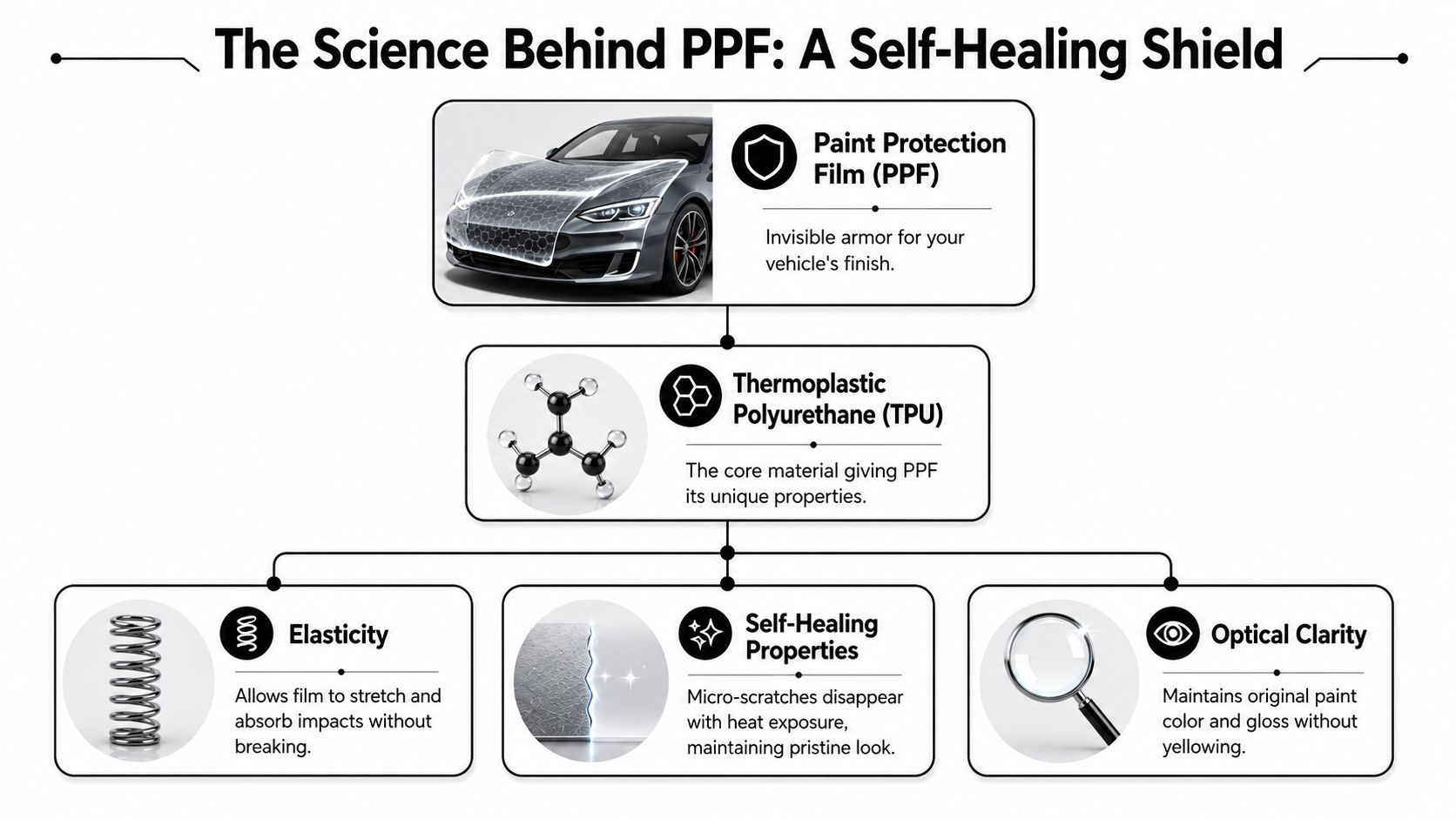
A good PPF install looks simple from the outside. Underneath, it’s not simple at all. Modern film works because the material stack is designed to absorb impact, stay clear, and recover from minor surface marking.
How the layer stack does the work
Think of PPF like a flexible armor system rather than a single sheet of plastic. Independent industry guidance describes automotive PPF as commonly falling in the 6–14 mil range, with a self-healing topcoat over an elastomeric core plus adhesive and release layers underneath, and notes that thicker films usually improve impact durability but can reduce flexibility and make edges more noticeable, as outlined in Lintec Auto’s discussion of automotive PPF specs.
Each layer has a job:
- Topcoat: Handles light wash marring and supports self-healing behavior.
- Elastomeric core: Absorbs and disperses impact energy.
- Adhesive layer: Bonds the film to the painted panel.
- Release liner: Protects the adhesive until installation.
The important part is the middle. When road debris hits the panel, the film spreads that force out so the paint underneath is less likely to take the full hit.
What self-healing actually means
Self-healing is one of those features that sounds like marketing until you’ve watched it happen. Technical guidance from 3M states that modern PPF is designed to protect against stone chips, scratches, bug damage, road tar, stains, and harsh UV weathering, and that the film can self-heal minor marks when heat is applied to the surface, as detailed in 3M’s PPF technical data sheet.
That doesn’t mean deep gouges vanish. It means the light marks that usually sit in the top surface can relax and level out when exposed to warmth from the sun, warm water, or controlled heat.
Light wash marks and surface scuffs may disappear. Cuts through the film won’t.
Why thickness matters
Film thickness is a big reason PPF lives in a different category than cosmetic wraps. The extra material gives it more ability to absorb abuse before the paint sees it.
If you want a straightforward explanation of what those film thickness numbers mean for actual protection and appearance, this breakdown of paint protection film thickness is worth keeping handy.
The trade-off is real. More material can mean more protection, but it can also mean more visible edges and a slightly different surface character. That balance matters more than most first-time buyers realize.
PPF vs Vinyl Wraps vs Ceramic Coatings
A lot of confusion starts because these three products get discussed like they do the same job. They don’t. They can overlap, but each one is built around a different priority.
One protects from impact, one changes color, one changes maintenance
PPF is for preserving paint from physical abuse. Vinyl wrap is mainly for changing appearance. Ceramic coating is for surface behavior, easier cleaning, chemical resistance, gloss retention, and water behavior.
Independent industry guidance describes typical automotive PPF as 8–12 mils thick or about 0.20–0.30 mm, while vinyl wraps are about 4 mils, which helps explain why PPF is used as a physical barrier against rock chips and minor impacts. The same guidance notes that premium films are often warranted for 10+ years, according to Ceramic Pro’s overview of PPF construction and durability.
That single thickness comparison clears up a lot. Vinyl wraps are not intended to do what PPF does. They can look excellent, but the mission is different.
Protection Showdown PPF vs Vinyl vs Ceramic Coatings
| Attribute | Paint Protection Film (PPF) | Vinyl Wrap | Ceramic Coating |
|---|---|---|---|
| Primary purpose | Physical protection for painted surfaces | Color or finish change | Surface protection and easier maintenance |
| Impact resistance | Strongest option of the three for chips and minor impacts | Limited compared with PPF | Not built as a physical barrier |
| Appearance change | Usually clear, may slightly affect texture or edge visibility | Major visual transformation | Keeps paint visible and enhances gloss behavior |
| Thickness role | Heavier film designed to absorb abuse | Thinner material focused on styling | Very thin coating layer |
| Self-healing potential | Available in modern films | Not the defining feature | Depends on product type, but not in the same way as PPF |
| Best use case | Front-end or full-body protection | Restyling the vehicle | Daily-driver ease of cleaning and finish support |
What works and what doesn’t
If your main fear is chipped paint, ceramic coating alone won’t solve that. It helps with wash maintenance and contamination release, but it doesn’t replace film in impact zones.
If your goal is a color change, vinyl wrap is the right lane. And if you’re installing vinyl and want a cleaner result, details matter. This guide to a perfect bubble-free vinyl finish is useful because prep and application discipline make or break the final look.
For most owners, the practical choice comes down to these three paths:
- Choose PPF if physical damage worries you most.
- Choose vinyl if appearance transformation is the priority.
- Choose ceramic if you want easier washing and a slicker, glossier finish behavior.
There’s also a fourth conversation starting to matter more. Some newer coating systems aim to sit between the brittle feel people associate with older hard coatings and the flexibility people appreciate in impact-focused protection. For a direct side-by-side on where film and coatings separate, this comparison of paint protection film vs ceramic coating lays out the decision clearly.
The mistake isn’t choosing the wrong premium product. It’s asking one product to do a job it was never designed to do.
The Titan Revolution Beyond Traditional Protection
The usual split in paint protection has always been pretty clear in the shop. Film handles impact. Traditional coatings improve gloss, water behavior, and wash maintenance. The problem is what happens in between, on cars that live outside, see big temperature swings, rack up highway miles, and still need to look sharp up close.
That middle ground is where flexible chemistry starts to matter.
I’ve seen plenty of older hard-coating systems look good on day one and still fall short in real use. Panels heat up in the sun, cool off overnight, flex on the road, and pick up constant minor abrasion from washing and daily exposure. Protection that cannot move with the surface has limits, even if the finish looks great right after application.
A different idea in surface protection
Titan’s elastomer approach is interesting for one reason. It addresses a problem detailers have worked around for years. Owners often had to choose between the physical resilience people associate with film and the appearance and maintenance behavior they like from coatings.
An elastomer coating aims to close some of that gap. Instead of relying on hardness alone, it adds flexibility so the protection layer can expand, contract, and absorb day-to-day stress with less brittleness. That matters on a modern vehicle, where painted panels, trim, and high-contact surfaces rarely live under gentle conditions.
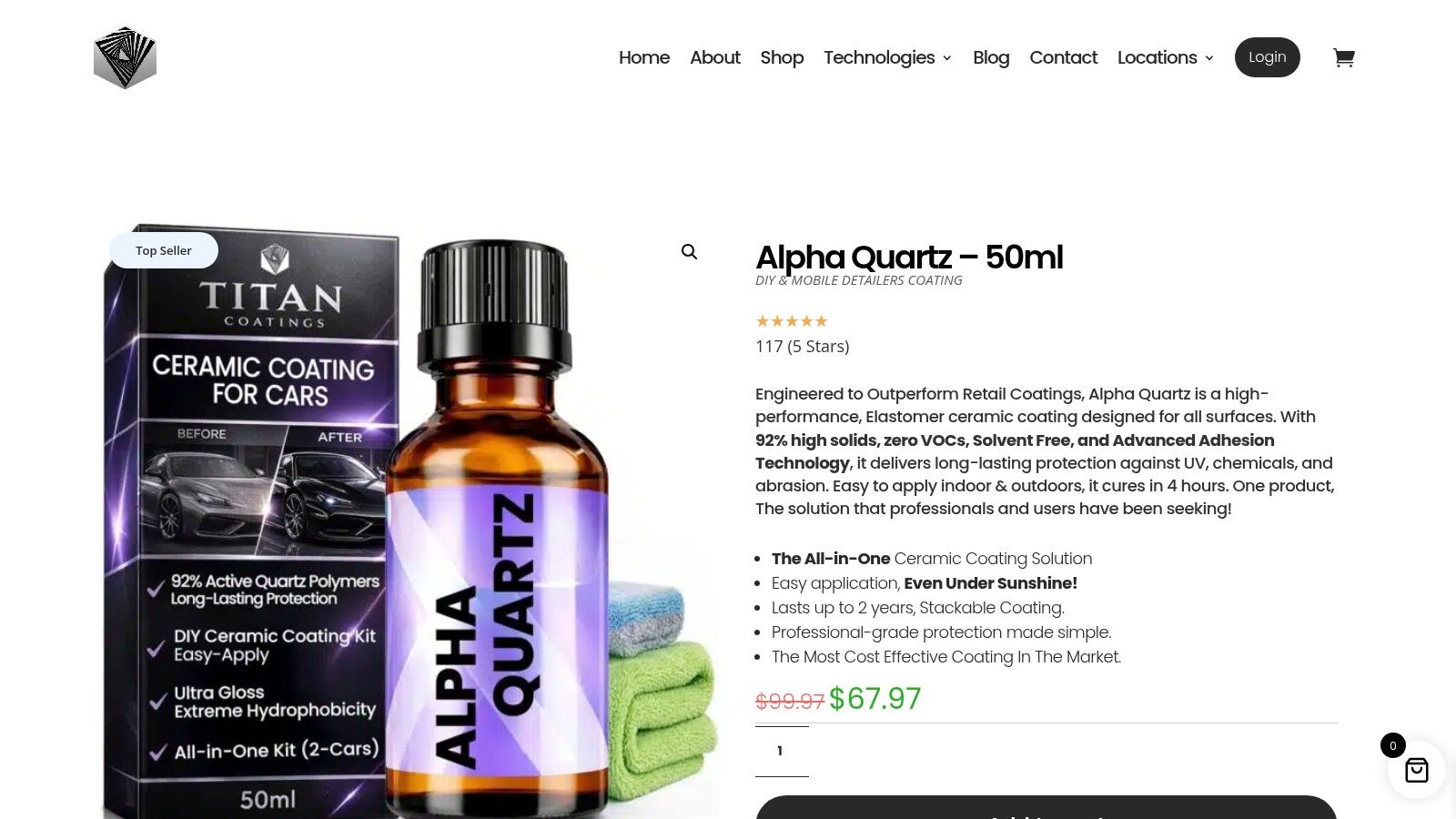
Here’s the product reference most relevant to that idea:
Why flexibility changes the conversation
Hardness still has value. So does flexibility. The mistake is treating them like they can never exist in the same system.
That is why Alpha Quartz stands out in Titan’s lineup. It is presented as an elastomer coating built for users who want the slickness and finish character of a coating, but with more give than older rigid formulas. In practice, that can matter on daily drivers, vehicles parked outdoors, and jobs where the installer needs a product that behaves predictably instead of punishing every small application mistake.
It also changes how owners can build a protection strategy. PPF still makes the most sense on the front end, rocker panels, and other direct impact zones. A flexible coating makes more sense where the goal is to preserve appearance, improve cleanability, and add a more forgiving protective layer without the edge lines or added film thickness some owners dislike on visible panels.
A few real-world cases where that approach makes sense:
- Cars exposed to heat and cold year-round: The surface is always expanding and contracting.
- Drivers who want coated paint behavior without going film-heavy everywhere: The finish keeps a more natural coated look.
- Mobile detailers and DIY users: Easier product behavior can save time and reduce application headaches.
The larger point is simple. Surface protection is no longer limited to the old film-versus-coating argument. Titan’s elastomer technology points to the next step, where protection can be more flexible, more practical, and better matched to how vehicles are used.
Installation Maintenance and Long Term Value
A good product can still fail in careless hands. That’s especially true with PPF, where installation conditions and technique affect both appearance and lifespan.
Installation is where many problems begin
PPF isn’t a slap-on accessory. It uses a wet installation process, and film behavior changes with temperature. 3M recommends an application temperature of 70°F to 79°F (21°C to 26°C), with adhesive flow and film conformability affecting final bond quality, lift lines, and visible adhesive marks, as noted in the earlier Lintec-linked guidance.
That matters because installers fight several things at once:
- Alignment: Pre-cut patterns need exact placement.
- Stretch control: Too much tension can distort edges and raise later.
- Moisture management: Trapped solution can leave marks or delay bonding.
- Edge finishing: The install often appears professional or amateur based on this step.
If you’re considering doing your own install, this PPF DIY guide is a practical place to start because it shows how much prep and patience are really involved.
What maintenance looks like after installation
Once the film is on, maintenance is simpler than most owners expect. The rule is gentle wash methods, clean media, and no aggressive scraping at film edges.
A straightforward care routine works well:
- Wash with clean mitts and proper lubrication. Dirty wash tools can mar the top surface.
- Dry without dragging debris. A clean drying towel or filtered air helps.
- Remove bugs early. Letting them bake on any surface makes cleanup harder.
- Avoid harsh edge abuse. High-pressure water aimed directly at vulnerable edges can create problems.
This is also where topper products make sense. Titan’s Ultra Ceramic Spray fits the maintenance category well because it’s easy to apply and works as a simple way to refresh slickness and hydrophobic behavior on protected surfaces. That kind of product doesn’t replace film or a base coating. It helps keep the finish easier to wash and nicer to live with.
The long-term value is in paint preservation
People often ask whether PPF is “worth it.” The honest answer depends on how you use the vehicle and how much damaged paint bothers you.
PPF usually makes the most sense when:
- You drive long highway miles
- The car has soft or expensive paint
- You want to preserve original factory finish
- You plan to keep the vehicle looking sharp for years
If you rarely drive, avoid highways, and don’t stress over chips, full-body film may be overkill. If every front-end chip annoys you, it’s easier to justify.
Expanding Protection Beyond Your Car’s Paint
A protected hood doesn’t help much if you still struggle to see through the windshield in heavy rain. Glass is part of the protection conversation, and many owners ignore it until the weather turns ugly.
Why glass protection matters on the road
Anyone who’s driven at night in steady rain knows the problem. Water sheets across the windshield, headlights flare, wipers smear, and your shoulders get tighter mile by mile. Better glass behavior can reduce that stress because water leaves the surface faster instead of clinging to it.
That’s where dedicated glass coatings come in. They aren’t about chip resistance like PPF. They’re about visibility, cleaner wipe behavior, and easier maintenance.
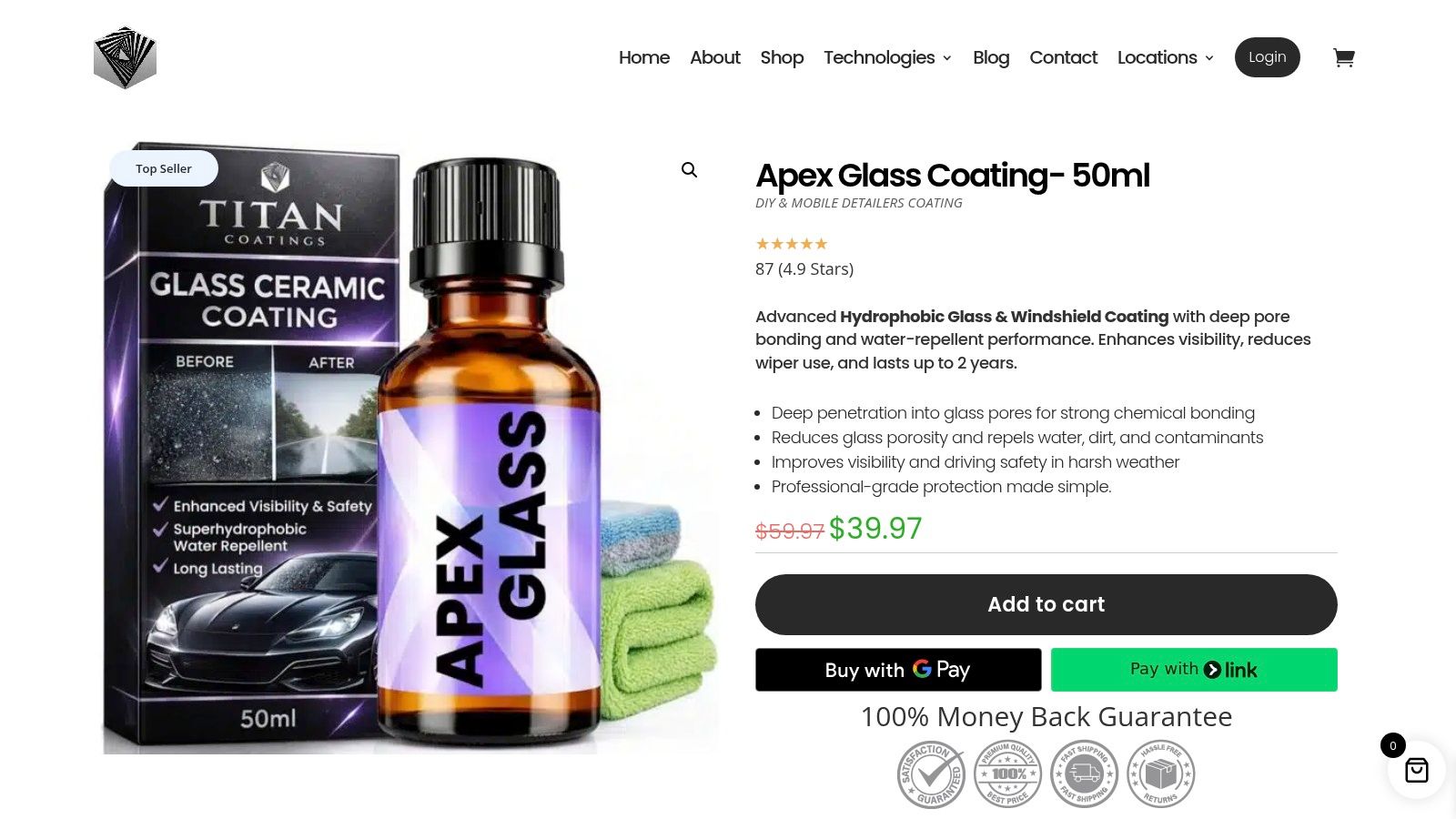
Here’s the product page visual tied to that category:
A simple upgrade that changes daily driving
Titan’s Apex Glass Ceramic Coatings is aimed at that use case. The practical appeal is straightforward. It’s meant to make glass more hydrophobic, so rain beads and clears more cleanly, which can make bad-weather driving feel calmer and less tiring.
For detailers, it’s an easy service to explain because the customer experiences the result directly. For DIY owners, it’s approachable because glass is one of the least intimidating surfaces to start with.
A good glass coating routine helps with:
- Rain behavior: Water beads instead of hanging flat on the surface.
- Cleaning: Contamination releases more easily.
- Visibility: The windshield stays clearer in rough conditions.
Better visibility is a comfort upgrade, but it’s also a safety habit.
When people ask about total vehicle protection, the best answer usually isn’t one product. Paint, film, trim, wheels, and glass all have different needs.
Your Ultimate Car Protection Buying Guide
By the time an owner is ready to buy, the question has usually changed. It’s no longer “what is car paint protection film.” It’s which protection setup fits the car, the budget, and the owner’s standards once the first few months of ownership wear off and daily use starts to show.
That decision gets easier when you stop looking for one perfect product and start matching each option to a specific job.
The trade-offs that matter
PPF still leads for impact protection. If the car sees highway miles, gravel, tight parking, or regular road debris, film protects painted panels in a way coatings and wraps do not. The compromise is visual. Thickness, edge lines, and a slight texture shift can change how factory paint looks, especially under direct sun or on dark colors.
That’s why I always tell owners to inspect an installed car in person before signing off on full-body film. A clean sample board is helpful. A real car is better.
Ceramic coatings are different. They improve wash behavior, gloss, and chemical resistance, but they do not replace film where chips are the problem. Vinyl wraps change color and style well, but protection is not their main job. Titan’s elastomer technology adds a newer option to that conversation. It gives owners a flexible protective layer that addresses some of the old trade-offs between hard-shell protection and finish quality, which is exactly why this next phase of surface protection matters.
A practical way to choose
Use this framework:
- Rock chips bother you most: Choose front-end or full-body PPF.
- You want easier washing and stronger visual pop: Choose a coating system.
- You want a color change or custom look: Choose vinyl wrap.
- You want protection without relying only on traditional film: Look at newer elastomer-based options from Titan.
- You want a balanced setup: Put film on impact zones, then add coating protection where it supports cleaning and upkeep.
Before booking, read owner feedback from outside the sales pitch. These paint protection film reviews are useful for spotting repeat complaints, installer issues, and the questions buyers often ask too late.
A short checklist saves money and frustration:
- Which panels need protection for how I drive?
- How visible are the edges and seams on this vehicle?
- How does the finish look in direct sun, not just indoors?
- What wash products and decontamination methods are safe afterward?
- Am I paying for resale protection, easier maintenance, appearance, or all three?
The right setup matches the way the vehicle is used and maintained. A garage-kept weekend car needs a different plan than a daily driver that eats highway miles.
If you want to compare film care, glass protection, and coating options in one place, take a look at APEX NANO – Titan Coatings. It’s a solid starting point for building a protection plan around how you drive.
0 Comments