
You've spent the afternoon correcting paint, removed the haze, and watched the panel sharpen under the light. Then one final wipe with the wrong car detail rag leaves faint trails, fresh micro-marring, or a stubborn smear across the finish. The towel looked clean. That's exactly why the mistake is so expensive.
Car detail rags aren't interchangeable shop cloths. Their fiber, pile, edge, cleanliness, and previous assignment determine whether they safely lift residue or drag it across the surface. The same discipline matters even more when you're leveling a coating, where a contaminated towel can affect the finish before the protective layer has fully settled.
The Hidden Cost of the Wrong Towel
A mobile detailer usually discovers the problem under inspection lighting. The hood looked perfect after polishing, but the final wipe reveals short arcs that weren't there before. The first suspicion is the compound or the machine. Often, the actual culprit is a towel that previously touched a lower panel, wheel, exhaust tip, or hardened product.
One embedded particle is enough to create localized marring when pressure and movement force it across clear coat. A rag can feel soft in your hand and still carry dried polish, sharp grit, wax residue, or loose threads. Washing may remove visible dirt without restoring the towel's suitability for delicate paintwork.
Shop rule: A towel's job history matters as much as its appearance.
Microfiber became valuable because it was engineered for contact, not because it was softer than cotton. Ultra-fine fibers below 0.7 denier were being produced experimentally by the late 1950s, while Japanese researchers at Toray Industries, including Miyoshi Okamoto and Toyohiko Hikota, advanced continuous-filament techniques during the 1960s. The development of microfiber eventually led to major commercial applications such as Ultrasuede in the 1970s, wider consumer visibility in the 1990s, and professional cleaning adoption by the early 2000s.
That history explains why modern car-detailing cloths behave differently from ordinary cotton rags. Fine synthetic filaments create more contact area, while engineered weaves control how the cloth captures residue, holds liquid, and separates the user's hand from the surface.
Why household substitutes fail
A cotton shop rag can leave lint. An old bath towel can carry coarse fibers and previous contamination. A bargain microfiber can have a harsh edge, inconsistent pile, or poor stitching that creates pressure points during a wipe.
True cost isn't the towel itself. It's the extra polishing, inspection, and correction required after the towel introduces defects. On coated paint, the risk includes streaking, uneven wipe-off, and residue that becomes harder to remove as the coating progresses through its working window.
Professional detailing treats textiles as surface-contact tools. One group handles wheels. Another handles glass. A separate, protected group is reserved for paint correction and coating work. That separation costs less than correcting a finish that was already clean.
Decoding GSM and Fiber Blends
GSM means grams per square metre, and it gives you a useful indication of towel weight and density. It doesn't tell you everything, but it helps you predict how much cushioning, liquid capacity, and residue-holding ability a cloth may provide.
A deeper pile usually creates more separation between your hand and the paint. That's useful for drying and final paintwork, where you want the towel to absorb or capture material without requiring aggressive pressure. For paint, polish, and sealant residue, soft long-pile or dual-pile towels around 400 to 600 GSM are a practical range, while drying assistance commonly uses plush terry microfiber around 360 to 500 GSM. These ranges come from a microfiber towel buyer's guide.
The blend changes the feel. A 70/30 polyester-to-polyamide towel is generally softer and more absorbent than an 80/20 blend, making it a sensible choice for paint finishing and coating wipe-off. That doesn't mean every 70/30 towel is safe. Weave quality, edge treatment, and contamination still control the result.
| Task | Ideal GSM | Pile Type | Best Blend |
|---|---|---|---|
| Final paint drying | At least 500 GSM | Deep or plush pile | 70/30 |
| Polish and compound removal | 400 to 600 GSM | Short side plus longer side | 70/30 |
| Coating leveling | 400 to 600 GSM | Short pile for spread, long pile for buffing | 70/30 |
| Glass cleaning | Lower to medium GSM | Flat weave or tight short nap | Soft synthetic blend |
| Interiors and screens | Lower pile | Soft, compact weave | Soft synthetic blend |
A high GSM towel isn't automatically better. Thick pile can hide debris, and a plush cloth used on a heavily contaminated area can become a storage pocket for grit. For glass, a flat weave often leaves less lint and gives better control around edges. For compound removal, short or dual-pile construction helps you feel residue instead of floating over it.
Edges deserve inspection
Edgeless, hidden-stitch, and soft-edge towels reduce the chance of pressure marks during polishing and coating removal. A stiff stitched border can concentrate force along a narrow line, especially when the towel is folded and you're working near a body crease.
Before buying a large batch, inspect the cut, run your fingers across both faces, and check whether the towel drags when dry. Titan's detailing towel guidance can help frame the selection, but the final test should happen on your own workflow and paint conditions.
Building a Task-Specific Rag Arsenal
The most reliable rag system starts with a refusal to use one towel everywhere. Assign each group before the wash begins, then keep the groups physically separate in labeled bags or bins. A blue towel for glass and a red towel for wheels works only if you maintain the rule every time.

Match the rag to the surface
Start with the dirtiest work and move toward the most sensitive work:
- Wheels and lower panels: Use dedicated, lower-value towels that can handle brake dust, road film, and sharp debris. Never return them to paint.
- Glass: Choose a clean flat-weave or tight short-nap towel. Keep it away from wax, tire dressing, and oily interior products.
- Compound and polish: Use clean short-pile or dual-pile towels. Rotate frequently as the face loads with residue.
- Final paintwork: Reserve soft, high-pile towels for drying and inspection. They should never have touched wheels or engine bays.
- Coating leveling: Keep a separate supply of short-pile spread towels and long-pile buffing towels. Once a towel becomes stiff or streaky, remove it immediately.
- Interiors and screens: Use a soft, lower-pile weave that hasn't contacted abrasive exterior contamination.
Before touching a panel, inspect the towel under strong light. Shake it out, feel for hardened spots, and check the edges for loose threads. Fold it into quarters so you have multiple clean faces. Make one controlled pass, then rotate to an unused face instead of continuing with the section that just collected residue.
A clear supply checklist can also prevent the common mistake of arriving at a job without enough separated cloths. Estimatty's cleaning supplies list is a useful reference for organizing general cleaning equipment around a mobile workflow.
For washing contact, use a dedicated car wash mitt rather than trying to make a towel perform a mitt's job. If you're applying a water-based flexible membrane sealant such as ULTRA Ceramic Spray, keep application and buffing towels separate from the towels used for heavy cleaning. Ultra 4.0 is described as a concentrated, water-based flexible membrane sealant for paint systems, wraps, PPF, glass, wheels, plastic trim, and household and personal items.
Leveling Elastomer Ceramic Coatings
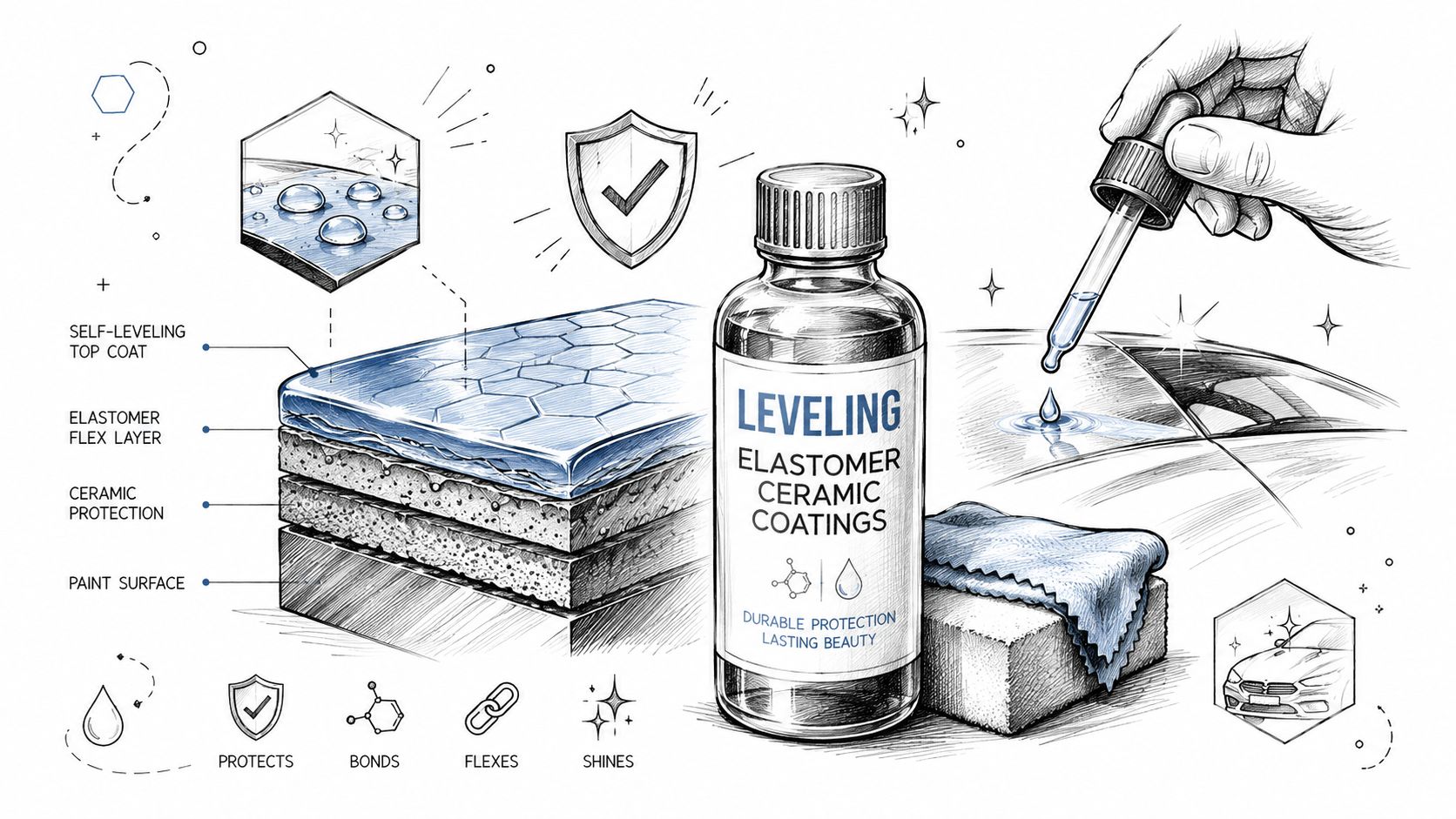
Coating wipe-off is where towel discipline becomes visible. A clean panel can still develop high spots, streaks, or uneven gloss if the towel drags partially cured material instead of lifting it. The answer isn't just a softer towel. You need the right sequence, clean faces, and a clear retirement point.
Titan's Alpha Quartz is described as an Elastomer ceramic coating designed for all surfaces. Its stated formulation includes 92% high solids, zero VOCs, a solvent-free composition, and Advanced Adhesion Technology, with curing described at 4 hours on the product page for Alpha Quartz 50ml Ceramic coatig. The coating is positioned as hard like glass while retaining flexibility, a combination intended to help it accommodate temperature changes without cracking.
Use two towels with different jobs
Begin with a short-pile towel to spread and level the fresh coating. Short fibers give you controlled contact and help you see whether the material is moving or being left behind. Work small areas, keep the pressure light, and fold before the current face becomes saturated.
Follow with a clean long-pile towel for the buffing pass. The deeper pile can catch remaining residue and reduce the tendency to push a thin film across the panel. Rotate to a fresh face often, then inspect the panel from more than one angle before moving on.
The coating can be flexible, but the wipe-off process still depends on mechanical control. A contaminated towel can introduce a defect into the surface while the coating is still workable, and a towel that has started to stiffen can create drag marks.
Surface preparation also matters before the bottle comes out. A dedicated ceramic coating prep spray helps remove remaining oils and polishing residue, but it doesn't make an unsuitable towel safe. Use clean preparation towels, then remove them from the paint group if they become loaded with residue.
Titan also describes its coating technology as using elastomers, nanotube technology, and Dark Matter technology. The practical takeaway for a detailer is straightforward: a flexible protective film still needs a controlled, contamination-free leveling process. Flexibility can help the cured layer handle movement and temperature variation, but it won't compensate for grit dragged across uncured material.
The Reality of Washing and Shedding
“Wash cold” is useful environmental advice, but it isn't a complete rag-care protocol. Cold, quick cycles and full, not overfilled, loads can reduce microfiber emissions, while hotter washing and detergent use can increase synthetic-fiber shedding under some conditions. A household laundry study measured average release at 114 ± 66.8 milligrams per kilogram of fabric under typical conditions and reported lower emissions with colder, quicker cycles and efficient machines. The study is available through PMC.
The problem is that detailers aren't washing neutral fabric. Towels may contain polishing oils, waxes, tire dressing, road film, or ceramic-coating residue. A cold cycle may reduce shedding while leaving contamination behind, especially when the load is oversized or the towel group is badly mixed.
A practical wash protocol
Sort by contamination before sorting by color.
- Paint and coating towels: Wash separately from cotton and lint-producing fabrics. Use liquid detergent, skip fabric softener and bleach, and choose cold to warm water based on how heavily the towels are loaded.
- Glass towels: Keep them away from waxes and dressings. Any softening residue can reduce their ability to leave a clean, streak-free surface.
- Wheel and engine-bay towels: Wash separately from plush paint towels. If they contain sharp debris, grease, or hardened product, downgrade them before laundering.
- Heavily contaminated towels: A pre-rinse or separate load may be more sensible than forcing contamination into a mixed load. If the towel remains stiff, oily, or abrasive after washing, retire it from paintwork.
Machine design affects fiber release too. Research reported that pulsator machines released more fibers than platen machines, while some filters captured longer fibers but missed shorter fibers under 500 micrometers. Another study found microfiber losses ranging from 9.6 to 1,240 milligrams per kilogram of textile per wash, showing why construction and laundering conditions matter. The textile-shedding research supports a balanced approach rather than one universal temperature rule.
Dry with low or moderate heat, and don't bake residue into the fibers. For careful hand-cleaning habits, the guidance on washing hand-wash caps and snapbacks offers a useful reminder to control agitation and drying, even though automotive towels require their own contamination standards. Titan's microfiber washing guidance should sit alongside your own towel-specific observations.
If you use a quick sealant for maintenance wipe-downs, OMNIGUARD Waterless Wash is described as a quick sealant for fast wipe-downs, water-mark removal, and UV protection, with HYPERBEAD™ particles, self-cleaning and oxidation-resistance properties, and durability described as up to 6 weeks. Towels used with such products still need proper separation because residue can transfer between surfaces.
Knowing When to Retire a Towel
A towel doesn't need to look dirty to be unsafe. Repeated laundering can leave embedded particles, compacted fibers, chemical residue, or a rough edge that changes how the cloth contacts paint. The safest inventory is one where retirement is based on behavior, not sentiment.
Run four checks before returning a towel to delicate work:
- Tactile drag: Glide it lightly across a clean, sacrificial surface. If it catches, skips, or feels gritty, remove it from paint duty.
- Visual inspection: Hold it under strong, diffused light and inspect both faces, the corners, and the edge. Look for hardened product, trapped particles, loose threads, or dark residue.
- Absorbency: Wet a clean section and watch whether it absorbs evenly. Repellent patches can indicate dressing, wax, or softener contamination.
- Streaking test: Use it on clean glass or a test panel with a compatible residue. If it leaves trails after rotation and light pressure, downgrade it.
A towel used on wheels, exhausts, door jambs, or abrasive polishing residue has changed category permanently.
Downcycle questionable towels to wheels, tires, engine bays, or household utility work. Do not send them back to a polished hood because they survived another wash. The replacement cost of a towel is small compared with the labor and paint correction required after a contaminated wipe.
The same discipline protects elastomer ceramic coatings during their most vulnerable stage. A flexible coating may be hard like glass after curing and designed to tolerate temperature changes without cracking, but the final surface still reflects every careless wipe performed before it settles.
APEX NANO by Titan Coatings offers coating products and preparation options for automotive surfaces, including elastomer ceramic technology and flexible membrane sealants. Visit APEX NANO – Titan Coatings to review the available coating systems, then pair the product with a clean, task-specific rag process that protects the finish during application and wipe-off.
0 Comments