
Professional vehicle ceramic coating cost in the United States generally runs about $600 to $2,500, with a published median near $950, and the bottle price is not the bill. Daniel discovered the difference while comparing quotes for the same sedan: the cheaper offer left out the paint correction his finish needed.
When a Low Ceramic Coating Quote Falls Apart
Daniel's comparison starts with a deceptively simple choice. Both estimates promise a coated sedan, but only the more complete scope accounts for the defects already in the paint. The lower number doesn't buy the same finished result.
That's the distinction I'd put in front of a client before discussing gloss or durability. A transparent coating isn't a substitute for correcting the finish underneath it. If the installer leaves visible swirls, the owner can still see them after application.
In AutoZone's ceramic-coating cost guide, preparation can add one to three days and approximately $500 to $2,000, while professional five-year packages sit around $1,000 to $2,500, with larger SUVs and trucks potentially reaching $3,000 or more. Those are scope-dependent estimates, not charges to stack automatically onto every advertised package.
Read the work description before the total
For Daniel, the useful comparison isn't between the bold numbers at the bottom. It's between the descriptions above them.
A complete discussion should establish whether the installer includes:
- Washing and chemical decontamination, rather than applying over contamination.
- Clay treatment where needed, with the technician explaining what remains bonded to the surface.
- Machine polishing, including the defects the shop expects to improve and those it expects to leave.
- Panel wipe and coating application, followed by clearly stated curing requirements.
- Warranty coverage, including exclusions and any maintenance obligations.
An estimate that says only “ceramic coating” leaves too much unresolved. Daniel needs to know whether he's buying protection for the finish as it stands or paying someone to improve that finish first.
Before accepting a quote, ask which defects will still be visible after the coating is applied.
Agree on the finish you're buying
The practical move is to review the paint with the installer before approving the job. Identify the marks that bother you, then ask whether the proposed preparation addresses them.
Not every owner needs extensive correction. Someone protecting an everyday vehicle may accept remaining imperfections, while another owner wants a more refined finish before coating. Either choice can be reasonable when the estimate makes it explicit.
Daniel's cheaper quote isn't automatically dishonest, and the higher quote isn't automatically better. The problem is an incomplete comparison. Until both estimates describe the intended finish, the owner doesn't know what the price difference buys.
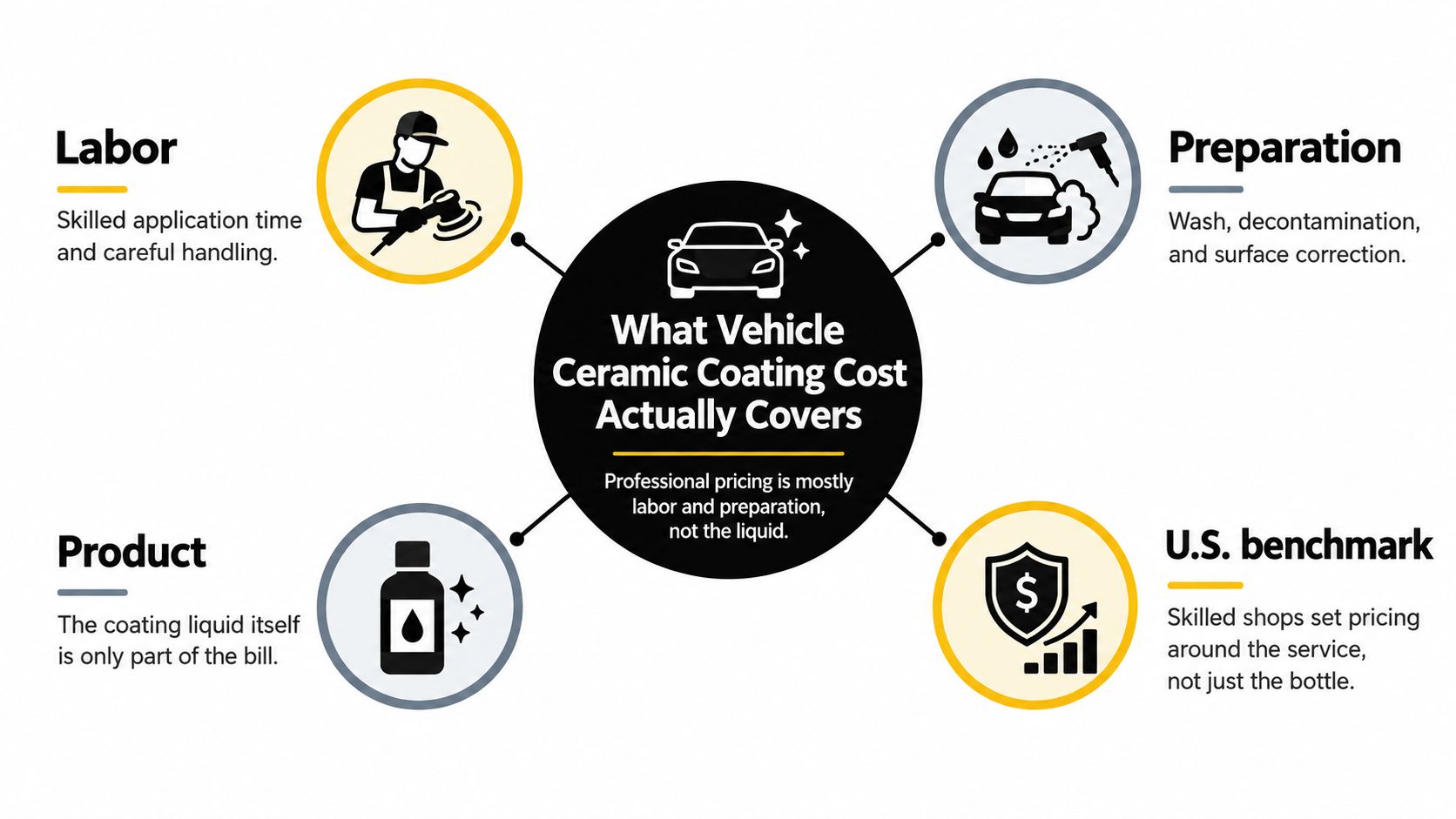
What Vehicle Ceramic Coating Cost Actually Covers
A fair coating invoice reads like a work order, not a receipt for a bottle. The technician is selling inspection, preparation, careful application, and responsibility for the result.
A U.S. detailing-pricing benchmark from Zarla places skilled labor around $50 to $100 per hour, professional coating packages around $700 to $2,000, and additional paint correction around $250 to more than $750. These benchmarks describe different scopes, so an installer should explain which preparation is already included rather than adding overlapping allowances.
Follow the technician's sequence
The work starts with washing and inspection. Chemical decontamination addresses contamination such as embedded iron, while mechanical decontamination may be needed for material that remains bonded to the finish.
Polishing addresses the agreed defects. The installer then removes polishing oils before applying and leveling the coating. That sequence explains why a nearly new vehicle and a water-spotted, heavily marked vehicle shouldn't receive identical preparation estimates.
The final wipe isn't the entire application process, either. The technician must manage the working conditions, inspect the coating as it's leveled, and follow the product's curing requirements.
Ask for an estimate you can audit
A useful estimate separates the work into understandable categories:
- Vehicle size and coverage identify the body style and surfaces included.
- Preparation and correction state the condition assessment and approved polishing work.
- Coating tier names the product or system rather than relying on a vague premium label.
- Curing and aftercare explain handover requirements, inspections, and any continuing obligations.
For a mobile detailer building clearer paperwork, AurenWell's painting invoices with deposit tracking offer a useful administrative reference. The trade is different, but separating scope, payments, and the remaining balance is relevant to coating estimates too.
An itemized bill protects both sides. The customer can see what's included, and the detailer can identify additional work before doing it. If inspection reveals more demanding preparation than expected, the conversation becomes a documented scope change rather than an unexplained increase at collection.
That's a more useful definition of value than judging the invoice by the coating brand alone.
How Vehicle Size and Paint Correction Raise Quotes
Put a sedan beside a tall van and the size difference is obvious. The installer has more surface to inspect, prepare, reach, coat, and check on the larger vehicle.
Paint condition adds another distinction. Similar-looking cars can require different correction schedules if one has light washing marks and the other has deeper defects. A durability label doesn't tell you how much work either vehicle needs.
Compare size bands with correction hours
The following Professional Coating Ranges by Vehicle and Correction Time table reproduces DetailPilot's vehicle-size bands and correction-time benchmarks, including three-to-five-year and premium five-to-seven-year package categories.
| Scope | Sedan | SUV or crossover | Truck or van |
|---|---|---|---|
| Professional three-to-five-year coating | $600 to $1,200 | $800 to $1,500 | $900 to $1,800 |
| Premium five-to-seven-year multi-layer package | $1,000 to $2,000 | $1,200 to $2,500 | $1,400 to $3,000 |
| One-step correction | 3 to 5 hours | Condition-dependent | Condition-dependent |
| Two-step correction | 6 to 10 hours | Condition-dependent | Condition-dependent |
| Severe three-step correction involving wet sanding | 8 to 14 hours | Condition-dependent | Condition-dependent |
| Coating material per application | About $50 to $150 | Application-dependent | Application-dependent |
Correction durations are general job benchmarks, not sedan-only promises or guaranteed schedules for every body style. The material allowance also isn't a substitute for an installed quote.
The important contrast is between the modest material component and the time required to produce the agreed finish. Comparing bottle prices won't tell you whether a technician has allowed enough time for inspection, polishing, or careful application.
Ask for a condition grade
A practical estimate should describe the paint as needing light, moderate, or heavy correction, then explain what that description means for your vehicle. Ask the installer to identify the intended correction process and expected working time.
Titan's guide to car paint detailing cost provides a relevant companion topic when you're separating appearance-restoration work from the protective application.
Keep unrelated repairs separate, too. If a customer is also considering wheel refurbishment, reviewing diamond-cut repair pricing from The Alloy Hub can help them organize that as a distinct service rather than folding every cosmetic concern into the coating budget.
Comparison rule: Match vehicle size, correction grade, and covered surfaces before comparing durability labels.
A large vehicle with acceptable paint may need less corrective work than a smaller neglected car. The estimate should show which factor is driving the price instead of assuming body style explains everything.
Choosing a Coating When Labor Is the Real Bill
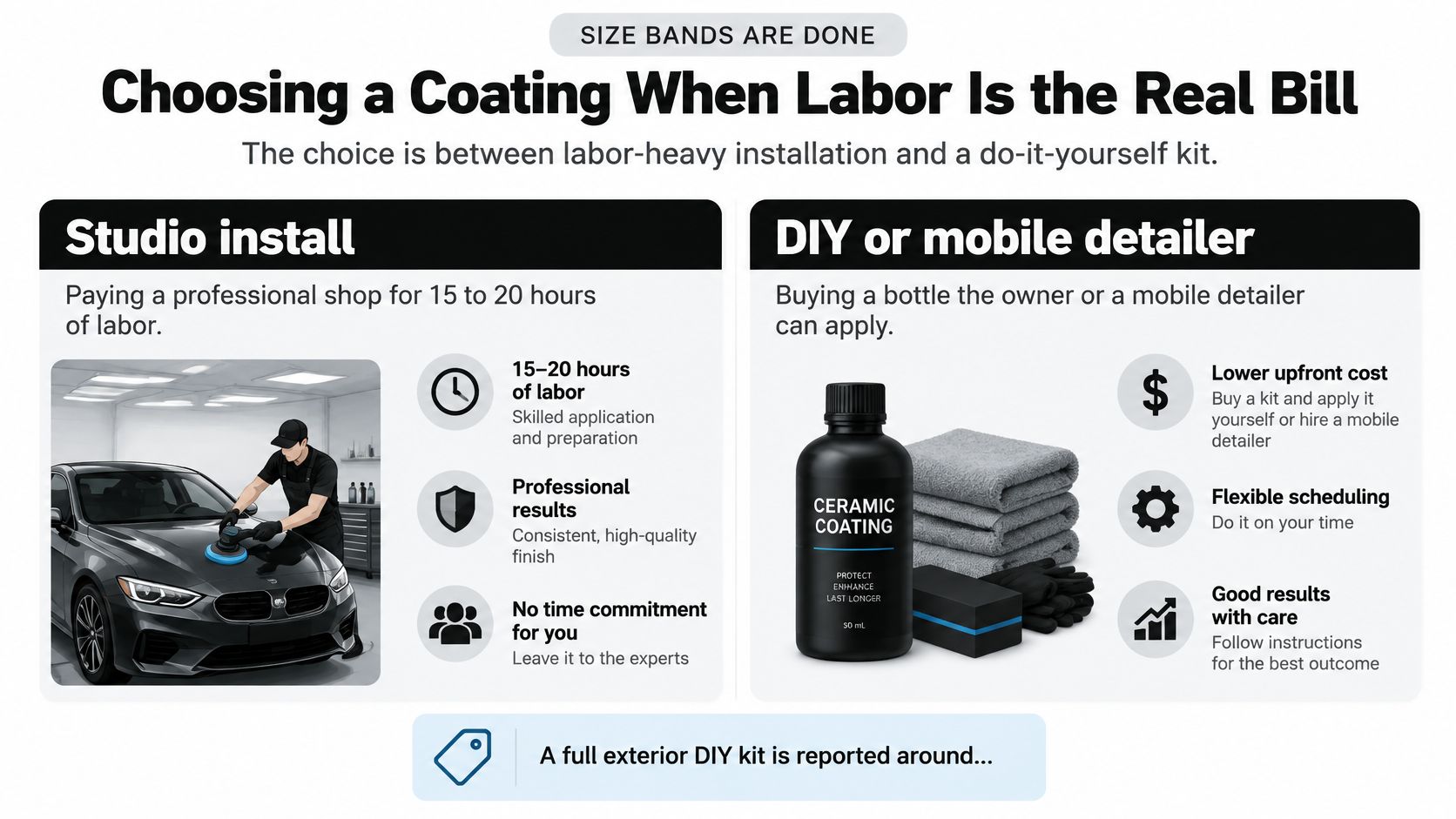
A DIY owner and a studio customer aren't purchasing the same thing. The owner buys materials and supplies their own working time; the studio customer pays someone to manage the process and the application risks.
Autotrader's ceramic-coating cost guide describes approximately 15 to 20 hours of professional work, complete exterior DIY kits around $200 to $400, and professional applications commonly starting near $800 and reaching $2,500 or more. The professional difference includes equipment, lighting, consumables, working conditions, and technical labor, not just a more expensive liquid.
Match the product to the surface
Alpha Quartz 50ml Ceramic coatig is described by Titan as an elastomer ceramic coating for all surfaces, with 92% high solids, zero VOCs, a solvent-free formulation, and a four-hour cure. Its stated suitability for indoor and outdoor application makes it relevant to DIY owners and mobile detailers, provided they can meet the preparation and curing requirements.
The product's application accessibility doesn't remove the need to assess the finish. An owner who isn't comfortable polishing may reasonably pay a professional for preparation while considering their application options separately.
Apex Glass Coating- 50ml serves a different job: Titan describes it as a hydrophobic glass and windshield coating with deep-pore bonding, enhanced visibility, reduced wiper use, and durability up to two years. For someone concerned about rain visibility, glass treatment belongs on the estimate as its own surface-specific choice, not as a replacement for paint protection.
The Ultra ceramic spray is another option to investigate when a spray-format application better suits the job. Check its current directions and surface compatibility rather than assuming every ceramic-labeled product has the same application process or service life.
Choose the process you can execute
Before deciding, review the coating finishing process and compare it with your workspace, equipment, and confidence.
- Choose studio installation when correction, controlled working conditions, or installer accountability matter most.
- Consider DIY when you can prepare the surface properly and follow the product directions without rushing.
- Assess mobile conditions carefully before committing to a job whose application or cure requirements you can't maintain.
The cheapest workable route is the one you can complete correctly. Buying a bottle doesn't eliminate the work behind the result.
Adding Up Five Years of Ownership Cost
The installation invoice is only the starting entry in an ownership budget. A client who accepts that number without asking about maintenance can underestimate what they'll spend keeping the coating in service.
Motors Minds' ownership-cost discussion gives correction allowances of roughly $200 to $1,500, maintenance sealants around $100 to $200 every one to two years, and an illustrative five-year midsize-vehicle total of approximately $1,300 to $2,000, before additional washing, reapplication, or repairs. Those figures describe a particular ownership model, not a universal total or a reason to add correction twice when it's already included.
Build a personal ownership ledger
Start with the written installation quote. Then ask the installer to identify required maintenance, optional treatments, and costs that depend on the vehicle's condition later.
| Ownership entry | How to handle it |
|---|---|
| Installation | Record the agreed scope and payment |
| Preparation | Confirm whether it's included or additional |
| Required maintenance | Get the schedule and terms in writing |
| Optional sealants or inspections | Separate recommendations from obligations |
| Washing and supplies | Use your actual habits and spending |
| Repairs or reapplication | Keep separate from routine maintenance |
The distinction between necessary work and optional upsells matters. A maintenance treatment may be useful without being mandatory, while a warranty may impose conditions the owner must understand before purchase.
Titan's discussion of ceramic coating life is a relevant starting point for questions about service expectations. Ask how the proposed maintenance plan relates to the actual product and your use of the vehicle.
Test the break-even without inventing savings
Compare the coating route with what you spend on waxing and exterior care. If you've never paid for regular waxing, don't count an imaginary avoided waxing bill as a saving.
Include your time if it matters to you, but use your own judgment about its value. Easier cleaning may justify a purchase even when it doesn't produce a cash saving.
Budget check: A coating can be worthwhile without paying for itself. Separate convenience and appearance from documented financial savings.
Treat resale presentation the same way. You can value keeping the car presentable without assigning an unsupported resale premium. The decision becomes clearer when the ownership ledger reflects your behavior rather than an optimistic sales calculation.
How Temperature Swings Change Coating Value
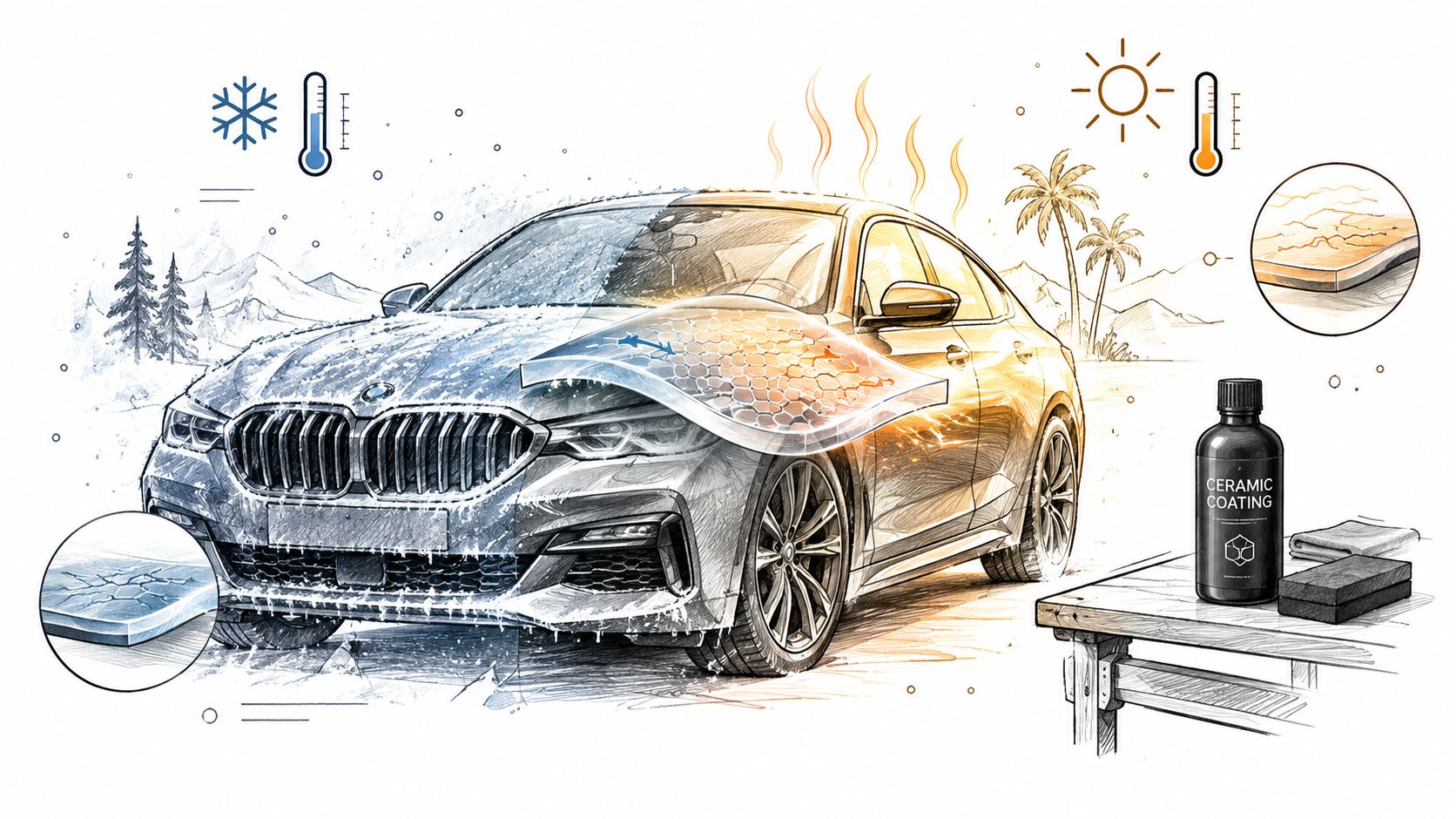
Consider the same car leaving a freezing driveway in winter and standing in summer heat months later. The owner sees the same painted panel, but the coating system has to tolerate changes in the underlying surface.
A rigid film can experience stress when the substrate and coating respond differently to temperature changes. Repeated movement can contribute to cracking or lost adhesion when the system lacks sufficient flexibility, which makes thermal behavior relevant to the ownership calculation.
Understand what flexibility is intended to do
Titan presents its proprietary coating technology and elastomer approach as combining a hard, glass-like surface with flexibility. Its company description identifies Dark Matter Technology®, DiamondTech, and HyperQuartz® among its proprietary technologies.
The intended elastomer benefit is straightforward: allow the protective film to accommodate movement rather than behave as a brittle layer. If that design reduces temperature-related failure in the installed system, it could improve long-term value.
That remains a product-design claim, not a guarantee that temperature changes can never affect the coating. Nor does elasticity establish that bug strikes or other impacts cannot damage it.
Ask for evidence before paying for longevity
The useful questions concern formulation, film thickness, substrate, preparation, curing, and test conditions. Ask the manufacturer or installer what thermal-cycling evidence supports the proposed application.
- Request relevant testing, including the conditions and the way failure was assessed.
- Check installation limits against the ceramic coating application temperature guidance.
- Separate impact protection from coating behavior, especially if rock chips are your main concern.
A peer-reviewed materials review describes coating performance as dependent on formulation, preparation, environment, and maintenance. Water beading alone shouldn't be treated as proof that the entire protective system remains intact.
Coatings also aren't rock-chip armor. Paint-protection film is the relevant comparison for that concern, and a flexible coating shouldn't be sold as eliminating future chip-repair bills.
The financial question isn't whether flexibility sounds impressive. It's whether documented performance supports paying more for the specific system on your car.
Build a Quote You Can Compare Fairly
Before requesting another price, write a short vehicle description and send the same scope to each installer. Include photographs if useful, but ask whether the final estimate requires an in-person inspection.
The opening market range comes from The Pricer's ceramic-coating analysis, which examined 2,201 advertised prices from 708 detailing businesses and reported the middle 50% around $600 to $1,399. That context is useful, but an advertised price still doesn't establish what your vehicle needs.
Put the comparison in writing
Give each shop the information needed to describe the same job:
- Vehicle and condition identify the body style, visible defects, and correction grade.
- Surfaces covered distinguish paint from glass, wheels, trim, and other additions.
- Preparation scope names the decontamination and correction work included.
- Coating system identifies the actual product and application scope.
- Cure and collection rules explain when you can collect, drive, and wash the vehicle.
- Warranty and maintenance separate required actions from optional services.
Ask the shop to state what it excludes. That answer can reveal more than an elaborate package name.
Approve a result, not an advertisement
If you're considering a dealer package, apply the same checklist before accepting it. The questions in whether car-dealer paint protection is worth it belong in that conversation, especially when the proposed treatment is bundled into a broader vehicle purchase.
For DIY or mobile work, choose the surface and process before choosing the bottle. A paint coating, windshield treatment, and spray-format product should answer different needs, not compete as interchangeable promises.
Then compare the written options with the ownership ledger you'll follow. A demanding maintenance plan isn't good value if you know you won't maintain it.
The winning quote is the one that clearly prices the result you want. Review the current Titan coatings shop for product directions and available options, or ask your preferred studio to return an itemized scope before you pay a deposit.
APEX NANO – Titan Coatings offers elastomer coatings and surface-specific options for owners, DIY detailers, and professional installers comparing protection costs. Visit APEX NANO – Titan Coatings to review the relevant products and application requirements, then take that information to your installer and request a quote that separates preparation, coverage, and aftercare.
0 Comments