
The car had been in the driveway less than an hour when the owner noticed the first mark. It wasn’t a dent, barely even a chip, but it changed the whole mood from pride to protection.
That’s how this usually starts. A fresh finish looks permanent until the first highway run, the first bug bake on the bumper, or the first wash-induced swirl reminds you that modern paint is beautiful, but not invincible.
Your Cars First Line of Defense
A new vehicle doesn’t stay “new” because it sits under soft garage lights. It stays new because somebody makes smart decisions early, before the front bumper gets peppered, before the mirror caps haze up, and before the hood collects the kind of random damage that always seems to happen on ordinary drives.
I’ve seen this with daily commuters, weekend toys, and high-end builds. The owner brings the car home spotless, swears they’ll be careful, then one trip behind a dump truck or one rushed wash changes the finish. That’s when car paint protection wrap stops sounding optional and starts sounding practical.
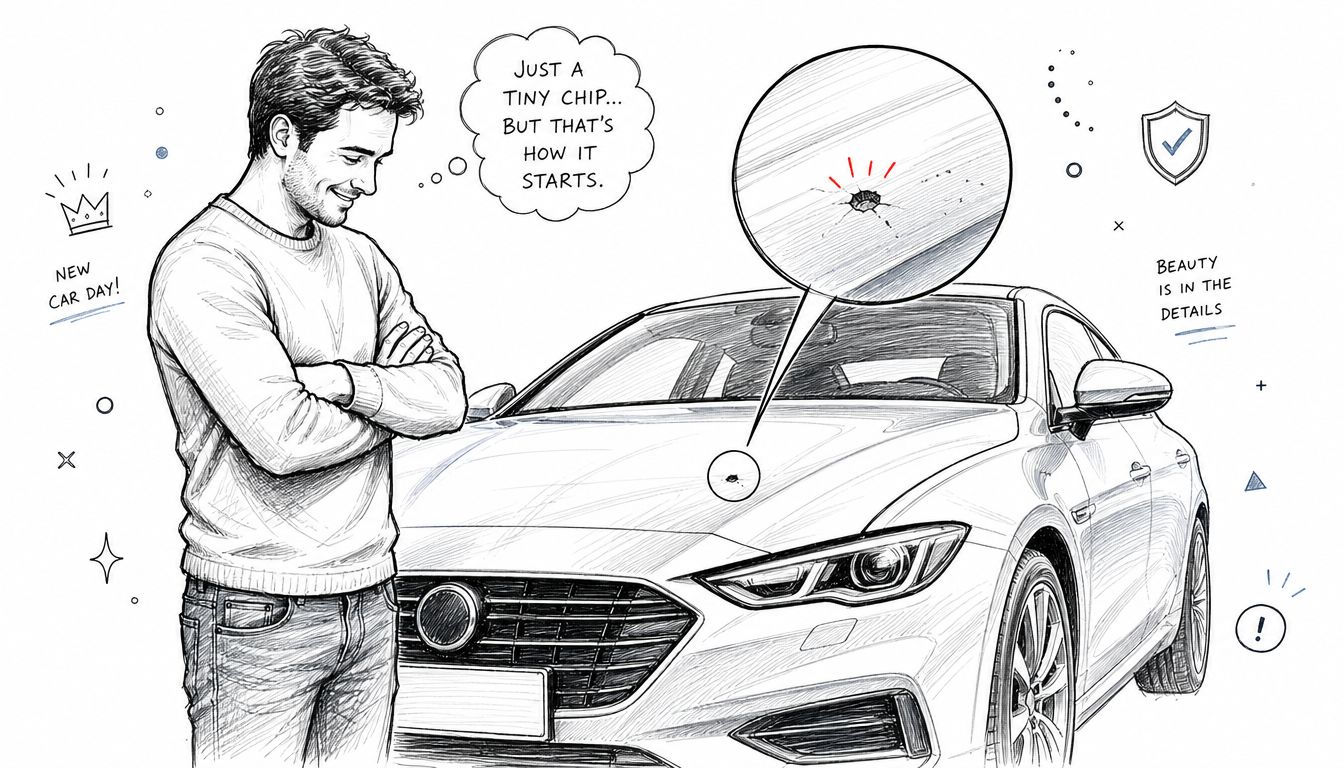
Protection starts before damage
Most owners wait until they can see damage. That’s backwards. Paint protection works best when the surface is still clean, level, and free of correction history. Once chips, sanding marks, and repeated polishing enter the story, you’re protecting a compromised finish instead of preserving an excellent one.
The demand for that preservation keeps rising. The global paint protection film market was valued at USD 349.04 million in 2024 and is projected to reach USD 627.15 million by 2032, growing at a CAGR of 7.60%, reflecting a massive 80% increase in market value over eight years, according to Data Bridge’s paint protection film market analysis.
That growth tells you something simple. Owners aren’t being overly cautious. They’re responding to a real problem.
Practical rule: The best time to protect paint is before the first chip, not after the first correction.
What owners usually get wrong
People often shop for protection by product category alone. They ask whether film is better than ceramic, or whether a wrap is worth it, as if one answer fits every vehicle. It doesn’t.
What matters is how the car is used:
- Highway mileage: Front-end impact protection matters most.
- Outdoor parking: UV, fallout, bird droppings, and water spotting matter more.
- Frequent washing: Scratch resistance and cleaning behavior matter every week.
- Lease or short ownership cycle: Removal, upkeep, and cost efficiency matter more than prestige.
A good protection plan preserves appearance, reduces maintenance stress, and fits the way the owner drives. That’s the standard to judge everything else by.
PPF vs Vinyl vs Coatings The Core Differences
Most confusion comes from one mistake. People treat paint protection film, vinyl wrap, and coatings like they’re versions of the same thing. They’re not. They solve different problems.
The easiest way to think about them is this. PPF is the bodyguard. Vinyl is the outfit. Coatings are the high-tech armor that changes how the surface behaves.
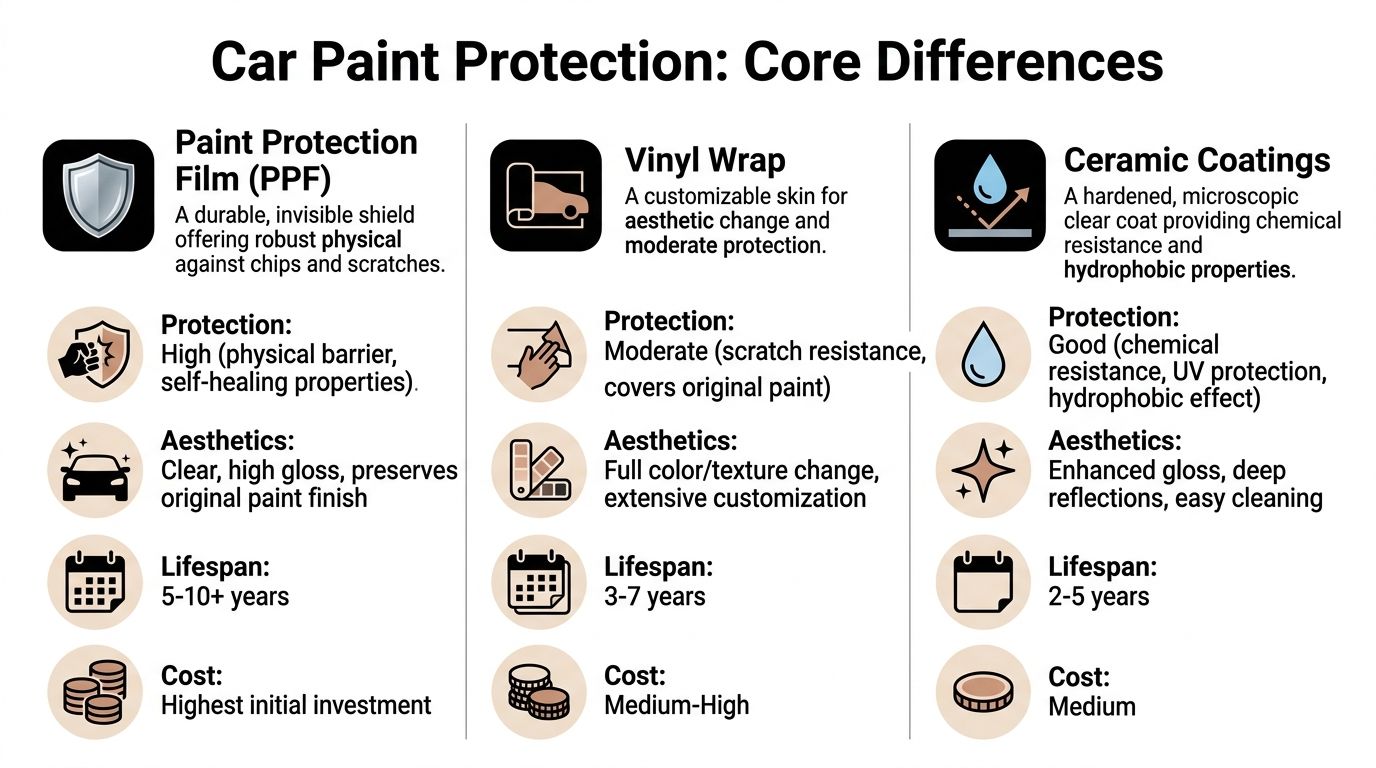
The bodyguard, the outfit, and the armor
PPF is a transparent impact layer. It’s built to take abuse that would otherwise hit your paint. One reason it works so well is material choice. PPF is composed of thermoplastic polyurethane (TPU), a material whose elastomeric polymers allow minor scratches to self-heal when exposed to heat, as the molecular chains reorient to close the defect, as explained in Garware’s breakdown of paint protection film features.
Vinyl wrap is mainly about visual change. It can transform gloss to satin, white to matte grey, or factory paint into something more custom. It does add a sacrificial layer, but that’s not why professionals reach for it first. Its primary job is styling.
Coatings sit in a different category. They don’t absorb stone strikes like film. They change the surface tension, improve chemical resistance, add gloss, and make cleanup easier. A good coating is about maintenance efficiency as much as appearance.
If you want a deeper side-by-side look at where each approach wins, this guide on paint protection film vs ceramic coating is worth reviewing.
Paint Protection Options at a Glance
| Attribute | Paint Protection Film (PPF) | Vinyl Wrap | Elastomer/Ceramic Coating |
|---|---|---|---|
| Primary purpose | Physical impact protection | Color or finish change | Surface protection and easier maintenance |
| Appearance effect | Preserves factory look | Changes look dramatically | Enhances gloss and slickness |
| Best against | Chips, light abrasion, road rash | Cosmetic restyling, light surface scuffing | Water, grime, chemicals, wash maintenance |
| Typical weakness | Edge contamination, aging, removal complexity | Less impact protection | Won’t stop a direct rock strike like film |
What works in the real world
For a front bumper on a highway-driven car, PPF has a job nothing else does well. For a full color change, vinyl owns that category. For a car that needs easier washing, deeper gloss, and less environmental sticking, a coating changes day-to-day ownership more than people expect.
A lot of protection mistakes happen when owners buy aesthetic products for impact problems, or impact products for maintenance problems.
The smartest buyers stop looking for one magic product. They start matching the product to the threat.
The Hidden Risks of Traditional Wraps
Paint protection film has real strengths, but it’s not flawless. Too many owners hear only the clean version of the story. Film protects, self-heals, and keeps the front end cleaner. All true. But long-term ownership brings a second conversation, and that one matters just as much.
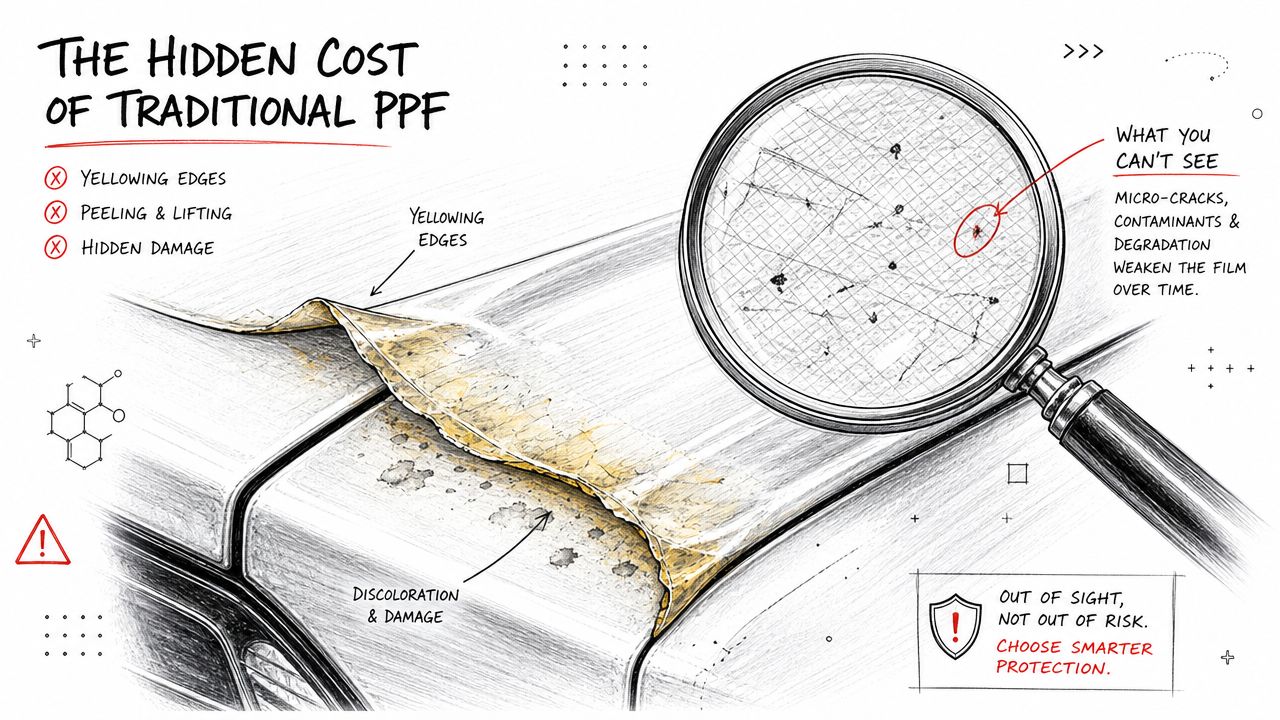
Where the idealized version breaks down
Traditional film can collect grime at edges, especially around complex panel transitions. On neglected cars, those borders start telling on the install long before the owner wants them to. Some films also age less gracefully than marketing suggests, especially when maintenance is inconsistent and the vehicle lives outside.
Then there’s removal. This is the part many sales conversations rush past.
After 5–7 years, PPF adhesive can oxidize and bond into the vehicle’s clear coat, causing the film to split during removal and potentially necessitating correction costs that can be nearly as high as the original installation, according to this analysis of common PPF problems and removal issues.
That doesn’t mean every install becomes a liability. It means aging adhesive is a real ownership factor, not a footnote.
Good installers talk about the exit, not just the install
A professional should discuss more than coverage patterns and gloss levels. They should ask how long you plan to keep the car, whether it lives indoors, how often it gets washed, and what your tolerance is for future removal work.
Here’s a practical way to look at it:
- Short ownership cycle: Full-body film may be harder to justify.
- Heavy front-end abuse: Targeted film still makes sense.
- Outdoor exposure: Maintenance quality becomes critical.
- Existing vinyl: Surface-specific products matter more than generic advice.
If you’re protecting wrapped surfaces, this guide on ceramic coating for vinyl wrap helps frame the difference between preserving appearance and chasing impact resistance.
The right question isn’t “Is PPF good?” It’s “Is this coverage plan good for how long I’ll own the car, and how I’ll maintain it?”
That’s the conversation serious owners need.
The Titan Coatings Evolution Beyond Ceramic
Traditional ceramic coatings solved one problem well. They made paint easier to clean and gave it a sharper, more reflective look. But many rigid coatings share a limitation. Hardness alone isn’t enough when the surface expands, contracts, flexes, heats up, cools down, and takes constant environmental abuse.
That’s where elastomer technology changes the discussion.
Why flexibility matters
High-quality film creates a substantial physical barrier. PPF has a total thickness of around 3.0 mils and exceeds the abrasion resistance of a car’s clear coat by 2 to 3 times, and that barrier can be enhanced with a top-coated nano-ceramic, as outlined in Ceramic Pro’s technical discussion of PPF structure and performance.
That last detail matters. Enhancement on top of a barrier is often where the best systems live.
Titan built its own coating technology around that idea and pushed it further with elastomer coatings developed using nano tubes technology and Dark Matter Tech. The important part for the end user is simple. The coating behaves hard like glass, but flexible. That combination matters because a protective layer that can flex with temperature swings and surface movement is less likely to become the weak point.
Real-world behavior beats showroom language
A coating that looks great on delivery day isn’t enough. Its true test comes later, after heat cycles, cold mornings, road film, bug impact, wash friction, and months of contamination. Flexibility gives the coating a better chance to keep performing without becoming brittle.
That’s why elastomer coatings are compelling in a modern protection strategy:
- Temperature resilience: A flexible film on the surface is less prone to cracking behavior when the panel moves from frozen conditions to hot exposure.
- Impact tolerance: Minor bug strikes and routine surface stress don’t challenge the coating the same way they challenge a brittle layer.
- Longer useful life: When the coating can move with the substrate, it stays visually cleaner and structurally calmer over time.
A strong overview of that approach appears in Titan’s elastomer coating technology page.
Beyond “PPF or ceramic”
The old debate asked owners to choose one side. In practice, the better answer is often layered protection. Film handles direct impact where impact is concentrated. An advanced elastomer coating improves slickness, gloss, washability, and environmental resistance across the rest of the vehicle, and can also support the surfaces that already carry film.
A modern protection system doesn’t replace every older method. It fixes the blind spots those methods leave behind.
That’s the shift. Not film versus coating. Film where you need a shield, flexible coating where you need surface behavior and long-term stability.
Building Your Perfect Protection Strategy
A protection plan should fit the car’s job. The owner with a highway commuter needs something different from the collector with a garage-kept exotic. The mobile detailer needs different priorities again. Once you stop chasing one universal answer, the right setup becomes easier to build.
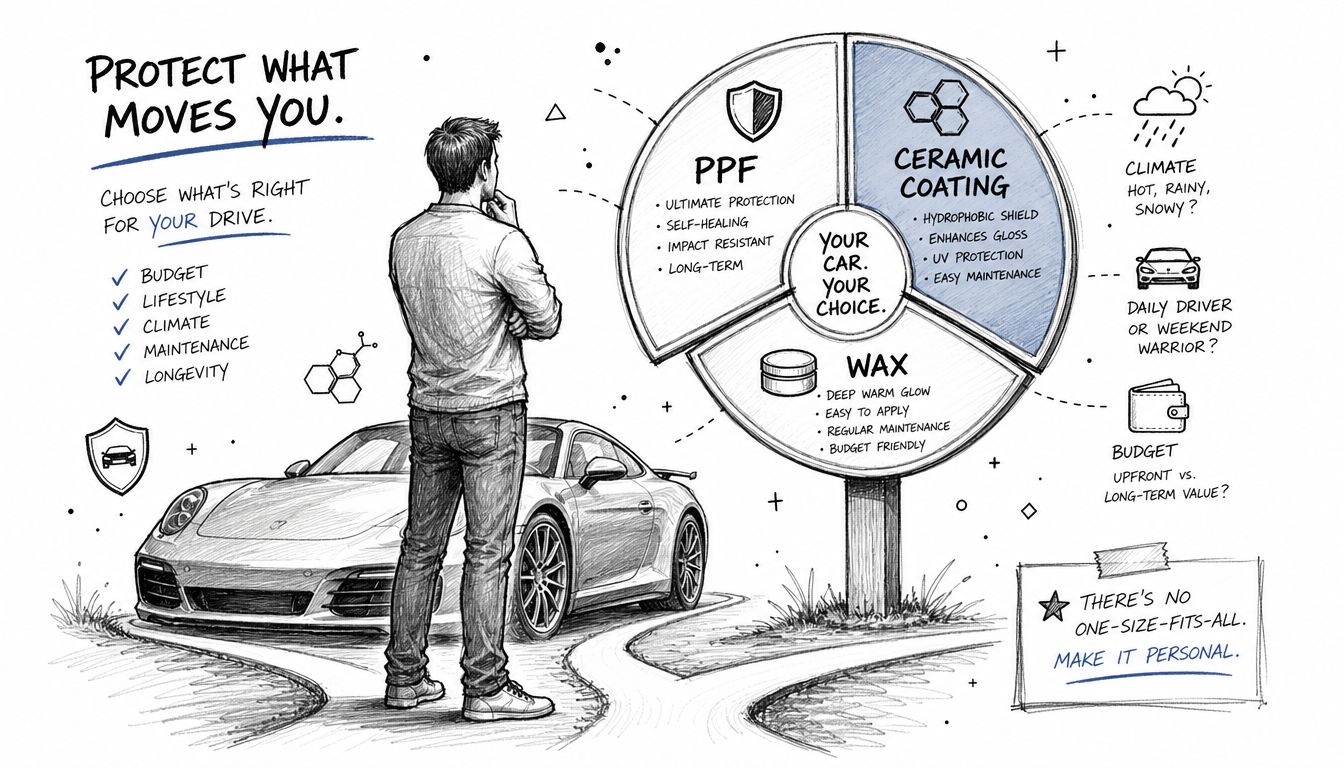
For the daily driver
If the car sees commuting, parking lots, weather, and regular washing, simplicity wins. A practical setup focuses on easy maintenance, solid gloss, and a surface that doesn’t fight you every time it gets dirty.
Alpha Quartz fits that use well because it’s easy to install and delivers strong cosmetic results without making the process feel intimidating. For DIY owners and mobile detailers, that ease matters. A product that goes on predictably gets used correctly more often.
A good daily-driver strategy looks like this:
- Use targeted protection where abuse is concentrated: Front edge areas matter most if the car sees highway time.
- Choose an easy coating for the rest: Alpha Quartz makes sense when you want straightforward application and dependable finish behavior.
- Add glass protection: Clear visibility changes the driving experience more than many owners expect.
For the enthusiast or exotic owner
A high-value vehicle deserves a more surgical plan. Here, the hybrid approach shines. Put PPF only where the car takes direct hits, such as the front bumper, leading hood section, mirror caps, and lower rocker exposure zones. Then coat the entire vehicle, including the film, to improve gloss, slickness, and contamination release.
That strategy gives you impact protection where only a barrier will do the job, without forcing film onto every panel. It also reduces some of the visual and maintenance weaknesses that show up on untreated film surfaces over time.
If the vehicle is new, this guide to the best paint protection for new cars lines up well with how I’d advise a first-time owner to think about coverage.
The best exotic-car setup is usually selective, not excessive.
For mobile detailers and serious DIY owners
Products only work in the field if they fit the realities of field work. That means controlled install time, predictable wipe-off, and repeatable results under less-than-perfect conditions.
Two products stand out in that conversation:
- Alpha Quartz for installers who want an elastomer coating that’s approachable and forgiving enough for mobile work.
- Ultra Ceramic Spray for fast enhancement jobs, maintenance packages, and owners who want easier application with a strong visual payoff.
Ultra Ceramic Spray is especially useful when the goal is speed without turning the result into a compromise. It’s simple to apply, and that matters for enthusiasts who maintain their own cars and detailers who need efficient service flow.
Don’t forget the windshield
The highest-value add-on is often the one owners overlook. Apex Glass is easy to use and directly improves wet-weather visibility. When rain starts pooling and the windshield sheds water more cleanly, driving feels calmer and less fatiguing. For anyone who commutes in bad weather, that’s not a small upgrade. It’s one you notice immediately.
Application and Maintenance for Lasting Brilliance
A protection product can only perform as well as the surface under it. If there’s bonded contamination, leftover polishing oils, trapped residue, or weak prep, the result won’t match the label. Good prep isn’t glamorous, but it’s where clean installs come from.
Application that doesn’t fight you
For enthusiast-friendly products, simplicity matters. Ultra Ceramic Spray works well because the application process is direct. Clean the panel properly, apply evenly, level it, and don’t rush dirty towels across the finish. The same logic applies to Apex Glass. Clean glass thoroughly, apply the coating evenly, and let the surface stay clean during cure.
If you want a more detailed process overview, this step-by-step guide on how to apply ceramic coating to a car is a useful reference.
Maintenance that preserves the result
Once the vehicle is protected, maintenance should become easier, not more complicated.
- Use pH-neutral wash products: Gentle chemistry protects the surface behavior you paid for.
- Wash with clean media: Dirty mitts and reused towels create avoidable marring.
- Remove bugs early: Even tough coatings shouldn’t be treated like permanent bug storage.
- Dry with quality towels or filtered air: Friction still matters.
- Keep edges clean on wrapped or filmed panels: That’s where neglected installs start looking old first.
Clean protection lasts longer than neglected protection, no matter how advanced the chemistry is.
The payoff is simple. Protected vehicles release dirt faster, wash more easily, and hold their finish with less correction work over time.
Your Car Paint Protection Questions Answered
Can you apply an elastomer coating over PPF
Yes, and that’s one of the smartest uses for it. Film handles impact. A flexible coating on top improves slickness, gloss, water behavior, and day-to-day cleaning. It also helps the film surface stay easier to maintain.
Does a windshield coating actually make rain driving easier
Yes. A good glass coating helps water move off the windshield more cleanly, which improves visibility and reduces some of the strain that comes with night driving and heavy rain. It’s one of the simplest upgrades with the most immediate benefit.
What lasts better, rigid coating or flexible elastomer coating
In real-world use, flexibility is a major advantage because the vehicle surface doesn’t live in a lab. Panels heat up, cool down, flex, and take constant environmental abuse. A coating that stays hard but also flexible is better suited to those conditions than one that relies on hardness alone.
If the budget only allows one choice, should you buy PPF or a coating
Choose based on the threat. If your main concern is rock chips on a highway-driven front end, PPF makes more sense. If your biggest annoyance is washing, water spotting, bug cleanup, and keeping the car looking sharp with less effort, a coating is the better first move.
Is car paint protection wrap enough on its own
Usually not. Film is excellent at impact protection, but surface behavior still matters. The strongest setup often combines selective film with a modern coating strategy rather than treating one product like a complete answer.
If you want protection products built around modern surface science, explore APEX NANO – Titan Coatings. Their lineup includes Apex Glass for clearer wet-weather visibility, Alpha Quartz for easy-to-install elastomer protection with strong DIY and mobile detailer appeal, and Ultra Ceramic Spray for fast, effective results. You can browse the full range in the Titan Coatings shop and find solutions that fit daily drivers, enthusiast cars, and professional detailing workflows.
0 Comments