
You know the scene. A client wants the car done in the driveway, the sun is already dropping, and the cord for your polisher keeps catching a tire, a stand, or the corner of an open door. That’s where a flex polisher cordless setup stops being a nice extra and starts looking like the practical way to work.
The shift matters because it changes how you move around the vehicle, how quickly you set up, and how much you can do without fighting the workspace. FLEX’s cordless lineup sits in that shift with more than 100 years of power tool innovation behind the automotive catalog, and it’s aimed at automotive, marine, aviation, and surface-technology work FLEX automotive catalog. In mobile detailing, that mobility is the point. If the tool can’t help you finish the job faster and cleaner on-site, the battery label doesn’t matter much.
Cutting the Cord in Mobile Detailing
A van pulls up, the customer points to the far side of a sedan, and the nearest outlet is across the garage, behind stored boxes and a tripped breaker waiting to happen. That’s the moment a cordless machine earns its keep. You aren’t buying a battery for convenience alone, you’re buying back time, movement, and access.
FLEX built its cordless polishers around that reality. The compact PXE 80 12.0 EC runs on 12 V batteries in 2.5 Ah or 5.0 Ah sizes, uses a 75 mm backing plate and 80 mm polishing disc, and offers 3 mm and 12 mm polishing strokes FLEX automotive catalog. That kind of setup makes sense when you’re working mirrors, bumpers, grilles, or awkward body lines where a cord becomes another problem to manage.
Practical rule: cordless polishers make the most sense when movement around the car costs you more time than the battery swap does.
The appeal is not just not having a cord on the ground. It’s the ability to finish a tight area, step to the next panel, and keep your rhythm without dragging cable slack around the vehicle. That’s why cordless polishers have moved from niche convenience tools into serious professional equipment, especially for detailers who work on-site, in crowded shops, or in places where generators are either impractical or unwelcome.
For a mobile-first workflow, start by thinking about access before power. If the job includes intricate trim, restricted parking, or frequent repositioning, the cordless route usually pays off faster than people expect. For a broader look at mobile workflow planning, see what mobile detailing includes in real service conditions.
Understanding Motion Architecture and Motor Specs
A cordless polisher is defined by how it moves, not just by the voltage stamped on the battery. FLEX’s PXE 80 12-EC/2.5 can switch between rotary, 3 mm orbit, and 12 mm orbit modes, with no-load speeds from 400 to 5,800 rpm and orbit rates up to 11,600 opm Detailed Image. That range matters because each movement behaves differently on paint, pressure, and panel shape.
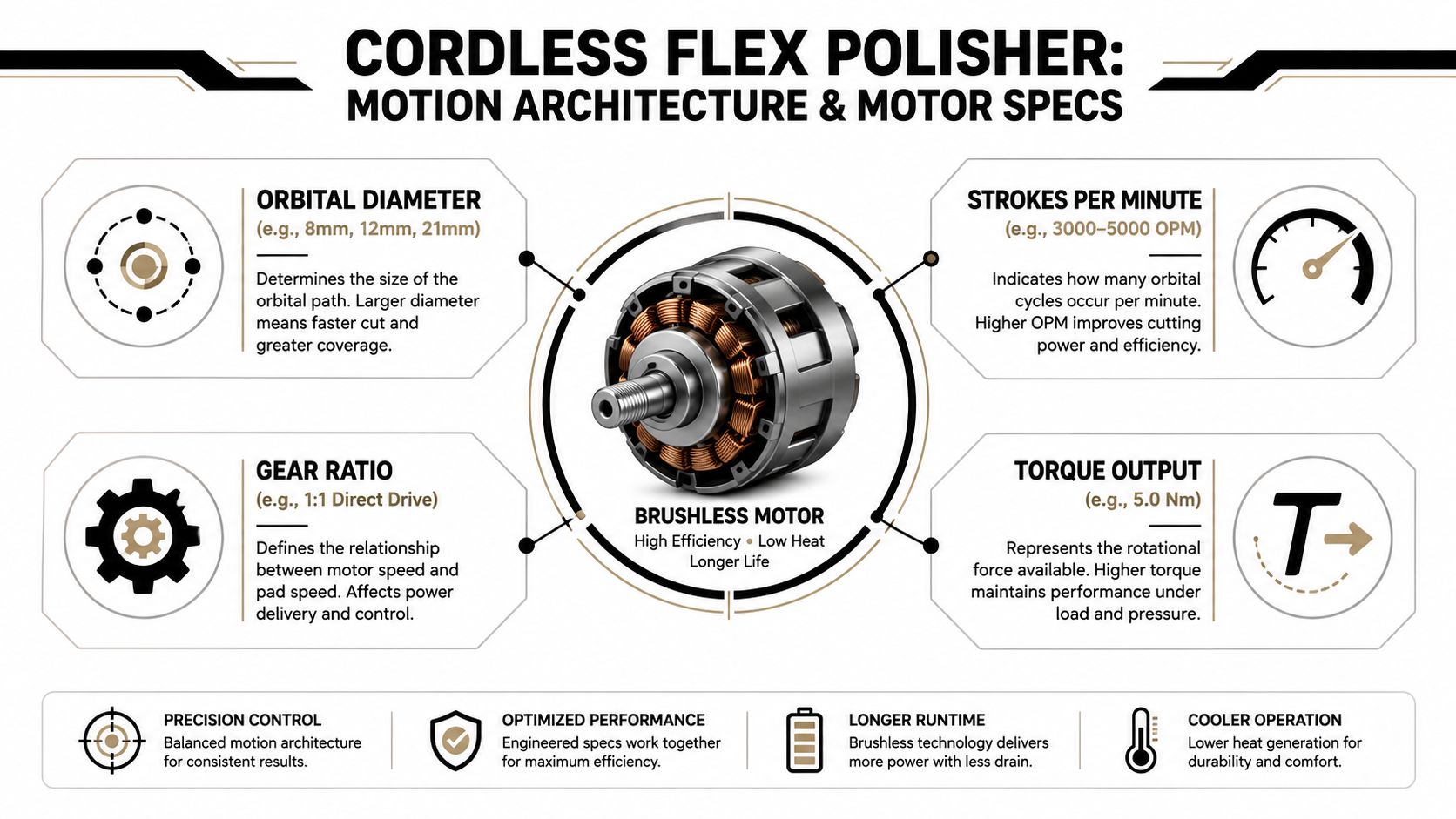
What the motion does
Rotary mode cuts directly and reacts fast, which is useful when you need targeted correction. It also raises the stakes if your pressure, pad choice, or dwell time gets sloppy, because heat and hologramming become real concerns. FLEX limits rotary use to the 1″ backing plate on the PXE platform, a sensible guardrail for stability at higher speeds.
Smaller-orbit modes are calmer and easier to control, especially around contours and finishing work. A 3 mm orbit is the kind of movement you want when precision matters more than aggression. A larger orbit, such as the 12 mm setting on the PXE, gives more surface engagement and helps the tool work through correction faster without jumping into full rotary behavior.
FLEX’s cordless dual-action XFE 15 150 18-EC uses a 15 mm eccentric stroke and an 18 V brushless motor, with 2,300 to 3,800 rpm no-load speed, a 6″ backing pad, and 6.5″ polishing pad capability My Car Cleaning. That stroke size covers more paint per pass than a smaller-offset machine, which helps on wide panels. The trade-off is load. Bigger strokes ask more from the motor and battery, so brushless drive and sensible pad selection are what keep the machine from feeling tired under pressure.
Practical rule: choose the stroke for the panel, not for the catalog photo. Big throw helps on large, flat sections. Small throw helps in tight or delicate work.
For a deeper look at the rotary side of the platform, Titan Coatings’ cordless rotary polisher category is worth comparing against the orbiting machines before you commit to a workflow.
Corded vs Cordless Throughput Reality
A cordless polisher looks fast on paper, then the battery starts defining the job. On a light finishing pass, the tool can stay in the cut long enough to feel productive. On heavier correction, pad drag, paint hardness, and panel size all pull runtime down, and that is where the throughput limit shows up.
FLEX’s cordless system materials and third-party coverage point to practical working windows on 18 V machines. A 5 Ah battery is rated at about 30 to 37 minutes on a rotary model and 40 to 48 minutes on a random orbital model, with a 45-minute recharge time The Ultimate Finish. On the 24 V side, an independent review of the FX3311 24V Cordless Rotary Polisher recorded 17 minutes of use on a passenger-side panel with the included 5 Ah battery Dr. Beasleys. That spread makes the trade-off clear. Heavy correction uses battery faster than light polishing, and rotary load drains a pack sooner than a random orbital pass.
| Cordless Runtime Expectations | Rotary Polisher | Random Orbital |
|---|---|---|
| 2.5 Ah | shorter working window, especially under heavy load | better for finishing and lighter passes |
| 5.0 Ah | about 30 to 37 minutes on an 18 V rotary platform | about 40 to 48 minutes on an 18 V random orbital platform |
Runtime is only part of the equation. Pad diameter and orbit stroke change how hard the machine has to work, so a larger pad on a bigger throw will eat through battery faster than a smaller pad with a calmer motion. That is why cordless detailers spend more time matching pad size to the panel than reading the spec sheet.
The 24 V FLEX system is presented in the launch materials as the higher-output option, while the 18 V line stays focused on practical working windows and quick turnaround FLEX product launch video. For shop work, that means one thing. A single battery is never the whole plan if you expect to keep pace across multiple panels. Spare packs and a charging rhythm matter more than the headline voltage.
That trade-off shows up again on large vehicles and harder paint. Cordless correction can handle real work, but SUVs, trucks, and long correction sessions burn through runtime faster than first-time buyers usually expect. If you are still deciding which style of machine fits your own workload, this guide to choosing a car polisher is a practical starting point before you commit to a battery-first setup.
Choosing the Right Platform for Your Workflow
Match the machine to the service, not the other way around. A compact 12 V polisher makes sense when you spend your time around grilles, pillars, bumpers, and interiors. A higher-voltage 24 V platform suits heavier correction work, especially when you’re trying to clear oxidation or deeper defects on larger vehicles without a cord limiting your reach.
A simple buying framework
Start with vehicle size. Small cars and tight-body designs reward compact tools because the pad can stay in the work area without striking trim. Full-size SUVs and trucks benefit from a machine that can keep torque under load and cover more paint between repositioning moves.
Then look at defect severity. Light swirl removal and maintenance polishing can be handled by less aggressive orbit settings. Heavier correction demands more sustained power, and that’s where the 15 mm orbit on the XFE 15 150 18-EC or the rotary behavior of the FX3311 becomes relevant My Car Cleaning, Therag Company.
Next, check your work environment. If you’re mobile, battery swaps matter. If you’re in a shop with accessible outlets, cordless still helps for speed and flexibility, but it doesn’t have to carry the entire job. FLEX’s cordless catalog includes rotary, dual-action, and mini tools across automotive, marine, and aviation use, which gives you room to specialize instead of forcing one tool to do everything FLEX automotive catalog.
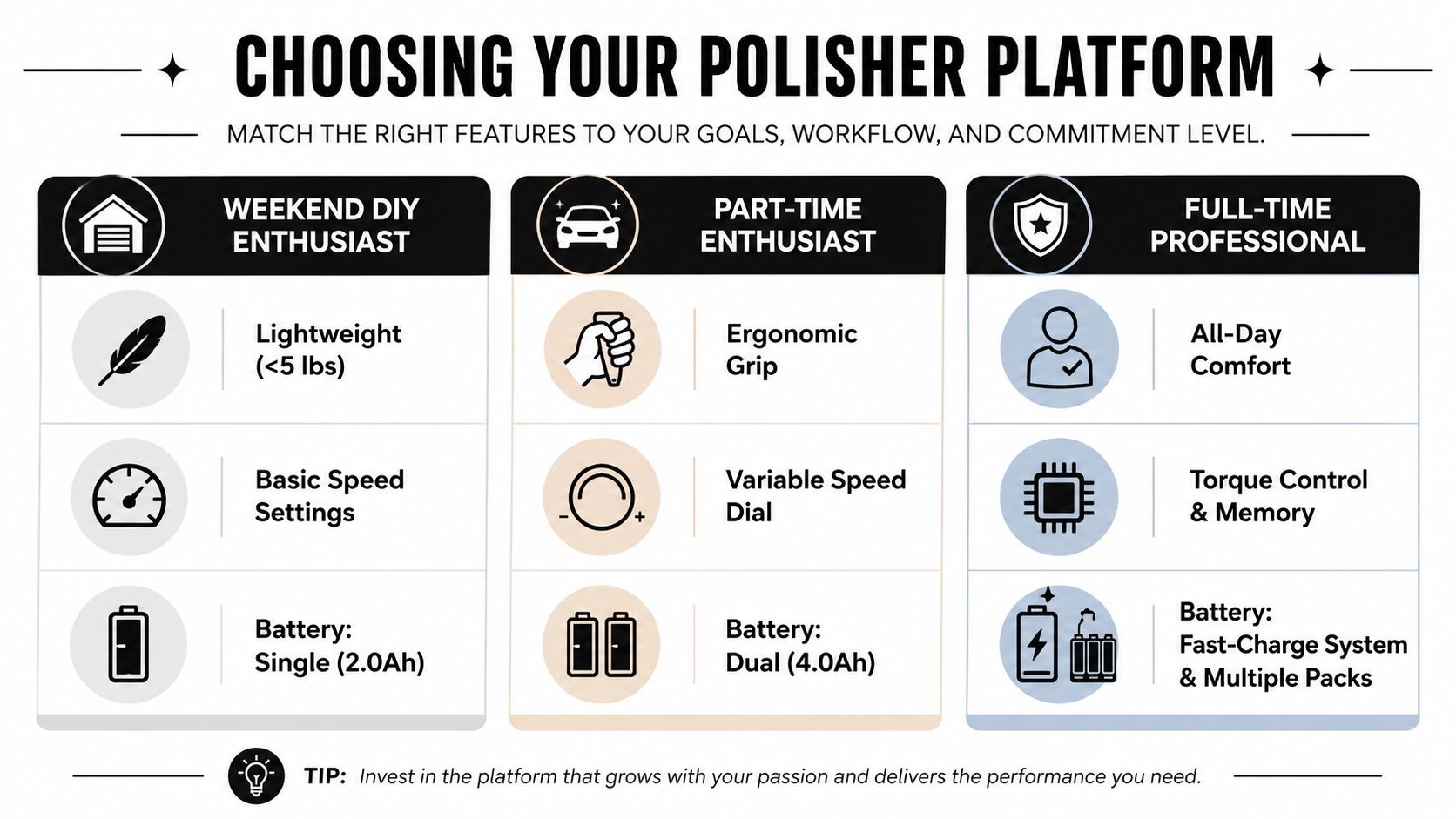
For the weekend user, a lighter system with simple speed control is easier to live with. For a full-time operator, fast charging and multiple packs matter more than one oversized battery. The right purchase is the one that keeps your hands moving instead of waiting on power.
If you’re comparing equipment lists for a mobile setup, this mobile detailing equipment guide fits neatly into the same decision process.
Pairing Correction with Elastomer Protection
The finish only matters if it stays finished. After correction, the panel needs protection that can survive heat swings, driving, washing, and daily abuse without turning brittle. That’s where Titan Coatings’ elastomer approach fits naturally into a cordless polishing workflow.
Titan positions Elastic coatings as hard like glass and flexible, which is the useful part of the idea for mobile work. Flexibility helps the coating move with the surface instead of acting like a rigid shell, so temperature change is less likely to create cracking stress. Their site also frames Alpha Quartz as an easy-to-install elastomer coating and points to protection that can handle everyday wear, including exposure when bugs hit the car service Alpha Quartz product page, paint coating overview.
A corrected panel and a brittle coating are a bad pairing. A corrected panel and a flexible protective layer make more sense for field work.
The cleanest workflow is mechanical correction first, then coating once the paint is ready. That sequence lines up with APEX NANO material on paint correction and polishing as part of coating preparation, which makes sense for any detailer trying to deliver a durable finish after machine work. If your process includes outdoor application, a product like Alpha Quartz belongs in the conversation because it’s built for easy installation and mobile use, while Titan’s Ultra Ceramic Spray is another simple maintenance option for keeping the surface protected after correction Ultra Ceramic Spray.
Apex Glass also fits the same practical mindset, especially for windshields and visibility-focused work. In rain, a clean, coated windshield changes the driving experience in a way customers notice immediately. That’s the kind of add-on that turns a polishing appointment into a more complete service package, without asking you to change your correction process.
Maximizing Battery Life and Tool Care
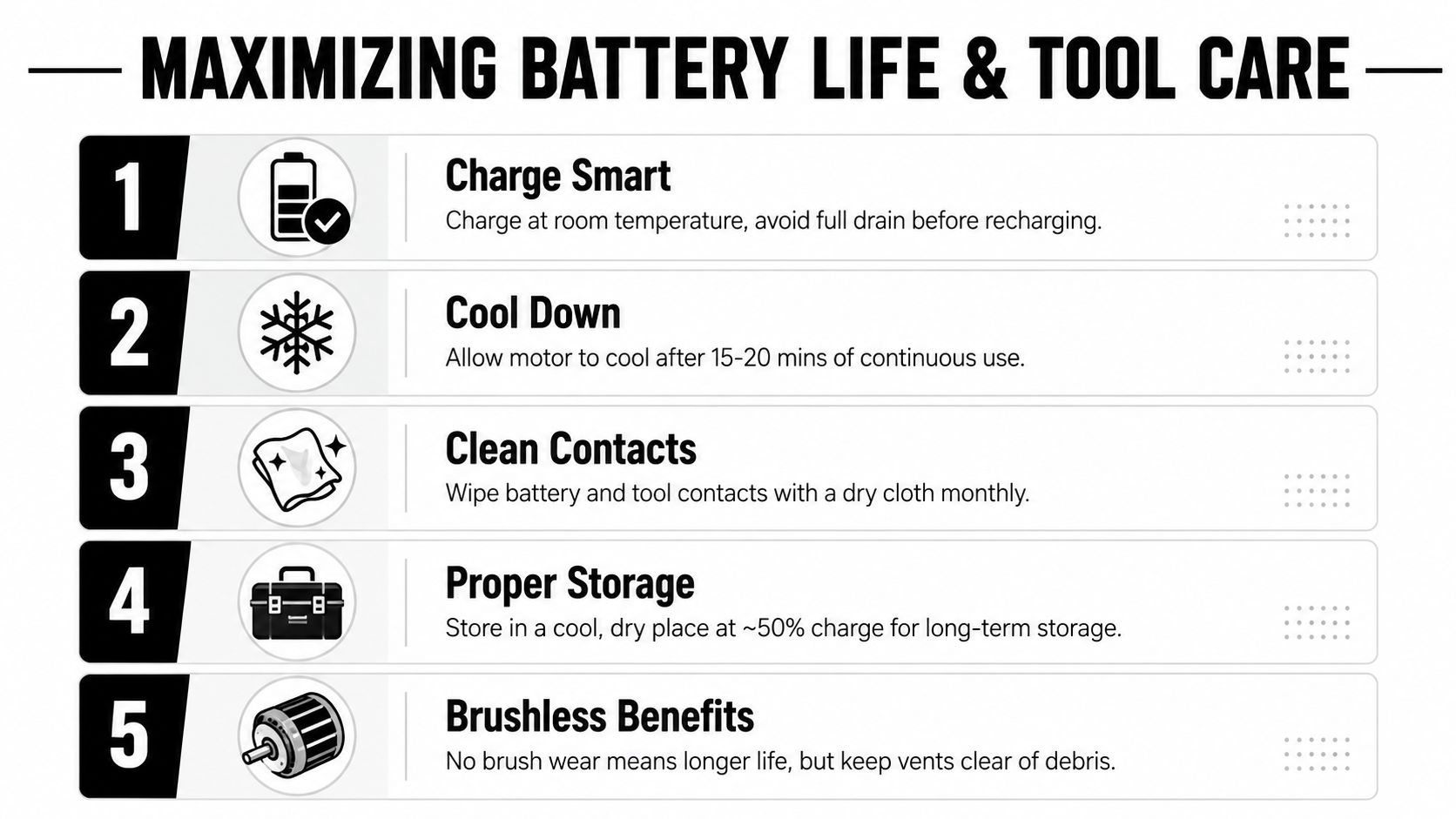
A cordless machine only earns its price if you treat the power system with some discipline. Batteries lose usefulness fast when they’re abused, and polishers feel weaker when pads are loaded up with spent product or the vents are packed with dust. The fix is simple enough, but it has to be consistent.
The habits that matter
- Charge smart. Keep charging habits calm and predictable, and don’t treat a battery like it has to be fully drained before it’s useful again.
- Let the motor breathe. Heavy polishing loads build heat, so give the tool a pause when the housing starts working hard.
- Clean contacts. Dry, clean battery terminals and tool contacts keep the connection reliable.
- Store it properly. A cool, dry storage spot is safer than leaving packs in a hot van or freezing garage.
- Match pad to machine. The wrong pad and backing plate combination adds drag, which shortens useful runtime and puts more strain on the bearings.
FLEX’s cordless platforms are built around brushless motors, and that helps because brushless designs remove brush wear from the maintenance equation. Their PXE platform also makes the backing-plate limit clear in rotary mode, which is a reminder that stability matters just as much as raw speed Detailed Image. If a setup vibrates, bogs down, or feels sloppy on the paint, the tool is telling you something.
The key maintenance win is throughput. When batteries stay healthy and the pad setup is sane, the machine spends more time cutting and less time recovering. That’s what keeps a mobile schedule from slipping.
The Future of Mobile Detailing
Cordless detailing isn’t a trend for people who want to feel modern. It’s a workflow shift that makes sense any time access, speed, and client convenience matter more than plugging into a wall. FLEX’s lineup shows how far the category has moved, from compact mini machines to 24 V heavy correction tools built for real jobs instead of emergency touch-ups FLEX automotive catalog.
The smart move is to pair the right polisher with a protection system that fits mobile reality. After correction, coatings like Alpha Quartz and Apex Glass give you a cleaner handoff to the customer, while Ultra Ceramic Spray can help keep the finish maintained without creating a complicated aftercare routine. That combination is what sells repeat work, because the client sees the result on the paint, then feels the value in how long it lasts.
If you’re building a cordless detailing workflow that still has to perform in the world, APEX NANO – Titan Coatings offers coating options that fit the correction-to-protection process discussed here. Visit APEX NANO – Titan Coatings and explore how their coatings can be paired with your next flex polisher cordless job for cleaner finish work and more durable post-polish protection.
0 Comments