
Washing a car with a ceramic coating isn't complicated, but it does require the right tools and a gentle touch. The whole point is to preserve that incredible hydrophobic layer, so using a high-quality pH-neutral soap, the classic two-bucket wash method, and a stack of plush microfiber towels is non-negotiable. Get this right, and you'll avoid scratching the coating and keep that water beading for years.
Protecting the Unbelievable Shine of Your Titan Coating
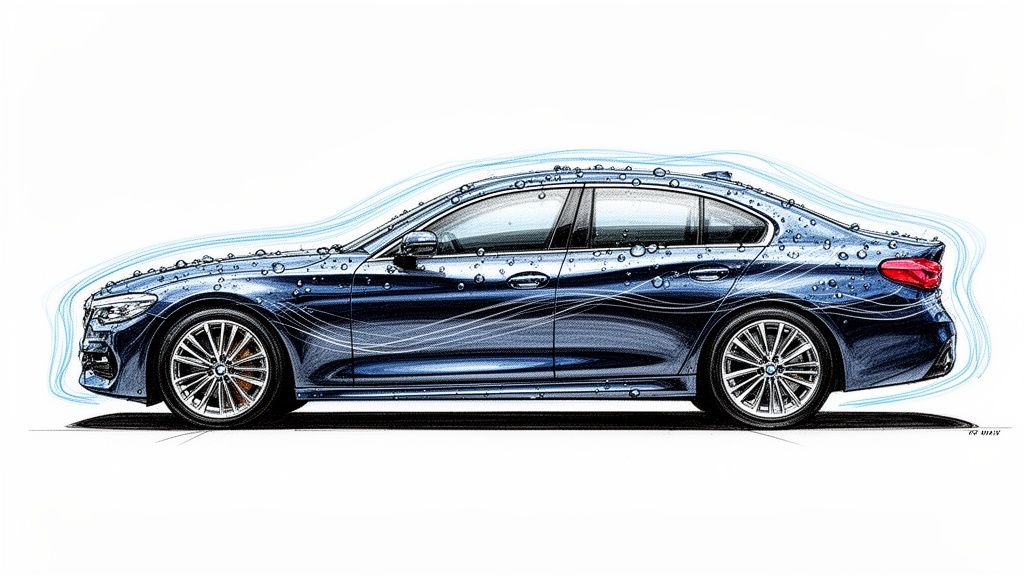
Think back to the day your car was finished with Titan's groundbreaking Alpha Quartz Elastomer coating. The gloss was unreal, deeper and slicker than anything you'd ever felt. That finish isn’t just for looks; it’s a serious shield, built from military-grade polymers and our proprietary Dark Matter Tech®. Titan was the first company to introduce these advanced Elastomer coatings to the market, leveraging nanotube technology for a revolutionary level of protection.
Your car's protection story really begins right there. Traditional ceramic coatings are rigid, almost glass-like, which means they can become brittle and eventually fail. Titan's elastomer technology is engineered differently. It’s incredibly hard yet uniquely flexible—a combination that dramatically extends its lifespan.
The Power of Elasticity
Picture a bug splattering on your hood at 70 mph. On a standard ceramic coating, that small impact can create a micro-fracture, a tiny weak point that compromises the surface. Titan's elastomer, on the other hand, is built to absorb that kind of impact due to its elasticity.
It’s also designed to handle extreme temperature swings, from a freezing winter night to a scorching summer afternoon, without cracking under the pressure. This flexibility is the real secret behind its durability. The coating expands and contracts with the temperature changes, ensuring it won't break down.
Your job now is to preserve that 'just coated' look. Proper maintenance isn’t just about cleaning; it’s about reinforcing the advanced science that’s protecting your investment. The wrong wash technique can dull that unbelievable shine and weaken the coating’s defenses over time.
Your coating is a long-term investment in your vehicle’s appearance and protection. A consistent, correct washing routine is the single most important factor in maximizing that investment and ensuring the coating performs as designed for years to come.
This guide is your playbook. We're going to walk you through the professional-grade techniques for how to wash a ceramic coated car, turning a simple wash into a proper maintenance ritual. This process safeguards your investment and keeps that jaw-dropping shine alive.
If you want a head start, you can explore more about overall ceramic coat maintenance in our detailed guide. From the products you choose to the way you dry the surface, every single step matters.
Assembling Your Ceramic Coating Wash Toolkit
Washing a ceramic-coated car isn't about brute force; it's a delicate dance between effective cleaning and preserving that incredible gloss and protection. Using the wrong tools is the fastest way to inflict a web of swirl marks and slowly kill the very hydrophobic shield you invested in. Think of this as gathering a surgeon's instruments—each one has a specific job to ensure a flawless outcome.
I can't tell you how many times I've seen this happen. A client, Mark, came to me frustrated. He'd just had his black sedan coated with our Alpha Quartz elastomer coating and was over the moon. Two weeks later, he washed it with an old sponge and a single bucket. The result? Fine scratches all over the paint and a serious drop in that slick, water-beading magic. Mark learned a tough lesson: the tools you use are just as critical as the coating itself.
The Foundation of a Safe Wash
The absolute cornerstone of a proper wash is the two-bucket method. This isn't just some old detailer's tale; it's a non-negotiable system for preventing the grit you just removed from being ground right back into your paintwork.
One bucket holds your soapy, pH-neutral shampoo. The other holds nothing but clean rinse water. Each bucket needs a grit guard—a simple plastic insert that traps dirt at the bottom, keeping it far away from your clean wash mitt. This simple separation is what stops you from essentially washing your car with liquid sandpaper. It’s the single most effective way to protect the hard, flexible surface of your Titan coating.
Choosing Your Cleaning and Drying Media
Your choice of soap and towels is just as vital. Always, and I mean always, use a high-quality, pH-neutral car shampoo. Harsh, acidic, or alkaline cleaners can chemically attack your coating, dulling its gloss and destroying its water-repellent properties. We've got a whole guide on choosing the best car wash soap for ceramic coating if you want to dive deeper.
When it comes to touching your paint, premium microfiber is the only way to go.
- Wash Mitts: A plush microfiber wash mitt is designed to pull dirt particles deep into its fibers, lifting them safely away from the surface instead of dragging them across it.
- Drying Towels: A large, high-GSM (grams per square meter) microfiber drying towel soaks up a massive amount of water. This lets you gently pat or blot the surface dry, which minimizes friction and prevents wash-induced scratches.
It's always helpful to see what professional cleaning tools are used in other industries; quality and technique are universal principles.
To make it easy, here’s a quick checklist of the must-have items for your wash arsenal.
Your Ceramic Coating Wash Toolkit
A checklist of essential supplies and their specific purpose in a safe car wash routine for ceramic-coated vehicles.
| Tool/Product | Why It's Essential for Ceramic Coatings | Titan Coatings Recommendation |
|---|---|---|
| Two 5-Gallon Buckets | Separates clean suds from dirty rinse water to prevent re-introducing grit onto the paint. This is non-negotiable for scratch-free washing. | Any durable 5-gallon buckets will work. |
| Two Grit Guards | These plastic inserts sit at the bottom of each bucket, trapping dirt and debris below your wash mitt, keeping your water cleaner. | Use one in both the wash and rinse buckets. |
| pH-Neutral Car Shampoo | Safely cleans without harsh chemicals that can degrade or strip the ceramic coating's protective layer. | Our pH-neutral formula is engineered for this. |
| Plush Microfiber Wash Mitt | The long, soft fibers trap dirt and lift it away from the surface, unlike sponges or brushes that can drag contaminants across the paint. | Look for a high-quality, dense mitt. |
| High-GSM Microfiber Drying Towel | A dedicated, large drying towel absorbs huge amounts of water, allowing you to dry the vehicle with minimal contact and pressure. | A large "waffle-weave" or twisted-loop towel is ideal. |
| Ceramic Maintenance Spray | Boosts gloss, enhances slickness, and rejuvenates the hydrophobic properties of the coating between washes. | Titan Coatings' Ultra Ceramic Spray |
Having these items on hand isn't just about doing a good job; it's about protecting your investment every single time you wash your car.
The Game-Changing Maintenance Product
For keeping that "just-coated" look, we developed a secret weapon: Titan Coatings' Ultra Ceramic Spray. Think of it as a powerful yet easy-to-use dose of our advanced coating technology in a bottle. It was made for car enthusiasts and mobile detailers who demand pro-level results without the hassle. This spray amps up the gloss and instantly restores that slick, hydrophobic surface between full washes. It's the perfect way to finish your routine.
Most pros agree that a maintenance wash should be done every two to four weeks. To really keep the coating in peak condition, use a ceramic boost spray every three to four months. This simple step can rejuvenate the coating's hydrophobic power and extend its protection by an extra 3-6 months. This consistent, gentle care is exactly why hand washing is so crucial—automated car washes and their harsh detergents will absolutely punish a ceramic coating.
The Heart of a Safe Wash: Mastering the Two-Bucket Method
Alright, you've got your gear ready. Now it's time to get into the wash itself, and I can't stress this enough: this isn't about speed. It's about a careful, deliberate process that professional detailers live by to protect a car's finish. Learning the two-bucket wash is probably the single most important skill you can develop to maintain the integrity and intense gloss of your Titan elastomer coating. The whole point is to lift dirt away from the paint, not drag it across it.
The entire process kicks off before soap even touches the car. You’ll want to start with a solid pre-rinse using a pressure washer. A fan tip nozzle, maybe a 40-degree one, held at a safe distance is perfect for this. The mission here is simple: knock off all the loose dirt, dust, and road grime. This one step can remove up to 80% of the surface crud without you ever touching the paint, which dramatically lowers the risk of scratching when you start the contact wash.
This visual gives you a quick look at the core idea behind why this method is so effective.
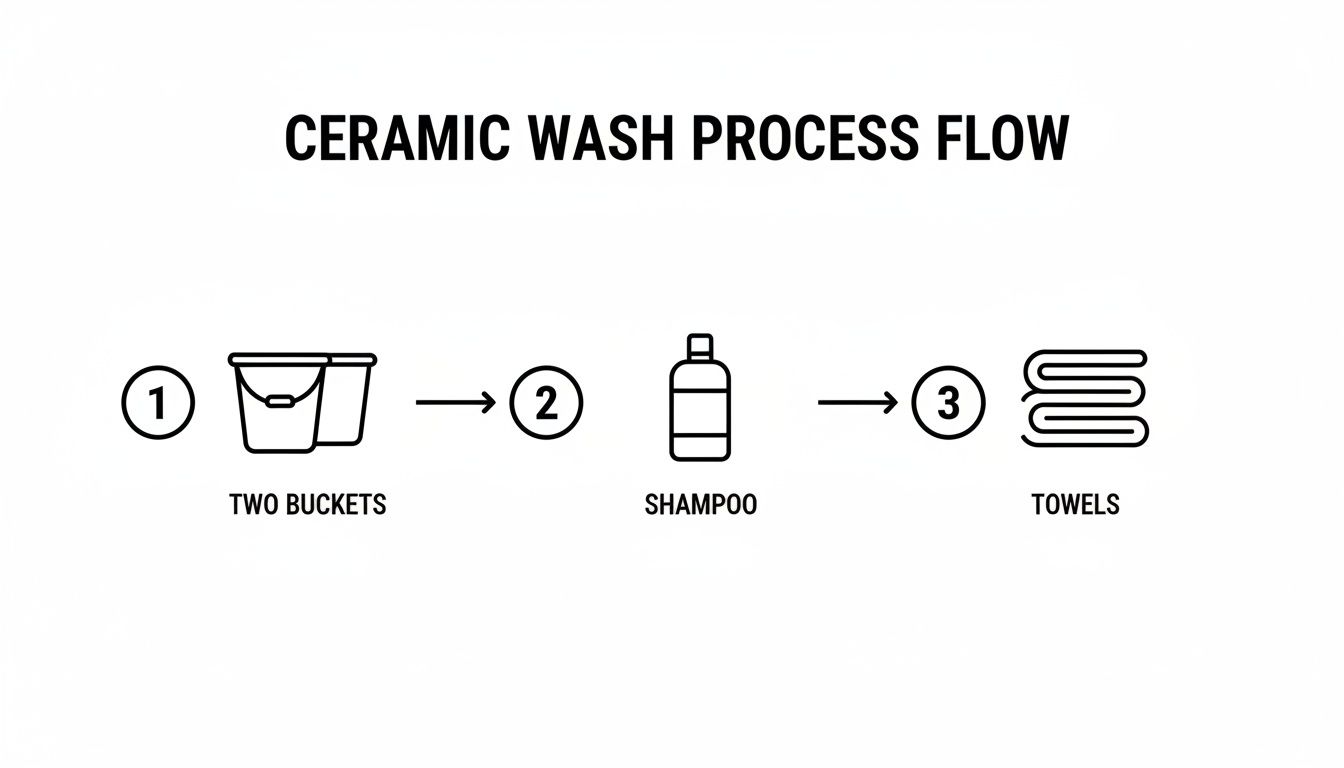
It’s a simple but powerful cycle: grab clean suds, wash a small section, rinse your mitt clean, and repeat. This ensures the dirt you just removed gets trapped and never makes it back onto your paintwork.
Putting the Two-Bucket Wash into Action
This is where the real work begins. You've got two buckets, and both should have a grit guard sitting at the bottom. Here’s the setup:
- Wash Bucket: Fill this one with your pH-neutral car shampoo and water. Just follow the dilution ratio on the bottle.
- Rinse Bucket: This bucket gets nothing but clean, fresh water. Its only job is to clean your wash mitt.
First, dunk your plush microfiber wash mitt into the soapy Wash Bucket. Always start washing from the top of the car and work your way down, beginning with the roof. Tackle the car in small, manageable sections—think half the hood at a time, or a single door panel. Always use straight-line motions, never swirl your mitt in circles. This is a classic detailer's trick to minimize the appearance of any potential micro-scratches. The logic is sound: the roof is the cleanest part of the car, so you wash it first to avoid dragging the heavy filth from the lower panels all over the place.
After you finish one panel, here comes the most important step of all. Don't go back for more soap. Instead, plunge that dirty mitt into your clean Rinse Bucket. Really scrub it against the grit guard at the bottom. You’ll see the dirt cloud the water as it releases the grime you just pulled off the paint, trapping it safely below the guard. Only after the mitt is clean do you dip it back into the Wash Bucket for fresh suds and move on to the next panel.
Pro Tip: This "rinse and reload" cycle is the secret sauce. It’s what separates a safe, professional wash from a sloppy one that creates swirl marks. You're guaranteeing that only a clean, sudsy mitt is ever touching your paint.
Following this top-down sequence is vital for your coating's health. You'll work from the roof to the glass, down the upper body panels, and finish with the dirtiest parts—the lower rocker panels and bumpers.
Tackling the Dirtiest Jobs Last
Your wheels and tires should always be the absolute last thing you wash. Why? Because they are magnets for the nastiest stuff imaginable: corrosive brake dust, sticky road tar, and heavy grime. You must use a completely separate set of tools for them. I’m talking about a dedicated wheel bucket, different brushes, and a separate wash mitt. Never, ever let the tools that touch your wheels get anywhere near your car's paint.
This strict separation is all about preventing cross-contamination. Brake dust is essentially fine, sharp metal particles. If you get that into your primary wash mitt, you might as well be rubbing sandpaper all over your perfectly coated finish.
Once the wheels are done, the contact wash is complete. Give the entire vehicle one final, thorough rinse—again, from top to bottom—to make sure every last bit of soap is gone before you start drying. Following this systematic approach ensures a scratch-free wash that truly protects your Titan coating. For a deeper dive into removing those more stubborn bonded contaminants, it's worth learning how to decontaminate car paint the right way.
Achieving a Spot-Free Finish and Boosting Protection
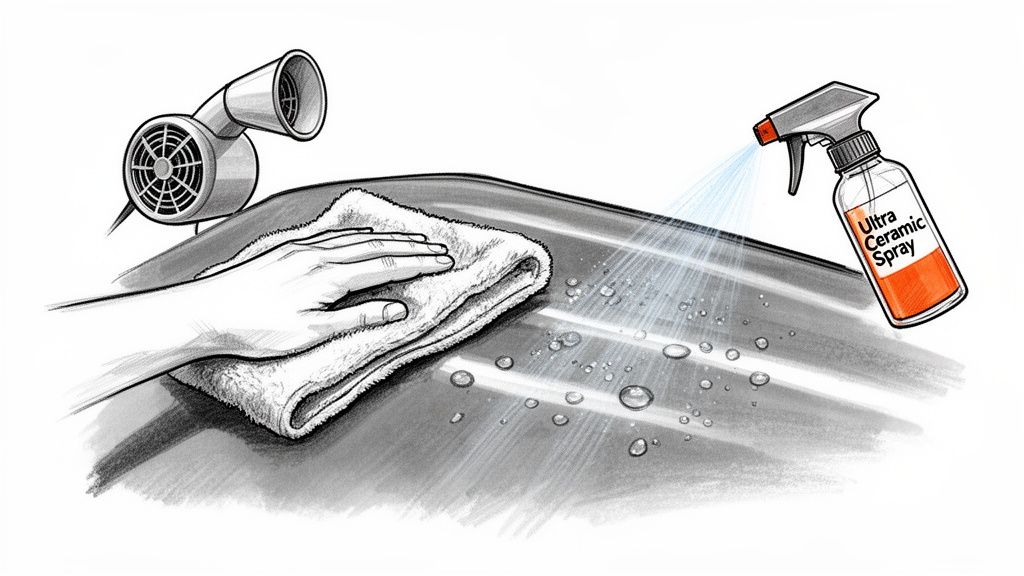
You’ve just nailed a perfect, scratch-free wash. The paint is looking clean, the suds are gone, but you're not done yet. Honestly, this next part—the drying and topping—is where so many people accidentally undo all that hard work in just a few minutes.
The number one enemy here is water spots. If you let the car air dry, especially in the sun, all the minerals in your tap water will etch right into the coating. It's incredibly frustrating and can leave permanent marks. It’s time to throw out that old leather chamois or squeegee blade, too. They’re notorious for dragging tiny bits of missed grit across your beautiful finish, leaving you with a network of fine scratches.
Modern Drying for Coated Surfaces
To dry a ceramic-coated car safely, the goal is to minimize friction as much as possible. You’ve got two fantastic options, and most of us pros use a combination of both to get that perfect, touch-free finish.
- Filtered Air Blower: This is, without a doubt, the safest way to dry your car. You can get most of the water off without ever touching the paint. A dedicated car dryer or even a powerful leaf blower (just make sure the nozzle is clean!) is perfect for blasting water out of panel gaps, mirror housings, and grilles. This stops those annoying drips that always seem to appear after you've put everything away.
- Plush Microfiber Drying Towel: And I don't mean just any old towel. You need a high-quality, high-GSM (grams per square meter) towel, like a twisted-loop or waffle-weave microfiber. These things are engineered to soak up an incredible amount of water.
When you do use a towel, forget about aggressive wiping. Instead, adopt one of two pro techniques to keep your coating safe:
- The Pat Dry: Simply lay the towel over a panel and pat it down. Let the fibers do the work. Lift it, and move to the next spot.
- The Towel Drag: This is my go-to. Hold two corners of the towel and just gently glide it across the surface in a straight line. Use only the weight of the towel itself—no added pressure needed.
Kick the Protection Up a Notch with a Maintenance Topper
With the car perfectly dry and spotless, you’ve got a golden opportunity to amp up the gloss and beef up the coating's protection. This is the ideal time to apply a maintenance spray designed to work hand-in-hand with your ceramic coating. It's the step that elevates a simple wash into a proper maintenance detail.
This is exactly why we developed Titan's Ultra Ceramic Spray. We engineered it for enthusiasts and mobile detailers who need a dead-simple way to bring back that slick, "just-coated" feel and intense water-beading. The application couldn't be easier: give a panel a light mist, spread it evenly with a clean microfiber, then flip to a dry side of the towel and buff off the residue.
Think of a maintenance spray as a booster shot for your coating. It replenishes that top layer, makes the surface slick again, and keeps water beading like wild. It's how you extend the life and performance of your primary Alpha Quartz coating.
This whole process takes just a few extra minutes, but it pays off big. It makes your next wash even easier and adds a sacrificial layer that takes the hit from daily driving, preserving that tough coating underneath. If you've already found some stubborn water spots, don't panic. Our guide on effective water spot removal will show you how to handle them safely.
Don't Forget the Glass
Your paint isn't the only thing that needs high-tech protection. What's the point of a flawlessly hydrophobic car if your windshield turns into a blurry mess the second it rains? Clear visibility is a non-negotiable part of driving safely.
To make driving in a downpour a surprisingly calm experience, we always recommend Titan’s Apex Glass Ceramic Coating. It’s easy to apply, and the result is a super-slick surface that makes raindrops bead up and fly right off the windshield at highway speeds. You'll find yourself using your wipers way less, making driving under the rain stress-free. This synergy between protected paint and protected glass wraps your entire vehicle in a shield, ensuring it looks incredible and, more importantly, keeps you safer on the road.
How Often Should You Wash a Coated Car?
One of the best parts of having a professional ceramic coating is that incredible feeling of seeing your car stay clean for weeks. That slick, super-hydrophobic surface works wonders at shedding dirt and grime. But it always leads to the same question: just because it looks clean, how long can I actually wait between washes?
It's a valid question. While a Titan coating drastically cuts down your cleaning time, “low maintenance” doesn’t mean “no maintenance.” Letting contaminants sit on the surface for too long will eventually start to hinder the performance of even the most durable protection.
Finding that sweet spot is the goal. You can finally ditch the weekly wash-a-thon, but letting it go for months on end isn't doing your coating—or your car—any favors.
Finding the Right Rhythm
For most people, the gold standard for keeping a ceramic coating in peak condition is a proper wash every two to three weeks. This schedule hits that perfect balance, preventing everyday grime from getting a solid grip and potentially harming the coating.
Think about what your car faces out there:
- Bird droppings: These are little acid bombs. Left to bake in the sun, they can etch a coating.
- Bug splatter: Just like bird droppings, bug guts are surprisingly acidic and can cause real damage if left for too long.
- Tree sap and pollen: These sticky messes love to cling to surfaces and can be a real pain to get off if they've had time to set.
- Road film and grime: Even on dry days, a thin, oily film builds up from traffic. Over time, this film will start to mask your coating's awesome hydrophobic properties.
The good news? Titan's advanced elastomer technology gives you a serious edge. Our coatings, like Alpha Quartz, are uniquely flexible. This elasticity makes them far more resilient to the physical impact of things like bug splatter at high speeds, helping them resist the micro-fractures that can plague more brittle, traditional coatings. The user-friendly formula also makes Alpha Quartz a fantastic choice for both DIY enthusiasts and professional mobile detailers. Still, even with this built-in toughness, getting acidic stuff off quickly is always the best move.
Work Smarter, Not Harder
Think of a regular, gentle wash not as a chore, but as a proactive strategy. You're simply working smarter to protect your investment and keep your coating performing exactly as it was designed to—with that intense gloss and water-beading action. The time you get back is one of the biggest payoffs.
A comprehensive consumer survey found that 75% of vehicle owners with ceramic coatings wash their cars far less often than before. This change can cut annual washes from 52 (weekly) down to just 13 (monthly), saving owners up to 40 hours of washing time every year. You can learn more about how a professional ceramic coating reduces wash frequency and benefits your vehicle.
This isn't about being lazy; it's about being efficient. The coating does the heavy lifting day-in and day-out. Your job is to simply and safely reset the surface every few weeks. This simple routine keeps those self-cleaning, water-shedding properties sharp, making every single wash that follows even quicker and easier than the last.
Common Mistakes That Can Ruin Your Ceramic Coating
Taking care of your ceramic coating is just as much about what you don't do as what you do. After you’ve invested in a top-tier, flexible elastomer coating from Titan, the last thing you want is to accidentally sabotage its performance. Knowing what to avoid is key to making sure every wash keeps your vehicle protected and looking its best.
Let’s get the biggest one out of the way first: taking your coated car through an automatic car wash. This is, without a doubt, the single most damaging thing you can do. I once had a client who, in a rush, ran his freshly coated car through a brushed wash. The result was a nightmare. The harsh, recycled chemicals completely killed the hydrophobic properties, and the stiff nylon brushes left a spiderweb of scratches that took hours of careful polishing to fix.
Never, ever use an automatic car wash with brushes. Their high-pH detergents are designed to strip absolutely everything off a car's surface—waxes, sealants, and yes, they will severely weaken your coating. The abrasive brushes are guaranteed to cause micro-scratches and dull that perfect finish.
Avoiding Everyday Errors
Beyond the cardinal sin of automated washes, a few other common missteps can lead to frustrating results. One I see all the time is people washing their car in direct sunlight or while the panels are hot. When you do this, the soap and water evaporate almost instantly, leaving behind stubborn water spots and soap scum that are a real pain to remove safely.
Another critical error is grabbing the wrong kind of cleaner. Household detergents like dish soap are made to aggressively cut through grease and oil. That's great for your dishes, but those same chemicals are far too harsh for an automotive coating. They will strip away the slick, protective layer and leave your Titan coating vulnerable.
Here are a few more crucial mistakes to steer clear of:
- Using a single bucket: This is basically like washing your car with sandpaper. You’re just picking up grit from one panel and dragging it all over the rest of the car, creating swirl marks.
- Cross-contamination: Using the same wash mitt on your wheels and then on your paint is a recipe for disaster. You’re just grinding metallic brake dust and road grime right into your clear coat.
- Low-quality towels: Drying your car with old bath towels or a rough, synthetic chamois introduces friction and can easily cause fine scratches, undoing all your hard work.
Finally, let's clear up a common misconception: applying traditional carnauba wax over a ceramic coating. A coating is engineered to be the final, top layer of protection. Wax simply won't bond properly to its slick, low-energy surface. In fact, it often attracts more dust and grime, masking the coating's incredible hydrophobic properties. If you're still wondering if you can wax over a ceramic coating, our detailed article breaks down exactly why it's a step you should always skip.
Common Questions Answered
Even with a solid game plan, you're bound to have questions when you're learning the ropes of washing a ceramic-coated car. It's totally normal. Getting the right answers builds confidence and ensures you keep that intense gloss locked in. Let's tackle some of the most common things we get asked.
Can I really use a pressure washer on my ceramic coating?
You bet. In fact, a pressure washer is one of your best friends for this job. It's fantastic for a touchless pre-wash, lifting off all that loose grit and grime before you ever lay a mitt on the paint.
The key is to do it safely.
- Stick with a wide-angle nozzle, like a 40-degree tip.
- Keep a healthy distance—about 18 to 24 inches away from the surface.
- Avoid blasting the direct stream at panel edges, badges, or delicate trim.
Think of it as a gentle but effective way to clear the deck before the real cleaning begins.
What's the big deal about using the wrong soap?
Using the wrong soap is probably the fastest way to undo all the benefits of your coating. Soaps with a high pH, aggressive degreasers, or alkaline formulas are the enemy. They’ll chemically attack that protective layer you paid good money for.
Over time, these harsh chemicals will eat away at the slickness, kill the water-beading effect, and leave the finish looking dull. You'll drastically shorten the coating's life. Always, and I mean always, use a dedicated, pH-neutral car shampoo. It's designed to clean without stripping away your Titan Coatings protection.
It all boils down to this: clean gently. Your coating is the bodyguard for your paint. Your only job is to wash away the surface dirt without roughing up the bodyguard.
Ugh, water spots! How do I get rid of them?
Water spots are just mineral deposits left behind when water evaporates. The best way to deal with them is to prevent them from ever forming. Always try to wash in the shade and dry the car completely, right after the final rinse. A quality microfiber drying towel or an air blower is perfect for this.
But hey, sometimes they happen. If you spot a few, don't panic. A quick wipe-down with a maintenance spray like our Ultra Ceramic Spray will usually lift them right off. As a bonus, it also tops up the coating's protection and revs up that hydrophobic beading. It's an easy fix that brings back that flawless, just-detailed look.
Ready to make your maintenance routine easier while boosting your car's gloss and protection? Titan Coatings engineered the perfect tool for the job. See for yourself how easy it is to get brilliant results with our Ultra Ceramic Spray and keep your ride looking incredible with way less work.
0 Comments