
A detailer I know spent half a day correcting a black SUV until the stainless trim looked liquid. The next morning, under direct light, the trim showed a web of fine wash marks and one sharp line from a key ring brushing the door.
That’s the moment a person often stops trusting the phrase scratch resistant coating for stainless steel. The finish looked perfect, the owner did everything right, and the damage still appeared. If you work on vehicles every day, you’ve seen this disappointment too. Stainless trim, pillars, door sills, exhaust surrounds, and metal accents can look premium for a moment, then betray every wipe, every dusty towel, and every careless touch.
The Unavoidable Flaw in Flawless Finishes
The frustration with stainless steel isn’t that it looks bad. It’s that it looks too good when it’s fresh. The cleaner and more reflective the finish, the more obvious every micro-mark becomes.
A client once pointed at a polished trim strip and said, “I only touched it while drying.” That’s believable. On stainless, especially decorative stainless, light surface contact can leave visible evidence long before the base material has failed. For detailers, that creates a brutal mismatch between effort and reward. You polish, refine, protect, and the surface still picks up fine visual damage during normal handling.
Why stainless trim disappoints so quickly
A lot of confusion starts here. People assume stainless steel means the surface should be naturally tough against scratching. But corrosion resistance and scratch resistance are not the same thing. Stainless can resist rust very well and still show wash marring, scuffing, and abrasion on the topmost surface.
That’s why surface engineering matters so much. The bond between the coating and the metal decides whether protection stays in place when the part heats up, cools down, flexes slightly, or gets cleaned repeatedly. If you want a useful primer on that bond, Titan’s guide to coating adhesion on real-world surfaces is worth reading before you spec any coating system.
Fine scratches on stainless usually start as a surface interaction problem, not a bulk metal problem.
The real-world damage nobody talks about enough
Professional detailers don’t deal with laboratory conditions. They deal with:
- Dirty wash media: Tiny trapped grit can drag across trim and leave visible scoring.
- Pocket contact: Keys, rings, belt hardware, and bags hit door-area stainless constantly.
- Maintenance wear: Repeated wiping, chemical cleaning, and dust removal slowly dull the look.
- Environmental grit: Sand and road debris don’t have to hit hard to leave marks on exposed trim.
The result is familiar. A vehicle can have corrected paint, cleaned glass, and crisp tires, while the stainless details still look tired. That’s why buyers and pros keep searching for a coating that doesn’t just add shine for delivery day, but helps the metal hold its finish in daily use.
The Science of Hardness Versus Flexibility
A common misconception is that “hard coating” marks the end of the conversation. It isn’t. Hardness helps resist scratching, but hardness alone doesn’t guarantee durability.
Surface treatments and coatings can form a protective film that raises hardness and wear resistance. They can also lower surface friction, which helps reduce the shear forces that create fine scratches on trim, appliances, and hand-contact surfaces, as described in this technical overview of stainless anti-scratch process principles.
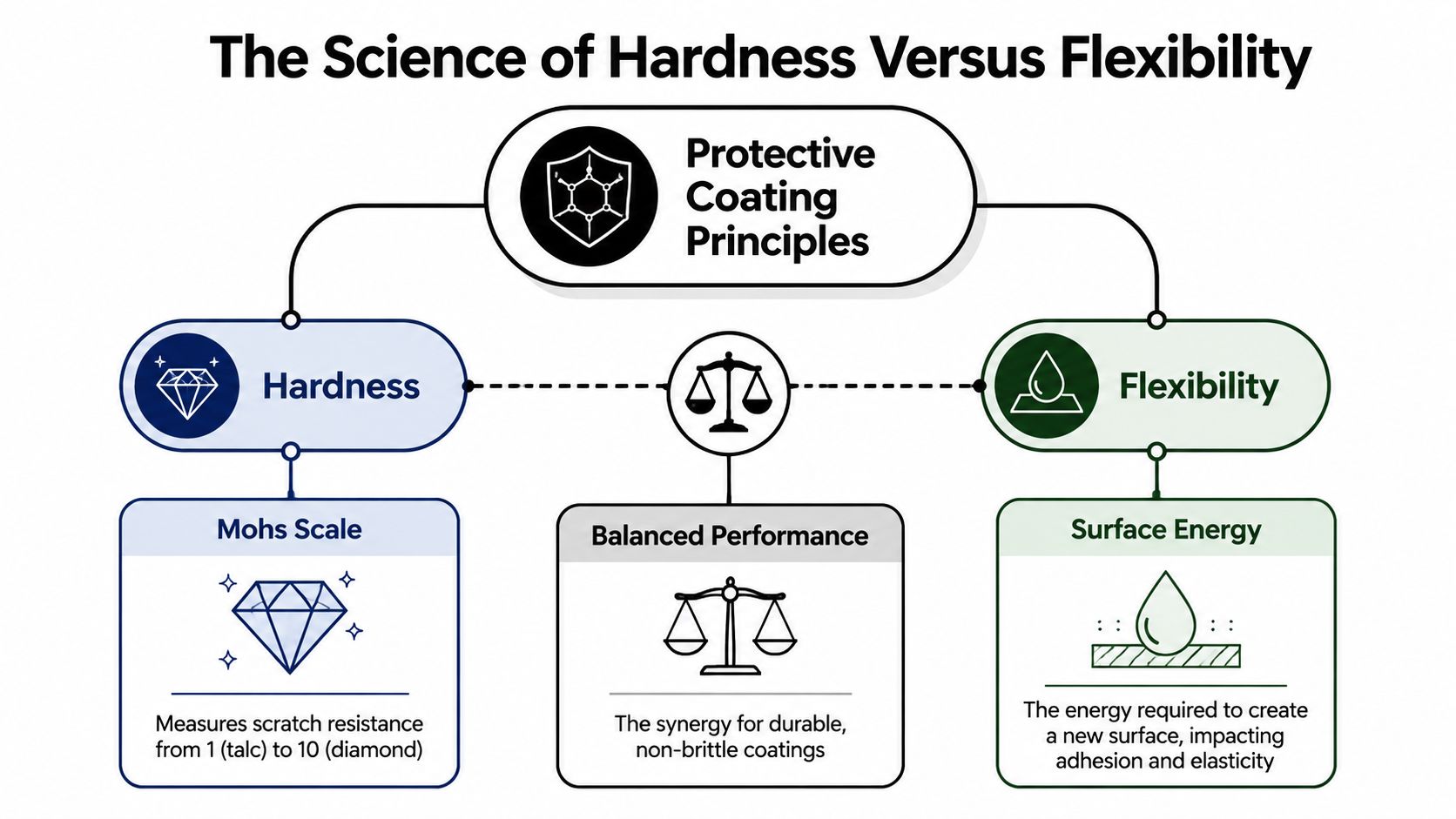
Hard is useful. Brittle is dangerous.
Glass is hard. Drop it, and that hardness doesn’t save it. Rubber is flexible. Drag a sharp object across it, and flexibility alone won’t save it either.
The goal in a scratch resistant coating for stainless steel is a smarter balance:
| Property | What it helps with | Where it falls short alone |
|---|---|---|
| Hardness | Resists fine abrasion and light surface scoring | Can crack or chip if the film is too brittle |
| Flexibility | Absorbs stress, movement, and thermal change | May not resist sharp abrasion well by itself |
| Balanced performance | Handles both daily wear and real-world stress | Requires careful coating design |
Many buyers are often misled by single-number marketing. A hardness claim may sound impressive, but if the coating can’t tolerate movement, impact, or temperature swing, that hard film may fail at the exact moment the vehicle sees real use.
For readers comparing protection systems, Titan’s overview of 9H ceramic coating claims and what they mean is a useful example of why hardness ratings need context.
What flexibility actually changes
On stainless trim, the surface doesn’t live a quiet life. It heats in the sun, cools overnight, gets wiped during maintenance, and takes small impacts from handling and debris. A coating that can move with the substrate has a better chance of staying intact instead of developing tiny failures that become visible later.
Here’s the simple version I give new technicians:
- A hard surface resists the start of a scratch.
- A flexible structure helps the film survive stress without cracking.
- A durable coating needs both.
Practical rule: If a coating is sold only as “hard,” ask what happens when the panel expands, contracts, or takes a light impact.
That’s the dividing line between a coating that looks good in a brochure and one that keeps a stainless finish looking clean in traffic, weather, and wash cycles.
A New Generation of Coating Technology
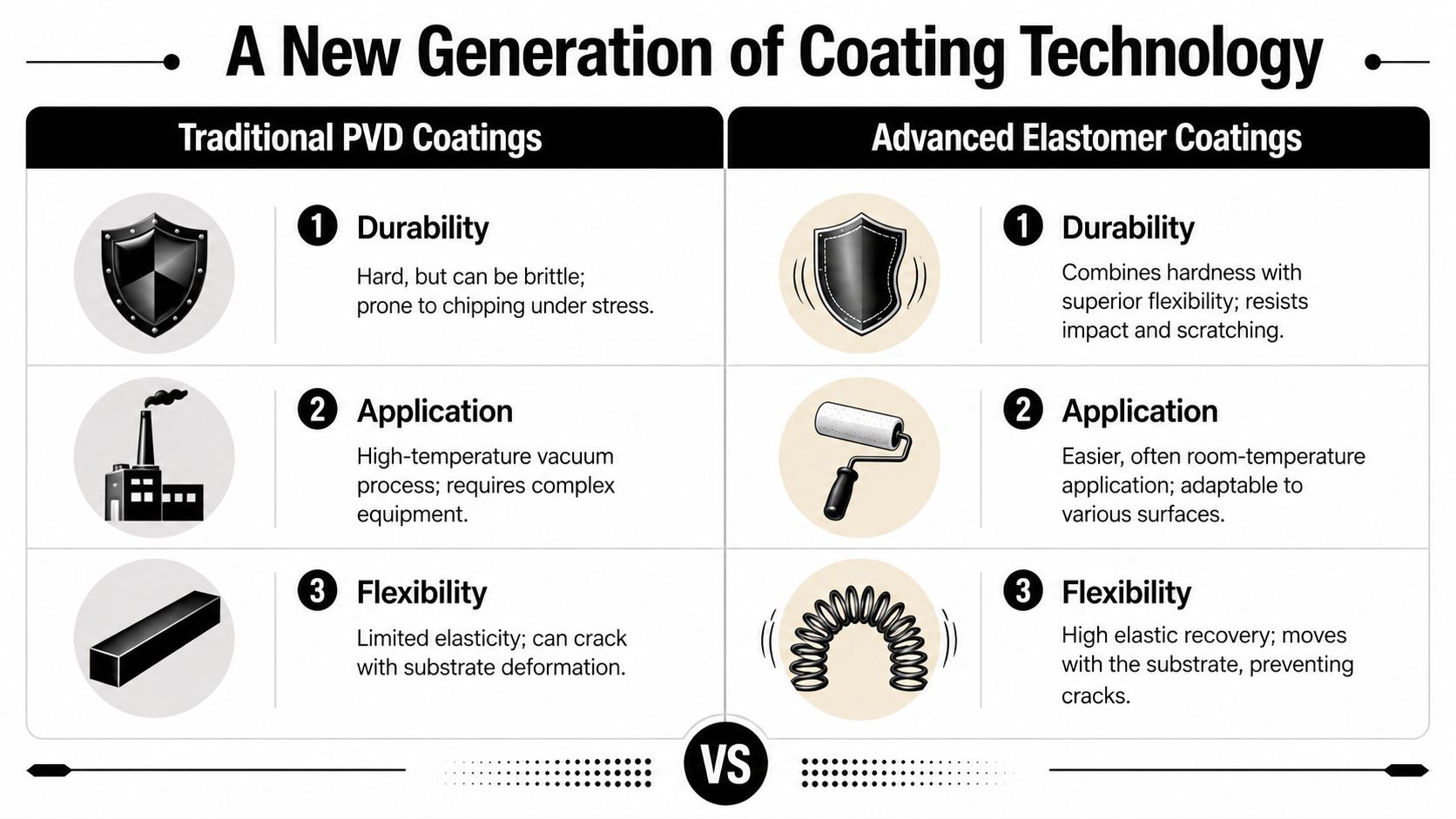
The older generation of stainless protection focused on making the surface harder or changing its appearance. That approach gave the industry important tools, but it also left some obvious gaps once coatings moved from controlled manufacturing to exposed, high-contact use.
Technologies such as PVD and CVD started moving from laboratory work into industrial use in the late 1970s and 1980s. They allow nanometre- to micrometre-scale coatings to be deposited on stainless steel and can significantly increase surface hardness, according to The Open University’s manufacturing material on coating processes.
What traditional systems do well
PVD and CVD matter because they changed what manufacturers could do with stainless. They made it possible to deposit very thin functional layers, control appearance more precisely, and improve wear behavior without changing the base metal itself.
In factory environments, that’s powerful. These methods helped make premium stainless trim, appliance parts, and decorative components more durable and more visually consistent.
For static parts or tightly controlled applications, they still make a lot of sense.
Where the old model starts to struggle
Professional detailers work on surfaces after the factory process ends. You’re not evaluating a coating in a vacuum chamber. You’re evaluating it after weather, traffic film, hand contact, road vibration, and repeated cleaning.
That’s where a harder-but-rigid layer can become a compromise.
| Technology direction | Strength | Limitation in daily use |
|---|---|---|
| Thin hard film systems | Strong barrier and scratch resistance potential | Limited flexibility under stress |
| Basic ceramic style coatings | Good slickness and surface protection behavior | Can be less forgiving on impact and temperature movement |
| Flexible elastomer systems | Designed to combine hardness with movement | Need correct prep and application to perform well |
The broader finishing market has another problem. Buyers often can’t compare products cleanly because the language is inconsistent. One useful example comes from Ionbond’s discussion of stainless finishes, which notes that some coatings are marketed with hardness language while others are described more vaguely, and that anti-fingerprint behavior is often mistaken for sharp-object scratch protection. That confusion is explained in their piece on PVD coating for stainless steel finishes.
That distinction matters. A coating that repels oils and moisture may improve appearance, but that doesn’t automatically mean it will handle keys, grit, or abrasive contact well.
Why flexibility is now the serious differentiator
The next step isn’t abandoning hardness. It’s engineering hardness with recovery. That’s the shift detailers should pay attention to.
You can see the same logic in adjacent finishing work outside automotive trim. If you’re comparing protective approaches for metal surfaces in general, this guide on achieving a flawless steel door finish is a useful reminder that finish quality depends on matching the coating type to the actual service environment, not just the desired look.
That’s exactly why elastomer-based coating systems have become such an important discussion. They aim to solve the weakness that older, more brittle surface technologies didn’t fully address: real-world movement.
Meet Titan Alpha Quartz The Elastomer Revolution
There’s a reason detailers keep asking for something beyond “another ceramic.” The market has spent years training people to chase hardness language, while practical questions stayed unanswered. What happens when the surface gets hit by road grit? What happens in heat, cold, and repeated washing? What happens when the substrate moves and the coating doesn’t want to?
That’s the gap elastomer technology is built to address.
Why Alpha Quartz stands out in practice
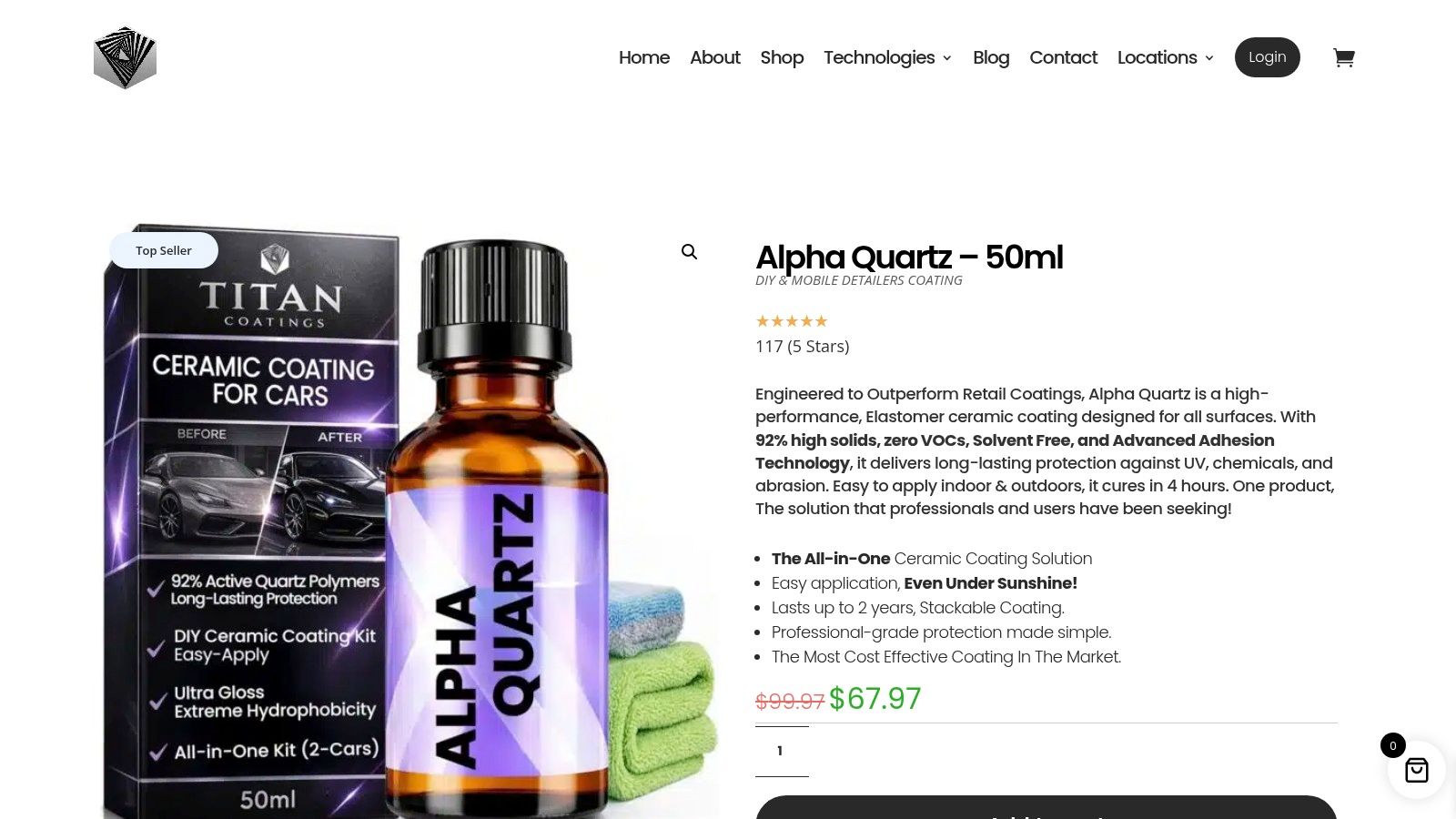
Titan positions Alpha Quartz as an elastomer-based coating option for users who want a film that behaves differently from a conventional brittle shell. The key idea is simple. The coating is intended to be hard like glass but flexible enough to handle stress, which is especially relevant on trim and exterior surfaces exposed to changing temperatures and incidental impact.
For professional detailers and mobile installers, that matters because stainless trim rarely fails in one dramatic event. It usually degrades through accumulation. Fine contact, repeated cleaning, heat cycling, bug impact near front-end trim, and daily handling all stack up over time.
A coating with elasticity is meant to keep that stack from becoming visible damage too early.
The value for mobile detailers and DIY users
Ease of use isn’t a side benefit. It’s part of the technology decision.
If a product only performs under ideal shop conditions, many users won’t get the result the chemistry is capable of delivering. Alpha Quartz is aimed at people who need something more forgiving in the field, including DIY owners and mobile detailers who can’t control every environmental variable the way a fixed studio can.
That makes it relevant beyond painted panels. Stainless accents, glossy metal trim, and mixed-material exterior details all benefit when the installer has a coating that is less likely to become a stress point itself. Titan discusses that elastomer category in more detail on its page about Titan Coatings elastomer technology.
A protective layer should not become the weak link when the surface heats, cools, or gets lightly impacted.
Why this matters in a crowded market
One of the biggest issues in the coating space is vague language. As Ionbond notes, many products are sold as “scratch resistant” without comparable testing language, and some formulas are primarily about repelling oils and moisture rather than resisting mechanical damage. That creates a real decision problem for buyers who need true durability, not just a cleaner-looking panel.
In that context, an elastomer approach makes sense because it answers a question traditional coating marketing often avoids: Can the coating keep performing when conditions stop being gentle?
That doesn’t mean no coating can ever be marked. It means the structure of the protection system is better aligned with how vehicles are used.
Total Vehicle Protection Beyond Stainless Steel
The same logic that applies to stainless trim applies to the rest of the vehicle. Real protection isn’t just about preserving gloss. It’s about reducing stress during ownership.
Take glass. Every detailer has had a client who tenses up in heavy rain, not because the vehicle is unsafe, but because visibility becomes mentally exhausting. Water sheets, wipers smear, glare builds, and the driver works harder than necessary. A glass coating changes that experience by helping water clear faster and making the windshield easier to maintain.
Where visibility becomes part of protection
Titan’s Apex Glass is built around that practical result. The appeal isn’t theoretical. It’s the way the windshield behaves when weather turns ugly. Drivers notice it most at night, in highway spray, or during long commutes when visual fatigue builds.
For detailers, that creates an easy conversation with clients. You’re not selling shine. You’re helping them keep a clearer field of view in the kind of conditions that usually make driving tense.
Easy maintenance still matters
Not every customer wants a full multi-step coating service on every surface. Some want a fast way to maintain gloss and add a layer of protection between deeper services. That’s where a spray format becomes useful.
Ultra Ceramic Spray fits that maintenance role well because the barrier to entry is lower. A client can use it as part of regular upkeep, and a pro can use it to refresh protected surfaces efficiently.
A simple product ecosystem tends to work better for real owners:
- For stainless and trim: use a coating approach designed around scratch resistance and movement.
- For glass: choose something focused on visibility and easier wet-weather driving.
- For routine upkeep: keep a spray product in the workflow so protection doesn’t disappear between major details.
The best protection plans are the ones owners will actually maintain.
That’s the larger point. Stainless steel may bring people into the coating conversation, but once they understand what modern surface protection can do, they usually want the same thinking applied across the vehicle.
Mastering Application and Long-Term Care
A good coating can still disappoint if the prep is rushed. Stainless steel is unforgiving that way. It shows residue, trapped contamination, uneven wipe patterns, and missed polishing oils faster than many painted surfaces.
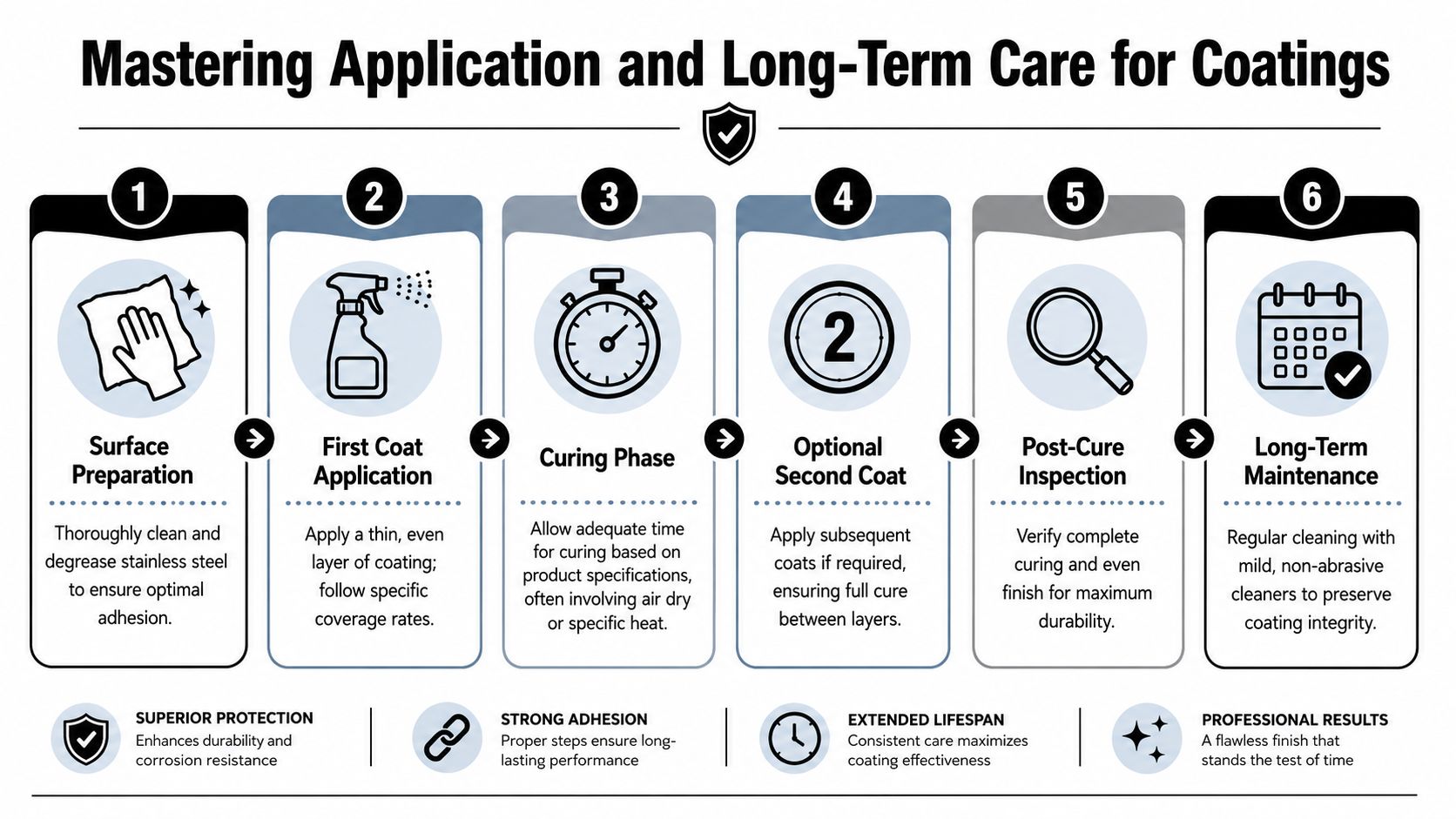
The first rule is straightforward. Prep determines bonding. If the surface isn’t fully clean, the coating has to attach to the contamination instead of the metal.
For a more detailed walkthrough, Titan’s guide to coating surface preparation before application covers the logic behind each prep stage.
A field-ready application flow
When I train installers on metal trim and stainless details, I keep the process tight:
- Wash first. Remove loose grime, traffic film, and anything that can drag during wiping.
- Decontaminate the surface. Stainless often holds residues that don’t show until the coating goes on.
- Refine if needed. If the trim already has visible marring, correct it before sealing the defect under protection.
- Panel wipe carefully. Oils left from polish or cleaner can interfere with consistency.
- Apply thin and controlled. More product doesn’t equal more durability.
- Level thoroughly. Stainless highlights high spots quickly under angled light.
The goal isn’t drama. It’s uniform coverage and stable bonding.
Caring for the coating after install
Often, brands are vague on these matters. Buyers don’t just want to know how the coating looks on day one. They want to know what happens after repeated cleaning and whether damage can be managed without redoing everything.
That lifecycle question is important. As discussed in this video on coating repairability and long-term satisfaction, buyers often need clarity on how harder, thinner coatings survive maintenance cycles and whether spot repair is realistic after wear or localized damage.
Here’s the practical maintenance advice I give:
- Use mild cleaners: Abrasive cleaners and harsh pads can defeat the point of adding protection.
- Wash with clean media: Stainless trim shows drag marks fast, so towel discipline matters.
- Inspect under direct light: Catching minor damage early makes correction decisions easier.
- Treat deep scratches: A deep cut into the substrate is different from marring in the coating layer.
What flexibility changes over time
A flexible coating structure can help long-term integrity because repeated cleaning and temperature swing create cumulative stress. That doesn’t mean maintenance becomes optional. It means the coating is less likely to behave like a brittle shell that turns routine use into premature failure.
Shop-floor advice: If the owner uses abrasive pads on coated stainless, no chemistry can make that a good maintenance plan.
For pros, the biggest win is predictability. A user-friendly coating with sensible prep and clear maintenance habits gives better real-world outcomes than an ultra-rigid system that performs beautifully only when nothing goes wrong.
The Future of Protection Is Smart and Flexible
The old story in coatings was simple. Make the surface harder and call it solved. Real-world use proved that wasn’t enough.
A durable scratch resistant coating for stainless steel has to do more than resist a light scratch in ideal conditions. It has to stay bonded, hold appearance, tolerate cleaning, and survive stress from temperature change and everyday contact. That’s why the conversation has shifted toward engineered flexibility, not just headline hardness.
Titan’s broader research direction reflects that shift, especially in how it connects advanced coating behavior with practical use across vehicle surfaces. If you want a wider view of where material science is heading, Titan’s article on what graphene coatings are and how advanced protection is evolving is a useful next read.
The takeaway is clear. Better protection doesn’t come from chasing the hardest possible shell. It comes from building a coating that can resist wear and survive reality.
If you want to explore protection systems designed for stainless trim, paint, glass, and maintenance use, take a closer look at APEX NANO – Titan Coatings.
0 Comments