
You’ve picked out the car, signed the papers, and you’re ready to drive home grinning. Then the finance manager slides over one more form, circles a paint protection package, and suddenly that easy purchase turns into a tense decision.
I’ve seen that moment from the other side of the industry. It catches people when they’re excited, tired, and least likely to stop and ask the question that matters: car dealer paint protection, is it worth it?
The New Car Glow and the High-Pressure Upsell
A buyer walks into the finance office feeling like the hard part is over. The deal is done, the monthly payment is set, and the new car still smells like fresh plastic and clean leather. Then the pitch starts.
The language is always polished. You’re told the paint needs protection from sun, bird droppings, road grime, bug acids, and fading. You’re told this package helps preserve resale value. You’re told it’s easiest to do it now, before the car leaves the lot.

That’s where people get trapped. The product sounds protective. The timing feels urgent. The paperwork makes it look standard, even when it’s just another add-on.
Why buyers say yes
Consumers don’t buy dealer paint protection because they’ve compared coating chemistries. They buy it because they don’t want to make a mistake on a brand-new vehicle.
A few factors usually push them over the line:
- Fatigue at signing: After a long purchase process, buyers want to finish.
- Fear of regret: Nobody wants to hear “you should’ve protected it” after the first chip or stain.
- Bundled pricing pressure: The add-on gets folded into financing, so the sting feels smaller in the moment.
- Authority effect: If the dealership presents it as necessary, many buyers assume it must be.
Good dealerships train staff to present add-ons smoothly. If you want a better sense of how sales teams are coached to frame value and close more effectively, this guide on how to boost dealership sales performance gives useful context.
Practical rule: If the product description sounds bigger than the technical details, slow down.
The first question to ask
Before you agree to anything, ask one simple thing: What exactly is being applied to my paint?
That question alone changes the conversation. If the answer turns vague fast, you already know a lot. Real protection has a product type, an application method, prep requirements, and maintenance guidance. A soft answer usually means a soft product.
If you’re comparing your options from the start, it also helps to understand how old-school protection stacks up against newer methods. This breakdown of best car waxes for new cars is a useful place to reset expectations before you buy into a dealer package.
What Are You Actually Buying from the Dealership
Most dealer paint protection packages are sold like advanced surface technology. In practice, they’re often much less impressive.
According to Cilajet’s breakdown of dealer paint protection, dealer paint protection often costs between $795 and $995 but utilizes low-quality, entry-level coatings applied in under 20 minutes by non-certified staff, resulting in a superficial layer that provides minimal hydrophobicity or chemical resistance compared to professional ceramic coatings. That sentence tells you almost everything you need to know.
The product is often not the real product
The phrase “paint protection” sounds technical, but it can cover a lot of mediocre material. Sometimes it’s a basic sealant. Sometimes it’s a lightly branded coating package that owes more to marketing than material science.
What matters isn’t the brochure. It’s the chemistry, surface prep, installation conditions, and cure time.
A real coating job starts before the bottle is opened. Paint gets washed properly, decontaminated, inspected under lighting, and corrected if needed. If the surface isn’t ready, the coating just locks defects under a shiny layer.
Why dealership application falls short
Dealerships are built to move inventory. They aren’t usually set up like dedicated coating studios.
That creates a few common problems:
- Speed over prep: If a product is applied in under 20 minutes, there usually isn’t enough time for serious paint prep.
- Non-specialist labor: The person applying it may be part of general prep, not a trained coating installer.
- One-size-fits-all process: Every car gets the same routine whether the paint needs extra correction or not.
- Warranty-first selling: The paperwork often carries more weight than the coating itself.
A warranty can be useful. But when the coating is weak, the warranty becomes the main thing you bought.
What the buyer should ask before signing
You don’t need to be a chemist. You just need to ask sharper questions than the script expects.
Ask these:
- What brand and product name is being installed?
- How is the paint prepped before application?
- Who applies it, and are they trained specifically for coatings?
- How long does the installation take?
- What does the warranty cover, and what voids it?
If you also want to understand where dealer coatings sit compared with impact-focused solutions, this overview of what is car paint protection film helps separate film from coating, which dealers often blur together in conversation.
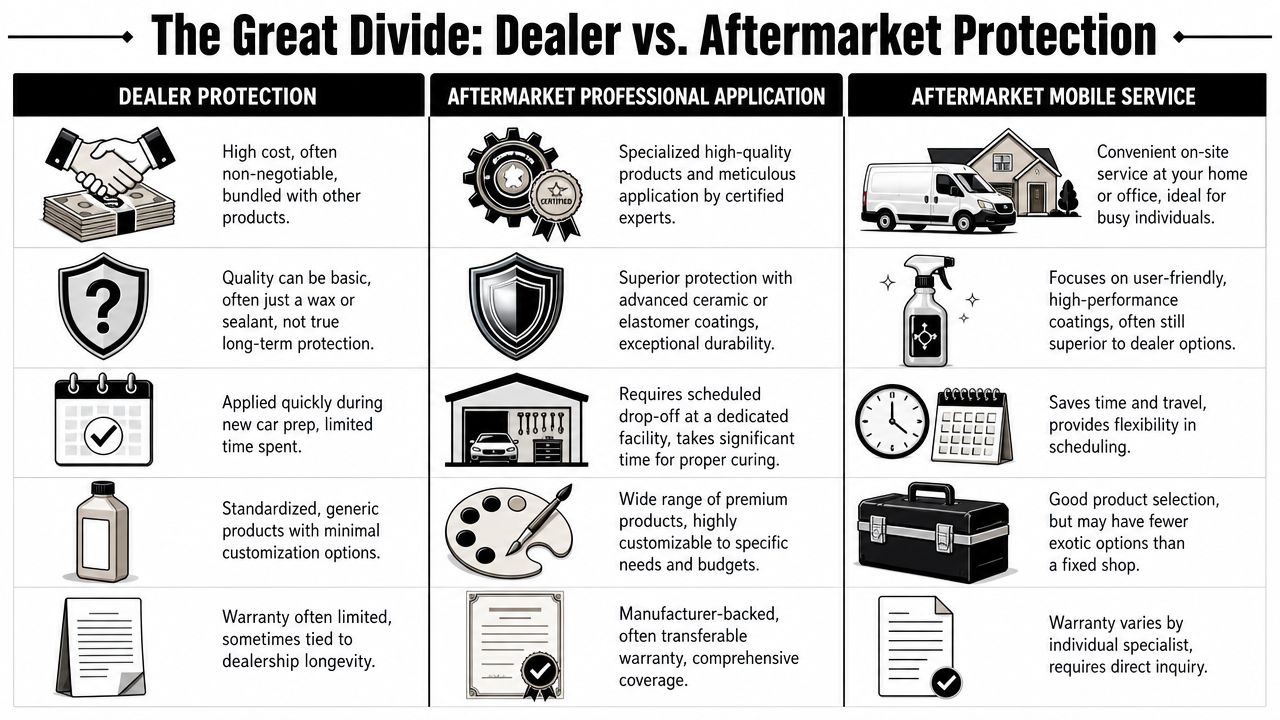
The Great Divide Dealer vs Aftermarket Protection
The easiest way to judge value is to stop looking at the dealer package in isolation. Put it next to real alternatives and the difference becomes obvious.
Consumer Reports notes that dealers typically charge around $600 for paint protection, while vehicles with high-quality aftermarket coatings can retain up to 15% more resale value by preserving the original finish, as covered in this Consumer Reports discussion of dealership extras. That doesn’t mean every coating pays off equally. It means quality and execution matter far more than where the coating was sold.
Three paths buyers actually have
Once you strip away the pressure, most owners land in one of three lanes:
- Dealer protection for convenience at delivery
- Professional aftermarket installation for maximum finish work and durability
- DIY or mobile-grade aftermarket products for better value and more control
Those options don’t just differ in price. They differ in process, chemistry, and outcome.
Paint protection options compared
| Attribute | Dealer Protection | Professional Aftermarket | DIY Aftermarket (e.g., Titan) |
|---|---|---|---|
| Where it’s sold | Finance office or dealer add-on menu | Dedicated detail shop or coating studio | Online or through detailing supply channels |
| Typical material | Often basic sealant or entry-level coating | Higher-end ceramic or advanced specialty coating | User-friendly ceramic or elastomer-based product |
| Surface prep | Usually limited | Thorough wash, decontamination, correction | Depends on the user, but can be done properly with care |
| Application time | Often very fast | Slower, more deliberate process | Flexible, based on skill and environment |
| Customization | Minimal | Tailored to vehicle use and owner goals | Tailored by product choice |
| Best for | Buyers who prioritize immediate convenience | Owners who want the strongest professional result | DIYers and mobile detailers who want value and control |
| Weak point | Vague product quality and rushed install | Requires scheduling and higher commitment | Prep and technique are on you |
What actually changes in the real world
A rushed package can make paint look slick for a while. That’s not the same as durable protection.
Professional aftermarket work earns its keep by doing the unglamorous steps right. The wash is cleaner. The panel wipe is more deliberate. Defects are addressed before coating goes down. The installer is thinking about how the car lives, not just how it looks under delivery bay lights.
DIY aftermarket products sit in a useful middle ground. Good ones let owners skip the dealer markup and still apply something worth having. They also give mobile detailers a practical way to deliver better protection than a dealer package without needing every client to commit to a full shop-based correction.
What separates value from hype is simple: material quality, prep quality, and whether the coating matches how the vehicle is actually used.
If you’re weighing coating against film, this guide to paint protection film vs ceramic coating helps sort out which one fits your driving conditions instead of your sales pitch.
Beyond Ceramic Introducing Flexible Elastomer Coatings
Traditional coatings taught the market to think in one direction. Harder must be better. More glass-like must be more durable. That sounds logical until the surface starts dealing with real life.
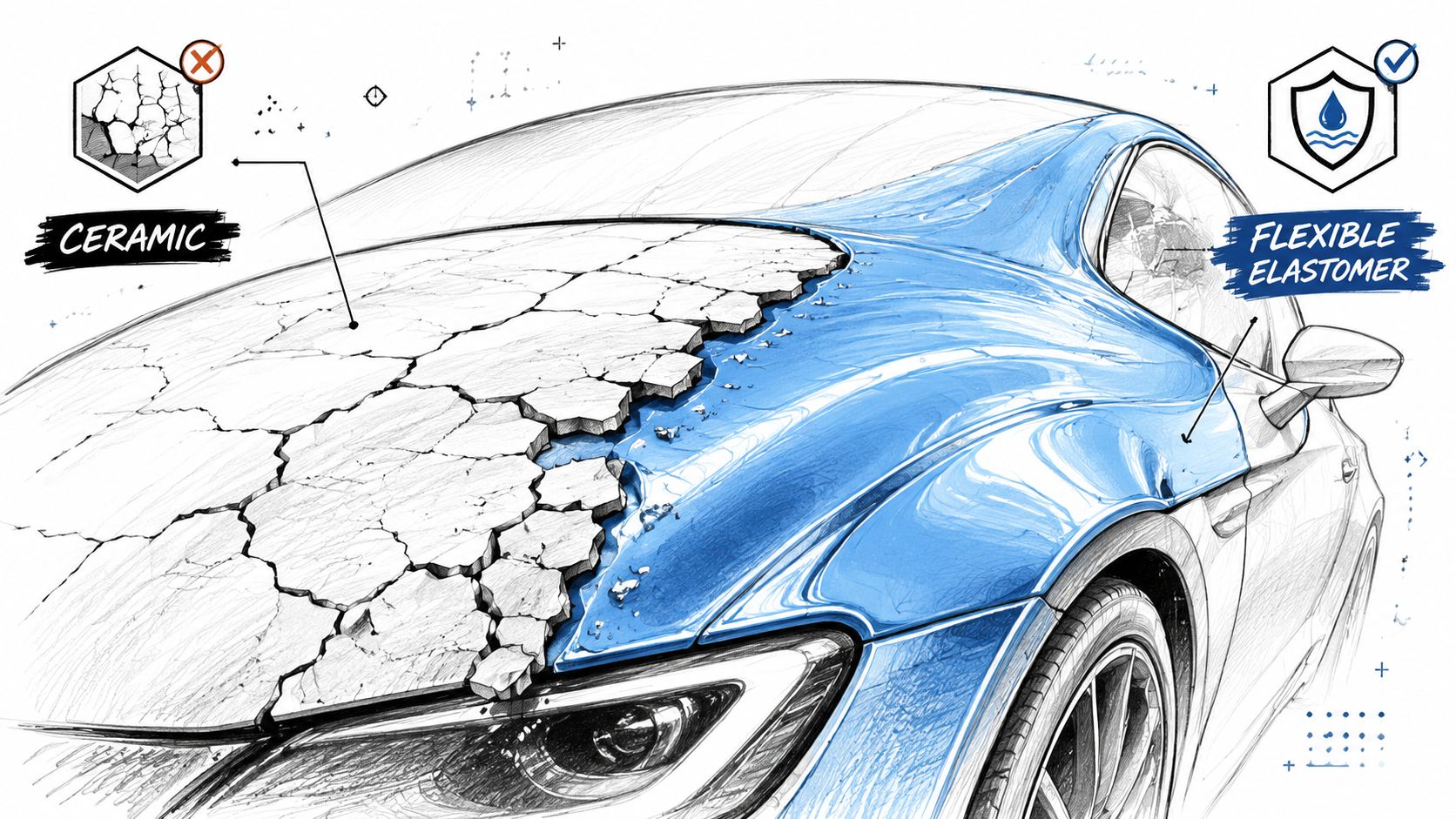
Cars don’t live in controlled labs. They sit in frozen weather, then bake in heat. They take bug impacts, road grime, wash friction, and constant expansion and contraction through temperature swings. A coating that’s only rigid can become its own weak point.
Why flexibility matters
Think of the difference between a dry twig and a living branch. One snaps when pressure hits. The other bends, then returns.
That’s the right way to think about advanced elastomer coatings. They’re built to stay hard enough to protect while remaining flexible enough to move with the surface. That flexibility matters when temperatures swing from frozen mornings to scorching summer panels. It also matters when the front end gets peppered with bugs and road abuse that would stress a more brittle layer.
Titan Coatings states that it pioneered the introduction of Elastomer-based coatings to the automotive market, using carbon nanotube technology combined with proprietary Dark Matter Technology® to achieve both exceptional strength and the elastic flexibility needed to prevent cracking, as explained on its technology overview.
Hard like glass, but not brittle
That combination is what gets people’s attention once they see it in person. You can have a coating that presents with the crisp, slick look enthusiasts want, but doesn’t behave like a rigid shell when the environment gets hostile.
That’s a major distinction:
- Glass-like hardness helps with surface defense and finish retention.
- Elastic movement helps the coating resist cracking when panels expand, contract, or take light impact.
- Temperature stability matters because daily driving doesn’t happen at one steady climate point.
The dealer pitch usually never gets this deep. It can’t, because most dealer packages aren’t built around this level of chemistry in the first place.
Why this category changes the value discussion
Once you understand elastomer technology, the usual dealer package starts looking old-fashioned. The question stops being whether you need “some kind of coating.” The question becomes whether the coating can survive reality without turning rigid and tired.
For owners who want to dig into the science behind movement, resilience, and why flexibility extends coating life, this explanation of coating flexibility is worth reading.
Choosing Your Shield Titan Products in Action
Technology only matters if it translates into usable products. That’s where a lot of coatings lose people. The lab story sounds good, but the install is fussy, the maintenance becomes annoying, or the product only makes sense for a fixed studio.
A stronger lineup solves for different users instead of pretending every owner needs the same bottle.
Alpha Quartz for the DIYer and mobile detailer
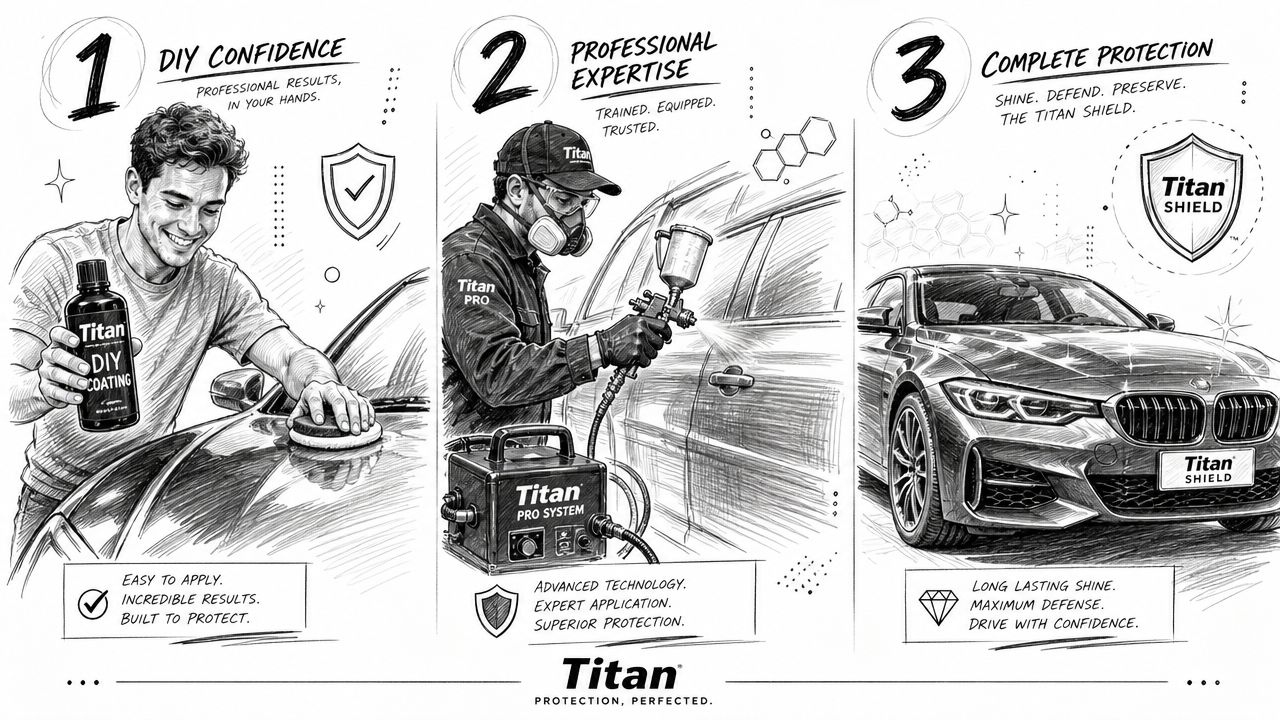
Alpha Quartz stands out because it brings elastomer protection into a format that doesn’t feel locked behind a specialist-only gate. For a passionate DIY owner, that matters. For a mobile detailer, it matters even more.
It’s the kind of coating that makes sense when you want strong visual results without creating a needlessly difficult install. Ease of use matters because consistency matters. A product can be advanced and still be approachable.
Its elastic behavior is its main draw. If you care about coatings that don’t get stressed by sharp temperature changes, this category offers a distinct advantage. The same goes for the abuse cars see from bug strikes on the front end. Flexibility gives the coating a better chance to absorb that stress without giving up its structure.
ULTRA Ceramic Spray for quick wins that still count
Not every owner wants a full coating install day. Some want fast application, better gloss, and easier maintenance.
That’s where ULTRA Ceramic Spray fits. It’s simple to use, and the result is a slicker, cleaner-feeling surface that makes routine upkeep easier. For people who wash their own vehicles, a good spray format often becomes the gateway to better paint care because they’ll use it.
According to Tolbert Auto Spa’s cost-benefit analysis, professional ceramic coatings can reduce wash frequency by up to 60% through their hydrophobic behavior. That’s the practical benefit people notice first. Water moves. Contaminants don’t hang on as easily. Washing gets less frustrating.
Apex Glass Coating for bad-weather visibility
There’s also a category many owners underestimate until they drive through a hard rainstorm with proper glass protection. A good windshield coating changes the way water behaves on the glass, and that changes fatigue behind the wheel.
Apex Glass Coating is easy to use, and that matters because glass products should be convenient enough to maintain. The payoff isn’t just shine. It’s visibility. Water sheds more cleanly, the windshield stays clearer, and wet-weather driving feels calmer.
When the windshield clears faster in rain, you feel it immediately. The drive gets easier, and your eyes stop working overtime.
If you want to explore where elastomer technology fits across different use cases, this page on Titan Coatings elastomer systems adds useful background.
Maximizing Your Investment Warranty and Maintenance
A lot of dealer packages lean hard on the warranty because the coating itself doesn’t carry the whole argument. That’s why the fine print matters so much.
The sharper comparison comes from longevity. According to this 2025 UK guide on dealer paint protection, dealer packages generate high profit margins while delivering protection lasting only 3-6 months, whereas professional independent ceramic coatings can last 2-5 years. That gap is where value gets decided.
A warranty isn’t the same as performance
If a coating resists UV exposure, grime, wash wear, and chemical contamination in daily use, you’ll see it on the paint. The vehicle stays easier to clean. The finish holds up better. The owner notices fewer headaches.
That’s real value. Paperwork alone isn’t.
Maintenance keeps good protection working
The best coatings still need smart maintenance. Not complicated maintenance. Smart maintenance.
- Wash correctly: Use methods that don’t grind dirt back into the surface.
- Dry with purpose: A topper or drying aid can help maintain slickness and behavior.
- Inspect the paint: Catch contamination early instead of letting it sit.
- Match product to climate: Cold winters, harsh sun, and road conditions all affect upkeep rhythms.
If climate is part of your concern, this look at Winnipeg ceramic coating durability is a practical reminder that weather and care habits shape how long protection performs in practice.
The Verdict Is Dealer Paint Protection Worth It for You
For most informed buyers, dealer paint protection isn’t the best value. It’s convenient, but convenience alone doesn’t justify vague chemistry, rushed application, and limited real-world performance.
If you’re asking car dealer paint protection is it worth it, the better question is this: what kind of owner are you, and what outcome do you want?
A simple decision checklist
- If you’re a DIY enthusiast: Skip the finance-office add-on. Put your money into a better product and proper prep so you control the result.
- If you’re a mobile detailer: Use coatings that install cleanly, perform well, and give clients something stronger than a dealership upsell.
- If you want the best finish possible: Go to a specialist who treats prep as part of the product.
- If you drive in rough conditions: Consider whether you need coating, film, or a combination based on actual road exposure.
- If you just want peace of mind: Choose technology with a clear material story, not a vague package name.
Buy protection the same way you bought the car. Look at what it’s made of, how it works, and whether it fits your use.
The people who regret dealer paint protection usually didn’t buy bad intentions. They bought too quickly. There’s a difference.
A better coating isn’t just about gloss. It’s about resilience, easier ownership, and knowing the layer on your paint was chosen because it works, not because it was sitting beside a finance contract.
If you want a better alternative to the usual dealership add-on, take a look at APEX NANO – Titan Coatings. You can explore their coating technology, browse the full shop lineup, and see options like Alpha Quartz, ULTRA Ceramic Spray, and Apex Glass Coating built for DIY users, mobile detailers, and owners who want protection that’s hard like glass but flexible enough to handle real-world temperature swings.
0 Comments