
$295–$680 is a realistic range for a true full paint-focused detail, and once you add correction and ceramic coating, the bill usually moves into $600–$1,500+ territory. A single headline price hides the true story, because paint condition, vehicle size, and correction depth change the labor almost as much as the final finish.
You feel that confusion the first time you ask two shops for quotes on the same car and get numbers that look like they came from different planets. One shop is selling a quick refresh. The other is pricing hours of machine polishing, inspection, prep, and protection that last.
Why Paint Detailing Quotes Vary So Wildly
A black sedan can get two quotes that make no sense side by side, and both shops may be honest. The difference usually isn’t greed, it’s scope. One detailer is estimating a wash and protection pass, while the other is pricing the hours needed to fix swirls, etching, and oxidation before the finish can be protected.
The smartest quote is the one that tells you what the shop plans to do with the paint, not just what vehicle you drive. Reputable detailers price by estimated labor hours because paint condition changes everything, and that’s why the same car can land in completely different price brackets. A lowball quote often means the shop is skipping correction, skipping prep, or both.
The three variables that matter most
Paint condition is the biggest swing factor after size. A lightly dusty car is a quick job. A finish covered in swirls, water spotting, or bonded contamination needs more machine work and more inspection.
Vehicle size matters because panels, trim, glass, and contours all add time. A sedan is one thing. A truck or van gives the detailer more surface area and more awkward edges to slow down the process.
Depth of correction changes the business model entirely. A quick polish and protect job is not the same thing as defect removal, and you shouldn’t let anyone blur those lines.
A quote that doesn’t separate prep, correction, and protection is usually hiding something.
If you want a clean reference point, Titan Coatings’ overview of auto detailing and paint correction fits the reality most shops work from, correction comes before serious protection, not after.
The Five Stages of Professional Paint Detailing
Professional paint work isn’t one task. It’s a sequence, and each stage protects the next one from failure. If a shop skips a stage, the result might still look decent for a day, but the finish won’t hold up the way it should.
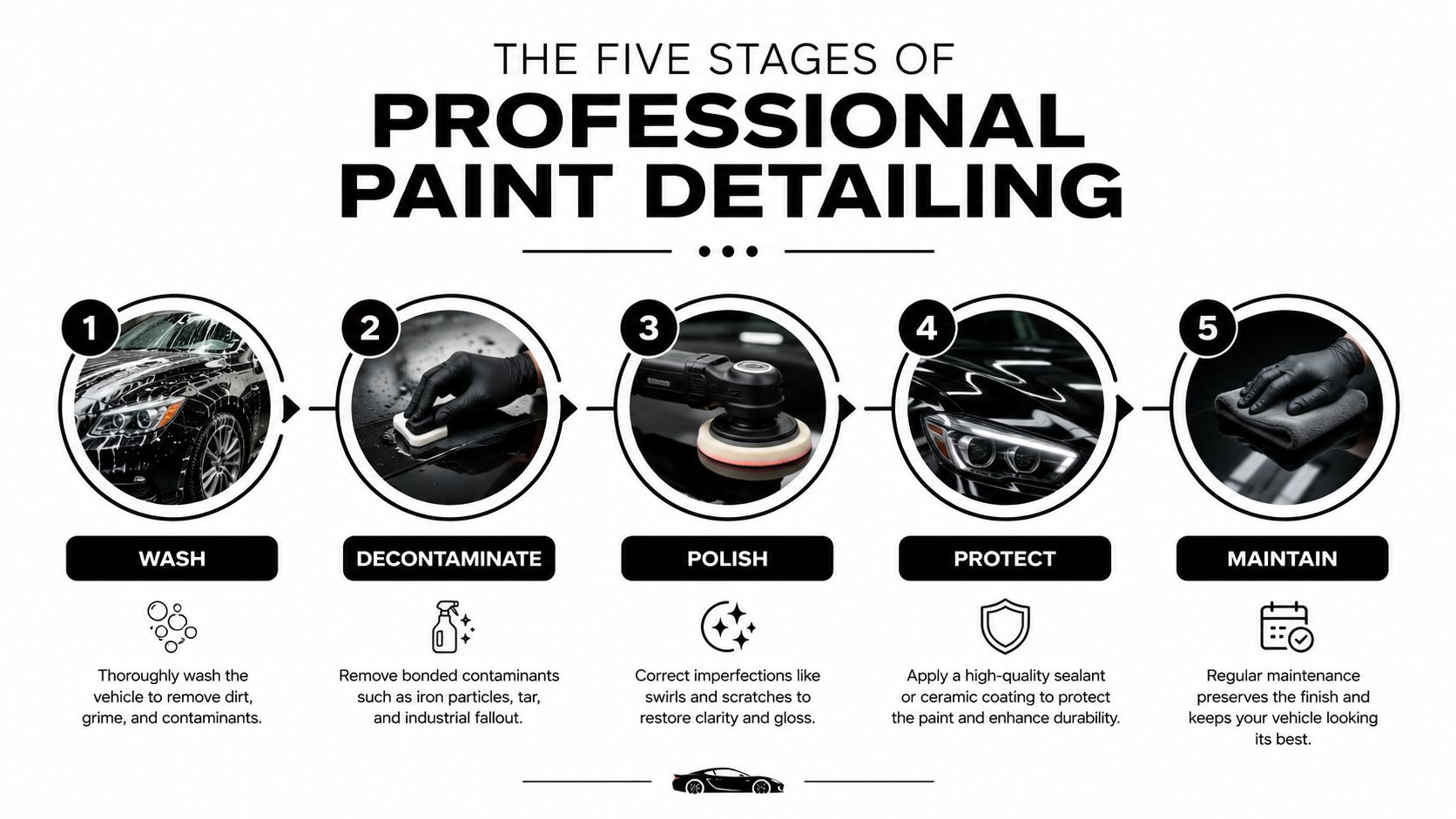
Start with safe wash work
The first step is a pre-wash and contact wash. That removes loose dirt before anyone touches the paint with mitts or towels, which lowers the chance of dragging grit across the clear coat.
Remove bonded contamination
Next comes chemical and mechanical decontamination. Iron fallout, road film, tar, and embedded grime don’t come off with soap alone, so the shop uses stronger cleaners and often a clay process to get the surface clean.
Correct the finish
Then comes the expensive part, machine polishing or paint correction. A detailer removes swirls, haze, light oxidation, and other defects that make paint look tired.
Lock in protection
The last step is sealant or coating application. This is when a detail job stops being just cleaning and starts becoming long-term surface care.
Skip correction and you’re sealing in defects. Skip decontamination and you’re trapping junk under the protection layer.
A solid shop should be able to explain each step before they quote you. If they can’t, keep looking. The service menu should read like a process, not a mystery.
What Each Service Costs in Real Numbers
The cleanest way to read car paint detailing cost is to break the quote into stages. Shops build pricing that way, and it is the fastest way to compare one estimate against another without getting fooled by a glossy total.
A practical benchmark for exterior-only work starts around $75–$125 for a sedan/coupe and rises to $120–$180 for a truck/van. Add sealant, and the price usually moves to about $100–$150 for a sedan and $150–$220 for a truck/van. Those numbers cover entry-level paint care, not correction, so they stay in the wash-and-protect lane. DetailPilot pricing guide
A true full detail, meaning interior, exterior, decontamination, correction, and protection, averaged $295–$680 in a 2024 benchmark compiled from 1,422 service invoices across 47 U.S. states. A basic full detail took about 5.5–6.5 labor hours, while a corrective full detail took 8.5–11 hours. AutomotoFlux benchmark
Typical Paint Detailing Price Ranges by Service and Vehicle Size
| Service Stage | Sedan/Coupe | SUV/Crossover | Truck/Van |
|---|---|---|---|
| Exterior-only detail | $75–$125 | higher than sedan pricing | $120–$180 |
| Exterior with sealant | $100–$150 | higher than sedan pricing | $150–$220 |
| 1-step polish | $200–$400 | $275–$500 | $300–$550 |
| 2-step correction | $400–$1,000 | in the same premium correction range | in the same premium correction range |
| Minor correction with exterior detailing | $500+ | $500+ | $500+ |
| More extensive paint correction | $750+ | $750+ | $750+ |
That table is the part quote sheets usually hide. A 1-step polish fits a vehicle that needs a visible refresh, while 2-step correction moves into serious defect removal and serious time. DoorstepHQ pricing guide
Size still matters, and it matters in a plain way. Bigger panels take longer to wash, decontaminate, tape, inspect, and polish, so a truck or van will always sit higher than a sedan even before you start talking about correction quality. A fair quote should reflect that extra labor instead of pretending every vehicle is the same.
At the broader repair level, a car paint job can range from $1,000 for a budget/basic job to $10,000+ for high-quality or custom work, with about $4,000 cited as an average for a mid-tier sedan repaint. Industry pressure is still building too, since one repair-industry report said paint and material costs were up 7.4% in Q1 2025, with individual company refinish increases ranging from 6.1% to 9.4%. AutoTrader cost guide
A shop that also offers mobile detailing companies will often price convenience separately, because travel time and setup are real labor costs. That does not make the work better by itself. It just explains why an at-home service can land above a fixed-bay quote even when the product list looks similar.
Labor Versus Materials: Where the Money Goes
Pull up two quotes for the same paint correction job and the line items will look similar at first. The difference sits in labor. The bottle on the shelf matters, but the technician who measures the paint, chooses the pads, and works panel by panel is where the bill climbs.
A corrective detail that runs 8.5–11 hours is a serious labor job. That is a full workday or more spent washing, decontaminating, taping, inspecting, correcting, and refining the finish. Materials matter, but they rarely drive the invoice the way time does.
What you’re paying for
Labor covers the technician’s time, skill, and judgment. It also covers the extra care a bargain quote skips, like slowing down enough to correct the paint properly the first time.
Materials cover pads, polishes, clay media, sealants, coatings, towels, tape, and other consumables. They are part of the bill, but they do not explain a premium quote by themselves.
Inspection and correction discipline are where cost hides. A shop that checks under proper lighting and polishes in stages will spend more time than a shop that chases shine for a few minutes and calls it finished.
Cheap detailing gets cheap by cutting time, not by discovering some magic product nobody else has.
Premium coating systems change the long-term math because they shift value from quick shine to lasting protection. Titan Coatings’ paint protection film cost discussion makes the point clearly, the up-front spend matters less when the protection holds up.
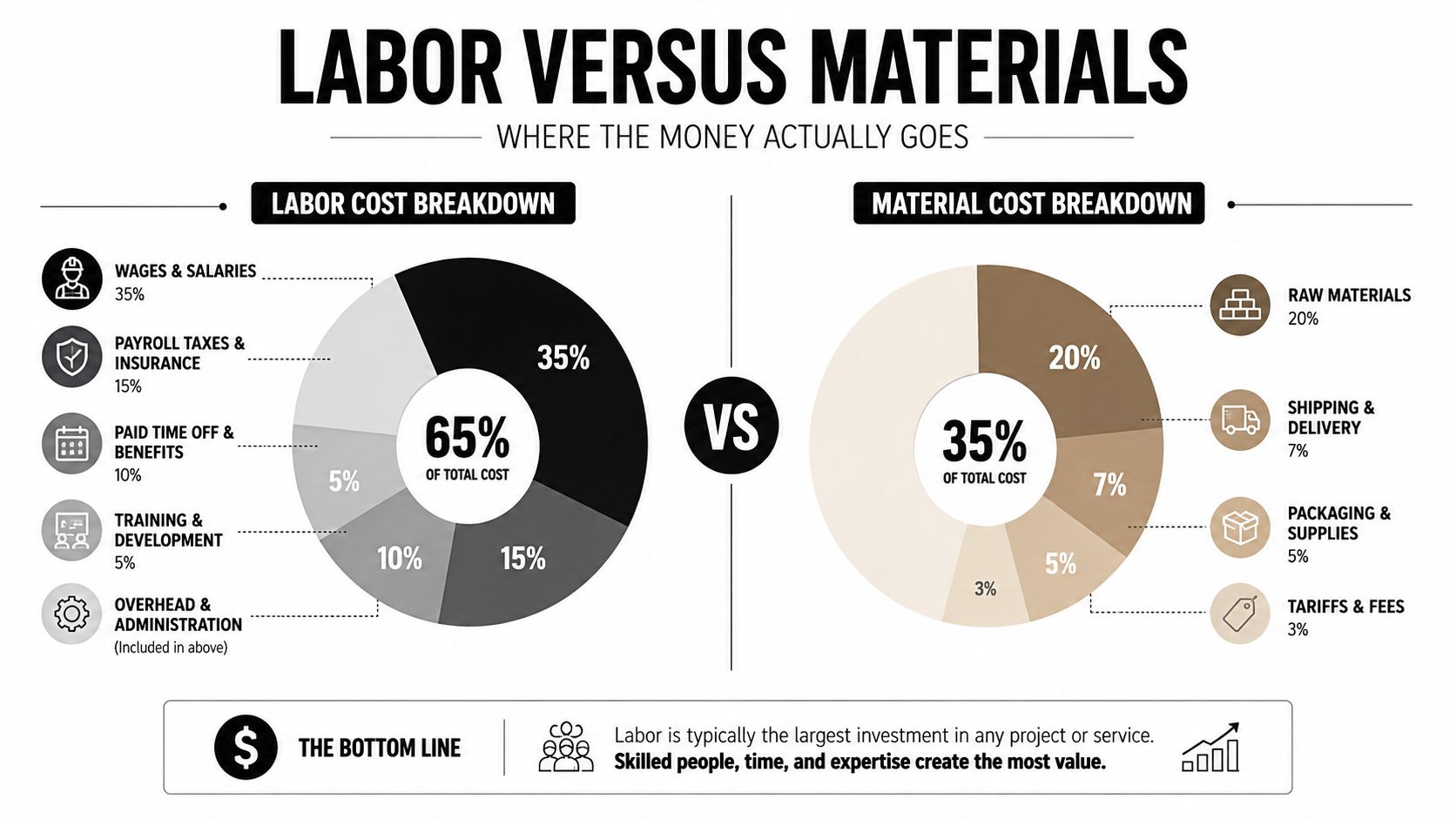
Premium shops price the hands, the lights, the inspection time, and the risk they take if the finish is wrong. The product list is only part of the story.
Sample Quotes for a Sedan, SUV, and Truck
Real quotes make the numbers easier to sanity-check. If a shop gives you a number that doesn’t resemble the job below, ask exactly what’s included before you book.
A daily-driver sedan that needs a 1-step polish and sealant usually lives in the middle of the market. The work is straightforward, but it still needs correction time, not just a rinse and shine.
A family SUV getting a 2-step correction and ceramic coating is a different animal. That quote should reflect more panel area, more prep, and a much heavier labor commitment.
A full-size truck with decontamination, correction, and a premium elastomer protection package sits at the top of the ladder. More surface area means more time, and truck paint often carries more wear from work use, highway miles, and outdoor exposure.
Sample quote breakdown
| Vehicle | Services | Labor Logic | Realistic Total |
|---|---|---|---|
| Sedan | wash, decontamination, 1-step polish, sealant | lower surface area, moderate correction time | mid-range correction pricing |
| SUV | wash, decontamination, 2-step correction, ceramic coating | more panels, more polishing passes, more prep | upper correction and coating pricing |
| Truck | decontamination, correction, premium elastomer protection | largest surface area, longest cycle time | highest of the three |
A few add-ons can move the number fast. Glass coating is one example, and so is engine bay detailing if the vehicle needs a presentation-level reset. The key is to treat those as add-ons, not surprises.
If you’re comparing estimates, Titan Coatings’ mobile detailing companies page is a useful reminder that location and setup matter too. A mobile setup can be practical, but correction-heavy work still needs the right conditions and enough time to do it properly.
DIY Versus Professional Detailing When Each Makes Sense
DIY makes sense for maintenance. Professional makes sense for correction. Mixing those two up is how people waste weekends and still end up paying a shop to fix what they tried to save.
The DIY side is best for wash work, quick maintenance, and spray protection. Titan Coatings’ Ultra Ceramic Spray fits that lane well, because it’s a simple maintenance booster, not a correction substitute. If you’re just keeping a healthy finish topped up, that’s a practical place to save money.
Professional work earns its keep when the paint needs actual restoration. Two-step correction, deep decontamination, and serious prep belong in trained hands with the right lighting and machine control. If you guess wrong here, you can burn a clear coat or leave the finish looking uneven.
Use this decision filter
- Choose DIY if the paint is already in good shape and you mainly need upkeep.
- Choose professional detailing if you see swirls, etched water spots, dullness, or oxidation.
- Choose a mobile pro if you want convenience and the vehicle only needs manageable correction.
- Choose a shop if the finish needs full inspection, heavier correction, or coating prep.
If you run a detailing business, the quoting side matters too. A solid resource like win contracts with Orbit AI can help you present services clearly instead of throwing vague prices at customers.
For buyers who want an easier middle path, Titan Coatings’ detail a car page reflects the kind of service flow that works for enthusiasts and mobile operators alike. Keep the maintenance simple, and pay the professional when the paint needs real correction.
Why Premium Elastomer Coatings Change the Value Equation
Traditional coatings can be hard and glossy, but hardness alone doesn’t solve every problem. In real weather swings, a coating that stays brittle can become a liability if it can’t flex with the surface underneath it. Titan’s elastomer approach is built around the opposite idea, hard like glass, flexible in use, which is the point if you want a coating that keeps performing through temperature swings and impact.
That flexibility matters on daily-driven cars, especially where the finish sees heat, cold, road grit, and repeated washing. A coating that resists cracking under thermal change is easier to justify when the vehicle lives outside or sees harsh seasonal shifts. Titan’s product line reflects that logic in a few different ways.
APEX Glass Ceramic Coating is the one to look at for windshields and visibility-focused protection. It’s made for rain behavior and clearer driving in ugly weather, which is exactly where glass coatings should earn their keep. Alpha Quartz Ceramic Coatings is the easier-application elastomer option for DIY users and mobile detailers, and Ultra Ceramic Spray is the maintenance layer that helps extend a base coating’s life.

Titan’s professional ceramic coating cost page fits the same pricing logic buyers need here. Pay for the coating that matches the correction level, use case, and how long you plan to keep the car.
Smart Ways to Reduce Cost and Maximize Longevity
The cheapest path is not the cheapest quote, it’s the quote that needs to be repeated less often. That starts with gentle wash technique, regular upkeep, and not letting the paint get ugly before you ask a pro to fix it.
If you maintain the finish properly, you delay correction work. That’s where a simple spray topper or a coating maintenance product earns its place, because small upkeep jobs are far cheaper than letting defects stack up until a full correction is the only option.

The quote-check checklist
- Ask what stages are included so you know whether prep, correction, and protection are all in the number.
- Ask for labor-hour logic so the shop can explain why the price fits the condition of your paint.
- Ask whether correction is required before coating because coating over defects is wasted money.
- Ask what maintenance product they recommend so you can extend the interval between full details.
If you’re shopping smart, bundle correction and coating together when the paint needs both. Separating them later usually costs more and gives you less consistency between steps.
For a buyer who wants a serious protection system, APEX NANO – Titan Coatings offers coatings and maintenance options that fit the exact pricing logic in this guide, correction first, protection second, maintenance after that. If you want the finish to last longer and the quote to make sense, start there and choose the product that matches how you drive.
0 Comments