
You’re halfway through cleaning a freshly coated vehicle when the wheel exposes the real problem. The face looks clean, but brake dust is packed behind the spokes, around the caliper, and deep inside the barrel. A rigid brush can’t follow the shape, while a stiff one can turn loose grit into a finishing problem.
That’s where the EZ Detail Brush earns its place. Used with the right rinse, cleaner, pressure, and coating awareness, it becomes a precision tool for tight wheel geometry. Used as a substitute for proper decontamination, it can carry abrasive debris exactly where you don’t want it.
Why the EZ Detail Brush Changed Wheel Cleaning
A mobile detailer can usually tell within seconds whether a wheel will clean easily. A simple five-spoke design gives you room to work. A dense multi-spoke wheel with a narrow barrel, exposed hardware, and a fresh coating demands a different approach. The brush has to bend around the structure, reach behind it, and come back out without dragging a hard component across the finish.
The EZ Detail Brush was built around that problem. The Big EZ Detail Brush uses an 18-inch flexible wire stem and a 4-inch diameter head made with nylon and Nylex memory bristles, as described on the EZ Detail Brush product site. The flexible stem lets the head conform to curved spaces, while the bristles maintain their shape instead of behaving like a rigid bottle brush.
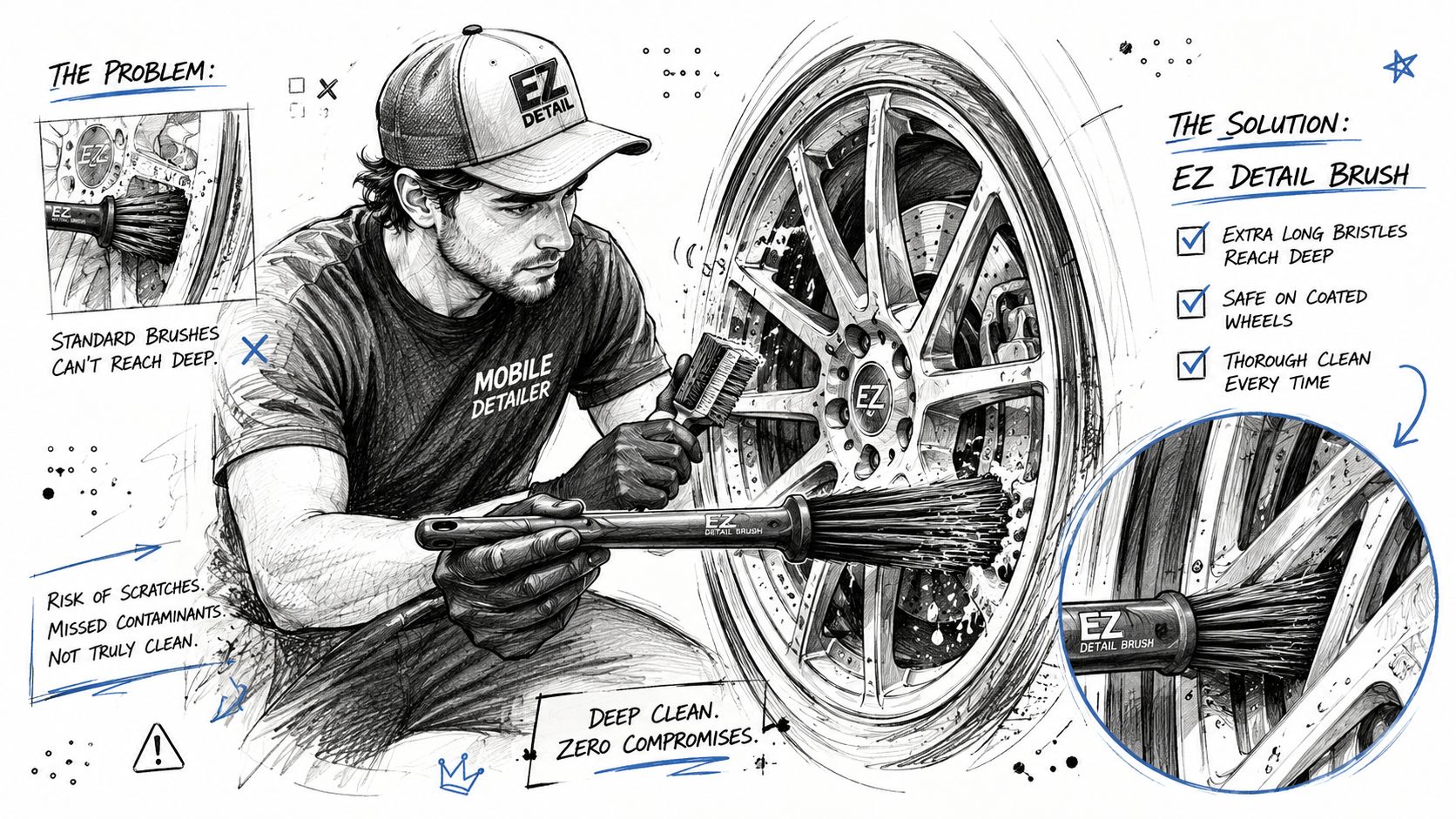
Reach matters, but control matters more
The brand’s product family includes the 16-inch Go EZ, intended for areas such as door jambs and wheel wells. That size-specific approach makes sense in a professional kit. The Big EZ is useful when the barrel is deep and access is restricted, while the shorter version gives better control in tighter exterior spaces.
The stem and bristles solve access. They don’t solve poor technique. I treat the EZ Detail Brush as a light-agitation tool, not a brake-dust scraper. It works best after water and cleaner have already softened the contamination. If the brush is doing all the removal by force, the process has already gone wrong.
Practical rule: Use the brush to reach contamination that chemistry and rinsing have loosened, not to grind through contamination that remains bonded to the wheel.
The vinyl-covered tip is another useful detail around spokes and barrels, but it still deserves care near exposed paint, polished lips, and delicate hardware. For broader wheel preparation and finishing habits, Galhor’s pro guide to mirror wheel shine is a useful companion. For product-specific guidance, see the EZ Detail Brush wheel-cleaning resource.
Preparing Wheels and Coatings Before Brushing
The safest brush contact happens before the brush touches the wheel. Loose sand, road grit, and dry brake dust are abrasive contaminants. A soft bristle can’t make those particles harmless if it pushes them across a coated surface.
Start with a thorough pre-rinse. Direct the water into the barrel, behind the spokes, around the caliper, and across the wheel face. The purpose isn’t to make the wheel spotless. It’s to remove anything loose enough to become a moving abrasive during agitation.
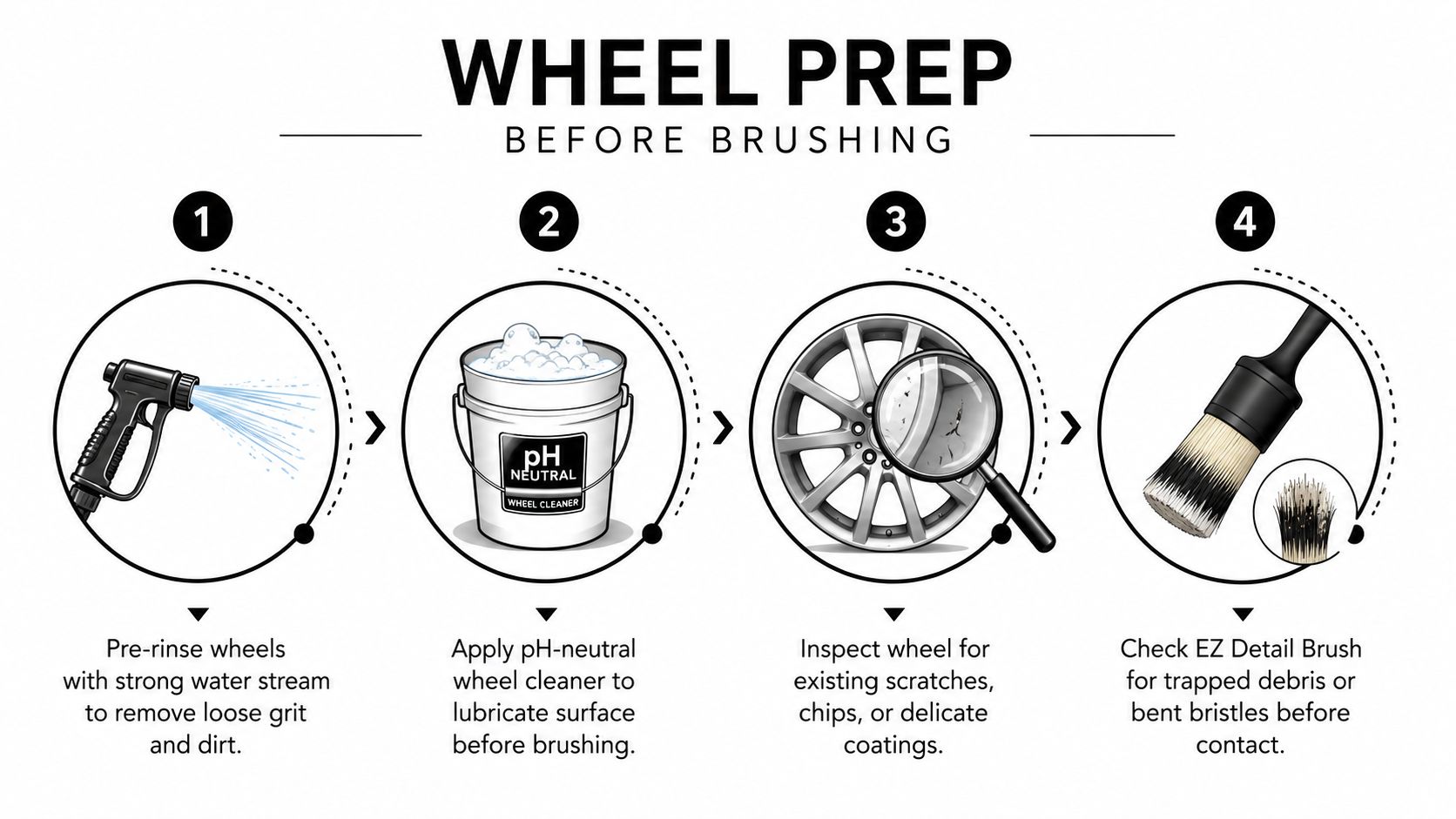
A controlled preparation sequence
- Start with a cool wheel. Hot surfaces accelerate drying and can make cleaner residue difficult to manage. Work in shade when possible, and confirm the wheel feels cool before applying chemistry.
- Choose chemistry that does the work. For coated wheels, begin with a wheel cleaner compatible with the manufacturer’s finish guidance. Specialist guidance for the EZ Detail Brush describes using warm water to soften the bristles, then pairing the brush with a quality wheel cleaner. Field feedback also describes effective results with alkaline wheel cleaner or soap, but chemistry should always be matched to the wheel finish and coating.
- Soak the brush. Warm water softens the Nylex and nylon bristles, allowing them to conform more gently to the wheel. It also helps distribute cleaner through the brush instead of leaving the outer bristles dry during the first contact.
- Agitate only where access is difficult. Work behind spokes, inside the barrel, and around caliper zones with light pressure. Let the solution lubricate the surface. If you need force, stop and rinse again rather than pressing harder.
- Rinse the brush immediately. A loaded brush can redeposit brake dust. Rinse it before moving from a dirty inner barrel to a paint-adjacent spoke or polished lip.
For related chemistry decisions, Titan’s guidance on using degreaser on wheels provides additional context. The practical sequence remains simple: rinse, apply cleaner, soften the brush, agitate tight areas, and rinse again.
A pH-neutral cleaner can be a sensible starting point for sensitive finishes, but no label replaces a test spot. Matte paint, powder coat, polished aluminum, and coated hardware can respond differently to the same product. Inspect the wheel before cleaning, note existing chips or scratches, and don’t mistake a new coating for a license to skip preparation.
Safe Techniques for Ceramic and Elastomer Coated Surfaces
“Non-scratch” is a risk-reduction description, not a universal guarantee. A brush may have soft, flexible bristles, yet still create marks if it carries abrasive grit, meets a hot surface, or receives excessive pressure.
Ceramic-coated wheels generally benefit from reduced adhesion and easier rinsing, but the coating doesn’t protect against every mechanical mistake. Matte finishes require extra restraint because aggressive contact can alter the appearance even when obvious scratches aren’t visible. Powder-coated surfaces vary in texture and durability, so a test area remains the responsible first step.
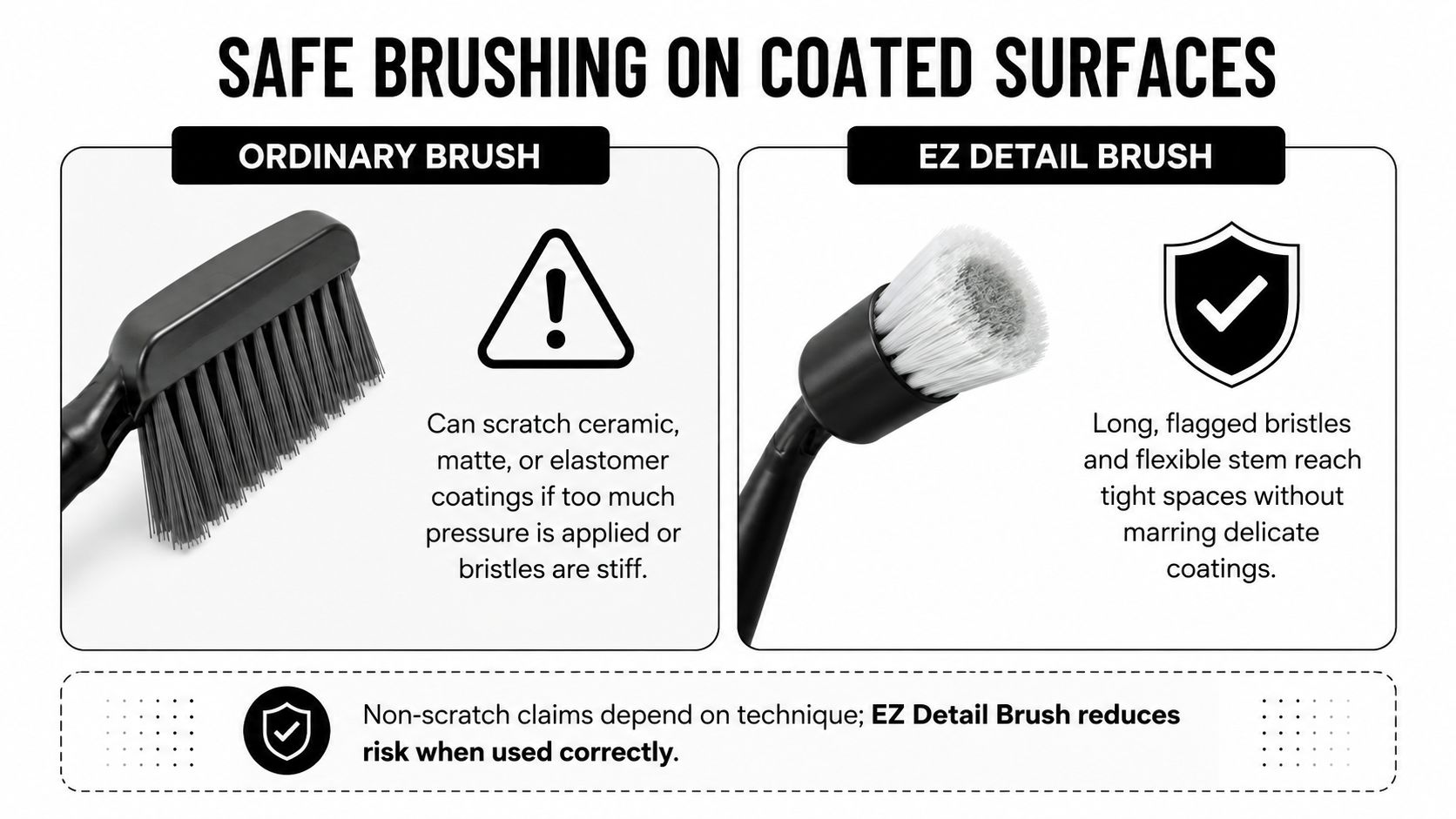
How flexible coatings change the conversation
Titan Coatings describes its ElastoTek® systems as using Dark Matter Technology®, a proprietary blend of carbon allotropes, within a flexible elastomer membrane rather than a rigid ceramic shell. Its ZEUS™ Elastomer Membrane Coating documentation describes the coating as flexible and self-regenerating, with a maximum hardness rating of 10H and thermal resistance up to 600°C. Those specifications appear in Titan’s ZEUS coating documentation.
The material distinction matters. A hard surface can resist many forms of wear, while an elastomeric membrane can accommodate movement and stress. Independent scientific literature describes elastomers operating across broad temperature ranges, and a patent on an elastomeric coating reports elongation from about 50% up to 100% without loss of adhesion. That evidence supports the general mechanics of flexible, nano-reinforced materials, but it doesn’t mean a wheel brush is incapable of causing damage.
Titan states that it was the first company to introduce elastomer coatings to the market using nanotube technology and Dark Matter Technology, a claim repeated on its car wax versus paint sealant page. For the detailer, the useful takeaway is practical: flexible protection may tolerate movement differently from a rigid film, but cleaning pressure still needs to stay low.
Adjust the brush to the finish
- Gloss ceramic coating: Use the brush after rinsing and chemical dwell time. Keep pressure light and flush the bristles often.
- Matte or satin finish: Avoid aggressive scrubbing and test an inconspicuous area first. Let cleaner and water carry as much soil as possible.
- Powder coat: Watch textured areas where grit can remain trapped. Use short, controlled passes rather than forcing the brush into the texture.
- Delicate hardware: Use a smaller detailing brush where the large head can’t move freely. Titan’s ceramic-coated car washing guide is relevant for broader coated-surface technique.
Remove the brush by twisting gently rather than pulling it straight through a tight opening. That reduces sudden contact between the stem, tip, and surrounding finish. If mineral residue is already present, address the source and learn how to remove chalky hard water buildup instead of increasing brush pressure.
Maintaining Your EZ Detail Brush for Long-Term Performance
A wheel brush becomes a liability when it stores the last wheel’s contamination. Brake dust can lodge deep between the bristles, and a quick splash under the hose may leave particles behind. Clean the tool immediately after use, while the chemistry and debris are still easier to remove.
Work the brush through clean water until runoff is clear. Then inspect the head, stem, and covered tip. If the bristles have folded from storage or tight extraction, hot water can help restore their alignment. The independent retailer guidance for the brush also emphasizes hot-water reshaping and hang-drying.
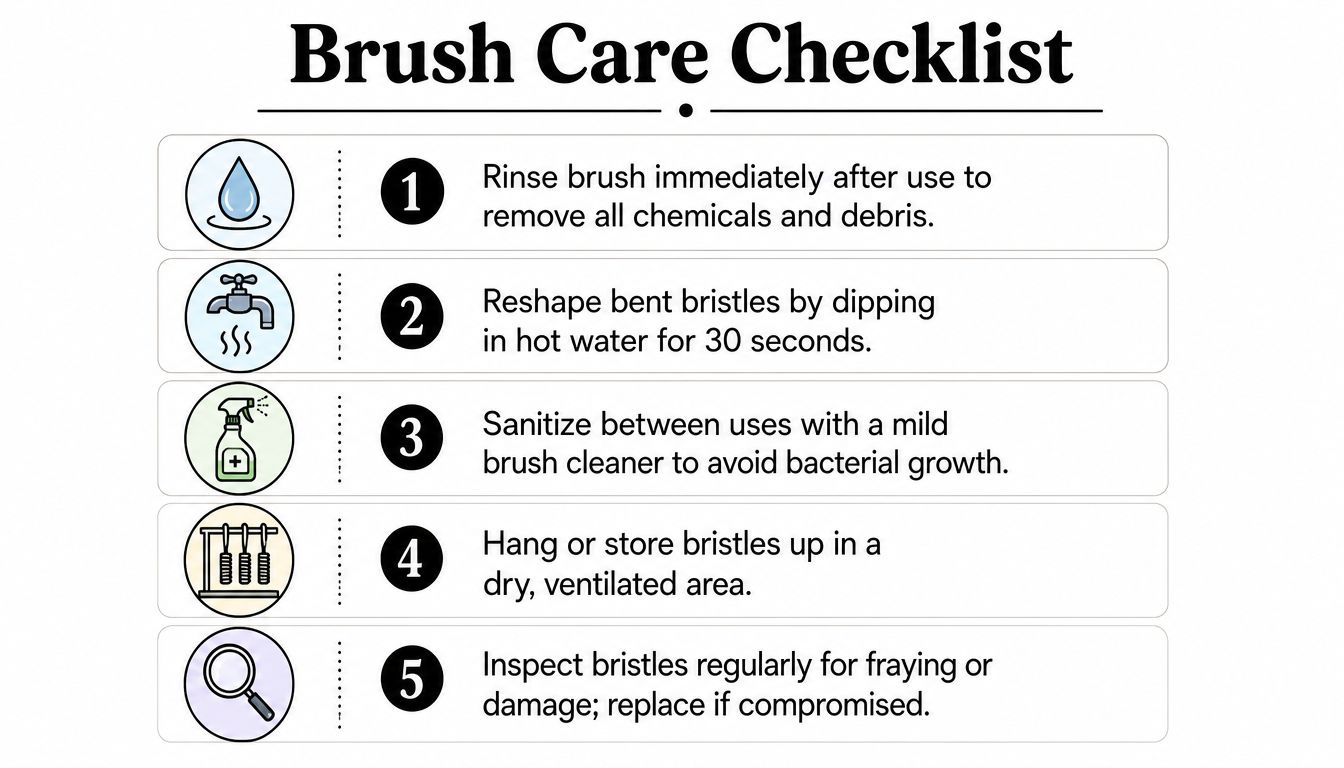
A mobile detailer’s care routine
- Rinse immediately. Flush both sides of the bristle head and move the bristles with your hand so trapped particles can escape.
- Reshape carefully. Dip the bristles in hot water briefly, then form them back into their intended alignment. Don’t bend the stem sharply to compensate for a misshapen head.
- Sanitize between vehicles. Use a mild brush cleaner when your workflow requires it, then rinse thoroughly. Keep wheel tools separate from interior tools.
- Dry with airflow. Hang the brush or store it bristles-up in a dry, ventilated area. A sealed damp bag encourages odors and leaves the bristles compressed.
- Retire compromised tools. Replace the brush when debris remains embedded, bristles become badly splayed, or the stem shows corrosion or damage.
The brush should remain dedicated to wheels and exterior spaces. I don’t move a wheel brush into an interior kit, even after rinsing, because the contamination standards are different. A dedicated storage sleeve or ventilated rack is more useful than a crowded bucket where the head gets crushed.
For people building a complete mobile setup, Titan’s auto detail brush kit guidance shows how smaller brushes can handle lug holes, emblems, grilles, and other areas where the EZ Detail Brush is too large.
Common Mistakes That Damage Wheels and Coatings
The EZ Detail Brush isn’t foolproof. Most problems begin when the operator treats flexibility as permission to increase pressure.
The most common example is a brush loaded with black brake dust. The detailer finishes the barrel, moves straight to the spoke face, and continues working without rinsing. The bristles may feel soft, but the trapped contamination can still mark a delicate surface.
Four habits worth eliminating
- Skipping the pre-rinse: Dry grit remains in the working area and becomes part of the contact between bristle and finish. The fix is simple, use water first and inspect the runoff before brushing.
- Working on a hot wheel: Cleaner dries quickly, lubrication disappears, and the brush can drag residue across the finish. Move the vehicle into shade or wait until the wheel cools.
- Using one loaded pass everywhere: Inner barrels and spoke faces don’t carry the same contamination load. Rinse the brush between zones, especially before approaching polished lips or paint-adjacent areas.
- Pressing into matte or textured finishes: Pressure can force grit into the surface profile and make cleaning less predictable. Apply chemistry, use gentle movement, and switch tools when the brush can’t move freely.
Memory bristles return toward their original shape. That helps the brush reach and release contamination, but it doesn’t make the bristles immune to abrasive particles. The same applies to the vinyl-covered tip. It reduces the chance of hard-tip contact, yet careless extraction can still catch an edge.
If a wheel already has peeling clear coat, flaking finish, or visible damage, brushing won’t repair it. Diagnose the condition first and consult a guide such as Titan’s resource on how to fix clear coat peeling on rims. A compromised surface needs a repair decision, not more agitation.
The brush should get lighter as the wheel gets cleaner. Continuing with the same pressure after the contamination has lifted is an avoidable risk.
Pairing the Right Coating with Efficient Cleaning Routines
The most efficient wheel-cleaning routine uses the brush less aggressively because the coating makes contamination easier to release. Titan’s elastomer approach centers on a flexible membrane, and its ZEUS documentation describes a system that combines flexibility, self-regeneration, hardness, and thermal resistance. In practical terms, that can support a maintenance strategy where rinsing and suitable chemistry handle most of the soil, while the EZ Detail Brush addresses the geometry the water can’t reach.
Titan’s Alpha Quartz is presented as an elastomer coating intended for straightforward installation and DIY or mobile-detailing use. The material concept is important for wheels exposed to repeated temperature changes and impact from road contamination. Flexibility can help a coating accommodate movement instead of behaving like a rigid layer, but application quality, surface preparation, and maintenance still determine the result.
For quick upkeep between full details, Titan’s Ultra Ceramic Spray is positioned as a simple spray-coating option. For glass, Apex Glass Ceramic Coating is designed for windshield and glass use, where improved water behavior can support clearer visibility during rain and make wet-weather driving less stressful. Apply any glass coating to properly cleaned, prepared glass, and follow the product directions rather than treating it like a wheel product.
The wider shop range is available through the Titan Coatings shop. A coating won’t replace rinsing, correct chemistry, or a clean brush. It can, however, change the brush from a decontamination workhorse into what it should have been all along, a controlled tool for tight spaces.
APEX NANO – Titan Coatings offers coating solutions for automotive surfaces, including flexible elastomer systems, ceramic sprays, and glass protection that fit different maintenance routines. Visit APEX NANO – Titan Coatings to compare the options, then pair the chosen coating with careful rinsing and light-touch EZ Detail Brush technique.
0 Comments