
You’re on a driveway with one hour to turn a hazy sedan around, and the windshield looks clean until the customer drives into low sun. That familiar hiss can save you ten minutes or leave the film that causes the callback, depending on what’s in the can and how you use it.
Aerosol Glass Cleaner Versus Other Glass Cleaning Methods
You hear the hiss before you see the foam spread. My verdict is simple. Aerosol glass cleaner wins on speed and even coverage, loses on airborne mist and volatile emissions, and only earns its place in your kit when the formula and your method control both problems.
An aerosol isn’t bottled cleaner with a fancy cap. It’s a cleaning solution packed with a propellant that dispenses as a controlled spray without a separate trigger. Think of a trigger bottle as a garden hose you aim in short, deliberate doses. An aerosol is closer to a fire hose for glass, covering a windshield in seconds, along with anything the overspray drifts onto.
Where the Format Came From
That speed is the original point of the category. Sprayway introduced what its corporate historical record identifies as the first consumer aerosol glass cleaner in 1947, shifting glass cleaning from a manually applied liquid to a packaged spray for rapid, even distribution. The format was built for convenience, not for laying down protection. It cleans the surface. It doesn’t replace a coating that bonds to glass afterward.
Glass Cleaning Formats Compared
| Format | Typical VOC content | Coverage speed | Residue and mist risk | Best use |
|---|---|---|---|---|
| Aerosol spray | About 12% VOC (EPA assumed category value) | Fastest, even coverage on large panes | Higher overspray and airborne mist | Quick maintenance across whole vehicles |
| Trigger spray bottle | About 4% VOC (EPA assumed non-aerosol value) | Moderate, you control the dose | Lower when sprayed onto the towel | Controlled interior and exterior passes |
| Ammonia-free concentrate diluted on site | Read the mixed product safety data sheet | Moderate after dilution | Set by your mix ratio and towel load | Bulk work and cost control |
| Pre-moistened glass wipes | Read the pack safety data sheet | Fast for small areas | Low mist, limited on heavy film | Touch-ups between jobs |
| Alcohol-based automotive glass cleaner applied by cloth | Read the product safety data sheet | Slower, two-cloth method | Low when sprayed onto the cloth | Interior windshield film |
Those VOC figures need honest handling. The EPA consumer-product emissions analysis listed an assumed VOC content of 12% for aerosol glass cleaners, compared with 4% for non-aerosol glass cleaners. They’re category assumptions for emissions work, not lab results for the can in your hand. California regulatory materials in that same analysis described some glass-cleaner aerosols at 5% to 8% total VOC and caustic formulations at 7% to 11%, which tells you why you can’t judge every can by the format alone.
The Three Trade-Offs That Matter on a Job
First, time. If you’re a mobile detailer with one hour per car, aerosol coverage across a windshield, rear glass, and mirrors is hard to beat. You lay down an even layer, wipe once, level with a dry towel, and move on. Trigger bottles make you pump, wait, and chase dry spots.
Second, drift. Overspray doesn’t politely stop at the glass edge. It moves toward your face, into the cabin, onto dashboards and screens, and into towels you planned to use for final leveling. The scale in that EPA analysis is worth knowing. It estimated baseline emissions from the glass-cleaner category at 15,461 tons per year and projected controlled emissions of 6,648 tons per year under proposed limits, a reduction of roughly 57%. For the broader U.S. aerosol-products category, it reported approximately 342,000 metric tons of nonmethane VOC emissions per year. You won’t change national totals from a driveway, but you do decide how much mist you breathe in a closed cabin.
Third, control. Trigger bottles, concentrates, and cloth-applied cleaners trade speed for placement. You put product where you want it, in the amount you want, and you keep most of it out of the air. Facilities teams face the same choice between ready-to-use cans and diluted refills, and if you’re sourcing for a shop or a building contract you can find canned glass cleaners for facilities and compare formats before committing to a case.
Practical rule: Use aerosol where coverage speed pays, outdoors or in open bays. Switch to cloth application where the air, the tint, or the coating can’t forgive overspray.
- Aerosol strengths: Fastest coverage, even distribution, no trigger fatigue, strong on large exterior panes.
- Aerosol costs: Higher assumed VOC content, airborne mist, drift onto trim and towels, flammable propellants in many formulas.
- Trigger and cloth strengths: Precise dosing, lower mist, easier work around screens, sensors, and tint edges.
- Trigger and cloth costs: Slower on big glass, more passes on heavy traffic film, more chances to flood one spot and miss another.
I would keep both in the van. The can handles exterior maintenance speed. The bottle and the cloth handle interiors, coated glass, and any job where the customer will judge you at night, facing headlights.
What Is Actually Inside the Can
Read a can like a team sheet, not a single ingredient. Solvents do the degreasing, lifting oily fingerprints and traffic film off the surface. Surfactant should stay almost absent, because whatever surfactant you leave behind dries on glossy glass and shows up as streaks when light hits it at an angle.
That balance is what separates a glass cleaner from an all-purpose cleaner. A technical formulation comparison from Nouryon notes that glass cleaners generally use solvents and ammonia with only trace surfactant, because excessive surfactant residue degrades optical appearance. Its image-based streak testing also found that a 2% nonionic-surfactant formulation could outperform several broader cleaner categories when specifically optimized for glass. More surfactant doesn’t mean cleaner glass. On glass, it usually means more wiping.
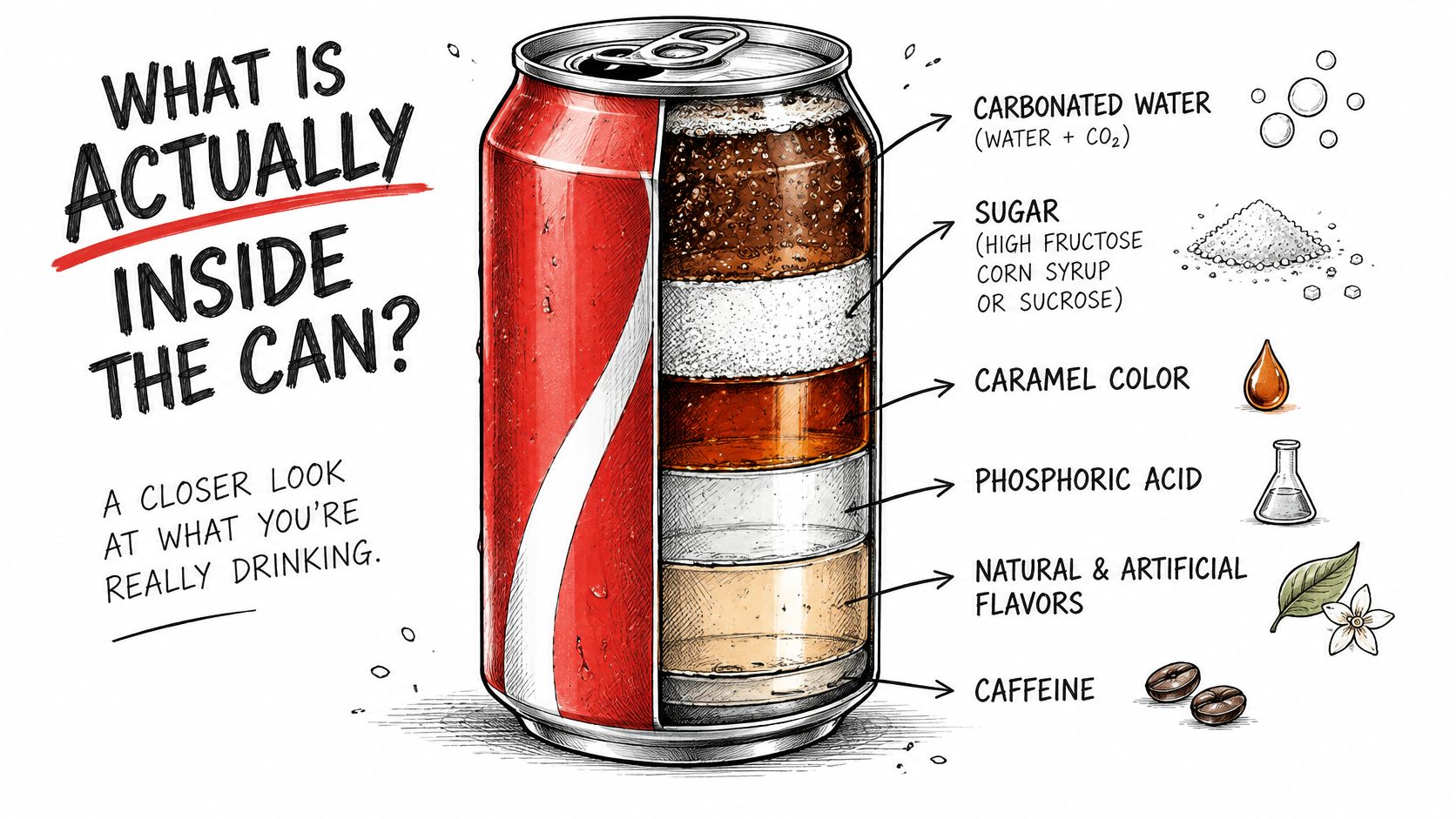
What Each Ingredient Does in an Aerosol Glass Cleaner
| Ingredient | Typical share | Job in the formula | Detailing note |
|---|---|---|---|
| Propane or butane propellant | 1 to 5% by weight in one sheet, 1 to 2.5% each in another | Pushes product out as a spray | Flammable gas under pressure, never puncture or heat |
| Ethanol | 2.5 to under 10% | Dissolves film and dries fast | Flammable liquid and eye irritant |
| 2-Butoxyethanol (glycol ether) | 2.5 to under 10%, or 1 to 5% in another product | Cuts oily fingerprints and traffic film | Irritant to skin and eyes |
| Isopropanol | Listed on the sheet, share not stated there | Solvent for grease and oily contamination | Check the brand safety data sheet before coated glass |
| Alkaline amines | Listed on the sheet, share not stated there | Lifts stubborn contamination | One product sits around pH 10.1, so check coated glass |
| Nonionic surfactant | Trace | Wetting and lifting dust | Excess leaves visible streaks |
Those ranges come from real product sheets, and they show how much formulas differ. One commercial aerosol glass-cleaner safety data sheet lists liquefied hydrocarbon propellant at 1 to 5% by weight and 2-butoxyethanol at 1 to 5%. A second product safety sheet lists ethanol at 2.5 to less than 10%, 2-butoxyethanol at 2.5 to less than 10%, propane at 1 to 2.5%, and butane at 1 to 2.5%.
Why Solvent Choice Shows Up in Your Towel Work
Glycol ethers and alcohols dissolve the hydrophobic contamination that water-based cleaners smear around. That’s plasticizer haze on interior windshields, fingerprint oil on door glass, and the greasy edge traffic film leaves on exterior panes. A fast-evaporating, low-residue formula lets you finish in fewer passes because you’re removing dissolved oil instead of redistributing it.
Flood the glass and you lose that advantage. Excess product increases wipe passes, redeposits dissolved oils, and leaves a film that’s especially visible under night driving or direct sun. Spray a controlled burst onto the microfiber, work a section, then level with a clean dry side. You’ll use less product and see the glass clear sooner.
Ask three questions of every label before the can joins your regular kit. Which solvents are doing the work? How much surfactant is in the formula? Which propellant pushes it out? If the maker won’t publish a safety data sheet that answers those questions, I wouldn’t trust the product around tint, coatings, or a customer’s cabin.
Choosing the Right Formula for Each Detailing Job
Pick the formula for the job, not the brand on the shelf. I run the decision in a fixed order. Surface first, then environment, then the finish the customer needs.
Surface means asking what’s on the glass. Interior film, aftermarket tint, a ceramic or rain-repellent layer, anti-glare treatments, and windshield-mounted cameras all change what you can spray. Environment means an open driveway behaves nothing like a closed bay or a shut cabin. Finish means deciding whether you need a quick maintenance wipe or a bonding-ready surface for a coating.
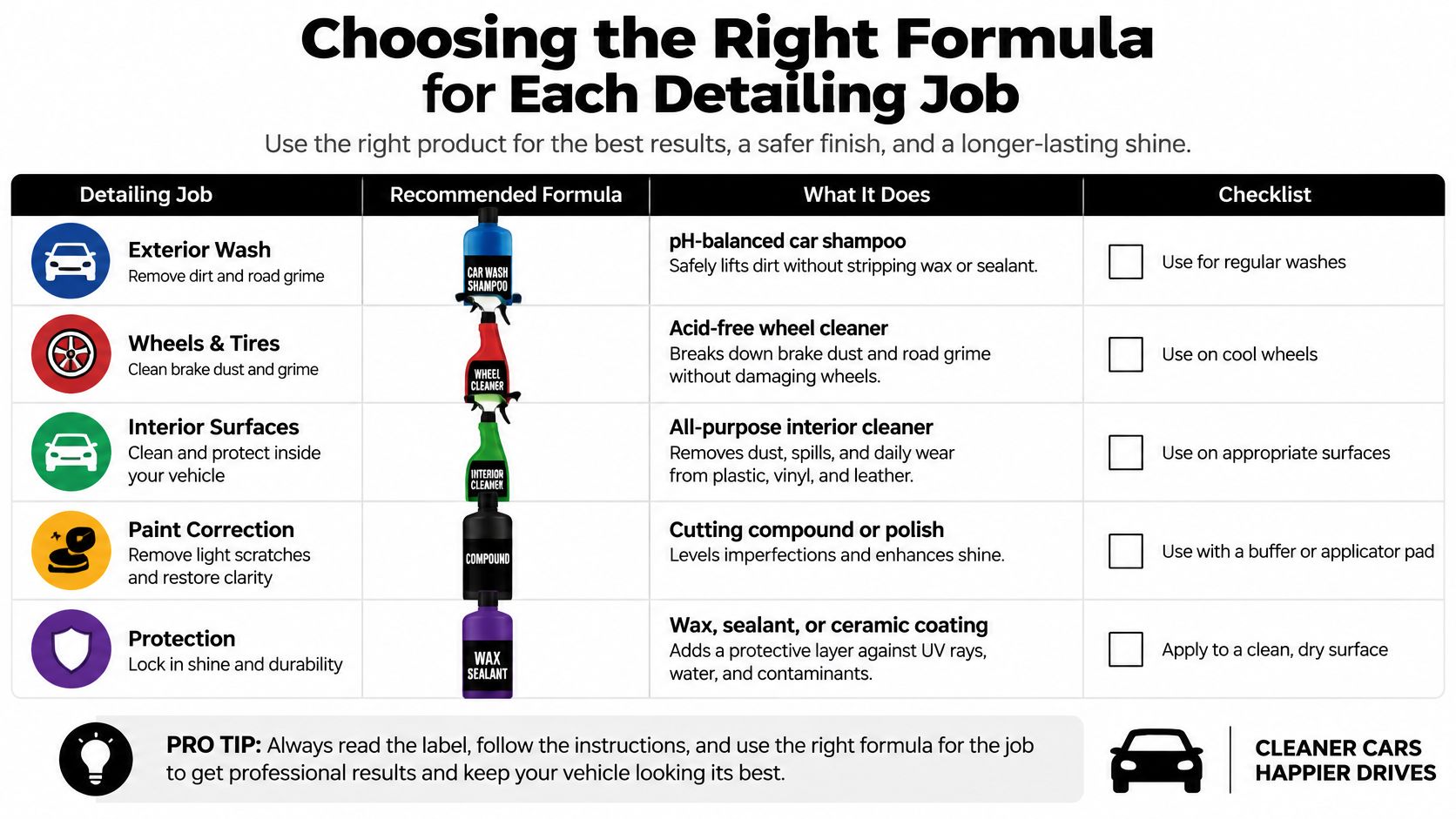
Formula Choice by Detailing Situation
| Detailing situation | Formula to choose | Why it fits | What to avoid |
|---|---|---|---|
| Interior windshield film | Alcohol-based and ammonia-free | Dissolves plasticizer haze and oily film | Ammonia-based cleaners on anti-glare glass |
| Aftermarket tinted side windows | Ammonia-free and labeled tint-safe | Protects the tint film | Ammonia and abrasive pads |
| Exterior glass before a glass coating | Low-residue, fast-evaporating, ammonia-free | Leaves a clean bonding surface | Waxy or oily formulas that leave film |
| Ceramic-coated or rain-repellent glass | Gentle, fragrance-free, checked against the coating maker’s list | Avoids dulling the repellent layer | Strongly alkaline or undisclosed additives |
| Enclosed cabin or closed garage | Lower-emission, fragrance-free, sprayed onto the cloth | Reduces volatile exposure | Heavy spraying with windows shut |
Ammonia is the main concern on modern interiors. Consumer Reports automotive guidance recommends an alcohol-containing automotive glass cleaner for interior windshield film, using two cloths and spraying the cloth rather than the glass, and warns against ammonia because it may damage anti-glare, anti-fingerprint, or aftermarket tint-related surfaces. That two-cloth habit matters as much as the formula. The first cloth removes dissolved film. The second, dry cloth levels what’s left before it dries into haze.
Hard water spotting is a separate problem from oily film, and a glass cleaner won’t dissolve mineral deposits just because it foams well. If you’re dealing with spots before you choose a maintenance cleaner, work through the options for a dedicated window water spot remover first, then return to a low-residue cleaner for the final wipe.
The Label Checklist
- Ammonia-free: Non-negotiable around tint, anti-glare glass, and interior screens.
- Tint-safe in writing: A verbal claim from a sales rep doesn’t protect a customer’s film.
- Fragrance-free: Scent adds volatile load to a small cabin and gives sensitive customers a reason to complain.
- Low-residue claim you can test: Verify it under low sun and at dusk, not under shop lights.
- Published safety data sheet: You want VOC figures, propellant identity, and pH before you spray.
- Written compatibility note: Get the coating maker’s position before you use it on coated glass.
Ammonia-free is a baseline, not proof that a formula is residue-free or safe on every surface you touch.
Choose the cleaner that leaves the least film on the glass in front of you, then test it on a hidden strip before the full job. A product that’s perfect on a bare exterior windshield can be the wrong call on a tinted rear window ten minutes later.
Checking Coating Compatibility Before You Spray
A glass coating bonds to the glass surface. Any film your cleaner leaves behind sits between the coating and that surface, and the bond suffers for it. That is why a fast maintenance habit can undo an expensive protection job.
Titan Coatings, at www.titancoatings.us, built its line around its own coating technology, including elastomer coatings developed with nanotube technology and its Dark Matter technology. For glass work, the relevant product is Apex Glass Coating- 50ml, an advanced hydrophobic glass and windshield coating with deep pore bonding and water-repellent performance that enhances visibility and reduces wiper use. Deep pore bonding only works if the pores are clean. Cleaner residue, dressing contamination, or a damp surface all work against it.
A glass panel can look clean and still carry a surfactant film from the last wipe-down, and the coating bonds to that film instead of the glass.
Run This Checklist Before Any Coating Goes On
- Confirm compatibility: Use an ammonia-free cleaner or one the coating maker lists as compatible.
- Remove all cleaner residue: Follow with a clean, dry towel and inspect under angled light.
- Protect your glass towels: Keep dressings, waxes, and ceramic applicators away from them.
- Let the glass dry fully: Trapped moisture under a coating shows up as patchy beading later.
- Follow the maker’s wait times: Don’t improvise cure windows to fit your schedule.
Run the list in order, because each step protects the bond the next one depends on. An ammonia-free cleaner can still leave film, and a panel that feels dry can still hold moisture you cannot see. The angled-light inspection catches both before they cost you the job.
Oleophobic and scratch-resistant glass treatments raise the same question from the other side. Once a treatment is on the glass, your cleaner has to maintain it without stripping or dulling it, so read how a scratch-resistant glass oleophobic coating is meant to be cared for before you commit to a maintenance product.
Where a Good Coating Still Fails
When a coated windshield underperforms, the cause usually traces back to preparation rather than the coating itself: residue under the bond, moisture sealed in at application, or a cure window cut short to fit the schedule. Each one shows up later as patchy beading or early loss of water repellency, and each one is a compatibility miss that a clean towel and angled light would have caught.
Safe Spraying Steps for Cabins and Detailing Bays
Aerosol gives you coverage, but the spray is airborne, so your method decides your exposure. That’s not a reason to abandon the can. It’s a reason to stop spraying interiors the way you spray an exterior windshield in open air.
The health side is straightforward. Guidance summarized in a representative aerosol glass-cleaner data sheet reflects NIOSH and OSHA advice that mists, vapors, and gases from cleaning chemicals can irritate the eyes, nose, throat, and lungs, and recommends application methods that minimize aerosol generation. That sheet lists isopropanol, liquefied petroleum propellants, and alkaline amines, with an alkaline pH around 10.1 and VOC content near 10.6%. Spraying produces higher airborne exposure than wiping, so the towel is your main control.
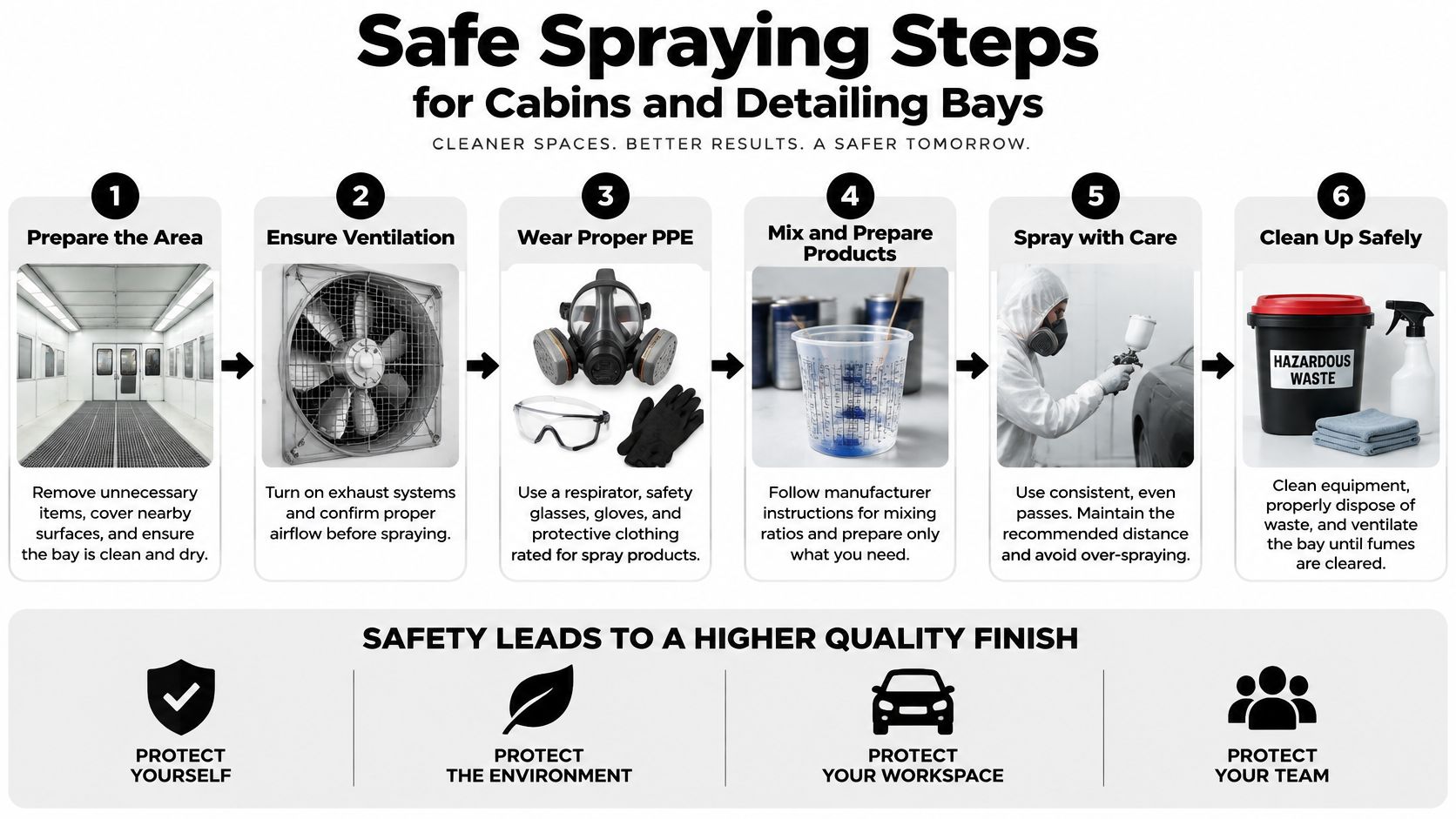
The Eight-Step Spraying Procedure
- Ventilate before the first spray. Open the doors, run fans, or raise the bay door. Air movement you set up in advance beats holding your breath through a windshield.
- Clear ignition sources. Move the can away from sparks, flames, heat lamps, and hot panels. Liquefied petroleum propellants and a heat gun don’t belong in the same workspace.
- Spray the towel for interior glass. Use a short burst onto the microfiber, not onto the glass itself. You keep the product on the towel and most of the mist out of the cabin air.
- Keep your face out of the spray path. Never spray at head height inside a closed cabin. Turn the towel away from you, spray low, then bring it to the glass.
- Wipe in one direction with the first towel. Straight, overlapping passes lift dissolved film instead of swirling it into arcs you’ll chase later.
- Level with a separate clean, dry microfiber. Buff until no film shows under angled light. A damp leveling towel just moves residue around.
- Quarantine your glass towels. Keep dressings and ceramic applicators away from them. Contamination from waxes, dressings, or coating applicators can create more haze than the cleaner itself.
- Store the can upright and cool. Keep it out of direct sun and away from a parked car’s heater vents. Pressure and heat are a bad pairing in a van that sits in summer traffic.
The rest of your interior kit should follow the same low-mist logic. When you’re reviewing the best products for car interior detailing, favor products you can apply by towel or applicator inside the cabin and save true spraying for open air.
The mistake mobile detailers make most often is spraying the glass directly in a closed cabin, then sitting in the driver’s seat to wipe it while breathing the cloud they just made.
None of these steps slow you down in any real way. Ventilation runs while you set up. Spraying the towel takes the same second as spraying the glass. What changes is where the product ends up, on the glass where it cleans, instead of in the air, on the dashboard, and in your lungs across a full week of jobs.
Testing Glare and Cabin Air on a Real Job
Say a mobile detailer finishes a sedan in bright afternoon light, every pane looking spotless. That night the customer calls. Oncoming headlights bloom across the windshield, and the drive home felt like looking through a fogged visor. The bay said clean. The road said otherwise.
Judge glass under the light your customer drives in, not under bay lights. A formula can cut grease aggressively and still leave a microscopic film that scatters light. It’ll pass a noon inspection and fail the only test that matters, a dark road with traffic coming at you.
The Air Question Deserves the Same Rigor
A cabin is a small closed box, so what you spray inside it concentrates fast. Reporting on a 2025 study of 30 cleaning products found 530 unique volatile organic compounds, including 193 classified as potentially hazardous. Conventional products emitted about 22 hazardous VOCs on average, compared with approximately four for green fragrance-free products. You don’t need laboratory equipment to act on that. A lower-emission, fragrance-free formula applied to the towel is a measurable step down in exposure, for you and for the customer who gets into the car an hour later.
Six Field Tests for a New Glass Cleaner
| Test | How to run it | Pass signal |
|---|---|---|
| Night glare toward headlights | Judge the wiped glass at dusk from the driver seat, then again after rain | No halo or light scatter |
| Low-angle sunlight | Park facing a low sun and inspect both sides of the glass | Even clarity with no visible film |
| Tinted side windows | Wipe one tinted pane with a cloth sprayed off the glass, then inspect in low sun and at dusk | Tint stays intact with no clouding or lifted edges |
| Coated glass | Clean, apply the coating, then check beading after one day | Water beads evenly with no patchy spots |
| Wiper and sensor area | Clean the blade edge and sensor housing, then run a test wipe | Blades clear streak-free and sensors show no residue |
| Cabin air | Spray onto the cloth with windows open, then ventilate until the odor is gone | No lingering odor after your set airing time |
Run the tests in order and write down the result while you’re standing at the car. Note the product, the application method, and the lighting. A cleaner that passes low sun but fails night glare is a maintenance product, not a final-wipe product. A cleaner that clears glass beautifully but leaves the cabin smelling sharp after your normal airing time doesn’t belong in interiors.
Technique changes the outcome as much as chemistry here. If your wiping method needs work, compare your routine against the best way to clean auto windshield guidance and fix the towel sequence before you blame the formula. Two clean towels and a dry leveling pass rescue more jobs than a stronger solvent ever will.
I would run at least the glare test and the cabin air test on any new cleaner before it touches a paid job. Log the results so you can compare formulas across cars and seasons. Six months of honest notes will tell you more than any shelf claim about streak-free shine.
Titan Protection After a Clean
Protection is the decision that makes the clean last, because bare glass starts collecting film again the moment the car leaves the driveway. Everything you did with the aerosol only pays off if the coating you lay down next actually bonds to the surface you prepared.
For windshields and exterior glass, a hydrophobic glass coating turns rain from a visibility problem into water that beads and clears, which makes driving in rain far less stressful and cuts how hard the wipers have to work. That outcome depends entirely on the preparation you’ve just done. A clean, dry, residue-free surface is what lets a glass coat for cars bond evenly instead of beading in patches a week later. Any propellant haze or surfactant film left behind by the cleaner sits between the coating and the glass, so the residue question running through this whole workflow becomes a bonding question at this step.
Matching the Coating to the Surface
Paint and mixed exterior surfaces call for a different product than glass. Alpha Quartz 50ml Ceramic coatig is a high-performance elastomer ceramic coating designed for all surfaces, built around Advanced Adhesion Technology for protection against UV, chemicals, and abrasion. It’s easy to apply indoors and outdoors, which suits DIY users and mobile detailers who can’t tie up a bay all day. The elastomer flexibility argument is the same one covered in the compatibility check, so what matters here is matching the formula to the substrate, not the label on the bottle.
That matching is where most coating jobs go wrong. A daily-driven commuter and a garaged weekend car face different contamination loads, and the product pages in the Titan shop list which formula is intended for which surface. Pick the coating for the panel you’re protecting, then confirm the glass is ready for it before you open the applicator.
For faster maintenance work on paint and trim beside the glass, a spray format such as Ultra Ceramic Spray covers that separate job with an easy install. Keep the roles straight, though. The spray coating protects paint and trim. The glass coating protects glass. The aerosol cleaner prepares both surfaces and protects neither.
The can is a tool, and the right formula and method make it a good one.
That sentence is the whole workflow. Respect the chemistry inside the can, control where the spray goes, test under real driving light, and only then lock the result in with a coating bonded to clean glass. Do those four things and the hiss from the driveway stops being a gamble. It becomes the fastest reliable step in your glass routine, and your customers notice the difference the first night they drive home.
If you’re ready to pair a low-residue glass routine with protection that bonds to properly prepared surfaces, explore the glass, elastomer, and spray coatings at APEX NANO – Titan Coatings and choose the product that matches your next job. Bring your surface, your working conditions, and your test results, and you’ll find a coating built for detailers who check their work under real light.
0 Comments