
You’re standing in the driveway or at the wash bay, and the glass looks clean until the sun hits it. Then the windshield lights up with chalky halos, tiny white freckles, or a dull haze that won’t budge with another round of glass cleaner. That’s usually the moment people reach for a window water spot remover, but the smart move is to identify what you’re looking at first, because the wrong fix can waste time and wear the glass down.
What Window Water Spots Actually Are
The first thing to notice is whether the mark sits on the surface, seems bonded into the glass, or looks like it’s changed the glass itself. Fresh mineral residue usually wipes down with the right chemistry. Bonded mineral film feels more stubborn and often leaves that cloudy, baked-on look after sprinklers or hard water have dried on the pane. True etching is the bad one, because the surface itself has been altered and basic cleaning won’t bring it back.
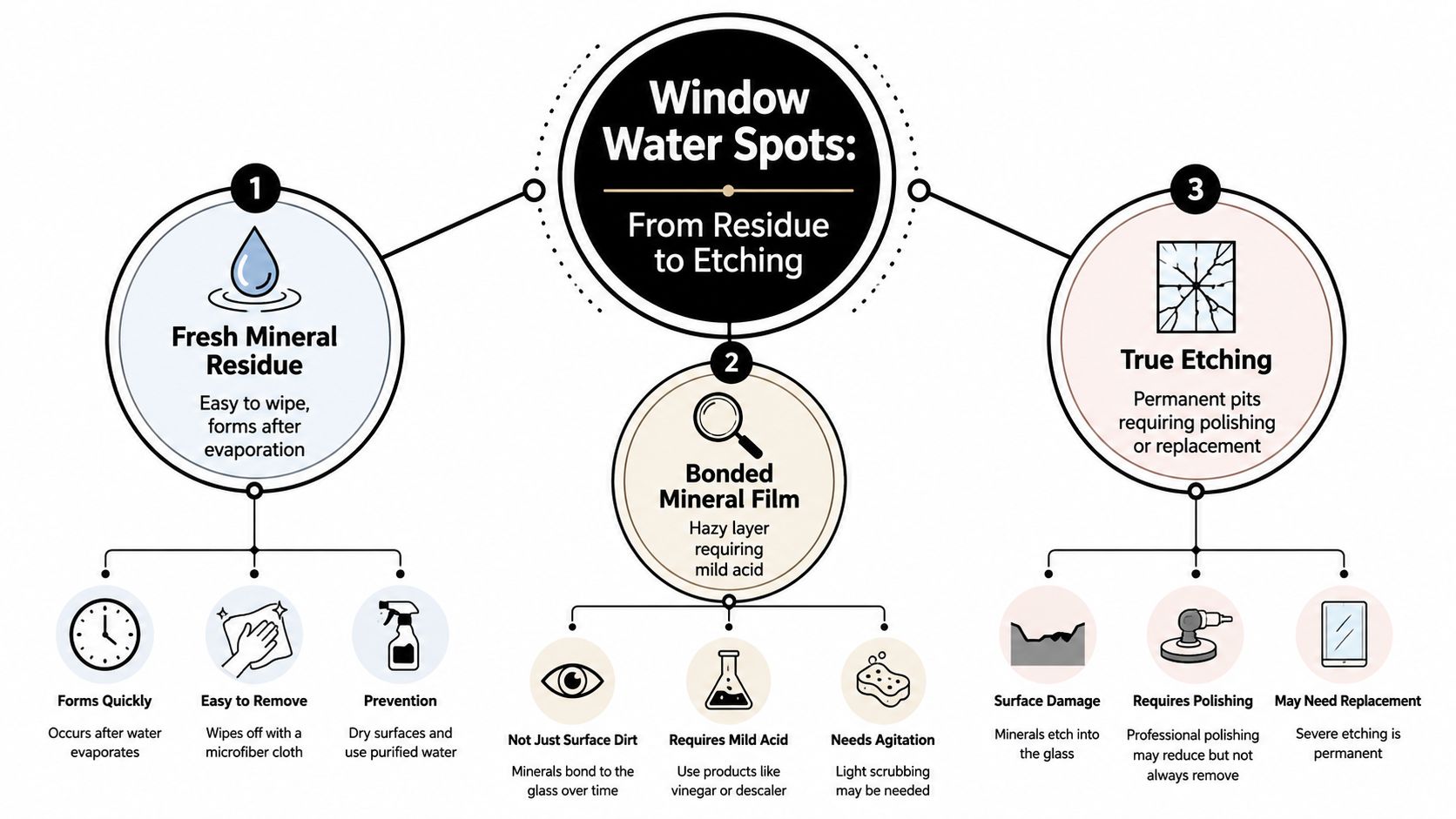
Why the spots keep coming back
Water spots on windows are largely driven by dissolved mineral deposits from hard water, especially calcium carbonate and magnesium salts, which are left behind when water evaporates on glass. That’s why a car that looked fine in the shade can come out of a wash bay and suddenly show spotting across every window, especially if sprinklers or overspray keep hitting the glass.
A quick field test helps more than guesswork. Wet the panel and watch how the water behaves. If the marks soften or disappear while wet, you’re probably dealing with residue or light film. If the glass still looks foggy when wet, or you can feel a rougher texture, you may be in etching territory, where a window water spot remover alone may not be enough.
Practical rule: if the mark disappears while the glass is wet, start with chemistry. If it stays visible and textured, assume the problem is bonded or etched and slow down.
The reason pros care so much about diagnosis is simple. The category developed around a persistent maintenance problem, not a one-step miracle fix. Once hard-water residue bonds to glass, routine glass cleaner usually can’t touch it, so the right approach is to match the method to the damage. For a solid, shop-minded overview of how hard-water staining behaves on windows, pro advice on glass stains is worth a look.
The biggest mistake is reaching for a harsher product because the first pass didn’t work. That usually means the spot was misread, not that the chemistry was too weak. Start with the least aggressive method that fits what you see, then escalate only if the glass is telling you to.
Removing Light to Moderate Spots the Safe Way
The safest routine starts before the remover ever touches the pane. Wash the glass, remove loose dirt, and work on a small test area first. A 2’x2′ section is a practical benchmark for confirming how the glass reacts before you commit to the whole windshield or side window, and that matters because contamination sitting on the panel turns light rubbing into scratch risk.
The step order that keeps the glass out of trouble
Use a dedicated remover or a 50/50 mix of white vinegar and distilled water for lighter deposits. Spray or apply it to the glass, then agitate it with a microfiber applicator or cloth in firm cross-hatch or circular motions so the product works into the mineral film. One common workflow keeps the treated area wet for only about 20 seconds before scrubbing and rinsing, while another vinegar-based method leaves the solution on the glass for 1–2 minutes before wiping. The key is not the exact brand of towel, it’s short dwell, active agitation, and immediate rinse.
Never let the product dry on the glass. That’s where haze and residue get left behind, especially in heat or direct sun. After the rinse, use a fresh microfiber towel and a streak-free cleaner to neutralize any remaining cleaner on the surface, then dry it clean.
Shop-floor habit: treat the remover like a working chemical, not a spray-and-walk-away cleaner. The wipe matters as much as the spray.
| Spot Severity and First-Removal Method | First-Line Method | Dwell Time | Key Caution |
|---|---|---|---|
| Fresh residue | Vinegar and distilled water or mild remover | 20 seconds to 2 minutes depending on method | Don’t let it dry |
| Bonded film | Dedicated spot remover with agitation | Short, controlled dwell | Rinse fast, keep testing |
| Suspected etching | Skip straight to correction planning | N/A | Don’t keep scrubbing the same area |
For a windshield-focused maintenance reference, the best way to clean auto windshield surfaces is a helpful companion read when you’re deciding how much correction is reasonable.
If the first pass doesn’t move the spot, don’t jump immediately to a harsher pad. Rewash, retest, and confirm you’re not fighting dirt or dried cleaner instead of mineral film. That’s the difference between solving the job and chasing your tail for a whole Saturday.
Escalating to Mechanical Polishing for Stubborn Spots
A spot that still looks chalky after cleaning, or one that stays visible even after a proper rinse and dry, usually means you are past surface residue. At that point, the glass may be holding bonded mineral film, or the surface may already be lightly etched. The work changes from removal to correction, and the margin for error gets smaller.
The abrasion route that still respects the glass
If compounds, polishes, and gritty cleaners fail on glass, 0000 steel wool with generous glass cleaner may be used on the glass only, with adjacent trim and paint masked off and a test area confirmed first. Keep the pressure even and the motion controlled, because the grade matters here. The wool is meant to gently cut the deposit, not grind at the glass.
For heavier correction, a separate workflow recommends machine polishing at about 800 rpm after tape-masking surrounding paint. That speed leaves little room for careless handling. Too much machine speed, too much heat, or poor isolation of the work area can haze the pane or punish the trim around it.
A glass buffing pad can help when used as part of a controlled process, and the tool is available here, but it does not replace diagnosis or restraint. If the spot is still active mineral residue, a pad is overkill. If it is etched, the pad may be the honest next step.
The safest pattern is simple. Mask the nearby paint, inspect a test area, keep the pad flat, and verify the result by re-wetting the pane afterward. Polished glass can look perfect dry, then show wetting differences when water hits it again, so an angled look in natural light tells you more than a casual glance in the bay.
For readers who want a deeper shop-level walk-through, for spot-free window glass is a useful companion resource before stepping into correction work.
A few things go wrong over and over. People reach for abrasives before confirming the defect is etching. They skip the masking and burn the edge of a trim piece. They keep working the same spot after it is clear the deposit is deeper than surface residue. That is how a water-spot job turns into a glass problem.
Home Remedies Versus Dedicated Removers
The kitchen-cabinet fix and the shelf product don’t compete on the same terms. Vinegar, citric acid, and baking soda are inexpensive and useful on fresh residue. Dedicated removers are better when the film has bonded and you want less guesswork. Abrasives and polishing compounds sit in a different category altogether, because they’re correction tools, not cleaners.
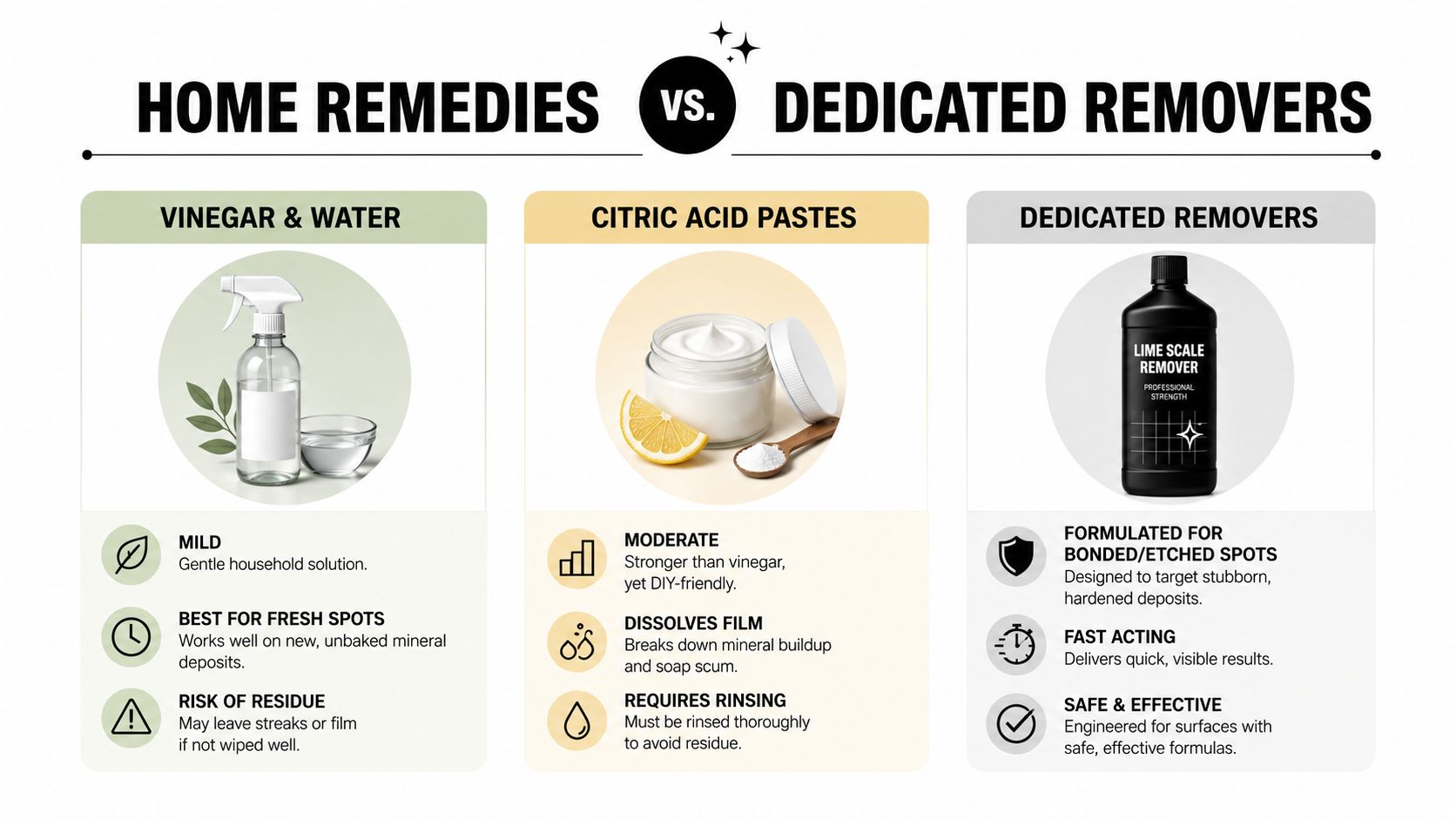
What each option is really good at
A 50/50 vinegar and water mix softens mineral buildup and works well when the spotting is fresh. Citric acid pastes and baking soda slurries add more mechanical help, but they still need careful rinsing and a light hand. Dedicated removers are the better fit when the film has hardened and you’d rather save time than keep retesting homemade mixes.
Good rule of thumb: if the spot responds to short dwell time and immediate rinsing, stay in the chemical lane. If it only responds to abrasion, stop pretending a wipe-on cleaner will solve it.
Here’s the honest trade-off. Home remedies are cheap and familiar, but they’re less forgiving when the deposit is stubborn. Dedicated removers are made for the job, and they reduce the amount of improvising on coated or tinted glass. Abrasives can rescue the worst cases, but they also raise the stakes, because a bad hand turns a stain into a scratch.
For a practical product-side reference on mineral cleanup, how to remove hard water stains gives a useful bridge between light cleaning and more serious correction.
The key is not to escalate emotionally. A more aggressive product isn’t automatically the better answer. If the glass is clean but the spot is still there, you may be dealing with etching, and no amount of kitchen chemistry will fake a correction.
Why Prevention Beats Removal Every Time
A clean pane can still be one bad sprinkler cycle away from the same white haze. That is why a window water spot remover helps, but prevention does more of the work over time. Hard-water residue keeps coming from sprinklers, wash water, and runoff, so the best win is cutting the number of chances those minerals have to dry, bond, and get baked in.
Titan Coatings built its coating approach around that maintenance gap. The company says it brought Elastomer coatings to market with nano-tubes technology and Dark Matter tech, and that matters on glass because the surface still has to handle temperature swings, road grime, and repeated wash cycles. The idea is straightforward. An elastic membrane can stay hard enough to protect while still flexing with the surface instead of cracking when conditions change.
What flexibility changes in the real world
Traditional brittle coatings can start to show their limits when mornings are cold and afternoons are hot. A more flexible coating is meant to move through that shift instead of turning rigid. On glass and painted panels, that extra give can help the layer stay intact where a less forgiving coating may fail at weak points.
For readers comparing options, Titan’s Alpha Quartz is a 92 percent high-solids Elastomer ceramic coating that cures in 4 hours and is designed for indoor or outdoor application. That fits the kind of install detailers often want when the job needs to work for DIY or mobile use without turning into a long, drawn-out process. The shop version of that workflow is outlined in the Titan glass coating page.
| Traditional Ceramic Versus Elastomer Coating | Traditional Ceramic | Titan Elastomer Coating |
|---|---|---|
| Surface behavior | Can be more brittle under swings | Built for flexibility |
| Temperature response | May be less forgiving | Designed to move through hot and frozen conditions |
| Maintenance value | Protection only if it survives | Protection plus resilience |
If you want the broader catalog, the Titan shop is where the current lineup lives, including glass and maintenance products. The maintenance logic stays the same either way, because prevention keeps the next round of spotting from turning into correction work again.
Coating Workflows From Titan Coatings
After the glass is clean, the next question is what to put on it so the job does not keep coming back. For windshield and side-window protection, Titan’s Apex Glass and Windshield Ceramic Coating is the glass coating to look at first, because it is built around visibility and water behavior on glass. The product is described as activating superhydrophobic sheeting at just 30 MPH and lasting up to 2 years on side windows and 6–9 months on windscreens.
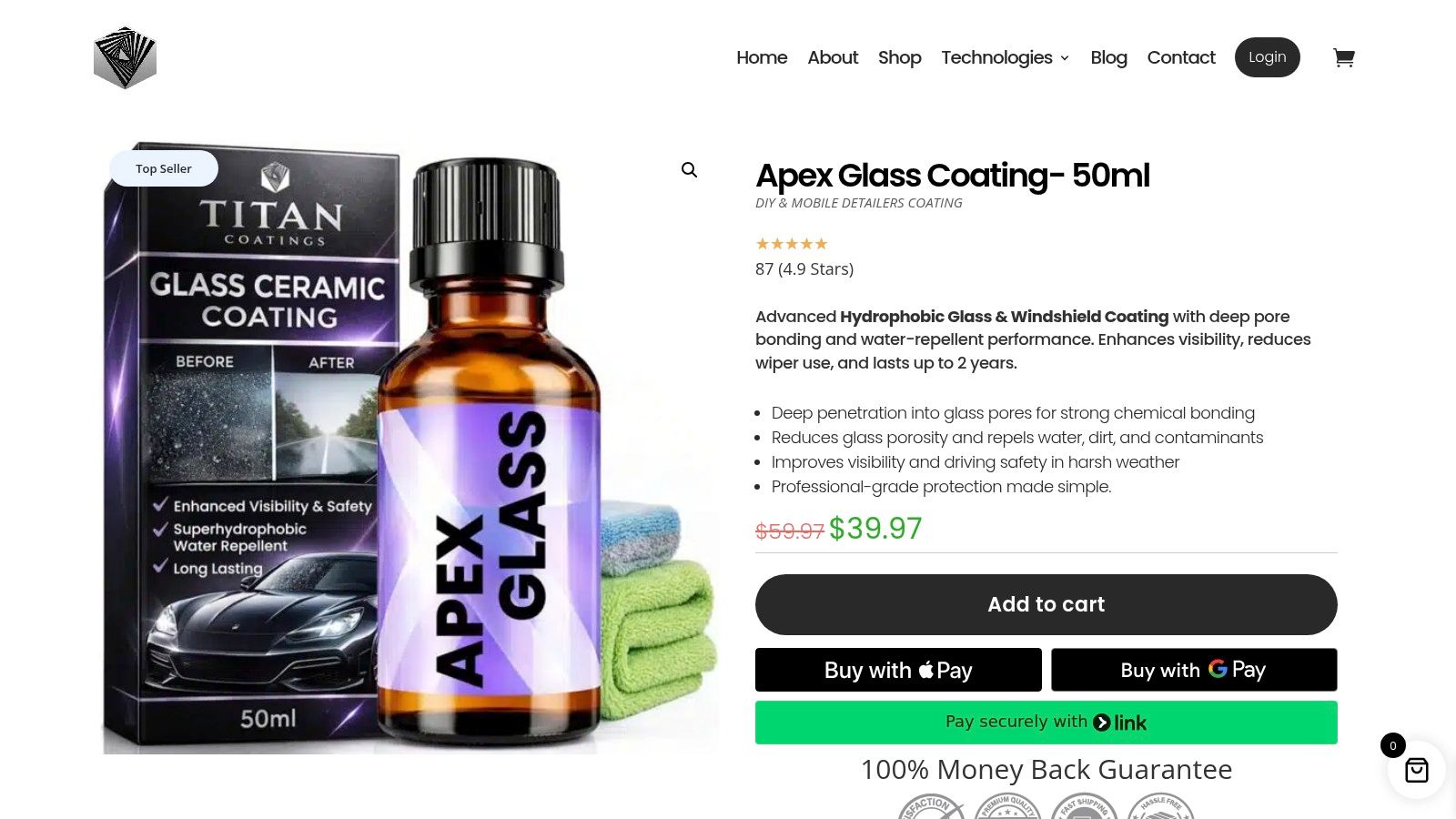
How the glass workflow feels in the bay
The application process is direct enough for an experienced DIYer or mobile detailer. Use 10 to 15 drops on an applicator, move in circular passes so the coating works into the pores of the glass, let it dwell for 3 to 5 minutes, then wipe with a short-pile microfiber and finish with a long-pile microfiber buff. Two coats are commonly recommended, and treating the wiper blades too helps the system perform more consistently.
For current product details, Apex Glass ceramic coatings is the source page. The trade-off detailers care about is simple, rain behavior changes how often the driver has to reach for the wipers.
Visibility coatings do not remove the need for washing. They buy cleaner gaps between washes and help the glass shed water faster when conditions turn ugly.
Alpha Quartz fits the surface-protection side of the conversation. It is an Elastomer ceramic with that 92 percent high-solids formulation, and the fact that it cures in 4 hours gives it a real workflow advantage for shops that need to turn cars faster. Ultra Ceramic Spray sits in a different lane, as a flexible spray sealant for paint, wheels, trim, and glass, and it can be used wet or as a drying aid. For the product page, Ultra Ceramic Spray is the cleanest reference point.
If you are comparing the broader glass protection setup, Titan’s coating page gives you the glass-focused view in one place. The pattern stays the same across the line, clean the surface properly, protect it, and keep mineral deposits from getting a foothold again.
For broader wash-interval planning on exterior surfaces, find solar panel cleaning frequency tips is useful because the same basic logic applies, which is to clean before buildup turns stubborn.
A Practical Maintenance Routine and Final Checklist
A good routine keeps the spots from ever becoming a weekend project. Start with a weekly two-bucket rinse, then do a monthly pH-neutral wash so minerals and road film don’t sit on the surface long enough to bond. Every quarter, inspect the glass under angled light and deal with anything new before it hardens.
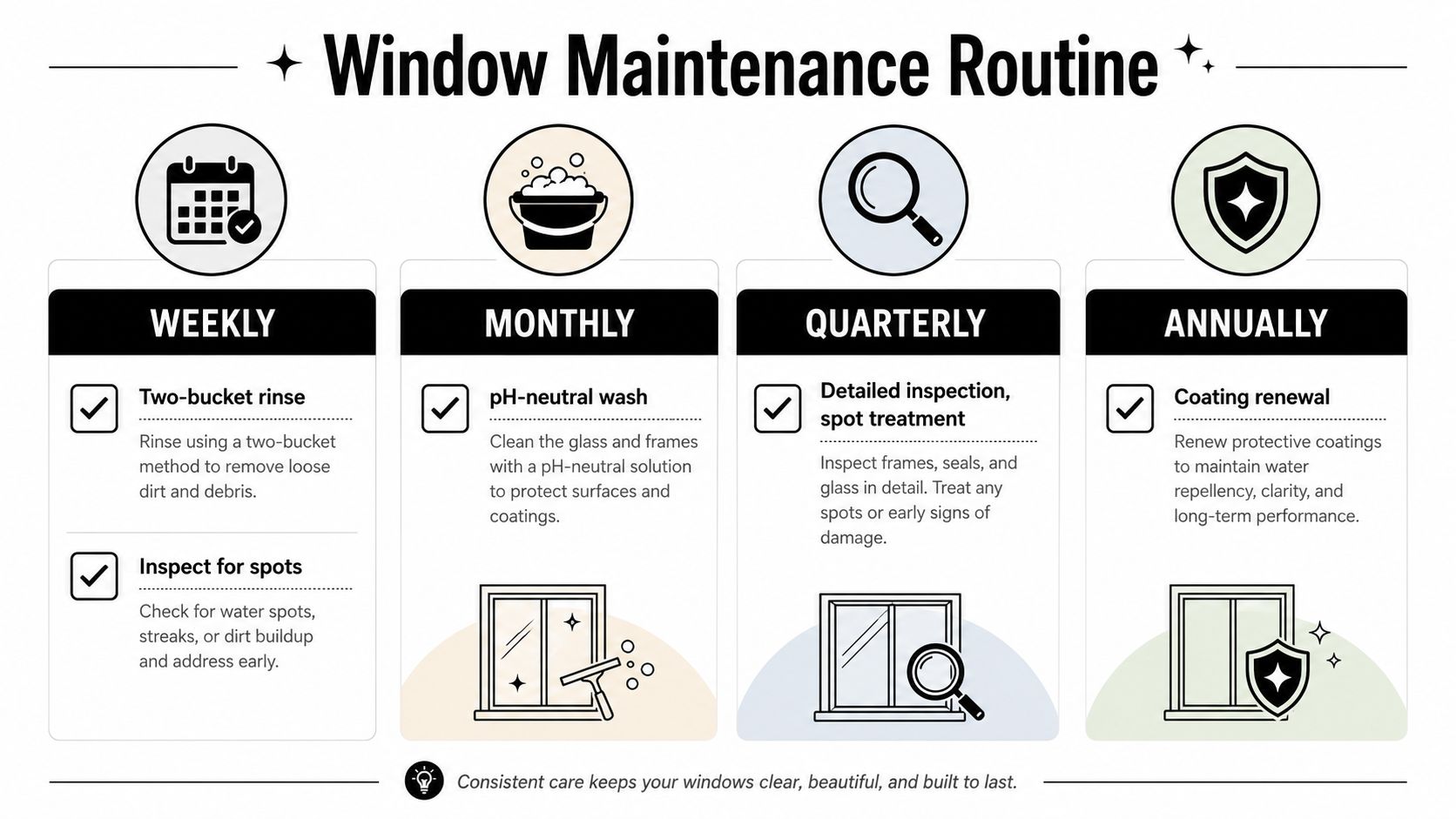
A routine that actually survives real life
When the hydrophobic behavior starts to fade, refresh the protection instead of waiting for the glass to look tired. On body panels, a top-up of Ultra Ceramic Spray is the simple maintenance move, and the windshield can be re-coated with Apex Glass when water no longer sheets the way it should. That shift is what makes the whole system easier to live with, because the owner spends less time correcting and more time rinsing.
For broader wash-interval planning on exterior surfaces, find solar panel cleaning frequency tips is useful because the same basic logic applies, which is to clean before buildup turns stubborn. And if you’re maintaining your own wash setup, deionized water car wash guidance is worth checking when you want fewer mineral marks to fight later.
A few quick answers come up again and again. Are water spot removers safe on tinted windows? Only if the product and the film are compatible, and abrasives are a bad idea on aftermarket tint. How do you tell a coating failure from a fresh spot? Fresh spots usually change when wet, while a failing coating just stops beading the way it should. Can a coating go over light etching? It can protect the surface, but it won’t restore missing glass.
The cleanest glass is the one that never gets a chance to bake in. If you want to match the right remover to the right defect, then build the maintenance routine around protection instead of rescue, check the current Titan Coatings lineup and choose the glass product that fits your car, shop, or mobile detailing workflow.
A CTA for APEX NANO – Titan Coatings.
0 Comments