
You wash the car, step back to admire the finish, then notice the same dull patches and stubborn grime after the next wet commute. A professional car coating can make ownership easier, but the right choice starts with the damage you want to prevent, not the gloss you want on collection day.
Professional Car Coating Types Compared
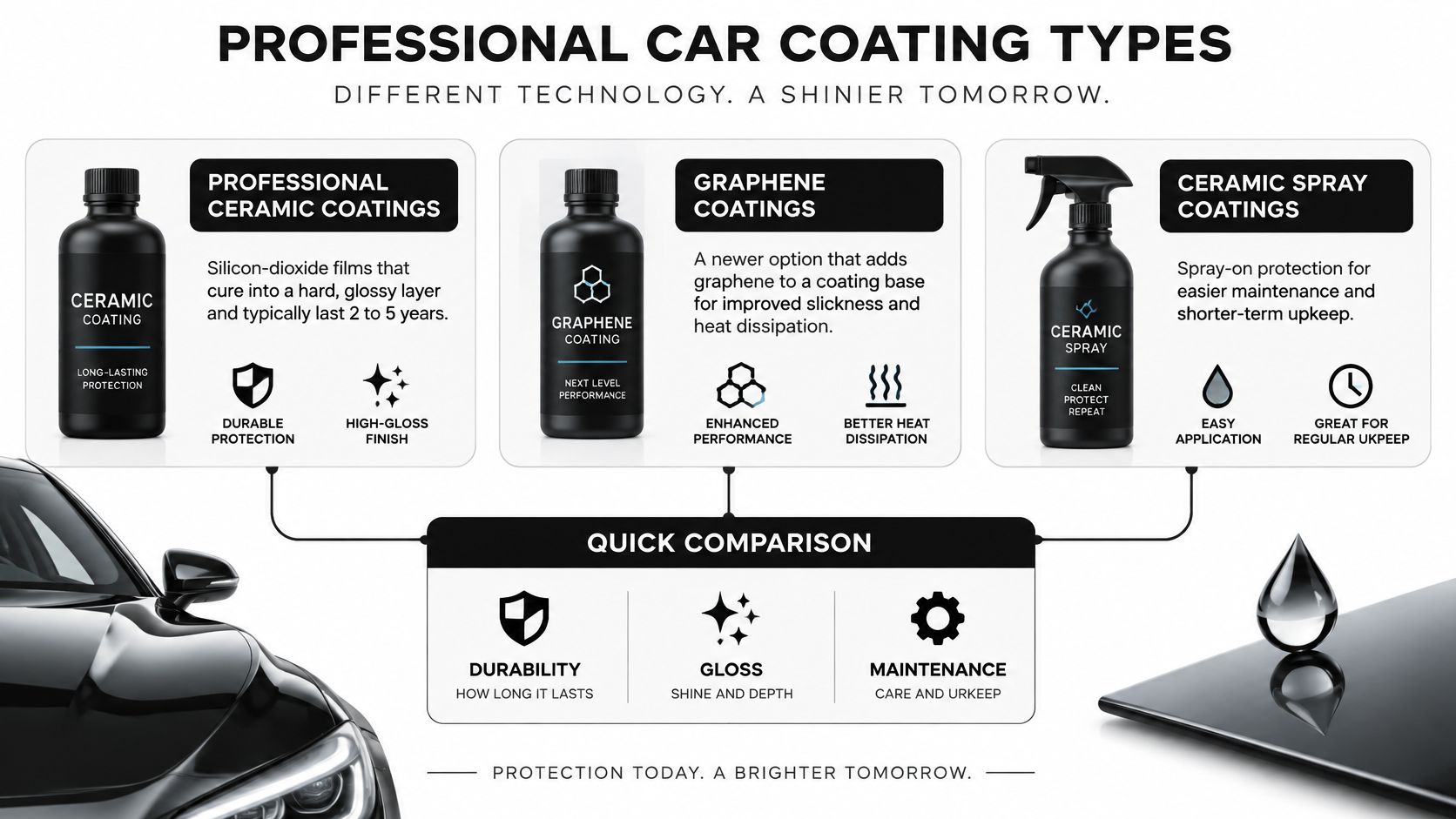
A coating’s name tells you less than its chemistry and intended use. Ceramic coatings use silicon-based chemistry to form a protective film. Polymer sealants use synthetic polymers, while hybrid ceramics combine silica-based ingredients with polymers. Compare the product’s documented performance and required upkeep before choosing.
Match the Chemistry to the Job
Professional car coating types at a glance
| Coating Type | Core Chemistry | Typical Durability | Best Fit |
|---|---|---|---|
| Professional ceramic | Silicon-based film, commonly described as silicon dioxide chemistry | Use the exact formula’s documented service interval | Owners wanting gloss and easy cleaning |
| Polymer sealant | Synthetic polymer bonded to paint | Plan for regular renewal when protection declines | Budget protection and regular reapplication |
| Hybrid ceramic | Silica blended with polymers | Follow the formula’s maintenance and renewal schedule | Daily drivers balancing cost and durability |
| Elastomer ceramic (Titan) | Elastomer membrane with carbon nanotube reinforcement | Confirm the selected product’s manufacturer claim and warranty | Owners seeking an elastomer coating; suitable formulas are also available for DIY and mobile detailers |
These categories are not quality rankings. A well-maintained sealant can suit a regularly used car better than a coating that does not match the owner’s upkeep routine. The ceramic and polymer coating comparison explains how the chemistry differs from the sales terminology.
Graphene-labelled products also need scrutiny. An ingredient name alone does not establish how durable the finished coating will be.
Where Elastomers Fit
Titan describes its elastomer coatings as carbon-nanotube-reinforced films. Check the manufacturer’s elastomer coating technology page for its current wording, and treat durability and market-positioning language as claims to assess against the product’s technical information.
A windshield illustrates surface hardness; a rubber bumper illustrates flexibility. A thin coating is neither structural glass nor an impact-absorbing bumper. Titan’s Dark Matter Technology explanation describes carbon nanotube reinforcement within an elastomer blend, intended to combine a hard surface with flexibility. Judge the coating by the performance documented for the finished product.
Your choice should reflect how the car is used and cared for:
- Washing habits: Choose a product whose upkeep fits your routine.
- Local climate: Account for sunshine, coastal contamination, and temperature swings.
- Vehicle use: Consider whether the car is a daily commuter, an outdoor work vehicle, or a stored weekend car.
Professional Coatings Versus Consumer Products and Cost Per Year
A waxed car can look sharp after a Sunday application, then need attention again after a storm and several dirty commutes. Wax suits owners who accept frequent renewal. A professional coating costs more upfront because the service includes inspection, preparation, application, and a warranty from the certified installer, with terms based on the products and layering used.
Compare the Complete Service
Consumer product versus professional coating
| Factor | Consumer Wax or Spray | Professional Coating |
|---|---|---|
| Typical protection window | Short-term protection requiring regular renewal | Longer-term protection tied to the exact formula and care |
| Surface preparation | Wash and surface preparation appropriate to the product | Decontamination, selective claying, and paint correction as needed |
| Bonding | Deposits a protective layer; some sprays also bond or cure | Cures into a bonded protective film |
| UV and chemical resistance | Product-specific, generally selected for convenient upkeep | Select using documented UV, chemical, and etch resistance |
| Maintenance | Washing plus frequent condition-based reapplication | Scheduled washing with suitable pH-neutral products |
| Cost per year | Low upfront cost, with repeat product and labour costs | Higher upfront cost, potentially spread across longer service |
Some consumer sprays bond or cure, and professional coatings vary in performance. Choose by the product’s documented properties and the installer’s process, not by retail category alone.
Titan’s ElastoTek technical explanation describes an elastomer coating reinforced with carbon nanotubes. Ask the installer for the finished product’s documented service-temperature range on the current technical data sheet, and judge it against the climate the car sees, rather than a single advertised span.
Calculate Value Without Inventing Savings
Use this calculation:
Annual protection cost = preparation, installation, required maintenance, and reapplication costs divided by the service years actually delivered.
Include your time when comparing DIY with professional service. Keep optional paint correction separate from coating costs, so polishing work does not distort the comparison.
The NACE IMPACT study estimated the global cost of corrosion at US$2.5 trillion annually, equal to 3.4% of global GDP in 2013, and estimated that established corrosion-control practices could save 15%–35% of that total. Those broad corrosion-management estimates do not show that a detailing coating prevents structural rust or guarantees a financial return.
For your car, judge value by the years of protection and easier cleaning you receive. A coating does not replace factory corrosion protection, repair exposed metal, or guarantee a higher resale price.
Titan Coatings is ISO 9001 certified, but that credential does not establish an individual coating’s durability. The vehicle ceramic coating cost guide explains pricing considerations. An authorized installer provides an accurate quote based on vehicle size, condition, and package.
Choose professional installation if you plan to keep the car and maintain the coating properly. Compare the cost per year of protection, not just the sticker price, and don’t buy on a promise that the coating will pay for itself.
How to Prepare and Apply a Professional Car Coating
Preparation determines whether the coating has a sound surface to protect. A glossy film can’t repair peeling clearcoat or restore adhesion beneath failing paint.
The published review of automotive clearcoat degradation describes how weathering affects gloss, scratch resistance, and adhesion. Treat the paint, preparation, coating, and cure as a complete system, not separate purchases.
Prepare Before Opening the Bottle
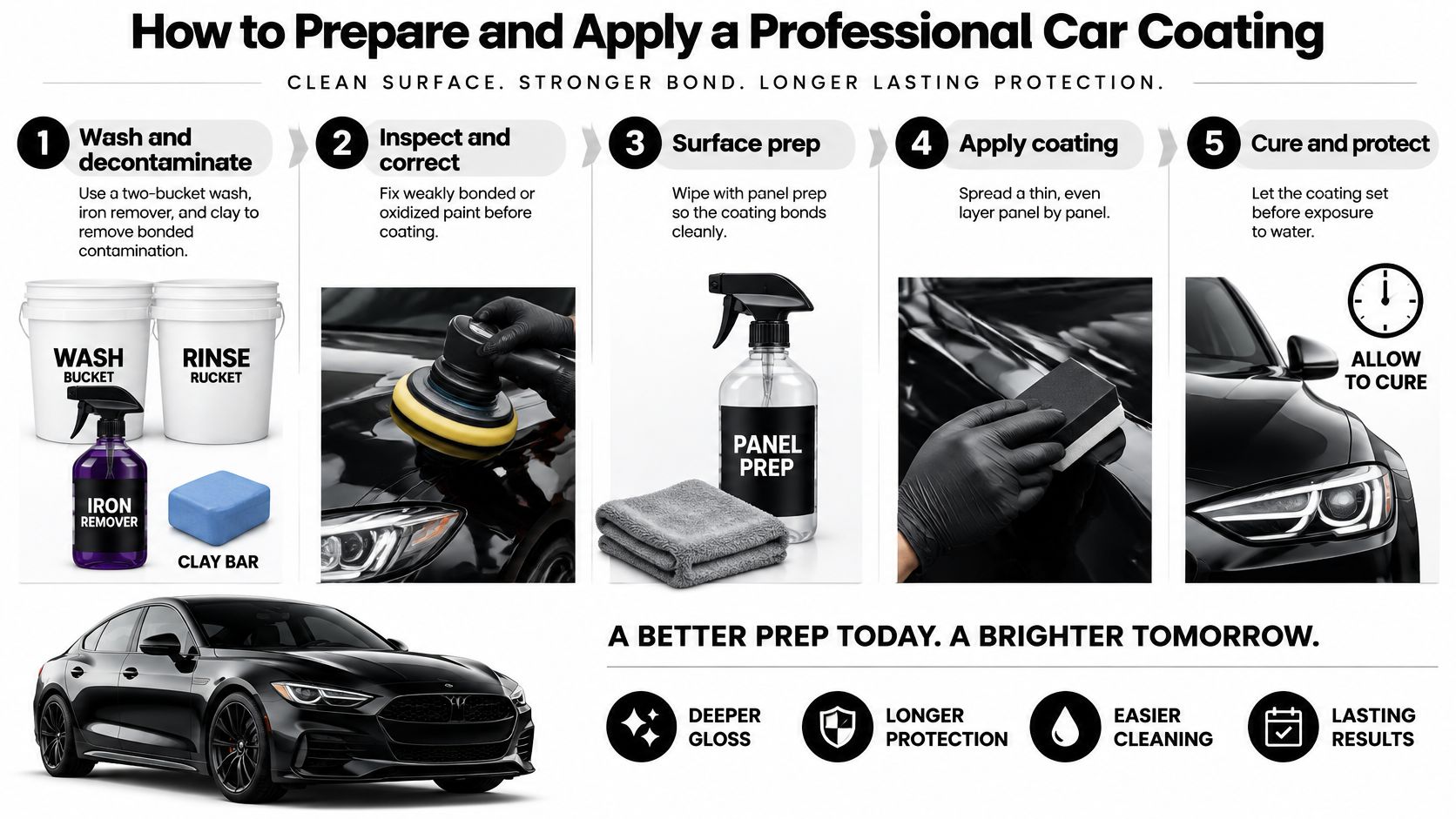
Wash and decontaminate. Start with a thorough rinse and a two-bucket contact wash using clean wash media. Apply an appropriate iron remover, rinse thoroughly, and use a lubricated clay bar only where bonded contamination remains. Unnecessary claying can add marring.
Inspect and correct the paint. Examine clean paint under both focused inspection lighting and softer ambient light. Use a dual-action polisher, an appropriate pad, and the least aggressive effective polish to address correctable swirls and oxidation. Peeling, unstable paint needs repair, not another protective layer.
Remove polishing residue. Use a compatible panel-preparation product with fresh microfiber towels, unless the specific coating system specifies a different process. Applying over oily residue can produce inconsistent bonding; repeatedly wiping with a contaminated towel only spreads that residue around.
Our car paint preparation guide is useful for planning the work before you commit to an installation day. Assemble enough clean towels and inspect the applicator before starting, rather than improvising halfway across the bonnet.
Control Application and Cure
Spread a thin, even film. Work in manageable sections using overlapping cross-hatch passes. Follow the selected formula’s dosing instructions, and don’t add extra product to chase durability. Excess material can become difficult to level and leave visible high spots.
Level at the correct flash stage. Watch the coating’s behaviour and use the technical sheet’s application window. A short-pile microfiber helps remove excess material without pushing it into adjacent panels. Direct sun, hot panels, or unsuitable cold conditions can make timing unreliable.
Inspect from different angles. Follow with a clean finishing microfiber suited to the product. Check edges, panel creases, mirrors, and overlapping application areas under diffused light. Don’t assume a streak will disappear as the coating cures.
Protect the curing film. Keep the vehicle away from premature water exposure, contamination, and washing for the specified cure period. Some of our coatings are designed for layering, and the installer recommends the layering process for each vehicle.
Other Titan Coatings require 12–24 hours for initial curing, and the vehicle shouldn’t be washed for 7 days to allow full chemical bonding. Don’t substitute those timings for a different product’s documented instructions.
A successful installation looks even before anyone sprays water onto it. Beading doesn’t excuse streaks, trapped residue, or missed panels.
Before your first DIY panel, watch a complete application video from a certified installer for the exact coating you’ll use. Choose a demonstration that shows preparation, levelling, inspection, and mistakes, not just the final water test.
The finished surface should have consistent gloss and clean water release appropriate to the formula. If application conditions aren’t suitable, reschedule rather than forcing the job.
Lifespan, Maintenance and What Shortens Coating Life
A coating’s service life depends on how the vehicle is used, cleaned and stored. A garaged weekend car faces less routine exposure than a daily driver parked near the coast, where UV, heat and salt deposits can put more strain on the finish. Persistent bird droppings, tree sap, abrasive washing and harsh cleaners also shorten the time a coating performs as intended.
Keep the maintenance simple:
- Wash regularly: Use a pH-neutral shampoo and clean microfiber wash media. Wash sooner when road film or salt builds up.
- Remove deposits promptly: Soften contamination with a suitable cleaner instead of scraping or rubbing it off dry.
- Avoid abrasion: Skip abrasive cleaning products and washing methods that can mar the surface.
- Dry carefully: Use clean drying towels or suitable filtered airflow rather than leaving mineral-rich water to evaporate.
- Inspect after cleaning: Assess gloss and water behaviour on a clean surface, not through traffic film.
A coating’s calendar claim means little without its conditions of use. The ceramic coating lifespan guide can help you frame expectations around the vehicle’s use and maintenance.
Diagnose Before Reapplying
ULTRA is a DIY product that helps maintain and refresh a coating at home. Use it only if it suits the coating already on the vehicle. A maintenance product should not be used to hide an unresolved application problem.
Inspection rule: A change in water behaviour is a reason to investigate, not automatic proof that the coating has failed.
After washing, rinse a panel and watch how water releases. Beading and sheeting can indicate that water-repellent behaviour remains; flat, persistent patches deserve closer inspection, since contamination can cause similar symptoms.
If a coating degrades, a certified installer must inspect the vehicle, provide feedback and work on restoring it as needed. Don’t polish or chemically strip the finish before that assessment.
What a Professional Car Coating Cannot Protect Against
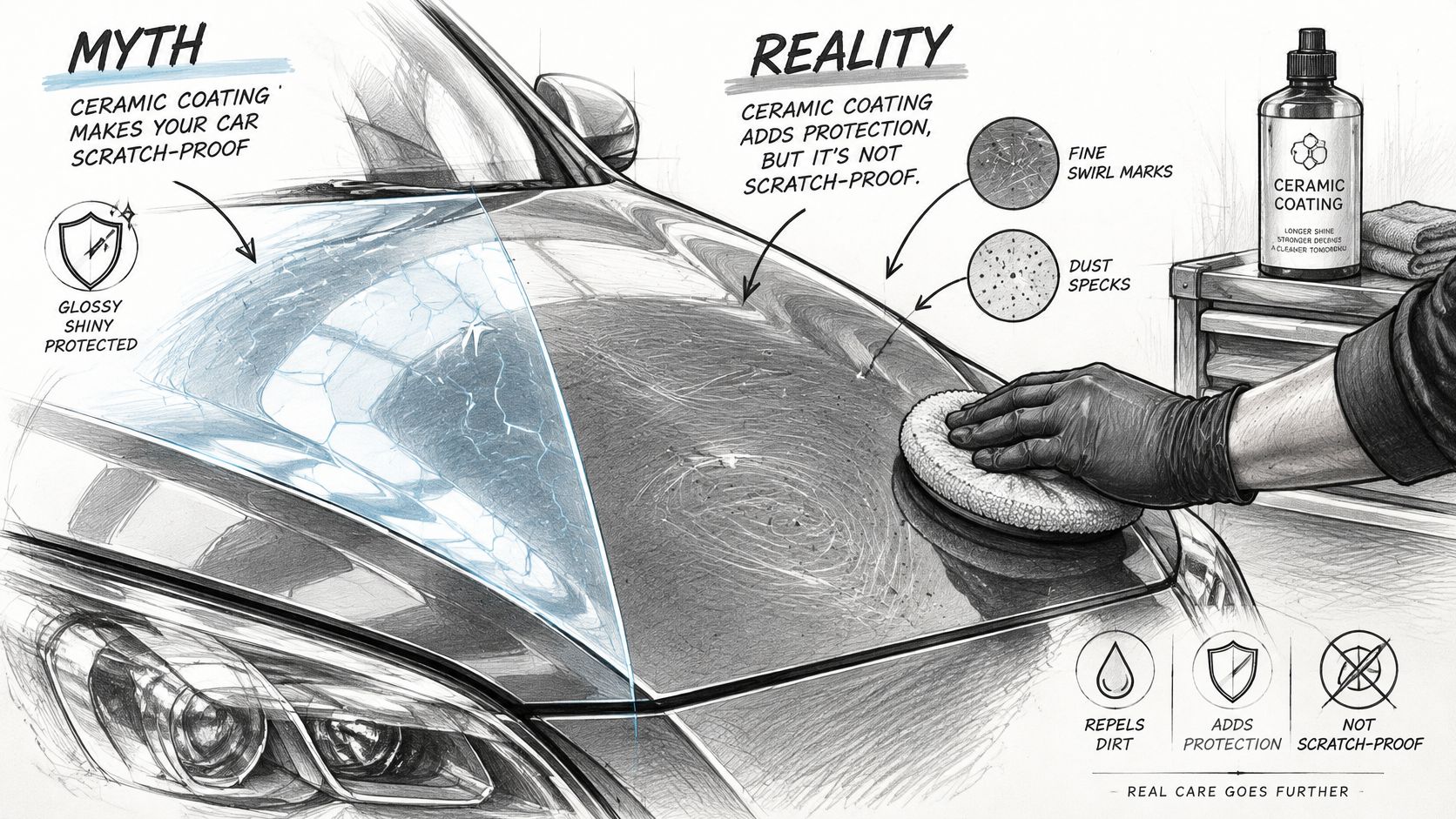
A harder or more hydrophobic surface doesn’t make paint scratch-proof. It changes how the surface interacts with contamination and cleaning, not whether a stone can damage it.
PPF Magazine’s ceramic coating coverage distinguishes easier maintenance and UV-related benefits from significant abrasion and impact protection. Paint-protection film serves a different purpose by absorbing impact damage.
Match the Damage to the Defence
| Damage Type | What a Coating Can Contribute | What You Still Need |
|---|---|---|
| UV-related deterioration | Additional resistance from a suitably tested formula | Sensible storage and condition checks |
| Bird-dropping or acid-rain etching | A protective interface and easier cleaning | Prompt removal |
| Road film and grime | Easier release during washing | Proper washing and decontamination |
| Wash marring | Selected resistance, not immunity | Clean tools and low-abrasion technique |
| Stone chips and deep scratches | No dependable impact barrier | Appropriate paint-protection film |
| Collision damage | No meaningful protection | Repair and insurance arrangements |
The distinction matters most on a highway car. If the bonnet already collects stone chips, another coating layer isn’t the sensible answer. Discuss film on vulnerable front-facing panels, then choose a compatible surface treatment for cleaning convenience.
Reject Permanent-Protection Promises
Elasticity is a useful design feature, but it doesn’t turn a thin coating into armour. Bug residue still needs removing, and a flexible film doesn’t guarantee that an impact cannot damage the paint underneath.
Some nanoparticle-containing coatings can also undergo surface oxidation and erosion during prolonged exposure, with potential particle release. Ask for weathering and environmental documentation rather than treating the word nano as proof of permanent protection.
Set a recurring inspection reminder and examine clean paint for persistent water patches, reduced gloss, and contamination that no longer releases normally. Correct and recoat only when inspection establishes the need, not merely because a fresh bottle is available.
Buy protection for the damage your car really encounters. A polishing service, coating, film installation, or combined system solves different problems.
PFAS, VOC and Chemistry Checks Before You Buy
Ask what sits beneath the coating label. PFAS status, VOC content, and finished-film performance are separate questions, and a reassuring answer to one doesn’t settle the others.
Canada’s coatings-related regulatory consultation document illustrates why buyers should check current requirements rather than rely on an old compliance statement. A consultation or proposal isn’t the same as an enacted restriction applying to your installation.
Get Documentation for the Exact Formula
A product described as PFAS-free needs a clear definition. Ask whether that means no intentionally added PFAS, what substances the declaration covers, and whether the manufacturer supports it with appropriate documentation.
Don’t assume that a fluorine-related ingredient name establishes PFAS status on its own. Equally, don’t assume that a safety-data sheet lists every ingredient or proves the absence of a chemical class.
Use this purchasing checklist:
- Request written chemistry information. Obtain the safety-data sheet, technical-data sheet, and a clear PFAS declaration for the current formulation.
- Confirm local VOC compliance. Check the rules applicable where the shop operates, including use and handling requirements.
- Ask for performance evidence. Look for gloss retention, adhesion, chemical resistance, and weathering results for the formula being installed.
- Match claims to test conditions. Identify the substrate, cure conditions, exposure method, and failure criteria behind the claimed performance.
- Review workshop controls. Confirm ventilation, protective equipment, spill handling, and disposal procedures.
Don’t Trade Evidence for a Green Label
A PFAS-free claim doesn’t automatically establish equal hydrophobicity, abrasion resistance, or durability. Neither does it establish inferior performance. Compare those properties individually.
The ASTM paint and coating standards catalogue identifies methods addressing stresses such as salt exposure, humidity, immersion, and weathering. Those defined tests are more useful than a demonstration involving clean water on a freshly coated panel.
Our low-VOC coating guide helps separate emissions terminology from broader safety and performance questions. Low VOC doesn’t mean exposure controls are unnecessary.
For coastal or high-UV use, prioritize relevant environmental testing. Detailers should also confirm the current formulation before stocking products or issuing quotes, because an old technical sheet may not describe the material being supplied.
Choose Your Coating and Book a Certified Installer
Choose the service by surface and workload. A commuter with tired paint needs a different plan from a new car awaiting protection, and a mobile detailer needs a product compatible with the working environment.
Start with an honest inspection. If the paint already looks good, don’t buy aggressive correction merely because it’s bundled into a package. If it’s heavily marked, establish how much improvement is safe before discussing the coating.
Choose by Surface and Application Conditions
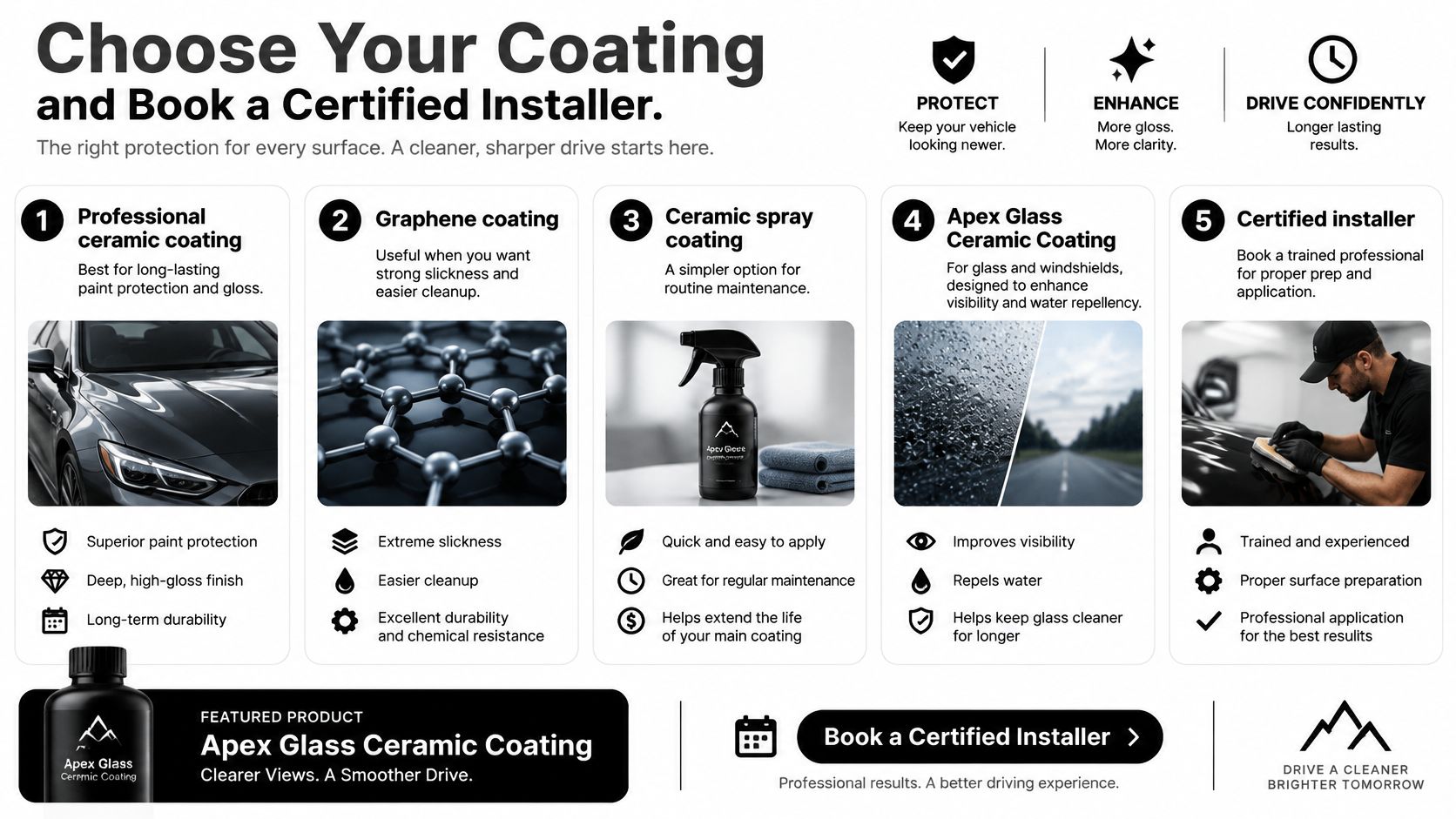
For glass and windshields, Apex Glass Ceramic Coating is a hydrophobic treatment designed to enhance visibility and water repellency through deep-pore bonding. Easier water release can make wet-weather driving less demanding, but it doesn’t eliminate rain-related stress or replace functioning wipers, clean glass, suitable tyres, and safe speed.
Glass preparation deserves particular care. Remove traffic film and existing residue, inspect the swept area, and follow the application instructions closely. Persistent smearing or glare is a problem to resolve, not a normal trade-off for water beading.
For owner application and mobile work, Alpha Quartz 50ml Ceramic coatig is our DIY and mobile detailers elastomer ceramic coating, designed for indoor and outdoor application across surfaces. Its application-friendly positioning makes it relevant when a full studio installation isn’t practical, but outdoor use still requires clean panels and suitable weather.
A convenient application process doesn’t remove the need for preparation. Mobile detailers should plan shade, dust control, inspection lighting, and a protected curing arrangement before accepting the job.
Book the Work, Not Just the Bottle
Professional-grade Titan Coatings must be applied by certified installers. That requirement is separate from the DIY products available to owners and mobile detailers.
Use this booking checklist:
- Confirm certification: Establish who will carry out the professional-grade installation.
- Get preparation in writing: The quote should state decontamination, correction scope, and the surfaces included.
- Read the warranty: Our coatings come with a warranty when installed by a certified professional. The installer provides it, and coverage depends on the layering and products used.
- Request relevant test results: Look for evidence tied to the actual formulation, rather than ingredient-level claims.
- Confirm chemistry documentation: Keep the current technical sheet and written PFAS information with your service records.
- Plan aftercare: Arrange suitable parking during cure and understand when washing can resume.
Request a written quote for your vehicle this week. Compare the complete service and expected maintenance burden, then browse the Titan Coatings shop to identify the surface-specific category that fits your needs.
APEX NANO – Titan Coatings offers elastomer-based automotive coatings, glass protection, and options for professional and owner application. Visit APEX NANO – Titan Coatings to explore the range and arrange a vehicle-specific discussion about preparation, certified installation, and long-term care.
0 Comments