
The first time you search auto paint protection reviews after buying a new car, you usually end up more confused than informed. One tab says ceramic is all you need, another says PPF or nothing, and a third pushes a spray bottle like it replaces both.
That confusion isn’t your fault. The category changed fast, most reviews are still stuck in the old ceramic-versus-film argument, and very few people explain where newer flexible coating chemistry fits.
The Search for Perfect Paint Protection
A customer brought in a dark daily driver that still had temporary dealer gloss on it and almost no real protection. He’d spent days reading auto paint protection reviews and was ready to give up. Every reviewer sounded certain, but none of them were answering the question that mattered: what problem are you trying to solve?
That’s the mistake most buyers make. They search for the “best” product before defining the threat. Rock chips, bug splatter, bird droppings, UV exposure, rain visibility, wash marring, winter grime, and heat cycling are not the same problem. They don’t need the same solution.
Why reviews feel contradictory
Most review content compares shine, water beading, and brand hype. That’s shallow. Good protection should be judged by what it resists, how it ages, how hard it is to apply correctly, and whether it still performs after real weather and real washing.
A lot of online advice is also outdated because the state of technology isn’t just wax, ceramic, and film anymore. Flexible coatings changed the conversation. If you’re still reading reviews that treat all coatings like rigid glass layers, you’re missing the biggest chemistry shift in the category.
Practical rule: Don’t read auto paint protection reviews as product rankings. Read them as evidence of which technology solves your specific problem.
Start with the use case, not the buzzword
If you drive highways every day, physical impact matters. If your car lives outside, chemical fallout and UV matter. If you’re a DIY owner or mobile detailer, application tolerance matters more than marketing language.
That’s why I tell people to stop chasing broad claims and start with a simple decision tree:
- Choose impact defense first if you’re worried about chips on bumpers, hood edges, and rocker panels.
- Choose washability and chemical resistance first if you care about easier maintenance and a cleaner-looking finish.
- Choose flexibility and climate stability if you want a coating that won’t become the weak point when temperatures swing.
- Choose user-friendly application if you’re doing the work yourself or offering the service on the road.
If you want a complete picture before choosing, Titan breaks out the category well in its guide to automotive paint protection coating options.
Understanding Your Options From Wax to Elastomers
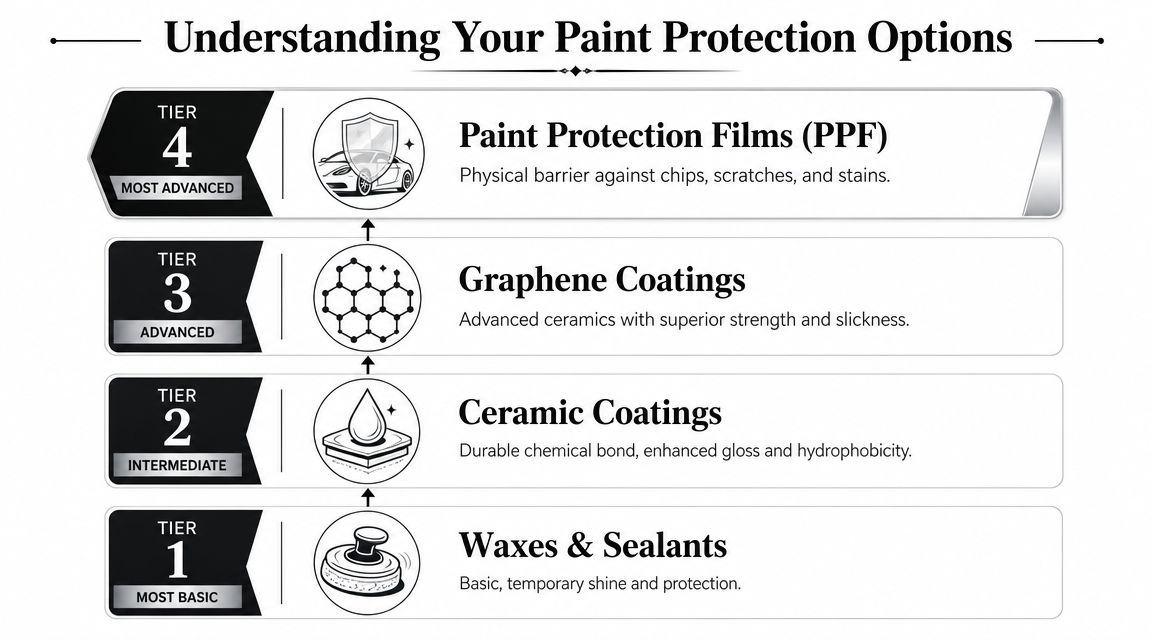
Here’s the cleanest way to think about paint protection. It isn’t one market. It’s four tiers of chemistry and one separate physical barrier system, each with a different job.
| Protection Type | What It Mainly Does | Where It Fits |
|---|---|---|
| Wax | Adds temporary gloss and light sacrificial protection | Budget-minded maintenance |
| Traditional ceramic coating | Adds slickness, chemical resistance, and easier washing | Daily drivers needing lower-maintenance paint care |
| Advanced coatings like graphene and elastomer systems | Push coating chemistry toward more resilient performance | Users wanting more than classic rigid ceramic behavior |
| PPF | Creates a physical barrier against impacts | High-risk panels and premium preservation |
Wax still matters more than enthusiasts admit
A recent academic review reported that wax-type products account for about 46% of consumer purchases, while ceramic-type coatings account for about 38% in consumer buying behavior, showing many buyers still prioritize convenience and cost over premium durability claims, according to this academic review of coating materials.
That tells you something important. The average buyer isn’t shopping like a forum addict. They’re trying to balance time, budget, and visible results.
Wax still sells because it’s familiar. It’s easy to understand, easy to apply, and cheap to repeat. The tradeoff is obvious. It doesn’t give the long-term resilience people expect from a serious protection system.
PPF and ceramic solve different problems
PPF sits in its own category because it’s a film, not a coating. Its purpose is physical defense. That’s why it dominates discussions around chip-prone areas.
Ceramic coatings became popular because they offer a different value. They bond to the surface, improve water behavior, make washing easier, and help preserve finish quality. They are not impact shields.
This visual lays out the category in the way most buyers should understand it:
Where elastomer coatings change the conversation
Older review content often falters because traditional ceramic thinking assumes the ideal coating is harder. Hardness matters, but rigid hardness alone can become a liability when a vehicle sees repeated heat, cold, vibration, washing, and surface strikes from bugs and road contamination.
Titan pushed a different approach with elastomer-based coating technology built around flexible performance. The core idea is simple. A coating should be hard like glass and flexible enough to move with the surface instead of behaving like a brittle shell. That matters in day-to-day ownership because temperature swings and repeated stress are where many old assumptions about coating durability start to show cracks.
If you want a deeper look at that chemistry direction, Titan’s overview of car paint coat technology is a useful starting point.
How to Judge Paint Protection Like a Professional
Most buyers judge protection by two things. Shine and water beading. That’s not enough.
A professional looks at failure points. What breaks first, what degrades first, and what the owner will notice six months later.
The five criteria that matter
Use this checklist whenever you read auto paint protection reviews:
- Impact resistance matters if you drive highways, gravel roads, or sit behind trucks; film has a real advantage here.
- Chemical resistance matters if your car sees bird droppings, bug acids, road salt, tree sap, and harsh detergents.
- Hydrophobic behavior matters because a slicker surface sheds contamination more easily and generally washes cleaner.
- Application tolerance matters because a difficult product can fail even when the chemistry is sound.
- Long-term visual stability matters because a protection system that looks tired early will disappoint no matter what the label promised.
The right review doesn’t ask whether a product beads water on day one. It asks what the surface looks like after weather, washing, and neglect.
Price tells you what the product is supposed to do
Paint protection film was originally developed for military helicopter rotor blades, which explains why buyers see it as the heavy-duty, impact-focused option. That same market logic still shows up in modern pricing, where full-body PPF commonly runs $4,000 to $7,000 and a 5-year ceramic coating often falls in the $1,200 to $1,800 range, as outlined in this PPF versus ceramic coating pricing guide.
Price isn’t just cost. It signals labor intensity, expected coverage, and what kind of damage the product is designed to handle.
Don’t confuse longevity claims with maintenance freedom
A coating can have strong service life and still need careful washing. PPF can hold up for years and still look poor if the install was bad or maintenance was careless. “Lasts years” doesn’t mean “ignore it.”
Judge products by the maintenance burden they create, not just the lifespan printed on the box. Owners are much happier when they buy the system they’re willing to maintain.
The Showdown Ceramic Coatings vs PPF vs Elastomers
Most auto paint protection reviews ought to begin with this critical insight, yet often don’t. Different technologies are strong in different categories. If you expect one product type to dominate every threat, you’ll buy wrong.
Head-to-head by real-world threat
| Protection Type | Primary Strength | Impact Resistance | Chemical Resistance | Flexibility & Durability | Ideal Use Case |
|---|---|---|---|---|---|
| PPF | Physical barrier against chips and debris | Strongest option for this category | Good as a barrier system | Depends heavily on film quality and install quality | High-risk front-end panels, road-driven vehicles |
| Traditional ceramic coating | Slickness, gloss, and easier washing | Limited | Strong for daily contamination control | More rigid behavior than flexible coating systems | Daily drivers focused on appearance and maintenance |
| Elastomer coating | Balanced surface protection with flexible chemistry | Better framed as resilience than chip shielding | Strong for day-to-day exposure | Designed to handle movement and temperature stress better than rigid systems | Drivers wanting coating behavior with more forgiving durability |
Ceramic wins on cleanliness, not on impact
In side-by-side testing, ceramic-coated surfaces stayed visibly cleaner, looked deeper, and showed fewer tiny swirls, while the PPF side did better against debris. That’s the key takeaway from this side-by-side ceramic and PPF field test video.
That’s why I get irritated when people say ceramic is “better” than film. Better at what? If the threat is road rash, no. If the goal is slickness, washability, and chemical resistance, yes.
PPF is still the answer for rock-chip zones
For impact and chip resistance, modern TPU PPF is the strongest option, and practical guidance points buyers toward high-risk panels like bumpers, rocker panels, and hood leading edges. Standard film thickness in field-test summaries is typically 8 to 10 mil, with thicker films used for heavier-duty applications, based on this PPF field-test summary and comparison guide.
That’s the honest answer. If your primary fear is impact, use film in the strike zones. Don’t ask a coating to do a film’s job.
Where elastomers pull ahead for most owners
Many drivers are not track drivers. They’re daily drivers dealing with contamination, climate swings, bug impact, washing, and long-term finish fatigue. That’s where flexible coating chemistry becomes more interesting than old-school hardness claims.
A rigid coating can look impressive in a controlled demo. Real life is less polite. Panels heat up, cool down, flex slightly, get washed, get hit with bug residue, and live through repeated thermal cycles. A coating with elasticity has a practical advantage because it doesn’t rely on brittle behavior to appear durable.
Titan’s Alpha Quartz fits that use case well. It’s built around elastomer technology, with the company framing that flexibility as a way to maintain a hard protective surface while resisting the cracking and stress sensitivity associated with older rigid approaches. For DIY owners and mobile detailers, that matters as much as raw chemistry because usable performance beats impressive lab language.
If you drive a normal car in normal conditions, the smartest setup is often not “PPF everywhere” or “ceramic only.” It’s impact protection where impacts happen, and a resilient coating everywhere else.
If you’re still deciding how those categories overlap, Titan’s breakdown of paint protection film vs ceramic coating is worth reading for the tradeoff itself.
Why Flawless Application Is a Non-Negotiable
The product matters. The install decides whether it gets a fair chance.
I’ve seen expensive coatings fail because the paint wasn’t decontaminated properly. I’ve seen film jobs ruined by ugly edges, trapped contamination, and stretch mistakes that should never have happened. Buyers obsess over the bottle and ignore the hands doing the work.
Prep failure is the most common hidden problem
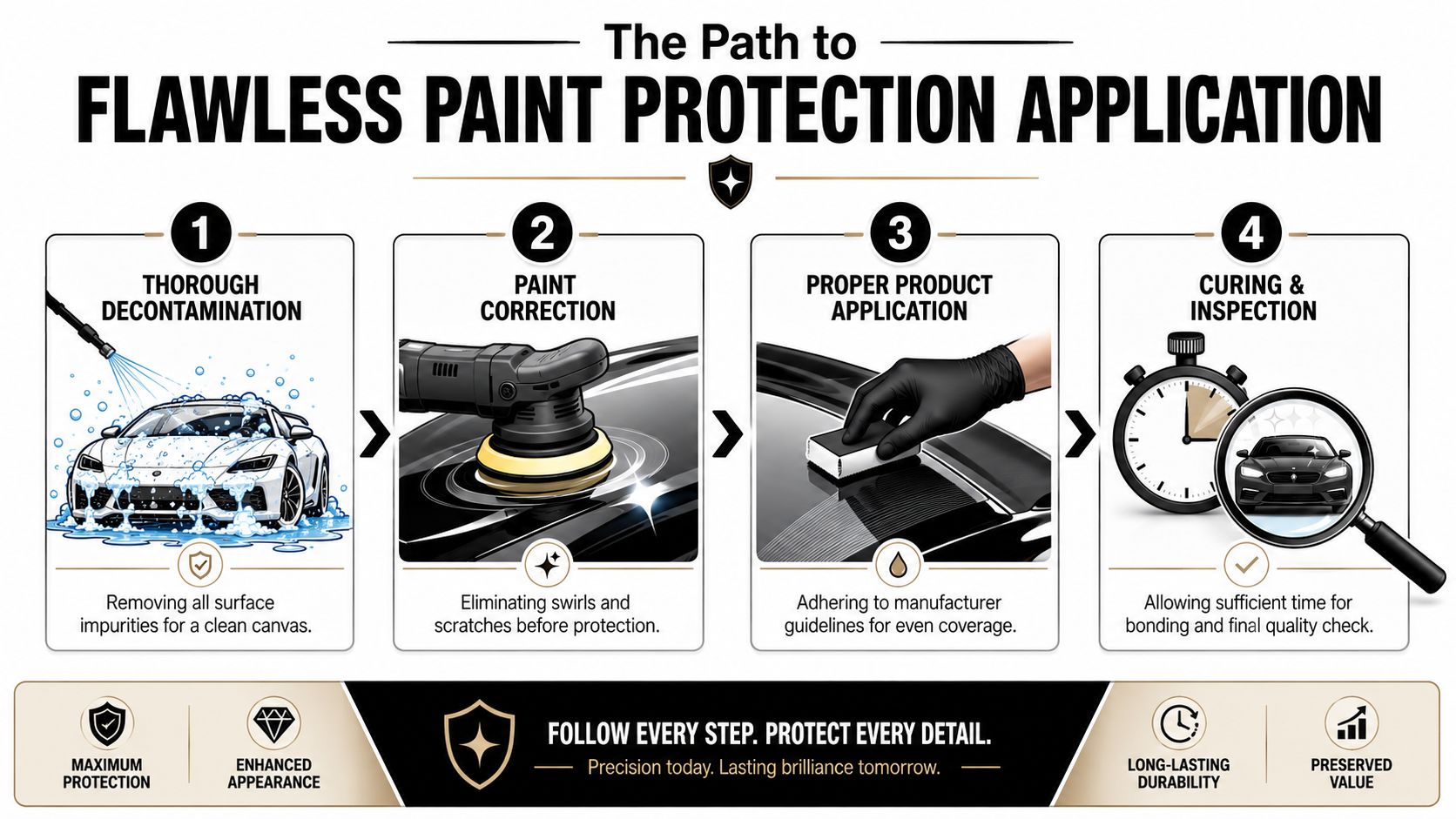
Professional installers note that film stretched beyond about 10% to 15% can lose integrity, and they also point out that poor prep is a leading cause of coating failure. That’s exactly why installer skill often matters more than brand selection, as discussed in this guide to how expert PPF installers handle edges and curves.
A proper foundation usually includes washing, alcohol wipe-down, and often clay-bar decontamination before protection goes on. Skip that, and you’re asking premium chemistry to bond over dirt, residue, or embedded contamination.
What I look for before I approve an install
- Surface clarity: If swirls, bonded contamination, or polishing oils remain, protection goes on top of defects instead of solving them.
- Edge discipline: Dirty, exposed, or poorly tucked edges turn even a premium install into a future complaint.
- Application environment: You don’t need a museum-grade room for every product, but you do need process control.
- Product fit: Some coatings punish small mistakes. Others are much more forgiving for DIY users and mobile operators.
Why easier chemistry matters
In practical use, smart product design earns respect. A coating that delivers strong results but demands a perfect studio environment will frustrate most real users. A more user-friendly system lowers the chance of application failure.
Titan’s flexible coatings are relevant here because they’re positioned for easier installation than many old rigid coatings, especially for mobile detailers and hands-on owners. The same logic applies to simple maintenance products like ULTRA Ceramic Spray, which gives users a straightforward spray-and-wipe format instead of a complicated process. Good chemistry should help the installer, not fight them.
If prep is the weak point in your process, start with Titan’s guidance on coating surface preparation.
Choosing Your Armor Recommendations for Every Driver
A generic recommendation is useless. The right answer depends on how you drive, where the vehicle lives, and how much effort you’re willing to put into maintenance.

The daily commuter
If you drive every day and park outside, don’t overcomplicate it. You need a coating that handles contamination, regular washing, and seasonal temperature shifts without turning delicate.
A flexible elastomer coating is the sensible answer here. I’d point most daily drivers toward Alpha Quartz because the value is in the balance. It offers the hard-surface behavior people want, but with elasticity that’s better suited to real-world thermal change and repeated exposure.
The highway driver
If your hood, bumper, and mirror caps are in the line of fire, use film on those strike zones. Edmunds notes that modern PPF can last up to 15 years under ideal conditions, though that assumes favorable storage and often an added ceramic layer, and their guidance also makes the key distinction that PPF is for physical impacts while ceramic coatings are more about chemical resistance and easier cleaning, as explained in this Edmunds guide to paint protection film.
My recommendation is simple. Use PPF where rock chips happen. Don’t waste money wrapping low-risk panels unless you know why you’re doing it.
The DIY weekend owner
You want protection without turning your garage into a lab. That rules out products that are too twitchy in the wipe-off stage or too demanding for a practical install.
Two Titan products make sense here:
- Alpha Quartz if you want a more substantial coating with easier handling than many rigid systems.
- ULTRA Ceramic Spray if you want a fast, low-drama way to improve gloss, slickness, and upkeep.
That second category matters more than enthusiasts admit. Consistent, easy application often beats a more advanced product that gets applied badly.
The rain-stressed driver
A lot of protection articles ignore glass. They shouldn’t. Poor visibility in rain creates more daily frustration than a lot of paint defects.
Titan’s APEX Glass & Windshield Coating is a practical add-on because it’s designed to make the glass shed water more effectively and improve visibility in wet conditions. It’s also easy to use, which matters because windshield products need to be maintained properly, not feared.
Clean paint looks good in the driveway. Clean glass changes the drive home in the rain.
The professional detailer or mobile operator
Your reputation sits on repeatable results. That means choosing products that perform well and don’t create unnecessary failure points in the field.
Flexible coating systems are attractive here because they let you offer a more modern answer than the old hard-coating pitch. Clients understand durability, ease of care, and weather resilience. They don’t care about buzzwords unless those buzzwords solve a visible problem.
Your Auto Paint Protection Questions Answered
Can I put a ceramic coating on top of PPF
Yes, that’s a common layered approach. Film handles physical abuse, and the coating helps with cleaning and water behavior. Just make sure the film is properly installed and fully settled before adding anything on top.
How should I wash a protected car
Use a careful hand wash routine, clean mitts, quality drying towels, and avoid aggressive contamination buildup. Protection lasts longer when owners wash with discipline instead of relying on the coating to survive abuse.
How is an elastomer coating different from a “flexible” ceramic
The practical difference is that elastomer-focused chemistry is built around flexibility as a core performance feature, not just a marketing adjective. The goal is a surface that keeps hardness while tolerating movement, temperature swings, and day-to-day stress more gracefully.
Should I choose PPF, ceramic, or elastomer
Choose PPF for chip-prone areas. Choose a coating for easier cleaning and chemical resistance. Choose elastomer technology when you want coating-style protection with more resilience in real-world use. If you’re still comparing service life expectations, Titan’s article on how long ceramic coating lasts on cars adds useful context.
If you want paint, glass, and surface protection from a company focused on advanced coating chemistry, explore APEX NANO – Titan Coatings and match the product to the way you drive, wash, and maintain your vehicle.
0 Comments