
You know the moment. The polishing is done, the panel is crisp, the light shows a clean correction, and then the tape comes off wrong. A sticky line stays behind on the trim. Compound dust has crept under an edge. The finish is good, but now you’re fixing the protection step instead of finishing the job.
That’s why good automotive masking tape isn’t a throwaway supply. It’s protection for the work you already did, and for the coating work that comes next. When you’re dealing with modern finishes, especially flexible coating systems that still cure hard at the surface, sloppy masking doesn’t just look amateur. It creates cleanup, risk, and wasted time where precision should have been locked in from the start.
More Than Just Tape It’s Your Job’s Insurance
A lot of detailing mistakes don’t begin with the machine. They begin before the pad ever touches paint.
I’ve seen detailers spend hours refining a dark panel, only to lose momentum because the tape they trusted softened, shifted, or left adhesive where it never should have. The painful part is that the correction itself was often excellent. The failure came from treating tape like a cheap consumable instead of part of the process.
The cheap roll usually costs more
Good masking protects edges, textured plastics, badges, rubber seals, washer nozzles, fresh trim dressings, and all the awkward transitions where polish likes to stain or sling likes to collect. Bad masking gives you rework. On high-value jobs, rework is what kills margin.
That’s one reason this category keeps expanding. The global painting masking tapes market is estimated at USD 1.56 billion in 2026 and projected to reach USD 2.58 billion by 2033, at a 7.5% CAGR according to Coherent Market Insights on painting masking tapes. Professionals keep paying attention because the tape directly affects finish quality.
Practical rule: If the job matters enough to polish carefully, it matters enough to tape carefully.
Why the stakes are higher now
Modern coating work raises the bar. Flexible coating systems have changed what clients expect from durability. A coating can feel hard at the surface and still resist cracking because the chemistry below that surface layer is built to move with temperature swings and real-world stress.
That means your prep line has to be equally disciplined. If a tape edge bleeds, lifts, or leaves residue near a coating boundary, you’re creating unnecessary contamination and cleanup around the exact zones where clarity matters most.
Three places tape acts like insurance:
- Around sensitive trim: It stops staining from compounds and polish oils.
- At edge transitions: It helps you maintain a controlled work area when refining paint or laying protection.
- Before specialty coatings: It preserves clean borders so the final look appears deliberate, not patched together afterward.
The best detailers don’t think of tape as an accessory. They think of it as a barrier between controlled work and avoidable problems.
Understanding Automotive Grade Masking Tape
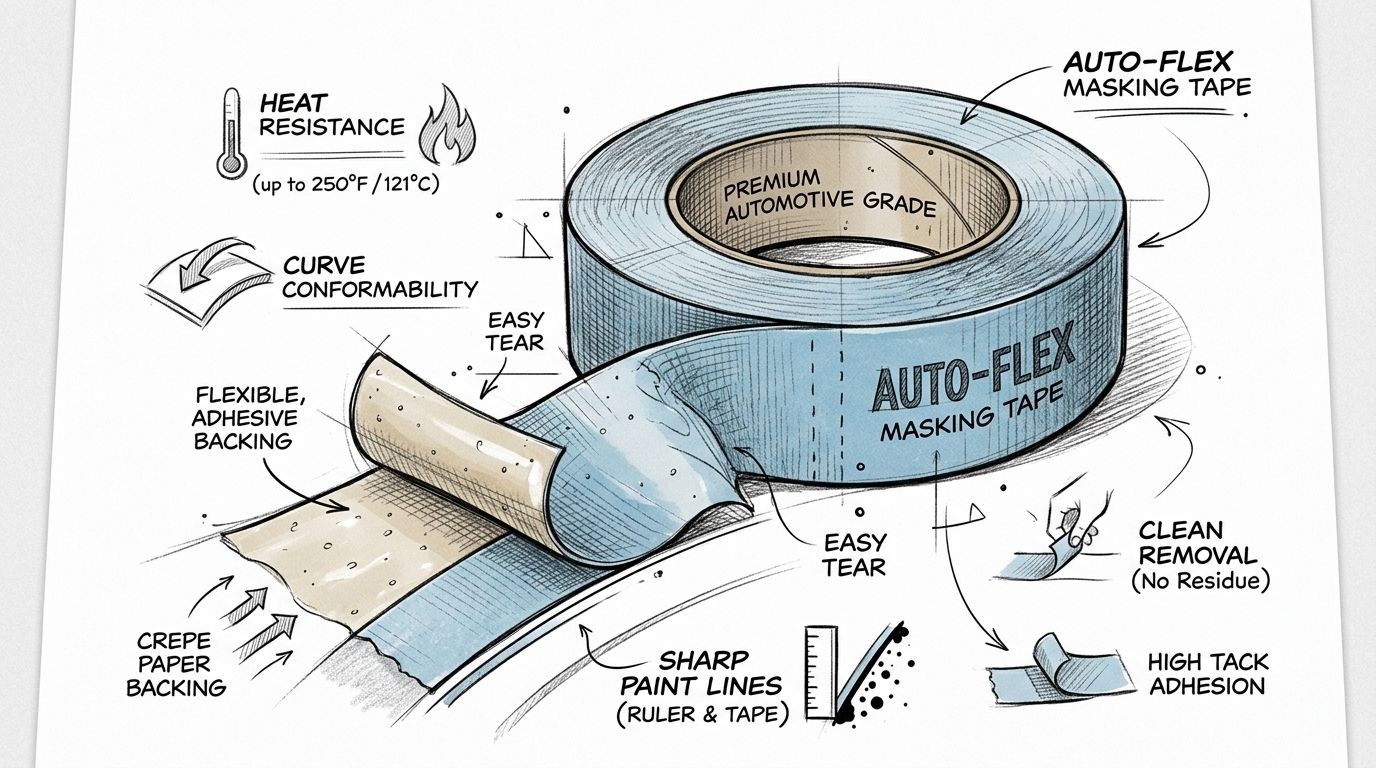
Automotive masking tape started in the auto trade, and that history matters because it explains what the product is supposed to do. It wasn’t invented for arts and crafts or casual house painting. It came from a real production problem on painted vehicles.
Automotive masking tape was invented in 1925 by Richard Gurley Drew, a 3M engineer, who created the first pressure-sensitive masking tape specifically to address the costly and inefficient process of touching up damaged areas on automotive paint jobs, marketed as Scotch® masking tape, as noted in the masking tape history entry.
What makes it automotive grade
Hardware store painter’s tape can stick to a wall. That doesn’t make it suitable for hot panels, polished clear coat, sharp body lines, rubber trim, or solvent-heavy prep.
Automotive-grade tape is designed around a few essential requirements:
- Clean release: It should come off without turning the end of the job into adhesive cleanup.
- Controlled adhesion: It needs to hold securely without bonding so aggressively that removal becomes risky.
- Conformability: It should follow curves, mirror housings, emblems, and tight contours without springing back.
- Edge control: It must create a reliable barrier against polish, dust, sling, and coating migration.
Why general painter’s tape falls short
A lot of people learn this the expensive way. General painter’s tape tends to fight curves, wrinkle at compound edges, and lift when you run a machine near it. Once it lifts, the barrier is gone. At that point, stained trim and dirty edges are usually a few passes away.
Automotive masking tape earns its keep when the panel gets warm, the curve tightens, and the machine starts throwing material toward every vulnerable edge.
This is also why pros keep multiple widths on hand. A narrow roll handles emblems, trims, and tight radiuses. A wider roll speeds up long moldings, piano black pillars, and broad buffer zones around sensitive surfaces.
A simple rule works well in the bay. If the surface is expensive to replace, difficult to clean, or easy to stain, use automotive tape, not generic painter’s tape.
Decoding the Specifications That Matter
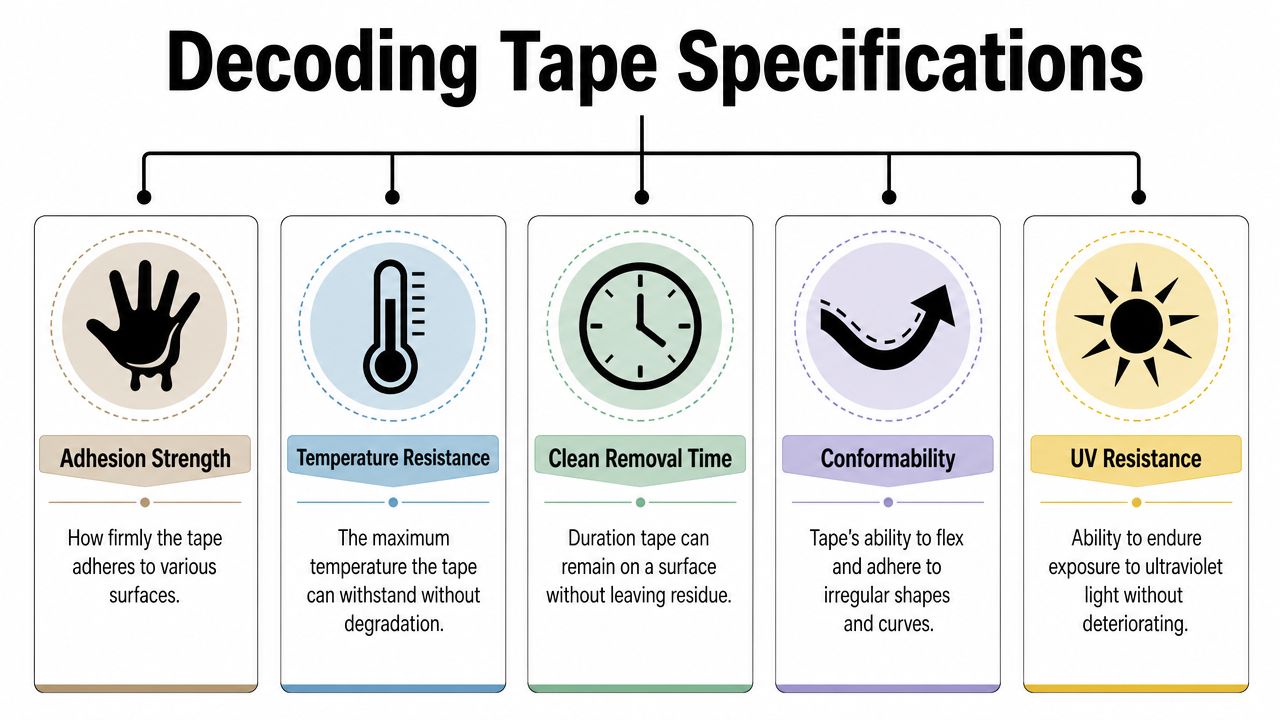
Most tape packaging hides the useful information in plain sight. The numbers matter, but only if you know what they mean on a working vehicle.
Strength, thickness, and why pads expose weak tape fast
Professional-grade automotive masking tapes show approximately 25 lbs/in tensile strength, 38 oz./in. width adhesion to steel, and 6.7 mils thickness, according to the CarPro Forum tape comparison review. Those aren’t abstract specs. They explain why one tape survives machine work and another shreds at the edge.
Here’s what those numbers mean in practice:
- Tensile strength: A stronger backing resists tearing when a polishing pad brushes the tape edge.
- Adhesion to steel: This gives you a baseline for grip. Too little grip and the tape lifts. Too much grip and removal gets risky.
- Thickness: A tape with some body is easier to place cleanly and less likely to collapse into an uneven edge.
If you’re checking correction risk before you mask, a paint thickness gauge for cars helps you decide how aggressively you can work near those edges in the first place.
The spec people misunderstand most
Heat resistance and solvent resistance are not the same thing.
A tape can tolerate warmth and still react badly when it meets panel wipe, wax remover, prep solvent, or coating-related chemicals. That’s where many detailers get caught. They buy a roll labeled for heat, then assume the adhesive will stay stable through every stage of prep and protection.
What I look for on a real job:
- Will the panel get warm from machine work or curing conditions
- Will the edge see solvent, cleaner, or coating contact
- Does the tape need to wrap a curve without lifting
- Will I remove it quickly, or will it stay on through multiple steps
Conformability matters more than people think
A tape that won’t hug a curve creates mini gaps. Mini gaps become stained trim, bleed lines, and fuzzy borders that look worse on dark paint and gloss black plastics.
The tape should bend with the panel, not force you to fight the panel.
A good roll lets you run a clean strip around a mirror base, a fender vent, or the edge of a windshield surround without cutting the line into a dozen little pieces. Every extra seam is another chance for product to sneak through.
UV and clean removal time still matter
Even if you’re doing same-day work, cars move. They get pulled in and out. Some jobs stretch. Tape that bakes in the sun or overbonds to the surface can turn a routine removal into a fingernail-and-solvent cleanup session.
When in doubt, buy for the harshest condition the job might realistically see, not the easiest one you hope it sees.
A Tape for Every Task Types and Best Uses
There isn’t one best tape. There’s the right tape for the way you’re working that day.
Some jobs need a workhorse roll that handles trim and polishing zones. Some need a higher-temp tape that stays composed when heat builds. Others need a fine edge around glass or delicate design features. If you only keep one type in the cart, you’ll eventually force it into a job it wasn’t built to do.
The main tape families
Crepe paper tape is the standard shop roll. It’s flexible enough for most daily masking and quick enough for trim, badges, emblems, and basic correction work.
High-performance tape is what you reach for when heat is part of the process. High-performance automotive masking tapes are engineered to withstand continuous thermal exposure up to 110°C (230°F), as described in Q1’s overview of automotive masking tape performance. That matters when the environment or workflow could soften weaker adhesives.
Fine-line tape is the precision option. It’s useful where a ragged edge would stand out immediately, such as around headlights, trim boundaries, or styling lines.
Low-tack tape has its place on sensitive surfaces or situations where you want less grab and easier release. It’s not for every task, but it can save frustration when the standard roll feels too aggressive.
Automotive Masking Tape Comparison
| Tape Type | Best For | Key Feature |
|---|---|---|
| Crepe paper tape | General detailing and trim protection | Flexible daily-use masking |
| High-performance tape | Hot panels and demanding shop conditions | Better thermal stability |
| Fine-line tape | Sharp edges and visual precision | Cleaner, tighter line definition |
| Low-tack tape | Delicate surfaces and cautious masking | Easier release |
For broader protection strategy around daily drivers and fresh deliveries, this guide on the best paint protection for new cars is worth reading before you choose the rest of your process.
How I choose on the cart
I don’t choose tape by brand first. I choose by failure risk.
- If trim staining is the concern, I want conformability and clean release.
- If heat is involved, I move to a higher-performance tape immediately.
- If the edge will stay visible, I care more about line quality than speed.
- If the surface feels uncertain, I reduce tack and test first.
That’s the difference between owning tape and using tape professionally.
Mastering the Edge Pro Application and Removal
Bad tape technique can ruin good tape. That’s why a skilled application matters as much as the roll itself.
The first mistake is taping onto contamination. If polish oil, dust, dressing, or moisture sits on the surface, the adhesive bonds to the contamination instead of the panel. Then the edge lifts, and once it lifts, product starts traveling.
For cleaner boundaries, I always start with a properly prepped surface. If your prep routine needs tightening, this walkthrough on how to prep car paint lines up well with the discipline required before masking.
How to get a cleaner edge
Research cited from Mirka indicates that tape seams spaced more than 15cm apart increase paint seepage probability by 22% under high-pressure spray conditions, as referenced by AutomotiveTouchup’s masking tape techniques page. Even if you’re detailing rather than spraying, the lesson is the same. Too many gaps and broken transitions create weak points.
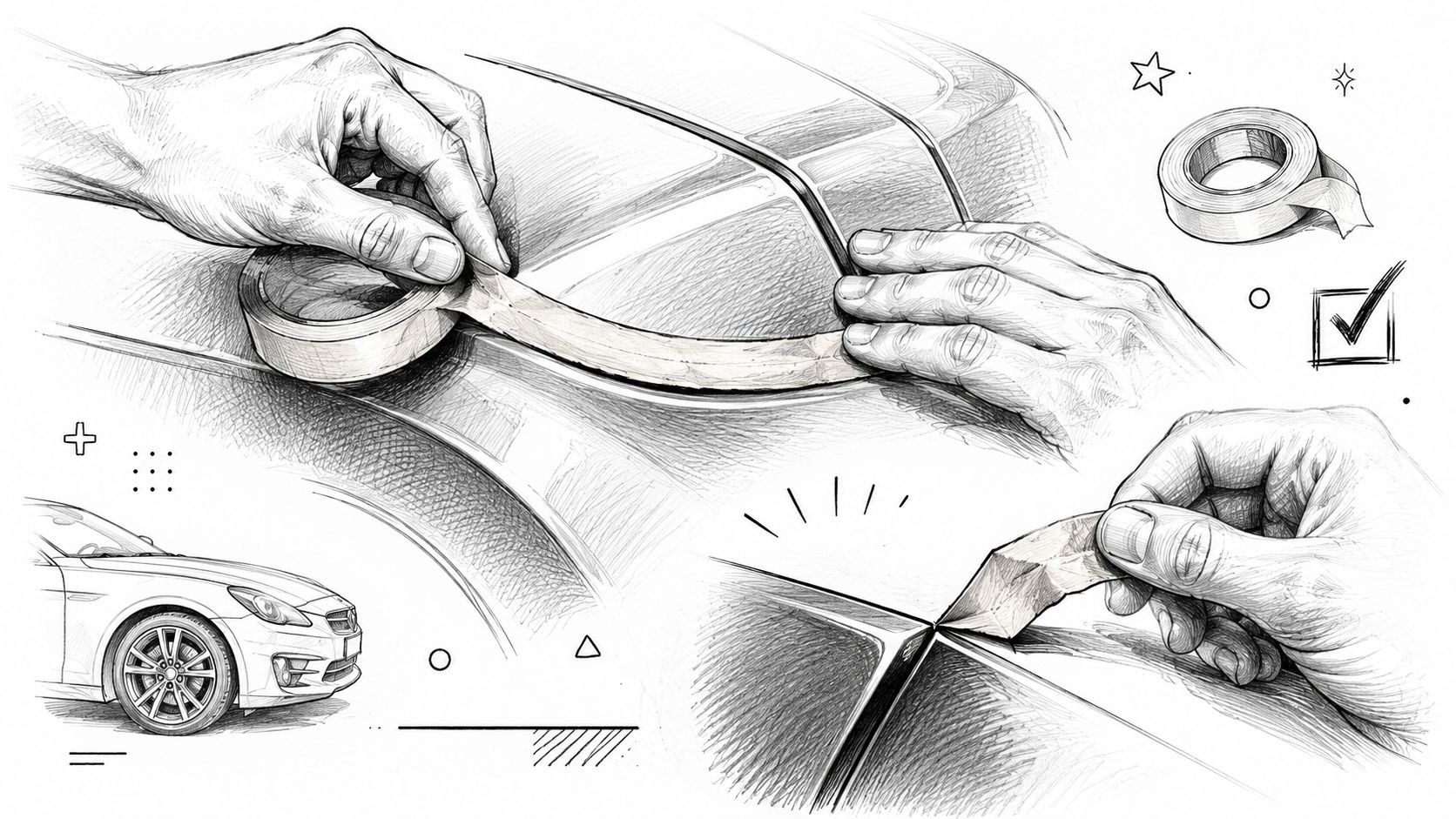
That changes how I tape curves and transitions. I don’t bridge large sections lazily and hope the adhesive holds. I build a continuous edge.
Three pro habits that prevent most failures
Use short controlled runs on tight curves
On mirror bases, bumper contours, and windshield corners, guide the tape in smaller arcs. Don’t yank and force it around the shape.Press the edge, not the whole strip first
Set the boundary line accurately, then smooth the rest. That keeps the edge true instead of dragging it off line.Back-mask where sling is likely
Folding or building tape away from the work zone creates a protected lip that catches residue and keeps adjacent panels cleaner.
A neat edge doesn’t come from pressing harder. It comes from placing the boundary correctly before you lock it down.
Removal matters too
Most residue complaints start at removal. Pull too fast, yank straight up, or wait too long, and you increase the chance of adhesive staying behind.
My preferred method is simple:
- Peel back on itself instead of lifting straight away from the panel.
- Work slowly around fresh edges, gloss plastics, and trim.
- Remove as soon as the stage is complete unless the process specifically requires it to remain longer.
If tape tears during removal, that usually points to one of three causes. The tape was too weak for the task, it was placed over contamination, or it sat in conditions that exceeded what it was built to handle.
The Perfect Partnership Tapes and Titan Elastomer Coatings
The biggest mistake people make with advanced coatings is thinking the chemistry will rescue sloppy prep. It won’t.
When a vehicle is getting a modern elastomer-based coating, the masking stage matters more, not less. The cleaner the boundaries, the cleaner the final presentation. That becomes even more important when the coating system is designed to combine surface hardness with flexibility below the surface.
Titan introduced carbon nanotubes into the automotive coatings market in 2021 and established the first commercial application of CNT-based elastomer coatings using Dark Matter Technology®, according to Titan’s technology overview. That shift matters because it reflects a different way of thinking about durability. Not just hardness, but hardness with controlled movement.
Why the tape line matters more on flexible coatings

Titan’s ElastoTek® membrane-forming technology uses a specialized blend of elastomers that enhances coating flexibility while maintaining glass-like hardness, helping prevent crack formation under extreme temperature fluctuations, as explained on Titan’s ElastoTek technology page. In plain shop language, that means the coating is built to stay tough without becoming brittle when conditions swing from frozen mornings to hot panels.
For detailers, that raises the standard for edge work.
A poor tape edge can leave behind contamination, ragged boundaries, or cleanup marks right where the coating should present its best clarity. That’s especially frustrating when the coating itself is built to deliver a premium finish over time.
For anyone comparing coating behavior in more depth, Titan elastomer coatings explain why flexibility changes long-term performance expectations.
Where this shows up on real jobs
Glass and windshield work is one example. A dedicated glass coating like Apex Glass needs tidy masking around surrounding trim and adjacent materials because visibility products look best when the perimeter is clean. It’s also one of the easier categories for mobile detailers and DIY users because the application is straightforward, but the finish still depends on clean bordering.
Alpha Quartz is another strong example. It’s easy to install, suits DIY users and mobile detailers well, and the elastomer character helps the coating resist cracking when temperatures swing or when the front end takes regular bug impact.
Ultra Ceramic Spray fits a different need. It’s the fast, practical option when you want easy installation and strong visual results without complicating the workflow. Even there, good masking around trim and textured surfaces keeps the finish looking intentional rather than rushed.
Advanced coatings reward disciplined prep. They don’t excuse shortcuts.
Troubleshooting Common Tape Failures
Most tape failures aren’t mysterious. They’re process errors wearing a product label.
Residue left on the surface
This usually comes from using the wrong tape for the environment, letting it sit too long, or placing it on a dirty panel. If the adhesive had to fight heat, contamination, or chemistry it wasn’t built for, removal gets ugly. To improve coating performance at the foundation level, review the basics of coating adhesion.
Bleed under the edge
Bleed is often a placement problem. The edge wasn’t fully seated, the tape bridged a curve poorly, or the seam layout created gaps where product could creep in. Better conformability and tighter seam control solve most of it.
Tearing or shredding on removal
That points to weak backing, overworked tape, or aggressive removal. If a polishing pad has been kissing the edge all set, low-grade tape often starts to fray. Stronger tape and slower peel-back removal fix that fast.
If you treat automotive masking tape like part of the finish, it behaves like part of the finish. If you treat it like an afterthought, it usually proves you wrong.
If you’re ready to pair better prep with advanced surface protection, explore the coating lineup from APEX NANO – Titan Coatings. Their range includes glass, spray, and elastomer-based systems built for detailers, mobile pros, and owners who want protection that stays sharp through real-world use.
0 Comments