
A client once brought me a set of dark-finish wheels that looked perfect from ten feet away and ruined up close. The faces were stained, the barrels felt gritty, and the owner had already made it worse by scrubbing harder every weekend.
The Story of a Ruined Finish and What Brake Dust Really Is
He thought the black film was road grime. It wasn’t. By the time I rinsed the wheels and ran a gloved hand across the surface, I could feel bonded contamination sitting in the finish like fine sand.
Why brake dust ruins good wheels
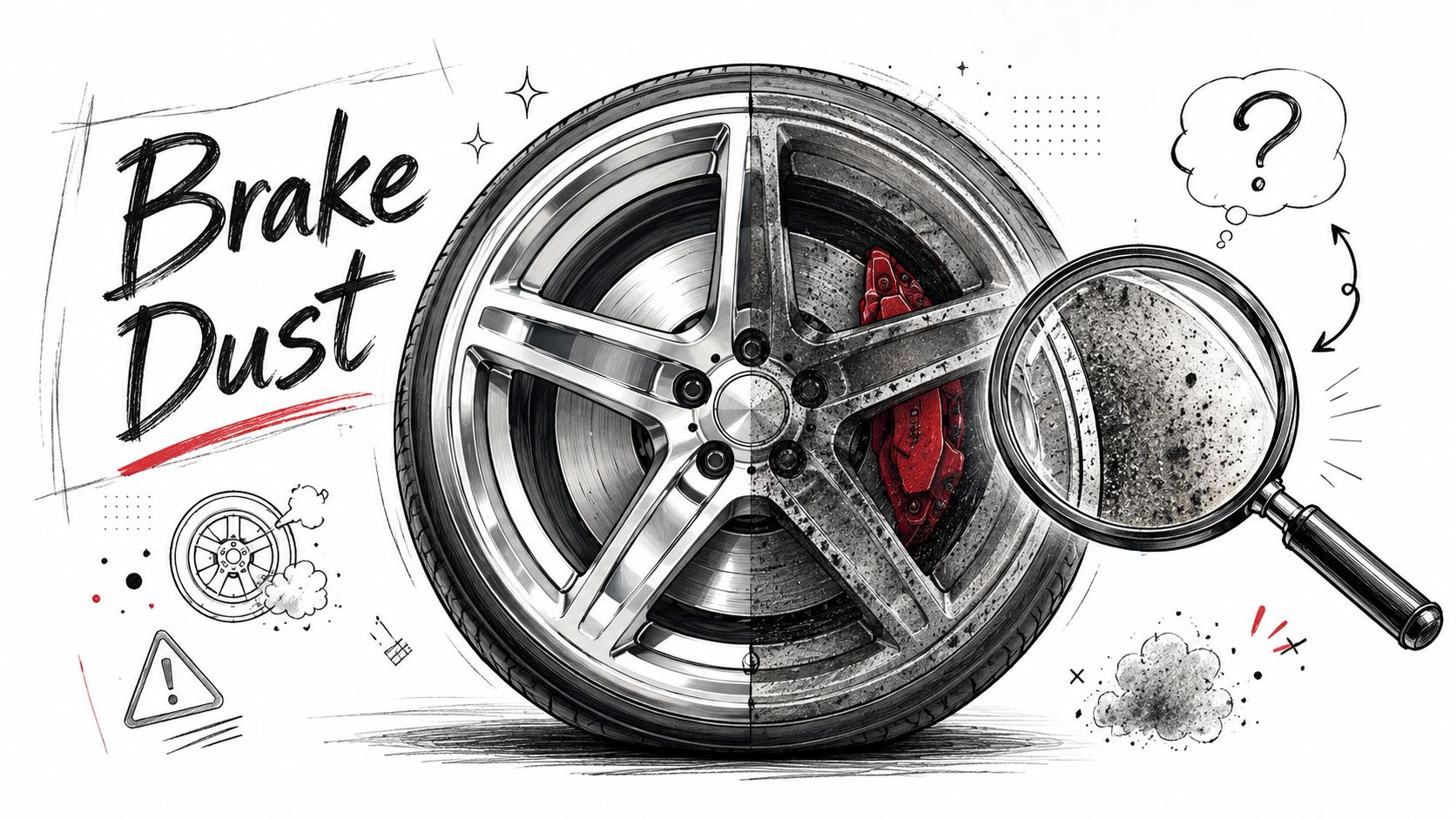
Brake dust isn’t just dirt you wash away with car shampoo. It is a composite of iron particles, carbon, adhesives, and metal shavings generated each time brake pads contact rotors under pressure and high temperatures, and this mixture can rapidly bond to wheel surfaces when hot, which is why wheel-care guidance says to clean only when the wheel is cool to the touch, as explained in this brake dust breakdown.
That one detail changes how you should treat the problem. If you spray cleaner on a hot wheel, the chemistry flashes off too fast, the contamination keeps baking into the finish, and you increase the odds of staining. If you attack it late with a stiff brush, you often scratch the clear coat before you remove the iron.
I see the same cycle constantly:
- Fresh detail, fast disappointment: The wheels look flawless after a wash, then turn gray-black after a few drives.
- Wrong cleaner, wrong result: Soap handles loose film but leaves behind metallic fallout.
- More scrubbing, more damage: The wheel gets cleaner, but the finish gets duller.
What makes it so stubborn
Brake dust lands hot. Then it cools on the wheel and starts clinging to coatings, clear coat, painted faces, and raw inner barrels. That bonding is why a normal wash mitt and shampoo rarely solve the whole problem.
Practical rule: If a wheel still feels rough after washing, the problem isn’t lack of effort. It’s bonded contamination.
The fix starts with using the right chemistry and the right timing. On neglected wheels, I like to think in layers. First remove loose grime, then dissolve iron contamination, then decide whether the surface needs a fallout remover or mechanical decontamination. If the wheel is already carrying embedded metallic specks, a dedicated iron fallout remover for wheels and painted surfaces is a smarter first move than brute-force agitation.
The real mistake most owners make
Most owners wait too long. They clean paint often and leave wheels for “later.” But wheels deal with heat, abrasive particles, road film, and repeated wet-dry cycles. That makes brake dust more than a cosmetic nuisance. It’s a chemical and physical assault on the finish.
A perfect wheel finish isn’t maintained by washing harder. It’s maintained by interrupting that contamination cycle before the particles lock themselves into the surface.
Decoding Cleaner Chemistry for Safe and Effective Results
Walk into any detailing aisle and you’ll see foam cleaners, iron removers, acid cleaners, degreasers, and color-changing sprays. Most of them promise the same thing. They don’t behave the same way on a wheel.
The three cleaner families that matter
The first category is the old fast-cut approach. Acid cleaners strip away mineral deposits and heavy buildup quickly, but they’re the least forgiving on delicate or compromised finishes. I reserve that type of chemistry for very specific restoration scenarios, not routine maintenance.
The second category is the one most detailers rely on for modern wheels. pH-balanced, non-acidic, alkaline brake dust cleaners typically operate in the pH range of 9 to 11 and can remove 90 to 98% of loosely adhered brake dust with a 2 to 3 minute dwell time and a high-pressure rinse, while embedded dust often needs agitation, according to bench-testing details on wheel cleaner performance.
The third category is the degreaser-heavy cleaner. These products cut tire browning, oily grime, and old dressing residue well, but they aren’t always the best at dissolving iron-rich contamination by themselves.
Brake Dust Cleaner Types Compared
| Cleaner Type | Primary Use | Safety on Coated Wheels | Risk Level |
|---|---|---|---|
| Acidic cleaner | Heavy mineral buildup and severe neglect | Lowest margin for error on sensitive finishes | High |
| pH-balanced iron-reactive cleaner | Routine brake dust removal and coated wheel maintenance | Generally the safest choice when used correctly | Moderate to low |
| Strong alkaline degreaser | Grease, road film, tire residue | Depends on finish and dwell control | Moderate |
That table is why pros don’t grab one bottle for every wheel. They match the chemistry to the contamination.
What works in the bay
For maintenance washes, a brake dust cleaner in the pH-balanced iron-reactive category is usually the best compromise. It gives you chemical bite on iron particles without forcing you into the risk profile of strong acids. If the wheel has a sealant, ceramic layer, or delicate dark finish, that matters.
The best wheel cleaner is the one that removes contamination without creating the next correction job.
Alkaline cleaners still have a place. If the tire is loaded with old dressing and the wheel face is greasy from neglected road film, they help. But if you’re dealing with metallic specking and embedded fallout, they can leave you halfway done.
If a wheel has severe mineral staining, old neglected barrels, or signs of previous chemical misuse, slow down before reaching for anything aggressive. A product category like acid wash solutions used in detailing has its place, but wheel faces with unknown history don’t reward guesswork. On customer cars, the safest path is always test first, inspect first, then escalate only when the finish can tolerate it.
The Professional Application and Agitation Method
Technique matters more than product hype. I can usually tell in a minute whether someone is disappointed because the cleaner failed or because the process did.
Prep the wheel before chemistry touches it
Start with wheels that are cool to the touch and out of direct sun. Dry or mostly dry wheels are often better for iron-reactive chemistry because the product isn’t diluted immediately on contact.
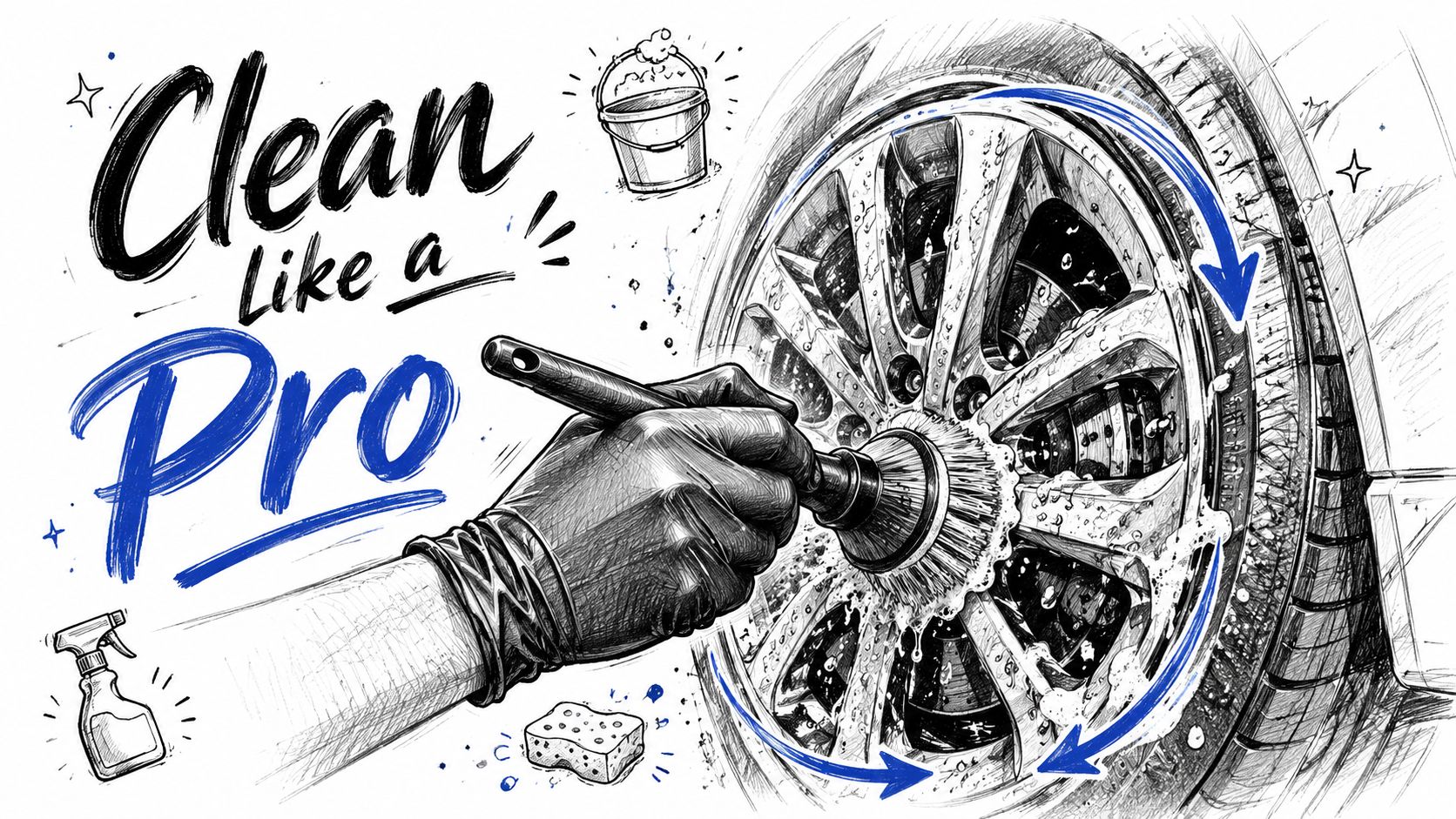
Set your tools beside you before you spray anything. My basic wheel kit includes:
- Face brush: A soft-bristled brush for spokes, lips, and painted faces.
- Barrel brush: Long-reach, flexible enough to reach behind spokes without slamming metal hardware into the finish.
- Detail brush: Small brush for lug recesses, valve stem area, center caps, and emblem edges.
- Wash media: A dedicated microfiber or wheel mitt that never touches paint.
- Rinse source: Pressure washer or strong hose nozzle for complete flushing.
A lot of wheel damage comes from poor tool control. If your barrel brush has exposed wire, if your brush is loaded with old grit, or if you drag one dirty mitt from tires to wheel faces, you’re creating scratches while trying to avoid them. If your kit needs an upgrade, dedicated car wheel cleaning brushes made for tight spokes and barrels make the job safer and faster.
Apply, dwell, watch, then agitate
Spray the wheel face, inner barrel, lug area, and behind the spokes. Don’t mist lightly. You want full coverage so the cleaner can reach every pocket where brake dust collects.
Some wheel cleaners visibly react on contact, including color-changing action during timed dwell, and product guidance also warns to test on an inconspicuous area first and avoid harsh chemistry that could strip protective layers, as noted in this wheel cleaner compatibility guidance.
That visible reaction is useful, but it doesn’t replace technique. Let the product dwell for the recommended window. Don’t let it dry. Don’t keep adding more product every few seconds as if more liquid automatically means more cleaning.
On a neglected wheel, the first pass loosens the contamination. The brush finishes what the chemistry started.
Agitate in this order if you want fewer misses:
- Inner barrel first so the worst contamination doesn’t splash onto a finished face later.
- Spoke backs next because that’s where a lot of untouched buildup hides.
- Face and lip after that using the softest tool.
- Lug holes and center cap last with a small detail brush.
Use light pressure. Let the bristles flick and sweep. If you’re bending brush handles and grinding your wrist into the face, you’re doing too much.
Rinse like you mean it
A weak rinse leaves chemical residue in seams, around weights, and near the valve stem. Flush every angle until runoff is clean. Then inspect before drying. If the water doesn’t sheet evenly and the surface still feels rough, there is still contamination on the wheel.
Dry with a dedicated microfiber towel or forced air. The towel should glide. If it drags, stop and reassess instead of pressing harder. Water spots and leftover cleaner can mimic staining, so a careful dry-down often tells you whether the wheel is clean or only looks clean while wet.
Troubleshooting Stubborn Deposits and Stains
“Scrub harder” is some of the worst wheel-care advice out there. It turns a contamination problem into a refinishing problem.
When the first pass doesn’t finish the job
Some wheels live in brutal conditions. Dense traffic, mountain driving, winter salt, and high-dust pad compounds all push contamination deeper into the finish. In those situations, detailers still lack a standard playbook for deciding when to use clay-style fallout removal versus non-acidic chemical removers without risking long-term pitting or coating wear, as discussed in this guide on stubborn brake dust removal.
That matches what I see in practice. One wheel responds to a second chemical cycle and gentle brush work. Another needs a more careful escalation path.
A safer escalation path
Use this sequence instead of jumping straight to aggressive methods:
- Second chemical pass: Reapply the brake dust cleaner to a cool wheel and work smaller areas.
- Targeted agitation: Use a soft detailing brush only where contamination remains.
- Fallout removal media: If the wheel still feels gritty, use a well-lubricated synthetic clay mitt or pad with very light passes.
- Final inspection under good light: Look for orange specks, shadow staining, or etched areas that won’t wash away.
If contamination survives chemistry and gentle agitation, don’t assume the answer is pressure. The answer is often better decontamination media and better lubrication.
What you must separate is bonded contamination from finish failure. If clear coat is already peeling, whitening, or flaking, no cleaner will fix it. It may look like stubborn brake dust, but you’re seeing damaged finish. At that point, wheel restoration advice like this guide on fixing peeling clear coat on rims becomes more relevant than another round of cleaner.
The detailer mindset is simple. Escalate one level at a time, inspect constantly, and stop before your “solution” becomes the source of the damage.
Future-Proofing Your Wheels with Elastomer Coatings
Cleaning alone is reactive. It keeps the problem under control, but it doesn’t change the surface that brake dust is attacking.
Why protection matters after the wash
One issue that doesn’t get enough attention is what repeated cleaning does over time. Repeated use of even mild brake dust cleaners can affect the hydrophobic properties of a ceramic-coated wheel, leading to premature loss of water sheeting and increased dust adhesion, which is a real concern noted in this discussion of cleaner effects on coated wheel behavior.
That matters because wheel care isn’t one wash. It’s repeated chemical exposure, repeated heat cycles, repeated rinsing, repeated contamination. If your wheel protection is brittle, thin, or unstable under thermal swing, maintenance gets harder with every month.
The overlooked difference in elastomer protection
Advanced coating design changes the conversation. Titan developed its own coating technology and introduced Elastomer coatings to the market using nano tubes technology and Dark Matter tech. The practical advantage isn’t marketing language. It’s how the coating behaves on a surface that heats up, cools down, gets peppered with contamination, and still needs to release grime during maintenance washing.
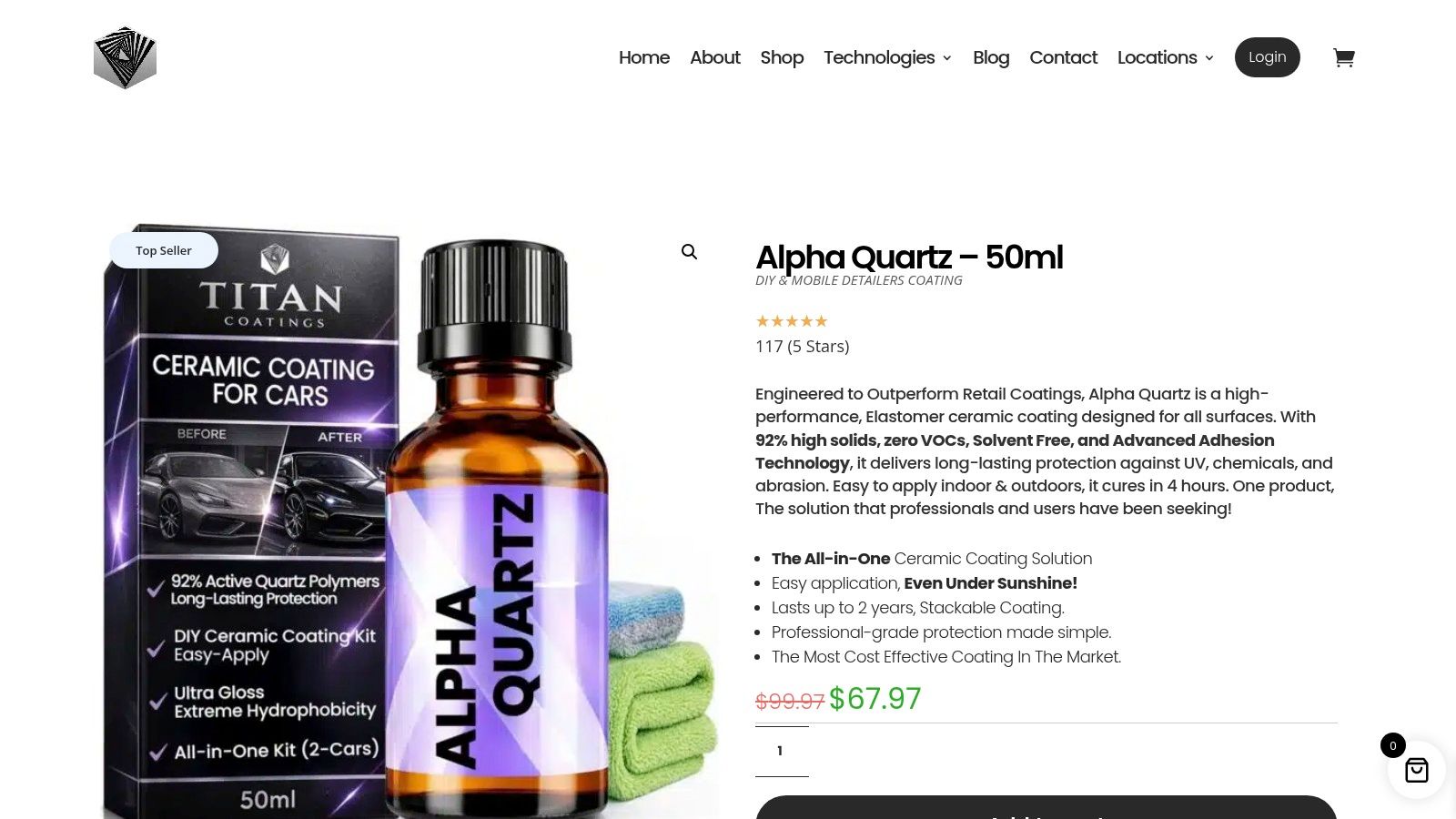
Traditional coatings are often described as hard, and hardness matters. But wheels don’t just need hardness. They need flexibility. Titan’s elastic coatings are hard like glass and flexible, which helps them last longer because they don’t tend to crack down under temperature change from frozen conditions to hot braking cycles.
That flexibility is a serious advantage on wheels. Brakes generate repeated thermal stress. Road grit, hot iron particles, and regular wash chemistry keep attacking the same areas. A rigid layer can become the weak point.
Why Alpha Quartz fits wheel care so well
For DIY users and mobile detailers, Alpha Quartz stands out because it’s easy to install and delivers strong visual and maintenance results without turning the job into a studio-only process. On wheel surfaces, easier installation matters because you’re coating tight shapes, spoke backs, lips, and barrels, not broad flat panels.
The payoff is simple:
- Dust releases easier: Contamination doesn’t cling as aggressively to a slick protected surface.
- Maintenance gets safer: You rely less on harsh methods and heavy agitation.
- Temperature swings are less threatening: Flexibility helps the coating handle frozen-to-hot cycling without becoming brittle.
- Daily appearance improves: Clean wheels stay cleaner-looking for longer.
If you want to understand the underlying platform better, Titan’s elastomer coating technology explains why this category is different from conventional brittle protection layers.
A wheel coating should do more than bead water. It should survive heat, resist contamination, and make the next cleaning easier than the last one.
That is the full lifecycle most brake dust cleaner articles miss. Clean first, yes. But if you stop there, you’re signing up to fight the same battle every week.
Expanding Protection Beyond the Wheels
The same protection mindset shouldn’t stop at the rims. Once you see how much easier maintenance becomes when contamination can’t anchor itself as easily, it’s hard to go back to bare surfaces elsewhere on the vehicle.
Easy protection for paint, wraps, and PPF
Some owners want full coating work. Others want something faster that still gives them a cleaner, slicker surface between major details. Titan’s Ultra Ceramic Spray fits that second group well. It’s easy to install, produces strong results, and works for people who want a spray-on option that doesn’t turn into an all-day job.
For mobile detailers, that matters even more. Fast installation means less setup, less cure anxiety during a field job, and a straightforward maintenance upgrade for clients who aren’t ready for a more involved coating service. Titan also offers broader paint-surface protection options through its vehicle coating lineup for paint care.
Don’t ignore glass and windshield performance
Visibility is part of protection too. A clean windshield is good. A protected windshield is better.
Titan’s APEX Glass & Windshield Coating is easy to use and worth serious attention because it helps rain move off the glass more easily. That changes the driving experience in wet weather. When water clears faster, night driving and highway rain feel less stressful, especially for clients who spend long hours behind the wheel.
This broader approach is what separates routine detailing from preservation. You aren’t just making the car look clean for a weekend. You’re building surfaces that resist contamination, release dirt more easily, and ask less from every future wash.
If you want protection that goes beyond cleanup and into long-term preservation, explore APEX NANO – Titan Coatings. Their lineup includes advanced elastomer technology, user-friendly options like Alpha Quartz and Ultra Ceramic Spray, and glass protection that helps make rainy driving easier to manage.
0 Comments