
You're sitting in the driver's seat, looking at a coffee mark and wondering whether a damp cloth will fix it or turn it into a bigger stain. The safest answer depends on what the seat is made of. “Suede” can mean animal hide, Alcantara, or a synthetic microfiber, and each has different care requirements.
Treat the upholstery as a specified material, not a generic fabric. Identify it first, then clean with the least moisture and agitation that will do the job.
Know What Your Seats Are Actually Made Of
A soft, napped surface doesn't tell you whether you're looking at genuine suede or a synthetic material. Alcantara is a synthetic microsuede, while other vehicles use different microfiber upholstery. That distinction matters because the material's construction and factory finish determine what cleaners and techniques are safe.
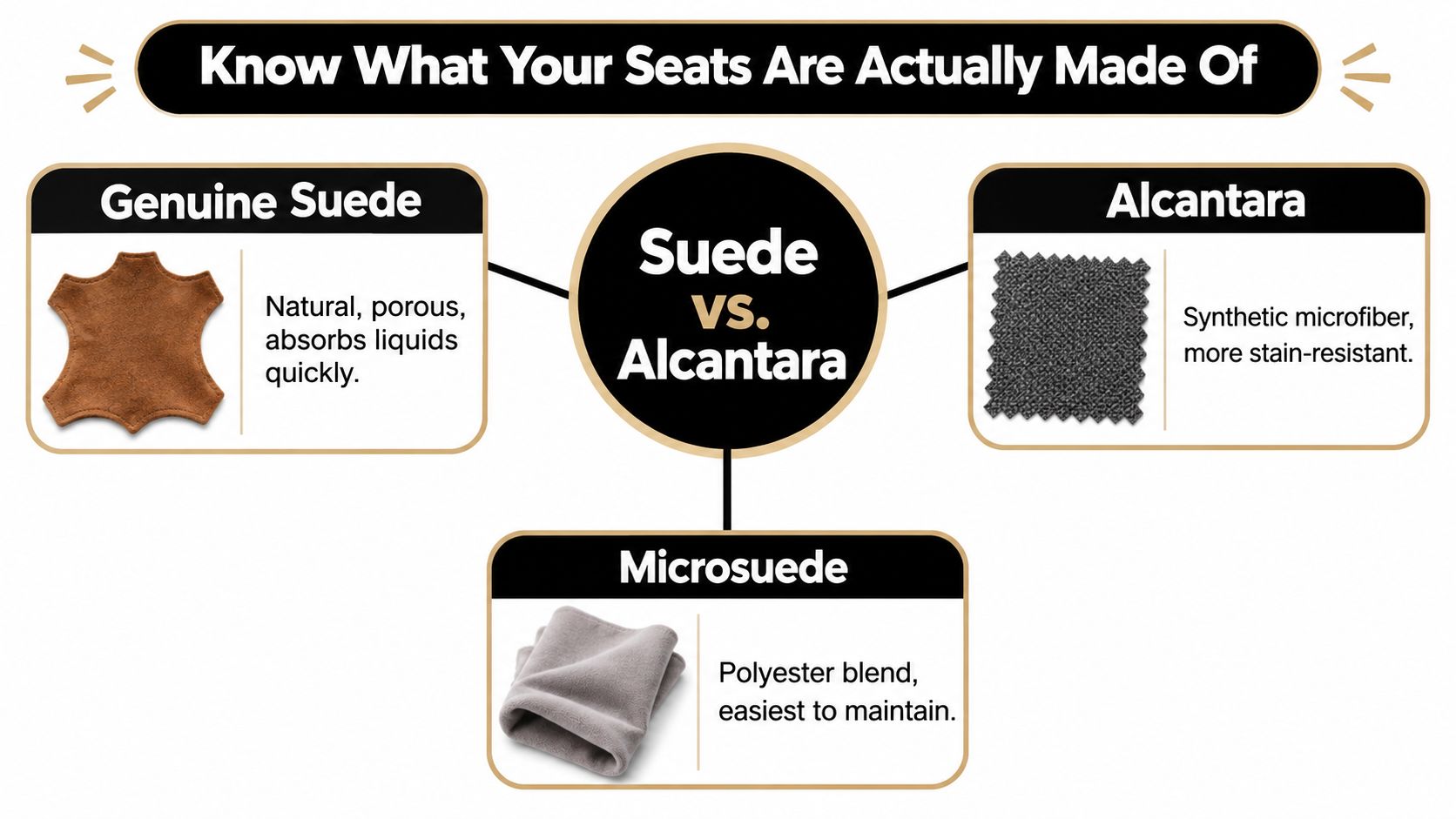
GM's interior-cleaning bulletins state that suede used on GM North American seats already has a soil repellent applied during manufacturing. GM Materials Engineering doesn't recommend adding aftermarket fabric protectors, and its prescribed cleaning is limited to water or water combined with mild soap. The guidance warns against laundry detergents and dish soaps containing degreasers because they can alter the upholstery or leave residue. GM's interior-cleaning bulletin is a useful reminder that an overzealous “deep clean” can undermine a factory finish.
Start by checking the owner's manual and care guide. If the upholstery details aren't clear, locate the trim information and consult the vehicle manufacturer before trying a cleaner or coating. Don't use a water test or a video tutorial as a substitute for the care instructions for your specific trim.
Shop rule: Confirm the material before choosing the method. The right technique for one microsuede can be the wrong one for another seat.
For stains on other interior materials, Titan's guide to removing stains from leather car seats covers a different surface and shouldn't be treated as a suede-care formula. If you're unsure how a fabric's care code affects cleaning, this overview of when to call a pro for sofa can help you recognize when to pause and get specialist advice.
Tools and Products Worth Setting Out
Set up the work area before you start. A small kit is easier to control than a lineup of powerful cleaners, and it reduces the temptation to reach for a product because it's nearby.
Put the gentle tools within reach
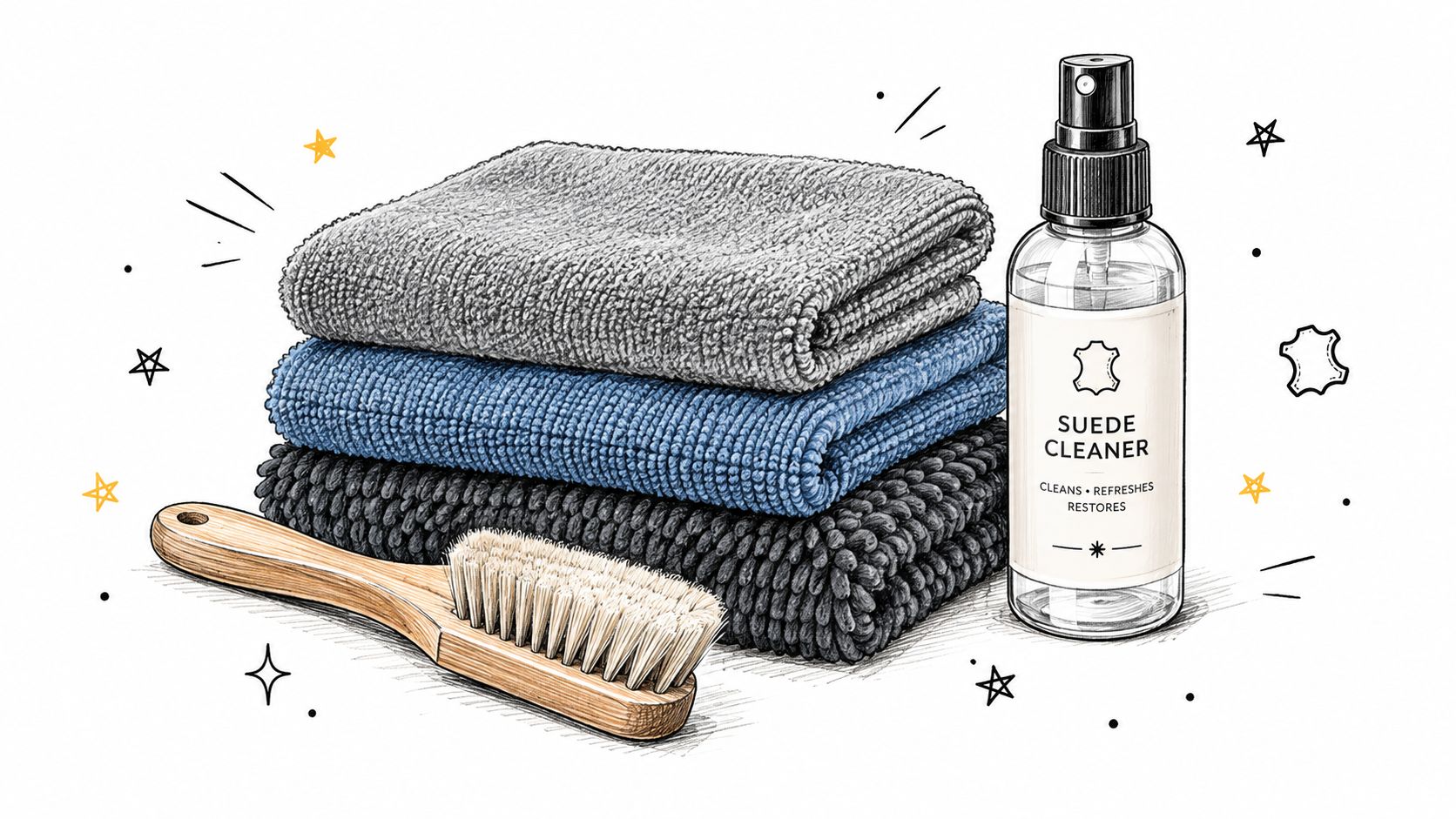
Use a vacuum with a brush attachment to lift loose dirt without dragging a hard nozzle across the upholstery. Keep a soft-bristle brush on hand for working with the nap, and set out clean white cotton cloths or microfiber towels. White fabric makes it easier to see what you're lifting and helps avoid transferring dye from a colored cloth.
Have distilled water ready for light damp cleaning. If the vehicle's instructions permit a cleaner, use only a compatible product and follow its directions. A few towels with different pile heights can be useful: one for light wiping, another for absorbing moisture, and a clean one for a final pass. For other cabin-cleaning tools, see this overview of products for car interior detailing.
Leave the household shortcuts on the shelf
Dish soap and laundry detergent may seem mild because they're common household products, but GM specifically warns against formulas with degreasers for its suede seat material. Avoid all-purpose sprays unless the upholstery manufacturer says they're suitable. Don't assume a product labeled “fabric cleaner” is safe for every microfiber or suede-like surface.
Solvent-based spot removers are also a poor first choice. They can affect color, texture, or a factory-applied finish, and vigorous brushing can flatten the nap. If you can't verify compatibility, don't use the product on the seat.
The best kit isn't the one with the most bottles. It's the one that lets you remove loose soil, control moisture, and stop before the seat gets saturated.
The Safe Cleaning Routine From Dry to Damp
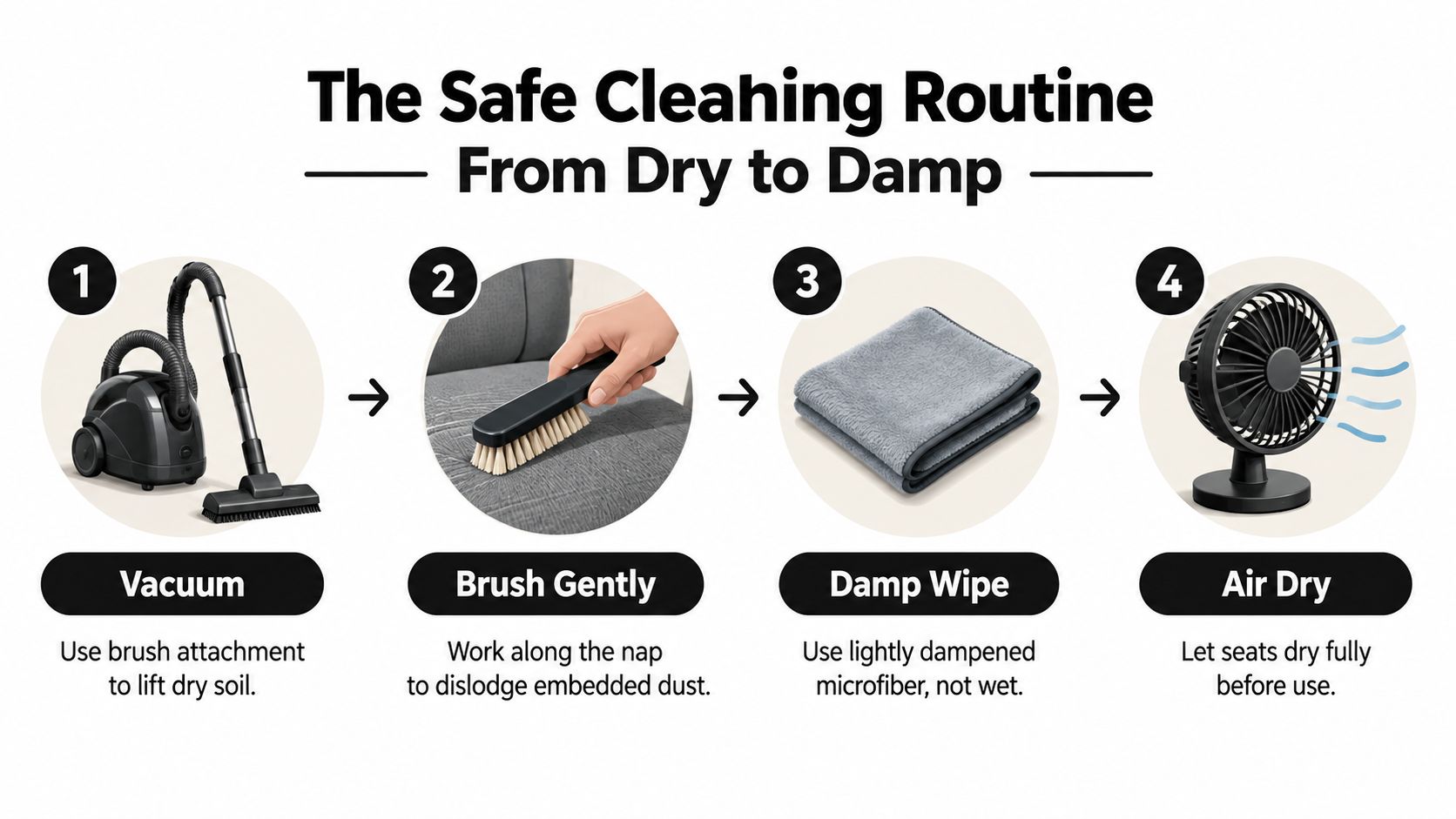
Cleaning suede car seats works best as a dry-first process. Dry soil is easier to remove before moisture turns it into a paste that settles deeper into the fibers.
Vacuum, then loosen the nap
Move the vacuum's brush attachment over the seat without pressing hard. Pay attention to seams and the areas where crumbs gather, but don't grind the nozzle into the material. Use a soft brush to lift dust from the nap with light, controlled strokes.
If pet hair is caught in the upholstery, remove it before damp cleaning so you don't work loose hair into the fibers. This guide to removing pet hair from a car covers the separate problem without relying on aggressive seat scrubbing.
Wipe lightly, one panel at a time
Alcantara's manufacturer recommends daily dry dust removal with a soft brush, dry cloth, or vacuum, and a weekly wipe with a slightly damp white cotton cloth. That's a useful maintenance rhythm for Alcantara, but always check your own upholstery instructions before adopting it for another material. The objective is a light wipe, not a wash.
Dampen the cloth with water, then wring it out until it's barely damp. Work across one panel at a time, turning to a clean part of the cloth as it picks up soil. If the surface needs more than water, use a compatible cleaner on the cloth rather than pouring or spraying it directly onto the seat.
Keep control of the moisture: If the upholstery looks wet, you've used too much. A slow pass with a nearly dry cloth is safer than soaking the seat and trying to extract the excess afterward.
Finish with a gentle brush in the nap's direction, then let the seat dry naturally. Don't keep repeating passes just to chase a faint mark. If the material isn't responding, stop and check its care instructions before escalating.
Spot Treatment for Stains You Can Actually Live With
A coffee spill is easiest to manage while it's fresh. The key is to absorb what you can without spreading the liquid or driving it further into the upholstery.
For Alcantara, the manufacturer advises acting within 30 minutes, removing solid material or excess liquid, and working from the stain's outside edge toward its center. Alcantara's stain-removal instructions also specify using a white cloth or a thoroughly wrung sponge, rinsing and wringing it between passes, and never pouring the cleaning solution onto the upholstery.
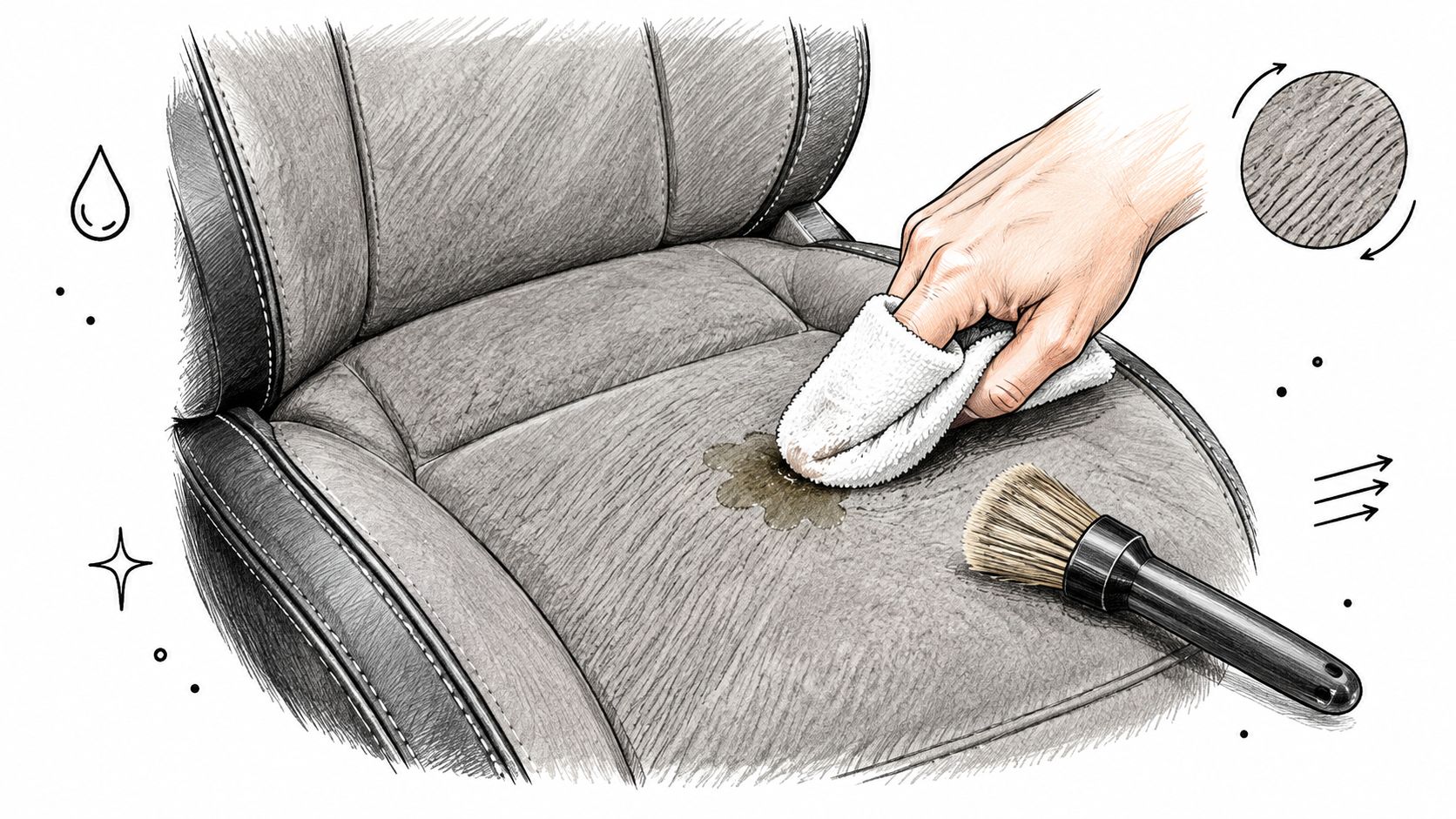
First, lift any solid residue carefully. Blot excess coffee with a clean white cloth, pressing gently rather than rubbing back and forth. Apply the compatible cleaning solution to the cloth or wrung sponge, not the seat, and dab from the perimeter inward. Rinse and wring the cloth between passes so you don't redeposit the stain.
Coffee, juice, and light food residue may respond to prompt, careful treatment, but there's no guarantee a mark will disappear completely. Ink, dye transfer from clothing, and set-in pet urine can be difficult to remove without changing the upholstery's color or texture. Don't keep increasing the pressure or switching to stronger chemicals when a stain resists.
If the mark remains after gentle treatment, stop and let the area dry before deciding what to do next. Repeated wetting can leave a larger affected area than the original spill. A professional who understands the specific seat material may be a safer next step than experimenting with household remedies.
Drying and Brushing to Bring the Nap Back
Cleaning isn't finished when the cloth comes away clean. The seat still needs to dry correctly, and the surface may need brushing to restore its texture.
Alcantara's care guidance recommends natural drying, which may take overnight, followed by gentle brushing with a soft-bristle brush. Avoid forcing the process with a hair dryer, heat gun, direct steam, or intense heat. Heat can alter the material, while vigorous rubbing can flatten its raised surface.
Wait until the upholstery is fully dry before brushing. Use light strokes in a consistent direction, working evenly across the cleaned area rather than concentrating on one spot. The goal is to lift and align the nap, not to scrub away a remaining stain.
A finished panel should feel and look even beside the surrounding upholstery. If one patch appears shiny or matted, more pressure usually won't improve it. Try a gentle pass with the soft brush; if the texture still differs, don't keep working the spot. Stains and moisture can affect the nap in ways a brush can't reverse.
Drying also matters if the cabin has signs of persistent dampness or a musty odor. Before treating any suspected interior moisture problem, review this information on car interior mold and address the underlying cause rather than masking the smell.
Natural drying and a careful finishing brush are part of the clean, not optional polishing steps.
Do's and Don'ts That Save You From Yourself
Gentle, regular care is a better bet than waiting until the seat looks tired and then attacking it with a strong cleaner. The surface has a nap, and some factory-treated materials have a finish worth preserving. More product and more agitation don't automatically mean a better result.
Suede Seat Care Do's and Don'ts at a Glance
| Safe Routine | Skip These Shortcuts |
|---|---|
| Follow the vehicle or material manufacturer's care instructions. | Treat every suede-like seat as if it were the same fabric. |
| Remove dry soil with a brush attachment and soft brush. | Scrub aggressively or use a hard nozzle directly on the surface. |
| Use a barely damp white cloth when the care guide allows it. | Pour cleaner onto the seat or saturate the upholstery. |
| Let the seat dry naturally, then brush gently. | Use direct steam, a heat gun, or intense heat to speed drying. |
| Check compatibility before applying any protective product. | Use bleach, acetone, trichloroethylene, or unverified solvents. |
Alcantara's care guidance specifically warns against chlorine bleach, direct steam, aggressive solvents such as acetone or trichloroethylene, excessive heat, and vigorous rubbing. These aren't clever ways to get a deeper clean. They can alter the upholstery, and rubbing can flatten or damage the nap. GM's warning about degreasers is another reason not to assume that a household cleaner is harmless just because it works elsewhere.
A protective coating is a separate decision from cleaning. Consider one only when the seat is fully clean and dry, and only after confirming that the product is compatible with the exact upholstery and its manufacturer's instructions. Titan Coatings describes its elastic coating approach as combining glass-like hardness with flexibility, but the sources cited here don't independently verify those performance claims for suede upholstery. Treat compatibility as the deciding factor, not a coating's general description.
For glass rather than seats, Apex Glass Coating is described as a hydrophobic glass and windshield coating with water-repellent performance that enhances visibility and reduces wiper use. It's a glass-care product, not a seat cleaner or proof that a coating belongs on suede.
Putting It All Into a Weekly Habit
A steady routine keeps dirt from building up to the point where you're tempted to over-clean the seats. For Alcantara, the manufacturer's guidance calls for daily dry dust removal and a weekly wipe with a slightly damp white cloth. That doesn't mean every vehicle needs a damp wipe every week; follow the instructions for your own trim and use moisture only when appropriate.
A practical routine looks like this:
- Regularly: Vacuum loose soil with the brush attachment and lift surface dust with a soft brush.
- When a spill happens: Blot promptly with a clean white cloth and follow the upholstery's stain-care instructions.
- When a light refresh is needed: Use a barely damp cloth if the manufacturer permits it, then allow the seat to dry naturally.
- After damp cleaning: Brush gently once the surface is dry to lift the nap.
- Before protection: Check compatibility and the product's application instructions. Don't assume a coating or fabric protector is suitable just because it's marketed for interiors.
For a broader cabin-maintenance routine, see this guide to DIY car interior detailing. If you're considering a coating beyond the seats, Titan describes Alpha Quartz 50ml Ceramic coatig as an elastomer ceramic coating for all surfaces, with listed protection against UV, chemicals, and abrasion. Its suitability for a particular suede seat still needs to be verified with the vehicle or material manufacturer.
The simple checklist is dry soil first, minimal moisture, no aggressive chemicals, natural drying, and careful brushing. Those habits protect the surface without turning routine maintenance into a risky deep-cleaning session.
APEX NANO – Titan Coatings offers coating products for automotive surfaces, including glass coatings and elastomer ceramic coatings, which should be used only where the product and surface manufacturers confirm compatibility. Keep suede care gentle, and visit APEX NANO – Titan Coatings to explore its product range and application guidance.
0 Comments