
You park under a tree after a long road trip, step out with coffee in hand, and spot the damage first. Bug splatter on the bumper, a sap spot near the hood edge, maybe a fine web of wash marks in the sun. That’s usually the moment drivers ask whether car paint protection works, or whether it’s just another expensive add-on with a glossy sales pitch.
The honest answer is that paint protection works when the product matches the threat. It can reduce repaint frequency, slow clear-coat wear, and help preserve value, but it won’t turn paint into armor. A bumper repaint commonly runs $500 to $1,000, larger paint jobs can exceed $2,000, and the Insurance Information Institute says bodywork costs have risen nearly 40% more than prices overall since 2005 (Lintec Auto’s summary of automotive paint-protection economics).
That’s why the question isn’t “does it work,” it’s “which failure mode are you trying to stop.” Chips, UV fade, acid etching, swirl marks, and resale wear each need a different defense. I’ve seen owners spend on the wrong layer, then blame the product when the car still picks up a chip from a winter commute or a parking lot brush with a shopping cart.
Why Drivers Ask Whether Paint Protection Works
A driver usually does not ask about paint protection on a calm afternoon. The question comes up after a fresh road-trip scar, a bird-dropping etch, or a dealership delivery where the paint already looks softer than expected. That is the practical pressure point, because no one wants to pay for protection that only sounds good in a brochure.
The category is bigger than one product
Paint protection is not a single product, it is a ladder of barriers. Wax sits at the lightest end, synthetic sealants add more durability, ceramic coatings focus on chemical and UV resistance, and paint protection film, or PPF, is the only one in the group that creates a real physical barrier against impact.
The better question is which failure mode you are trying to stop.
A film works best against chips and light abrasion. A coating helps with staining, oxidation, and easier cleaning. Wax mainly supports short-term gloss and water behavior. For a closer look at how car paint protective coatings are positioned in practice, Titan Coatings’ overview of paint protection coatings is a useful starting point.
That distinction matters because marketing tends to flatten everything into one promise. A wax can improve gloss, a ceramic layer can make washing easier, and PPF can absorb some road abuse, but none of them erase dents or crash damage. Edmunds is clear that PPF protects against stone chips and light scratches, not dents, parking scuffs, or collision damage (Edmunds on paint protection film).
The practical question is cost versus the damage mode
For many owners, the value is not perfection. It is reducing how often a panel needs correction, refinishing, or repainting, especially now that labor and materials cost more than they used to. A protection plan can still make sense when it only limits the kind of damage that would otherwise keep sending the car back for work.
Climate and maintenance shape the result too. A car that lives outdoors, sits under trees, or runs behind trucks faces different risks than a weekend toy that stays in a garage and sees gentle washing. Sun exposure, road film, salt, bird droppings, and how often the car is cleaned all affect how long any layer keeps doing its job.
That is why I look at protection by failure mode first, then by ownership habits. A commuter that gets hammered by debris may justify film on the front end and a coating on the rest of the car. A fair-weather car may only need a lighter layer to keep the finish looking clean with less effort. The product should match the use case, not the advertisement.
The Four Tiers of Car Paint Protection Explained
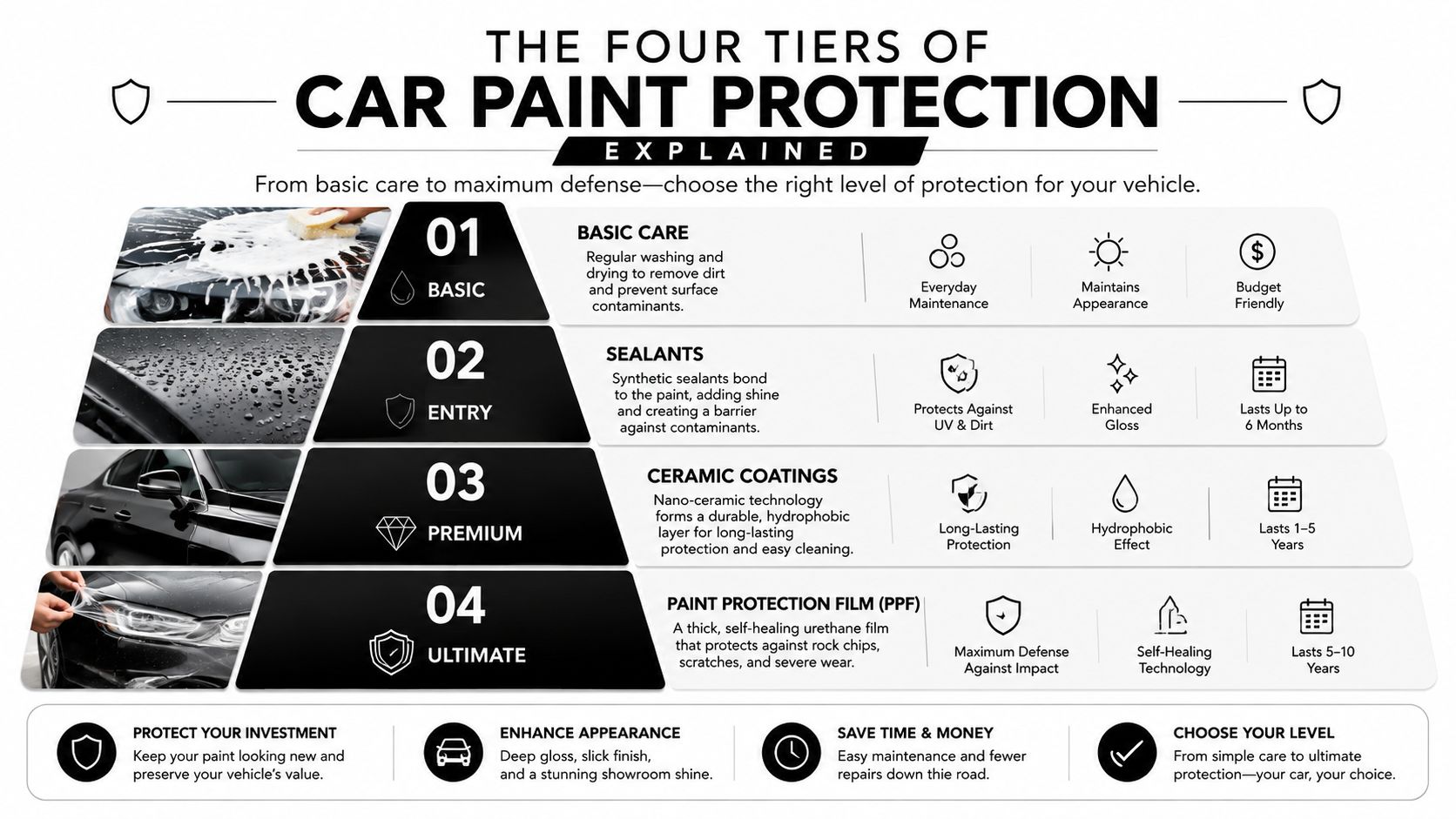
Paint protection only makes sense once you match the product to the failure mode. Wax and sealant help with gloss and easier washing. Ceramic coatings reduce staining and make the surface less sensitive to UV and chemicals. PPF is the layer that takes the abuse from road debris, because it is built to absorb impact that liquid products cannot.
Wax and sealant are maintenance layers
Wax is the simplest layer. It sits on top of the paint, boosts gloss, and helps water release from the surface more cleanly. A synthetic sealant does a similar job with more durability and more consistency than a traditional wax, but it is still a thin chemical barrier that helps with appearance and maintenance.
Both are useful if the goal is routine care. They help with washing, shine, and short-term environmental exposure, but they do not meaningfully stop gravel, hard debris, or a key mark. On a car that is already in good shape, they can slow down how fast the finish starts looking tired, which is often enough for owners who wash often and keep the car indoors more than outdoors.
Ceramic coating is a chemical barrier that resists stains and UV but doesn’t absorb impact like film does
A ceramic coating bonds more tightly to paint than wax or sealant. Its main strengths are chemical resistance, UV resistance, and easier cleaning. That is why many owners choose ceramic for daily-driven cars that face sun, rain, road film, bug residue, and frequent washing.
The limitation is simple. Ceramic helps the surface stay cleaner and cuts down on staining and oxidation, but it does not cushion a hit. If the problem is rock chips on the front bumper, a ceramic layer can make upkeep easier and reduce some environmental wear, yet it will not take the blow the way film can.
PPF is a physical barrier
PPF is a thermoplastic film, not a liquid coating. It is installed as a transparent layer over the painted panel, and it is meant to take the abuse first. That makes it the strongest answer for front ends, rocker panels, mirror caps, and other chip-prone areas.
The practical link most owners miss is the one between product type and failure mode. If the paint is getting hazed from daily washing, a coating may solve it. If the paint is getting peppered by road debris, film is the more direct fix. A good overview of those coatings and film choices is on Titan’s car paint protective coatings page.
| Type | Typical Longevity | Strengths | Limits |
|---|---|---|---|
| Wax | Short, refreshed often | Easy gloss, simple upkeep | Very limited durability, weak mechanical protection |
| Synthetic sealant | Longer than wax | Better beading, easier maintenance | Still thin, still not an impact layer |
| Ceramic coating | Multi-year in good conditions | UV, chemical resistance, easier cleaning | Won’t absorb chips or dents |
| PPF | 5 to 10 years in typical professional use, and longer in ideal conditions, with field reports and manufacturer guidance pointing to strong durability when the film is cared for properly (Ceramic Pro on PPF durability) | Impact buffering, scratch resistance, chip defense | Premium install, not immune to all damage |
Wax vs Sealant vs Ceramic vs PPF Compared Side by Side
The useful comparison starts with the damage you are trying to stop. A garage-kept coupe that sees careful hand washes has different needs than a commuter parked outdoors or a highway SUV that gets hit with road grime every week.
Which layer fits which use case
A waxed finish makes sense for an owner who wants easy gloss, quick hand application, and a product that can be refreshed without much effort. It is a short-term surface treatment, so it suits a weekend car that gets stored indoors and cleaned often, where the main goal is appearance rather than long-term defense.
A synthetic sealant sits between wax and ceramic in practical use. It usually holds up better than wax in daily weather, rain, and wash cycles, and it can be a good choice for drivers who want simpler maintenance without committing to a harder coating. For a closer look at that middle ground, see this ceramic coating vs paint sealant comparison.
Ceramic coating changes the ownership experience more than it changes the paint’s ability to survive impact. It helps with chemical resistance, reduces how much grime bonds to the surface, and can keep a car easier to wash, especially when the vehicle lives outdoors or is driven regularly. It is a stronger fit for owners who want low-maintenance cleanability and more stable gloss, not for drivers who are trying to stop stone chips.
PPF serves a different job. It is the right call for front bumpers, hoods, mirrors, rocker panels, and other areas that take direct road abuse. The film adds a physical sacrificial layer, so the buyer who cares most about chip defense and edge protection gets more from film than from a liquid coating.
How the choice changes in real ownership
A garage-kept weekend car often does well with wax or sealant, because the main stress is light contamination and routine washing. Ceramic becomes more attractive if the owner wants easier cleanup and longer-lasting surface behavior without stepping up to film. PPF only makes sense if that car still sees enough road exposure to justify protecting vulnerable panels from impact.
A leased commuter is usually a better match for sealant or ceramic than for frequent waxing. The reason is simple. The car needs predictable upkeep, but the owner may not want to invest in a full film install unless the commute includes a lot of highway miles or the vehicle has exposed leading edges that keep getting marked up.
A highway-traveling SUV is the clearest case for combining layers by risk. Film belongs on the front end and other hit zones, while ceramic can cover the rest of the vehicle to help with washability and chemical resistance. That split approach matches the product to the failure mode instead of asking one layer to do everything.
The trade-off between gloss, upkeep, and protection
Wax and sealant are the easiest to live with if you enjoy reapplying protection on a regular basis. They are forgiving, inexpensive relative to harder systems, and they can make fresh paint look good quickly. Their weakness is that they are thin barriers, so they do little against chips, hard abrasion, or long exposure to harsh conditions.
Ceramic sits in a different category because it shifts the maintenance burden more than it changes impact protection. It can help a car stay cleaner and resist chemical staining better than wax or sealant, but the owner still has to accept that it will not cushion the paint the way film does.
PPF is the most specialized option, and that specialization is the reason it costs more. It is chosen for the panels that take the most abuse, not because it gives the same kind of shine as a coating. The practical decision is less about which product sounds strongest and more about which failure mode you want to reduce first.
Installer’s note: I’ve seen owners choose ceramic because they wanted chip defense, then learn later that the coating did its job exactly as designed, just not for the damage they were receiving.
What the Evidence and Field Tests Show
A shop can see two very different outcomes with the same product. One car comes back with better gloss retention and easier wash maintenance, while another still picks up chips, etched spots, or wear in the same conditions. The difference usually comes down to which failure mode the product was built to address, how the car is driven, and how well the owner maintains it.
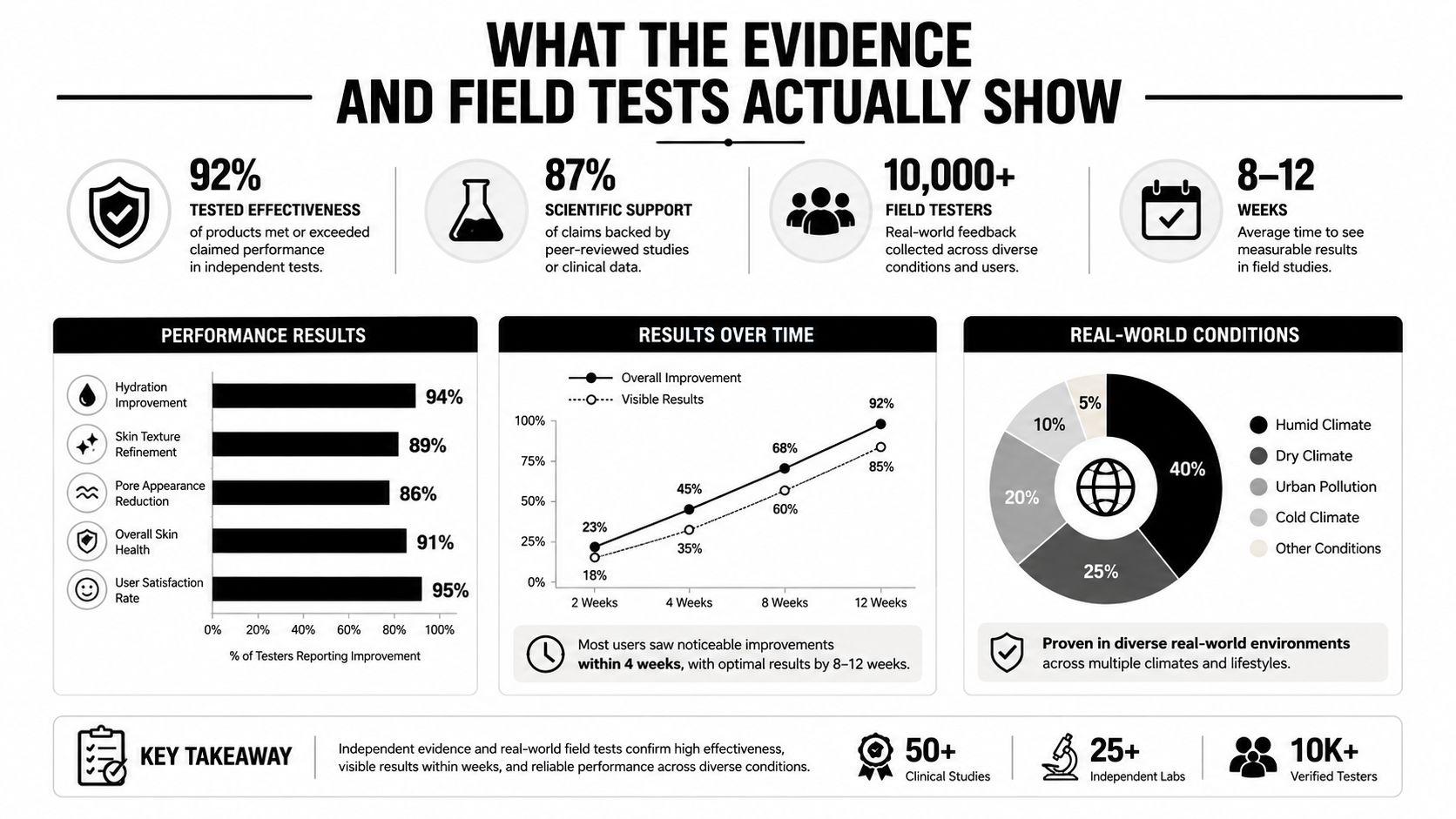
Not every protection stack improves every failure mode
Broad reviews of automotive coatings describe protection layers as tools for reducing UV exposure, acid rain, oxidation, bird droppings, chemical contaminants, abrasion, swirl marks, and scratches. That list matters because it shows where each system earns its keep. Most of the time, the benefit is slowing clear-coat degradation and limiting surface marring, not stopping every kind of damage from reaching the panel.
Tribological testing also shows why lab results need context. One protective coating stack performed worse than unprotected paint in ball-cratering wear, which is a reminder that chemistry, film thickness, and intended use all shape the result. The same product can do well in one test and poorly in another if the test is measuring a failure mode it was never built to handle. Field reports and lab work on coating behavior are most useful together, especially on coating testing methods and results where abrasion, flexibility, and surface durability are separated instead of treated as one property (PMC review of automotive protective layers).
PPF succeeds because it behaves differently
PPF has the clearest technical edge against impact. Technical datasheets describe TPU film as a transparent, mechanically resilient barrier against stone chips, scratches, bug damage, road tar, stains, and harsh UV. Independent industry analysis also explains that the film absorbs and disperses impact energy before it reaches the paint, which is why it belongs on chip-prone zones like front bumpers and rocker panels (TeckWrap technical PPF data).
One practical detail stands out. Proper PPF can stretch up to 400% before breaking (AutomotoFlux on PPF behavior). That elasticity helps the film survive the kind of impact and flex that a surface chemistry alone cannot absorb.
Where Elastomer Coatings Change the Conversation
Many shoppers hear “hard” and assume harder automatically means better. In the world, hardness can help with surface resistance, but it can also come with brittleness if the system can’t flex with expansion, contraction, and minor impacts. That’s where elastomer-based coatings start to matter.
Flexibility changes how a coating ages
Titan Coatings describes its Elastomer line as a flexible coating approach built around its own technology stack, including Dark Matter Technology®. The practical idea is simple. A coating that can move with temperature swings and minor surface stress is less likely to fail from micro-cracking than a rigid layer that can’t flex.
That matters to owners who live with winter mornings and summer heat. It also matters to mobile detailers and DIY users, because real installations don’t always happen in perfectly controlled bays. A coating that tolerates more variation gives the installer more room to work and the owner more room to live with the result.
Alpha Quartz and Ultra Ceramic Spray fit different use cases
Titan’s Alpha Quartz is positioned as an elastomer coating for painted surfaces, and it’s the kind of option that makes sense when the goal is durable protection with more flexibility than a brittle ceramic. Ultra Ceramic Spray fits a quicker maintenance model, where fast application and easy top-ups matter more than a fully intensive correction-and-coat routine.
Titan also offers APEX Glass, a glass and windshield coating that improves visibility in rain and helps the driver keep the glass cleaner between washes. That’s a different failure mode entirely from paint chips, but it still belongs in the protection conversation because visibility and surface contamination are part of real-world driving.
Read more about Titan’s elastomer coating approach and compare it against the type of stress your car sees.
Field reality: a coating doesn’t need to be marketed as indestructible to be useful. It only needs to match the problem better than bare paint or the wrong kind of product.
How Long Protection Lasts and How It Fails
Longevity is where marketing often gets slippery. The honest answer is that protection lasts as long as the product, the install, the climate, and the maintenance allow. A garage-kept car with careful washing will age differently from a highway commuter that lives through harsh weather and frequent contamination.
Failure usually starts as a performance change
Wax usually shows wear first. Water behavior becomes less crisp, gloss drops a bit, and washing takes more effort as the layer thins and breaks down.
Sealants follow a similar pattern, just with more staying power than wax. Their surface behavior changes before they disappear completely, so the decline often shows up in maintenance feel before it shows up in appearance.
Ceramic coatings usually fail less dramatically. Instead of vanishing overnight, they can lose hydrophobic performance, pick up water-spot issues, or start to feel less slick as contamination builds on the surface. That is why maintenance matters, because many owners think a coating has failed when it has been neglected.
PPF ages in a different way. The common problems are edge lift, yellowing on lower-quality material, staining from harsh contamination, or plain wear in the highest-impact zones. Installation quality and regular care matter because the film is a sacrificial layer, not a permanent force field, as Avery Dennison on paint protection film behavior explains.
Climate and maintenance change the math
Sun, heat, winter road grime, and aggressive washing all shorten the useful life of any system. Even stronger barrier layers do not stay perfect without proper upkeep. The pattern I see again and again is simple, good prep and good maintenance outlast hype.
A practical maintenance rhythm helps:
- Wash gently: Use clean mitts and safe soap, because dragging grit across any layer creates unnecessary wear.
- Decontaminate on schedule: Remove bonded fallout and film contamination before it builds into a bigger problem.
- Inspect edges and high-impact panels: Catch lifting, staining, or heavy abrasion before it becomes a replacement job.
- Avoid aggressive shortcuts: Strong chemicals and harsh pads can shorten the life of any protection layer.
Compare coating and film costs before choosing a protection path.
Setting Realistic Expectations and Calculating Real ROI
A wise paint-protection buy starts with the failure mode you want to avoid and the conditions the car lives in. A front-end film makes sense if chips are the problem. A coating makes more sense if the issue is UV, washing wear, or chemical staining. If the car sits outside, sees harsh winters, or gets washed often, the return changes again because climate and maintenance shape how long any layer keeps doing its job.
A garage-kept weekend car and a daily commuter do not earn back the same way. The first may only need light protection to keep the finish clean and original. The second can justify stronger protection because each mile adds exposure.
Resale matters more than most owners think
Kelley Blue Book notes that less than 5% of used vehicles qualify as Excellent Condition. That matters because a car that still carries original paint, shows fewer correction marks, and presents clean panels is easier to grade well at trade-in or sale. Lintec Auto’s summary of resale and paint condition points to the same basic reality, paint condition affects how buyers and appraisers see the car.
The point is not that every car needs a full film-and-coating package. A clean, original finish and less visible repair work can still move the needle when the car changes hands. That is where protection has a value beyond the driveway. It preserves the parts of the finish that are hardest to replace later.
ROI depends on the damage you’re avoiding
If the car runs gravel roads or spends long stretches at highway speed, PPF on the front end can be worth more than a cosmetic upgrade because it prevents chip repair and repaint work. If the car mostly faces sun, rain, and regular wash cycles, a ceramic layer may be the better fit because it helps with chemical resistance, easier cleaning, and slower visible wear. If the car is low-mileage and lightly used, a simpler maintenance product can be enough to keep it looking right.
The cleanest way to judge return is to compare the cost of protection against the likely cost of fixing the damage later. That includes not just materials and installation, but also the time and repaint risk that come with correction after the fact. Titan’s coating versus PPF cost discussion is useful because it asks the right question, what problem are you preventing, and what is that prevention worth on your car?
Choosing the Right Product for Your Situation
A useful rule starts with the failure mode, then matches the layer to it. Rock chips call for film. Sun exposure and chemical attack call for coating. Fast cleanup calls for a spray maintenance product. A flexible coating option for painted surfaces can make sense if you want protection that is easier to live with than a brittle ceramic system. If rain visibility is the main complaint, a dedicated glass coating is the better place to look. If you want a quick refresh between deeper details, a spray ceramic is built for that kind of maintenance.
Match the product to the driver, not the logo
- Highway commuter: Put PPF on the front bumper, hood, and leading edges where chips show up first.
- Daily driver in mixed weather: Use a ceramic layer for easier cleaning and better resistance to sun, grime, and routine wash chemicals.
- DIY owner or mobile detailer: Choose coatings that are simple to install and hold up under real use, not just ideal shop conditions.
- Rain-heavy region: Prioritize a windshield coating that helps water shed and keeps the view clearer in bad weather.
Apex Nano by Titan Coatings offers coatings and related surface-protection products for painted surfaces and glass, with options aimed at longer protection and easier maintenance. If you are comparing film, ceramic, or an elastomer-based coating, review the lineup at APEX NANO – Titan Coatings and match the product to the specific damage your car faces.
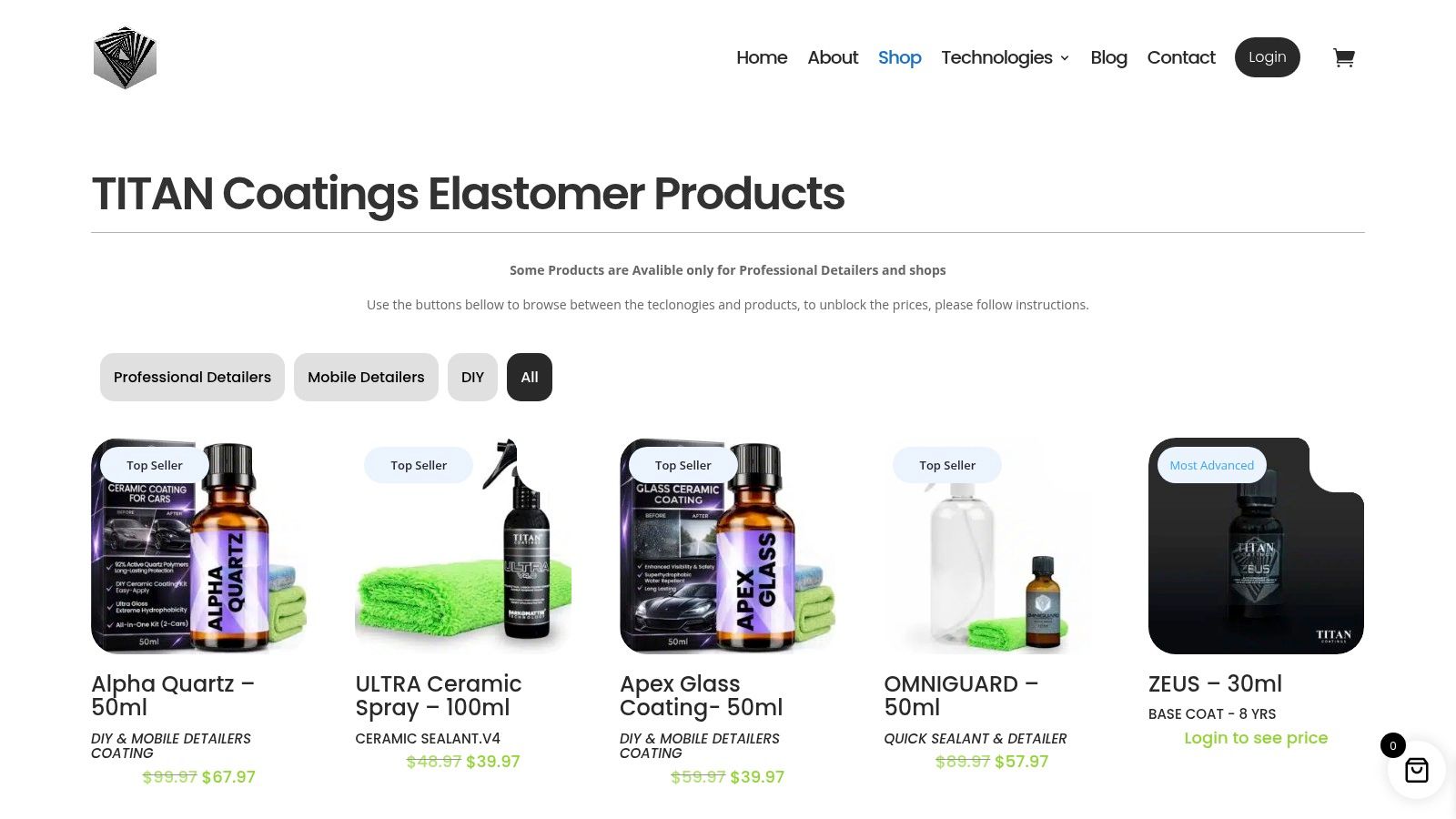
If you want a protection plan that fits how you drive, APEX NANO – Titan Coatings can help you compare coating, film, and glass options against the wear you are trying to prevent. Visit their site to review the lineup and choose the right layer for your paint, windshield, and maintenance routine.
0 Comments