
A friend of mine had a freshly coated performance car that looked flawless on delivery day. By the end of winter, the front end showed impact marks, and the coating on a few panels had started to show the kind of fine stress lines that ruin confidence fast.
The Myth of Invincible Paint Protection
He hadn’t cut corners. He paid for a premium coating, followed wash instructions, and avoided cheap tunnel washes. On paper, he did everything right. In reality, one piece of road debris, repeated heat cycling, and months of cold mornings followed by heated garages exposed the weak point that a lot of owners never hear about until it’s too late.
The problem wasn’t gloss. It wasn’t water behavior. It was brittleness under actual use.
A lot of coatings look tough when the car is parked, clean, and photographed in soft light. The test happens later. Gravel gets kicked up on the highway. Bugs hit the front clip at speed. Panels expand and contract. Windshields go from cold rain to defroster heat. That’s when the difference between a hard coating and a resilient coating becomes obvious.
Where premium coatings often disappoint
Many consumer coatings are sold around shine, slickness, and beading. Those matter, but they don’t answer the more important questions:
- Impact response: What happens when the coating takes a light hit from road debris?
- Thermal movement: Does it move with the surface, or does it start to fracture?
- Real maintenance: Can an owner or mobile detailer apply it consistently without turning installation into a high-risk process?
I’ve seen owners assume “ceramic” means nearly indestructible. It doesn’t. Some formulas are impressive on chemical resistance and gloss retention, but still struggle when the surface flexes or the environment swings hard from frozen mornings to hot afternoons.
The coating that survives the sales pitch isn’t the one that matters. The coating that survives weather, impact, and maintenance cycles is the one worth paying for.
That same lesson shows up outside automotive work. Shops that handle expert RV collision restoration know that protection isn’t theoretical once large panels, road abuse, and repair realities enter the picture. Durability has to work on moving, expanding, exposed surfaces, not just on a brochure.
That’s where military-grade thinking becomes useful. Not because most cars need battlefield specs, but because the military world starts with a better question. What keeps performing when failure isn’t acceptable?
What Truly Is a Military Specification Coating
A military specification coating isn’t a brand category. It’s a discipline. The coating, the substrate, the prep, the application method, and the inspection all have to work together because the finish is expected to perform in ugly conditions, not ideal ones.
Think of the difference between a consumer drill and one built for daily production-line use. Both can turn a fastener. Only one is designed around repeated stress, reliability, and predictable output under pressure. Military coatings follow that same logic. The standard isn’t “looks protected.” The standard is “performs when the environment pushes back.”
It’s a system, not a bottle
That’s why standards matter. MIL-STD-171 is a foundational military standard that guides the selection and application of finishes for military equipment, ensuring required strength, stability, and protection against corrosion, wear, and adverse environmental impacts across aerospace and defense, as outlined in this overview of MIL-STD-171.
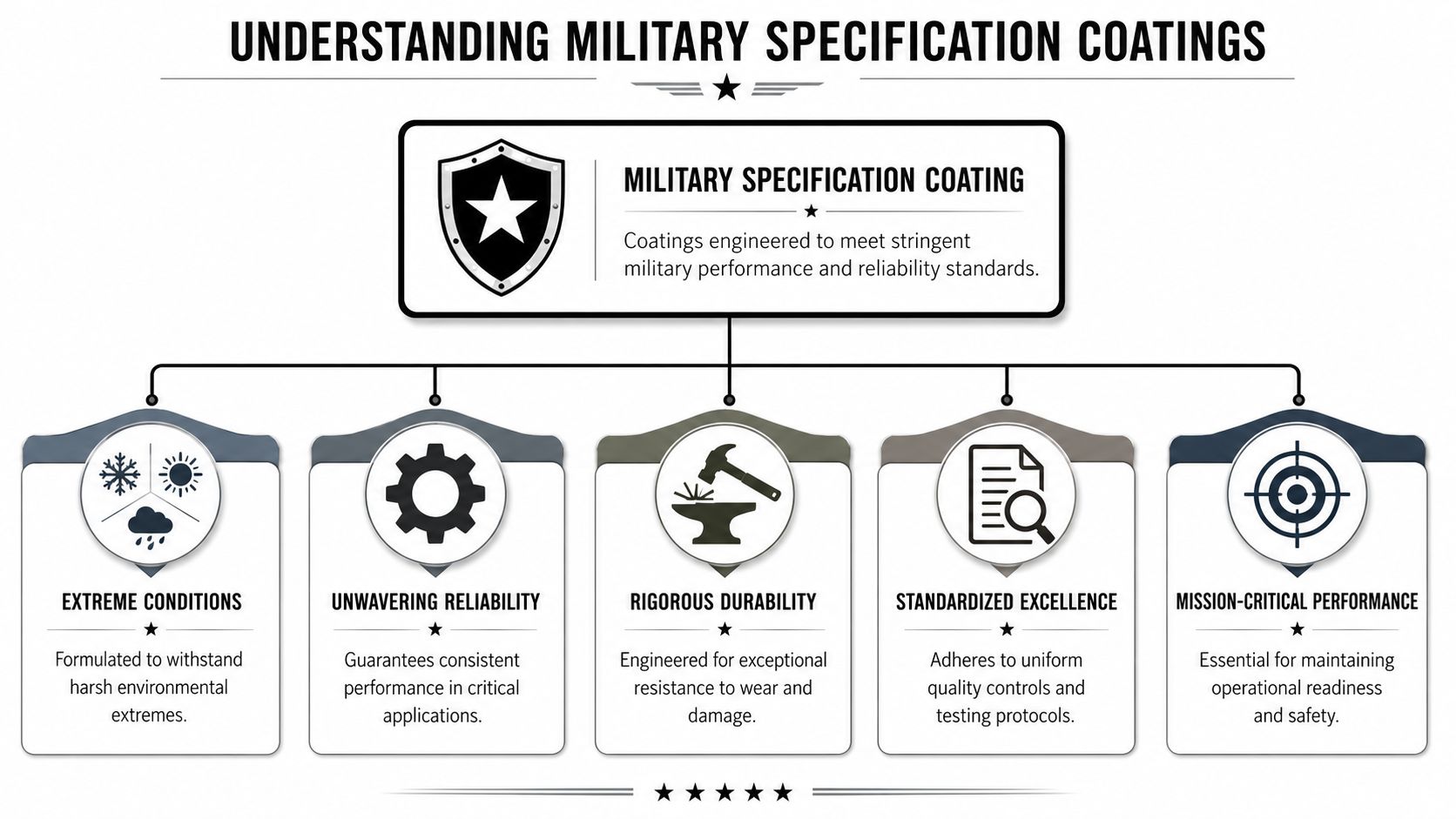
The key takeaway is simple. Military specification coatings are built around verified performance, not loose marketing language. That makes them useful as a benchmark even for civilian vehicles.
What that philosophy means in practice
When people hear “mil-spec,” they often imagine a magic product. In practice, it means a controlled process:
- Substrate matters: Aluminum, steel, composites, and electronics don’t get treated the same way.
- Preparation matters: The surface has to be cleaned and conditioned correctly before any protective layer goes on.
- Application matters: Film build, cure conditions, and compatibility aren’t optional details.
- Inspection matters: The result has to be checked against a defined expectation.
If you want a civilian analogy, look at how industrial shops approach durable concrete floor coatings. The coating itself matters, but the substrate condition, prep work, and installation discipline usually decide whether the finish lasts or fails.
Titan’s industrial background fits that mindset. If you want to see how that translates outside standard automotive detailing, the company’s work in industrial coating systems shows the broader logic behind performance-first protection.
Practical rule: If someone talks only about hardness and never about prep, compatibility, and inspection, they’re not talking about a true performance coating system.
The Gauntlet Performance and Testing Metrics
Marketing language has made “durable” almost meaningless. A real military specification coating earns that label by surviving tests that are deliberately harsh, repeatable, and measurable.
That matters because coatings don’t fail in abstract ways. They fail from heat, abrasion, chemicals, and environmental exposure. If a product can’t prove performance under those conditions, you’re relying on claims, not evidence.
What military-style verification looks like
The testing standard is simple in spirit. Stress the coating until weak points show up.
Military specification coatings must pass extensive testing. That includes requirements in MIL-PRF-14105E for heat resistance up to 1,400°F, and durability verification can involve withstanding a minimum of 50 passes in abrasion testing, as described in the NRC specification document.
Those numbers matter because they anchor the conversation. You’re no longer discussing whether a coating “seems tough.” You’re discussing whether it can maintain performance under severe heat and repeated mechanical wear.
Why these tests matter to vehicle owners
A daily driver won’t see the same service environment as military hardware, but the logic still applies. The harshest conditions on civilian vehicles usually come from repeated moderate stress:
| Stress type | What it means on a vehicle |
|---|---|
| Heat exposure | Engine bay proximity, summer panels, hot pavement reflection |
| Abrasion | Wash contact, road grit, bug impact, airborne debris |
| Chemical contact | Road film, cleaners, salts, contaminants |
| Environmental cycling | Freeze-thaw swings, rain, UV, humidity |
A coating that survives one dramatic event but degrades under repeated ordinary abuse isn’t much use. This is why testing discipline matters more than hype.
For detailers, there’s another lesson here. Application consistency is part of performance. Even a strong chemistry can underdeliver when installation is inconsistent, flash timing is missed, or the surface wasn’t properly prepared. Shops that want to understand this side in more depth should spend time with resources on coating testing and validation, because that’s where real-world protection separates from product storytelling.
If a coating has no serious testing culture behind it, the installer becomes the test lab. That’s an expensive way to learn.
The military world got one thing right a long time ago. You don’t call a coating protective because it sounds advanced. You call it protective when it clears the gauntlet.
Mil-Spec Versus Commercial Coatings The Critical Differences
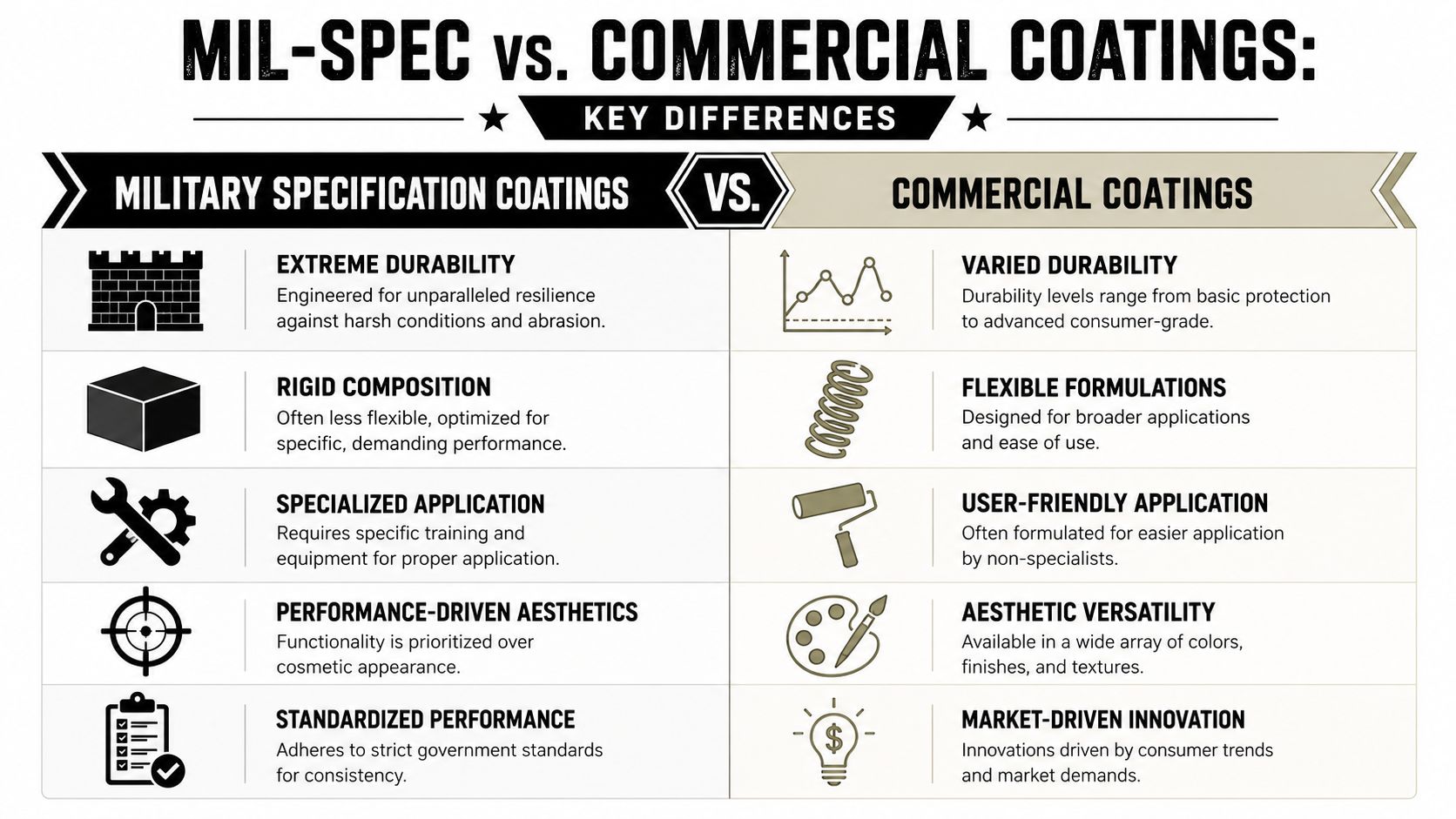
Traditional military coatings and common commercial coatings solve different problems. That’s why people get confused when they compare them directly. One category prioritizes survival under defined stress. The other often prioritizes appearance, easy sales language, and broad usability.
Neither side is automatically wrong. But the trade-offs are real.
Where traditional mil-spec coatings win
Military systems are built around reliability, standardization, and resistance to harsh conditions. They’re designed so that performance is the priority, even if the finish isn’t glamorous and even if the application process is demanding.
That usually means:
- Defined expectations: The coating has to meet a performance target.
- Strict process control: Prep and application are part of the package.
- Less concern for cosmetic drama: Protection comes first.
Where commercial coatings often win
Commercial products usually focus on what vehicle owners notice immediately:
- Gloss and slickness: These are easy to appreciate on day one.
- Simple installation paths: Better for mobile detailers and DIY users.
- Wider finish appeal: Easier to position in a retail service menu.
The weakness is inconsistency. Some commercial coatings are well-engineered. Some are little more than polished branding around average chemistry.
The gap that opened up
The bigger issue is that old military frameworks can lag behind material science. There’s a real contradiction between rigid military specification structures and emerging nanomaterials. 60% of new defense coating R&D projects use nanomaterials, yet current MIL-SPEC frameworks often rely on outdated detail specifications that can’t accommodate adaptive technologies, as discussed in the DLA guidance on detailed military specifications and standards.
That creates an unusual split. The military philosophy still sets the bar for toughness, but some of the older structure around it can slow adoption of flexible, adaptive, next-generation coatings.
Commercial coatings often look better than they perform. Traditional mil-spec coatings often perform better than they adapt.
For modern vehicle protection, that leaves a gap. Owners want toughness, but they also want flexibility, appearance, easier installation, and fewer failure points when temperatures swing or the panel takes a hit. That’s the opening for newer coating technologies that borrow the performance mindset without inheriting all the rigidity.
The Evolution Beyond Mil-Spec Titan’s Elastomer Technology
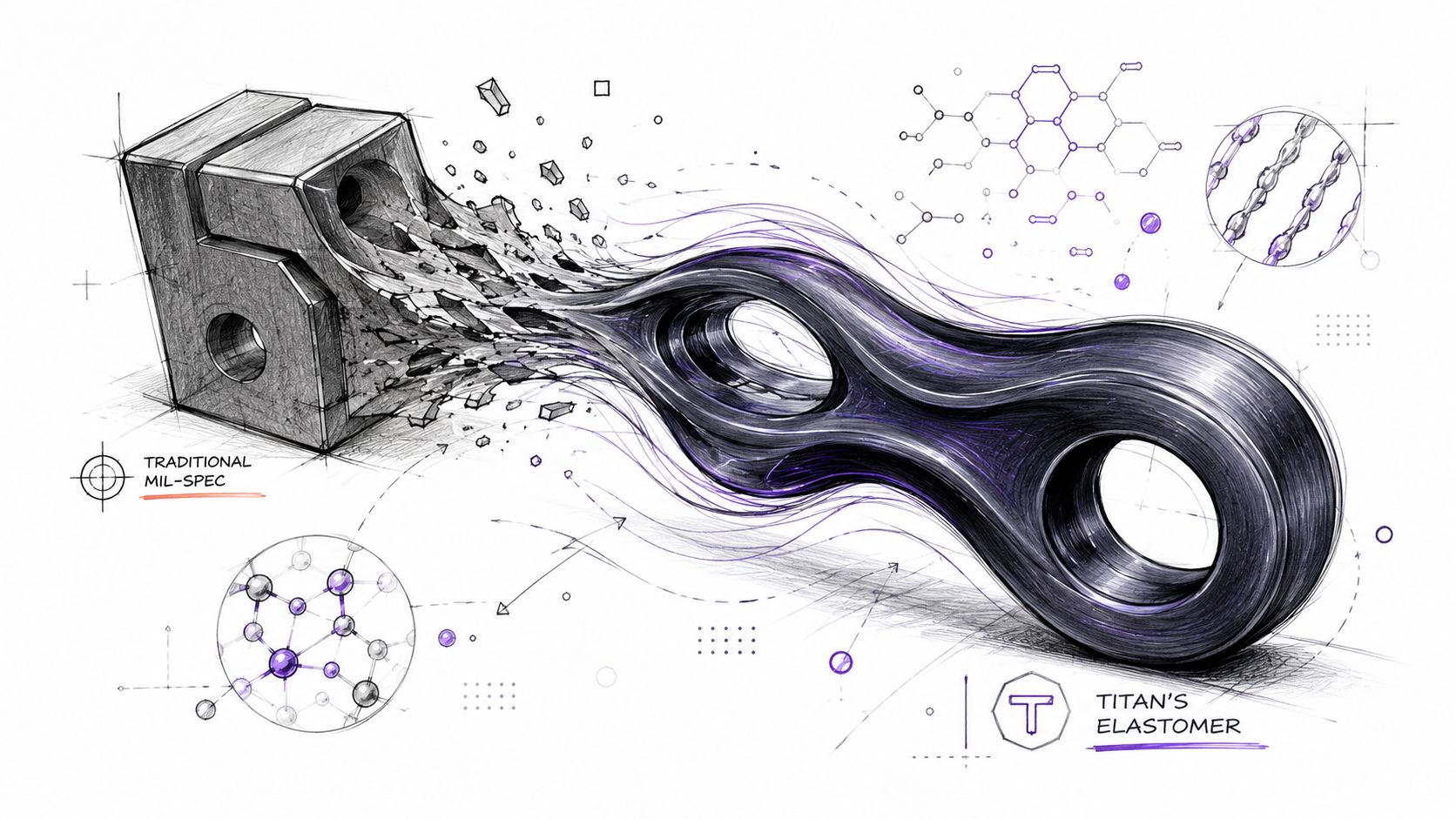
The old military model teaches the right lesson and carries the wrong limitation. The lesson is that protection has to be engineered, verified, and built for stress. The limitation is rigidity.
That’s where Titan changed the conversation. Titan created its own coating technology and introduced elastomer coatings to the market using nanotube technology and Dark Matter Technology®, building a different answer to the same durability problem. The company’s broader technology background is available on Titan’s elastomer technology page.
Hard surface, flexible behavior
Titan Coatings’ Elastomer technology uses the elasticity and flexibility of polymers, enhanced with carbon nanotubes for strength. That combination allows the coating to stretch and return to its original shape, improving durability and performance over rigid coatings, as explained in Titan’s technology overview.
The importance of that point is often underestimated. A rigid coating can be hard and still fail when the surface moves. A flexible coating that maintains structure under stress handles real driving conditions better because it can absorb movement instead of turning every thermal shift or light impact into a fracture risk.
Titan’s Dark Matter Technology® also uses vertically aligned carbon nanotubes grown on chlorine-etched aluminum foil, allowing the coating to absorb 99.995% of incident light, according to Titan’s Dark Matter Technology® post. Separate Titan technology material also notes that Dark Matter Technology® achieves thermal stability through silicon carbide and aluminum additives that help it withstand extreme temperature variation without degradation, reducing cracking risk between frozen and hot conditions.
Why Alpha Quartz fits the real world
Alpha Quartz becomes relevant for detailers, mobile installers, and DIY users. It reflects the same protection philosophy without forcing the installer into a rigid industrial workflow. It’s easy to install, delivers strong visual results, and its elastomer behavior addresses a common weakness in brittle coatings. When bugs hit the front end or temperatures move from frozen mornings to hot surfaces, flexibility matters.
That “hard like glass and flexible” balance is the major evolution beyond an old-school military specification coating. It keeps the performance mindset and fixes the flaw.
Real-World Application For Flawless Protection
The best coating in the world won’t save a bad surface. That’s not opinion. Over 70% of coating failures stem from inadequate surface pretreatment, not coating quality, according to industry guidance on military and industrial coating selection.
That single point explains why some installers blame a product when the failure started long before the first drop touched the panel.
Prep work decides whether protection happens
For cars, practical prep usually means clean paint, full decontamination, correction where needed, proper wipe-down, and no shortcuts around residue removal. For glass, it means stripping traffic film, minerals, old dressings, and anything that interferes with bonding.
If you skip that work, three things happen:
- Adhesion suffers: The coating bonds to contamination instead of the surface.
- Performance drops: Water behavior, durability, and clarity all become inconsistent.
- Failure gets misdiagnosed: People blame the chemistry when the actual issue was prep.
Surface prep isn’t a side task. It’s the foundation the coating sits on.
For anyone working on fresh vehicles, daily drivers, or customer cars with unknown history, it helps to think in terms of system protection rather than a single product step. Guidance on paint protection for new cars is useful here because new paint still needs proper process discipline if you want coating performance to hold.
Easy products still need disciplined use
Titan’s product line works well in this context because several options are built for accessible installation, not just lab-style handling.
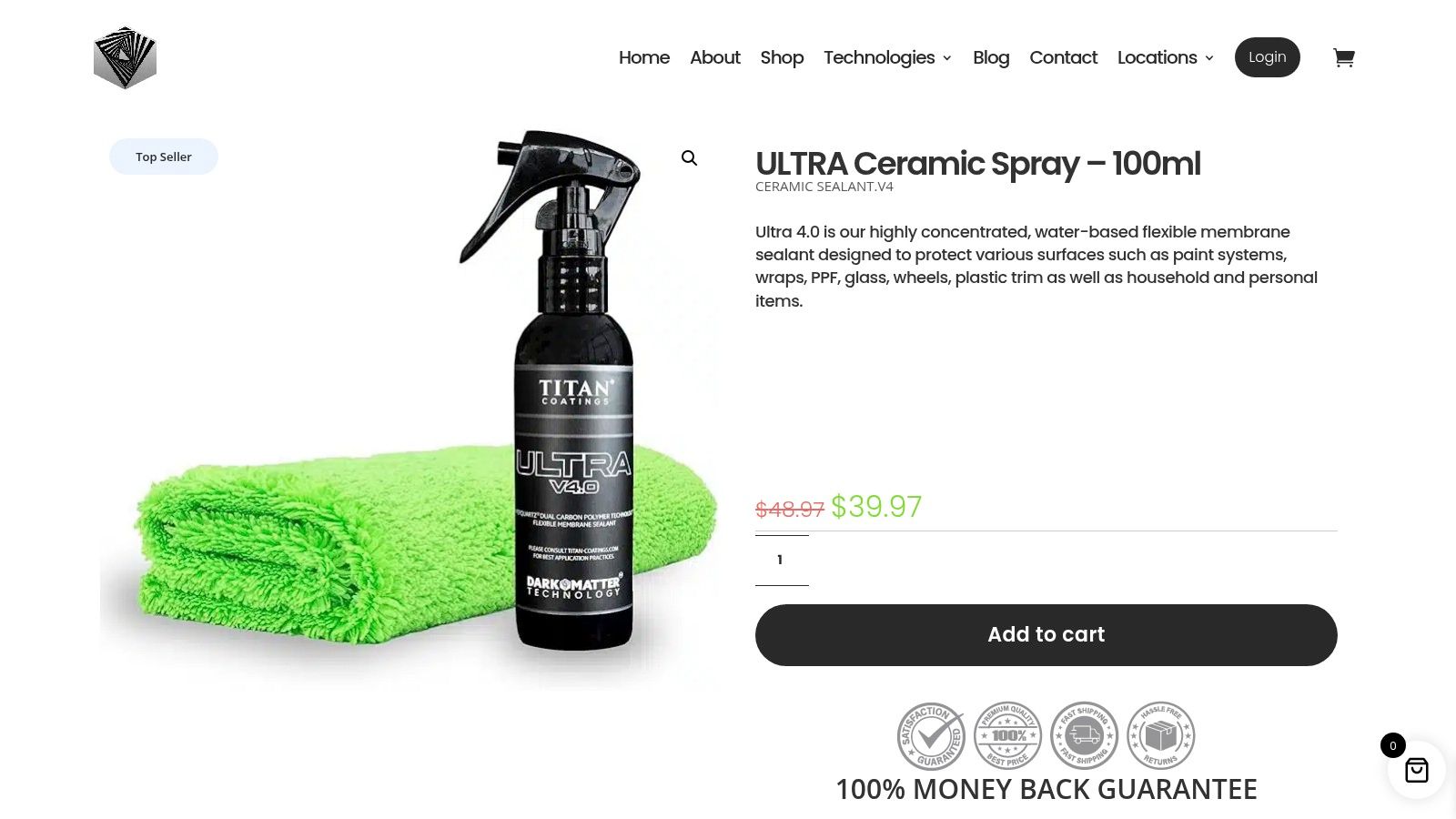
Ultra Ceramic Spray is a good example. It’s straightforward to use, which makes it practical for DIY owners and mobile detailers who need repeatable results without a complex install window. You can see it in Titan’s shop for Ultra Ceramic Spray.
Then there’s the glass side, which doesn’t get enough attention. APEX Glass Coating is worth discussing because visibility is a protection issue, not just a convenience feature. On a windshield, a coating that enhances water shedding can make driving in rain feel less stressful, and this product is designed to be easy to use. Titan also offers the APEX Glass Ceramic Coating for glass and windshield protection.
Where HyperGlass enters the conversation
Titan’s HyperGlass™ nanomembrane coating uses ultra-advanced mimetic nano components for hydrophobic and abrasion-resistant protection. Its glass-like hardness combined with elastomer flexibility helps it remain durable without cracking under mechanical stress or temperature changes, based on the description from Detailing the Carolinas covering HyperGlass™.
That combination is what makes modern flexible coatings so practical. You don’t have to choose between ease of application and serious protection as often as you used to. You still need prep. You still need clean technique. But the products can now work with the realities of everyday installation instead of fighting them.
Choosing Your Armor In 2026 and Beyond
A military specification coating still matters because it teaches the right standard. Protection should be built around reliability, not packaging. It should survive heat, wear, contamination, and repeated use. That mindset is still the benchmark.
The weak point is rigidity. Old-school toughness often came with hard application requirements and a coating structure that didn’t always adapt well to real vehicle movement, temperature shifts, and daily abuse. For civilian vehicles, especially ones that live outdoors, get driven hard, or see four seasons, that flaw becomes obvious over time.
What to ask before you choose
When you’re comparing protection options, don’t stop at gloss or hardness claims. Ask better questions:
- How does it handle temperature swings?
- Does it resist cracking when the surface flexes or takes light impact?
- Is the installation process realistic for a shop, mobile detailer, or DIY user?
- Does the coating improve driving function, such as glass clarity and rain visibility, not just appearance?
A lot of owners are now looking beyond rigid coatings for exactly that reason. They want the toughness associated with military-grade thinking, but they also want flexibility, easier use, and practical longevity. For exterior surfaces that take constant sun exposure, that same decision process should include UV-focused paint protection options, because durability isn’t only about impact. It’s also about resisting slow environmental wear.
The next evolution is already here. Mil-spec set the bar for toughness. Flexible elastomer coatings raised the standard by making that toughness more usable.
If you want to explore coatings built around that newer flexible protection model, take a look at APEX NANO – Titan Coatings and compare the options for paint, glass, and spray-applied protection based on how your vehicle is used.
0 Comments