
The best way to clean windshield wiper blades is to lift each arm just far enough to reach it, wipe the rubber edge and the glass with washer fluid on a lint-free cloth, then test on wet glass. Say it's 6 a.m., rain's already spotting the driveway, and your first swipe leaves a gray fan exactly where you need to see. Don't reach for the strongest bottle under the seat. Reach for the mildest one that works, and let the wet test tell you if the rubber's still alive.
The Safest Clean for Windshield Wiper Blades
That dawn smear usually isn't a dead blade. It's film on two surfaces at once. You wipe the rubber, lower it onto a dirty windshield, and the blade picks the grit straight back up on the first pass.
The AAA windshield wiper safety and maintenance guidance recommends regular cleaning with a clean, damp cloth and warns that debris at the bottom of the windshield can be dragged across the glass, reducing visibility. AAA also identifies using blades to clear ice or snow as damaging. So the order matters. Clean the glass, clean the edge, then test wet.
What to Grab and What to Leave in the Cabinet
Windshield washer fluid is your default because it's made for this exact pairing of glass and rubber. Isopropyl alcohol is a second step, not a first move, and only when your vehicle maker allows it. Anything petroleum based is out, because it attacks the edge you're trying to save and can leave glare you'll meet at the next set of headlights.
| Cleaner | Best use | Hard limit |
|---|---|---|
| Windshield washer fluid | Routine film, salt dust, and the wet test | Default choice on a lint-free cloth |
| Isopropyl rubbing alcohol | Stubborn film when the maker allows it | Wipe the edge only; do not soak the blade |
| Approved non-abrasive glass cleaner | Everyday haze on automotive glass and rubber | Must be labeled safe for both glass and rubber |
| Mild automotive-glass detergent | Bugs, pollen, and light grime | Rinse the blade with clear water afterward |
| Acetone, hexane, fuel, kerosene, petroleum solvents | Never on the rubber | Can damage the edge and cause smears or glare |
Before you touch anything, photograph the dry wipe pattern in daylight if you can. That photo makes the later wet test honest. You're not guessing whether it improved. You're comparing arcs.
Practical rule: If a blade still skips, streaks, chatters, or scrapes after repeated gentle cleaning, replace it. Don't escalate to harsher chemicals or harder scrubbing.
Lift each arm only far enough to work, keep a hand on it so it can't snap back, and use light pressure along the edge. That's the whole argument. Mild fluid, both surfaces, no heroics.
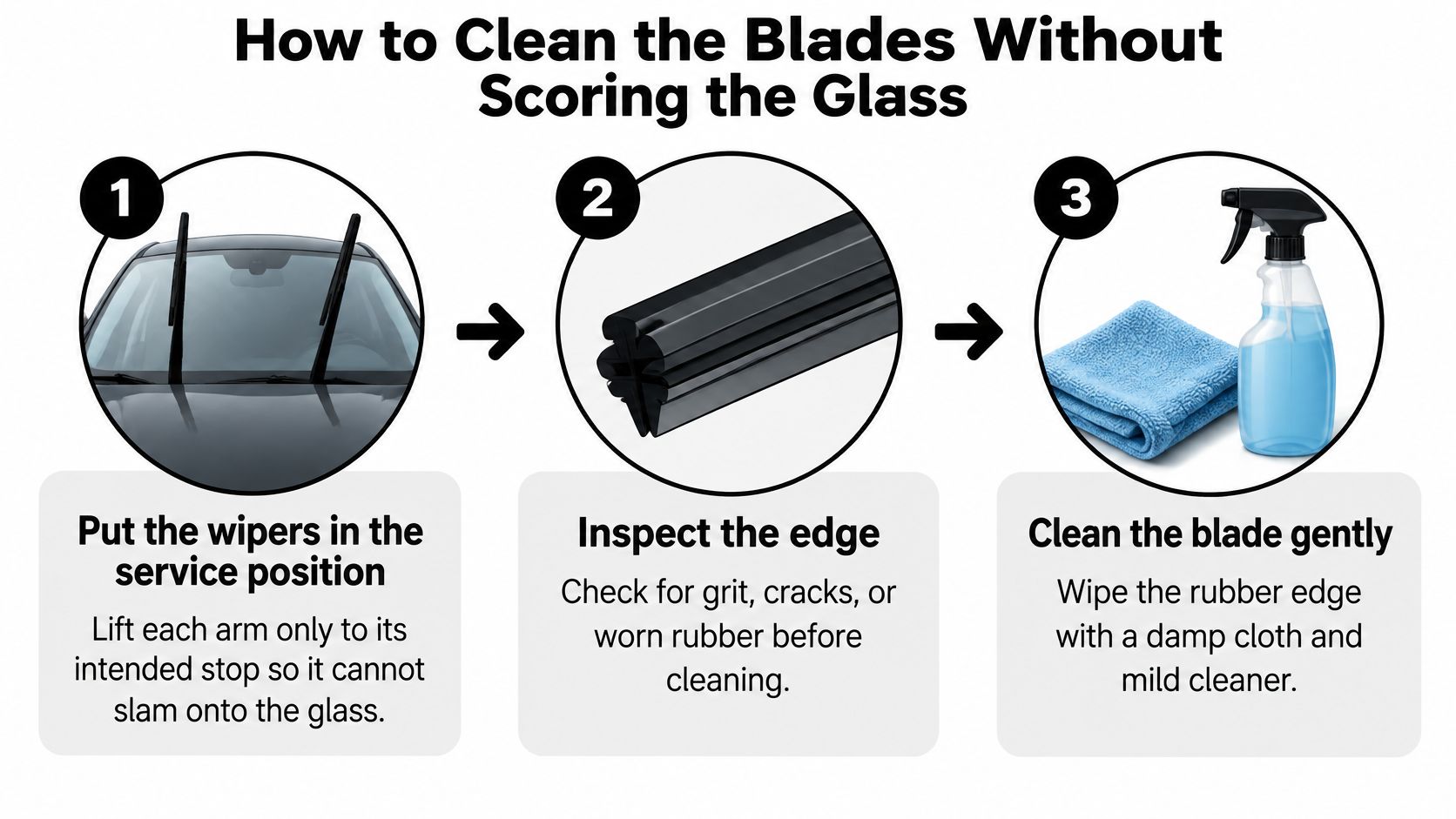
How to Clean the Blades Without Scoring the Glass
A wiper drags across a wet windshield, leaving a thin gray arc behind. Before reaching for a stronger cleaner, check the blade and the glass together. Dirt on either surface can spoil the wipe.
The Eight Steps in Order
- Set the wipers in service position. Lift each arm only as far as its intended stop, and keep a hand on it so it cannot snap back onto the glass.
- Inspect the wiping edge. Look for hardened rubber, cracks, splits, deformation, or separation. A damaged edge needs replacement; cleaning cannot restore it.
- Clean the windshield first. Use washer fluid or mild automotive glass detergent to remove grit before it transfers back to the blade. A soft, lint-free cleaning cloth for car glass and blades helps lift residue without dragging it across either surface.
- Wipe the contact edge gently. Dampen the cloth with the same fluid and make a light pass along the rubber edge. Clean other parts of the blade only if its manufacturer permits it.
- Loosen stuck residue without scouring. For insects, resin, or pollen, use a moist cloth or sponge on the rubber. Keep abrasive insect sponges away from the blade. If bug residue is stuck to the glass, first clean windshield splatter without scratches.
- Rinse and dry the blade. Clear water removes detergent left on the rubber, which can otherwise smear during testing.
- Wet the windshield and test. Saturate the glass with washer fluid, then run several wet cycles. Never test a blade on dry glass.
- Check the wipe in daylight. Look for streaks, smears, chatter, or missed areas. If residue remains, repeat the gentle cleaning, then stop after two or three wet cycles if the pattern is still poor.
Why Dry Glass Is the Enemy
A manufacturer service bulletin hosted by NHTSA warns that running wipers on dry glass can let abrasive dust score the windshield and wear the blades. Keep the glass wet while cleaning and testing.
Use light pressure. Pressing harder can push trapped grit along the rubber and glass, leaving scratches or worsening the wipe. Avoid acetone, hexane, petroleum-based solvents, abrasive compounds, and aggressive scrubbing; they can damage the blade edge or leave marks on the windshield.
Which Cleaner Fits Salt Bugs Sap or Smear
One solvent isn't the answer for every car that pulls up. A sedan that just crossed a salted highway in February doesn't need the same first move as a coupe that sat under a pine tree in June.
Start every case with water or washer fluid and a soft cloth, then step up only if film remains. The Tesla owner guidance on cleaning wiper blades identifies three acceptable options for both automotive glass and rubber, windshield washer fluid, isopropyl rubbing alcohol, or a non-abrasive glass cleaner approved for automotive glass and rubber, and warns unsuitable products can cause damage, smearing, or glare.
Match the First Move to the Mess
| Contamination | First move | Do not |
|---|---|---|
| Dust and road film | Washer fluid on glass and the wiping edge | Wipe the glass dry |
| Winter salt | Washer fluid, then rinse the blade with clear water | Force a frozen blade across the glass |
| Bugs, pollen, or resin | Moist cloth on the rubber | Use an abrasive insect sponge on the rubber |
| Tree sap, wax, or chemical film | Alcohol or washer concentrate after a non-abrasive glass clean | Use petroleum solvent |
| Coating or silicone smear | Clean glass and edge again with an approved cleaner | Put wax, polish, or silicone on the blade edge |
Winter salt is a good example of patience paying off. Free a frozen blade by hand and clear ice before it moves, so you don't overload the mechanism or tear rubber that's stuck to the glass. Then wash, rinse the edge with clear water, and test wet.
Tree sap and wax film are where people reach too far. Clean the glass first with a non-abrasive cleaner, then use alcohol or washer concentrate on the edge only if the maker allows it. An aerosol glass cleaner made for automotive glass fits that glass-first step without turning it into a solvent experiment.
A coating or silicone smear works differently. It's a transfer problem, so residue keeps moving between glass and rubber until you clean both again. Never wipe wax, polish, or silicone onto the wiping edge to make it glide. You'll get a quiet blade and a windshield that blooms under streetlights.
Field shortcut: If the mildest fluid lifts the film, stop there. Stepping up a cleaner you don't need only adds risk to the rubber.
Petroleum products stay banned in every row, in every climate. That doesn't change with the season.
Streaks Chatter and the Replace Decision
Rain starts on the drive home, and one blade keeps drawing the same band across the driver's view. After cleaning, soak the windshield with washer fluid and run the wipers. If the streak returns in the same place, check the glass and rubber separately before choosing what to do next.
A hardened edge loses the flexibility needed to follow the curve of the windshield. A deformed lip or split can leave a streak even when both surfaces are clean.
Reading the Pattern After Cleaning
| After two wet cleans | Likely cause | Next action |
|---|---|---|
| Clear arc | Removable film | Keep the blade and clean it with glass washes |
| Streaks, smooth edge | Residue still on the glass | Clean the windshield again and retest |
| Streaks, rough or split edge | Permanent wear | Replace the blade |
| Chatter or skipping | Hard rubber or weak arm pressure | Inspect the arm, then replace hard rubber |
| Scrape or visible damage | Torn or deformed edge | Replace the blade |
| Maker score of 4 or lower | Failed diagnostic | Replace; 4.5 or higher can stay |
The manufacturer service procedure hosted by NHTSA says blades scoring 4 or lower should be replaced, while blades scoring 4.5 or higher generally do not need replacement after cleaning. It also warns that operating wipers on a dry windshield can damage the glass and blades. Test with washer fluid.
If the edge feels smooth but one band still streaks, residue may remain on the glass. Mineral spots in the sweep area can also interrupt the wipe. Clean the windshield again, then retest; a window water spot remover for glass can address spotting on the glass side of the problem.
Chatter or skipping calls for an arm-pressure check. Pinch the rubber gently: if it feels hard or brittle, replace the blade. A scrape or visible split shows a torn or deformed edge, so further scrubbing will not restore it.
Check the before-and-after wipe pattern in bright, diffused light. If the blade still makes noise during a proper wet test, or leaves the same streak, replace it.
Arrange a replacement once the wet retest confirms the blade has failed. A stronger cleaner won't fix a worn edge, and aggressive scrubbing can score the glass.
A Cleaning Rhythm That Outlasts the Season
Say a driver heads into a wet morning after a week of pollen and road dust. A quick check on glass-wash day can catch grime before it turns into a smear: inspect the blade edge, clean it as needed, and check every 6 months or sooner if wiping performance drops. The GM Parts wiper blade guidance says blades typically last 6 to 12 months, depending on quality, use, and environmental conditions.
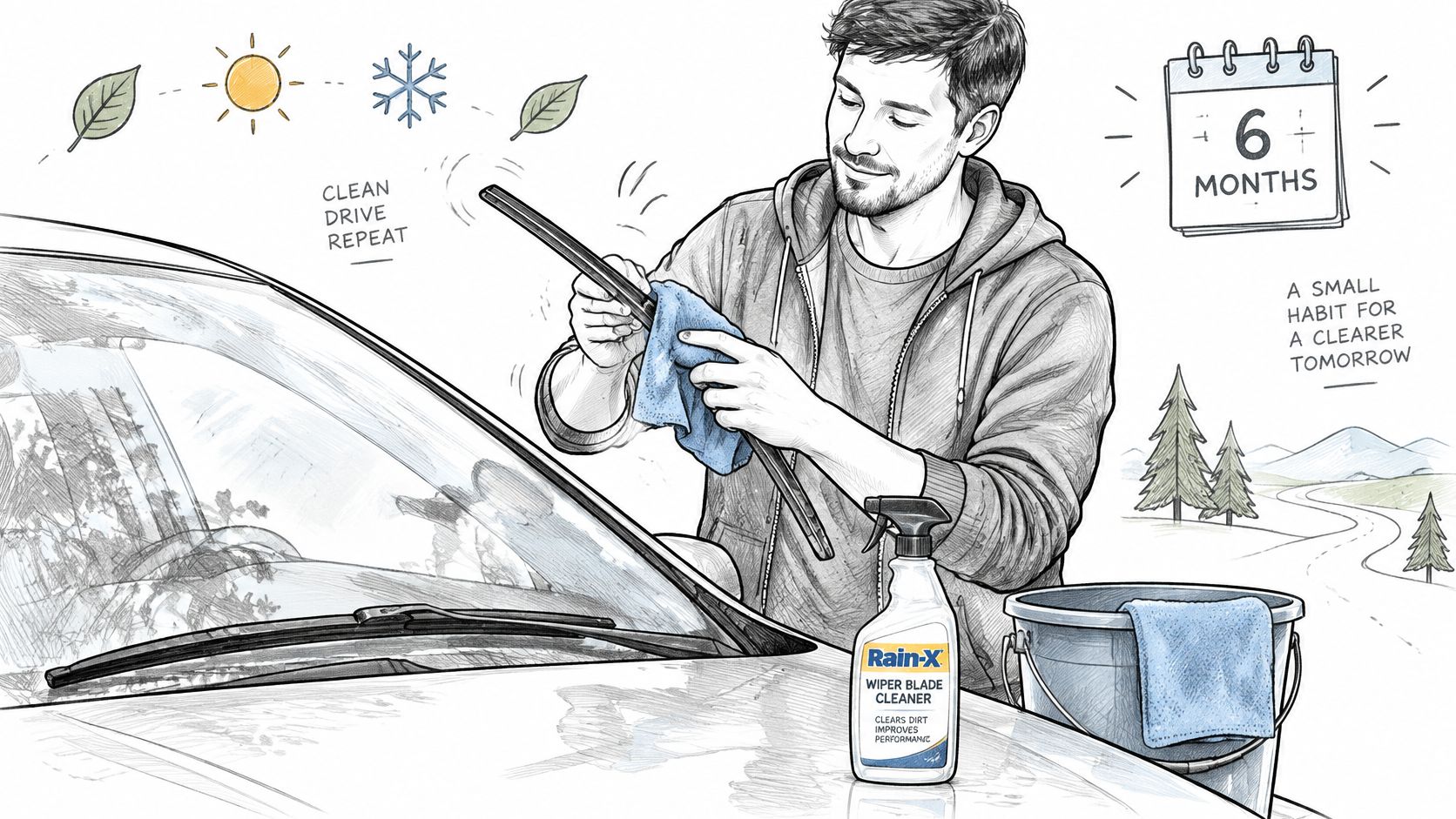
Seasonal checks focus on different trouble. In winter, clear ice and snow before moving the blades; this fits naturally into a routine to winterize your vehicle before the first freeze. During pollen season, check the edge after it collects yellow film rather than waiting for rain to reveal a streak.
For coated glass, wash with a pH-neutral shampoo and avoid harsh chemicals or abrasive cleaning products. That helps keep grit from being dragged across the surface during routine washing.
When Clean Glass Can Do More of the Work
Once the rubber is in good condition, a hydrophobic glass coating can help water clear the windshield and reduce wiper use. Apex Glass Coating, 50ml is a DIY and mobile detailers coating priced at $39.97. Apply it to clean, dry glass: use 10 to 15 drops, work in circles, wait 3 to 5 minutes, then wipe with short-pile microfiber and buff with long-pile microfiber. Two coats are recommended.
Titan Coatings have hydrophobic properties that significantly reduce water spots and stains. Keep the glass and coating clean with gentle washing, and let the rubber's wet-wipe performance guide blade care.
Set the Next Rainy Drive Up Right
Say you're leaving for work as rain starts, and the blades leave a clear arc on the wet windshield. Keep them in service, then use washer fluid to wipe the blades whenever you clean the glass. For a steady routine between checks, follow this guide to cleaning your auto windshield.
If the wet retest still shows streaks or chatter, or the rubber edge looks rough, replace the blades before the next storm. Clean, sound blades come first; a coating cannot restore worn rubber.
For the rest of the vehicle, Alpha Quartz 50ml is a DIY and mobile detailers coating priced at $67.97. For at-home coating upkeep, Ultra and Omniguard help maintain and refresh a coating.
Choose the care that fits the surface. Browse the Titan Coatings shop for coating and maintenance products, and start your rainy-day check with the blades and glass.
Clean blades and glass help make the next rainy drive easier to manage. APEX NANO – Titan Coatings offers coatings for vehicle surfaces, along with products for maintaining coatings at home. Find the APEX NANO – Titan Coatings range that suits your vehicle, then check the blades before the next storm.
0 Comments